
 Download PDF
 Download PDF
Market Overview
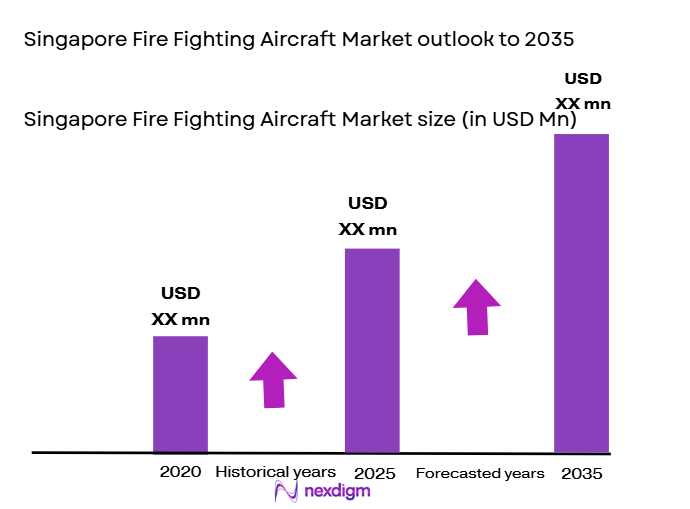
The Singapore Fire Fighting Aircraft market has reached a considerable valuation in recent years, driven by increasing investments in disaster management and advancements in firefighting technologies. The market is supported by the country’s robust aviation industry and the growing demand for rapid response capabilities to mitigate forest fires and other large-scale emergencies. Government funding for firefighting equipment, the advancement of aircraft technology, and collaborations between private companies and public agencies continue to fuel the growth. In 2023, the market value was estimated at USD ~ million, and it is projected to continue growing steadily, driven by technological upgrades and the demand for more efficient aircraft.
The Singapore Fire Fighting Aircraft market is dominated by Singapore itself, which is the central hub for firefighting aircraft in Southeast Asia. The strategic location of Singapore, coupled with its robust aviation infrastructure and active government support, positions it as a leader in the region. Additionally, countries like Australia, Malaysia, and Indonesia are significant players, primarily due to the occurrence of seasonal wildfires in these regions, which push the demand for more advanced firefighting solutions. Singapore, being a major regional aviation and logistics hub, has attracted key players in the market to set up bases for servicing the Southeast Asian region.
Market Segmentation
By System Type
The Singapore Fire Fighting Aircraft market is segmented by system type into helicopter-based fire fighting systems, fixed-wing aircraft fire fighting systems, multi-role aircraft fire fighting systems, small scale drone fire fighting systems, and water bombing aircraft systems. Among these, helicopter-based fire fighting systems dominate the market. The versatility of helicopters, which can access difficult terrains and work in smaller spaces, has made them highly preferred in urban and rural fire management operations. Their ability to operate at various altitudes and their agility in responding quickly to fires in densely populated areas significantly contribute to their dominant market share.

By Platform Type
The market is further segmented by platform type into helicopter platforms, fixed-wing aircraft platforms, remotely piloted aircraft systems (RPAS), tethered balloons for monitoring and fire fighting, and hybrid platforms combining drones and aircraft. The most dominant sub-segment under this category is helicopter platforms. Helicopter platforms are the most widely used due to their rapid deployment capability, versatility in firefighting operations, and cost-effectiveness when compared to fixed-wing aircraft. Helicopters can carry specialized fire suppression equipment and are well-suited for small, localized fires or challenging firefighting environments, such as forested and mountainous regions.

Competitive Landscape
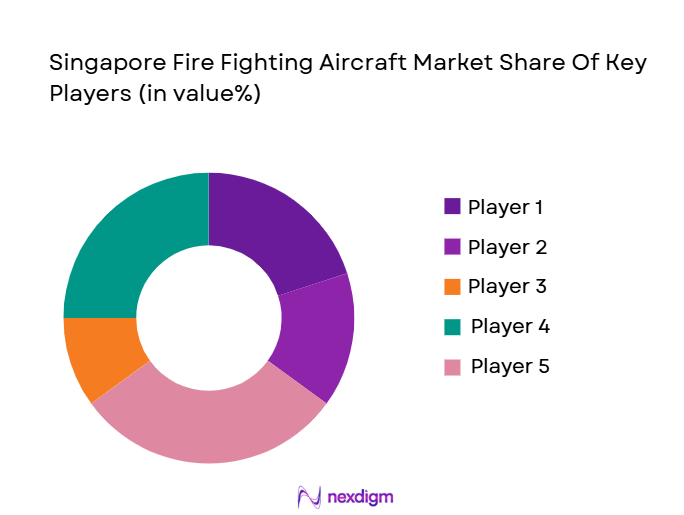
The Singapore Fire Fighting Aircraft market is dominated by several key players, including both local and global companies. The market is competitive, with major players like Airbus and Boeing leading the development and distribution of firefighting aircraft. The dominance of these companies is further driven by their extensive product portfolios, strong distribution networks, and ongoing technological innovations in aircraft systems for firefighting operations. The increasing demand for efficient firefighting solutions has led to collaborations between public and private sectors, and the market is expected to witness further consolidation with the rise of hybrid aircraft technologies.
| Company | Establishment Year | Headquarters | Product Portfolio | Revenue (USD) | Market Focus | Strategic Initiatives |
| Airbus | 1970 | Toulouse, France | ~ | ~ | ~ | ~ |
| Boeing | 1916 | Chicago, USA | ~ | ~ | ~ | ~ |
| Bell Helicopter | 1935 | Fort Worth, USA | ~ | ~ | ~ | ~ |
| Lockheed Martin | 1995 | Bethesda, USA | ~ | ~ | ~ | ~ |
| Sikorsky Aircraft | 1923 | Stratford, USA | ~ | ~ | ~ | ~ |
Singapore fire fighting aircraft Market Analysis
Growth Drivers
Wildfires in Southeast Asia
The rising frequency of wildfires across Southeast Asia is a significant growth driver for the firefighting aircraft market. With countries like Indonesia, Malaysia, and the Philippines frequently facing large-scale forest fires, the need for efficient aerial firefighting solutions has grown exponentially. The increasing intensity of fires, fueled by climate change and dry seasonal conditions, has led to a heightened demand for advanced firefighting technologies, pushing governments and organizations in the region to invest in better firefighting aircraft.
Enhancing disaster management
Another key growth driver is the Singapore government’s strong commitment to enhancing disaster management capabilities. The government has continuously allocated substantial funding towards improving firefighting infrastructure, including the procurement of modern firefighting aircraft. In recent years, there has been a noticeable increase in public-private partnerships that focus on developing and upgrading aerial firefighting systems, further supporting the expansion of the firefighting aircraft market in Singapore and the broader Southeast Asian region.
Market Challenges
Firefighting aircraft market
One of the major challenges facing the firefighting aircraft market is the high acquisition and maintenance costs associated with these systems. Aircraft specifically designed for firefighting are expensive to purchase, and their ongoing operational costs, which include fuel, maintenance, and crew, can be prohibitively high for smaller agencies or private organizations. This financial burden can limit the growth of the market, especially in countries or regions with limited budgets for disaster management.
Regulatory and certification
Regulatory and certification hurdles also present a challenge for the market. Firefighting aircraft must comply with stringent regulations set by civil aviation authorities, which can lead to delays in getting new systems certified and operational. The certification process for firefighting equipment is complex and time-consuming, often requiring aircraft manufacturers to make significant adjustments to meet local and international standards. These regulatory delays can slow the deployment of critical firefighting equipment, limiting the effectiveness of fire management operations.
Opportunities
Drone technology
The adoption of drone technology for firefighting presents a significant opportunity for market growth. Drones are increasingly being utilized in aerial surveillance, fire monitoring, and even active firefighting. Their ability to access difficult terrain, provide real-time data, and potentially deliver fire retardants makes them an ideal complement to traditional firefighting aircraft. As drones become more integrated into firefighting strategies, they are expected to significantly reduce costs and improve operational efficiency, opening up new avenues for innovation and market expansion.
Development and adoption
Another opportunity lies in the development and adoption of hybrid firefighting aircraft. Hybrid systems, which combine the capabilities of traditional fixed-wing aircraft or helicopters with advanced drone technologies, are gaining traction in the market. These hybrid systems can offer greater operational flexibility and cost-effectiveness, making them well-suited for a variety of fire situations. With the increasing demand for versatile and efficient firefighting solutions, the growth of hybrid aircraft is expected to play a critical role in the future of aerial firefighting, particularly in the Southeast Asian market.
Future Outlook
Over the next decade, the Singapore Fire Fighting Aircraft market is expected to experience significant growth. This growth is driven by continuous improvements in firefighting aircraft technology, increasing demand for more efficient fire suppression solutions, and government initiatives to combat seasonal wildfires and large-scale emergencies. The market will likely see an increase in the adoption of hybrid platforms combining aircraft and drones, which offer better efficiency and adaptability for different fire scenarios. The growing focus on sustainability and environmental protection will also lead to the development of more eco-friendly firefighting technologies.
Major Players
- Airbus
- Boeing
- Bell Helicopter
- Lockheed Martin
- Sikorsky Aircraft
- Leonardo
- Air Tractor Inc.
- Textron Aviation
- Northrop Grumman
- Hawker Pacific
- General Atomics Aeronautical Systems
- Air Pacific
- Bombardier
- Russian Helicopters
- Leonardo Helicopters
Key Target Audience
- Investments and venture capitalist firms
- Government and regulatory bodies (Civil Aviation Authority of Singapore)
- Military and defense agencies
- Environmental conservation organizations
- Disaster management agencies
- Firefighting agencies
- Private sector companies involved in large-scale fire prevention and control
- Aircraft manufacturers and service providers
Research Methodology
Step 1: Identification of Key Variables
The first phase involves defining the key variables that influence the Singapore Fire Fighting Aircraft market. Desk research is used to gather primary and secondary data to identify stakeholders, trends, and technologies affecting market growth.
Step 2: Market Analysis and Construction
This phase focuses on compiling historical data, including market penetration rates and revenue figures. The analysis also evaluates trends and forecast models to ensure the market’s future projections are accurate and reliable.
Step 3: Hypothesis Validation and Expert Consultation
Industry experts are consulted through computer-assisted telephone interviews (CATIs) to validate market hypotheses. These interviews provide in-depth insights and help refine the data collected in earlier stages, ensuring the findings are grounded in operational realities.
Step 4: Research Synthesis and Final Output
The final stage involves synthesizing data gathered from various sources, including interviews with key stakeholders and manufacturers. This data is used to develop a comprehensive understanding of the Singapore Fire Fighting Aircraft market, ensuring that the final report accurately reflects the dynamics of the sector.

- Executive Summary
- Research Methodology (Definitions, Scope, Industry Assumptions, Market Sizing Approach, Primary & Secondary Research Framework, Data Collection & Verification Protocol, Analytic Models & Forecast Methodology, Limitations & Research Validity Checks)

- Market Definition and Scope
- Value Chain & Stakeholder Ecosystem
- Regulatory / Certification Landscape
- Sector Dynamics Affecting Demand
- Strategic Initiatives & Infrastructure Growth

- Growth Drivers
Increased frequency of wildfires in Southeast Asia
Government investments in disaster management infrastructure
Technological advancements in firefighting aircraft design - Market Challenges
High acquisition and maintenance costs
Regulatory hurdles and certification processes
Limited availability of specialized pilots and operators - Market Opportunities
Adoption of drone technology for firefighting
Growing demand for hybrid aircraft solutions
Opportunities in regional export markets - Trends
Increased use of AI and automation in firefighting systems
Shift towards environmentally friendly fire suppression agents
Development of integrated firefighting platforms
- Government Regulations & Defense Policy
FDI Rules
Offset Obligations
Export Licenses - SWOT Analysis (Capability Strengths, Cost Vulnerabilities, Competitive Pressures)
- Porter’s Five Forces (Procurement Power, Supplier Concentration, Substitutes, Barriers to Entry)

- By Market Value, 2020-2025
- By Installed Units, 2020-2025
- By Average System Price, 2020-2025
- By System Complexity Tier, 2020-2025

- By System Type (In Value%)
Helicopter-based fire fighting systems
Fixed-wing aircraft fire fighting systems
Multi-role aircraft fire fighting systems
Small scale drone fire fighting systems
Water bombing aircraft systems - By Platform Type (In Value%)
Helicopter platforms
Fixed-wing aircraft platforms
Remotely piloted aircraft systems (RPAS)
Tethered balloons for monitoring and fire fighting
Hybrid platforms (combining drones and aircraft) - By Fitment Type (In Value%)
Retrofit for existing aircraft
OEM installation
Modular installation systems
Integrated fire suppression systems
Custom fitment for specialized operations - By EndUser Segment (In Value%)
Firefighting agencies
Military and defense
Private sector and industrial users
Government disaster management agencies
Environmental conservation organizations - By Procurement Channel (In Value%)
Direct sales from manufacturers
Government contracts
Third-party distributors
Online marketplace sales
Fleet leasing and rental

- Market Share Analysis
- Cross Comparison Parameters
(Market share, Technology innovation, Regional presence, Market Penetration, Technology Integration, R&D Investment, Operational Efficiency, Customer Retention, Regulatory Compliance, Product Portfolio Diversity Fleet size, Aftermarket services) - SWOT Analysis of Key Competitors
- Pricing & Procurement Analysis
- Key Players
Air Tractor Inc.
Bell Helicopter
Lockheed Martin
Leonardo
Airbus
Boeing
Textron Aviation
Airbus Helicopters
Northrop Grumman
Sikorsky Aircraft
General Atomics Aeronautical Systems
Dassault Aviation
Hawker Pacific
Oshkosh Corporation
The Boeing Company

- Growing demand from local government agencies for rapid response solutions
- Increasing adoption by private sector firms in industrial fire risk management
- Military applications for strategic defense and disaster management
- Environmental groups seeking more efficient methods for forest fire control

- Forecast Market Value, 2026-2035
- Forecast Installed Units, 2026-2035
- Price Forecast by System Tier, 2026-2035
- Future Demand by Platform, 2026-2035


 Request a Sample
 Ask for Customization
 Get a Quote
 Enquire Now