
 Download PDF
Market Overview
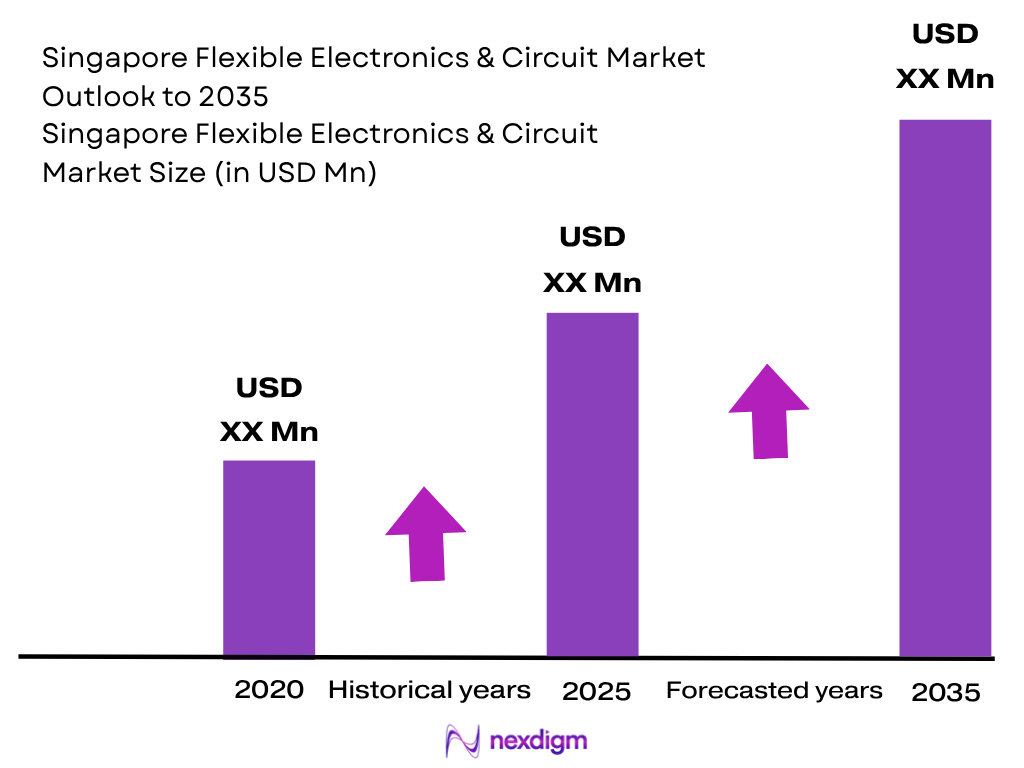
The Singapore Flexible Electronics & Circuit Market is valued at USD XX billion, supported by the country’s established semiconductor ecosystem, advanced electronics manufacturing capabilities, and demand for compact electronic components. The market growth is driven by increasing adoption of flexible printed circuit boards, flexible hybrid electronics, and advanced packaging technologies across consumer electronics, healthcare devices, automotive electronics, and industrial applications. Singapore’s electronics industry recorded manufacturing output of SGD XX billion, supported by semiconductor and precision engineering activities, strengthening demand for flexible circuit solutions.
Singapore dominates the flexible electronics and circuit ecosystem in Southeast Asia due to its strong semiconductor manufacturing infrastructure, advanced research capabilities, and presence of global electronics companies. Cities such as Singapore’s central manufacturing clusters including Jurong, Tampines, and one-north contribute significantly due to concentration of semiconductor facilities, electronics manufacturing services, and technology innovation centers. The country’s electronics sector contributed approximately SGD XX billion to manufacturing output, supported by semiconductor production, advanced electronics assembly, and high-value technology exports
Market Segmentation
By Circuit Technology Type
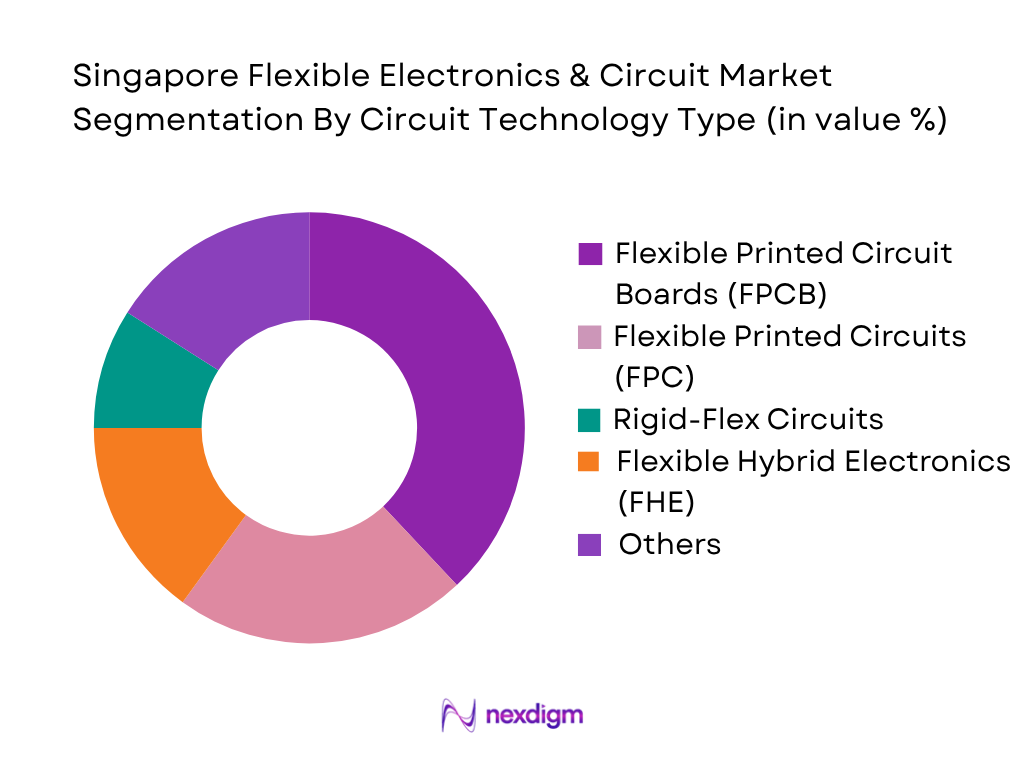
The Singapore Flexible Electronics & Circuit Market is segmented by circuit technology type into flexible printed circuit boards (FPCB), flexible printed circuits (FPC), rigid-flex circuits, flexible hybrid electronics (FHE), printed electronics circuits, stretchable electronics circuits, thin-film flexible circuits, and multilayer flexible circuits. Flexible printed circuit boards (FPCB) are expected to maintain a dominant market share under this segmentation due to their extensive usage in compact electronic systems requiring lightweight structures, high reliability, and efficient space utilization. FPCB technology is widely integrated into smartphones, wearable devices, medical equipment, semiconductor manufacturing systems, and automotive electronics. The increasing requirement for miniaturized electronic components and high-density interconnections supports adoption of FPCB solutions. Additionally, Singapore’s strong semiconductor and electronics manufacturing ecosystem encourages demand for advanced flexible circuit technologies capable of supporting next-generation electronic applications.
By Application Area
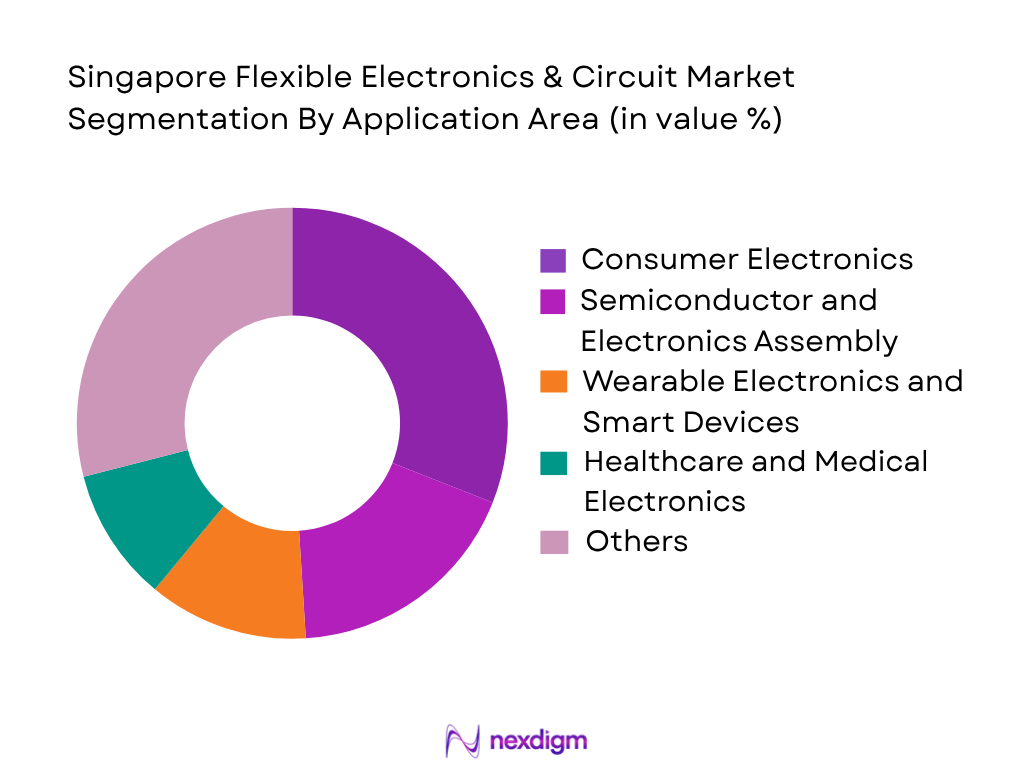
The Singapore Flexible Electronics & Circuit Market is segmented by application area into consumer electronics, wearable electronics and smart devices, healthcare and medical electronics, automotive electronics, electric vehicle electronics, aerospace and defense electronics, semiconductor manufacturing equipment, industrial automation electronics, Internet of Things (IoT) devices, smart packaging electronics, telecommunication equipment, and energy storage systems. Consumer electronics is expected to account for the leading market share due to Singapore’s role as a regional electronics hub and increasing demand for lightweight, compact, and high-performance electronic products. Flexible circuits are widely used in smartphones, smart wearables, display modules, and connected devices because they enable thinner designs, improved durability, and efficient component integration. The expansion of smart devices, digital infrastructure, and advanced electronics manufacturing continues to support demand for flexible electronic solutions.
Competitive Landscape
The Singapore Flexible Electronics & Circuit Market consists of global electronics manufacturers, flexible circuit suppliers, semiconductor solution providers, and advanced material companies operating across consumer electronics, healthcare electronics, automotive systems, and industrial applications. The competitive environment is influenced by technological capabilities in flexible printed circuit manufacturing, advanced packaging integration, material innovation, and precision electronics production. Companies with strong manufacturing networks, research capabilities, and partnerships with semiconductor and electronics manufacturers maintain a significant presence in Singapore’s flexible electronics ecosystem.
| Company | Establishment Year | Headquarters | Flexible Circuit Manufacturing Capability | Product Portfolio | Key Application Areas | Technology Expertise | Regional Presence |
| Samsung Electronics | 1969 | Suwon, South Korea | ~ | ~ | ~ | ~ | ~ |
| LG Electronics | 1958 | Seoul, South Korea | ~ | ~ | ~ | ~ | ~ |
| TE Connectivity | 1941 | Schaffhausen, Switzerland | ~ | ~ | ~ | ~ | ~ |
| Flex Ltd. | 1969 | Singapore | ~ | ~ | ~ | ~ | ~ |
| Molex LLC | 1938 | Illinois, USA | ~ | ~ | ~ | ~ | ~ |
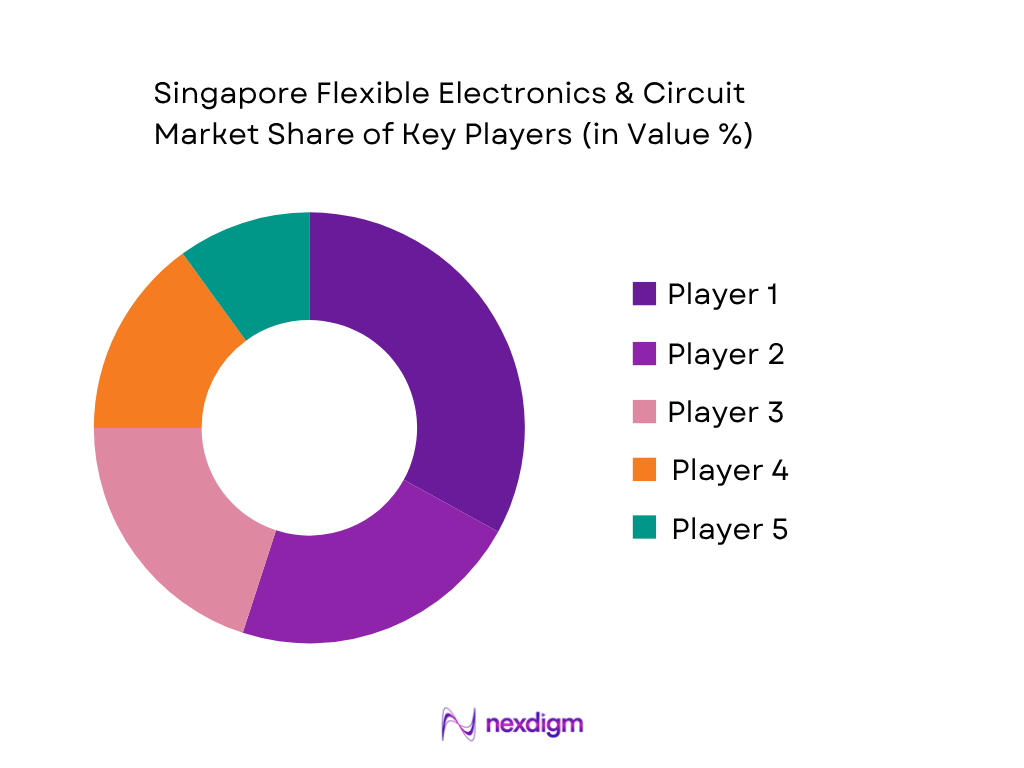
Singapore Flexible Electronics & Circuit Market Analysis
Growth Drivers
Expansion of Semiconductor and Advanced Electronics Manufacturing Ecosystem
The Singapore Flexible Electronics & Circuit Market is supported by the country’s advanced semiconductor and electronics manufacturing ecosystem, which creates demand for flexible printed circuit boards (FPCBs), flexible hybrid electronics, and advanced interconnect technologies used in compact electronic systems. Singapore’s GDP reached approximately USD 501 billion, according to World Bank data, reflecting a strong industrial economy capable of supporting high-value electronics manufacturing activities. The country’s electronics sector remains a key contributor to manufacturing output, supported by semiconductor fabrication, integrated circuit design, precision engineering, and electronics manufacturing services. Singapore hosts more than 60 semiconductor companies involved across wafer fabrication, semiconductor equipment, and supporting technologies, strengthening the adoption environment for flexible circuit solutions. The country’s merchandise trade exceeded SGD 1 trillion, highlighting its integration with global electronics supply chains and enabling flexible electronics components to support regional and international markets. Growing demand for miniaturized devices, advanced semiconductor packaging, wearable electronics, industrial automation systems, and IoT-enabled products is encouraging manufacturers to adopt flexible circuits due to their lightweight structure, reliability, and space-saving capabilities. Additionally, Singapore’s focus on advanced manufacturing, research capabilities, and technology innovation supports the development of next-generation flexible electronics applications across consumer electronics, healthcare devices, automotive systems, and industrial technologies.
Growth of Smart Devices, Healthcare Technologies, and IoT-Based Electronic Applications
The Singapore Flexible Electronics & Circuit Market is driven by increasing adoption of smart devices, healthcare technologies, wearable electronics, and IoT-based applications requiring compact and efficient circuit solutions. Singapore’s digital infrastructure development has supported high technology adoption, with internet usage exceeding 90 users per 100 inhabitants according to international development indicators. The expansion of connected devices, smart city systems, and digital healthcare platforms is increasing demand for flexible circuits used in sensors, wearable devices, smart displays, and medical monitoring equipment. Singapore’s healthcare expenditure reached approximately SGD 30 billion, according to national healthcare statistics, supporting investment in advanced medical electronics and wearable healthcare solutions. The country’s aging population and focus on preventive healthcare are increasing demand for remote monitoring devices, flexible sensors, and connected medical systems. Additionally, smart manufacturing initiatives and IoT deployment across industrial sectors are creating opportunities for flexible circuit integration into automation systems, embedded sensors, and intelligent infrastructure. The development of electric mobility solutions and automotive electronics is further supporting demand for flexible electronic components used in battery management systems, vehicle sensors, and advanced control modules. Singapore’s strong technology ecosystem, digital transformation initiatives, and electronics manufacturing capabilities continue to create opportunities for flexible electronics adoption across multiple industries.
Market Challenges
Dependence on Imported Advanced Materials and Flexible Electronics Manufacturing Technologies
The Singapore Flexible Electronics & Circuit Market faces challenges due to dependence on imported advanced materials, specialized manufacturing equipment, and international technology supply chains. Flexible circuit manufacturing requires materials such as polyimide films, liquid crystal polymer substrates, copper foils, conductive inks, and specialty adhesives, which are largely sourced from global suppliers. Singapore’s merchandise imports exceeded SGD 600 billion, according to international trade statistics, demonstrating the country’s dependence on international supply networks for industrial inputs and electronic components. Although Singapore has strong semiconductor manufacturing capabilities, domestic production of certain flexible electronics materials remains limited compared with major manufacturing hubs in East Asia. This creates exposure to supply chain disruptions, logistics constraints, and availability issues for critical materials. Flexible electronics production also requires advanced equipment for roll-to-roll manufacturing, precision printing, laser processing, and surface mounting, increasing investment requirements for manufacturers. The relatively smaller domestic manufacturing scale compared with larger electronics production countries creates challenges in achieving cost efficiency and expanding production volumes. Companies operating in Singapore need strategic supplier partnerships, technology investments, and manufacturing innovation to overcome dependency challenges and strengthen their position within the regional flexible electronics ecosystem.
Complex Manufacturing Processes and Requirement for Specialized Technical Expertise
The Singapore Flexible Electronics & Circuit Market faces challenges related to complex manufacturing processes, advanced technology requirements, and the need for specialized engineering expertise. Flexible electronics production involves multiple precision-based processes including substrate preparation, conductive pattern printing, circuit layering, component integration, and reliability testing. These processes require skilled professionals with expertise in materials science, electronics engineering, semiconductor integration, and manufacturing automation. Singapore’s GDP per capita exceeded USD 80,000, according to international economic indicators, reflecting a high-value economy where technology industries depend on specialized workforce capabilities rather than labor-intensive manufacturing. Companies operating in the flexible electronics sector must continuously invest in research, workforce development, automation, and quality control systems to meet requirements for healthcare, automotive, aerospace, and industrial applications. The market also faces challenges from competition with countries having larger flexible electronics manufacturing ecosystems and established supply chains. Strict performance requirements for medical electronics, automotive systems, and advanced industrial applications increase testing and certification complexity. Manufacturers need continuous innovation, technical expertise, and collaboration with technology partners to improve production efficiency and maintain competitiveness in the evolving flexible electronics industry.
Market Opportunities
Expansion of Flexible Healthcare Electronics and Wearable Medical Devices
The Singapore Flexible Electronics & Circuit Market presents opportunities through increasing adoption of flexible healthcare electronics, wearable medical devices, and connected monitoring technologies. Flexible circuits enable lightweight, compact, and comfortable healthcare solutions such as wearable sensors, smart medical patches, patient monitoring systems, and diagnostic devices. Singapore’s healthcare infrastructure supports advanced technology adoption, with the country operating more than 20 public hospitals and specialist centers according to government healthcare data. Healthcare expenditure reached approximately SGD 30 billion, supporting investment in digital healthcare systems and advanced medical technologies. The growing focus on preventive healthcare, remote patient monitoring, and personalized medicine is increasing demand for flexible electronic components capable of integrating sensors, communication modules, and processing units into compact devices. Singapore’s biomedical research capabilities and electronics manufacturing ecosystem provide opportunities for collaboration between medical technology developers and flexible circuit manufacturers. Flexible electronics can support applications including continuous health monitoring, rehabilitation devices, and connected healthcare platforms. The expansion of digital healthcare services, artificial intelligence-based diagnostics, and wireless medical technologies creates additional opportunities for companies developing flexible electronic solutions designed for healthcare applications requiring durability, miniaturization, and reliability.
Development of Smart Manufacturing, IoT Systems, and Advanced Electronics Applications
The Singapore Flexible Electronics & Circuit Market offers opportunities through increasing adoption of smart manufacturing, industrial IoT systems, and advanced electronics applications. Singapore’s manufacturing sector contributed approximately SGD 100 billion to economic output, supported by electronics, precision engineering, biomedical manufacturing, and technology-intensive industries. The adoption of automation, robotics, connected equipment, and smart factory solutions is increasing demand for flexible circuits used in sensors, embedded systems, and compact electronic modules. Flexible electronics enable integration into space-constrained industrial equipment due to their lightweight design, adaptability, and reliability. The expansion of smart city infrastructure and digital technologies is also creating opportunities for flexible circuit applications in connected devices, environmental monitoring systems, smart packaging solutions, and intelligent infrastructure. Singapore’s strong digital economy and technology adoption environment support demand for IoT-enabled electronics and advanced sensor technologies. Additionally, electric vehicle development and energy management systems are creating opportunities for flexible circuits used in battery monitoring, power management, and automotive electronic systems. Companies developing flexible displays, printed electronics, smart sensors, and industrial IoT solutions can benefit from Singapore’s advanced manufacturing ecosystem and regional technology connectivity.
Future Outlook
The Singapore Flexible Electronics & Circuit Market is expected to witness continued expansion driven by advancements in semiconductor technologies, increasing adoption of miniaturized electronic systems, and growing demand for flexible electronic components across multiple industries. The development of smart manufacturing facilities, healthcare monitoring devices, electric vehicle electronics, and IoT-based solutions is expected to create additional opportunities for flexible circuit manufacturers. Increasing investments in advanced electronics production and research activities will support innovation in flexible hybrid electronics, printed electronics, and next-generation circuit technologies.
Major Players
- Samsung Electronics
- LG Electronics
- TE Connectivity
- Molex LLC
- Flex Ltd.
- Fujikura Limited
- Sumitomo Electric Industries Ltd.
- Nitto Denko Corporation
- Zhen Ding Technology Holding Limited
- Career Technology (MFG.) Co., Ltd.
- Panasonic Industry Co., Ltd.
- 3M Singapore Pte Ltd.
- DuPont Singapore Pte Ltd.
- Honeywell Singapore Pte Ltd.
- Schneider Electric Singapore Pte Ltd.
Key Target Audience
- Flexible Printed Circuit Board Manufacturers
- Consumer Electronics Manufacturers
- Wearable Technology Companies
- Healthcare Device Manufacturers
- Automotive Electronics Manufacturers
- Investments and Venture Capitalist Firms (Technology Investment Funds, Electronics Manufacturing Investment Firms)
- Government and Regulatory Bodies (Singapore Economic Development Board, Enterprise Singapore, Infocomm Media Development Authority)
- Industrial Automation and IoT Solution Providers
Research Methodology
Step 1: Identification of Key Variables
The initial phase involves developing a comprehensive ecosystem map covering major stakeholders within the Singapore Flexible Electronics & Circuit Market. Extensive secondary research is conducted to identify critical market variables including flexible circuit technologies, manufacturing capabilities, application industries, material suppliers, and end-user demand patterns. The objective is to define the key factors influencing market development and technology adoption.
Step 2: Market Analysis and Construction
This phase involves analyzing historical market trends, technology adoption patterns, manufacturing activities, and application-level demand within the Singapore Flexible Electronics & Circuit Market. The assessment includes evaluation of flexible printed circuit production, semiconductor ecosystem integration, electronics manufacturing capabilities, and demand from consumer electronics, healthcare, automotive, and industrial sectors.
Step 3: Hypothesis Validation and Expert Consultation
Market hypotheses are developed and validated through discussions with industry participants, including flexible electronics manufacturers, semiconductor companies, electronics suppliers, and application-specific solution providers. These consultations provide operational insights regarding production processes, technology developments, supply chain dynamics, and future adoption trends within the market.
Step 4: Research Synthesis and Final Output
The final stage involves integrating primary and secondary research findings to develop a comprehensive assessment of the Singapore Flexible Electronics & Circuit Market. Industry interactions are used to validate technology segmentation, application analysis, competitive positioning, and future market development factors, ensuring a detailed and reliable market evaluation.

- Executive Summary
- Research Methodology (Market Definition and Scope, Singapore Flexible Electronics & Circuit Market Classification, Flexible Electronics Technology Mapping, Flexible Printed Circuit Board (FPCB) Assessment, Flexible Printed Circuit (FPC) Evaluation, Flexible Hybrid Electronics Analysis, Printed Electronics Technology Assessment, Conductive Ink Technology Mapping, Flexible Substrate Material Evaluation, Polyimide Film Analysis, Liquid Crystal Polymer Substrate Assessment, Roll-to-Roll Manufacturing Technology Evaluation, Thin-Film Electronics Assessment, Stretchable Electronics Evaluation, Sensor Integration Analysis, Smart Wearable Electronics Mapping, Automotive Flexible Electronics Assessment, Medical Flexible Electronics Evaluation, IoT Electronics Application Mapping, Semiconductor Integration Assessment, Advanced Packaging Technology Analysis, Market Sizing Framework, Supply-Side Assessment, Demand-Side Assessment, Primary Industry Interviews, Data Triangulation, Forecasting Framework)

- Definition and Scope
- Singapore Flexible Electronics & Circuit Industry Evolution and Development of Semiconductor Manufacturing Ecosystem, Flexible Printed Circuit Adoption, Advanced Electronics Manufacturing, Consumer Electronics Miniaturization, Wearable Technology Expansion, Healthcare Electronics Innovation, Automotive Electronics Integration, Electric Vehicle Electronics Development, Aerospace Electronics Applications, Industrial Automation Electronics, IoT-Based Electronic Systems, Smart Manufacturing Technologies and Advanced Materials Development
- Flexible Electronics & Circuit Value Chain Analysis
- Flexible Electronics & Circuit Supply Chain Analysis
- Flexible Substrate Suppliers, Conductive Material Manufacturers, Copper Foil Suppliers, Electronic Component Suppliers, Flexible Circuit Manufacturers, Printed Electronics Developers, Semiconductor Packaging Companies, Electronics Manufacturing Service Providers, Sensor Manufacturers, Display Technology Providers, Automotive Electronics Suppliers, Medical Device Manufacturers, Wearable Technology Companies, Aerospace Electronics Providers, Industrial Automation Companies, Smart Device Manufacturers, Electronics Distributors and End-Use Industries

- Growth Drivers (Expansion of Semiconductor Manufacturing Ecosystem, Increasing Advanced Electronics Manufacturing Investments, Rising Demand for Miniaturized Electronic Components, Growth of Wearable Electronics Applications, Healthcare Technology Adoption, Electric Vehicle Electronics Integration, IoT Device Expansion)
- Market Challenges (Limited Domestic Flexible Circuit Manufacturing Capacity, Dependence on Imported Advanced Materials, High Technology Investment Requirements, Complex Flexible Electronics Manufacturing Processes, Shortage of Specialized Technical Expertise, Competition from Regional Electronics Manufacturing Hubs, Supply Chain Dependency on Imported Components)
- Market Opportunities (Expansion of Semiconductor Packaging Applications, Flexible Healthcare Sensor Development, Growth of Wearable Medical Devices, Automotive Flexible Electronics Adoption, Electric Vehicle Electronics Applications, Flexible Display Technologies, Printed Electronics Adoption, Industrial IoT Expansion, Advanced Sensor Integration)
- Market Trends (Miniaturization of Electronic Components, Growth of Flexible Hybrid Electronics, Adoption of Advanced Semiconductor Packaging, Increasing Use of Flexible Sensors, Expansion of Wearable Electronics, Development of Low-Power Flexible Devices, Sustainable Electronics Material Adoption, Smart Manufacturing Electronics Integration)
- Government Regulations and Standards (Singapore Economic Development Board Electronics Industry Initiatives, Enterprise Singapore Manufacturing Standards, Infocomm Media Development Authority Technology Regulations, International Electrotechnical Commission Standards, IPC Flexible Circuit Standards, Semiconductor Manufacturing Quality Standards)
- SWOT Analysis
- Porter’s Five Forces Analysis
- PESTLE Analysis
- Stakeholder Ecosystem
- Competition Ecosystem

- By Market Value (2020-2025)
- By Volume Consumption (2020-2025)
- By Average Selling Price (2020-2025)
- By Flexible Printed Circuit Board (FPCB) Consumption Volume (2020-2025)
- By Flexible Printed Circuit (FPC) Production Volume (2020-2025)
- By Flexible Hybrid Electronics Consumption Volume (2020-2025)
- By Printed Electronics Consumption Volume (2020-2025)
- By Wearable Electronics Application Volume (2020-2025)
- By Healthcare Flexible Electronics Application Volume (2020-2025)
- By Automotive Flexible Electronics Application Volume (2020-2025)

- By Circuit Technology Type (In Value %)
Flexible Printed Circuit Boards (FPCB)
Flexible Printed Circuits (FPC)
Rigid-Flex Circuits
Flexible Hybrid Electronics (FHE)
Printed Electronics Circuits
Stretchable Electronics Circuits
Thin-Film Flexible Circuits
Multilayer Flexible Circuits
Advanced Semiconductor Flexible Interconnects - By Material Type (In Value %)
Polyimide-Based Flexible Substrates
Polyester-Based Flexible Substrates
Liquid Crystal Polymer (LCP) Materials
Copper Foil Flexible Materials
Conductive Ink Materials
Silver-Based Conductive Materials
Organic Semiconductor Materials
Graphene-Based Flexible Materials
Advanced Composite Flexible Materials - By Application Area (In Value %)
Consumer Electronics
Wearable Electronics and Smart Devices
Healthcare and Medical Electronics
Automotive Electronics
Electric Vehicle Electronics
Aerospace and Defense Electronics
Semiconductor Manufacturing Equipment
Industrial Automation Electronics
Internet of Things (IoT) Devices
Smart Packaging Electronics
Telecommunication Equipment
Energy Storage and Battery Management Systems - By Manufacturing Technology (In Value %)
Photolithography-Based Manufacturing
Screen Printing Technology
Inkjet Printing Technology
Roll-to-Roll Manufacturing
Laser Processing Technology
Additive Electronics Manufacturing
Hybrid Manufacturing Processes
Surface Mount Technology Integration
Advanced Semiconductor Packaging Processes - By End-Use Industry (In Value %)
Consumer Electronics Industry
Semiconductor and Electronics Manufacturing Industry
Healthcare Technology Industry
Automotive Industry
Electric Mobility Industry
Aerospace and Defense Industry
Telecommunication Industry
Industrial Automation Industry
Energy and Battery Industry
Smart Manufacturing Industry
Research and Development Applications - By Region (In Value %)
Central Region
East Region
West Region
North Region
North-East Region

- Market Share of Major Players (By Singapore Revenue, Flexible Circuit Product Portfolio, FPCB Manufacturing Capability, Flexible Electronics Technology Coverage, Material Technology Portfolio, Application Industry Coverage, Production Capacity, Research and Development Capability, Customer Base, Regional Presence, Manufacturing Partnerships, Innovation Pipeline, Export Capability, Supply Chain Integration)
- Cross Comparison Parameters (Flexible Circuit Product Portfolio Breadth, FPCB Manufacturing Capability, Flexible Hybrid Electronics Expertise, Flexible Substrate Technology Coverage, Roll-to-Roll Manufacturing Capability, Sensor Integration Capability, Semiconductor Integration Expertise, Healthcare Flexible Electronics Development Capability)
- SWOT Analysis of Major Players
- Competitive Positioning Matrix
- Flexible Circuit Technology and Application Benchmarking
- Detailed Profiles of Major Companies
Samsung Electronics
TE Connectivity
Molex LLC
Flex Ltd.
Fujikura Limited
Sumitomo Electric Industries Ltd.
Zhen Ding Technology Holding Limited
NOK Corporation
Career Technology (MFG.) Co., Ltd.
Panasonic Industry Co., Ltd.
Nitto Denko Corporation
AT&S Austria Technologie & Systemtechnik AG
Nippon Mektron Ltd.
Interflex Co., Ltd.
Würth Elektronik Group

- Consumer Electronics Manufacturer Requirement Assessment
- Wearable Technology Manufacturer Demand Analysis
- Healthcare Device Electronics Requirement Assessment
- Medical Monitoring Device Manufacturer Evaluation
- Automotive Electronics Integration Assessment
- Electric Vehicle Component Manufacturer Demand Analysis
- Semiconductor Manufacturing Equipment Requirement Analysis
- Aerospace Electronics Procurement Assessment
- Industrial Automation Electronics Requirement Analysis
- IoT Device Manufacturer Application Assessment
- Smart Packaging Solution Provider Demand Analysis
- Telecommunication Equipment Manufacturer Requirement Analysis
- Flexible Circuit Component Procurement Preference Assessment

- By Market Value (2026-2035)
- By Volume Consumption (2026-2035)
- By Average Selling Price (2026-2035)
- By Flexible Printed Circuit Board (FPCB) Consumption Volume (2026-2035)
- By Flexible Printed Circuit (FPC) Production Volume (2026-2035)
- By Flexible Hybrid Electronics Consumption Volume (2026-2035)
- By Printed Electronics Consumption Volume (2026-2035)
- By Wearable Electronics Application Volume (2026-2035)
- By Healthcare Flexible Electronics Application Volume (2026-2035)
- By Automotive Flexible Electronics Application Volume (2026-2035)


 Request a Sample
 Ask for Customization
 Get a Quote
 Enquire Now