
 Download PDF
Market Overview
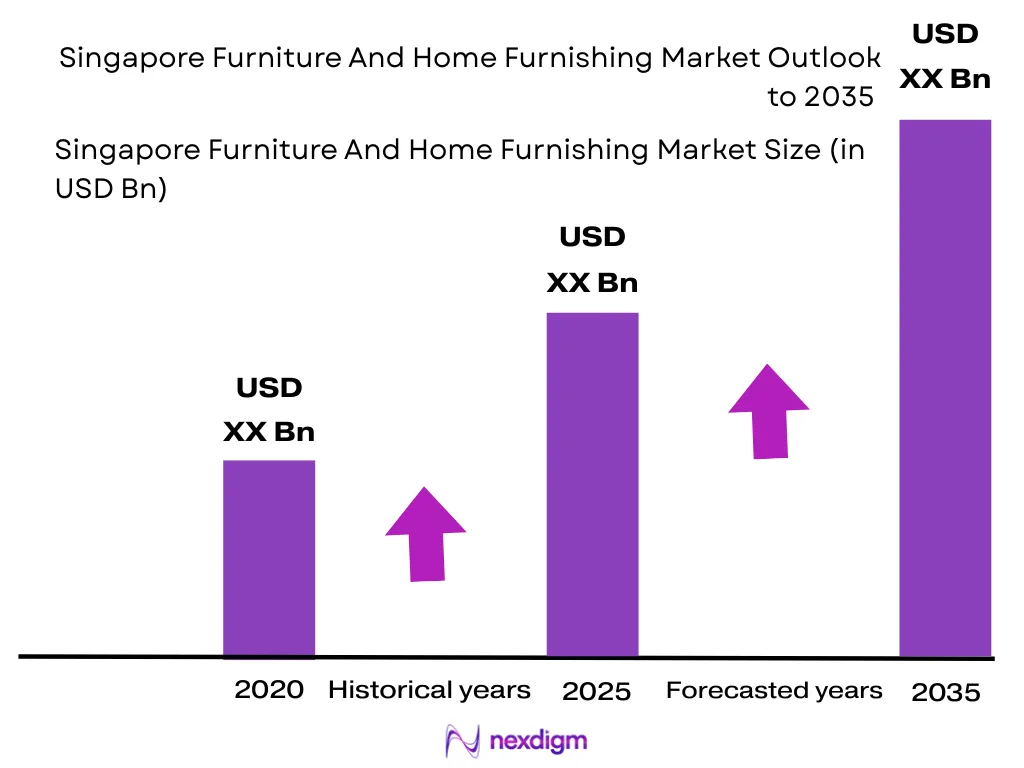
The Singapore Furniture And Home Furnishing Market is valued at USD ~ billion, with the wider furniture and home decor market also benchmarked near USD ~ billion on a five-year historical basis. Demand is driven by home improvement, compact urban living, online furniture retail, renovation-linked purchases and multifunctional furniture adoption. Singapore’s furniture and household equipment online retail proportion reached 30.5 in the preceding base year and 32.5 in the latest base year, showing digital channel maturity. Singapore itself dominates the national market because it is a city-state with no separate provincial market, but demand concentrates around mature residential and retail catchments such as Central Singapore, Tampines, Jurong, Woodlands, Punggol and Queenstown. The country had about 6 million people by mid-base year, with public housing supporting most residential furnishing demand. Public-housing resale prices increased 4.9 in the preceding base year and 9.6 in the latest base year, encouraging renovation, refurnishing and premium replacement cycles.
Market Segmentation
By Product Type
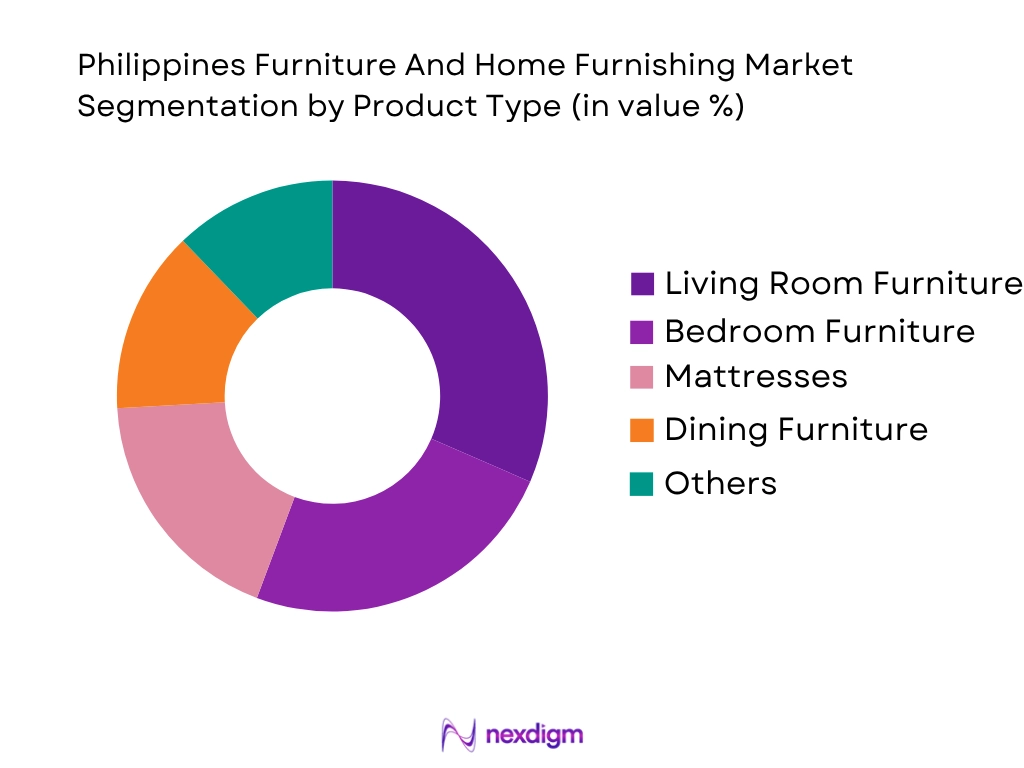
Singapore Furniture And Home Furnishing Market is segmented by product type into living room furniture, bedroom furniture, office and home-office furniture, outdoor furniture, modular furniture and smart furniture. Living room furniture has the dominant market share, driven by its central role in HDB, condominium and landed-home furnishing baskets. Sofas, recliners, TV consoles, coffee tables and accent chairs are often the first high-ticket items purchased during new-home setup or renovation. Deep Market Insights identifies living room furniture as the largest type segment and reports living room furniture revenue of USD 0.85 billion against the total retail furniture market size of USD 2.17 billion, supporting its leadership. Modular and smart furniture are gaining traction because Singapore homes are compact, but they remain smaller than living room and bedroom furniture.
By End User
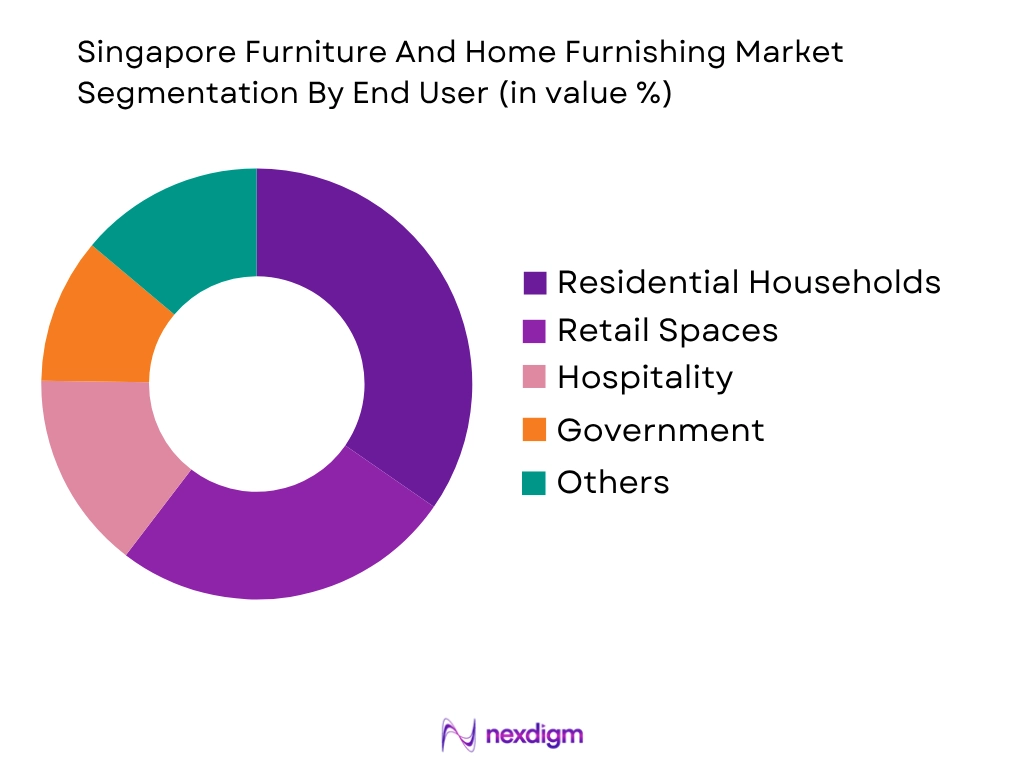
Singapore Furniture And Home Furnishing Market is segmented by end user into residential, commercial, hospitality, government and institutional, and other end users. Residential buyers dominate the market because furniture demand is closely tied to HDB flats, BTO completions, resale-flat transactions, condominium renovations and family replacement cycles. Around eight out of ten Singapore citizens live in public housing, which makes public-housing layouts a defining factor for sofa sizes, modular storage, storage beds, dining sets and built-in-compatible furniture. Commercial and hospitality demand remains important, especially from offices, serviced apartments, hotels and co-living operators, but these purchases are more project-based and cyclical. Residential demand is more continuous because every household requires furnishing, maintenance, replacement and style upgrades across living, bedroom, dining and storage categories.
Competitive Landscape
The Singapore Furniture And Home Furnishing Market is moderately fragmented, with global mass retailers, local D2C brands, online furniture platforms, mid-premium showrooms and legacy furniture groups competing across different price bands. IKEA, COURTS, Harvey Norman, HipVan and Castlery are among the most visible players, while Scanteak, Commune, Cellini, FortyTwo and Star Living strengthen the local competitive base. Major brands compete through SKU depth, showroom experience, island-wide delivery, financing, digital catalogues and renovation-linked purchases. Ken Research lists IKEA Singapore, Courts Singapore, Star Furniture Group, Scanteak, HipVan, Castlery, FortyTwo, Cellini and others among important market participants.
| Company | Establishment Year | Headquarters | Core Categories | Channel Model | Price Positioning | Delivery/Assembly Strength | Singapore-Specific Edge | Product Strategy |
| IKEA Singapore | 1978 | Singapore | ~ | ~ | ~ | ~ | ~ | ~ |
| COURTS Singapore | 1974 | Singapore | ~ | ~ | ~ | ~ | ~ | ~ |
| Harvey Norman Singapore | 1982 globally; Singapore operations established later | Australia / Singapore operations | ~ | ~ | ~ | ~ | ~ | ~ |
| HipVan | 2013 | Singapore | ~ | ~ | ~ | ~ | ~ | ~ |
| Castlery | 2013 | Singapore | ~ | ~ | ~ | ~ | ~ | ~ |
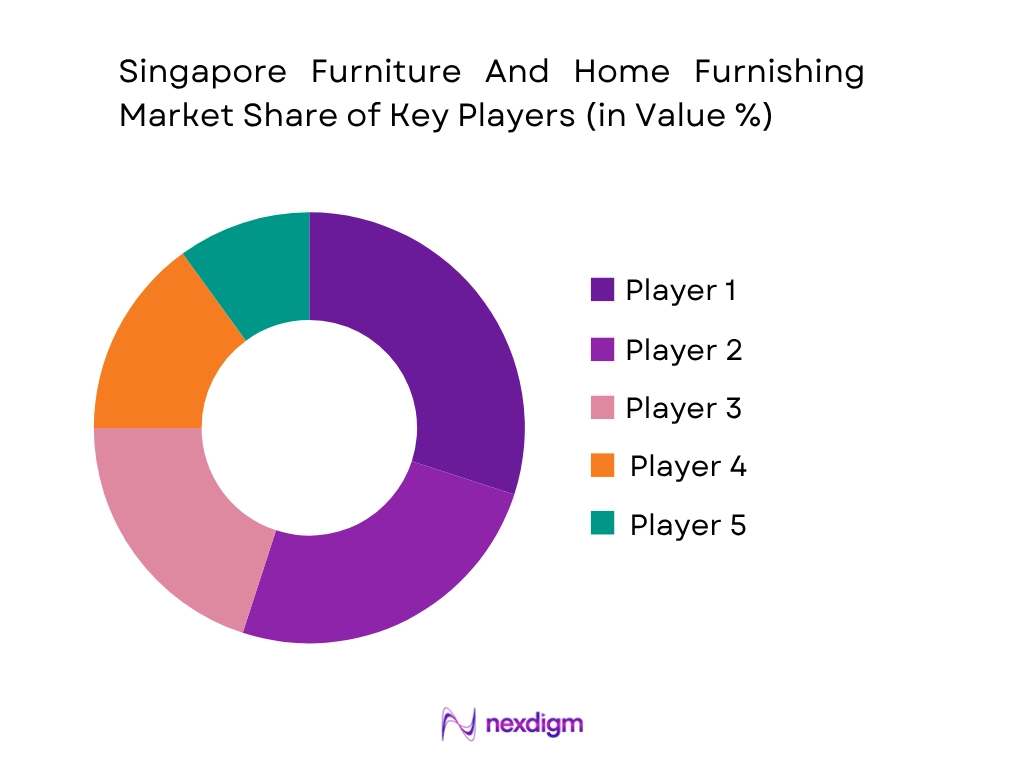
Singapore Furniture And Home Furnishing Market Analysis
Growth Drivers
Public-Housing-Led Residential Furnishing Demand
Singapore Furniture And Home Furnishing Market is strongly supported by the scale of public housing and the recurring furnishing needs created by HDB ownership, resale movement and renovation-led replacement. Singapore had 1,463,400 resident households in 2024, of which 1,132,100 households lived in HDB dwellings, making public housing the core furniture demand base for sofas, storage beds, wardrobes, dining sets, modular cabinets and compact living-room furniture. Within HDB homes, 456,700 households lived in 4-room flats and 324,600 households lived in 5-room and executive flats, creating a large addressable base for mid-ticket and family-oriented furniture formats. Condominiums and other apartments added another 258,800 resident households, supporting premium furnishing, designer furniture and custom-fit decor demand. Singapore’s population reached 6,036,860 in 2024, while GDP per capita stood at USD 90,674.1 in 2024, indicating a dense, high-income consumer base capable of recurring home-improvement spending. These indicators directly support market demand because furniture purchases in Singapore are closely linked to flat handovers, resale transactions, household upgrading and space-optimized home layouts.
High-Income Urban Economy and Logistics-Enabled Retail Fulfilment
Singapore Furniture And Home Furnishing Market benefits from the country’s high-income urban economy and logistics infrastructure, both of which are directly relevant to imported furniture, online fulfilment and island-wide bulky-item delivery. Singapore’s GDP reached USD 547.39 billion in 2024, while GDP per capita reached USD 90,674.1 in 2024, providing a strong macroeconomic base for discretionary household categories such as modular furniture, mattresses, lighting, home decor and premium furnishing. The country’s population stood at 6,036,860 in 2024, concentrated within a single urban market, which helps retailers operate national fulfilment from limited warehouse nodes rather than fragmented regional distribution. The World Bank notes that Singapore handles more than 30 million twenty-foot equivalent units annually through its transshipment hub, reinforcing its role as a regional trade and import gateway. This matters for furniture because a significant portion of Singapore’s furniture supply is imported or regionally sourced, then distributed through showrooms, e-commerce platforms and delivery networks. A dense urban consumer base, high GDP per capita and port-linked supply access together support broad product availability across mass, mid-market and premium furniture categories.
Market Challenges
Space Constraints and Standardized Housing Layouts Limit Large-Format Furniture Demand
Singapore Furniture And Home Furnishing Market faces a structural challenge from compact urban living and standardized public-housing layouts, which restrict demand for oversized furniture and increase the need for precise sizing, modularity and delivery planning. In 2024, 1,132,100 resident households lived in HDB dwellings, including 245,700 households in 3-room flats, 456,700 households in 4-room flats and 324,600 households in 5-room and executive flats. These dwelling formats create strong demand for space-saving furniture, but they also limit retailers that depend on large sofas, king-size beds, bulky wardrobes and wide dining formats. Singapore’s total population of 6,036,860 in 2024 is concentrated in a city-state environment, intensifying the need for compact, multifunctional and lift-access-compatible products. The challenge is market specific because retailers must design assortments around HDB corridors, lifts, service-yard constraints, room dimensions and condo management delivery rules. Brands that cannot adapt SKU dimensions, packaging, assembly service and return handling to Singapore’s dense housing structure face higher rejection rates, slower conversion and narrower addressable demand for bulky products.
Import Dependence and Bulky-Item Fulfilment Complexity
Singapore Furniture And Home Furnishing Market is exposed to import and fulfilment complexity because the domestic consumer base is large while the country functions as a trade hub rather than a large-scale furniture manufacturing base. The World Bank describes Singapore as an international trading hub handling more than 30 million twenty-foot equivalent units annually, which supports supply availability but also places furniture retailers within a broader port, warehousing and logistics ecosystem. In 2024, Singapore had 1,463,400 resident households, including 266,400 condominium and other-apartment households in 2025 and 258,800 in 2024, which require coordinated delivery windows, building access approval and careful assembly for bulky furniture. The country’s 6,036,860 population in 2024 increases demand density, but dense delivery geography does not remove operational friction for sofas, mattresses, wardrobes, dining tables and outdoor furniture. Furniture retailers must manage container arrivals, warehouse space, last-mile scheduling, assembly teams, returns and replacement parts within a small land-constrained market. This creates a challenge for both online-first and showroom-led players because customer experience depends not only on product design but also on successful delivery and installation.
Market Opportunities
New Flat Supply Creates Ongoing Demand for Starter Furniture and Space-Saving Packages
Singapore Furniture And Home Furnishing Market has a strong opportunity in new-home furnishing packages, especially for BTO buyers, first-time homeowners and young families moving into newly completed flats. HDB stated that more than 25,000 new flats would be launched in 2025, including 19,600 BTO flats and more than 5,500 Sale of Balance Flats. HDB also indicated that the public-housing programme was on track to launch about 102,300 BTO flats from 2021 to 2025, exceeding its earlier commitment of 100,000 flats. In FY2024, HDB recorded 14,900 flat sales completed with keys issued to buyers, which directly translates into move-in-linked demand for beds, sofas, dining tables, wardrobes, curtains, lighting and storage systems. This opportunity is market specific because BTO households often buy multiple categories at once and require furniture that fits HDB layouts, lift dimensions, delivery timelines and renovation sequencing. Retailers can capture future growth by offering room bundles, compact storage, modular wardrobes, storage beds, extendable dining sets and scheduled delivery aligned with key collection and renovation handover cycles.
Premium Urban Households Support Designer, Sustainable and Custom-Fit Furnishing
Singapore Furniture And Home Furnishing Market has a premiumization opportunity supported by high-income households, condominium ownership and a dense urban consumer base. Singapore’s GDP per capita reached USD 90,674.1 in 2024, while national GDP stood at USD 547.39 billion in 2024, giving retailers a macroeconomic foundation for higher-value furniture categories such as designer sofas, solid-wood dining tables, premium mattresses, custom storage, imported lighting and sustainable materials. In housing terms, Singapore had 258,800 resident households in condominiums and other apartments in 2024, plus 68,700 landed-property households, creating a specific buyer base for premium furnishing, outdoor furniture, bespoke carpentry-compatible pieces and design-led decor. The population base of 6,036,860 in 2024 is concentrated in a city-state where showrooms, online discovery and delivery can reach consumers nationally. This opportunity reflects future growth because affluent homeowners increasingly seek furniture that solves compact-luxury needs: better materials, longer product lifespan, modular design, low-emission finishes and visually coordinated interiors. Brands positioned around design consultation, sustainable sourcing and custom-fit solutions can target condominium, landed-home and high-income HDB upgrader segments more effectively.
Future Outlook
The Singapore Furniture And Home Furnishing Market is expected to record a forecasted CAGR of around 6.6% during 2026-2035, supported by compact-home furnishing, HDB resale renovation, condominium upgrades, online channel adoption and premium design-led furniture. Deep Market Insights forecasts the Singapore retail furniture market to grow at 6.58% CAGR through its forecast window, while 6Wresearch places Singapore home furnishings growth at 7.5% CAGR, indicating a stable mid-to-high single-digit trajectory. Future growth will be shaped by four structural forces. First, HDB and BTO-related furnishing will continue to create repeat demand for storage beds, modular cabinets, compact dining and living-room furniture. Second, the online channel will remain material because furniture and household equipment already has a high online sales proportion compared with several traditional retail categories. Third, sustainability, certified wood, low-VOC materials and circular furnishing programs will become stronger differentiators. Fourth, the market will shift toward design-led, space-efficient and smart furniture as consumers optimize smaller homes without compromising aesthetics.
Major Players
- IKEA Singapore
- COURTS Singapore
- Harvey Norman Singapore
- HipVan
- Castlery Singapore
- FortyTwo
- Commune
- HomesToLife
- Cellini
- Scanteak
- Star Living
- Novena Furniture
- BoConcept Singapore
- King Living Singapore
- Grey & Sanders
Key Target Audience
- Furniture retailers and home furnishing chains
- Online furniture platforms and D2C furniture brands
- Home decor, lighting and textile brands
- Mattress and sleep-solution companies
- Interior design and renovation companies
- Real estate developers, serviced-apartment operators and co-living operators
- Investments and venture capitalist firms
- Government and regulatory bodies
Research Methodology
Step 1: Identification of Key Variables
The initial phase involves constructing an ecosystem map covering furniture retailers, online platforms, importers, local designers, renovation contractors, logistics providers and institutional buyers in the Singapore Furniture And Home Furnishing Market. Key variables include housing completions, resale transactions, online sales proportion, product category mix, average selling price, import dependency and delivery capability.
Step 2: Market Analysis and Construction
In this phase, historical and current data are compiled from market reports, Singapore government datasets, company publications, retail channel checks and product-level SKU audits. The market model is constructed using top-down benchmarks such as reported market size and bottom-up indicators such as store footprint, category basket, channel mix, pricing ladder and furniture replacement cycle.
Step 3: Hypothesis Validation and Expert Consultation
Market hypotheses are validated through interviews with furniture retailers, distributors, interior designers, renovation contractors, online sellers, logistics companies and real-estate-linked buyers. These consultations help validate product category shares, channel conversion trends, consumer price sensitivity, delivery costs, warranty expectations and the influence of HDB and condominium renovation cycles.
Step 4: Research Synthesis and Final Output
The final phase integrates desk research, expert interviews, competitor benchmarking and SKU-level pricing analysis into a validated market view. Findings are synthesized into market size, segmentation, competitive landscape, growth outlook and strategic recommendations, ensuring that the Singapore Furniture And Home Furnishing Market report is commercially useful for investors, retailers and manufacturers.

- Executive Summary
- Research Methodology (Market Definitions, SSIC Retail Classification, Furniture vs Furnishings Scope, Homeware Inclusion Criteria, Market Sizing Approach, Retail Sales Index Mapping, Online Sales Proportion Mapping, Import-Export Trade Mapping, Primary Interview Framework, Mystery Shopping Framework, SKU Benchmarking, Limitations and Forecast Assumptions)

- Definition and Scope
- Market Genesis and Evolution
- Industry Structure and Value Chain
- Business Cycle and Replacement Cycle
- Residential Furniture Demand Flow

- Growth Drivers (BTO Completions, Household Formation, Condo Renovation, Expat Leasing, E-Commerce Adoption)
- Market Challenges (Rental Pressure, Import Freight, Small Homes, Returns, Assembly Costs, Inventory Carrying Cost)
- Market Opportunities (Sustainable Furniture, Smart Furniture, Rental Furniture, Elderly-Friendly Furniture, Omni-Channel Retail)
- Market Trends (Japandi, Scandinavian, Minimalist, Space-Saving, Online-First, Custom Carpentry, Eco-Conscious Buying)
SWOT Analysis - Porter’s Five Forces Analysis
- PESTLE Analysis

- By Value (2020-2025)
- By Volume (2020-2025)
- By Average Selling Price (2020-2025)

- By Product Category (In Value %)
Living Room Furniture
Bedroom Furniture
Dining Furniture
Storage and Space-Saving Furniture
Mattresses and Sleep Solutions - By Sales Channel (In Value %)
Offline Retail
Online D2C, Marketplace
Department Store
Furniture Mall
Interior Designer Channel - By Room Application (In Value %)
Living Room
Bedroom
Dining Room
Study and Work-From-Home Spaces
Balcony and Outdoor Spaces - By Region (In Value %)
Central Singapore
Eastern Singapore
Western Singapore
Northern Singapore
North-East Singapore

- Market Share of Major Players by Value and Volume (Furniture, Furnishings, Mattresses, Online Sales, Offline Sales)
- Cross Comparison Parameters (SKU Breadth by Room Category, HDB/BTO Furniture Fit, Average Delivery Lead Time, White-Glove Assembly Capability, Online Sales Proportion, Price Tier by Sofa and Bed SKUs, Sustainability Material Credentials, Warranty and Returns Policy)
- SWOT Analysis of Major Players
- Detailed Profiles of Major Companies
IKEA Singapore
COURTS Singapore
Harvey Norman Singapore
HipVan
Castlery Singapore
FortyTwo
Commune
HomesToLife
Cellini
Scanteak
Star Living
Novena Furniture
BoConcept Singapore
King Living Singapore
Grey & Sanders

- Consumer Demand and Utilization
- Household Purchase Journey
- Purchasing Power and Budget Allocation
- Needs, Desires and Pain Point Analysis
- Decision-Making Process

- By Value (2026-2035)
- By Volume (2026-2035)
- By Average Selling Price (2026-2035)


 Request a Sample
 Ask for Customization
 Get a Quote
 Enquire Now