

 Download PDF
Market Overview
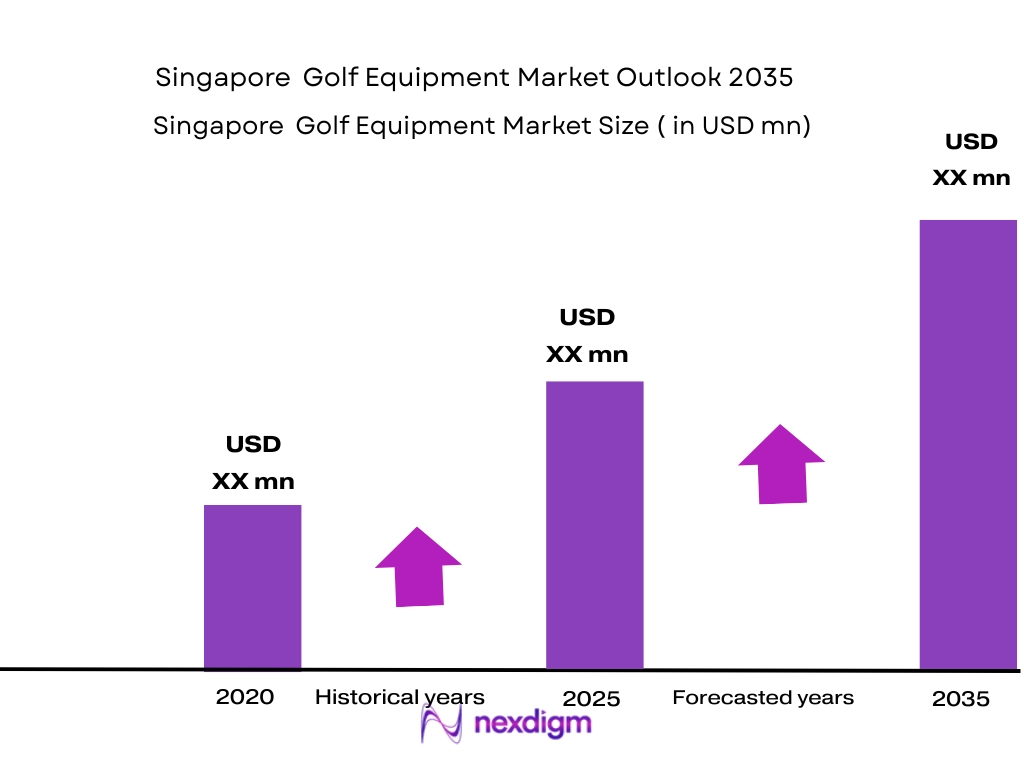
The Singapore golf equipment market has experienced steady growth, with the market size expected to reach USD ~ million, based on a recent historical assessment. This growth is driven by an increasing number of golf enthusiasts, the rise of golf tourism, and Singapore’s status as a key destination for international sporting events. The growing demand for high-performance golf equipment, such as advanced clubs, balls, and apparel, reflects the country’s strong golfing culture, and the development of high-quality facilities further supports this trend.
Singapore’s dominance in the golf equipment market can be attributed to its well-established infrastructure, high standard of living, and a growing number of golf courses, including those in luxury resorts and business districts. The country’s active participation in global golf tournaments, along with a flourishing expatriate community and affluent locals, fuels the demand for premium golf equipment. The presence of major international golf brands and the growing retail networks across Singapore have strengthened its position as a hub for golf enthusiasts in Southeast Asia.
Market Segmentation
By Product Type
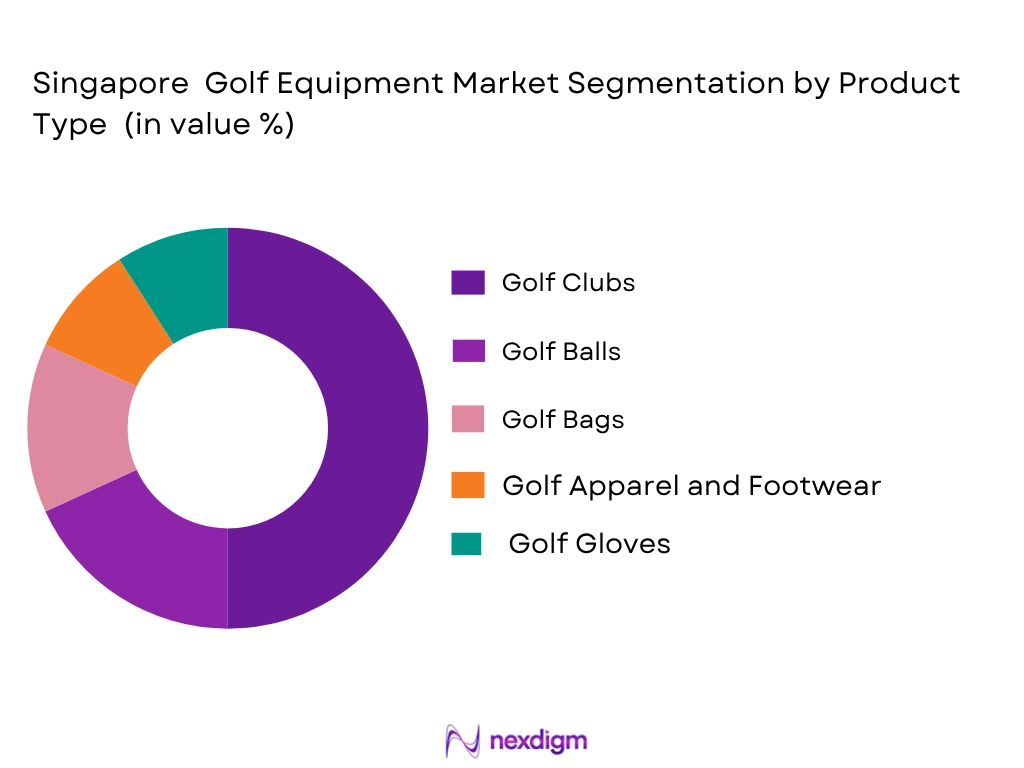
The Singapore golf equipment market is segmented by product type into golf clubs, golf balls, apparel, and accessories. Golf clubs have the dominant market share due to factors such as brand reputation, technological advancements, and the high demand for precision and customization among local golfers. The increasing interest in performance-enhancing equipment, particularly for professional golfers and serious amateurs, has driven the market for high-end golf clubs. Furthermore, golf clubs with adjustable features, such as loft and shaft length, cater to a wide range of player preferences, making them highly popular in Singapore.
By Distribution Channel
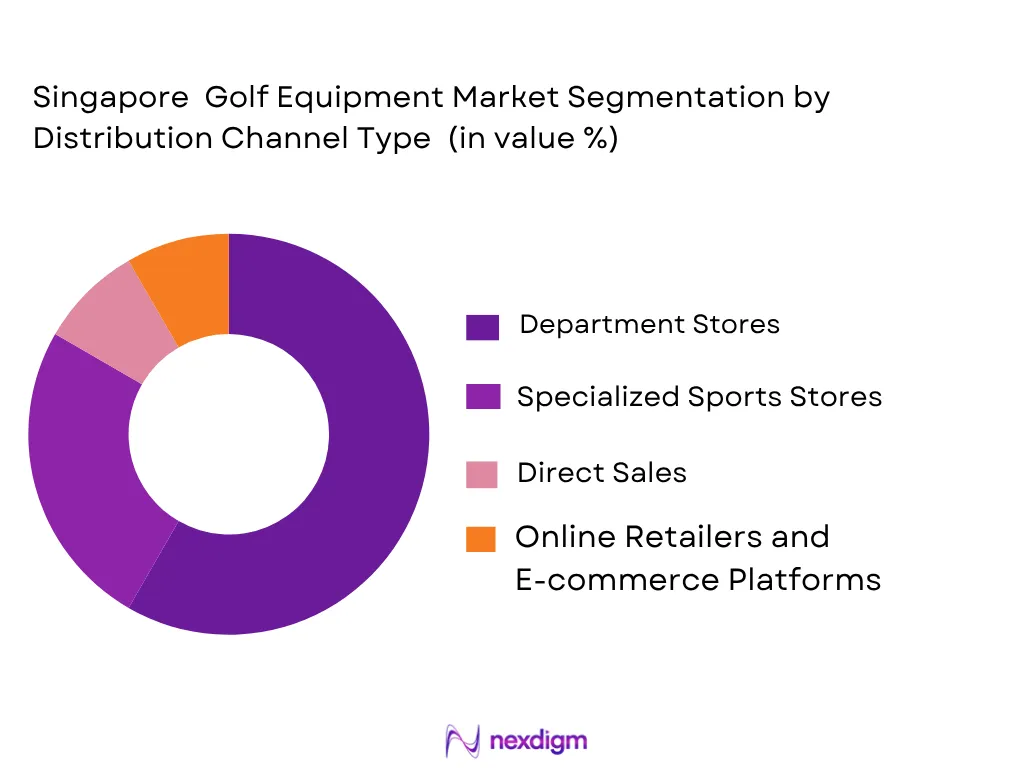
The Singapore golf equipment market is segmented by distribution channel into offline retail stores and online platforms. Offline retail stores, particularly golf pro shops and specialty stores, dominate the market, driven by the opportunity for consumers to physically test the equipment before purchase. Additionally, the personalized advice and fitting services offered in-store make these outlets highly preferred for high-value items like golf clubs. However, online platforms have gained traction, offering convenience and access to a wider range of brands and products, particularly for smaller accessories and golf apparel.
Competitive Landscape
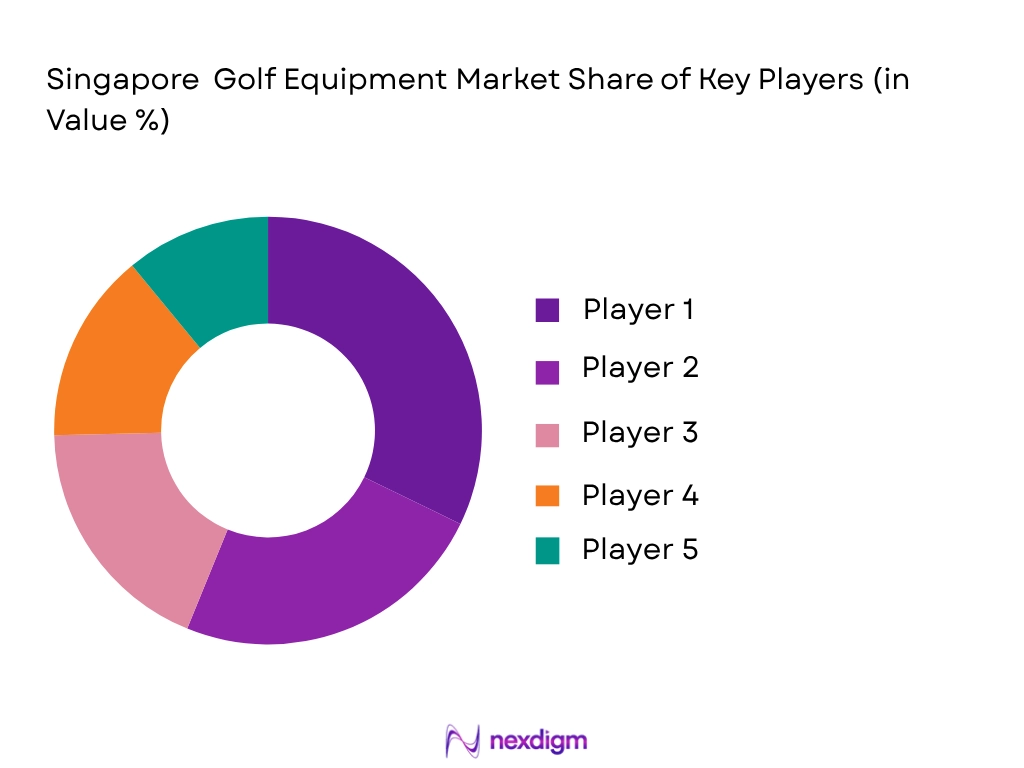
The competitive landscape in the Singapore golf equipment market is shaped by both international and local brands. Global players, such as Callaway, TaylorMade, and Titleist, have a strong presence, often through partnerships with local distributors and golf course operators. Additionally, Singapore has a burgeoning local retail market that includes specialized golf equipment shops. This dynamic market sees occasional consolidation, with key brands offering both premium and entry-level products to meet the diverse needs of local consumers. As consumer preferences shift toward advanced and customized products, market leaders are investing heavily in technology and product innovation.
| Company Name | Establishment Year | Headquarters | Technology Focus | Market Reach | Key Products | Revenue (USD) | Customer Segment |
| Callaway Golf | 1982 | Carlsbad, USA | ~ | ~ | ~ | ~ | ~ |
| TaylorMade Golf | 1979 | Carlsbad, USA | ~ | ~ | ~ | ~ | ~ |
| Titleist | 1935 | Fairhaven, USA | ~ | ~ | ~ | ~ | ~ |
| Srixon | 1930 | Japan | ~ | ~ | ~ | ~ | ~ |
| Ping Golf | 1959 | Phoenix, USA | ~ | ~ | ~ | ~ | ~ |
Singapore Golf Equipment Market Analysis
Growth Drivers
Expansion of Golf Courses and Driving Ranges
The growth of the golf equipment market in Singapore is supported by the expansion of golf courses and driving ranges. As more spaces for golf are developed, the demand for high-quality golf gear increases. Many new golf clubs and resorts are incorporating state-of-the-art facilities to cater to both enthusiasts and tourists, creating a broader market for advanced golf equipment. Additionally, the growing interest in golf among the younger demographic is pushing for more accessible locations, further stimulating demand for golfing products across different segments.
Corporate Golf Events and Tourism
Corporate golf events and golf tourism are becoming key drivers of market growth in Singapore. Businesses frequently organize golf events to foster team-building and client relations, creating a constant need for premium golfing equipment. Singapore’s appeal as a global destination for golf tourism also brings international players, further increasing the demand for both recreational and professional-grade equipment. This convergence of business and leisure is contributing to the flourishing golf scene and fueling the market for golf gear.
Market Challenges
Price Sensitivity Among Occasional Golfers
A significant challenge in the Singapore golf equipment market is the price sensitivity of occasional golfers. Many casual players may not prioritize investing in high-end equipment due to the sporadic nature of their play. This often leads to a preference for budget-friendly options, which impacts the sales of premium brands. As a result, manufacturers must strike a balance between offering high-quality equipment while appealing to a price-conscious customer base.
Limited Space for Golf Course Expansion
The expansion of golf courses in Singapore faces significant challenges due to the limited availability of land. With Singapore being a highly urbanized country, finding suitable space for new courses or driving ranges is difficult. This constraint limits the opportunities for growing the golfing community, affecting the overall demand for equipment. Additionally, competition for land resources means high operational costs for golf course developers, which can further drive up the prices of golfing facilities.
Opportunities
Smart Golf Equipment
The increasing integration of technology in golf presents a lucrative opportunity for the market. Smart golf equipment such as GPS systems, sensors, and swing analyzers is becoming popular. These innovations enhance the player’s experience by providing detailed analytics and improving their game. As golfers increasingly embrace technology to optimize their performance, demand for such high-tech equipment is expected to rise, offering significant growth prospects for manufacturers and retailers alike.
Customization of Golf Equipment
Personalization is a growing trend in the golf equipment market, with players seeking customized clubs, balls, and gear tailored to their specific needs and preferences. Customization helps golfers achieve better performance and a more enjoyable experience, fueling demand for specialized products. Offering personalized equipment options presents an opportunity for manufacturers to cater to a niche market, allowing for higher margins and a more loyal customer base. The growing awareness of these benefits positions customization as a key growth opportunity in the market.
Future Outlook
Over the next five years, the Singapore golf equipment market is projected to experience steady growth. This will be fueled by the continued rise in golfing participation, particularly among younger demographics and women, as well as the increasing popularity of golf tourism. Technological advancements in golf equipment will remain a key driver, with innovations in customization and performance optimization expected to further attract consumers. The growth of golf courses and recreational facilities in emerging areas around Singapore will provide additional opportunities for market expansion. Furthermore, as local and international golf events continue to increase in frequency, the demand for high-quality equipment will continue to rise.
Major Players
- Callaway Golf
- TaylorMade Golf
- Titleist
- Srixon
- Ping Golf
- Cobra Golf
- Mizuno
- Wilson Sporting Goods
- Odyssey Golf
- Cleveland Golf
- Adams Golf
- Bridgestone Golf
- Nike Golf
- PXG
- Odyssey Golf
Key Target Audience
- Investments and venture capitalist firms
- Government and regulatory bodies
- Professional golfers
- Golf course owners and operators
- Retailers specializing in sports equipment
- Distributors of sporting goods
- Golf tourism operators
- Affluent golf enthusiasts
Research Methodology
Step 1: Identification of Key Variables
This step involves identifying the critical factors influencing the Singapore golf equipment market, including product types, distribution channels, and customer demographics.
Step 2: Market Analysis and Construction
The market was analyzed by studying trends, segmentation, and demand patterns. Key factors such as technological advancements, the competitive landscape, and economic drivers were taken into account.
Step 3: Hypothesis Validation and Expert Consultation
Expert consultations were conducted to validate the hypothesis and refine the model. These experts included industry professionals, manufacturers, and distributors operating within Singapore’s golf sector.
Step 4: Research Synthesis and Final Output
The final step involved synthesizing the gathered information into a comprehensive report, which includes market trends, opportunities, challenges, and projections for the Singapore golf equipment market.

- Executive Summary
- Research Methodology (Market Definitions and Scope of Golf Equipment Products, Product Classification Framework, Retail Audit and Consumption Data Utilization Approach, Primary Interviews with Manufacturers, Distributors, Retailers, and Consumers, Bottom-Up Volume and Value Modelling, Top-Down FMCG and Household Spending Validation, Assumptions on Pricing, Pack Sizes, and Consumption Frequency, Limitations and Data Triangulation Techniques, TAM/SAM/SOM Modelling Framework Based on Household Penetration and Retail Sales)

- Definition and Scope
- Evolution of Golf Equipment Industry in Singapore
- Timeline of Market Development and Regulatory Changes
- Golf Equipment Usage Patterns Across Demographics
- Value Chain Analysis
- Stakeholder Ecosystem

- Growth Drivers
Expansion of Golf Courses and Driving Ranges
Corporate Golf Events and Tourism
Technological Advancements in Golf Equipment - Market Challenges
Price Sensitivity Among Occasional Golfers
Limited Space for Golf Course Expansion
Availability of Counterfeit or Low-Quality Products - Opportunities
Smart Golf Equipment (GPS, Sensors, etc.)
Customization of Golf Equipment
Expansion of Golf Retail Channels (Omnichannel) - Market Trends
Demand for Premium Golf Balls
Rise of Golf Apparel as a Lifestyle Segment
Increasing Online Shopping for Golf Equipment - Government Regulations
Import Regulations and Tariffs
Environmental Regulations on Packaging and Sustainability - SWOT Analysis
- Porter’s Five Forces Analysis

- By Value, 2020-2025
- By Volume, 2020-2025
- By Average Selling Price, 2020-2025

- By Product Type (in Value %)
Golf Clubs
Golf Balls
Golf Bags
Golf Apparel and Footwear
Golf Gloves
Golf Accessories - By Brand (in Value %)
Major International Brands
Local and Regional Brands - By Distribution Channel (in Value %)
Specialized Sports Stores
Department Stores
Online Retailers and E-commerce Platforms
Direct Sales (e.g., through golf courses and pro shops) - By Price Segment (in Value %)
Budget
Mid-range
Premium
Luxury - By End User (in Value %)
Individual Golfers (Male/Female, Amateur/Professional)
Golf Courses and Clubs
Corporate and Institutional Users (Corporate Gifts, Sponsorships)
Hospitality and Leisure (Hotels, Resorts) - By Region (in Value %)
Central Singapore
Eastern Region
Western Region
Northern Region

- Market Share of Major Players
By Value
By Volume
By Product Category
By Distribution Reach - Cross Comparison Parameters (Product Portfolio Breadth, Pricing Strategy, Retail Presence, E-commerce Capability, Brand Awareness
Innovation Pipeline, Customer Retention Rate, Sustainability Initiatives - SWOT Analysis of Major Players
- Detailed Profiles of Major Companies
Titleist Singapore
TaylorMade Golf Singapore
Callaway Singapore
Mizuno Singapore
Ping Singapore
Wilson Sporting Goods Singapore
Srixon Singapore
Local and Regional Golf Equipment Manufacturers
Retail and E-commerce Players

- Golf Equipment Purchase Patterns
- Price Sensitivity and Brand Preferences
- Factors Driving Purchase Decisions
- Loyalty and Retention Strategies for Golf Equipment Brands

- By Value, 2026-2035
- By Volume, 2026-2035
- By Average Selling Price, 2026-2035


 Request a Sample
 Ask for Customization
 Get a Quote
 Enquire Now