

 Download PDF
 Download PDF
Market Overview
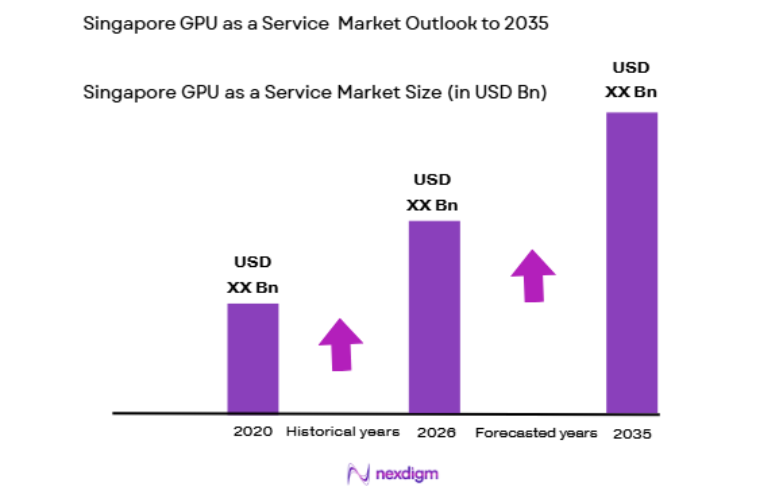
The Singapore GPU as a Service market is experiencing robust growth, driven by the increasing demand for cloud-based solutions in sectors such as artificial intelligence (AI), machine learning, and data analytics. The market size is projected to reach USD ~ million, fueled by the ongoing digital transformation and the need for high-performance computing to support advanced workloads. Enterprises are embracing GPU services for faster processing, improved scalability, and cost efficiency in delivering AI-driven applications.
The primary cities dominating this market are Singapore, as well as regional hubs such as Jurong and Changi. These locations benefit from the country’s strong infrastructure, government initiatives, and the growth of cloud service providers. The Singaporean government’s efforts to develop a robust digital economy, along with its position as a regional tech leader, contribute to the nation’s dominance in the GPU-as-a-Service market.
Market Segmentation
By Product Type
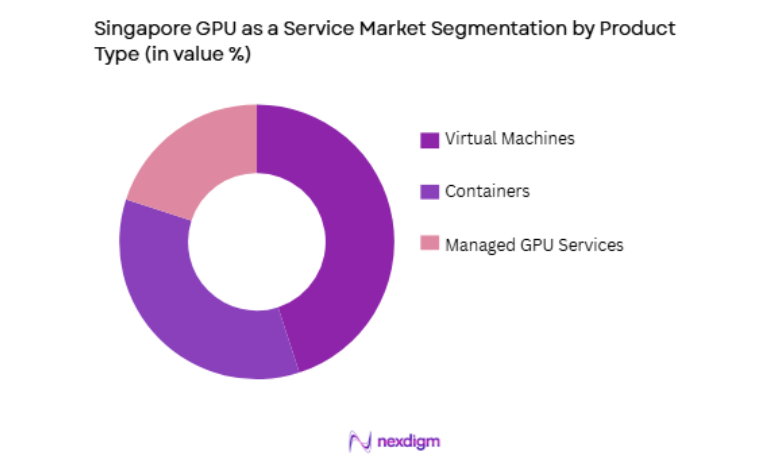
The Singapore GPU as a Service market is segmented by product type into virtual machines, containers, and managed GPU services. Recently, virtual machines have dominated the market share due to the increasing demand for scalable and flexible GPU resources for various industries. This trend is driven by the rising use of cloud-based applications and the need for on-demand GPU resources, which provide enterprises with the ability to scale their operations and optimize their computational power for tasks such as AI training, data analysis, and simulations.
By End-user Industry
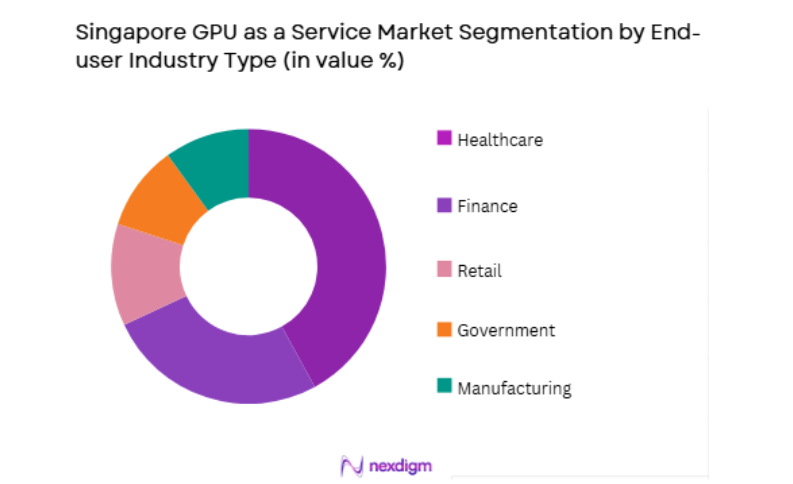
The Singapore GPU as a Service market is segmented by end-user industry into healthcare, finance, retail, government, and manufacturing. The healthcare sector has seen the most significant growth in demand for GPU services due to the increasing need for AI-powered medical imaging, diagnostics, and drug discovery applications. The sector’s reliance on GPU-accelerated computing for complex tasks, such as genomic analysis and clinical research, has contributed to the dominance of this sub-segment in the market, positioning healthcare as a key driver of GPU adoption in Singapore.
Competitive Landscape
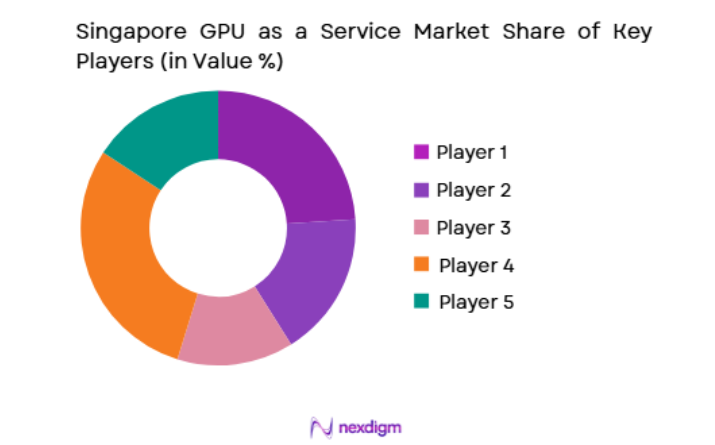
The competitive landscape in the Singapore GPU as a Service market is characterized by consolidation, with global cloud providers and local service providers offering a variety of GPU-powered solutions. The market is highly competitive, with major players such as Amazon Web Services (AWS), Microsoft Azure, and Google Cloud influencing the market dynamics. These players continue to invest heavily in data centers, infrastructure, and innovation to meet the growing demand for high-performance computing services.
| Company Name | Establishment Year | Headquarters | Technology Focus | Market Reach | Key Products | Revenue | Additional Parameter |
| Amazon Web Services | 2006 | USA | ~ | ~ | ~ | ~ | ~ |
| Microsoft Azure | 2010 | USA | ~ | ~ | ~ | ~ | ~ |
| Google Cloud | 2008 | USA | ~ | ~ | ~ | ~ | ~ |
| Oracle | 1977 | USA | ~ | ~ | ~ | ~ | ~ |
| Nvidia | 1993 | USA | ~ | ~ | ~ | ~ | ~ |
Singapore GPU as a Service Market Analysis
Growth Drivers
Government Support for Technological Development
The Singaporean government has been a key driver of the growth in the GPU-as-a-Service market. Under its Smart Nation initiative, the government has emphasized the development of AI, data analytics, and digital infrastructure to drive economic growth. These efforts have led to substantial investments in cloud services and data centers, making GPUs more accessible to enterprises looking to leverage high-performance computing for applications such as AI, machine learning, and big data processing. The support for R&D and innovation in AI also creates opportunities for companies to use GPU resources for advanced research and industrial applications.
Rising Demand for Artificial Intelligence and Machine Learning
The increasing adoption of artificial intelligence (AI) and machine learning (ML) technologies across various sectors has fueled demand for GPU-powered cloud services. GPUs are essential for running complex algorithms and data models used in AI and ML, providing businesses with faster processing times and the ability to scale. As organizations in sectors such as healthcare, finance, and retail continue to invest in AI technologies to drive innovation and improve operational efficiency, the demand for GPU services has surged. Companies are increasingly adopting cloud-based GPU services to avoid the high capital expenditure associated with maintaining on-premises infrastructure, further accelerating market growth.
Market Challenges
High Costs of GPU Infrastructure
One of the major challenges in the Singapore GPU as a Service market is the high capital expenditure required for building and maintaining GPU infrastructure. While cloud service providers have mitigated this issue to some extent, enterprises still face the challenge of managing the cost of GPU resources, particularly for applications requiring extensive computational power. Smaller businesses and startups, in particular, may struggle to justify the investment needed for GPU-intensive workloads, making it a barrier to wider adoption. Moreover, the lack of local competition in the market limits the potential for cost reduction through alternative service providers.
Data Privacy and Security Concerns
Data privacy and security continue to be significant concerns for organizations adopting GPU as a Service solutions. As businesses increasingly migrate their operations to the cloud, they face heightened risks of data breaches, cyberattacks, and compliance issues related to data protection laws. Despite the investments made by cloud providers in security measures, the risk of unauthorized access, loss of control over sensitive data, and potential violations of privacy regulations remain concerns. In a highly regulated market like Singapore, businesses must navigate these security challenges to ensure compliance with local and international data protection standards.
Opportunities
Expansion of Cloud-based GPU Solutions
The growth of cloud computing and the ongoing digital transformation in various sectors present significant opportunities for GPU-as-a-Service providers in Singapore. As businesses continue to embrace cloud-based solutions, they are increasingly seeking high-performance computing services to meet the growing demands of AI, machine learning, and data analytics. The scalability and flexibility offered by GPU-as-a-Service solutions make them an attractive choice for enterprises looking to avoid the costs and complexities of maintaining on-premises infrastructure. As cloud adoption continues to rise across industries, GPU service providers stand to benefit from increased demand for on-demand, high-performance computing resources.
Growth of Edge Computing and IoT Applications
The rise of edge computing and the growing adoption of Internet of Things (IoT) applications represent new opportunities for the GPU-as-a-Service market in Singapore. As more industries look to process data closer to the source to reduce latency and improve performance, the need for GPUs at the edge has grown. This is particularly true in sectors such as manufacturing, logistics, and healthcare, where real-time data processing is essential. By providing GPU resources at the edge, service providers can support the growing demand for low-latency, high-performance applications, further expanding the market for GPU-as-a-Service solutions.
Future Outlook
The future outlook for the Singapore GPU as a Service market is positive, with expected growth driven by increasing cloud adoption, the rise of AI and machine learning technologies, and the expansion of edge computing. As demand for high-performance computing continues to grow across sectors like healthcare, finance, and retail, GPU-as-a-Service providers will play a crucial role in enabling businesses to scale their operations. With ongoing government support and a favorable business environment, the market is poised for steady growth over the next five years.
Major Players
- Amazon Web Services
- Microsoft Azure
- Google Cloud
- Oracle
- Nvidia
- IBM
- Alibaba Cloud
- Huawei Cloud
- Rackspace Technology
- Tencent Cloud
- Digital Ocean
- IBM Cloud
- Fujitsu
- Atos
- VMware
Key Target Audience
- Investments and venture capitalist firms
- Government and regulatory bodies
- AI and machine learning solution providers
- Healthcare technology firms
- Financial institutions and fintech companies
- Large-scale enterprises
- Data centers and hosting companies
- Technology consulting firms
Research Methodology
Step 1: Identification of Key Variables
In this step, we identify the key variables driving the KSA GPU as a Service market, including demand for cloud-based GPU services, AI adoption, and the evolution of digital infrastructure in various sectors.
Step 2: Market Analysis and Construction
We analyze data from various primary and secondary sources, including industry reports, government publications, and market surveys, to construct a detailed model of the market.
Step 3: Hypothesis Validation and Expert Consultation
Consultation with industry experts, cloud service providers, and technology specialists helps validate our hypotheses and refine our market assumptions.
Step 4: Research Synthesis and Final Output
The final output synthesizes all findings, providing a comprehensive market analysis covering key drivers, challenges, opportunities, and future trends.

- Executive Summary
- Research Methodology (Definitions, Scope, Industry Assumptions, Market Sizing Approach, Primary & Secondary Research Framework, Data Collection & Verification Protocol, Analytic Models & Forecast Methodology, Limitations & Research Validity Checks]

- Market Definition and Scope
- Value Chain & Stakeholder Ecosystem
- Regulatory / Certification Landscape
- Sector Dynamics Affecting Demand

- Growth Drivers
Increased Demand for AI and ML Processing
Government Initiatives in Digital Transformation
Rising Demand for High-Performance Computing
Growth in Cloud Infrastructure Development
Expansion of Smart Cities and IoT Applications - Market Challenges
High Cost of GPU Hardware
Limited Availability of Skilled Workforce
Data Security and Privacy Concerns
Interoperability Issues with Existing Systems
Scalability Challenges in GPU Service Offerings - Market Opportunities
Rising Adoption of AI-Driven Services
Government Investment in Smart Infrastructure
Expansion of 5G Networks and Edge Computing
Strategic Partnerships between Cloud Providers and Tech Giants
Emerging Opportunities in the Autonomous Vehicle Sector - Trends
Increasing Usage of Hybrid Cloud Models
Growth in Multi-cloud GPU Services
Proliferation of Edge Computing for Real-time Processing - Government regulations
Data Protection and Privacy Laws
Regulations on Cloud Service Providers
Government Incentives for Cloud Computing Investments - SWOT analysis
- Porters 5 forces

- By Market Value, 2020-2025
- By Installed Units, 2020-2025
- By Average System Price, 2020-2025
- By System Complexity Tier, 2020-2025

- By System Type (In Value%)
Cloud-based GPU Services
On-premise GPU Solutions
Hybrid GPU Platforms
Edge GPU Computing
AI-Optimized GPU Solutions - By Platform Type (In Value%)
Cloud Platforms
Private Data Centers
Public Cloud Infrastructure
AI Processing Platforms
Integrated Cloud and Edge Platforms - By Fitment Type (In Value%)
On-premise Deployment
Cloud Deployment
Hybrid Deployment
Edge Deployment
Multi-cloud Deployment - By End User Segment (In Value%)
Tech Companies
Research Institutions
Gaming Industry

- Market Share Analysis
- Cross Comparison Parameters (Third‑Party & Global GPUaaS Platforms, SMC GPU Instances, Sustainable Metal Cloud, Singtel + Bridge Alliance, Agile Cloud, Provider or Platform)
- SWOT Analysis of Key Competitors
- Pricing & Procurement Analysis
- Key Players
Amazon Web Services
Microsoft Azure
Google Cloud
NVIDIA
Oracle Cloud
Alibaba Cloud
IBM Cloud
Huawei Cloud
Alibaba Cloud
Intel
AMD
Arista Networks
Dell Technologies
Supermicro
Veeam Software

- Rising Demand from Tech Companies for High-Performance Solutions
- Increased Adoption by Research Institutions for Scientific Computing
- Gaming Industry’s Drive for Cloud-based Rendering
- Government’s Focus on Digital Transformation

- Forecast Market Value, 2026-2035
- Forecast Installed Units, 2026-2035
- Price Forecast by System Tier, 2026-2035
- Future Demand by Platform, 2026-2035


 Request a Sample
 Ask for Customization
 Get a Quote
 Enquire Now