
 Download PDF
Market Overview
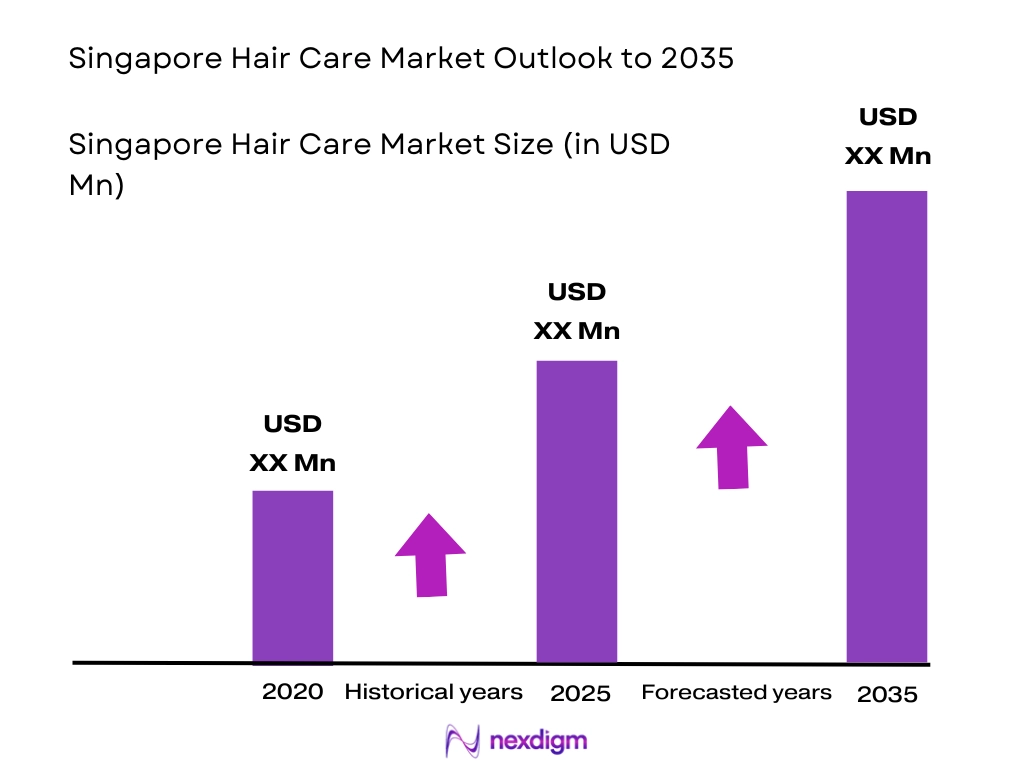
The Singapore Hair Care Market is valued at USD ~ million, based on retail sales of shampoo, hair colorants, conditioners, styling agents, perms, relaxers and hair loss treatments at retail selling price. The market expanded from USD ~ million to USD ~ million, supported by premium scalp-care routines, anti-hair-fall products, salon-grade treatments, and online beauty retail. The broader Singapore beauty and personal care market is valued at USD ~ million, reinforcing hair care’s position within a high-spend personal care ecosystem.
Singapore is a city-state market, with dominance concentrated in Central Singapore, Orchard, Marina Bay, CBD retail clusters, Changi Airport, Tampines, Jurong East, Woodlands and Serangoon/North-East malls. Demand is led by dense mall networks, pharmacy-beauty chains, premium salons, tourist-linked beauty retail and high residential footfall. Singapore’s population reached 6.04 million from 5.92 million, while visitor arrivals reached 16.5 million, expanding demand across pharmacies, salons, Sephora, Watsons, Guardian and travel-retail beauty counters.
Singapore Hair Care Market Segmentation
By Product Category
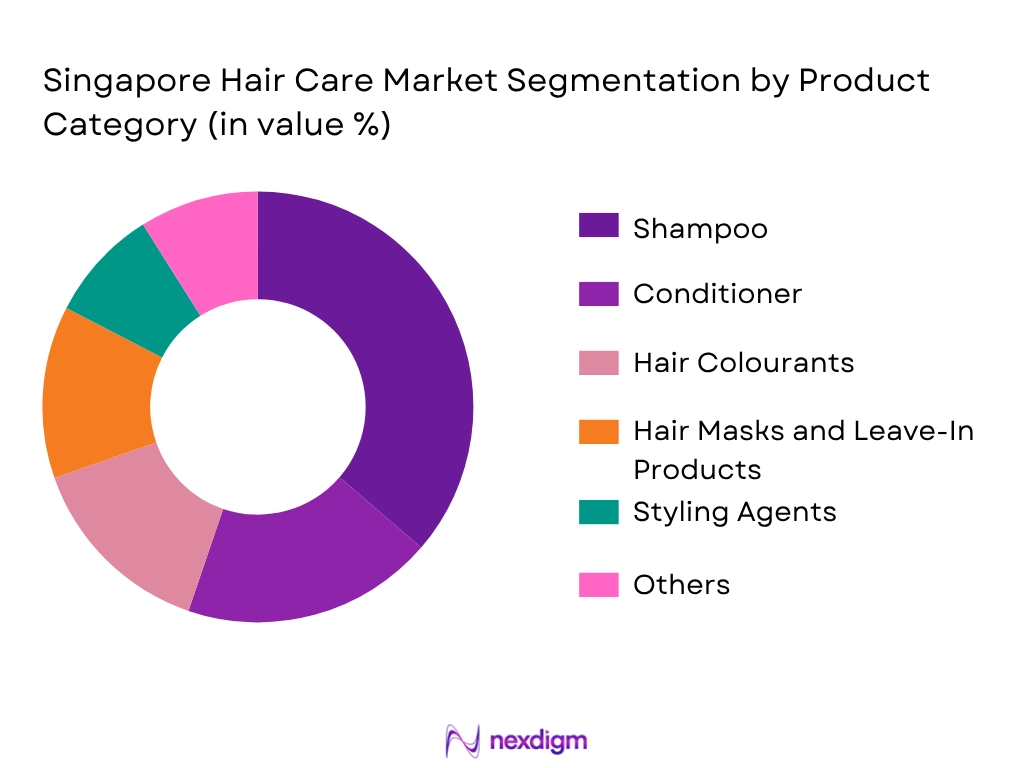
Singapore Hair Care Market is segmented by product category into shampoo, conditioner, hair colourants, hair treatments and masks, styling agents, hair loss and scalp care products, and perms or relaxers. Recently, shampoo has the dominant market share under this segmentation because it remains the highest-frequency replenishment product across mass, masstige and premium retail. Singapore’s humid climate increases wash frequency, especially among working professionals and commuters using MRT-linked retail corridors. Shampoo also has the broadest shelf presence across Watsons, Guardian, FairPrice, Cold Storage, Shopee and Lazada. The sub-segment benefits from specialized variants such as anti-dandruff, anti-hair-fall, scalp-purifying, sulphate-free, colour-protection and frizz-control formulas. Its dominance is further supported by entry-level packs, premium Japanese and Korean brands, salon-recommended products, and bundled shampoo-conditioner promotions in health and beauty chains.
By Distribution Channel
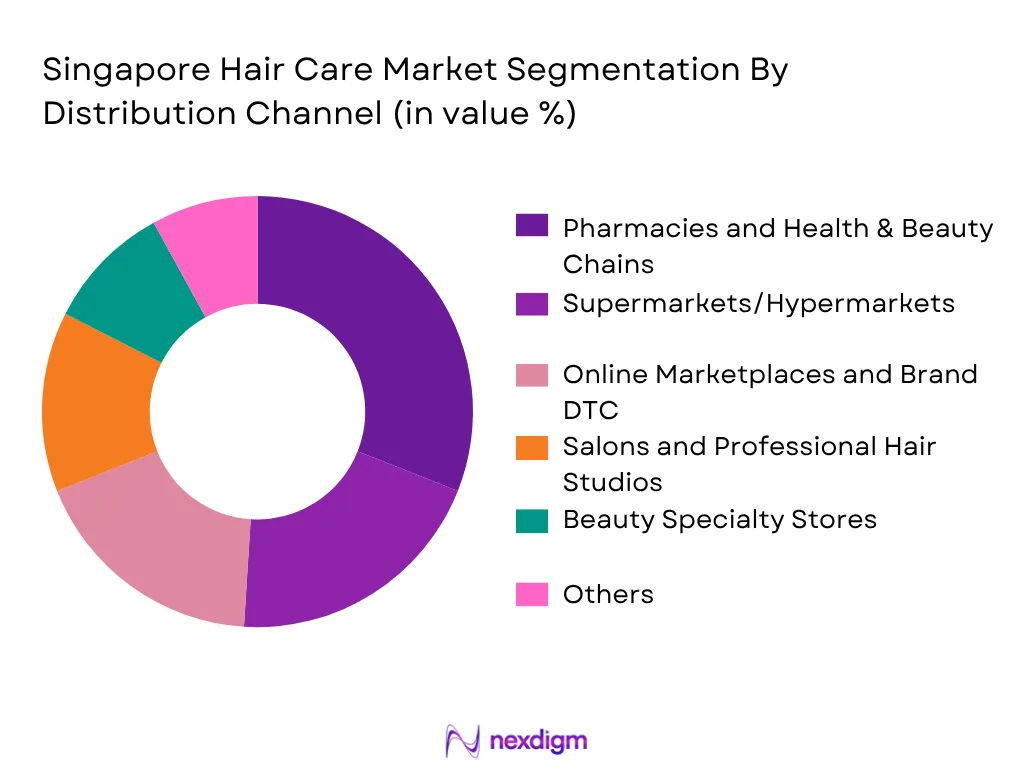
Singapore Hair Care Market is segmented by distribution channel into pharmacies and health and beauty chains, supermarkets and hypermarkets, online marketplaces, salons and professional studios, beauty specialty stores, department stores and travel retail, and scalp or trichology centres. Recently, pharmacies and health and beauty chains have the dominant market share because Watsons and Guardian combine mass availability, promotional pricing, dermatologist-style positioning and high mall penetration. These chains serve daily personal care shoppers as well as consumers seeking scalp, dandruff, hair fall and sensitive-scalp claims. Their dominance is reinforced by member discounts, bundle promotions, private labels, imported Japanese and Korean brands, and shelf visibility for multinational players. The format also captures consumer trust for quasi-therapeutic products such as anti-dandruff shampoos, scalp tonics and hair loss support products, making it central to Singapore’s hair care route-to-market.
Competitive Landscape
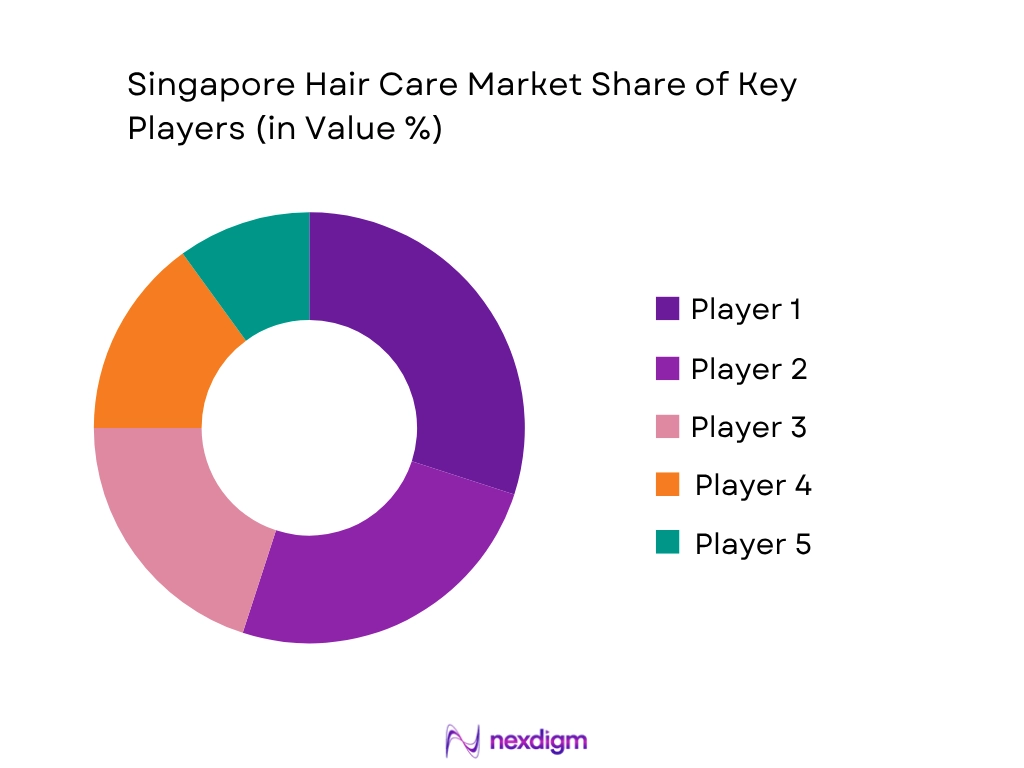
The Singapore Hair Care Market is concentrated around global beauty and FMCG companies with strong retail penetration, alongside salon and scalp-care specialists. Unilever, L’Oréal, Procter & Gamble, Kao and Shiseido dominate through mass shampoos, anti-dandruff products, conditioners, professional salon lines, J-beauty products and premium treatment portfolios. Competition is shaped by pharmacy shelf space, marketplace official stores, salon partnerships, promotional depth and demand for scalp-first, anti-hair-fall and humidity-control claims. Nexdigm lists Unilever, L’Oréal, P&G and Kao among companies covered in the Singapore haircare market, while 6Wresearch identifies global brands including L’Oréal, Unilever, P&G, Kao, Henkel and Shiseido as key players.
| Company | Establishment Year | Headquarters | Key Singapore Hair Care Brands | Main Price Tier | Core Channel Strength | Dominant Product Focus | Local Market Positioning | Market-Specific Advantage |
| L’Oréal | 1909 | Clichy, France | ~ | ~ | ~ | ~ | ~ | ~ |
| Unilever | 1929 | London, UK | ~ | ~ | ~ | ~ | ~ | ~ |
| Procter & Gamble | 1837 | Cincinnati, US | ~ | ~ | ~ | ~ | ~ | ~ |
| Kao Corporation | 1887 | Tokyo, Japan | ~ | ~ | ~ | ~ | ~ | ~ |
| Shiseido | 1872 | Tokyo, Japan | ~ | ~ | ~ | ~ | ~ | ~ |
Singapore Hair Care Market Analysis
Growth Drivers
Urban Grooming Frequency
Singapore’s hair care demand is structurally supported by a fully urban consumer base, dense workplace mobility and high personal-care spending capacity. The World Bank records Singapore’s urban population at 6,036,860 people and its urbanisation level at 100%, meaning the entire population lives in an urban retail-service environment where pharmacies, supermarkets, salons, MRT-linked malls and online fulfilment networks are easily accessible. Singapore’s total population stood at 6.04 million in June, rising from 5.92 million a year earlier, expanding the base of daily-use shampoo, conditioner, scalp-care and styling consumers. The World Bank also records Singapore’s GDP per capita at USD 90,674.1, while total GDP reached USD 547.39 billion, supporting premium grooming routines, salon-grade products and higher-frequency replenishment. Labour-market structure further supports urban grooming intensity: Singapore’s Ministry of Manpower reported 17,582 doctors, 50,389 nurses/midwives, and a doctor-to-population ratio of 1:343, reflecting a high-service, health-conscious economy where grooming, dermatology-linked scalp care and appearance management are closely tied to professional lifestyle norms. In practical market terms, this supports weekday cleansing, anti-hair-fall routines, anti-dandruff products, men’s styling products and travel-size formats purchased through Watsons, Guardian, FairPrice, Sephora, salons and online marketplaces.
Humid Climate
Singapore’s tropical climate directly increases demand for oil-control shampoos, anti-dandruff products, frizz-control conditioners, lightweight serums, scalp-refreshing tonics and frequent-wash formats. The National Environment Agency reported Singapore’s annual average temperature at 28.4°C, making it the warmest year on record, tied with two earlier peak years. Meteorological Service Singapore recorded annual mean daily maximum temperature at 32.1°C and annual mean daily minimum temperature at 25.9°C, both important for hair care because sustained heat increases scalp sweat, sebum discomfort and perceived need for cleansing. Rainfall conditions also support the market: Singapore’s annual rainfall reached 2,739.8 mm, above the long-term average of 2,534.3 mm, reinforcing humidity-driven demand for frizz management, anti-flat-hair products and styling retention. Singapore’s climate profile also states that the long-term annual mean temperature is about 27.8°C, with abundant rainfall and high humidity throughout the year, creating a year-round rather than seasonal need for hair care. With the World Bank recording 6,036,860 urban residents, the humid-climate effect is concentrated across office districts, MRT corridors, malls, schools, gyms, hawker-centre environments and outdoor commuting zones. This makes “humid-weather performance” a core product claim in Singapore, particularly for scalp-purifying shampoos, anti-frizz conditioners, heat-protection sprays and leave-in treatments.
Market Challenges
High Brand Fragmentation
Singapore’s hair care market faces high fragmentation because it is a small but highly open, high-income, import-friendly urban market. Enterprise Singapore reported total merchandise trade of USD 970 billion, with imports growing 7.8 and non-oil trade growing 8.3 in the latest trade review, showing the depth of Singapore’s import and re-export ecosystem. This open trade structure allows multinational, Japanese, Korean, European, regional ASEAN, salon-exclusive and indie brands to enter through distributors, official stores, marketplaces and beauty retailers. The Health Sciences Authority states that cosmetic dealers must comply with Singapore cosmetic-product regulation aligned with the ASEAN Cosmetic Directive, which covers 10 ASEAN countries and has applied in Singapore since 1 January 2008. While this harmonisation reduces technical barriers, it also enables a wider pool of compliant regional and international products to compete in shampoos, conditioners, scalp tonics, masks, serums and hair colourants. Fragmentation is intensified by Singapore’s 6.04 million population being served through many overlapping channels: pharmacies, supermarkets, beauty specialty stores, salons, scalp-treatment centres and online platforms. For brands, this creates shelf competition, claim duplication and weak switching barriers; for consumers, it creates abundant choice across anti-hair-fall, dandruff, oily-scalp, colour-care, clean-beauty and salon-grade propositions.
Price Discounting and Grey Imports
Price discounting and grey imports are major challenges because Singapore combines high trade openness with strong online retail infrastructure. SingStat reported online retail sales of USD 745 million in October, while retail sales increased 2.2 year-on-year in the same month; this demonstrates the scale of digital retailing in which consumers can compare official stores, parallel importers, flash deals and cross-border sellers. In another SingStat retail release, cosmetics, toiletries and medical goods recorded 7.8 growth, mainly due to higher demand for cosmetics and toiletries, confirming that beauty-linked categories are actively traded through retail promotions. Enterprise Singapore reported total merchandise trade of USD 970 billion, imports growth of 7.8, and non-oil trade growth of 8.3, indicating an economy where imported consumer goods can move quickly through multiple channels. For hair care, this creates grey-import pressure in professional shampoos, Japanese masks, Korean scalp products, salon colour-care ranges and premium serums, where consumers may find different pack sizes, country-of-origin labels or non-authorised sellers online. The challenge is not only lower margins but also channel conflict: salons, pharmacies and official brand stores must defend product authenticity, after-sales trust and formulation suitability against lower-priced marketplace alternatives.
Opportunities
Derma Hair Care
Derma hair care has strong future potential in Singapore because consumers increasingly connect scalp health with broader dermatology, wellness and preventive-care behaviour. The opportunity is supported by Singapore’s healthcare infrastructure: the Ministry of Health recorded 17,582 doctors, 50,389 nurses/midwives, 2.9 doctors per 1,000 population, and a doctor-to-population ratio of 1:343. MOH’s healthcare overview also lists 138,000 health manpower, 27 polyclinics and 14,331 public hospital beds, reflecting a system where clinically informed personal-care products can gain credibility. The demographic base strengthens this opportunity. Singapore’s citizen population aged 65 and above reached 19.9 of citizens, up from 12.4 a decade earlier, while the World Bank records people aged 65 and above at 13.66 of the total population. Ageing is relevant to derma hair care because thinning hair, sensitive scalp, greying hair, dryness, medication-linked hair changes and scalp irritation become more visible concerns. HSA’s cosmetic regulatory framework requires cosmetic dealers to ensure safety and quality, which benefits derma-positioned brands that can build trust through compliant labels, ingredient substantiation and low-irritation claims. In market terms, the strongest opportunities are scalp-barrier shampoos, anti-dandruff derma products, sensitive-scalp conditioners, caffeine or peptide-positioned tonics, post-colour scalp recovery products and pharmacist-supported hair-fall regimens.
Trichology Services
Trichology services represent a growth opportunity because Singapore’s population density, ageing profile, high urban stress environment and healthcare orientation create demand for consultation-led scalp and hair-loss solutions. Singapore’s population stood at 6.04 million, with 544,900 permanent residents and 1.86 million non-residents, creating a diverse consumer base exposed to different hair types, grooming routines and scalp concerns. The citizen population aged 65 and above reached 19.9, supporting greater demand for hair thinning, scalp ageing and hair-density services. Singapore’s healthcare capacity also supports consultation-led beauty models: MOH reported 17,582 doctors, 50,389 nurses/midwives, and 2.9 doctors per 1,000 population, while the Academy of Medicine Singapore states that dermatologists diagnose and treat hair and nail disorders in addition to skin diseases. This clinical adjacency helps scalp centres, salons and trichology operators position services around scalp analysis, follicle health, hair fall monitoring, treatment packages and take-home regimens. The opportunity is also supported by tourism-linked beauty demand: Singapore Tourism Board reported 16.5 million visitor arrivals, widening the addressable base for premium scalp treatments in Orchard, Marina Bay, CBD, hotel districts and Changi-linked retail corridors. For the hair care market, trichology services create downstream sales of scalp tonics, anti-hair-loss shampoos, post-treatment conditioners, ampoules and maintenance kits.
Future Outlook
The Singapore Hair Care Market is expected to grow at a 5.3% CAGR during 2026–2035, with the forecast direction anchored by published Singapore hair care product forecasts showing 5.3% growth momentum over the medium term. Growth will be driven by scalp-first routines, derma-positioned hair care, premiumization, e-commerce, salon retailing, refill formats and Korean/Japanese beauty influence. Singapore’s market will remain value-led rather than volume-led, as consumers shift from basic cleansing to treatment regimens, hair fall prevention, scalp health and humidity-control products. Over the next decade, Singapore’s hair care industry will become more segmented, functional and claims-driven. Scalp tonics, anti-hair-loss treatments, masks, serums and salon-grade products will gain greater importance as consumers adopt multi-step hair routines similar to skincare. Pharmacies and beauty chains will remain important, but online marketplaces and official brand stores will increase their influence through flash deals, reviews, live commerce and replenishment bundles.
Major Players
- L’Oréal Singapore
- Unilever Singapore
- Procter & Gamble Singapore
- Kao Corporation
- Shiseido Asia Pacific
- Henkel Singapore
- Wella Company
- Amorepacific Singapore
- LG Household & Health Care
- A.S. Watson Group / Watsons Singapore
- Guardian Health & Beauty Singapore
- Sephora Singapore
- PHS Hairscience
- Bee Choo Origin
- Yun Nam Hair Care
Key Target Audience
- Hair care product manufacturers
- Beauty and personal care brand owners
- Salon chains and professional hair studios
- Pharmacy and health-beauty retail chains
- E-commerce marketplaces and beauty platforms
- Importers, distributors and authorized brand agents
- Investments and venture capitalist firms
- Government and regulatory bodies, including Health Sciences Authority, Enterprise Singapore, Singapore Tourism Board and Singapore Department of Statistics
Research Methodology
Step 1: Identification of Key Variables
The initial phase involves constructing an ecosystem map of the Singapore Hair Care Market, including brand owners, importers, distributors, pharmacies, supermarkets, salons, scalp treatment centres and online platforms. Key variables include product category, channel revenue, SKU pricing, salon conversion, e-commerce visibility, retail promotions, consumer hair concerns and regulatory requirements.
Step 2: Market Analysis and Construction
In this phase, historical data for Singapore hair care is compiled from published market reports, retail sales references, beauty and personal care indicators, company filings and trade sources. Market construction includes retail selling price analysis, product mix mapping, channel split, brand portfolio assessment and benchmarking against Singapore’s wider beauty and personal care market.
Step 3: Hypothesis Validation and Expert Consultation
Market hypotheses are validated through interviews with brand managers, salon owners, pharmacy buyers, beauty e-commerce category managers, importers, distributors and scalp-care professionals. These discussions help verify dominant product segments, channel margins, pricing bands, promotional intensity, consumer need states and the role of salon recommendations in product conversion.
Step 4: Research Synthesis and Final Output
The final phase synthesizes secondary research, bottom-up channel checks, retail SKU analysis, expert validation and competitive benchmarking. The output includes market size, segmentation, competitive landscape, future outlook, target audience mapping and strategic implications for brands, retailers, investors and distributors active in the Singapore Hair Care Market.

- Executive Summary
- Research Methodology (Market definitions and assumptions, abbreviations, top-down market sizing, bottom-up SKU and channel validation, retail audit approach, salon channel interviews, dermatologist and trichologist inputs, importer-distributor validation, HSA cosmetic product notification review, ASEAN Cosmetic Directive compliance mapping, social listening across Shopee/Lazada/TikTok Shop, limitations and future conclusions)

- Definition and Scope
- Overview Genesis
- Timeline of Major Players
- Business Cycle
- Supply Chain and Value Chain Analysis
- Trade and Import Dependency Structure
- Consumer Hair and Scalp Need-State Landscape
- Retail and Salon Ecosystem Mapping

- Growth Drivers (Urban grooming frequency, humid climate, scalp-health awareness, Korean and Japanese beauty adoption, premium salon retailing, social commerce discovery, male grooming growth, anti-hair-loss demand)
- Market Challenges (High brand fragmentation, price discounting, grey imports, claim substantiation, ingredient restrictions, salon manpower cost, rental pressure, counterfeit risk, low switching cost)
- Opportunities (Derma hair care, trichology services, refill formats, scalp microbiome, clean formulations, halal-friendly beauty, premium men’s hair care, omnichannel regimen selling)
- Trends (Skinification of hair, bond repair, scalp microbiome, sulphate-free claims, silicone-free claims, caffeine shampoos, rosemary oil, waterless formats, influencer-led discovery)
- Government Regulation (HSA cosmetic product notification, Health Products Act, ASEAN Cosmetic Directive, ingredient restrictions, claims control, product information file, adverse event reporting, importer responsibility)
- SWOT Analysis (Premium demand, high import accessibility, fragmented competition, price-led retailing, derma scalp opportunity, marketplace dilution, salon expertise, sustainability gap)
- Stakeholder Ecosystem (Brand principals, importers, distributors, pharmacies, supermarkets, beauty specialty retailers, salons, scalp centres, dermatology clinics, e-commerce platforms, influencers, HSA)
- Porter’s Five Forces (Buyer switching cost, supplier power of imported brands, threat of indie brands, channel bargaining power, competitive rivalry across mass and premium tiers)
- PESTLE Analysis (Cosmetic regulation, affluent consumer base, ageing population, social commerce, sustainability expectations, ingredient compliance)
- Pricing and Promotion Architecture (Everyday shelf price, bundle price, member price, marketplace flash deal, salon package price, premium treatment set, refill discount, travel retail pricing)
- Route-to-Market and Distributor Margin Analysis (Brand principal margin, importer margin, distributor margin, pharmacy margin, marketplace commission, salon retail margin, treatment package margin)
- Import-Export and Trade Flow Analysis (Finished hair care imports, ASEAN sourcing, Japan/Korea imports, European salon brands, China marketplace inflows, airport retail movement)

- By Value (2020-2025)
- By Volume (2020-2025)
- By Average Selling Price (2020-2025)
- By Retail vs Professional Split (2020-2025)
- By Mass, Masstige and Premium Price Tier (2020-2025)

- By Product Category (In Value%)
Shampoo
Conditioner
Hair mask
Serum
Hair oil
Scalp tonic
Hair colourant
Styling product
Leave-in treatment
Anti-dandruff product - By Hair Concern (In Value%)
Hair fall
Thinning hair
Dandruff
Oily scalp
Dry scalp
Frizz
Split ends
Heat damage
Colour damage
Scalp sensitivity - By Product Positioning (In Value%)
Mass
Masstige
Premium
Luxury
Derma hair care
Clean beauty
Korean/Japanese beauty
Salon-exclusive
Natural and herbal positioning - By Distribution Channel (In Value%)
Modern trade sell-out
Pharmacy sales
Beauty specialty sales
Salon retail sales
Marketplace GMV
Direct-to-consumer sales
Social commerce conversion
Subscription sales - By End User (In Value%)
Female consumers
Male consumers,
Teenagers
Working professionals
Mature consumers
Expatriates
Salon customers
Scalp-treatment customers - By Hair Type and Texture(In Value%)
Straight and Fine Hair
Wavy and Thick Hair
Curly and Textured Hair
Chemically Treated Hair
Bleached and Colour-Treated Hair
Grey and Ageing Hair - By Price Tier (In Value%)
Economy
Mid-Market
Premium
Luxury
Professional and Prescription-Led - By Packaging Format (In Value%)
Bottles and Pump Packs
Refill Pouches
Tubes and Jars
Ampoules and Vials
Sprays and Aerosols
Sachets, Minis and Travel Packs
Bundled Regimen Packs - By Geography and Catchment (In Value%)
Central business district
Orchard premium retail
heartland malls
residential estates
tourist zones
airport retail
cross-border Johor-linked consumption

- Market Share of Major Players (on the Basis of Value and Volume, Product Category, Distribution Channel, Price Tier)
- Cross Comparison Parameters (Singapore SKU count, scalp-care portfolio depth, salon penetration, pharmacy and health-beauty chain presence, e-commerce marketplace visibility, humidity/frizz-control claims, anti-hair-loss claim substantiation, refill and sustainable packaging availability)
- Company Benchmarking Matrix (Parent company, key brands, hero SKUs, price tier, primary channel, target hair concern, promotional intensity, local distributor model, digital engagement)
- SWOT Analysis of Major Players (Brand equity, channel access, innovation speed, claim credibility, price competitiveness, salon advocacy, regulatory readiness, sustainability credentials)
- Pricing Analysis Basis SKUs for Major Players (Shampoo bottle size, conditioner bottle size, treatment mask pack size, scalp tonic bottle size, hair colour kit, serum size, refill pouch, bundle pack)
- Digital Shelf and Marketplace Analysis (Shopee ranking, Lazada visibility, TikTok Shop traction, official store presence, review volume, star rating, promotional participation, live commerce activity)
- Salon and Professional Channel Analysis (Salon exclusive lines, stylist recommendation, backbar usage, take-home retail conversion, scalp treatment packages, premium service bundling)
- Detailed Profiles of Major Companies
L’Oréal Singapore
Procter & Gamble Singapore
Unilever Singapore
Kao Singapore
Shiseido Asia Pacific8.8.6 Henkel Singapore
Wella Company
Amorepacific Singapore
LG Household & Health Care
A.S. Watson Group / Watsons Singapore
Guardian Health & Beauty Singapore
Sephora Singapore
PHS Hairscience
Bee Choo Origin
Yun Nam Hair Care

- Demand and Utilization (Wash frequency, conditioner attachment rate, treatment usage, serum adoption, salon retail conversion, scalp tonic repeat purchase)
- Purchasing Power and Budget Allocation (Mass basket size, premium beauty spend, salon service spend, scalp treatment package spend, online deal sensitivity)
- Needs, Desires and Pain Point Analysis (Humidity frizz, oily scalp, hair fall anxiety, dandruff visibility, colour fade, heat damage, sensitive scalp, post-treatment maintenance)
- Decision-Making Process (Dermatologist advice, trichologist diagnosis, hairdresser recommendation, peer review, influencer content, marketplace rating, pharmacy promotion, trial pack purchase)
- Customer Journey Mapping (Concern identification, online search, review validation, channel comparison, trial purchase, regimen formation, repeat purchase, salon upsell)
- Brand Loyalty and Switching Triggers(Promotion depth, product efficacy, fragrance, scalp feel, ingredient claims, salon recommendation, bundle value, platform ratings)

- By Value (2026-2035)
- By Volume (2026-2035)
- By Average Selling Price (2026-2035)
- By Retail vs Professional Split (2026-2035)
- By Mass, Masstige and Premium Price Tier (2026-2035)


 Request a Sample
 Ask for Customization
 Get a Quote
 Enquire Now