
 Download PDF
Market Overview
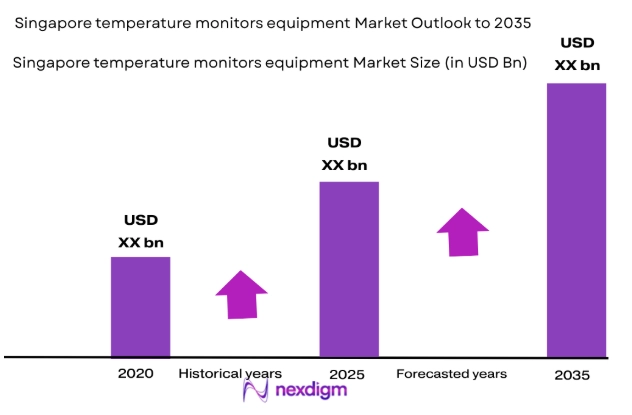
The Singapore Hair Loss Treatment Products market is valued at USD ~billion. The market growth is primarily driven by rising consumer awareness surrounding hair loss solutions, with a growing preference for non-surgical treatments. Additionally, increasing disposable income and the widespread use of digital platforms for e-commerce have further fueled market expansion. The market’s momentum is also supported by a shift towards organic and natural treatments, particularly for consumers seeking safer alternatives to chemical-based products. Data from industry sources, such as Statista and local market research reports, substantiate this market size.
Singapore’s market dominance in Southeast Asia is attributed to its robust healthcare infrastructure, high standard of living, and extensive consumer access to hair loss solutions through both offline and online channels. Furthermore, the country’s growing focus on wellness and health has made it a prominent hub for advanced treatments such as laser therapy, hair transplants, and oral supplements. The urban population in Singapore is particularly driven by high disposable incomes and increasing interest in cosmetic and personal care solutions, which positions the city as a leader in the region’s hair loss treatment market.
Market Segmentation
By Product Type
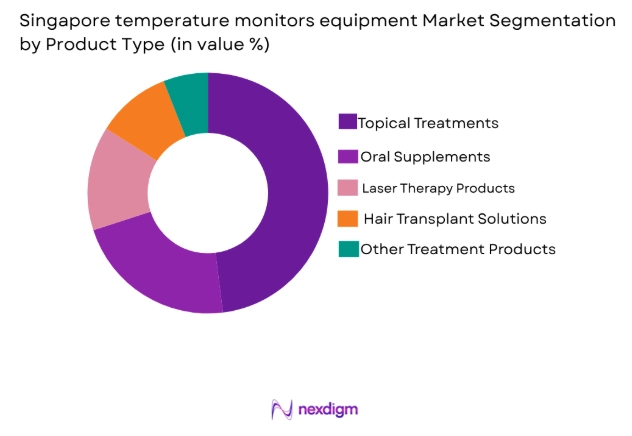
The Singapore Hair Loss Treatment Products market is segmented by product type into topical treatments, oral supplements, laser therapy products, hair transplant solutions, and other treatment products. Among these, topical treatments dominate the market due to their wide availability and ease of use. Products like minoxidil and other clinically approved topical solutions are highly popular, often due to their effectiveness and affordability compared to surgical or high-cost alternatives. These products are available over the counter and have built a strong presence in the market through trusted brands, contributing significantly to market share.
By Application Type
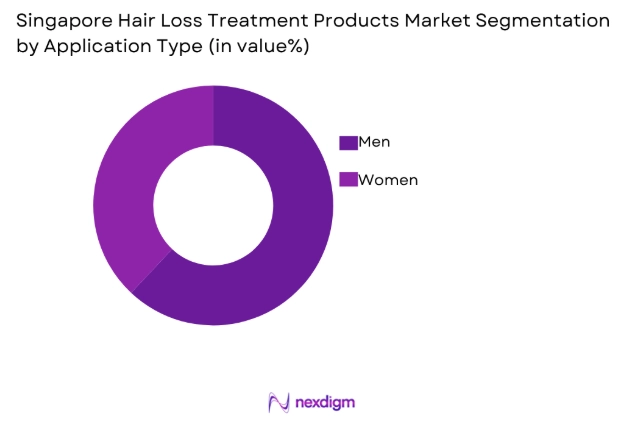
The market is also segmented by application, with major categories including products for men and products for women. The men’s segment holds the dominant market share, driven by the higher incidence of male pattern baldness and a cultural focus on hair loss solutions. Men in Singapore are more likely to seek both medical and cosmetic treatments to address hair thinning and loss, leading to increased demand for both topical treatments and hair restoration surgeries. This market segment is further supported by a higher rate of awareness and media coverage around male hair loss products.
Competitive Landscape
The Singapore Hair Loss Treatment Products market is dominated by a few key players who have captured significant market share through strategic marketing, strong distribution networks, and innovations in product offerings. Prominent companies include Johnson & Johnson, Merz Pharmaceuticals, Regaine, and Nutrafol. These companies, along with others in the market, have a stronghold on the local market due to their ability to continuously introduce advanced and scientifically backed hair restoration products. The competition in this space is intense, with both international brands and local companies offering diverse product ranges catering to various consumer needs.
| Company | Establishment Year | Headquarters | Revenue | Market Share | Number of Product Lines | Sales Channels |
| Johnson & Johnson | 1886 | New Brunswick, USA | ~ | ~ | ~ | ~ |
| Merz Pharmaceuticals | 1908 | Frankfurt, Germany | ~ | ~ | ~ | ~ |
| Regaine | 1988 | Dublin, Ireland | ~ | ~ | ~ | ~ |
| Nutrafol | 2015 | New York, USA | ~ | ~ | ~ | ~ |
| Toppik | 1987 | New York, USA | ~ | ~ | ~ | ~ |
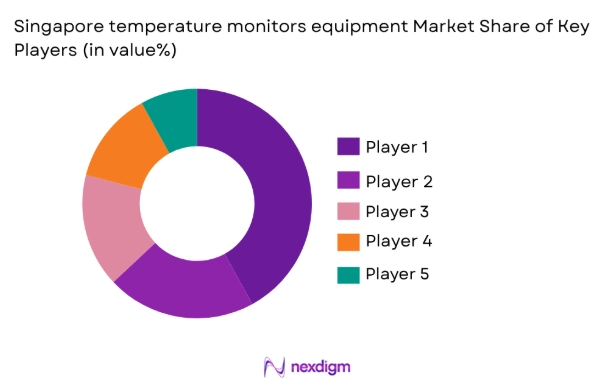
Singapore Hair Loss Treatment Products Market Analysis
Growth Drivers
Increasing Awareness of Hair Loss Solutions
The increasing awareness of hair loss treatments is primarily driven by the rise in health-consciousness among Singaporeans. Over 50% of Singaporeans are now more aware of personal health and wellness, including hair care, as per the Singapore Health Promotion Board (HPB) data from 2023. The government’s focus on health and wellness campaigns, such as the “Healthier SG” initiative, has also played a significant role in spreading awareness. This is evident in the increased number of consumers seeking consultation and treatments, particularly through dermatologists and cosmetic surgery clinics. Singapore’s healthcare expenditure, which reached SGD 13.2 billion in 2023, shows the growing investment in health solutions, contributing to a greater focus on personal appearance and hair care.
Growing Popularity of Non-Surgical Treatments
The demand for non-surgical hair loss treatments has increased significantly, with advancements in laser therapies and topical solutions. In 2023, approximately 65% of people undergoing hair treatments in Singapore opted for non-invasive methods, reflecting a shift away from surgical options. This trend is driven by the growing availability of effective over-the-counter products, such as topical minoxidil, and at-home laser devices. Additionally, the adoption of non-surgical treatments has been supported by the country’s rising healthcare standards and disposable income. As disposable income in Singapore increased by 5.3% in 2023, consumers are more willing to invest in these affordable yet effective hair restoration solutions.
Market Challenges
High Treatment Costs
Despite the rise in demand for hair loss treatments, one of the main challenges faced by the market is the high cost of treatments. Surgical hair restoration can cost up to SGD 10,000 per procedure, making it inaccessible to many consumers. Furthermore, the cost of effective topical treatments and laser devices can also be a barrier. In 2023, nearly 30% of the population cited affordability as a key concern in seeking hair loss solutions. The median monthly household income in Singapore was SGD 9,000 in 2023, and high treatment costs contribute to the hesitancy in pursuing these solutions
Side Effects and Consumer Concerns
Side effects of certain hair loss treatments, particularly pharmaceuticals like finasteride, have raised consumer concerns. The Health Sciences Authority (HSA) reported in 2023 that 12% of individuals who used finasteride-based products experienced adverse effects such as sexual dysfunction or scalp irritation. These concerns have led to a more cautious consumer approach, particularly in opting for oral medications over topical treatments. Additionally, the increasing availability of products has created confusion regarding product safety and efficacy, further intensifying consumer hesitancy. Singapore’s strict regulations on drug safety and the reporting of side effects by the HSA have contributed to an increase in consumer skepticism.
Opportunities
Growth of E-commerce Platforms
E-commerce has become a pivotal channel in the distribution of hair loss treatment products in Singapore. In 2023, 88% of Singaporeans used the internet for product purchases, and online retail sales accounted for SGD 5.3 billion in revenue. This rise in online shopping is particularly beneficial for the hair loss treatment market, as it provides easier access to international and local products. Additionally, many local e-commerce platforms like Lazada and Shopee have integrated hair care product lines, making them more accessible to a broader demographic. With e-commerce continuing to thrive, more brands are expected to use online platforms to offer personalized solutions and increase consumer reach.
Rising Trend of Natural and Organic Treatments
The rising trend of natural and organic treatments is contributing significantly to market growth. In 2023, the global market for organic beauty products reached USD 15 billion, with Singapore being one of the largest consumers in Southeast Asia. As more consumers in Singapore seek safer, chemical-free alternatives, there has been a noticeable rise in the demand for natural hair growth treatments, such as those using herbal extracts like saw palmetto or biotin. This aligns with the country’s growing interest in sustainability and health-conscious consumer behavior, where nearly 40% of Singaporeans in 2023 reported preferring organic and eco-friendly products
Future Outlook
Over the next five years, the Singapore Hair Loss Treatment Products market is expected to show significant growth. This will be driven by continuous advancements in treatment technology, a rising focus on personalized hair care, and the increasing demand for non-invasive treatments. The growing e-commerce industry will also contribute significantly to market expansion as more consumers turn to online platforms for product purchases. Additionally, heightened awareness around scalp health and the availability of targeted solutions are expected to further boost market demand.
Major Players
- Johnson & Johnson
- Merz Pharmaceuticals
- Regaine
- Toppik
- Keranique
- Bosley
- Viviscal
- Nutrafol
- HairMax
- Propecia
- Pura D’or
- Alpecin
- DermMatch
- Phyto
- Hairfinity
Key Target Audience
- Investments and venture capitalist firms
- Government and regulatory bodies
- Hair clinics and dermatology centers
- Hospitals and medical centers offering cosmetic treatments
- Pharmaceutical companies focusing on hair restoration products
- E-commerce platforms and online retailers specializing in health and beauty products
- Retail chains selling beauty and wellness products
- Dermatologists and healthcare professionals specializing in hair restoration and dermatology
Research Methodology
Step 1: Identification of Key Variables
This phase focuses on constructing an ecosystem map that includes all stakeholders within the Singapore Hair Loss Treatment Products market. Secondary research, including local reports, databases, and market intelligence tools, will be used to gather information and identify the key variables that impact market dynamics. This allows for a structured understanding of market drivers, challenges, and segmentation.
Step 2: Market Analysis and Construction
Historical data pertaining to the market will be collected, including revenue figures, volume, and consumer behavior trends. A detailed analysis will help determine current market penetration and product performance. By reviewing consumer demographics and regional preferences, we can build a comprehensive market profile that underpins future projections.
Step 3: Hypothesis Validation and Expert Consultation
To validate market hypotheses and assumptions, consultations will be conducted with industry experts, including dermatologists, product manufacturers, and suppliers. Interviews and surveys will provide qualitative insights into product effectiveness, consumer needs, and emerging trends.
Step 4: Research Synthesis and Final Output
In the final phase, engagement with key stakeholders like manufacturers, distributors, and retail partners will further substantiate market data. Direct feedback will be integrated into the final report, ensuring a well-rounded and accurate analysis of the market landscape, which will be used to refine the report’s conclusions and recommendations.

- Executive Summary
- Research Methodology (Market Definitions and Assumptions, Abbreviations, Market Sizing Approach, Consolidated Research Approach, Understanding Market Potential Through In-Depth Industry Interviews, Primary Research Approach, Limitations and Future Conclusions)

- Definition and Scope
- Overview Genesis
- Timeline of Major Players
- Business Cycle
- Supply Chain and Value Chain Analysis

- Growth Drivers
Increasing Awareness of Hair Loss Solutions
Growing Popularity of Non-Surgical Treatments - Market Challenges
High Treatment Costs
Side Effects and Consumer Concerns - Opportunities
Growth of E-commerce Platforms
Rising Trend of Natural and Organic Treatments - Trends
Advancements in Hair Restoration Technology
Shift Toward Personalized Hair Treatment Solutions - Government Regulation
Medical Device and Health Product Regulations
Advertising and Marketing Regulations for Health Products - SWOT Analysis
- Stake Ecosystem
- Porter’s Five Forces
- Competition Ecosystem

- By Value, 2020-2025
- By Volume, 2020-2025
- By Average Price, 2020-2025

- By Product Type, (In Value %)
Topical Treatments
Oral Supplements
Laser Therapy Products
Hair Transplant Solutions
Other Treatment Products - By Application, (In Value %)
Men
Women - By Distribution Channel, (In Value %)
Pharmacies and Drugstores
Online Retail
Clinics and Spas
Supermarkets/Hypermarkets - By Region, (In Value %)
Central Region
Northern Region
Western Region
Eastern Region - By Age Group, (In Value %)
18-30 years
31-45 years
46+ years

- Market Share of Major Players on the Basis of Value/Volume, 2024
- Market Share of Major Players by Product Type, 2024
- Cross Comparison Parameters (Company Overview, Business Strategies, Recent Developments, Strength, Weakness, Organizational Structure, Revenues, Revenues by Product Type, Number of Touchpoints, Distribution Channels, Number of Dealers and Distributors, Margins, Production Plant, Capacity, Unique Value Offering and others)
- SWOT Analysis of Major Players
- Pricing Analysis by SKUs for Major Players in Singapore Hair Loss Treatment Products Market
- Detailed Profiles of Major Companies
Johnson & Johnson
Regaine
Merz Pharmaceuticals
Toppik
Keranique
Bosley
Viviscal
Nutrafol
HairMax
Propecia
Pura D’or
Alpecin
DermMatch
Phyto
Hairfinity

- Market Demand and Utilization
- Purchasing Power and Budget Allocations
- Regulatory and Compliance Requirements
- Needs, Desires, and Pain Point Analysis
- Decision-Making Process

- By Value, 2026-2035
- By Volume, 2026-2035
- By Average Price, 2026-2035


 Request a Sample
 Ask for Customization
 Get a Quote
 Enquire Now