

 Download PDF
Market Overview
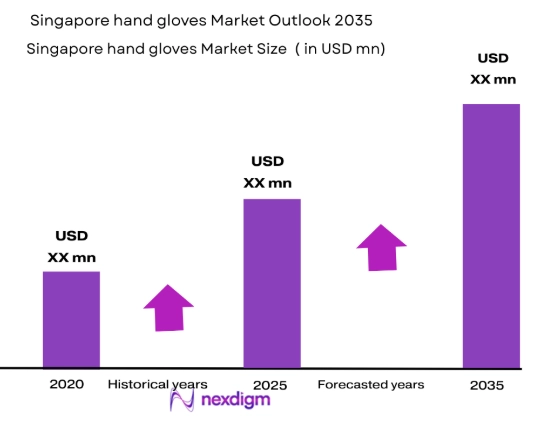
The Singapore Hand Gloves Market is valued at USD ~ million, with forecast expansion supported by healthcare consumption, industrial safety needs, food-service hygiene, and institutional procurement. Trade data also shows import momentum: Singapore imported USD 19.96 million of non-surgical vulcanized rubber gloves in the prior annual period and USD 22.34 million in the latest annual period, indicating higher supply intake into a market with limited local manufacturing depth. The market is projected to grow at a 4.12% CAGR through the forecast period.
Singapore’s demand is concentrated around the national healthcare, laboratory, food-processing, hospitality, and cleanroom ecosystem rather than multiple large city markets, because Singapore functions as a single-city economy. Malaysia, China, and Thailand dominate supply into Singapore due to proximity, glove manufacturing capacity, and established export networks. Malaysia supplied USD 12.83 million of Singapore’s non-surgical vulcanized rubber glove imports, followed by China at USD 3.63 million and Thailand at USD 3.58 million.
Market Segmentation
By Product Type
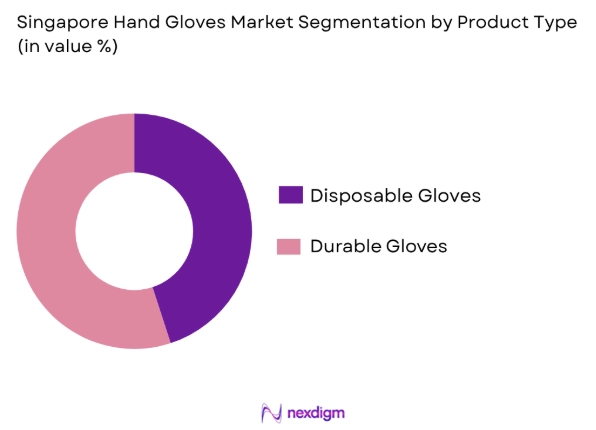
By Product Type: Singapore Hand Gloves Market is segmented by product type into disposable gloves and reusable gloves. Disposable gloves dominate the market due to their wide usage across hospitals, clinics, laboratories, food handling, cleaning services, and infection-prevention workflows. Healthcare institutions require single-use gloves to reduce cross-contamination, while food-service and hospitality operators rely on disposable gloves for hygiene compliance and operational convenience. The dominance is also supported by Singapore’s high dependence on imported rubber gloves, where disposable products form the largest traded category. Deep Market Insights identifies disposable gloves as the largest product type, with disposable gloves valued at USD 20.03 million against the total market value of USD 31.5 million.
By Material Type
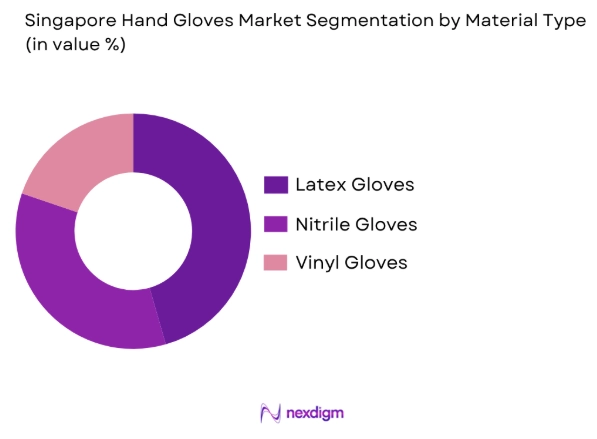
By Material Type: Singapore Hand Gloves Market is segmented by material type into latex gloves, nitrile gloves, and vinyl gloves. Latex gloves dominate due to their established use in medical examination, general healthcare, cleaning, and food-handling applications where flexibility, tactile sensitivity, and cost efficiency are important. Latex remains attractive for buyers seeking reliable protection at manageable procurement cost, especially for high-volume users. However, nitrile demand is increasing due to latex-allergy concerns and stronger chemical resistance, especially among laboratories, industrial users, and premium healthcare buyers. Deep Market Insights identifies latex as the leading material segment, valued at USD 14.74 million within the USD 31.5 million market.
Competitive Landscape
The Singapore Hand Gloves Market is moderately consolidated on the supply side, with Malaysian manufacturers holding strong influence due to geographic proximity and large-scale glove production. Global healthcare and safety brands compete through distributor networks, hospital procurement channels, industrial PPE contracts, and food-service supply chains. Competition is shaped by pricing, regulatory compliance, material quality, latex-free offerings, product availability, and institutional relationships.
| Company | Establishment Year | Headquarters | Key Product Focus | Material Strength | Distribution Strength | End-User Focus | Singapore Relevance | Strategic Positioning |
| Top Glove Corporation | 1991 | Shah Alam, Malaysia | ~ | ~ | ~ | ~ | ~ | ~ |
| Hartalega Holdings | 1988 | Kuala Lumpur, Malaysia | ~ | ~ | ~ | ~ | ~ | ~ |
| Kossan Rubber Industries | 1979 | Klang, Malaysia | ~ | ~ | ~ | ~ | ~ | ~ |
| Supermax Corporation | 1987 | Sungai Buloh, Malaysia | ~ | ~ | ~ | ~ | ~ | |
| Ansell Limited | 1893 | Melbourne, Australia | ~ | ~ | ~ | ~ | ~ | ~ |

Singapore Hand Gloves Market Analysis
Growth Drivers
Increasing Hygiene Awareness Across Commercial and Household Users
Singapore Hand Gloves Market demand is reinforced by strict hygiene practices across food, cleaning, and commercial sectors. The Singapore Food Agency reported over 57,000 licensed food establishments, including hawker stalls, restaurants, and catering units, all required to comply with food safety and hygiene standards, which include the use of protective gloves during food handling. Additionally, Singapore recorded 1.4 million resident households, many of which increasingly adopt hygiene practices post-pandemic, particularly in cleaning and caregiving. Workplace hygiene regulations under the Ministry of Manpower also apply to over 3.7 million employed persons, further expanding glove usage across commercial settings. Source: Singapore Food Agency; Department of Statistics Singapore; Ministry of Manpower.
Growth in Food Processing and Food Service Industries
Singapore Hand Gloves Market is supported by growth in the food manufacturing and food service ecosystem, where gloves are essential for safety compliance. The Department of Statistics Singapore reports 1,900 food manufacturing establishments, contributing to consistent demand for protective gloves in production and packaging. Additionally, the food services sector employed over 230,000 workers, all operating under hygiene compliance frameworks requiring protective equipment. Singapore’s food manufacturing output reached SGD 12.5 billion, indicating large-scale operations where gloves are used across processing lines. The scale of food imports and re-exports also drives handling requirements, strengthening glove consumption across logistics and distribution chains. Source: Department of Statistics Singapore.
Market Challenges
Intense Competition and Margin Pressure
Singapore Hand Gloves Market faces strong competition due to the presence of multiple global suppliers and regional exporters. Singapore imported gloves from more than 10 countries, with Malaysia, China, and Thailand dominating supply volumes, creating a competitive pricing environment for distributors. The country recorded total merchandise imports of SGD 633 billion, indicating high trade openness and ease of entry for suppliers. Additionally, Singapore has over 299,000 enterprises, many of which operate in trading and distribution, intensifying competition within the PPE and medical consumables sector. This competitive landscape pressures distributors and suppliers to maintain pricing efficiency while meeting strict quality standards. Source: Department of Statistics Singapore; World Bank.
Environmental Concerns Related to Disposable Gloves
Singapore Hand Gloves Market faces environmental challenges due to heavy reliance on disposable gloves, contributing to plastic and rubber waste. The National Environment Agency reported 6.86 million tonnes of total waste generated, with 949,000 tonnes of plastic waste, of which only 6% was recycled, indicating pressure on single-use products like gloves. Waste from healthcare and food-service sectors adds to disposal challenges, particularly for contaminated materials. Singapore operates four waste-to-energy plants handling over 8,700 tonnes of waste daily, showing the scale of waste management infrastructure required. These environmental constraints are prompting stricter waste handling protocols and increasing scrutiny on disposable PPE usage.
Opportunities
Expansion of Sustainable and Biodegradable Gloves
Singapore Hand Gloves Market presents opportunity for sustainable and biodegradable gloves due to environmental policy focus and waste management challenges. The government targets reducing landfill dependency, with Semakau Landfill projected to reach capacity by 2035, increasing urgency for sustainable alternatives. Singapore generated 949,000 tonnes of plastic waste, with low recycling rates, creating demand for eco-friendly materials. The Singapore Green Plan 2030 promotes sustainable consumption and waste reduction across industries, encouraging adoption of biodegradable and recyclable PPE. Businesses operating in food, healthcare, and cleaning sectors are increasingly required to align with sustainability practices, creating demand for environmentally responsible glove solutions. Source: National Environment Agency; Singapore Green Plan.
Growth of Online and B2B Procurement Channels
Singapore Hand Gloves Market is benefiting from expansion in digital procurement and B2B e-commerce. Singapore’s digital economy contributed SGD 113 billion to GDP, with strong adoption of online procurement platforms across businesses. The country has over 299,000 enterprises, many of which increasingly rely on digital sourcing for medical and industrial supplies. Additionally, Singapore recorded 5.6 million internet users, supporting widespread adoption of e-commerce platforms for both B2B and institutional procurement. Government initiatives under the Infocomm Media Development Authority promote digital transformation among SMEs, encouraging online sourcing of consumables like gloves. This shift enhances accessibility, supplier reach, and procurement efficiency. Source: Infocomm Media Development Authority; Department of Statistics Singapore.
Future Outlook
Over the next five years, the Singapore Hand Gloves Market is expected to expand steadily, supported by sustained healthcare spending, institutional hygiene standards, and safety compliance across laboratories, food handling, cleanrooms, and industrial workplaces. Demand will remain import-dependent, with Malaysia, China, and Thailand continuing to influence availability and pricing. Growth will be strongest in powder-free, nitrile, disposable, and specialty protective gloves as users prioritize contamination control, allergy reduction, and reliable supply.
Major Players
- Top Glove Corporation Bhd
- Hartalega Holdings Berhad
- Kossan Rubber Industries Bhd
- Supermax Corporation Berhad
- Ansell Limited
- Kimberly-Clark Corporation
- 3M Company
- Cardinal Health
- Medline Industries
- B. Braun
- Mölnlycke Health Care
- Semperit AG Holding
- Sri Trang Gloves
- Riverstone Holdings Limited
- Dynarex Corporation
Key Target Audience
- Hand glove manufacturers
- Medical glove distributors
- Hospital procurement departments
- Pharmaceutical and biotechnology companies
- Food-service and food-processing companies
- Industrial safety equipment suppliers
- Investments and venture capitalist firms
- Government and regulatory bodies
Research Methodology
Step 1: Identification of Key Variables
The initial phase involves mapping the Singapore Hand Gloves Market ecosystem, including manufacturers, importers, distributors, healthcare buyers, industrial users, and food-service procurement channels. This step uses secondary sources, trade databases, company publications, and regulatory references to identify variables influencing demand, pricing, supply, and product adoption.
Step 2: Market Analysis and Construction
Historical market information is compiled using market-size references, import data, product segmentation, and end-user consumption patterns. The analysis assesses disposable and reusable glove demand, material-level preferences, import dependency, and revenue contribution from institutional users. This supports construction of the market-size base and segmentation structure.
Step 3: Hypothesis Validation and Expert Consultation
Market hypotheses are validated through interviews with distributors, procurement managers, safety equipment suppliers, healthcare buyers, and industry specialists. These consultations help verify assumptions related to product pricing, demand concentration, substitution between latex and nitrile gloves, and the role of large-scale regional suppliers.
Step 4: Research Synthesis and Final Output
The final phase integrates desk research, trade data, company analysis, and expert insights into a validated market model. The output includes market overview, segmentation, competitive landscape, future outlook, key target audience, and FAQs for the Singapore Hand Gloves Market.

- Executive Summary
- Research Methodology (Market Definitions and Assumptions, Abbreviations, Market Sizing Approach, Consolidated Research Approach, Understanding Market Potential Through In-Depth Industry Interviews, Primary Research Approach, Limitations and Future Conclusions)

- Definition and Scope
- Market Dynamics Overview
- Market Genesis
- Major Players and Market Timeline
- Business Cycle and Trends
- Supply Chain and Value Chain Analysis

- Growth Drivers
Rising Demand from Healthcare and Medical Facilities
Increasing Hygiene Awareness Across Commercial and Household Users
Growth in Food Processing and Food Service Industries
Expansion of Pharmaceutical, Biotechnology, and Laboratory Applications
Rising Adoption of Powder-Free and Nitrile Gloves - Market Challenges
High Dependence on Imports
Price Volatility in Raw Materials
Intense Competition and Margin Pressure
Environmental Concerns Related to Disposable Gloves
Regulatory and Quality Compliance Requirements - Opportunities
Expansion of Sustainable and Biodegradable Gloves
Growth of Online and B2B Procurement Channels
Increasing Demand for Specialty Industrial Gloves
Rising Procurement by Healthcare and Public Sector Institutions
Premiumization of Medical and Protective Gloves - Trends
Shift Toward Nitrile and Powder-Free Gloves
Rising Demand for Single-Use Protective Gloves
Increasing Preference for Latex-Free Products
Growth in Eco-Friendly and Recyclable Glove Solutions
Digitalization of Distribution and Procurement Channels - Government Regulations
Import and Product Quality Regulations
Healthcare and Medical Device Compliance Standards
Workplace Safety and Protective Equipment Guidelines
Food Safety and Hygiene Requirements - SWOT Analysis
- Porter’s Five Forces

- By Value, 2020-2025
- By Volume, 2020-2025
- By Average Price, 2020-2025

- By Product Type (In Value %)
Disposable Gloves
Reusable Gloves - By Material Type (In Value %)
Nitrile Gloves
Latex Gloves
Vinyl Gloves - By Usage Type (In Value %)
Powdered Gloves
Powder-Free Gloves - By Sterility (In Value %)
Sterile Gloves
Non-Sterile Gloves - By End User (In Value %)
Healthcare and Hospitals
Clinics and Diagnostic Centers
Pharmaceutical and Biotechnology Companies
Food Processing and Food Service
Industrial and Manufacturing - By Distribution Channel (In Value %)
Direct Sales
Distributors and Wholesalers
Pharmacies and Medical Supply Stores
Supermarkets and Hypermarkets
Online Channels - By Price Tier (In Value %)
Economy / Entry-Level
Mid-Tier
Premium / High-End

- Market Share of Major Players by Value/Volume
- Market Share of Major Players by Product Type
- Market Share of Major Players by Material Type
- Cross Comparison Parameters (Company Overview, Business Strategies, Recent Developments, Strength, Weakness, Organizational Structure, Revenues, Revenues by Product Type, Number of Touchpoints, Distribution Channels, Number of Dealers and Distributors, Margins, Production Plant, Capacity, Unique Value Offering and Others)
- SWOT Analysis of Major Players
- Pricing Analysis Based on Glove Categories for Major Players
- Detailed Profiles of Major Companies
Top Glove Corporation Bhd
Hartalega Holdings Berhad
Kossan Rubber Industries Bhd
Supermax Corporation Berhad
Ansell Limited
Kimberly-Clark Corporation
3M Company
Cardinal Health
Medline Industries
B. Braun
Mölnlycke Health Care
Semperit AG Holding
Sri Trang Gloves
Riverstone Holdings Limited
Dynarex Corporation

- Market Demand and Utilization
- Purchasing Power and Budget Allocations
- Regulatory and Compliance Requirements
- Needs, Desires, and Pain Point Analysis
- Decision-Making Process

- By Value, 2026-2035
- By Volume, 2026-2035
- By Average Price, 2026-2035


 Request a Sample
 Ask for Customization
 Get a Quote
 Enquire Now