

 Download PDF
Market Overview
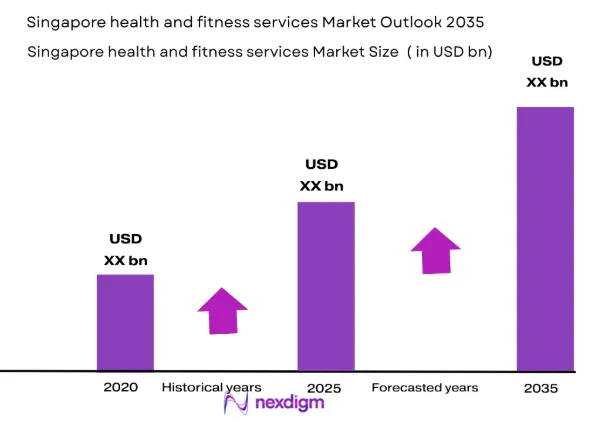
The Singapore health and fitness services market is valued at USD ~ billion, based on comprehensive industry analysis. This valuation reflects accumulated revenue from fitness centers, wellness programs, preventive care services, and related activities. Growth is driven by increasing health consciousness among residents, urban lifestyles with high disposable income, and a strong emphasis on preventive healthcare and well‑being. Corporates are increasingly embedding fitness benefits into employee wellness programs. Demand for boutique fitness studios and digital health solutions further propels overall market expansion.
Within Singapore, the central business districts and affluent residential zones such as Orchard, Marina Bay, and Holland Village dominate the health and fitness services market due to higher consumer purchasing power and dense populations seeking premium fitness options. These areas host the largest concentration of high‑end gyms, wellness clinics, and boutique studios. Additionally, Singapore’s strategic position in Southeast Asia attracts regional consumers and expatriates, reinforcing its dominance in the market.
Market Segmentation
By Service Type
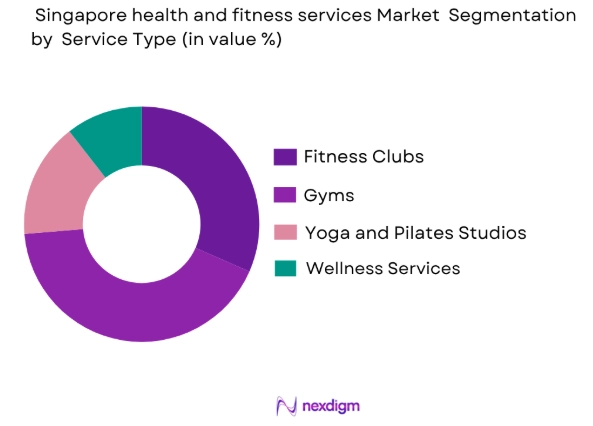
The Singapore health and fitness services market is segmented by service type into traditional gym memberships, boutique fitness classes, wellness services, and digital/online fitness solutions. Gym memberships remain the largest segment by market share due to long‑standing consumer preference for structured workout environments and widespread brand presence of major fitness chains. Many consumers view gyms as foundational for holistic fitness routines, and their established infrastructure supports broad demographic engagement. Boutique fitness and wellness services are growing, but gyms retain leadership given their comprehensive service and cross‑demographic appeal.
By End User
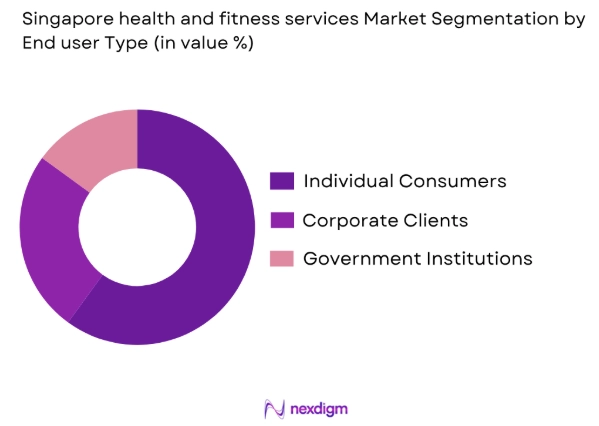
The market is also segmented by end user into individual consumers, corporate clients, and government health initiatives. Individual consumers dominate this segment, driven by strong personal spending on fitness and well‑being. Rising demand stems from heightened health awareness, the desire for preventive care, and lifestyle prioritization of fitness. Corporate wellness programs are expanding, but individual memberships and personal services (including digital subscriptions and personalized training) contribute the largest share of revenue. Government health campaigns further support individual engagement in fitness activities.
Competitive Landscape
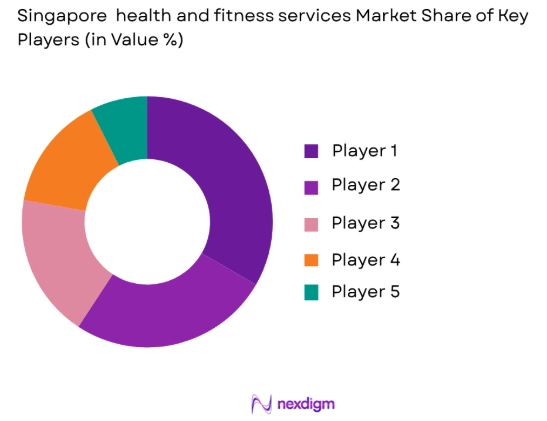
The Singapore health and fitness services market exhibits competitive dynamics with both international and local players. Established gym chains, specialized boutique studios, and emerging digital fitness platforms coexist, reflecting diversified consumer demand. Major players leverage extensive facilities, advanced class offerings, and technology integration to maintain customer engagement. Market competition emphasizes differentiation through service quality, brand recognition, and comprehensive wellness programs.
| Company Name | Establishment Year | Headquarters | Service Offering | Number of Locations | Membership Base (approx.) | Target Market |
| Fitness First Singapore | 1993 | Singapore | ~ | ~ | ~ | ~ |
| Anytime Fitness Singapore | 2002 | Singapore | ~ | ~ | ~ | ~ |
| Virgin Active Singapore | 1999 | Singapore | ~ | ~ | ~ | ~ |
| F45 Training Singapore | 2013 | Singapore | ~ | ~ | ~ | ~ |
| Pure Fitness Singapore | 2009 | Singapore | ~ | ~ | ~ | ~ |
Singapore Health and Fitness Services Market Dynamics and Core Analysis
Growth Drivers
Rising Health Consciousness Among Consumers
Health consciousness has surged in Singapore, with a growing number of consumers seeking fitness solutions to improve their well-being. In 2023, the percentage of Singaporeans engaging in regular physical activity rose to 73%, up from 70% in 2022. This reflects an increasing awareness of the health risks associated with sedentary lifestyles. The government’s promotion of healthy living through initiatives like the Health Promotion Board’s (HPB) national campaigns has further boosted this trend. The demand for gyms, fitness classes, and wellness programs is expected to continue growing as more individuals prioritize their health.
Technological Integration in Fitness
Singapore has seen rapid integration of technology in the fitness sector. In 2023, over 35% of fitness consumers in Singapore utilized fitness apps, wearables, and virtual training solutions to track progress and enhance their workouts. This shift is driven by advancements in AI, which allows for personalized training and real-time feedback. Fitness providers are increasingly adopting IoT-enabled equipment, enabling members to monitor their health and fitness metrics remotely. As a highly tech-savvy nation, Singaporeans are keen on utilizing such technologies, creating a significant opportunity for fitness services that integrate technology into their offerings.
Challenges
High Infrastructure and Equipment Costs
The high cost of establishing and maintaining fitness centers remains a significant challenge in Singapore. In 2023, the average cost of renting commercial space in prime districts of Singapore ranged from SGD 7 to SGD 15 per square foot, contributing to higher operational costs for fitness providers. Additionally, fitness equipment can cost between SGD 3,000 to SGD 10,000 per unit, especially for high-quality, smart devices. These costs limit the ability of smaller or new entrants in the market to compete with well-established brands that can afford the high infrastructure investments required.
Intense Price Wars Among Fitness Providers
The competition in Singapore’s health and fitness market has led to price wars among fitness providers. With new players entering the market, there has been downward pressure on membership fees, leading to thinner profit margins for fitness centers. In 2023, approximately 15% of fitness providers in Singapore reduced membership prices or introduced low-cost alternatives, leading to increased price competition. This trend makes it difficult for businesses to differentiate themselves, particularly those offering premium services, as consumers increasingly prioritize affordability without compromising quality.
Opportunities
Expansion of Wellness Programs for Employers
Corporate wellness programs are a significant growth opportunity in Singapore’s fitness sector. In 2023, nearly 40% of Singaporean companies provided wellness programs, ranging from fitness classes to mental health support initiatives. The government’s support through initiatives like the WorkWell Leader program, which encourages businesses to enhance employee well-being, further promotes these programs. As more companies invest in their employees’ health, fitness providers can partner with these corporations to offer tailored wellness solutions, expanding the market for fitness services focused on corporate clients.
Collaborations with Healthcare Providers
There is a growing trend of collaboration between fitness centers and healthcare providers in Singapore. In 2023, 25% of fitness centers had partnered with healthcare providers to offer rehabilitation services, preventative care, and holistic health programs to their members. Such partnerships help fitness providers tap into a larger customer base, especially among those seeking integrated wellness solutions that blend fitness and healthcare. As Singapore’s healthcare system increasingly focuses on preventive care, these collaborations offer a strategic opportunity for fitness providers to align their services with broader healthcare trends.ource
Future Outlook
Over the coming decade, the Singapore health and fitness services market is projected to grow substantially, supported by demographic shifts toward preventive healthcare and active lifestyles. Technological advancements, including digital fitness platforms and AI‑enhanced wellness solutions, will expand service accessibility and consumer engagement. Government initiatives promoting healthier living and corporate investment in employee wellness programs are expected to sustain long‑term demand. The integration of hybrid fitness models, combining in‑facility and online offerings, will further diversify revenue streams and enhance market resilience.
Major Players
- Fitness First
- Anytime Fitness
- Virgin Active
- F45 Training
- Pure Fitness
- 1‑Rebel
- Gymmboxx
- Celebrity Fitness
- ActiveSG Fitness Centers
- Orangetheory Fitness
- Barry’s
- Yoga Movement
- Barry’s Bootcamp
- CrossFit Singapore
- Spartan SG Fitness
Key Target Audience
- Investments and Venture Capitalist Firms
- Government and Regulatory Bodies
- Corporate Wellness Program Managers
- Fitness and Wellness Center Owners/Operators
- Fitness Equipment Manufacturers and Suppliers
- Health Insurance Providers
- Digital Health and Fitness Platform Developers
- Hospitality and Tourism Developers with Wellness Focus
Research Methodology
Step 1: Identification of Key Variables
This phase involves mapping major stakeholders and factors shaping the Singapore health and fitness services market. Secondary research is conducted using credible databases, industry reports, and government publications to identify variables such as consumer behavior, service demand patterns, pricing models, and regulatory frameworks.
Step 2: Market Analysis and Construction
Historical data from multiple years is aggregated to evaluate market size, revenue streams, and growth trends. This includes segment analysis by service type and end user, geographic distribution within Singapore, and adoption rates of fitness services across demographic groups.
Step 3: Hypothesis Validation and Expert Consultation
Market hypotheses relating to growth drivers and challenges are validated through interviews with industry practitioners, including fitness center managers, wellness service providers, and technology platform representatives. These discussions offer insights into operational trends and future expectations.
Step 4: Research Synthesis and Final Output
All collected data and expert insights are synthesized to produce a comprehensive outlook. Forecast models are developed using established methodologies such as CAGR extrapolation and trend analysis, ensuring robustness and validation against multiple data sources.

- Executive Summary
- Research Methodology (Market Definitions and Assumptions, Abbreviations, Data Triangulation Approach, Primary & Secondary Research Mix, Sample Frame by Channel and Consumer Cohort, Market Sizing and Forecasting Model, CAGR Validation Protocol, Limitations and Data Convergence Confidence)

- Definition and Scope
- Genesis and Evolution of Health and Fitness Services Adoption in Singapore
- Integration of Digital Platforms and Consumer Behavior Shifts
- Economic and Lifestyle Drivers Affecting Health and Fitness Services Purchases
- Market Value Chain – From Service Providers to End Consumers
Distribution Infrastructure Overview

- Growth Drivers
Rising Health Consciousness Among Consumers
Technological Integration in Fitness
Health-Focused Lifestyle Changes - Challenges
High Infrastructure and Equipment Costs
Intense Price Wars Among Fitness Providers
Shifting Consumer Preferences - Growth Opportunities
Expansion of Wellness Programs for Employers
Collaborations with Healthcare Providers
Emerging Fitness Trends for Elderly Population - Market Trends
Rise in Virtual and Hybrid Fitness Models
Increased Focus on Mental Health and Wellness
Expansion of Fitness for Children and Families - SWOT Analysis
- Porter’s Five Forces

- By Revenue, 2020-2025
- By Membership Subscriptions, 2020-2025
- By Average Service Pricing, 2020-2025
- By Channel Contribution, 2020-2025

- By Service Type (In Value %)
Gyms
Fitness clubs
Wellness Services
Yoga and pilates studios - By End User (In Value %)
Individual Consumers
Corporate Clients
Government Initiatives - By Distribution Channel (In Value %)
Physical Gyms & Fitness Studios
E-commerce & Online Platforms
Corporate Wellness Programs
Direct-to-Consumer Subscriptions
Boutique Fitness Studios - By Price Tier (In Value %)
Value / Budget Segment
Mid-Tier Mainstream
Premium / High-End Wellness
Luxury Wellness & Lifestyle Centers - By Geographic (In Value %)
Central Singapore
Eastern Singapore
Western Singapore
Northern Singapore

- Market Share Analysis – By Revenue / Volume
- Cross Comparison Parameters (Company Overview, Service Portfolio & Service Delivery Depth, Market Reach, Channel Mix, Pricing Architecture & Membership Trends, Digital Fitness Services Integration, Customer Retention Strategies, Marketing and Brand Positioning Metrics, Supply Chain Resilience, R&D Investments & New Service Launches, Strategic Partnerships & Alliances, Financial Metrics)
- SWOT Profiles of Key Competitors
- Pricing & Service Mapping Across Channels
- Detailed Profiles
Virgin Active
Fitness First
Anytime Fitness
Pure Fitness
F45 Training
The Gym Group
Yoga Movement
The Pilates Studio
KX Pilates Singapore
Ground Zero Fitness
Bikram Yoga
JannFitness
Gymmboxx
Fitness Works
Health and Fitness Solutions

- Market Demand and Utilization Patterns
- Purchasing Power and Budget Allocation
- Regulatory and Compliance Requirements for End Users
- Needs, Desires, and Pain Points Analysis
- Decision-Making Process and Influencers

- By Revenue, 2026-2035
- By Membership Subscriptions, 2026-2035
- By Average Service Pricing, 2026-2035
- By Channel Contribution, 2026-2035


 Request a Sample
 Ask for Customization
 Get a Quote
 Enquire Now