
 Download PDF
Market Overview
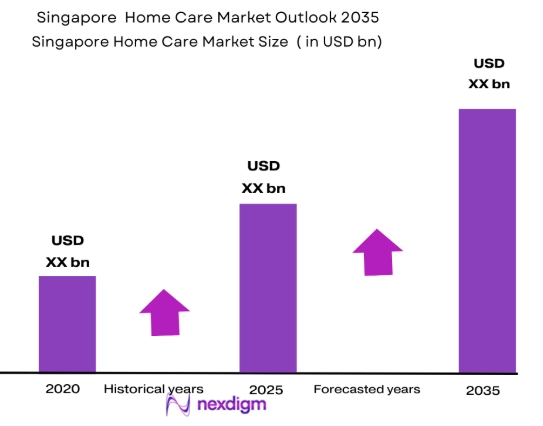
The Singapore home care market, valued at approximately USD ~ billion in 2025, is driven by the rising demand for convenience, cleanliness, and hygiene products, with an increasing shift towards more sustainable solutions. The growth is further fueled by a growing urban population, increased disposable income, and higher awareness of the benefits of maintaining a clean home environment. Key drivers also include the rising popularity of multifunctional and eco-friendly home care products. In 2024, the market is expected to see substantial growth with consumers becoming more inclined to purchase innovative products for both cleaning and personal care purposes.
Singapore’s home care market is dominated by its highly urbanized areas such as Singapore City, where a large proportion of the population resides in high-rise buildings, influencing the demand for specialized home care products. The urban lifestyle, coupled with a significant middle-class population, drives the demand for products focused on convenience and hygiene. Additionally, Singapore’s strong regulatory framework for product safety and quality further boosts consumer confidence, making it a leading market for premium home care products in Southeast Asia. Major local players and multinational companies both thrive due to favorable trade regulations and a robust economy.
Market Segmentation
By Product Type
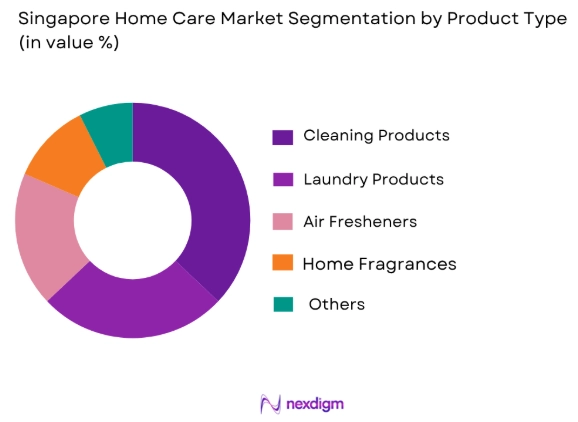
The Singapore home care market is segmented by product type into cleaning products, laundry products, air fresheners, home fragrances, and others. Among these, cleaning products hold the dominant market share in Singapore’s home care market, driven by their necessity in every household. The increasing demand for multipurpose cleaners that offer convenience and effectiveness in a single product has become a major factor behind the growth of this segment. Brands that have tailored their products for both residential and institutional use have also seen increased adoption. This broad appeal and the constant innovation in cleaning technology contribute to cleaning products maintaining their leadership position in the market.
By Distribution Channel
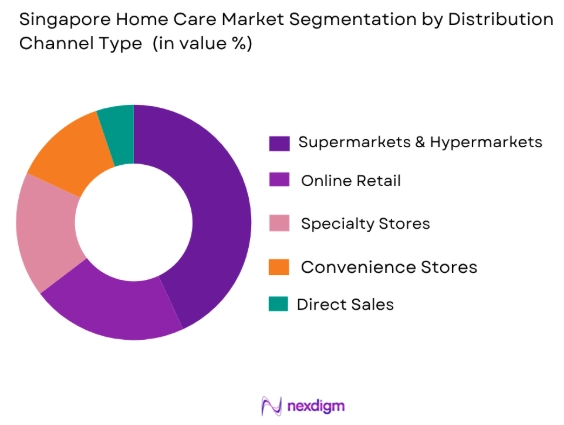
The home care market in Singapore is segmented by distribution channel into online retail, supermarkets & hypermarkets, specialty stores, convenience stores, and direct sales. Online retail is expected to dominate the market in 2024 due to the rise of e-commerce platforms and digital shopping habits. The shift towards convenience, especially post-pandemic, has made online shopping the preferred choice for many consumers looking to purchase home care products. The availability of various brands, promotional offers, and the convenience of home delivery make online platforms the dominant distribution channel in Singapore’s home care market.
Competitive Landscape
The Singapore home care market is highly competitive, with both local and international players actively vying for market share. Established global brands like Unilever, Procter & Gamble, and Reckitt Benckiser lead the market, alongside strong local players that cater to specific regional preferences. The competitive landscape is shaped by factors such as product innovation, brand loyalty, and marketing strategies. Companies that offer eco-friendly and multifunctional products are experiencing increased consumer demand, while major players are also focusing on expanding their e-commerce presence to tap into the growing digital shopping trend.
| Company | Establishment Year | Headquarters | Product Innovation | Pricing Strategy | Market Presence | Regulatory Compliance | Technology Integration | Sustainability Practices |
| Unilever | 1930 | United Kingdom | ~ | ~ | ~ | ~ | ~ | ~ |
| Procter & Gamble | 1837 | United States | ~ | ~ | ~ | ~ | ~ | ~ |
| Reckitt Benckiser Group | 1823 | United Kingdom | ~ | ~ | ~ | ~ | ~ | ~ |
| SC Johnson | 1886 | United States | ~ | ~ | ~ | ~ | ~ | ~ |
| Henkel | 1876 | Germany | ~ | ~ | ~ | ~ | ~ | ~ |
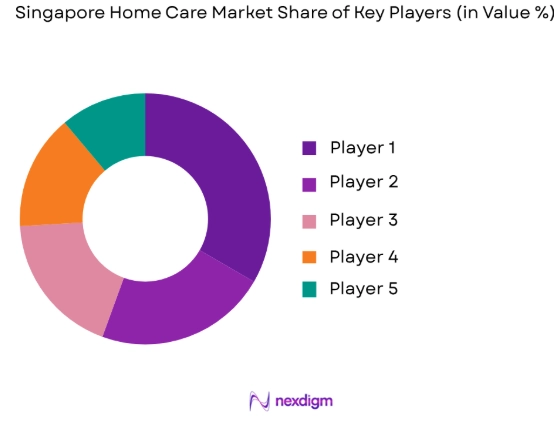
Singapore Home Care Market Analysis
Growth Drivers
Increasing Awareness of Cleanliness & Hygiene
The demand for home care products in Singapore is significantly driven by an increasing public awareness of cleanliness and hygiene. With the ongoing global health concerns and heightened focus on personal and environmental health, hygiene has become a top priority for consumers. Singapore’s health expenditure was USD 13.7 billion in 2023, reflecting growing consumer concern towards health and cleanliness, which directly influences the home care market. Additionally, the World Health Organization’s focus on sanitation has spurred the adoption of effective cleaning solutions among households. In 2024, Singapore’s health-conscious population continues to drive demand for cleaning products, with consistent growth in both retail and e-commerce sectors.
Technological Advancements in Home Care Products
Technological innovations play a crucial role in shaping the Singapore home care market. Companies are increasingly integrating smart technology into home care products, offering consumers greater convenience and efficiency. For example, smart cleaning devices, such as robot vacuums, have gained considerable traction in Singapore. In 2023, the global sales of robotic vacuum cleaners increased by 15%, with Singapore being a key market for high-tech solutions. This technological integration aligns with the country’s push towards a smart nation, where connected devices are central to daily life. Consumers are drawn to products that offer enhanced usability and performance, reinforcing the market’s demand for tech-enabled home care solutions.
Market Challenges
High Competition Among Local & International Brands
The Singapore home care market faces intense competition, particularly between established international brands and local players. Major global companies such as Unilever and Procter & Gamble dominate the market, but local brands are increasingly gaining ground by offering products tailored to regional preferences. According to the Singapore Economic Development Board, the country has seen a 5% increase in the number of local consumer goods companies in 2023, intensifying competition. The presence of multinational brands with well-established distribution networks further challenges smaller players. As a result, the market remains highly competitive, with constant price wars and marketing innovations.
Source: Singapore Economic Development Board
Supply Chain & Raw Material Costs
Supply chain issues and rising raw material costs are major challenges for the Singapore home care market. In 2023, global supply chains faced significant disruptions, particularly in the chemical and packaging industries, affecting product availability and production costs. The cost of raw materials such as petrochemicals and packaging materials saw a 12% increase in 2023, which directly impacted the home care sector. Singapore’s reliance on imported raw materials further exacerbates these challenges, as fluctuations in global commodity prices have a direct effect on local pricing. Companies are forced to adjust their strategies to mitigate these increased operational costs.
Market Opportunities
Growth of Smart Home Integration
Smart home technology is rapidly becoming a significant opportunity for the home care market in Singapore. According to a 2023 survey by the Infocomm Media Development Authority, Singapore’s smart home market grew by 10% in 2023, with increasing adoption of smart devices across residential households. The growing interest in home automation systems, including connected cleaning devices like robotic vacuums and smart washing machines, opens up new avenues for home care product innovation. In line with Singapore’s Smart Nation initiative, which encourages the integration of digital technologies into everyday life, the home care market stands to benefit significantly from this trend.
Increasing Demand for Organic & Non-toxic Home Care Products
There is a growing demand for organic and non-toxic home care products among Singaporean consumers, driven by health concerns and environmental awareness. In 2023, Singapore’s Ministry of Sustainability and the Environment reported a 7% year-over-year increase in eco-conscious consumer behavior. Products that emphasize sustainability, such as those made from organic ingredients or biodegradable materials, are increasingly popular. With more households shifting toward natural and eco-friendly alternatives, brands that offer chemical-free, biodegradable home care products are poised for growth. This shift is also reflected in the rise of green certifications and sustainable packaging in the home care sector.
Source
Future Outlook
Over the next 5 years, the Singapore home care market is expected to witness consistent growth, driven by the growing focus on hygiene, technological advancements in cleaning products, and an increasing demand for eco-friendly solutions. Consumers are gradually moving toward products that offer convenience, multiple functions, and sustainability, especially due to higher disposable incomes and the ongoing trend of urbanization. Government regulations supporting environmentally friendly products and innovations in the home care sector will further accelerate this market’s expansion, making Singapore a key leader in the Southeast Asia region.
Major Players
- Unilever
- Procter & Gamble
- Reckitt Benckiser Group
- SC Johnson
- Henkel
- Kao Corporation
- Colgate-Palmolive
- LG Household & Health Care
- Kimberly-Clark Corporation
- Godrej Consumer Products Ltd.
- PZ Cussons
- Amway Corporation
- Seventh Generation
- Ecolab
- SC Johnson Professional
Key Target Audience
- Investments and venture capitalist firms
- Government and regulatory bodies
- Large-scale retailers
- E-commerce platforms
- Home care product manufacturers
- Institutional buyers
- Raw material suppliers
- Distributors and wholesalers
Research Methodology
Step 1: Identification of Key Variables
The initial phase involves constructing an ecosystem map encompassing all major stakeholders within the Singapore home care market. This step is underpinned by extensive desk research, utilizing a combination of secondary and proprietary databases to gather comprehensive industry-level information. The primary objective is to identify and define the critical variables that influence market dynamics.
Step 2: Market Analysis and Construction
In this phase, we compile and analyze historical data pertaining to the Singapore home care market. This includes assessing market penetration, the ratio of marketplaces to service providers, and the resultant revenue generation. Furthermore, an evaluation of service quality statistics will be conducted to ensure the reliability and accuracy of the revenue estimates.
Step 3: Hypothesis Validation and Expert Consultation
Market hypotheses will be developed and subsequently validated through computer-assisted telephone interviews (CATI) with industry experts representing a diverse array of companies. These consultations will provide valuable operational and financial insights directly from industry practitioners, which will be instrumental in refining and corroborating the market data.
Step 4: Research Synthesis and Final Output
The final phase involves direct engagement with multiple home care product manufacturers to acquire detailed insights into product segments, sales performance, consumer preferences, and other pertinent factors. This interaction will serve to verify and complement the statistics derived from the bottom-up approach, ensuring a comprehensive, accurate, and validated analysis of the Singapore home care market.

- Executive Summary
- Research Methodology (definitions Scope, Industry Assumptions, Market Sizing Approach, Primary & Secondary Research Framework, Data Collection & Verification Protocol, Analytic Models & Forecast Methodology, Limitations & Research Validity Checks)

- Market Definition and Scope
- Value Chain & Stakeholder Ecosystem
- Regulatory / Certification Landscape
- Sector Dynamics Affecting Demand

- Growth Drivers
Increasing Awareness of Cleanliness & Hygiene
Technological Advancements in Home Care Products
Rising Disposable Income and Consumer Spending
Demand for Eco-friendly & Sustainable Products - Market Challenges
High Competition Among Local & International Brands
Supply Chain & Raw Material Costs
Regulatory Compliance and Product Safety Standards - Market Opportunities
Growth of Smart Home Integration
Increasing Demand for Organic & Non-toxic Home Care Products
Expansion of E-commerce for Home Care Products - Trends
Rise in Consumer Preference for Multi-purpose & Convenient Products
Growth in Subscription-Based Services for Regular Deliveries
Increasing Popularity of Sustainable Packaging Solutions - Government Regulations
- SWOT Analysis
- Porter’s Five Force

- By Market Value, 2020-2025
- By Market Share by Product Type, 2020-2025
- By Distribution Channel (Online vs. Offline), 2020-2025
- By Consumer Segment, 2020-2025

- By Product Type (In Value%)
Cleaning Products
Laundry Products
Air Fresheners
Home Fragrances
Others - By Distribution Channel (In Value%)
Online Retail
Supermarkets & Hypermarkets
Specialty Stores
Convenience Stores
Direct Sales - By Consumer Segment (In Value%)
Individual Consumers
Institutional Users (e.g., hotels, hospitals, offices)

- Market Share Analysis
- Cross Comparison Parameters (Product Innovation, Pricing Strategy, Distribution Network, Regulatory Compliance, Technology Integration, After-Sales Support, Brand Reputation & Consumer Loyalty, Sustainability & Eco-Friendliness)
- SWOT Analysis of Key Competitors
- Pricing & Procurement Analysis
- Key Players
Unilever
Procter & Gamble
SC Johnson
Reckitt Benckiser Group
Henkel AG
Kao Corporation
Colgate-Palmolive
LG Household & Health Care
Kimberly-Clark Corporation
Godrej Consumer Products Ltd.
PZ Cussons
Amway Corporation
Seventh Generation

- Elderly population driving service demand
- Growing Demand from Individual Households
- Institutional Use (Hotels, Hospitals, Commercial Establishments)
- Rise of Urbanization and Smaller Living Spaces (Increased Focus on Home Care)

- By Market Value, 2026-2035
- By Market Share by Product Type, 2026-2035
- By Distribution Channel (Online vs. Offline), 2026-2035
- By Consumer Segment, 20260-2035


 Request a Sample
 Ask for Customization
 Get a Quote
 Enquire Now