
 Download PDF
Market Overview
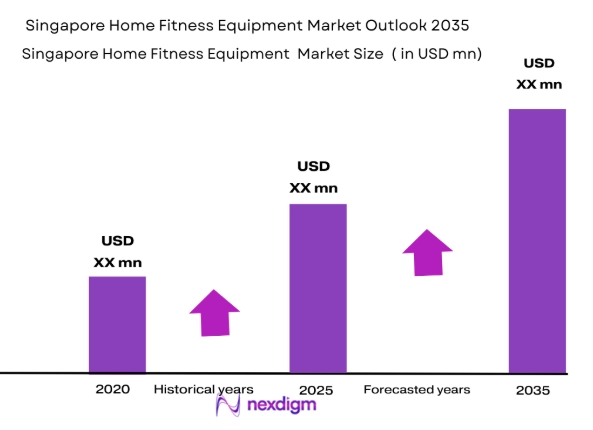
The Singapore Home Fitness Equipment market is valued at approximately USD ~ million, a result of increasing consumer interest in health and wellness, particularly due to the growing adoption of home-based fitness solutions. The market has been driven by rising health consciousness, supported by government health initiatives and increased urbanization. Furthermore, the trend of incorporating fitness into daily routines is accelerating the demand for home fitness equipment. The market is expected to see continued growth as consumers increasingly prioritize convenience and fitness accessibility at home.
Singapore is the dominant market in the region, driven by its affluent urban population and high levels of technological adoption. The city-state has a high concentration of health-conscious individuals, and its active lifestyle is supported by government initiatives promoting physical activity. Additionally, Singapore’s advanced infrastructure and internet penetration make it a favorable market for smart fitness equipment and connected solutions. Other urban regions in Southeast Asia, including Kuala Lumpur and Bangkok, also contribute significantly to the regional market, albeit to a lesser extent, due to similar urbanization trends and growing interest in fitness.
Market Segmentation
By Product Type
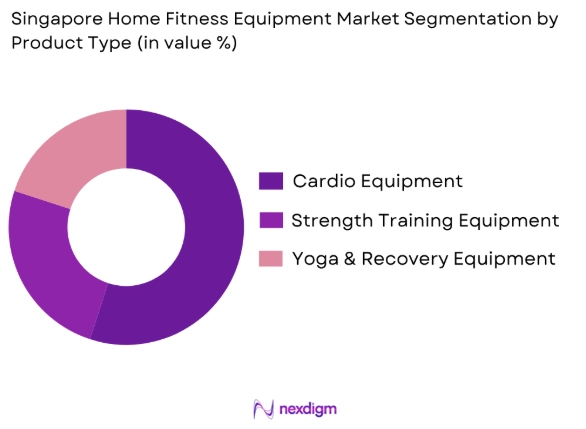
The Singapore Home Fitness Equipment market is segmented by product type into cardio equipment, strength training equipment, and yoga & recovery equipment. Among these, cardio equipment, particularly treadmills and exercise bikes, holds the largest market share in Singapore. This dominance is attributed to the convenience of indoor cardio workouts, which fit seamlessly into the busy lives of Singaporean residents. Additionally, advancements in smart cardio equipment that tracks performance and offers interactive features have further fueled the popularity of this segment. Treadmills, in particular, have seen widespread adoption due to their ability to provide an effective cardiovascular workout at home.
By Technology Integration
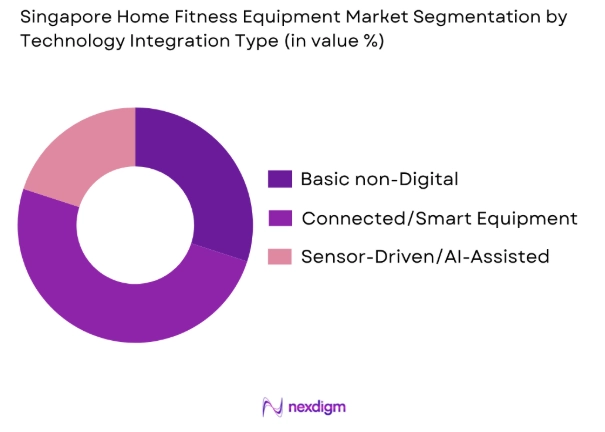
The market is segmented by technology integration into basic non-digital equipment, connected/smart fitness equipment, and sensor-driven/AI-assisted feedback devices. The connected/smart fitness equipment segment is currently dominating the market share, driven by the rising trend of connected fitness platforms. Singapore’s tech-savvy population is increasingly seeking interactive workouts, personalized training, and progress tracking. Products like smart treadmills and bikes, which sync with fitness apps and platforms like Peloton, have become increasingly popular due to their ability to offer immersive experiences and real-time feedback, making them the preferred choice for many consumers.
Competitive Landscape
The Singapore Home Fitness Equipment market is highly competitive, with both local and global players vying for market share. Key players include international fitness equipment giants like NordicTrack, Technogym, and Life Fitness, alongside regional brands such as Decathlon and local players such as GymMaster Singapore. These companies dominate due to their ability to provide a broad range of fitness solutions, integration with digital platforms, and a robust distribution network. The presence of large retailers and online platforms further consolidates their position in the market.
| Company | Establishment Year | Headquarters | Product Portfolio | Technology Integration | Pricing Strategy | Distribution Network |
| NordicTrack | 1975 | United States | ~ | ~ | ~ | ~ |
| Technogym | 1983 | Italy | ~ | ~ | ~ | ~ |
| Life Fitness | 1977 | United States | ~ | ~ | ~ | ~ |
| Decathlon Singapore | 1999 | Singapore | ~ | ~ | ~ | ~ |
| GymMaster Singapore | 2015 | Singapore | ~ | ~ | ~ | ~ |
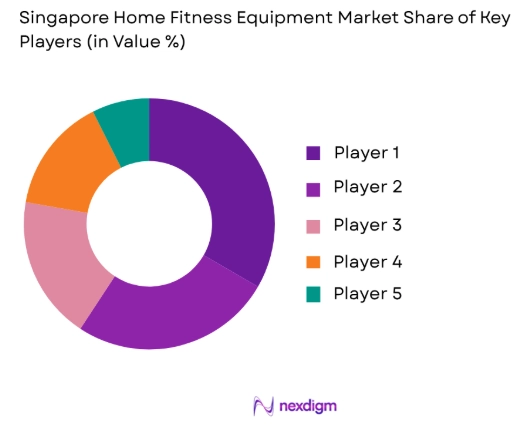
Singapore Home Fitness Equipment Market Analysis
Growth Drivers
Rising Health Awareness & Lifestyle Shift
Health awareness continues to rise as a key factor driving the Singapore Home Fitness Equipment market. In Singapore, the Ministry of Health’s National Steps Challenge revealed that in 2022, over 1 million participants took part in fitness initiatives aimed at improving physical activity levels. This increasing focus on fitness is further supported by the country’s push for a healthier population. The government’s investment in public health initiatives, such as ActiveSG, which promotes fitness programs, shows a growing commitment to improving the nation’s health. As Singapore’s population becomes more health-conscious, demand for home fitness equipment is poised to continue expanding.
Urbanization & Affluence Growth
Urbanization in Singapore has led to a growing demand for home fitness equipment, driven by the increasing population in urban centers. According to the United Nations, Singapore’s urban population is projected to grow steadily, reaching nearly 100% by 2025. As urban living becomes more commonplace, space constraints and time pressures push consumers to opt for convenient fitness solutions at home. Additionally, Singapore’s high GDP per capita, projected to reach USD 84,000 in 2025, enhances purchasing power. The affluent urban population’s ability to invest in high-end fitness equipment is fueling demand for these products in home fitness markets.
Challenges
High Cost of Fitness Equipment
The high cost of fitness equipment remains a significant barrier to widespread adoption in Singapore. While the market for fitness products has expanded, many premium fitness devices, including high-tech treadmills and smart bikes, retail for SGD 3,000 or more. In 2023, the Goods and Services Tax (GST) hike in Singapore increased the cost of imported goods, including fitness equipment, thus impacting consumer spending. This high initial investment is a key concern for lower-income households, hindering broader access to home fitness solutions. Such costs are challenging for many, despite the overall rise in health consciousness in the country.
Logistical and Distribution Challenges
Logistical challenges, particularly in the supply chain, affect the timely availability of fitness equipment in Singapore. The nation’s reliance on imports for most fitness products makes it vulnerable to global shipping disruptions, as seen during the COVID-19 pandemic. According to the Singapore Ministry of Trade and Industry, in 2022, port congestion led to significant delays in the importation of goods, including fitness equipment, causing extended delivery times for both consumers and retailers. This affects the overall customer experience and can lead to frustration, discouraging potential buyers from investing in home fitness solutions.
Opportunities
OEM Partnerships with Fitness Apps
One of the key opportunities for growth in the Singapore Home Fitness Equipment market lies in OEM partnerships with fitness apps. With the increasing use of fitness tracking and wellness apps, over 1.4 million people in Singapore have adopted digital fitness solutions as of 2022. By partnering with fitness app providers, equipment manufacturers can enhance the value proposition of their products. For instance, smart treadmills or exercise bikes integrated with fitness apps such as Peloton or Zwift could provide consumers with personalized workout plans, real-time feedback, and performance tracking. These collaborations are set to attract a larger audience seeking a more interactive and immersive fitness experience.
Local Assembly and Value Chain Localization
Local assembly of fitness equipment presents an opportunity for reducing costs and improving supply chain efficiency in Singapore. The Singapore Economic Development Board has been promoting manufacturing initiatives within the country to reduce dependence on global supply chains. In 2023, Singapore’s manufacturing output grew by 5%, signaling a potential for companies to localize their production of fitness equipment. By establishing local assembly lines, manufacturers can mitigate logistical challenges, shorten delivery times, and provide more affordable products to consumers, while simultaneously benefiting from government incentives aimed at supporting local industries.
Future Outlook
Over the next 5 years, the Singapore Home Fitness Equipment market is expected to continue its upward trajectory, with a significant emphasis on digital fitness solutions and smart, connected devices. The growing trend of remote working and flexible lifestyles will contribute to more consumers opting for at-home fitness equipment. Additionally, government health initiatives promoting fitness and physical well-being will further drive the demand for home fitness solutions. With an increasing focus on health and wellness, the market is poised to see innovations in technology integration, offering consumers more personalized and immersive fitness experiences.
Major Players
- Icon Health & Fitness
- Life Fitness
- Johnson Health Tech
- Technogym
- ProForm
- Decathlon Singapore
- BougeRV
- Jumia Fitness
- GymMaster Singapore
- Capital Sports
- XTERRA Fitness
- Sunny Health & Fitness
- Schwinn Fitness
- Body Solid
- Hammer Strength
Key Target Audience
- Investments and venture capitalist firms
- Government and regulatory bodies (e.g., Ministry of Health Singapore)
- Fitness equipment retailers
- Corporate wellness programs
- Large fitness chains and gyms
- Fitness equipment distributors
- E-commerce platforms
- Fitness tech companies
Research Methodology
Step 1: Identification of Key Variables
This phase involves mapping the ecosystem of stakeholders within the Singapore Home Fitness Equipment market, identifying key trends, consumer behaviors, and regulatory influences. We will gather data through extensive secondary research, analyzing industry reports and databases to determine key variables affecting market dynamics.
Step 2: Market Analysis and Construction
We will analyze historical market data, including sales performance, consumer preferences, and technological trends. This phase will also include evaluating the penetration of smart fitness technologies in the region, tracking how digital integration is reshaping consumer choices.
Step 3: Hypothesis Validation and Expert Consultation
Market hypotheses will be developed and tested through expert consultations. Industry leaders, manufacturers, and distributors will provide insights into product development trends and consumer shifts, validating the initial hypotheses and refining our understanding of market forces.
Step 4: Research Synthesis and Final Output
The final phase will involve consolidating all gathered data into a comprehensive report. This will include primary insights obtained from consultations with manufacturers, distributors, and tech companies, ensuring that the analysis is accurate, reliable, and reflects the true dynamics of the Singapore Home Fitness Equipment market.

- Executive Summary
- Research Methodology (Market Definitions and Standard Terminology, Assumptions and Base Year, Data Collection Framework, Primary vs. Secondary Data Matrix, Sampling Approach, Market Estimation & Sizing Models, Quality Assurance & Validation, Limitations and Areas for Future Enhancement)

- Definition and Scope
- Overview Genesis and Industry Context
- Market Maturity and Adoption Curve
- Product & Service Value Chain
- Distribution Channel Architecture
- Consumer Adoption Life Cycle

- Growth Drivers
Rising Health Awareness & Lifestyle Shift
Urbanization & Affluence Growth
Increasing Gym Closures During Pandemic and Shift to Home Fitness
Fitness Ecosystem Adoption - Challenges
High Cost of Fitness Equipment
Limited Consumer Awareness and Education
Logistical and Distribution Challenges
Economic Instability and Low Disposable Income - Opportunities
OEM Partnerships with Fitness Apps
Local Assembly and Value Chain Localization
Expansion of Financing & Rental Models - Market Trends
Connected Fitness Subscription Bundling
Fitness Data Analytics and Performance Tracking
Lease & Rental Channels Growth - Government Regulations
- SWOT Analysis of Key Competitors
- Porter’s Five Forces

- By Value, 2020-2025
- By Units Sold, 2020-2025
- By Average Selling Price, 2020-2025

- By Product Type (In Value %)
Cardio Equipment
Strength Training Equipment
Yoga & Recovery Equipment - By Technology Integration (In Value %)
Basic non-Digital
Connected / Smart Equipment
Sensor-Driven/AI-Assisted - By Price Tier (In Value %)
Economy / Value Tier
Mid‑Tier
Premium / Pro‑Level - By Distribution Channel (In Value %)
Specialty Fitness Stores
General Sports Stores
Online Marketplaces
Superstores / General Merchandisers
Direct OEM Sales & B2B Channels - By End User (In Value %)
Individual Consumers
Household Buyers
Corporate Wellness Programs
Fitness Coaches & Trainers - By Geography (In Value %)
Central Singapore
East Singapore
North Singapore
West Singapore

- Market Share by Value / Units
- Best Practice Benchmarking
- Cross‑Comparison Parameters (Company Overview, Product Portfolio Breadth, Technology Integration Level, Retail Channel Presence, Geographic Footprint, Pricing Strategy and Tier Positioning After‑Sales & Service Network, Brand Equity / Consumer Preference Scores)
- SWOT Analysis of Major Players
- Pricing Analysis for Key Competitors in the Market
- Company Profiles of Major Competitors
Icon Health & Fitness / NordicTrack
Life Fitness / Precor
Johnson Health Tech
Technogym
ProForm
Decathlon Singapore
BougeRV
Jumia Fitness
GymMaster Singapore
Capital Sports
XTERRA Fitness
Sunny Health & Fitness Schwinn Fitness
Body Solid
Hammer Strength

- Personal fitness equipment for self-use
- Family-driven fitness equipment investments
- Employee health initiatives and benefits
- Professional trainers using fitness equipment
- High-income consumers investing in luxury

- By Value, 2026-2035
- By Units Sold, 2026-2035
- By Average Selling Price, 2026-2035


 Request a Sample
 Ask for Customization
 Get a Quote
 Enquire Now