

 Download PDF
Market Overview
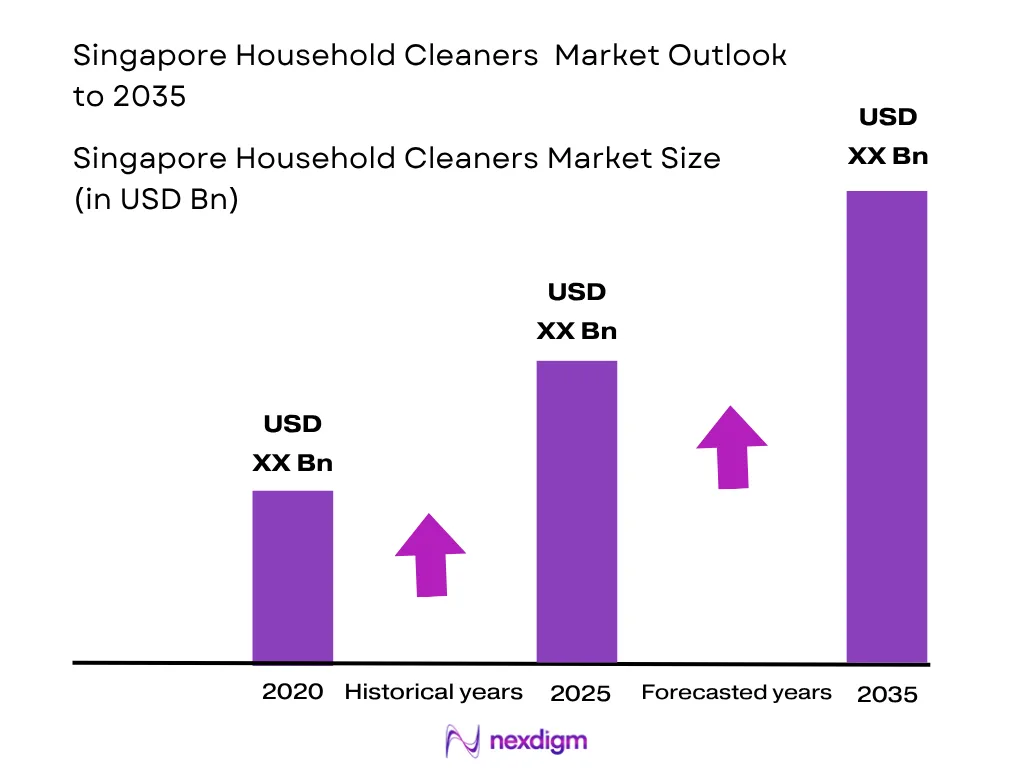
The market is valued at approximately USD ~ billion, driven by the growing demand for household cleaning products in urban and suburban households. Consumer preference for eco-friendly and efficient products has been a key factor in propelling market growth. Furthermore, innovation in cleaning formulations, combined with increased consumer awareness about hygiene and safety, continues to fuel demand. Additionally, the shift towards e-commerce and omnichannel distribution models has expanded accessibility, making products available to a larger, more diverse consumer base.
The market is dominated by regions with high urbanization rates and a focus on consumer health, including countries such as the United States, Germany, Japan, and China. In these regions, rapid urbanization, increased disposable income, and stringent regulatory frameworks regarding hygiene and sustainability have amplified market demand. The demand is particularly high in metropolitan cities due to busy lifestyles and growing awareness of household safety standards. These countries continue to lead the market due to their well-established retail networks and substantial investments in eco-compliant technologies.
Market Segmentation
By Product Type
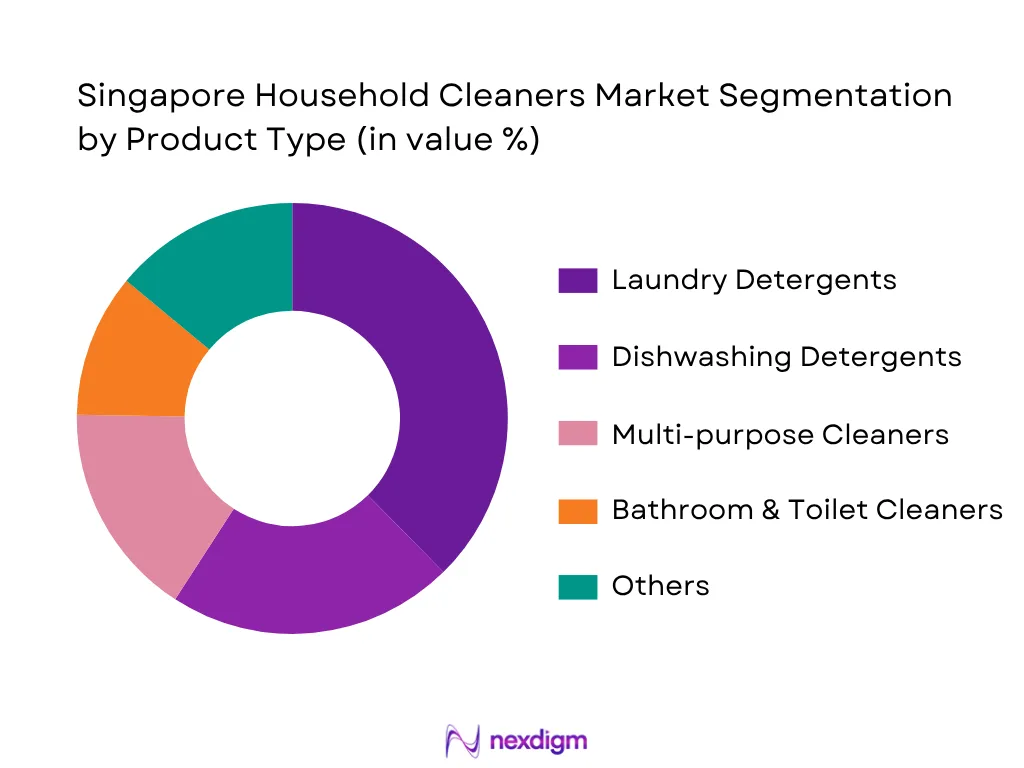
The household cleaners market is segmented by product category into laundry detergents, dishwashing detergents, multi-purpose cleaners, and specialized cleaning solutions. In recent years, laundry detergents have dominated the market share, particularly liquid variants, due to their versatility, ease of use, and high consumer demand for fabric care solutions. The increasing popularity of high-efficiency, concentrated, and eco-friendly detergents is further contributing to the segment’s dominance. Innovations in fragrance and formulation, aimed at enhancing laundry performance and reducing environmental impact, have also driven significant growth in this category.
By Product Form
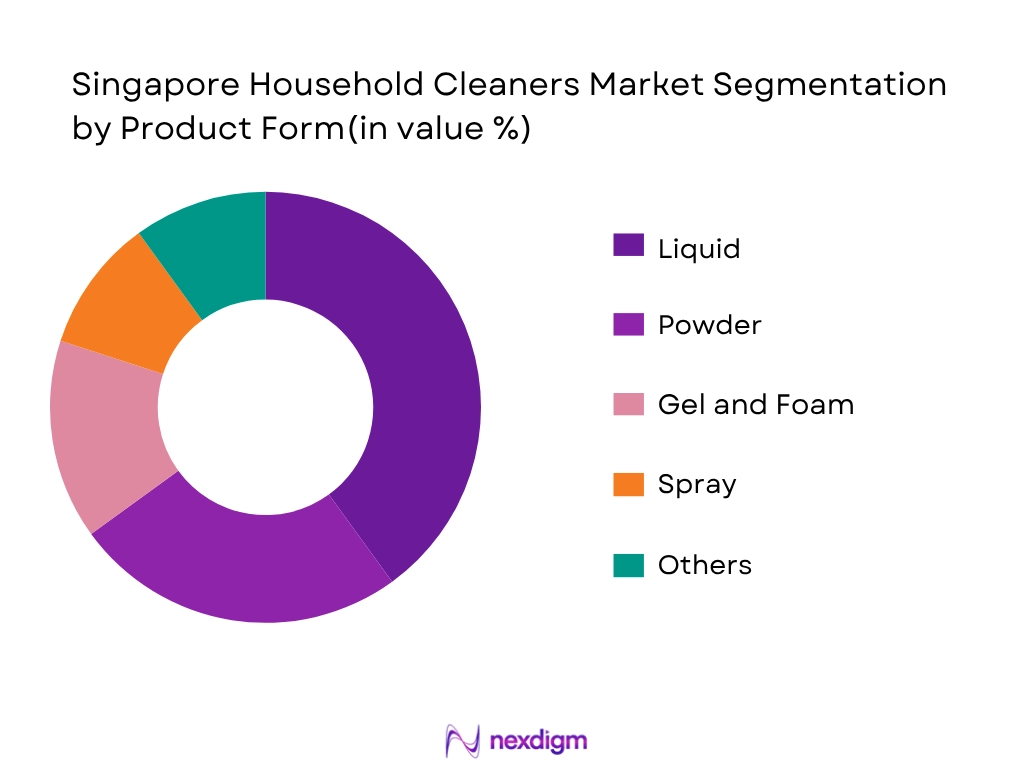
In the household cleaners market, product form is another critical segmentation, comprising liquid, powder, gel, foam, wipes, and tablets. The liquid form is particularly dominant, due to its easy application, versatility, and preference for both high-efficiency and eco-friendly cleaning solutions. Consumers tend to favor liquid cleaners because they offer convenient packaging, precise application, and the ability to address a broad range of cleaning needs, from laundry to surface cleaning.
Competitive Landscape
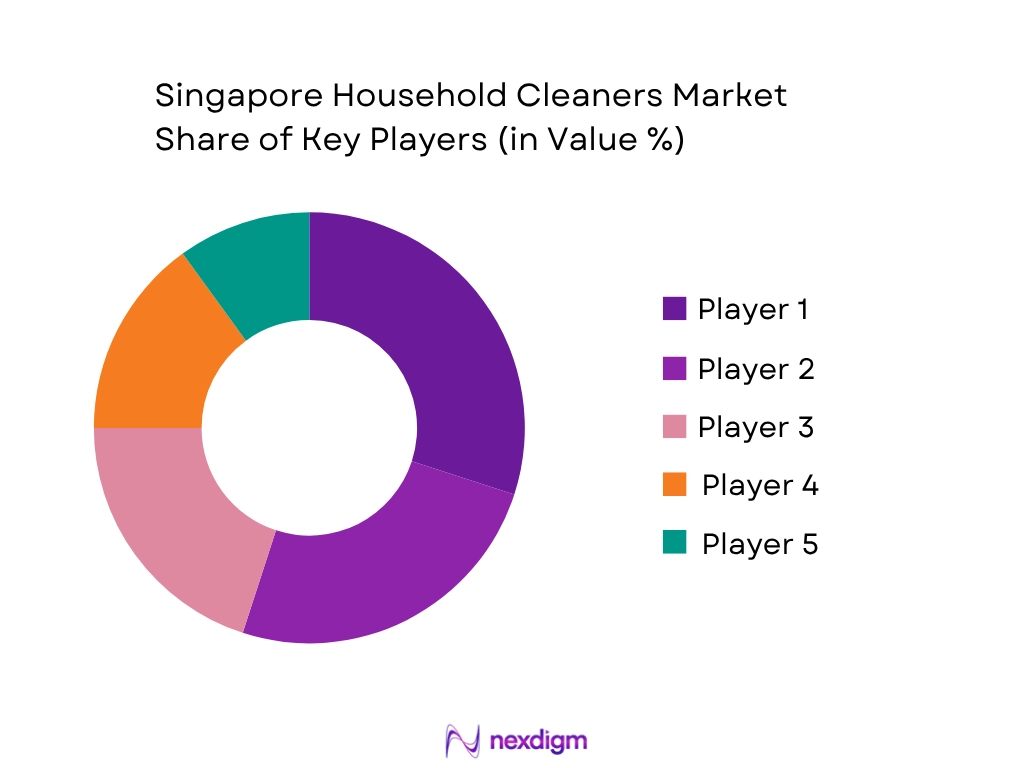
The global household cleaners market is dominated by a few major players that maintain significant influence across various regions. These companies include multinational corporations such as Unilever, Procter & Gamble, and Reckitt Benckiser. Their strong brand presence, diverse product offerings, and extensive distribution networks have established them as key market players. Additionally, these companies are actively engaged in product innovation and sustainability practices, which have strengthened their competitive position.
| Company | Establishment Year | Headquarters | Product Portfolio | Revenue (USD) | Market Presence | R&D Investment |
| Unilever | 1929 | London, UK | ~ | ~ | ~ | ~ |
| Procter & Gamble | 1837 | Cincinnati, USA | ~ | ~ | ~ | ~ |
| Reckitt Benckiser | 1814 | Slough, UK | ~ | ~ | ~ | ~ |
| S. C. Johnson & Son | 1886 | Racine, USA | ~ | ~ | ~ | ~ |
| Henkel | 1876 | Düsseldorf, Germany | ~ | ~ | ~ | ~ |
Singapore Household Cleaners Market Analysis
Growth Drivers
Urban Apartment Living
Urban apartment living in Singapore is a key driver for the growth of the household cleaners market. Singapore’s urbanization rate stands at around 100%, with a substantial portion of the population residing in high-rise apartments. The Housing and Development Board (HDB) estimates that 80% of Singapore’s resident population lives in public housing, primarily apartments. The growing number of households in urban areas is contributing to the demand for household cleaning products. In particular, the 1–3 room flats and 4–5 room flats continue to dominate the residential landscape, comprising 70% of HDB flat types in 2024. These compact spaces require efficient and effective cleaning solutions, which drives the demand for specialized cleaning products like multi-surface cleaners, bathroom disinfectants, and floor cleaners. Urban apartment dwellers often face time constraints, which fosters the popularity of ready-to-use and quick-clean solutions, further propelling the demand for innovative cleaning products in the market.
Hygiene Consciousness
Hygiene consciousness continues to rise across Singapore, significantly contributing to the increasing demand for household cleaners. According to the World Health Organization (WHO), Singapore ranks as one of the highest in Asia for personal hygiene practices. The heightened awareness of cleanliness is further amplified by public health campaigns and the COVID-19 pandemic, which has triggered a long-term increase in hygiene-conscious behaviors among consumers. In 2024, hygiene products like disinfectants, multi-purpose cleaners, and sanitizing solutions are seeing strong demand as consumers prioritize cleanliness in both their homes and public spaces. Additionally, Singapore’s relatively high per capita income, estimated at USD 75,000 in 2024 according to the World Bank, enables consumers to invest in premium cleaning products with added hygiene benefits, further driving the market. With more people opting for antibacterial and disinfectant products, hygiene consciousness remains a strong market driver.
Challenges
Input-Cost Inflation
Input-cost inflation remains a challenge for Singapore’s household cleaners market in 2024. The Ministry of Trade and Industry (MTI) reports that inflation in the cost of raw materials, including chemicals, plastics, and packaging, has significantly impacted production costs. This is exacerbated by global supply chain disruptions, particularly in the Asia-Pacific region, which have caused an increase in the prices of imported goods. The price of chemicals used in cleaning products has seen a substantial increase, with certain key raw materials, such as surfactants, rising by nearly 8% in 2024. Additionally, packaging costs, particularly for environmentally friendly options, have risen by about 6%. These increases in input costs place pressure on manufacturers, who are then forced to raise prices, which can negatively affect consumer demand, particularly in price-sensitive segments. Manufacturers are forced to find a balance between maintaining profitability and keeping products affordable for consumers.
Shelf Congestion
Shelf congestion in the Singapore household cleaners market is another significant challenge. As the demand for cleaning products grows, retailers face challenges in managing limited shelf space while catering to a wide variety of consumer preferences. In 2024, the number of household cleaner SKUs in major retail outlets increased by 20%, driven by the introduction of eco-friendly products, premium brands, and specialized cleaners. With more options available, it becomes increasingly difficult for brands to secure prominent shelf space, which can limit their visibility and consumer reach. Retailers in Singapore, including supermarkets and hypermarkets, are adopting tighter stocking strategies, focusing on high-turnover products, while products that do not meet specific criteria for consumer demand may face limited shelf space. This has led to greater competition among brands, with smaller or less well-established brands struggling to gain shelf space in mainstream retailers.
Opportunities
Eco-Certified Cleaners
Eco-certified cleaners represent a significant opportunity for growth in Singapore’s household cleaners market. With increasing awareness of environmental issues and the growing demand for sustainable products, eco-certified cleaning solutions are becoming more popular among consumers. In 2024, there has been a notable increase in the adoption of cleaning products that feature certifications such as Green Label and Eco-Label, which guarantee that the products meet environmental standards. This shift is partly driven by the government’s commitment to sustainability as part of its Green Plan 2030, which focuses on reducing carbon emissions, waste, and promoting environmentally friendly practices. In 2024, Singapore’s National Environment Agency (NEA) reported that more than 30% of cleaning products in major supermarkets and retail chains carry an eco-certification label, reflecting the rising consumer demand for eco-friendly cleaning solutions. This trend is expected to expand as consumers continue to prioritize sustainability and the government pushes forward with initiatives aimed at reducing the environmental footprint of consumer products.
Refill Systems
Refill systems are gaining significant traction in Singapore’s household cleaners market as consumers increasingly seek sustainable alternatives to traditional packaging. In 2024, refill pouches, which allow consumers to reuse packaging, are witnessing strong growth, particularly in supermarkets and eco-focused retail chains. This is driven by the rising concerns over plastic waste and the government’s push for a circular economy, which emphasizes waste reduction and resource efficiency. According to the Singapore Packaging Agreement (SPA), there was a 12% increase in the use of refill-based packaging in the first quarter of 2024 alone. Brands such as Ecover and Method have been at the forefront of this trend, offering refill stations and eco-friendly refill pouches, which are becoming increasingly popular among environmentally conscious consumers. The Singapore government’s Green Plan, which includes initiatives to reduce plastic waste and promote sustainable packaging, is expected to further accelerate the adoption of refill systems in the household cleaners segment.
Future Outlook
Over the next decade, the household cleaners market is expected to witness steady growth driven by increasing demand for eco-friendly, sustainable, and efficient cleaning products. Continued innovation in cleaning technologies and the growing consumer preference for non-toxic, biodegradable solutions are set to shape market dynamics. The increased adoption of e-commerce and online grocery platforms will further boost accessibility and purchasing convenience. Regulatory changes around chemical safety and sustainability will also continue to impact market strategies.
Major Players
- Unilever
- Procter & Gamble
- Reckitt Benckiser
- S. C. Johnson & Son
- Henkel
- Kao Corporation
- Lion Corporation
- Colgate-Palmolive
- The Clorox Company
- SCG Chemicals
- Kimberly-Clark
- Church & Dwight
- Henkel
- Amway
- Ecover
Key Target Audience
- Retailers and wholesalers of household cleaners
- Supermarket chains and e-grocery operators
- E-commerce platforms and online marketplaces
- Manufacturers of cleaning agents and household products
- Investment and venture capitalist firms
- Government and regulatory bodies (e.g., U.S. Environmental Protection Agency, European Chemicals Agency)
- Importers and distributors of household cleaning products
- Large-scale households and property management companies
Research Methodology
Step 1: Identification of Key Variables
The research begins by identifying key variables that impact the household cleaners market. This step includes analyzing consumer preferences, distribution channels, and regional trends. Data from both secondary and proprietary sources is collected to construct a comprehensive framework.
Step 2: Market Analysis and Construction
A detailed analysis of historical data from various market segments (e.g., product categories, distribution channels, and regions) is performed. This process will also include evaluating market penetration and competitor dynamics, ensuring accuracy in future projections.
Step 3: Hypothesis Validation and Expert Consultation
Market hypotheses and trends are validated through expert consultations and interviews with key industry players, including manufacturers, distributors, and retail partners. This process will enhance the credibility and reliability of the market insights gathered.
Step 4: Research Synthesis and Final Output
The final phase involves synthesizing the insights from previous steps, including expert consultations and data triangulation. This phase will result in the final output, providing actionable market intelligence for stakeholders in the household cleaners industry.

- Executive Summary
- Research Methodology (Market definitions and cleaner taxonomy; Scope boundaries between household cleaners, home care adjacencies and I&I overlaps; Top-down market sizing using household expenditure, retail sales, e-commerce and trade-flow triangulation; Bottom-up market build using SKU audits, assortment mapping, price-per-use benchmarking and weighted distribution checks; Primary interviews with principals, importers, distributors, retailers and marketplace sellers; Market share estimation framework; Forecasting assumptions, sensitivity analysis and validation checks)

- Definition and Scope
- Market Genesis and Continuum of Adoption
- Category Architecture and Product Taxonomy
- Evolution of Household Cleaning Behaviour
- Supply Chain, Import Dependency and Route-to-Market
- Regulatory, Safety and Sustainability Framework
- Innovation and New Product Launch Timeline

- Growth Drivers (Urban apartment living, hygiene consciousness, convenience orientation, premiumization, omnichannel accessibility)
- Challenges (Input-cost inflation, shelf congestion, private-label pressure, storage-space constraints, compliance complexity)
- Opportunities (Eco-certified cleaners, refill systems, concentrated liquids, mission-specific problem-solution cleaners, premium fragrance propositions)
- Trends (Multipurpose migration, low-suds/liquid shift, antibacterial reassurance, plant-based adoption, ratings/reviews-led discovery)
- Import Dependence and Supply Risk Mapping (Source-country concentration, freight exposure, lead times, distributor layering, inventory cycles)
- Regulatory and Sustainability Landscape (Disinfection guidance, active-ingredient logic, household chemical safety, GHS good practice, Green Label relevance, packaging and waste implications)
- Value Chain and Stakeholder Ecosystem (Principals, contract manufacturers, importers, distributors, key accounts, e-grocery, marketplaces, end households)
- Porter’s Five Forces (Supplier power, retailer leverage, substitute threat, entry barriers, rivalry intensity)
- Competition Ecosystem (Global majors, local eco brands, price challengers, private label, specialist challengers)

- By Value (2020-2025)
- By Volume (2020-2025)
- By Average Selling Price (2020-2025)
- By Per Household Spend (2020-2025)

- By Product Category (In Value%)
Laundry Detergents
Dishwashing Detergents
Multi-Purpose and Surface Cleaners
Bathroom and Toilet Cleaners
Bleach and Disinfectants
Floor Cleaners
Glass and Window Cleaners
Specialty Stain, Drain and Appliance Cleaners - By Product Form (In Value%)
Liquid
Powder
Gel and Foam
Spray
Wipes
Tablets, Capsules and Pods - By Pack Architecture (In Value%)
Rigid Bottles
Trigger Sprays
Refill Pouches
Wipe Packs
Cartons for Tablets, Capsules and Pods
Bulk Packs and Jerry Cans - By Pack Size (In Value%)
Up to 500 ml/g
501–1,000 ml/g
1,001–2,000 ml/g
Above 2,000 ml/g
Multipacks and Bundled Value Packs - By Distribution Channel (In Value%)
Supermarkets and Hypermarkets
Convenience and Value Stores
Pharmacies and Health & Beauty Retailers
Hardware, Home Improvement and Specialty Stores
E-Grocery
Online Marketplaces
Direct Selling and Community Selling - By Claim Positioning (In Value%)
Anti-Bacterial and Disinfecting
Low-Suds and Front-Load Compatible
Plant-Based and Biodegradable
Concentrated and High-Efficiency
Sensitive Skin and Baby-Safe
Fragrance-Led and Deodorising
Stain, Grease and Limescale Specialist - By Housing Type (In Value%)
HDB 1–3 Room Flats
HDB 4–5 Room Flats
Executive and Multi-Generation Flats
Private Condominiums and Apartments
Landed Homes - By Price Tier (In Value%)
Private Label and Economy
Mass Market
Upper Mainstream
Premium
Eco-Premium and Specialist

- Market Share of Major Players by Value and Volume, by Product Category, by Distribution Channel)
- Cross Comparison Parameters (Category coverage depth; Hero SKU count by cleaning mission; Average selling price per litre/kg and cost per wash/use; Pack-format and refill-pouch mix; Anti-bacterial/low-suds/plant-based claim intensity; Modern trade and e-commerce penetration; Singapore Green Label and eco-certification status; Import-distributor-manufacturing footprint)
- Brand Architecture and Hero SKU Benchmarking (Lead SKUs, fragrance variants, efficacy claims, refill availability, pack-size spread)
- Pricing Analysis Basis Leading SKUs (SGD/L, SGD/kg, cost per wash, cost per use, promo discount depth, private-label gap)
- Assortment, Shelf-Share and Review Benchmarking (Offline facings, online listing breadth, search visibility, rating count, review sentiment)
- Detailed Profiles of Major Companies
Unilever
Procter & Gamble
Reckitt
S. C. Johnson & Son
Henkel
Kao Corporation
Lion Corporation
Colgate-Palmolive
The Clorox Company
Diversey Holdings
Ecolab (Consumer & Institutional Cleaning)
Nanyang Family Products
Nature Clean (Local Eco‑Brand)
Kirei (Sustainable / Japanese Brand in SG)
3M Consumer Care
Ecover

- Consumer Profile by Household Structure (Singles, couples, families with children, multi-generational households, helper-supported households)
- Cleaning Mission Analysis (Laundry, dish care, kitchen degreasing, bathroom sanitisation, toilet care, floor care)
- Purchase Decision Hierarchy (Efficacy, germ-kill assurance, fragrance, safety, eco credentials, value-for-money)
- Purchase Frequency, Basket Size and Stock-Up Behaviour (Planned stock-up, top-up buying, emergency replenishment, promo pull-forward)
- Channel Preference and Conversion Triggers (Modern trade, e-grocery, marketplaces, pharmacy/beauty, direct selling)
- Promotion Mechanics and Loyalty Drivers (Hi-low discounting, multibuy, voucher stacking, bundle conversion, rating/review influence)

- By Value (2026-2035)
- By Volume (2026-2035)
- By Average Selling Price (2026-2035)
- By Per Household Spend (2026-2035)


 Request a Sample
 Ask for Customization
 Get a Quote
 Enquire Now