
 Download PDF
Market Overview
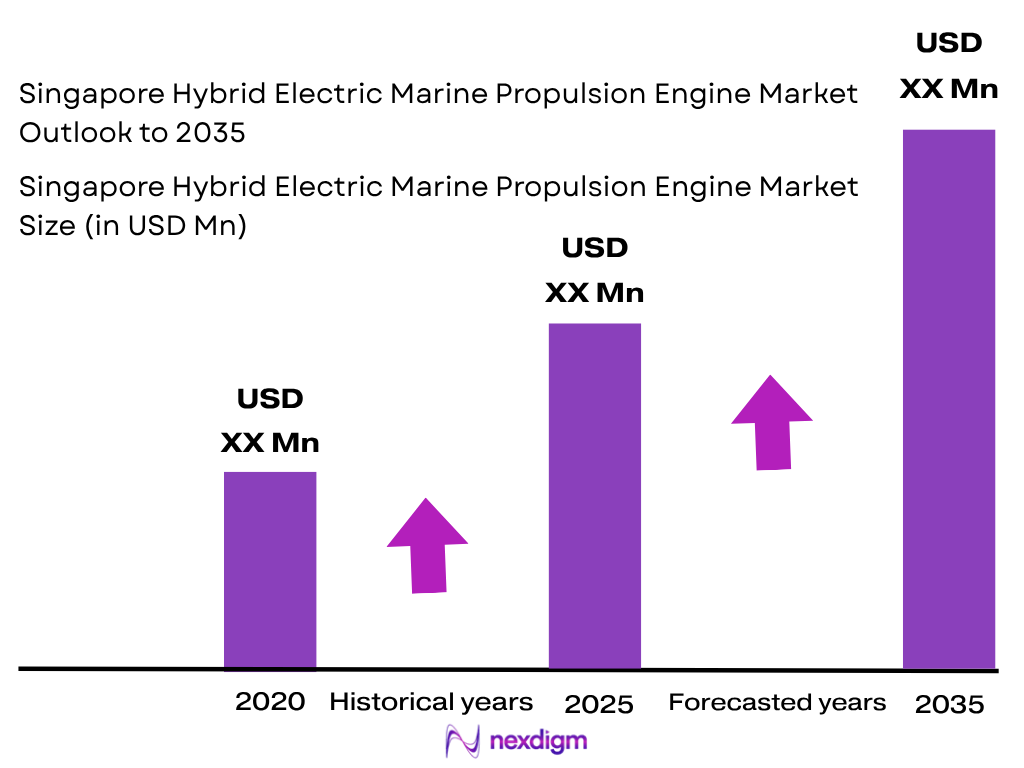
The Singapore Hybrid Electric Marine Propulsion Engine Market is valued at ~85.6 USD X million in 2024, based on a five-year historical analysis of marine electrification investments, vessel modernization programs, and hybrid propulsion system adoption across harbour craft, offshore vessels, and commercial marine applications. The market size is driven by increasing demand for fuel-efficient propulsion systems, Maritime Singapore’s decarbonization initiatives, replacement of conventional diesel propulsion systems, and rising investments in green vessel technologies.
Singapore dominates the hybrid electric marine propulsion engine market due to its position as one of the world’s largest maritime hubs, supported by extensive port infrastructure, a high concentration of harbour craft operators, ship management companies, and marine engineering providers. Cities including Singapore City and Jurong contribute significantly due to their shipbuilding, vessel repair, offshore marine services, and maritime technology ecosystems. Regional maritime activity from Southeast Asian shipping routes further strengthens demand.
Market Segmentation
By Vessel Type
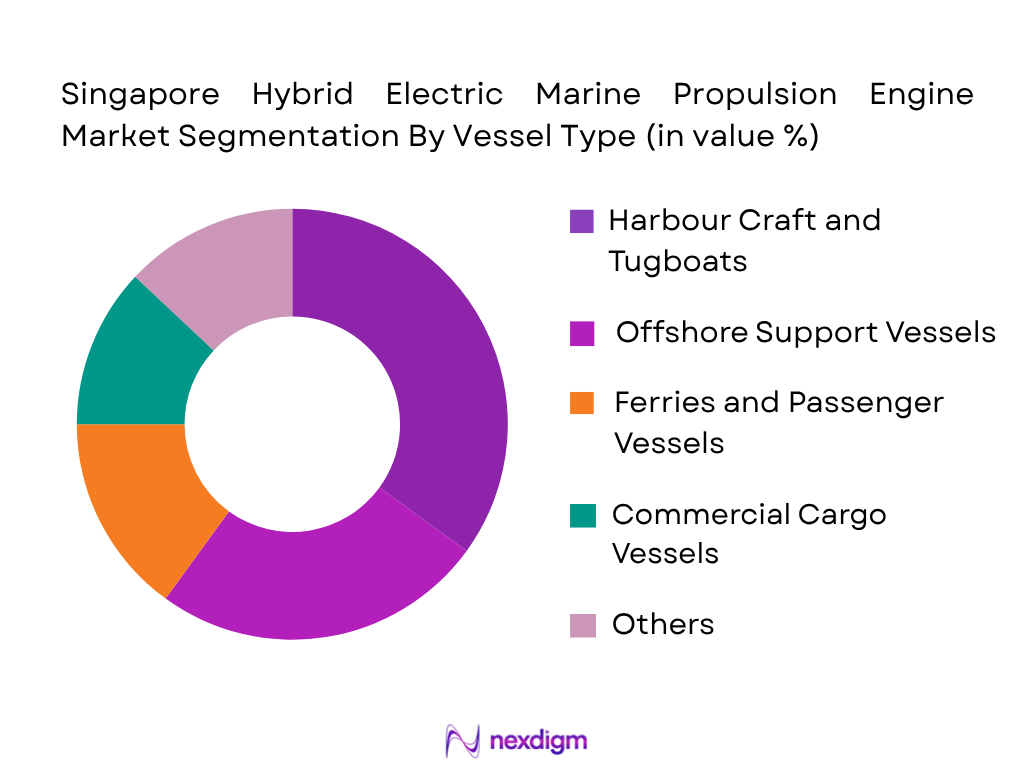
Singapore Hybrid Electric Marine Propulsion Engine Market is segmented by vessel type into harbour craft and tugboats, offshore support vessels, ferries and passenger vessels, commercial cargo vessels, leisure vessels, and government vessels. Harbour craft and tugboats hold the dominant market share due to their frequent operational cycles, fixed routes, high fuel consumption, and suitability for hybrid propulsion integration. Tugboats and harbour vessels operating within Singapore port waters require continuous power management, making hybrid systems attractive for reducing fuel consumption, improving manoeuvrability, and meeting maritime emission regulations. Additionally, Singapore’s transition toward cleaner harbour craft operations has encouraged vessel operators to evaluate hybrid propulsion solutions for both new vessels and retrofit applications.
By Propulsion System Type
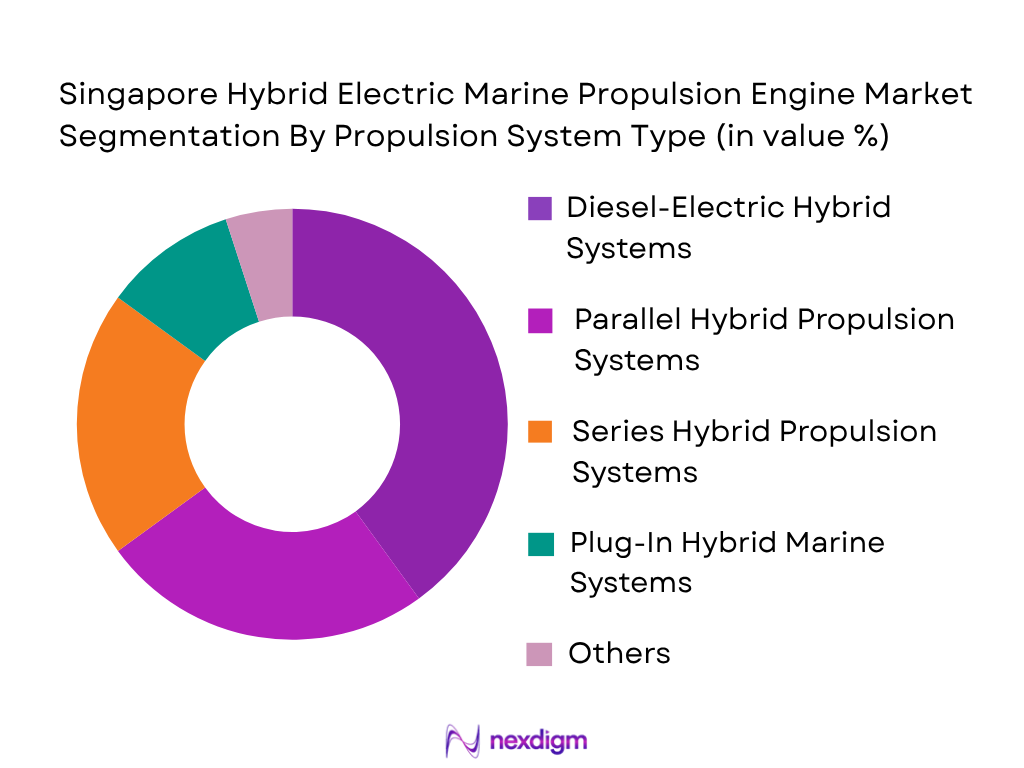
Singapore Hybrid Electric Marine Propulsion Engine Market is segmented by propulsion system type into diesel-electric hybrid systems, parallel hybrid systems, series hybrid systems, plug-in hybrid systems, and fuel cell hybrid systems. Diesel-electric hybrid systems dominate the market due to their compatibility with existing marine fleets, easier integration with conventional propulsion architecture, and ability to improve fuel efficiency without completely replacing diesel engines. These systems are widely preferred for commercial vessels where operational reliability, long sailing hours, and gradual decarbonization are important considerations. Marine operators in Singapore increasingly adopt hybrid configurations that combine conventional engines with electric motors and energy storage systems to achieve improved propulsion efficiency while maintaining operational flexibility.
Competitive Landscape
The Singapore Hybrid Electric Marine Propulsion Engine Market is characterized by the presence of global marine propulsion manufacturers, electrification technology providers, and specialized marine system integrators. The competitive environment is shaped by companies offering integrated propulsion solutions, battery technologies, energy management systems, and vessel retrofit capabilities. Major players compete through technological innovation, marine certification expertise, global service networks, and partnerships with shipyards and vessel operators.
| Company | Establishment Year | Headquarters | Marine Propulsion Portfolio | Hybrid Technology Capability | Battery Integration Capability | Singapore Market Presence | Vessel Applications |
| ABB | 1883 | Zurich, Switzerland | ~ | ~ | ~ | ~ | ~ |
| Wärtsilä | 1834 | Helsinki, Finland | ~ | ~ | ~ | ~ | ~ |
| Siemens Energy | 1847 | Munich, Germany | ~ | ~ | ~ | ~ | ~ |
| Volvo Penta | 1907 | Gothenburg, Sweden | ~ | ~ | ~ | ~ | ~ |
| Kongsberg Maritime | 1814 | Kongsberg, Norway | ~ | ~ | ~ | ~ | ~ |
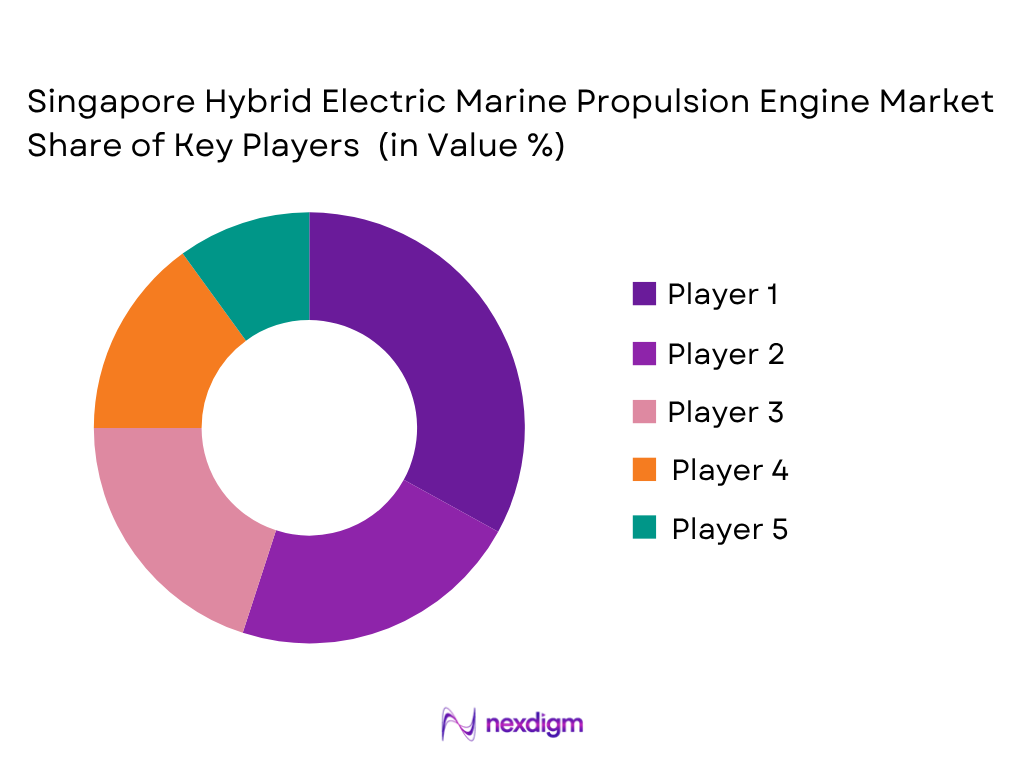
Singapore Hybrid Electric Marine Propulsion Engine Market Analysis
Growth Drivers
Port Electrification Initiatives
Singapore’s port electrification initiatives are accelerating demand for hybrid electric marine propulsion engines as the country transitions toward lower-emission maritime operations. The Maritime and Port Authority of Singapore (MPA) has implemented the Maritime Singapore Green Initiative and is supporting electrification of harbour craft through cleaner propulsion technologies and charging infrastructure development. Singapore operates one of the world’s busiest container ports, handling 41.12 million TEUs of container throughput in 2024, according to MPA, creating strong operational demand for efficient harbour vessels, tugboats, and support craft. The International Maritime Organization (IMO) has also strengthened global decarbonization measures, with international shipping responsible for approximately 3% of global greenhouse gas emissions, increasing pressure on ports and vessel operators to adopt cleaner propulsion solutions. Singapore’s port ecosystem includes more than 100,000 vessel calls annually, according to MPA, creating significant operating hours where hybrid propulsion systems can generate fuel efficiency improvements. Electrification programs targeting harbour craft, pilot boats, ferries, and service vessels are expected to support adoption of hybrid propulsion systems by enabling reduced fuel consumption, improved operational efficiency, and compliance with maritime emission requirements.
Maritime Decarbonization Targets
Maritime decarbonization targets are a major growth driver for hybrid electric marine propulsion engine adoption in Singapore as vessel operators seek solutions to reduce emissions while maintaining operational reliability. The International Maritime Organization has established a strategy to achieve net-zero greenhouse gas emissions from international shipping by or around 2050, increasing demand for transitional technologies such as hybrid propulsion systems. Singapore has committed to strengthening its green maritime ecosystem through the Maritime Singapore Decarbonisation Blueprint, which focuses on reducing emissions from port operations and domestic maritime activities. According to Singapore’s National Environment Agency, the country recorded approximately 58.59 million tonnes of carbon dioxide equivalent greenhouse gas emissions in 2022, highlighting the importance of emission reduction across industrial sectors including maritime activities. The maritime sector contributes significantly to Singapore’s economy, with more than 170,000 maritime-related jobs supported across the ecosystem, according to the Maritime and Port Authority of Singapore. Hybrid propulsion engines provide a practical pathway for operators by combining conventional engines with electric motors and battery systems, allowing gradual transition toward low-carbon vessel operations.
Market Challenges
High Initial Installation Cost
High initial installation requirements remain a key challenge for hybrid electric marine propulsion engine adoption in Singapore, particularly for small and medium-sized vessel operators. Hybrid propulsion systems require integration of electric motors, battery energy storage systems, power management systems, control software, and vessel modifications, creating higher upfront investment requirements compared with conventional marine engines. The challenge is amplified among Singapore’s harbour craft operators, where many vessels are operated by smaller businesses with limited capital allocation capacity. According to Singapore’s Ministry of Transport, the country has more than 1,600 harbour craft operating within its waters, including supply boats, passenger vessels, and service craft, making affordability and financing accessibility important adoption factors. Battery technology also requires additional marine-grade safety systems due to harsh operating environments involving humidity, vibration, and temperature variation. The International Energy Agency reported that global lithium-ion battery demand reached 750 GWh in 2023, reflecting increasing competition for battery materials across transportation sectors. Although hybrid propulsion provides long-term operational benefits, operators must evaluate investment recovery through fuel savings, regulatory compliance, and vessel lifecycle requirements before adoption.
Limited Charging Infrastructure
Limited marine charging infrastructure remains a significant barrier to widespread hybrid electric marine propulsion engine adoption in Singapore. Hybrid vessels require reliable access to charging facilities, shore power connections, and suitable energy distribution systems to maximize electric operating capability. Although Singapore is developing sustainable maritime infrastructure, large-scale marine charging deployment requires coordination between port authorities, vessel operators, energy providers, and technology suppliers. According to the Maritime and Port Authority of Singapore, Singapore’s port ecosystem supports more than 140,000 vessel arrivals annually, creating substantial infrastructure requirements for future electrified marine fleets. The International Energy Agency reported that global electricity demand increased by approximately 2.2% in 2023, reflecting rising pressure on energy infrastructure development across transportation sectors. Marine charging infrastructure also faces challenges related to vessel scheduling, grid capacity management, safety certification, and compatibility between different propulsion technologies. For hybrid electric marine propulsion engines, insufficient charging availability can reduce the operational benefits of battery-assisted propulsion, particularly for vessels requiring continuous operation such as tugboats, harbour craft, and offshore support vessels.
Market Opportunities
Electric Harbour Craft Transition
The transition toward electric and hybrid harbour craft represents a major growth opportunity for Singapore’s hybrid electric marine propulsion engine market due to the country’s concentrated port activity and high utilization of short-distance vessels. Harbour craft including tugboats, ferries, pilot boats, and service vessels operate predictable routes, making them suitable for battery-assisted propulsion solutions. The Maritime and Port Authority of Singapore has introduced initiatives supporting the adoption of cleaner harbour craft technologies as part of Singapore’s maritime decarbonization roadmap. Singapore’s maritime sector contributes approximately 7% of the country’s gross domestic product, according to the Maritime and Port Authority of Singapore, demonstrating the economic importance of improving vessel efficiency. The country also manages one of the busiest maritime hubs globally, with more than 600 million tonnes of cargo throughput handled in 2024, according to MPA statistics. These operational characteristics create opportunities for hybrid propulsion manufacturers to provide retrofit solutions and new vessel propulsion systems. Hybrid engines can support harbour craft operators by reducing fuel consumption during low-load operations, improving engine efficiency, and enabling compliance with future emission requirements.
Smart Port Development
Smart port development and maritime digitalization create significant opportunities for hybrid electric marine propulsion engine adoption through integration of intelligent energy management, automation, and predictive maintenance systems. Singapore has been investing in digital maritime infrastructure through initiatives such as the Next Generation Port project and advanced port management technologies. According to the Maritime and Port Authority of Singapore, the country’s port handles connectivity with approximately 600 ports across more than 120 countries, creating demand for efficient and technologically advanced maritime operations. Digital platforms combined with hybrid propulsion systems enable real-time monitoring of battery performance, fuel consumption, vessel efficiency, and maintenance requirements. The World Bank’s Logistics Performance Index identifies Singapore as one of the leading global logistics hubs, supported by strong infrastructure and operational efficiency. Increasing adoption of smart port technologies provides opportunities for hybrid propulsion providers to integrate marine electrification with digital vessel management platforms. These solutions can improve operational planning, reduce unnecessary fuel usage, and support data-driven decisions for fleet modernization programs among commercial marine operators.
Future Outlook
Over the next decade, the Singapore Hybrid Electric Marine Propulsion Engine Market is expected to show significant growth driven by maritime decarbonization initiatives, increasing adoption of green vessel technologies, rising fuel cost concerns, and advancements in battery energy storage systems. Demand will increase particularly among harbour craft operators, offshore vessel owners, and commercial fleet operators seeking improved operational efficiency and compliance with emission standards. The market is expected to benefit from vessel electrification programs, expansion of charging infrastructure, development of smart ports, and increasing collaboration between shipbuilders, propulsion manufacturers, and technology providers.
Major Players
- ABB
- Wärtsilä
- Siemens Energy
- Volvo Penta
- Rolls-Royce Holdings
- Kongsberg Maritime
- MAN Energy Solutions
- Cummins
- Yanmar Holdings
- Torqeedo
- ePropulsion
- Oceanvolt
- Danfoss
- CATL
- Nidec
Key Target Audience
- Marine propulsion manufacturers and system integrators
- Shipbuilders and shipyard operators
- Harbour craft operators and fleet owners
- Offshore support vessel operators
- Maritime technology and electrification solution providers
- Investments and venture capitalist firms (Temasek Holdings, GIC, maritime technology investment funds)
- Government and regulatory bodies (Maritime and Port Authority of Singapore, Singapore Economic Development Board, Ministry of Transport Singapore)
- Battery technology manufacturers and marine energy storage providers
Research Methodology
Step 1: Identification of Key Variables
The initial phase involves developing an ecosystem map covering vessel operators, marine propulsion manufacturers, shipyards, battery suppliers, regulatory agencies, and maritime technology providers operating within the Singapore Hybrid Electric Marine Propulsion Engine Market. Secondary research sources, maritime databases, company reports, and industry publications are analysed to identify variables influencing market growth, adoption patterns, and technology development.
Step 2: Market Analysis and Construction
This phase focuses on analysing historical market data related to hybrid propulsion installations, vessel electrification projects, marine technology investments, and propulsion system adoption. Market sizing is developed through evaluation of vessel fleet composition, propulsion replacement cycles, system pricing, installation costs, and demand patterns across commercial marine segments.
Step 3: Hypothesis Validation and Expert Consultation
Market assumptions are validated through primary interviews with shipowners, marine engineers, propulsion system manufacturers, shipyard representatives, and technology providers. These discussions provide operational insights regarding purchasing decisions, retrofit feasibility, technology preferences, and future adoption trends within Singapore’s maritime ecosystem.
Step 4: Research Synthesis and Final Output
The final stage integrates findings from primary and secondary research to create a comprehensive market assessment. Data triangulation is performed by comparing supplier revenues, vessel adoption trends, regulatory developments, and technology deployment patterns to ensure accurate market representation.

- Executive Summary
- Research Methodology (Market Definition and Scope, Hybrid Electric Marine Propulsion Engine Classification, Singapore Maritime Industry Mapping, Market Sizing Framework, Top-Down Market Estimation, Bottom-Up Market Estimation, Demand-Side Assessment, Supply-Side Assessment, Primary Interviews with Shipowners and Marine Technology Providers, Secondary Research Database Analysis, Port and Vessel Fleet Assessment, Revenue Modelling Framework, Forecasting Methodology, Data Triangulation, Market Assumptions, Research Limitations)

- Definition and Scope
- Evolution of Singapore Marine Propulsion Industry
- Development Timeline of Hybrid Electric Marine Propulsion Adoption
- Marine Electrification Ecosystem Analysis

- Growth Drivers (Port Electrification Initiatives, Maritime Decarbonization Targets, Increasing Harbour Craft Electrification, Rising Fuel Cost Pressure, Carbon Emission Reduction Requirements, Fleet Modernization Investments, Government Sustainability Incentives)
- Market Challenges (High Initial Installation Cost, Battery Replacement Cost, Limited Charging Infrastructure, Vessel Downtime During Retrofit Installation, Marine Battery Safety Concerns, Technology Standardization Challenges)
- Market Opportunities (Electric Harbour Craft Transition, Smart Port Development, Hybrid Tugboat Adoption, Offshore Vessel Efficiency Improvement, Battery Technology Advancements, Maritime Digitalization Integration)
- Market Trends (Zero-Emission Harbour Craft Development, Autonomous Vessel Propulsion Integration, Battery Energy Density Improvement, Hybrid Propulsion-as-a-Service Models, Predictive Maintenance Adoption, Digital Energy Management Systems)
Government Regulations and Industry Standards (IMO Maritime Emission Regulations, Maritime and Port Authority of Singapore Requirements, Green Ship Incentives, Alternative Marine Fuel Policies, Vessel Energy Efficiency Standards, Battery Safety Regulations) - Porter’s Five Forces Analysis
- PESTLE Analysis
- SWOT Analysis

- By Market Value (2020-2025)
- By Installed Propulsion Capacity (2020-2025)
- By Number of Hybrid Electric Marine Propulsion Systems Installed (2020-2025)
- By Vessel Retrofit and Newbuild Adoption (2020-2025)
- By Average System Installation Cost (2020-2025)
- By Propulsion System Revenue Contribution (2020-2025)

- By Vessel Type (In Market Value %)
Commercial Vessels
Tugboats
Harbour Craft
Offshore Support Vessels
Workboats
Crew Transfer Vessels
Ferries
Passenger Vessels
Coastal Cargo Vessels
Leisure and Recreational Vessels
Luxury Yachts
Private Boats
Recreational Marine Craft
Government and Defence Marine Vessels
Patrol Boats
Coast Guard Vessels
Research Vessels - By Power Rating (In Market Value %)
Below 100 kW Hybrid Propulsion Systems
100 kW–500 kW Hybrid Propulsion Systems
500 kW–1 MW Hybrid Propulsion Systems
Above 1 MW Hybrid Propulsion Systems - By Energy Storage Technology (In Market Value %)
Lithium-Ion Battery-Based Systems
Lithium Iron Phosphate (LFP) Battery Systems
Solid-State Battery Integrated Systems
Hybrid Battery and Supercapacitor Systems
Hydrogen Fuel Cell Assisted Hybrid Systems - By Application Type (In Market Value %)
Vessel Construction
Marine Vessel Retrofit
Fleet Modernization Programs
Port and Harbour Electrification Projects
Offshore Marine Operations - By Component Type (In Market Value %)
Electric Motors
Marine Battery Systems
Power Conversion Systems
Energy Management Systems
Hybrid Propulsion Controllers
Marine Generators
Propulsion Control Software - By Sales Channel (In Market Value %)
Original Equipment Manufacturers (OEMs)
Marine System Integrators
Shipyards and Newbuild Contractors
Retrofit Solution Providers
Aftermarket Service Providers

- Market Share Analysis of Major Players (By Revenue, Installed Capacity, Vessel Application, Propulsion Technology, Customer Segment)
- Cross Comparison Parameters (Integrated Hybrid Propulsion Portfolio, Marine Propulsion System Efficiency Improvement, Battery Integration Capability, Hybrid System Installation Capacity, Vessel Retrofit Expertise, Singapore Maritime Project Presence, Aftermarket Service Network Strength, Digital Energy Management Capability)
Pricing Analysis (By Propulsion System Capacity, Vessel Type, Installation Complexity, Retrofit Requirement) - SWOT Analysis of Major Players
- Company Profiles of Major Market Participants
ABB
Wärtsilä
Siemens Energy
Volvo Penta
Rolls-Royce Holdings
Kongsberg Maritime
Yanmar Holdings
MAN Energy Solutions
Cummins
CATL
Torqeedo
ePropulsion
Oceanvolt
Danfoss
Nidec

- Vessel Operator Adoption Assessment
- Fleet Modernization Analysis
- Purchasing Decision Analysis
- Hybrid Propulsion Investment Assessment
- Vessel Operator Technology Preference Analysis

- By Market Value (2026-2035)
- By Installed Propulsion Capacity (2026-2035)
- By Number of Hybrid Electric Marine Propulsion Systems Installed (2026-2035)
- By Vessel Retrofit and Newbuild Adoption (2026-2035)
- By Average System Installation Cost (2026-2035)
- By Propulsion System Revenue Contribution (2026-2035)


 Request a Sample
 Ask for Customization
 Get a Quote
 Enquire Now