
 Download PDF
Market Overview
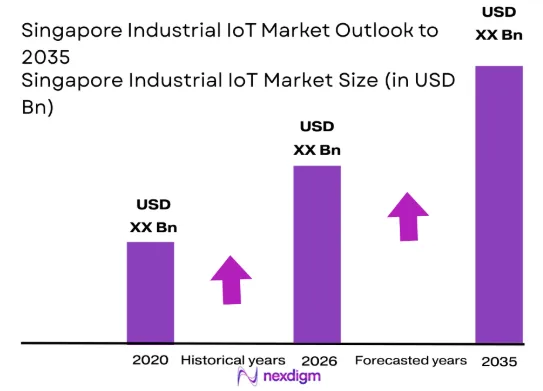
Singapore Industrial IoT market demonstrates strong expansion driven by rapid industrial digitalization across manufacturing logistics and infrastructure sectors. Based on a recent historical assessment, the Singapore Industrial IoT market generated approximately USD ~ billion supported by widespread adoption of industrial sensors predictive maintenance platforms cloud connected factory automation and advanced industrial data analytics systems. Government supported Industry 4.0 transformation programs and high concentration of advanced manufacturing facilities accelerate industrial connectivity deployments across semiconductor electronics and precision engineering industries.
Singapore’s Industrial IoT ecosystem is concentrated around advanced industrial clusters located across Jurong Industrial Estate Tuas Industrial Zone and Changi Business Park where semiconductor manufacturing electronics assembly and logistics operations extensively deploy connected industrial infrastructure. These areas dominate the Industrial IoT landscape due to strong manufacturing density global semiconductor fabrication facilities and highly automated logistics operations. Industrial digital transformation initiatives supported by government smart manufacturing programs further reinforce Singapore’s position as a leading industrial connectivity hub.
Market Segmentation
By Product Type
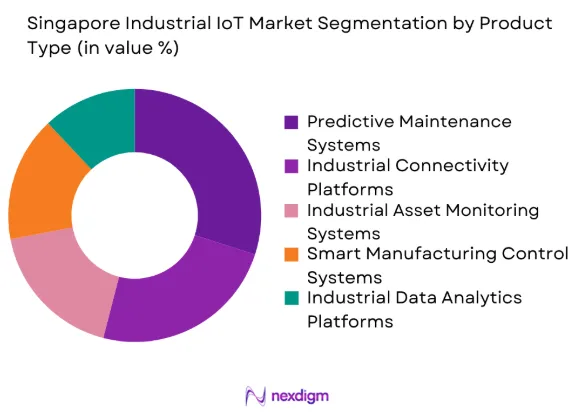
Singapore Industrial IoT market is segmented by product type into industrial connectivity platforms predictive maintenance systems industrial asset monitoring systems smart manufacturing control systems and industrial data analytics platforms. Recently, predictive maintenance systems has a dominant market share due to factors such as demand patterns infrastructure availability and industrial equipment reliability requirements. Semiconductor fabrication facilities electronics assembly plants and automated logistics centers rely heavily on predictive analytics platforms capable of monitoring industrial machinery performance continuously. Predictive maintenance platforms allow industrial operators to detect equipment anomalies before system failures occur which significantly reduces costly production downtime. Singapore’s advanced manufacturing ecosystem operates high precision production lines requiring uninterrupted machine operations therefore predictive monitoring technologies become essential components of industrial automation infrastructure. Industrial IoT sensors installed across production equipment collect operational data continuously and transmit machine health indicators into cloud analytics systems where artificial intelligence algorithms evaluate performance patterns. Industrial operators therefore gain the ability to perform maintenance scheduling based on predictive insights rather than reactive repairs which improves operational efficiency across manufacturing facilities.
By End User Industry
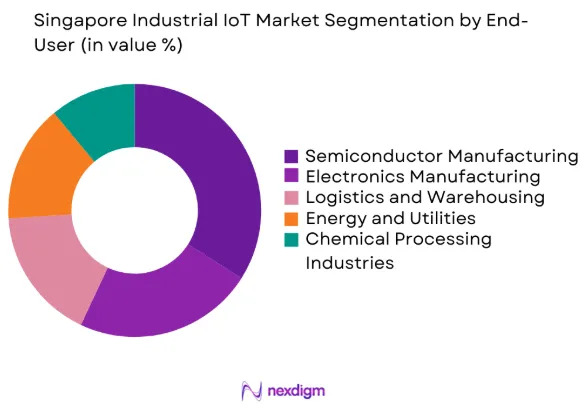
Singapore Industrial IoT market is segmented by end user industry into semiconductor manufacturing electronics manufacturing logistics and warehousing energy utilities and chemical processing industries. Recently, semiconductor manufacturing has a dominant market share due to factors such as Singapore’s role as a global semiconductor manufacturing hub hosting multiple advanced wafer fabrication plants operated by multinational semiconductor companies. Semiconductor manufacturing requires extremely precise process control equipment capable of monitoring wafer processing conditions temperature fluctuations vibration levels and equipment performance metrics continuously throughout production cycles. Industrial IoT technologies enable semiconductor fabrication facilities to maintain stable manufacturing environments required for microelectronics production where even minor deviations may cause production defects. Semiconductor companies therefore deploy advanced sensor networks automated machine monitoring platforms and real time industrial analytics systems designed to track equipment performance across fabrication plants. Industrial IoT solutions also support automated wafer transport systems robotic production lines and predictive maintenance of semiconductor fabrication tools ensuring uninterrupted chip manufacturing operations across complex cleanroom environments.
Competitive Landscape
Singapore Industrial IoT market demonstrates a moderately consolidated competitive structure dominated by global industrial automation companies cloud technology providers and industrial software platforms supplying integrated digital manufacturing solutions. Major technology vendors collaborate with semiconductor manufacturers electronics producers and logistics operators to deploy industrial connectivity systems predictive analytics platforms and automated monitoring solutions. Strategic partnerships between industrial automation firms and cloud technology providers further accelerate deployment of smart factory infrastructure across Singapore’s advanced manufacturing ecosystem.
| Company Name | Establishment Year | Headquarters | Technology Focus | Market Reach | Key Products | Revenue | Industrial IoT Platform Capability |
| Siemens AG | 1847 | Germany | ~ | ~ | ~ | ~ | ~ |
| Schneider Electric | 1836 | France | ~ | ~ | ~ | ~ | ~ |
| ABB Ltd | 1988 | Switzerland | ~ | ~ | ~ | ~ | ~ |
| Honeywell International | 1906 | United States | ~ | ~ | ~ | ~ | ~ |
| Cisco Systems | 1984 | United States | ~ | ~ | ~ | ~ | ~ |
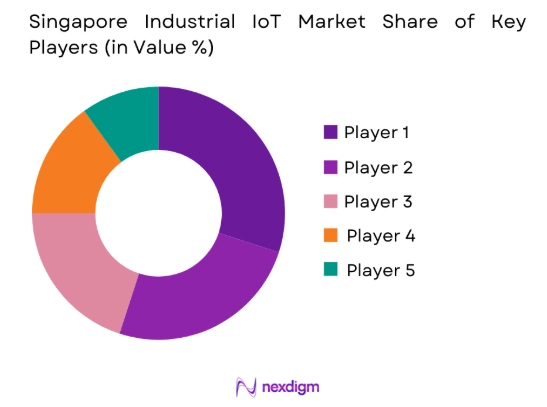
Singapore Industrial IoT Market Analysis
Growth Drivers
Expansion of Smart Manufacturing and Industry 4.0 Programs Across Singapore’s Advanced Industrial Sector
Singapore’s industrial sector is rapidly transitioning toward highly digitalized manufacturing environments where connected machines, automated production systems, and advanced industrial analytics platforms improve operational productivity. Manufacturing facilities across semiconductor fabrication, electronics assembly, and precision engineering industries deploy Industrial IoT sensors that continuously monitor equipment performance, temperature fluctuations, machine vibration, and production output metrics. Industrial connectivity platforms integrate manufacturing equipment, robotics systems, and process control technologies into unified digital ecosystems, enabling factory operators to analyze production performance in real time. Smart manufacturing initiatives encourage adoption of predictive maintenance technologies that reduce equipment downtime and optimize asset utilization. Government supported Industry 4.0 programs further accelerate industrial digitalization through automation incentives, research funding, and technology adoption initiatives.
Growing Deployment of Predictive Maintenance Platforms Across Industrial Infrastructure
Industrial companies operating manufacturing plants, energy facilities, and logistics distribution centers increasingly deploy predictive maintenance platforms powered by Industrial IoT sensors, artificial intelligence analytics, and machine learning algorithms capable of identifying early equipment failure indicators across complex industrial assets. These technologies continuously collect operational data including vibration patterns, temperature levels, electrical performance metrics, and mechanical stress indicators to detect abnormal machine behavior before failures occur. Industrial operators can therefore schedule maintenance based on predictive insights instead of reactive repairs, reducing costly production disruptions and unexpected breakdowns. Semiconductor fabrication plants, electronics assembly facilities, and automated warehouses require highly reliable equipment performance, making predictive monitoring systems essential for maintaining stable operations and improving overall industrial productivity.
Market Challenges
Cybersecurity Vulnerabilities Across Connected Industrial Infrastructure
Industrial IoT technologies connect thousands of sensors, machines, and operational technology systems across manufacturing facilities, energy infrastructure, and logistics networks, expanding potential cybersecurity attack surfaces within industrial environments. Connected devices transmit operational data through enterprise networks, cloud platforms, and edge computing infrastructure, creating vulnerabilities that malicious actors could exploit to disrupt industrial operations or access sensitive control systems. Semiconductor fabrication plants, energy utilities, and automated logistics centers operate critical infrastructure where cybersecurity breaches could cause major disruptions, financial losses, or safety risks. Industrial IoT networks therefore require robust cybersecurity architectures that protect communication channels, authentication protocols, and operational technology systems. Industrial organizations must deploy encryption technologies, network segmentation, and continuous threat monitoring platforms.
Integration Complexity Between Legacy Industrial Equipment and Modern IoT Platforms
Many industrial facilities within Singapore’s manufacturing ecosystem still operate legacy production equipment originally built without digital connectivity capabilities, creating integration challenges when deploying Industrial IoT platforms across existing infrastructure. Legacy machinery often lacks standardized communication protocols needed for seamless integration with modern IoT platforms, cloud analytics systems, and automated monitoring technologies. Industrial operators must invest in retrofit sensors, industrial gateways, and communication adapters capable of converting machine data into compatible digital formats. Integration becomes more complex when facilities operate multiple generations of equipment from different manufacturers using proprietary systems. These technical challenges increase deployment costs, extend implementation timelines, and require specialized industrial automation expertise across industrial sectors.
Opportunities
Adoption of Artificial Intelligence Driven Industrial Analytics Platforms
Industrial companies increasingly recognize the importance of advanced data analytics platforms capable of converting large volumes of industrial sensor data into actionable insights that enhance production efficiency, asset reliability, and energy management. Artificial intelligence integrated with Industrial IoT platforms analyzes complex operational datasets generated across manufacturing equipment, robotics systems, energy infrastructure, and logistics networks, identifying performance patterns that human operators may overlook. Semiconductor fabrication facilities, electronics manufacturers, and automated warehouses in Singapore produce substantial operational data through thousands of connected sensors embedded in production equipment. AI powered analytics platforms therefore support industrial productivity optimization, energy efficiency improvements, and equipment reliability across automated facilities, enabling data driven operational strategies that strengthen manufacturing competitiveness.
Expansion of Edge Computing Infrastructure for Real Time Industrial Monitoring
Edge computing technologies integrated with Industrial IoT architectures enable industrial data processing directly within manufacturing facilities instead of transmitting all operational data to centralized cloud servers, significantly improving response times and operational efficiency across industrial environments. Semiconductor fabrication plants, automated production lines, and logistics distribution centers generate extremely large volumes of sensor data that require real time processing to maintain continuous industrial operations. Edge computing devices installed within factory environments analyze sensor data locally, allowing production control systems to respond quickly to equipment anomalies, performance fluctuations, or environmental changes affecting manufacturing processes. Industrial companies increasingly deploy edge computing infrastructure with Industrial IoT networks to support real time monitoring, predictive maintenance, and automated production control across advanced industrial facilities.
Future Outlook
Singapore Industrial IoT market is expected to expand significantly as advanced manufacturing sectors continue adopting digital production technologies and intelligent industrial automation platforms. Semiconductor fabrication plants electronics manufacturing clusters and automated logistics facilities will continue deploying connected industrial infrastructure supporting predictive maintenance machine analytics and real time operational monitoring. Government supported smart manufacturing programs and industrial digitalization initiatives will accelerate adoption of Industrial IoT platforms. Increasing integration of artificial intelligence edge computing and robotics technologies will further transform industrial operations across Singapore’s highly automated manufacturing ecosystem.
Major Players
- Siemens AG
- Schneider Electric
- Honeywell International
- ABB Ltd
- Rockwell Automation
- Cisco Systems
- Bosch.IO
- IBM Corporation
- PTC Inc
- Emerson Electric
- Hitachi Ltd
- Advantech Co Ltd
- GE Digital
- Microsoft Corporation
- SAP SE
Key Target Audience
- Semiconductor Manufacturing Companies
- Industrial Automation Equipment Manufacturers
- Industrial IoT Platform Developers
- Electronics Manufacturing Companies
- Logistics and Supply Chain Operators
- Energy Infrastructure Operators
- Investments and Venture Capitalist Firms
- Government and Regulatory Bodies
Research Methodology
Step 1: Identification of Key Variables
Key market variables including industrial connectivity deployment manufacturing automation infrastructure sensor network adoption and predictive maintenance technology implementation were identified through secondary research across industry databases regulatory publications and corporate technology reports describing Industrial IoT adoption across Singapore’s industrial sector.
Step 2: Market Analysis and Construction
Collected industrial technology adoption data was analyzed to construct Singapore Industrial IoT market structure covering manufacturing logistics energy and industrial automation sectors. Data modeling techniques were applied to evaluate industrial IoT adoption across connected production environments.
Step 3: Hypothesis Validation and Expert Consultation
Market hypotheses were validated through consultations with industrial automation engineers semiconductor manufacturing specialists logistics infrastructure operators and industrial technology providers participating within Singapore’s digital manufacturing ecosystem.
Step 4: Research Synthesis and Final Output
All research inputs including secondary data industry reports and expert insights were synthesized into a structured analytical framework producing the final Singapore Industrial IoT market report with validated insights on technology adoption competitive dynamics and industrial digital transformation trends.

- Executive Summary
- Research Methodology (Definitions, Scope, Industry Assumptions, Market Sizing Approach, Primary & Secondary Research Framework, Data Collection & Verification Protocol, Analytic Models & Forecast Methodology, Limitations & Research Validity Checks)

- Market Definition and Scope
- Value Chain & Stakeholder Ecosystem
- Regulatory / Certification Landscape
- Sector Dynamics Affecting Demand
- Strategic Initiatives & Infrastructure Growth

- Growth Drivers
Expansion of Smart Manufacturing and Industry 4.0 Programs
Growing Deployment of Predictive Maintenance Across Industrial Assets
Government Digitalization Initiatives Supporting Industrial Connectivity - Market Challenges
Cybersecurity Risks within Connected Industrial Networks
High Integration Complexity Across Legacy Industrial Systems
Industrial Workforce Skill Gaps in IoT System Deployment - Market Opportunities
Adoption of AI Driven Industrial Analytics Platforms
Expansion of Edge Computing in Industrial Environments
Integration of Industrial IoT with Autonomous Robotics Systems - Trends
Rising Deployment of Edge Computing for Real Time Industrial Monitoring
Integration of Artificial Intelligence into Industrial Data Platforms
Increasing Adoption of Digital Twin Technologies in Industrial Operations - Government Regulations
- SWOT Analysis of Key Competitors
- Porter’s Five Forces

- By Market Value, 2020-2025
- By Installed Units, 2020-2025
- By Average System Price, 2020-2025
- By System Complexity Tier, 2020-2025

- By System Type (In Value%)
Industrial Connectivity Platforms
Predictive Maintenance Systems
Industrial Asset Monitoring Systems
Smart Manufacturing Control Systems
Industrial Data Analytics Platforms - By Platform Type (In Value%)
Manufacturing Facilities
Energy and Utilities Infrastructure
Logistics and Warehousing Facilities
Oil and Gas Industrial Operations
Smart Infrastructure and Utilities Networks - By Fitment Type (In Value%)
Integrated Industrial IoT Platforms
Retrofit Industrial Sensor Networks
Cloud Connected Industrial Systems
Edge Computing Enabled Systems
Hybrid Industrial IoT Architectures - By End User Segment (In Value%)
Semiconductor Manufacturing Companies
Electronics Manufacturing Firms
Energy and Utilities Operators
Logistics and Supply Chain Companies
Chemical and Process Industries - By Procurement Channel (In Value%)
Direct Enterprise Procurement
Government Supported Technology Programs
Industrial Automation Integrators
Technology Vendor Partnerships
Industrial Digital Transformation Contracts

- Market Share Analysis
- Cross Comparison Parameters (Industrial Platform Integration Capability, Edge Computing Support, Cybersecurity Architecture, Predictive Analytics Capability, Industry Deployment Coverage)
- SWOT Analysis of Key Competitors
- Pricing & Procurement Analysis
- Key Players
Siemens AG
Schneider Electric
Honeywell International
ABB Ltd
Rockwell Automation
Bosch.IO
Cisco Systems
PTC Inc
IBM Corporation
Hitachi Ltd
Advantech Co Ltd
GE Digital
Emerson Electric
Microsoft Corporation
SAP SE

- Semiconductor Manufacturing Demand for Precision Industrial Monitoring
- Electronics Manufacturing Adoption of Smart Factory Platforms
- Energy Infrastructure Deployment of Remote Asset Monitoring Systems
- Logistics and Warehousing Automation through Industrial Connectivity Platforms

- Forecast Market Value, 2026-2035
- Forecast Installed Units, 2026-2035
- Price Forecast by System Tier, 2026-2035
- Future Demand by Platform, 2026-2035


 Request a Sample
 Ask for Customization
 Get a Quote
 Enquire Now