
 Download PDF
Market Overview
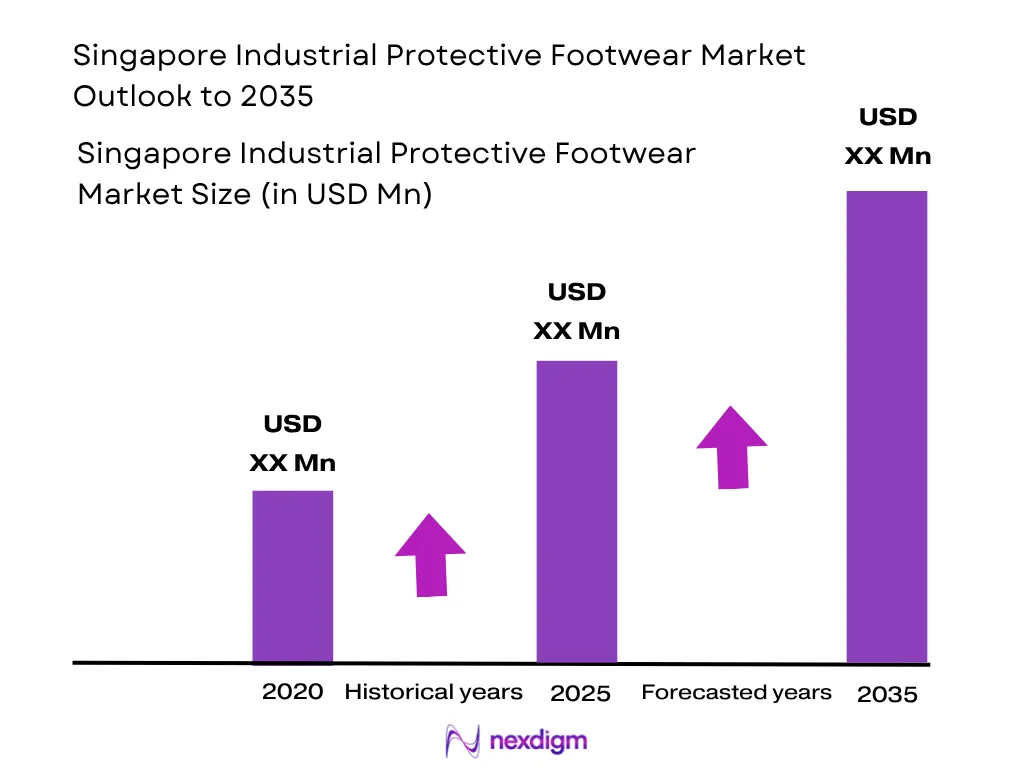
The Singapore Industrial Protective Footwear Market is valued at USD ~ million, with steel-toe safety shoes as the largest product type and construction & infrastructure as the largest end-use industry. Historical demand is shaped by Singapore’s WSH regime and high-risk worksites: workplace deaths increased from 36 to 43, while construction recorded 20 fatal injuries, followed by transportation & storage with nine and marine with five.
Singapore’s demand is concentrated around Tuas, Jurong Island, Jurong Industrial Estate, Changi, Seletar, Woodlands, Senoko, and major port-logistics zones, because these locations host construction, petrochemical, aerospace MRO, manufacturing, shipyard, and warehousing activity. Construction demand stood at SGD33.8 billion and was projected at SGD~ billion, while port cargo increased from 592.01 million tons to 622.67 million tons, reinforcing protective footwear consumption in worksites and logistics clusters.
Market Segmentation
By Product Type
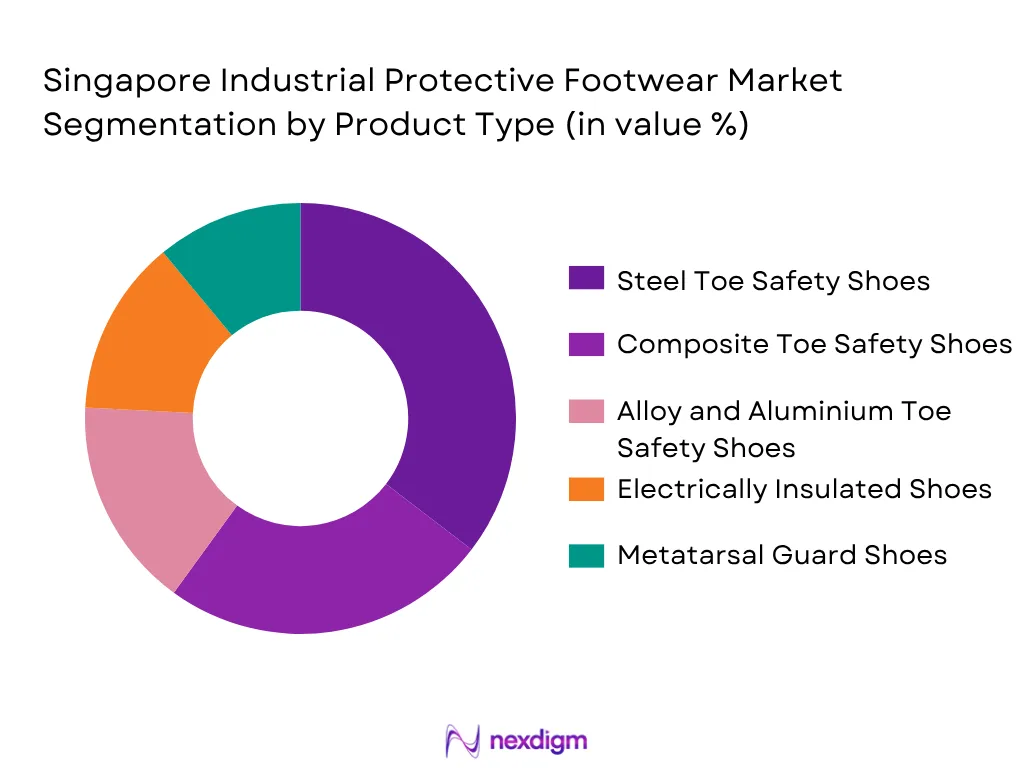
Singapore Industrial Protective Footwear Market is segmented by product type into steel toe safety shoes, composite toe safety shoes, alloy and aluminium toe safety shoes, metatarsal guard shoes, and electrically insulated / antistatic shoes. Steel toe safety shoes hold the dominant market share because construction, marine, manufacturing, and warehousing buyers still prioritize proven toe impact resistance, lower unit price, broad size availability, and easier certification acceptance in tender documentation. The segment also benefits from strong supply through industrial safety stores, PPE wholesalers, and direct contract channels. Steel toe models remain the default issue for construction contractors and logistics operators because they meet basic impact and compression requirements while keeping procurement costs manageable for large worker populations. Deep Market Insights identifies steel toe safety shoes as the largest type segment, with published revenue of USD 11.75 million within the 2024 market base.
By End-Use Industry
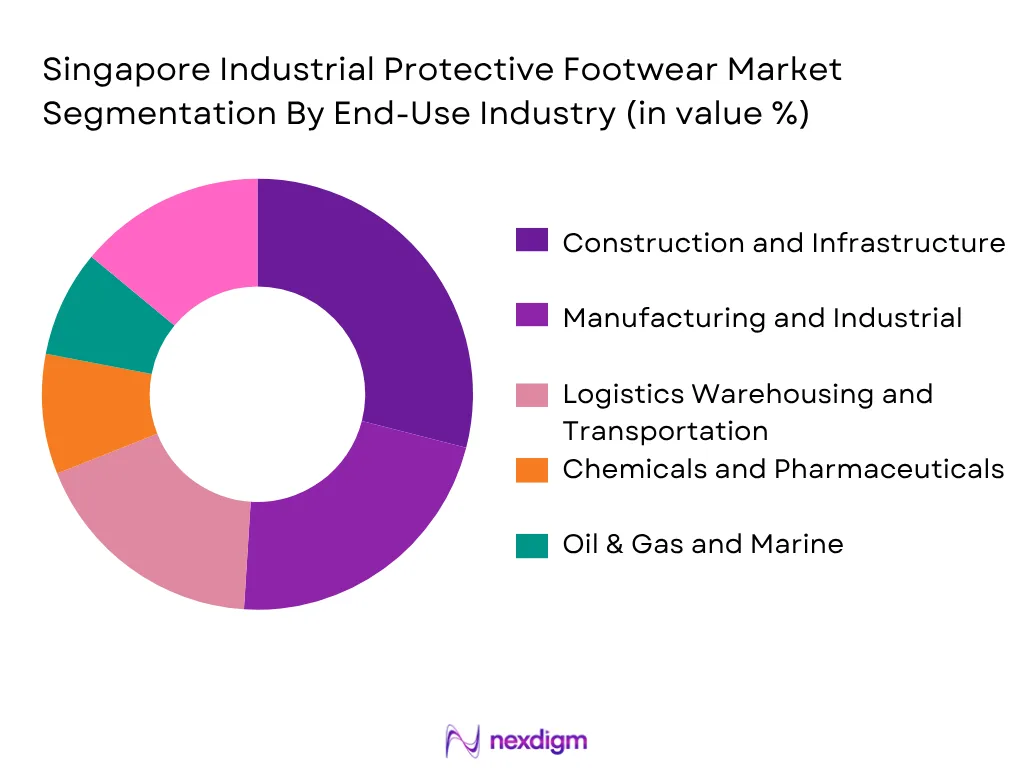
Singapore Industrial Protective Footwear Market is segmented by end-use industry into construction and infrastructure, manufacturing and industrial, logistics warehousing and transportation, chemicals and pharmaceuticals, and oil & gas and marine. Construction and infrastructure dominate the market because safety footwear is mandatory across most active job sites, and contractors typically procure protective footwear in bulk for direct employees, subcontractors, and project-based labour. High footfall exposure, falling-object risk, sharp debris, wet worksite conditions, and regular WSH inspections make safety shoes a recurring consumable rather than a one-time equipment purchase. The segment is also supported by public infrastructure, housing, industrial facilities, commercial redevelopment, and private development activity. Deep Market Insights identifies construction and infrastructure as the leading end-use segment, with published revenue of USD 12.78 million.
Competitive Landscape
The Singapore Industrial Protective Footwear Market is moderately fragmented, with global safety footwear brands competing against regional brands, local distributors, and private-label PPE suppliers. The market is led by brands with certified steel toe, composite toe, S1P, S3, SRC, HRO, and ESD portfolios. Competitive strength depends on certification credibility, SKU availability, size coverage, same-day or short lead-time supply, corporate tender servicing, and ability to bundle footwear with other PPE categories.
| Major Player | Establishment Year | Headquarters | Safety Footwear Portfolio | Singapore Channel Presence | Key Safety Classes | Target Industries | Differentiation | Procurement Positioning |
| Safety Jogger | 2000 | Belgium | ~ | ~ | ~ | ~ | ~ | ~ |
| Bata Industrials | 1970s safety footwear division; Bata founded 1894 | Netherlands / Switzerland group base | ~ | ~ | ~ | ~ | ~ | ~ |
| uvex Safety | 1926 | Fürth, Germany | ~ | ~ | ~ | ~ | ~ | ~ |
| KPR / King Power | Local Singapore safety footwear supplier | Singapore | ~ | ~ | ~ | ~ | ~ | ~ |
| King’s Safetywear | 1965 / Singapore company incorporated 1974 | Singapore | ~ | ~ | ~ | ~ | ~ | ~ |
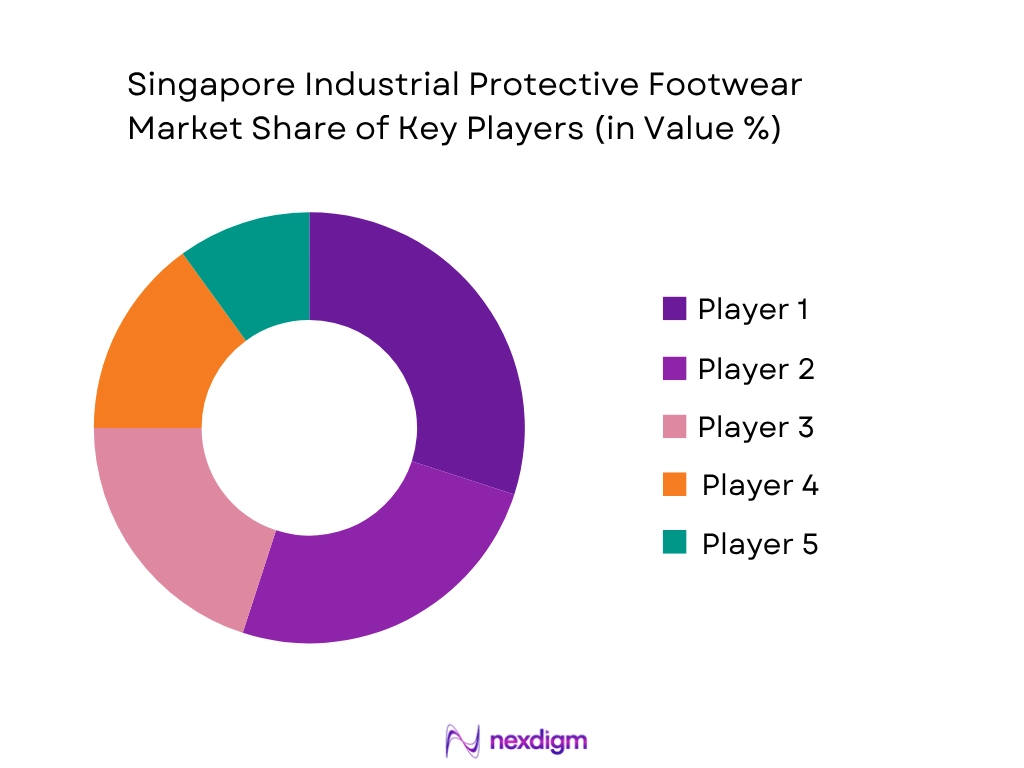
Singapore Industrial Protective Footwear Market Analysis
Growth Drivers
WSH Compliance Enforcement
Singapore Industrial Protective Footwear Market demand is strongly supported by mandatory workplace safety enforcement across construction, marine, transportation, storage, and manufacturing worksites where foot protection is a standard PPE requirement. MOM reported more than 7,000 WSH Act and regulation breaches, 673 composition fines, and 22 Stop Work Orders in the first half of the year, indicating an active compliance environment that pushes employers to maintain certified PPE inventories rather than relying on informal or delayed replacement. The WSH Report also recorded 43 workplace fatal injuries, with construction contributing 20, transportation and storage nine, and marine five, making these industries direct demand centres for impact-resistant, puncture-resistant, slip-resistant, and site-approved safety footwear. The macroeconomic base also supports industrial PPE consumption: World Bank reported Singapore’s GDP at USD 547.39 billion, GDP per capita at USD 90,674.1, and GDP growth at 4.4, showing a high-income industrial economy with capacity for structured safety procurement.
Construction Pipeline
Singapore Industrial Protective Footwear Market growth is closely tied to the construction pipeline because construction sites are high-frequency users of steel-toe, S1P, S3, puncture-resistant, and anti-slip footwear. BCA reported preliminary total construction demand of S$44.2 billion, driven by public institutional projects, public housing, and private housing, while medium-term construction demand is expected to be supported by Changi Airport Terminal 5, public housing developments, Cross Island Line Phase 3, Downtown Line Extension to Sungei Kadut, Integrated Waste Management Facility Phase 2, Tengah General and Community Hospital, Woodlands North Coast industrial estate, and multiple redevelopment projects. MOM’s employment table shows Singapore’s total employment reached 4,046.2 thousand persons, with construction representing 13.3 of year-end employment distribution, reflecting a sizeable worksite labour base requiring protective footwear issuance and replacement. Construction also reported 146 major injuries and 20 fatal injuries, reinforcing the operational need for certified footwear.
Market Challenges
Price Sensitivity
Singapore Industrial Protective Footwear Market faces price sensitivity because buyers such as contractors, subcontractors, logistics operators, and facilities management firms procure safety shoes for large headcounts and must balance compliance, durability, comfort, and replacement frequency. MOM reported total employment of 4,046.2 thousand persons, while construction alone accounted for 13.3 of employment distribution and manufacturing accounted for 12.0, creating large-volume procurement pools where even small specification changes affect purchasing decisions. The Economic Survey of Singapore reported total employment expansion of 60,700, with construction employment increasing by 11,300, meaning more workers entered PPE-mandated environments. At the macro level, World Bank reported consumer inflation at 2.4, GDP per capita at USD 90,674.1, and GDP growth at 4.4, indicating a high-income but cost-disciplined economy where procurement teams scrutinize consumable PPE categories. As a result, suppliers must justify premium S3, composite toe, HRO, and ESD footwear through compliance documentation, wear life, and comfort benefits rather than brand positioning alone.
Counterfeit or Non-Certified Imports
Counterfeit and non-certified imports remain a challenge for Singapore Industrial Protective Footwear Market because the country is highly trade-connected and safety footwear buyers depend heavily on imported SKUs, distributors, and online channels. World Bank WITS reported Singapore imports of 13,812,800 pairs under “Footwear, nes,” with 7,464,320 pairs imported from China, 1,590,890 pairs from Thailand, and 78,694 pairs from the United States, showing the scale of import exposure across footwear categories. Singapore Police also reported a counterfeit-goods enforcement case involving three arrested men, two retail stores, one storage facility, and more than 2,700 pieces of purported trademark-infringing goods seized, demonstrating active counterfeit risks in local retail channels. For industrial footwear, the risk is not only brand infringement but also uncertified toe caps, weak midsoles, and false compliance claims. Enterprise Singapore’s SS 513-1:2024 is an identical adoption of ISO 20345:2021 and includes safety footwear requirements, making certification traceability critical for industrial buyers.
Market Opportunities
S3 Penetration
S3 safety footwear penetration represents a strong opportunity in Singapore Industrial Protective Footwear Market because current worksite risks align with higher-specification footwear requiring toe protection, closed heel area, anti-static properties, energy absorption, water-resistant uppers, and puncture-resistant midsoles. The WSH Report recorded 20 construction fatal injuries, nine transportation and storage fatal injuries, and five marine fatal injuries, while construction also contributed 146 major injuries and manufacturing contributed 123 major injuries. The same report noted that the top causes of fatalities included vehicular incidents, suffocation or drowning, and collapse or failure of structures and equipment, together accounting for 24 fatal injuries, while major-injury causes collectively accounted for 357 injuries. These numbers support demand for higher-grade footwear in construction, marine, logistics, and industrial operations where sharp debris, wet surfaces, heavy objects, and unstable structures are common. Enterprise Singapore’s SS 513-1:2024 covers safety footwear and adopts ISO 20345:2021, while World Bank reported Singapore GDP of USD 547.39 billion, supporting compliance-led upgrading in a high-income industrial economy.
Women’s Safety Footwear
Women’s safety footwear is an underdeveloped opportunity in Singapore Industrial Protective Footwear Market because female participation in the workforce is rising, while most industrial safety footwear ranges remain designed around male lasts, broad unisex sizing, and heavier site models. MOM reported that the female share of the resident labour force increased to 47.6, while the employment rate for female residents aged 25 to 64 rose to 78.3. The resident labour force also had a median age of 45 years, and the resident old-age support ratio fell to 3.5, indicating a labour market that needs broader workforce inclusion and better ergonomic PPE for diverse users. Singapore recorded 2,365,600 employed residents in the Labour Force Advance Release, making properly fitted PPE relevant across manufacturing, logistics, laboratories, healthcare support, facilities management, and engineering roles. For footwear suppliers, this creates room for women-specific steel toe, composite toe, ESD, slip-resistant, lightweight, and breathable safety shoes suited to Singapore’s humid operating conditions.
Future Outlook
The Singapore Industrial Protective Footwear Market is expected to expand steadily as workplace safety enforcement, construction activity, logistics throughput, advanced manufacturing, petrochemical activity, and marine operations sustain demand for certified footwear. The publicly available Singapore-specific forecast from Deep Market Insights indicates a 6.45% CAGR over its forecast window, while no equally transparent Singapore-only public source was found for a full 2026–2035 CAGR. For 2026–2035 benchmarking, global industrial safety footwear forecasts range from 4.6% to 7.4% CAGR, with Singapore likely tracking the upper end where premiumization, composite toe adoption, and ESD footwear demand accelerate. Growth will be driven by four themes. First, construction and infrastructure work will maintain bulk demand for S1P and S3 footwear. Second, electronics, semiconductor, aerospace, and precision engineering facilities will support higher use of ESD and lightweight composite toe models. Third, marine, oil & gas, and chemical users will continue buying waterproof, oil-resistant, HRO, and chemical-resistant boots. Fourth, digital procurement will improve SKU visibility, delivery speed, and contract purchasing efficiency.
Major Players
- Safety Jogger
- Bata Industrials
- uvex Safety
- KPR / King Power
- SafetyFit
- D&D Safety Shoes
- Kings Safety Footwear
- Krushers
- Nitti
- Orex
- Caterpillar Safety Footwear
- Delta Plus
- Himalayan
- Rhino Shoe
- Panther Shoes
Key Target Audience
- Industrial protective footwear manufacturers
- PPE importers and authorized distributors
- Construction and infrastructure contractors
- Marine, shipyard, oil & gas, and petrochemical operators
- Manufacturing, aerospace MRO, electronics, and precision engineering companies
- Logistics, warehousing, transportation, and port operators
- Investments and venture capitalist firms
- Government and regulatory bodies: Ministry of Manpower, Workplace Safety and Health Council, Enterprise Singapore, Building and Construction Authority, Maritime and Port Authority of Singapore
Research Methodology
Step 1: Identification of Key Variables
The initial phase involves constructing an ecosystem map covering safety footwear manufacturers, importers, distributors, PPE wholesalers, industrial buyers, contractors, EHS managers, and regulatory stakeholders. Variables include safety class, toe-cap type, midsole protection, end-use industry, procurement channel, replacement cycle, pricing tier, and certification requirements.
Step 2: Market Analysis and Construction
Historical market data is compiled from published market intelligence, WSH statistics, construction demand, manufacturing output, port activity, and industry procurement indicators. Market value is assessed through top-down PPE demand mapping and bottom-up footwear replacement modelling across construction, manufacturing, logistics, marine, oil & gas, and process industries.
Step 3: Hypothesis Validation and Expert Consultation
Market hypotheses are validated through interviews with safety officers, industrial procurement teams, PPE distributors, brand representatives, contractors, and channel partners. These consultations test assumptions around SKU mix, steel versus composite toe adoption, S1P/S3 demand, channel margins, tender pricing, and inventory availability.
Step 4: Research Synthesis and Final Output
The final phase integrates secondary data, primary inputs, pricing benchmarks, distributor catalogues, and end-user procurement insights. This synthesis produces validated estimates for market size, segmentation, competitive positioning, future opportunity areas, and strategic recommendations for industrial protective footwear suppliers in Singapore.

- Table of Contents: Singapore Industrial Protective Footwear Market
- Executive Summary
- Research Methodology (market definition and scope, SS 513 / ISO 20345 product boundary, safety shoe vs safety boot classification, Singapore industrial end-user mapping, demand-side interviews with EHS managers and procurement heads, distributor and importer validation, SKU-level price benchmarking, top-down PPE spend estimation, bottom-up unit replacement modelling, channel margin checks, limitations and forecast assumptions)

- Definition and Scope
- Market Genesis and Evolution
- Regulatory and Compliance Landscape
- Demand Ecosystem
- Supply Chain and Value Chain Analysis
- Import Dependency and Local Distribution Structure
- Product Lifecycle and Replacement Dynamics
- Buyer Decision Framework

- Growth Drivers (WSH compliance enforcement, construction pipeline, logistics automation sites, shipyard safety requirements, manufacturing floor safety protocols, replacement demand, corporate EHS audits)
- Market Challenges (price sensitivity, counterfeit or non-certified imports, tropical heat discomfort, limited wide-fit availability, fragmented distributors, tender margin pressure, stockout risk)
- Market Opportunities (S3 penetration, women’s safety footwear, ESD footwear, HRO footwear, slip-resistant kitchen footwear, aerospace MRO footwear, sustainability-led PPE procurement, smart-fit programs)
- Market Trends (sneakerization, breathable mesh uppers, dual-density PU soles, anti-fatigue insoles, metal-free designs, certified lightweight models, online bulk ordering, SKU rationalization)
- Regulatory and Standards Analysis (SS 513, ISO 20345, EN ISO 20345, ASTM F2413, WSH Act, WSH Council guidance, site PPE requirements, safety audits, tender documentation)
- SWOT Analysis (compliance-driven demand, imported brand reliance, premium footwear whitespace, low-cost substitution threat)
- Porter’s Five Forces Analysis (supplier concentration, distributor rivalry, buyer bargaining power, substitute non-certified footwear, new private-label entrants)
- Stakeholder Ecosystem (MOM, WSH Council, standards bodies, brand principals, importers, PPE distributors, EHS managers, procurement teams, contractors, workers, training providers)
- Pricing and Margin Structure (factory landed cost, import duty and freight, distributor margin, reseller margin, tender discounting, bulk order rebates, replacement package pricing)
- Channel Ecosystem (offline PPE stores, direct distributor sales, corporate tenders, B2B web stores, online marketplaces, workwear bundle suppliers)

- By Value (2020-2025)
- By Volume(2020-2025)
- By Average Selling Price (2020-2025)
- By Replacement Demand vs New Workforce Demand (2020-2025)
- By Institutional Procurement vs Individual Purchase (2020-2025)

- By Product Type (In Value%)
Low-Cut Safety Shoes
Mid-Cut Safety Shoes
High-Cut Safety Shoes
Industrial Safety Boots
PVC / Rubber Gumboots
Rigger Boots
Executive / Officer Safety Shoes
Sneaker-Style Safety Shoes - By Safety Classification (In Value%)
SB Basic Toe Protection
S1 Anti-Static and Energy Absorbing Heel
S1P Puncture-Resistant Lightweight Footwear
S2 Water-Resistant Upper Footwear
S3 Heavy-Duty Puncture and Water-Resistant Footwear
SRC / Slip-Resistant Outsole Footwear
HRO Heat-Resistant Outsole Footwear
ESD / EH Electrical-Risk Footwear - By Toe-Cap Type (In Value%)
Steel Toe Cap
Composite Toe Cap
Aluminium Toe Cap
Carbon-Fibre Toe Cap
Non-Metallic Toe Cap - By Midsole Protection (In Value%)
Steel Anti-Puncture Midsole
Kevlar / Aramid Midsole
Composite Midsole
Textile Flexible Midsole
Non-Puncture-Protected Footwear - By Upper Material (In Value%)
Full-Grain Leather
Action Leather
Microfiber
Synthetic Textile / Mesh
PVC
Rubber
Waterproof Upper
Breathable Tropical Upper - By Outsole Material (In Value%)
Single-Density PU
Dual-Density PU
Rubber
Nitrile Rubber
PVC
TPU
EVA-Rubber Hybrid
HRO Heat-Resistant Outsole - By Hazard Protection Requirement (In Value%)
Impact and Compression Protection
Puncture Protection
Slip and Oil Resistance
Water and Mud Protection
Chemical and Hydrocarbon Resistance
Electrical Hazard Protection
ESD / Anti-Static Protection
Welding and Heat Protection - By End-Use Industry (In Value%)
Construction
Marine and Shipyard
Manufacturing
Transportation and Storage
Oil and Gas
Petrochemical and Process Industries
Aerospace MRO
Utilities and Electrical Works
Facilities Management
Food Processing and Industrial Kitchens
Healthcare Support and Cleaning Services
Hospitality Back-of-House - By Distribution Channel (In Value%)
Authorized Brand Distributors
PPE Wholesalers
B2B E-Commerce Platforms
Direct Corporate Tender Supply
Industrial Hardware Stores
Project-Site Supply Contracts
Online Marketplaces
Uniform and Workwear Suppliers - By Price Tier (In Value%)
Economy Certified Footwear
Mid-Range Industrial Footwear
Premium Ergonomic Footwear
Specialized Hazard Footwear
Imported Branded Footwear - By Buyer Type (In Value%)
Large Enterprises
Medium-Sized Industrial Buyers
SMEs
Government and Public-Sector Contractors
Subcontractors
Independent Workers

- Market Share Analysis of Major Players (value share, volume share, premium vs economy share, corporate tender share, online channel share, industrial distributor share), by Product Category (low-cut safety shoes, high-cut safety shoes, safety boots, gumboots, ESD footwear, HRO footwear, S3 footwear, waterproof footwear)
- Cross Comparison Parameters (SS 513 / ISO 20345 certification coverage, S1P/S2/S3/SRC/HRO/ESD range depth, toe-cap and midsole technology, outsole slip/heat/oil/chemical resistance, tropical comfort and breathability, Singapore stock availability and size coverage, B2B tender and bulk supply capability, replacement warranty and after-sales support)
- Pricing Analysis by SKU Tier (economy steel-toe shoes, mid-range S1P shoes, S3 high-cut boots, premium ergonomic footwear, ESD footwear, waterproof gumboots, HRO boots)
- Distributor and Channel Benchmarking (authorized dealership, online catalog depth, same-day delivery, project-site delivery, volume discounts, corporate account servicing, technical product guidance)
- SWOT Analysis of Major Players (brand recognition, compliance strength, product breadth, price competitiveness, channel dependency, premiumization potential)
- Detailed Profiles of Major Competitors
Safety Jogger
Bata Industrials
uvex
KPR / King Power
SafetyFit
D&D Safety Shoes
Kings Safety Footwear
Krushers
Nitti
Orex
Caterpillar Safety Footwear
Delta Plus
Himalayan
Rhino Shoe
Panther Shoes

- Construction Contractors (S3 footwear, steel toe, puncture-resistant midsole, slip resistance, high-cut ankle support, site inspection compliance)
- Marine and Shipyard Operators (water resistance, oil resistance, chemical splash protection, anti-slip outsole, gumboots, heat and welding protection)
- Manufacturing Plants (anti-static footwear, ESD footwear, lightweight low-cut shoes, standing comfort, outsole durability)
- Transportation and Storage Companies (slip resistance, toe protection, warehouse picking comfort, forklift-zone protection, wide-size availability)
- Oil, Gas, Petrochemical, and Process Facilities (chemical resistance, hydrocarbon-resistant outsole, HRO, anti-static, high-cut boots, certified documentation)
- Aerospace MRO and Precision Engineering (ESD protection, lightweight footwear, non-marking soles, clean workplace compatibility, comfort during long shifts)
- Facilities Management and Utilities (electrical hazard protection, waterproofing, ladder grip, mixed indoor-outdoor use, fast replacement needs)
- Food Processing and Industrial Kitchens (slip-resistant soles, washable materials, water resistance, hygiene, low-cut comfort, non-marking outsole)
- Buyer Pain Point Analysis (heat stress, shoe weight, outsole wear, size mismatch, certification ambiguity, delayed delivery, tender price pressure)
- Procurement Decision-Making Process (EHS approval, product testing, sample trials, worker feedback, tender evaluation, bulk delivery, replacement tracking)

- By Value (2026-2035)
- By Volume (2026-2035)
- By Average Selling Price (2026-2035)
- By Premiumization Contribution (2026-2035)


 Request a Sample
 Ask for Customization
 Get a Quote
 Enquire Now