

 Download PDF
Market Overview
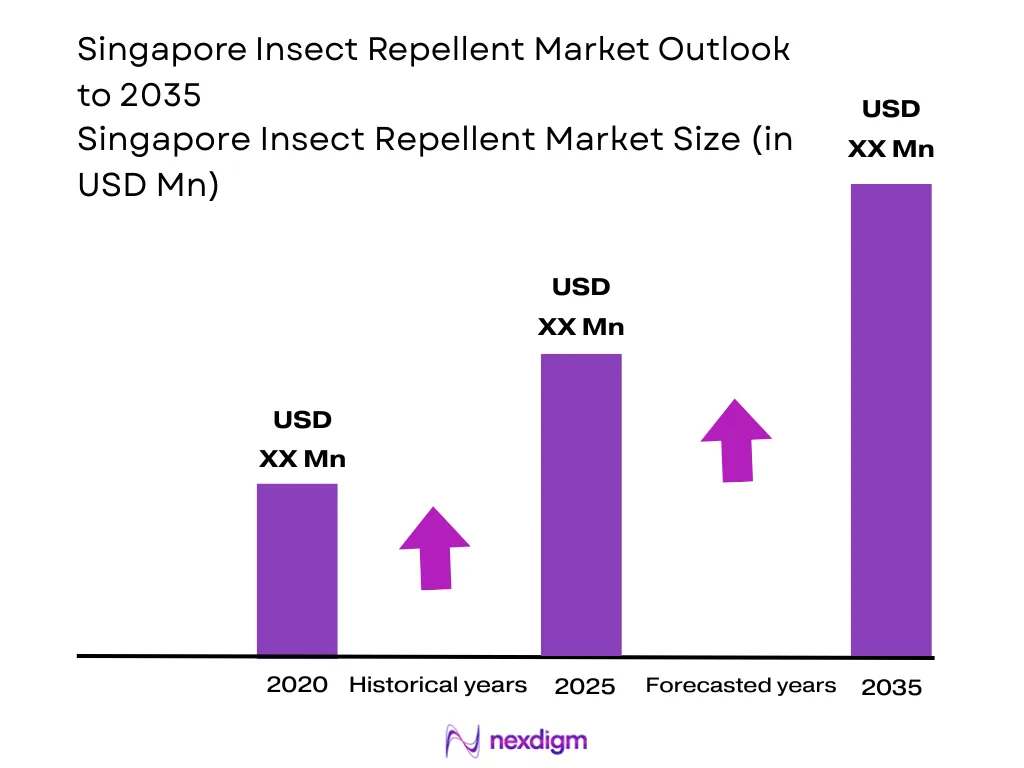
Singapore’s insect repellent market relies heavily on imports and retail distribution in urban settings. Trade and market tracking indicate that Singapore imported approximately USD ~ million worth of insect repellent products in 2024. Import data shows an expansion in repellent shipments year‑on‑year, indicating sustained retail demand across spray, lotion, vaporizer, and other formats. The trend correlates with increasing consumer emphasis on protection against mosquito‑borne diseases such as dengue and Zika, central to repellent purchase cycles. Retail channels such as pharmacies, supermarkets, and online stores in Singapore supplement this demand, catering to diverse consumer preferences for both synthetic and natural repellent variants.
Singapore’s unique urban and island geography — characterised by dense residential clusters and significant outdoor recreational spaces — strengthens demand for insect repellents. Singapore’s tropical climate, featuring persistent warmth and humidity, creates favourable mosquito breeding conditions, reinforcing consistent consumer use of repellents. The city‑state’s role as a major travel hub attracts millions of visitors annually, further elevating short‑term demand spikes during peak travel periods. Additionally, government public health messaging around vector‑borne disease prevention increases awareness and regular adoption of repellent products across households and workplaces.
Market Segmentation
By Insect Type
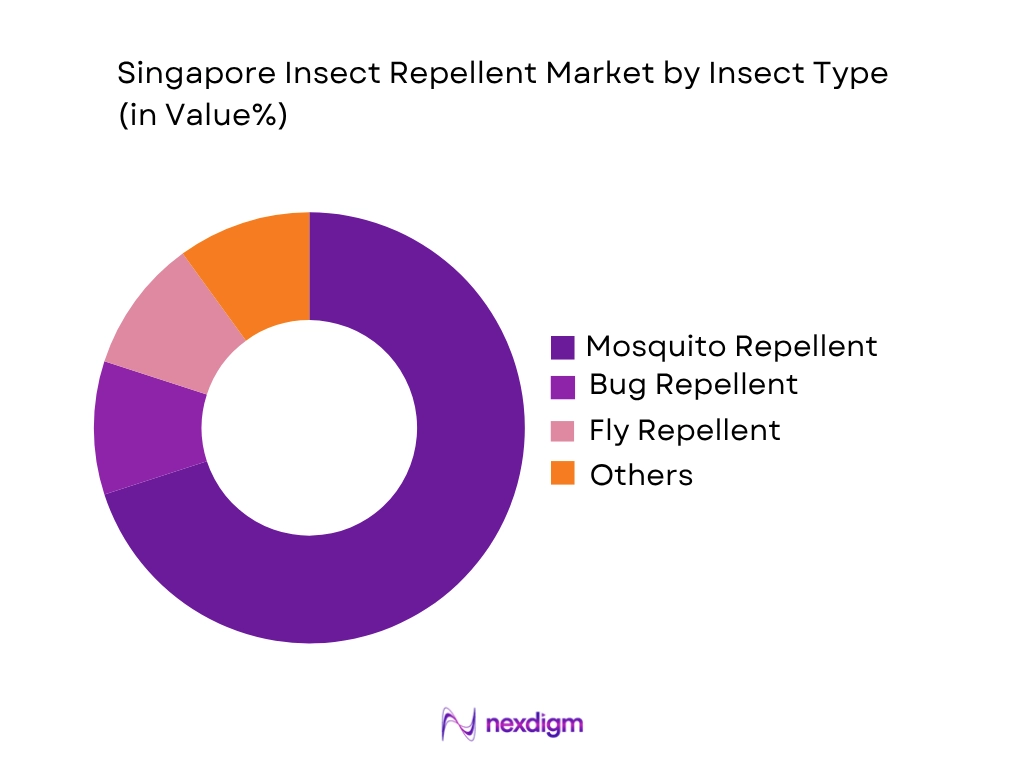
In Singapore, mosquito repellents dominate the insect repellent category due to the consistent threat of mosquito‑borne diseases enhanced by the nation’s tropical environment and high population density. Mosquito repellents — including sprays, patches, creams, and vaporizers — are essential for both household use and outdoor activities. Singapore’s public health authorities emphasise prevention of diseases such as dengue and Zika, which are vectored by Aedes mosquitoes, reinforcing daily repellent usage, especially in urban residential zones and leisure parks. Fly repellents and general bug repellents have smaller market shares, given that mosquitoes represent a more immediate health concern for end‑users enquiring protection products. Multi‑purpose repellents, while present, serve complementary needs and are less central to core consumer buying patterns.
By Product Format
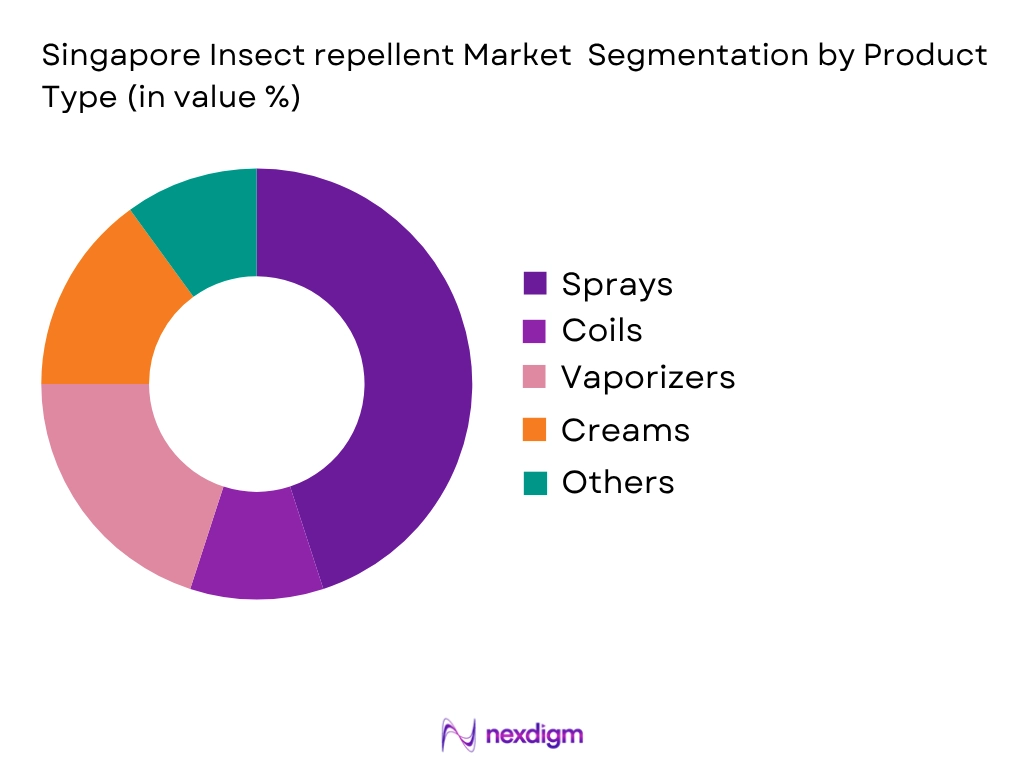
Spray and aerosol formats lead demand in Singapore’s insect repellent space due to their versatility in both urban and outdoor contexts. Consumers favour sprays for rapid application on skin and clothing before outdoor activities or travel. Electric vaporizers and diffusers follow as preferred indoor protection formats for residential and enclosed spaces, aligning well with high apartment living standards. Creams and lotions appeal to users seeking skin‑friendly protection, especially for children and sensitive skin types. Coil and mat formats, while traditional, serve a role in longer‑duration ambient protection. Patches and wearable repellents are increasingly utilised for convenience during commutes and vacations. This diversified format mix reflects consumer preference for flexible protection options across different settings.
Competitive Landscape
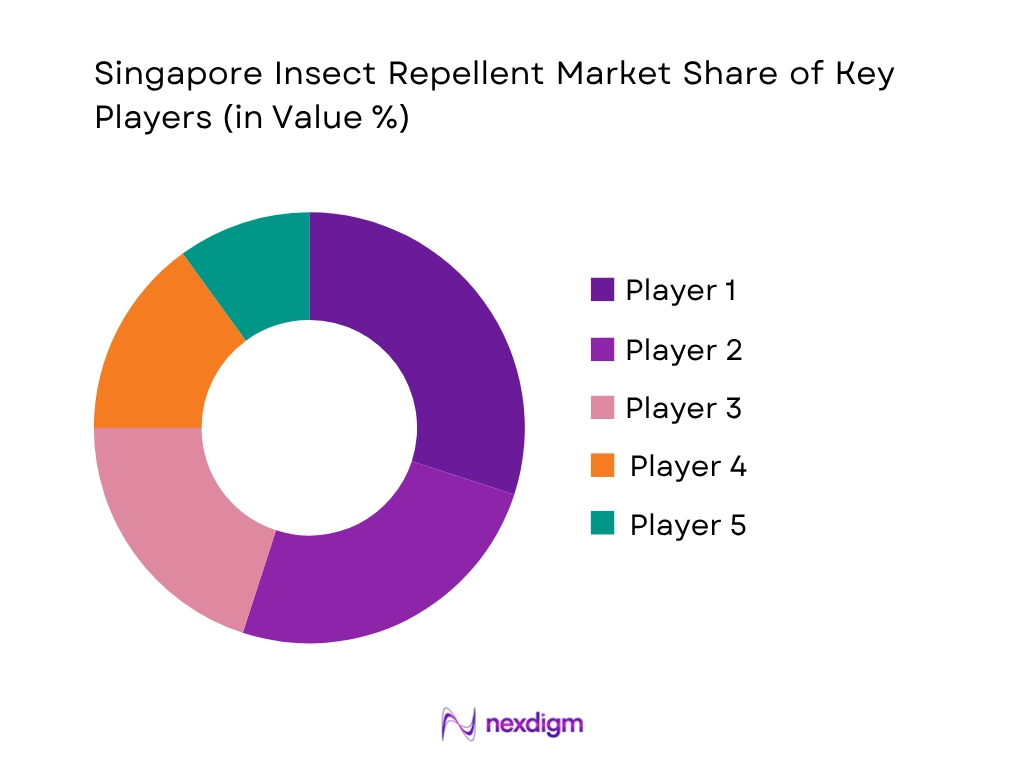
The Singapore insect repellent market is shaped by both global consumer goods companies and specialised pest control brands with extensive product portfolios spanning sprays, vaporizers, creams, and natural repellent lines. International players leverage strong distribution networks through pharmacies, supermarkets, and digital platforms, while local retailers and smaller brands cater to niche consumer segments focusing on eco‑friendly and botanical repellents. Competition centres on product efficacy, safety profiles, brand recognition, and regulatory compliance under the Health Sciences Authority (HSA), which governs product registration.
| Company | Year Established | Headquarters | Active Ingredient Focus | Distribution Channels | Product Portfolio Breadth | Regulatory Compliance | Innovation Initiatives |
| SC Johnson & Son Inc. | 1886 | USA | ~ | ~ | ~ | ~ | ~ |
| Reckitt Benckiser Group plc | 1812 | UK | ~ | ~ | ~ | ~ | ~ |
| Spectrum Brands Holdings, Inc. | 1906 | USA | ~ | ~ | ~ | ~ | ~ |
| Bayer AG | 1863 | Germany | ~ | ~ | ~ | ~ | ~ |
| Godrej Consumer Products Ltd. | 1897 | India | ~ | ~ | ~ | ~ | ~ |
Singapore Repellent Market Analysis
Growth Driver
Singapore’s Urban Population Density and Tropical Vector Exposure Sustains Repellent Demand
Singapore’s demographic and climatic conditions materially influence demand patterns for insect repellents, given that high urban density intersects with year‑round vector exposure. Singapore’s total population was reported as 6,030,000 residents, residing within a land area of 728 square kilometres, resulting in concentrated urban settlement patterns that increase daily human exposure to mosquitoes and biting insects. The city‑state’s tropical climate — with monthly mean temperatures consistently above 25 degrees Celsius and annual rainfall total of 2,340 millimetres — creates ample breeding conditions for Aedes and Culex mosquitoes, which are vectors for dengue and other diseases. According to the Singapore Ministry of Health, the number of confirmed dengue cases reached into the tens of thousands in the latest seasonal reporting, triggering recurrent public advisories on protective measures. These advisories reinforce household repellent usage habits, especially in high‑footfall residential zones, parks, and communal spaces. Additionally, Singapore’s high population density supports widespread retail distribution of sprays, vaporizers, coils, and wearable formats across supermarkets, pharmacies, and convenience outlets, ensuring consistent access. The coexistence of dense populations and persistent vector activity therefore underpins continual consumer engagement with repellents as daily protective products in both personal and shared environment.
High Travel Footfall and Tourism Activity Elevates Short‑Term Repellent Demand
Singapore’s standing as a global travel hub directly feeds into insect repellent category demand patterns, particularly in travel retail and hospitality channels frequented by tourists seeking protective products. In the most recent international travel data, Singapore reported 14,465,000 international visitor arrivals, reflecting robust tourism volumes despite global travel fluctuations. Singapore’s Changi Airport consistently ranks among the world’s busiest, serving millions of departure and arrival passengers, many of whom engage in outdoor excursions, resort stays, and regional travel where insect exposure is a concern. Tourism‑linked retail outlets, airport pharmacy counters, and travel accessory retailers thus integrate insect repellents with other travel essentials. Visitor engagement with parks, nature reserves, and outdoor attractions such as Sentosa and Pulau Ubin also elevates incidental exposure to biting insects, reinforcing repellent purchases among visitors unfamiliar with tropical vector environments. Local hotels and resorts routinely stock repellent products as amenity offerings, further normalising usage among both domestic and inbound guests. Singapore’s strategic positioning as a leisure and business destination therefore amplifies periodic spikes in repellent purchases aligned with travel peaks, supporting category viability beyond purely residential demand.
Challenges
Regulatory Registration and Compliance Burdens Impact Product Availability and Speed to Market
The regulatory environment in Singapore presents structural challenges for repellent manufacturers and distributors, as product registration, safety verification, and compliance processes are overseen by stringent public health authorities. In Singapore, personal protection products used for insect deterrence must align with labeling, safety, and ingredient standards under oversight bodies such as the Health Sciences Authority (HSA) and National Environment Agency (NEA). These agencies require evidence of active ingredient safety profiles, especially for products with synthetic actives like DEET, picaridin, and IR3535, before authorising retail distribution. Manufacturers must navigate permit applications, chemical safety dossiers, and product classification protocols, which add procedural overhead and extend lead times for new formulations. Singapore’s import control framework treats aerosol sprays and chemical repellents as controlled goods, with quarantine and customs inspections requiring documentation and clearances before market entry. These processes — while enhancing consumer safety — place administrative and logistical demands on companies, particularly small and medium‑sized brands that lack integrated regulatory affairs teams. The need to synchronise product labeling, safety testing outcomes, and compliance submissions with HSA and NEA expectations thus slows innovation cycles and inventory updates, posing a non‑trivial operational barrier within the repellent category.
Seasonal Rainfall Variability and Vector Population Flux Complicate Supply Planning and Stock Management
Singapore’s pronounced rainfall patterns introduce cyclical complexities into insect repellent supply chain and inventory management efforts. While urban environments remain warm year‑round, vector breeding is particularly stimulated by rainfall events that create standing water — mosquito breeding sites — which in turn trigger consumer demand spikes for repellent products. The city‑state’s annual precipitation is approximately 2,340 millimetres, with variability across monsoon periods generating irregular vector activity peaks. Retailers and distributors must therefore align inventory deployment with weather‑linked demand shifts, balancing the need for sufficient stock without overcommitting capital to slow‑moving inventory during drier periods. Singapore’s logistics landscape is highly efficient, but repellent products — especially aerosols, creams, and liquid formulations — require temperature‑controlled storage to maintain formulation stability, adding to operational cost considerations. Additionally, the rate of turnover varies significantly between central urban supermarkets, where footfall is high, and peripheral convenience outlets, where restocking frequencies differ. These seasonal and logistical dynamics require sophisticated demand forecasting rooted in climate data and point‑of‑sale analytics, placing burden on supply chain planners to avoid stockouts or overstocks across multiple retail formats and locations.
Opportunities
High Healthcare Access and Preventive Focus Boosts Consumer Awareness of Protection Tools
Singapore’s robust healthcare infrastructure and public health communications create fertile ground for elevated consumer consideration of insect repellents as part of preventive health regimens. The city‑state allocates substantial public resources to health systems, reflected in total health expenditure of USD 35,195,000,000, which supports preventive medicine programmes, public advisory campaigns, and vector control engagement. Government initiatives such as educational outreach on mosquito‑borne disease avoidance emphasise the use of protective measures — including repellents — alongside environmental sanitation. Clinics and polyclinics integrate preventive advice into patient interactions, reinforcing protection behaviours among residents who face regular vector exposure in urban and park settings. Additionally, Singapore’s geopolitical focus on “Healthy Living” campaigns encourages residents to adopt products that mitigate daily environmental health risks. The high level of health system engagement encourages consumers to regard insect repellents not as ancillary products but as integrated elements of personal health maintenance, similar to sunscreen and hygiene products. This alignment with preventive health priorities enhances category visibility in pharmacies and retail settings where consumers seek products validated by health‑centric messaging, underscoring ongoing opportunity for education‑linked demand growth within the repellent segment.
Near‑Universal Digital Connectivity Accelerates E‑Commerce and Omni‑Channel Reach for Repellent Products
Singapore’s highly connected digital ecosystem presents a significant opportunity for insect repellent brands to scale penetration through e‑commerce and omnichannel distribution strategies. In Singapore, internet user count exceeds 5,627,000, with digital infrastructure supporting rapid online access to health and personal care products. Mobile and broadband connectivity enables consumers to browse, compare, and purchase repellent formats—from sprays to wearable solutions—via online marketplaces and pharmacy delivery apps without physical store constraints. This is particularly relevant for expatriate populations, frequent travellers, and digitally native households, who prefer convenient doorstep delivery of essential protection goods. E‑commerce also facilitates personalised marketing communications, targeted promotions, and subscription repeat‑purchase models that reinforce consumer loyalty. Retailers leverage digital inventory visibility and click‑and‑collect models to reduce friction in purchase pathways, while brands develop digital content to highlight efficacy, safety profiles, and usage guidance, catering to health‑conscious audiences. High internet penetration combined with advanced logistics infrastructure and consumer comfort with online purchases accelerates repellent accessibility beyond traditional brick‑and‑mortar footprints, enabling market expansion into regional distribution via marketplace aggregators and specialist online pharmacies.
Future Outlook
The Singapore insect repellent market outlook points to continued relevance as broad health awareness initiatives persist, the urban population continues active outdoor lifestyles, and repellents become integrated into everyday personal protection routines. Demand will be supported by urban residential density, ongoing public health education about mosquito‑borne diseases, and growing consumer interest in eco‑friendly and skin‑safe repellent solutions. Digital commerce and fast convenience retail formats will continue expanding access across consumer segments, including travellers and expatriate communities.
Major Players
- SC Johnson & Son Inc.
- Reckitt Benckiser Group plc
- Spectrum Brands Holdings, Inc.
- Bayer AG
- Godrej Consumer Products Ltd.
- Tiger Balm Mosquito Repellents
- EcoSMART / EcoShield Technologies
- Mosi‑Guard Natural Repellents
- Herbal Armor / All Terrain Company
- Murphy’s Naturals
- Thermacell Corporation
- Local Singapore Botanical Repellent Brands
- Outdoor & Adventure OEM Repellents
- Pet‑Oriented Repellent Solutions
Key Target Audience
- Household Retailers
- Departmental Procurement Units
- Travel & Tourism Retail Channels
- Investment & Venture Capitalist Firms
- Government and Regulatory Bodies
- Modern Trade Chain Category Managers
- E‑Commerce Distribution Platform Operators
- Import/Distribution Partners & Logistics Managers
Research Methodology
Step 1: Identification of Key Variables
Primary vectors influencing the Singapore insect repellent market were identified including import shipment trends, vector disease incidence data, consumer behaviour metrics, active ingredient preferences, distribution channel penetration, and macroeconomic indicators. Secondary databases from trade intelligence and import statistics formed the foundation.
Step 2: Market Analysis and Construction
Analysts aggregated repellent import datasets, retail channel availability, product format diversity, and public health advisory data to construct market value proxies, aligning them with import trend momentum to approximate market activity.
Step 3: Hypothesis Validation & Expert Consultation
Market assumptions were validated through interviews and sales channel insights from pharmacies, supermarkets, and repellent importers to refine product demand projections and confirm segment priorities.
Step 4: Research Synthesis & Final Output
The validated data were synthesised into structured forecasts, competitive mappings, segmentation profiles, and growth driver analyses, integrating regulatory ecosystem insights for a comprehensive industry perspective.

- Executive Summary
- Research Methodology (Market Definitions and Assumptions, Abbreviations, Market Sizing & Volume Approach, Macro‑Economic Alignment (GDP, Import/Export Dynamics), Vector Disease Impact Metrics, Primary Research Protocol – Industry Interviews & Channel Intelligence, Secondary Data Cross‑Verification, Forecasting Model Calibration, Limitations and Confidence Assessment)

- Definition and Scope
- Macro Drivers and Vector Exposure (Tropical Climate, Urban Ecosystem, Mosquito Disease Load)
- Regulatory & Compliance Framework (NEA/Singapore Health Sciences Authority Registration)
- Industry Life Cycle and Adoption Profile (Import Trends, Retail Penetration)
- Value Chain and Supply Chain Architecture (Active Ingredients, Import Dependency, Distribution Nodes)

- Growth Drivers
Tropical Climate & Vector Prevalence
Urban Lifestyle and Outdoor Exposure Patterns
Rising Health Awareness and Hygiene Practices - Market Challenges
Regulatory Compliance & Product Registration Complexity
Import Dependency & Supply Chain Constraints - Opportunities
Natural & Eco‑Friendly Active Ingredient Adoption
Digital & E‑Commerce Distribution Expansion - Market Trends
Innovation in Long‑Lasting & Wearable Formats
Channel Shifts Toward Online & Pharmacy Vending
Government Regulation & Public Health Initiatives
Registration Mark Usage and Compliance
Labeling & Safety Standards - SWOT Analysis
- Stakeholder Ecological Mapping
- Porter’s Five Forces
- Competitive Intensity & Fragmentation

- Market Value Analysis (2020-2025)
- Market Volume Metrics (2020-2025)
- Average Selling Price Dynamics Across Formats (2020-2025)

- By Insect Target Type (In Value %)
Mosquito Repellents
Fly Repellents
Bug & Other Insect Repellents
Multi‑Purpose Repellent Solutions
Emerging Vector Protection - By Product Format (In Value %)
Spray / Aerosol Products
Coil & Mat Formulations
Electric Vaporizers and Diffusers
Creams, Lotions, Roll‑Ons
Wearables & Patches - By Active Ingredient Category (In Value%)
DEET‑Based Actives
Picaridin/IR3535 & Synthetic Actives
Botanical & Natural Extract Formulations
Combination Multi‑Actives
Specialty & Emerging Chemistries
- By Distribution Channel (In Value %)
Modern Trade (Supermarkets & Pharmacies)
Traditional Trade & Independent Retail
E‑Commerce & Online Marketplaces
Healthcare & Clinic Channels
Travel & Tourism‑Linked Retail Outlets - By End‑Use Application (In Value %)
Household Residential Usage
Commercial & Workplace Usage
Outdoor/Recreational & Travel Usage
Healthcare & Institutional Adoption
Hospitality & Service Establishments

- Market Share of Lead Players
- Cross‑Comparison Parameters (Company Overview, Active Ingredient Portfolio, Product Format Range, Regulatory Approvals, Distribution Footprint, Retail Touchpoint Density, Innovation Pipeline, Consumer Loyalty Metrics)
- SWOT Profiles of Key Competitors
- Pricing & SKU Strategy Benchmarking
- Company Profiles of Major Participants
SC Johnson & Son Inc.
Reckitt Benckiser Group plc
Spectrum Brands Holdings Inc.
Consumer Products Ltd.
Tiger Balm
Mosi‑Guard
EcoShield / EcoSMART
MyLO Mosquito Repellent Brands
Tiger Balm Mosquito Patch Brand
Local & Regional Insect Repellent Brands
Natural Botanical Repellent Providers
Wearable & Patch Solution Innovators
Travel & Tourism Channel OEMs
Specialty Outdoor & Activity Brands

- Consumer Purchase Behaviour & Motivation
- Price Sensitivity and Value Perception
- Efficacy & Safety Preference Profiles
- Pain Points in Performance, Skin Compatibility, and Convenience
- Decision‑Making Hierarchy & Channel Preferences

- Market Value Forecast (2026‑2035)
- Market Volume Projection (2026-2035)
- Format & Channel Evolution Forecast (2026-2035)


 Request a Sample
 Ask for Customization
 Get a Quote
 Enquire Now