

 Download PDF
Market Overview
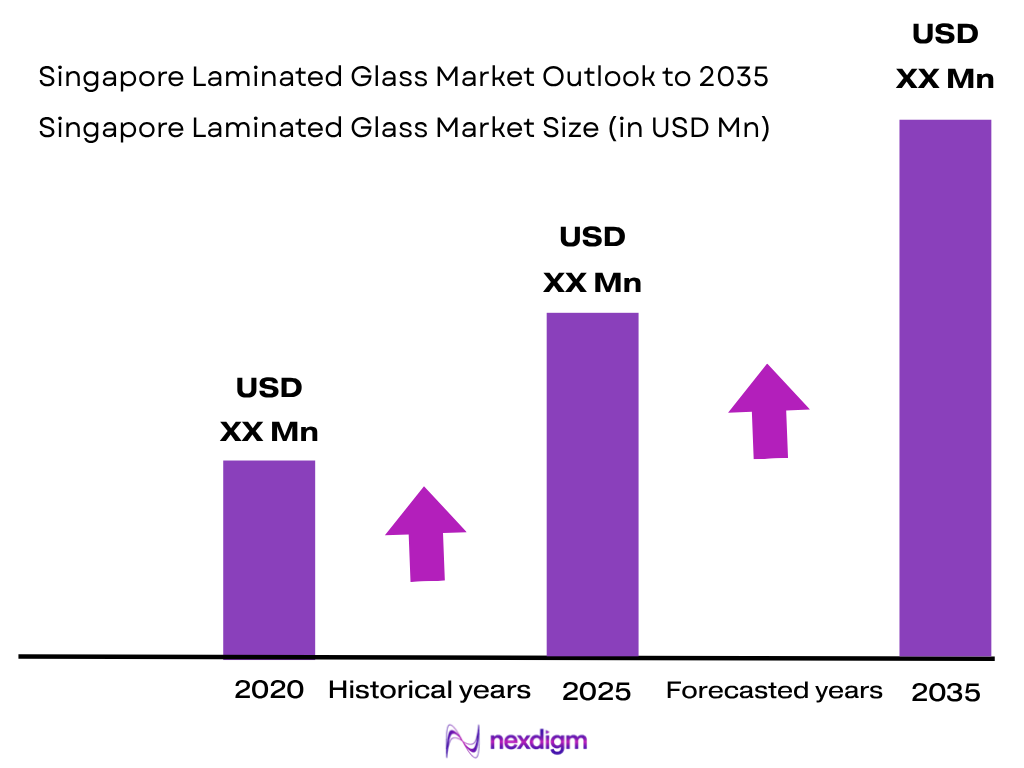
The Singapore Laminated Glass Market is valued at approximately ~USD XX million in 2024 and is driven by demand from commercial buildings, high-rise residential developments, transportation infrastructure and green building projects. The market growth is supported by Singapore’s focus on sustainable urban development, safety glazing standards and energy-efficient building solutions. Singapore’s Building and Construction Authority projected construction demand between SGD 32 billion and SGD 38 billion in 2024, supported by public infrastructure and private sector developments. (MarketWatch) The increasing adoption of laminated glass in facades, curtain walls, skylights and acoustic glazing systems is driven by requirements for safety, thermal performance and architectural aesthetics.
The Singapore Laminated Glass Market is concentrated mainly in Singapore’s Central Region, Marina Bay, Downtown Core, Jurong Innovation District and Punggol Digital District due to extensive commercial development, urban redevelopment and smart infrastructure projects. The Central Business District remains a major demand center because of high-rise office towers, premium mixed-use developments and hospitality infrastructure requiring advanced glazing systems. Singapore’s construction ecosystem is supported by continued urban renewal programs and green building initiatives. The Building and Construction Authority promotes sustainable buildings through the Green Mark certification framework, targeting higher adoption of energy-efficient construction technologies. (Wikipedia) Demand is also supported by transportation infrastructure expansion, including MRT development and airport-related projects requiring safety glazing solutions. Singapore’s tropical climate further increases the need for solar-control laminated glass in buildings to improve indoor comfort and reduce cooling requirements.
Market Segmentation
By Product Type
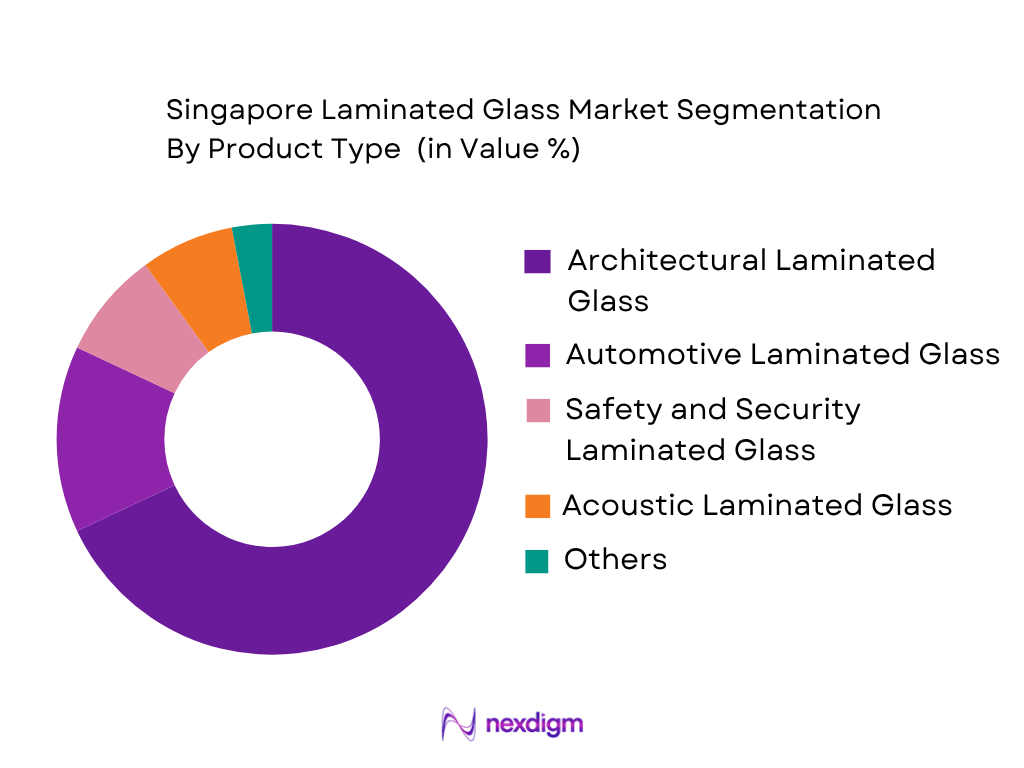
The Singapore Laminated Glass Market is segmented by product type into architectural laminated glass, automotive laminated glass, safety and security laminated glass, acoustic laminated glass and specialty laminated glass applications. Architectural laminated glass dominates the market due to Singapore’s highly urbanized construction environment, extensive high-rise developments and strict building safety requirements. Laminated glass is widely used in commercial towers, residential buildings, shopping malls and institutional structures because it provides enhanced safety retention, acoustic insulation and resistance against impact. Singapore’s dense urban landscape increases demand for noise-reduction glazing solutions, particularly around transportation corridors and commercial districts. The growing implementation of Green Mark-certified buildings is also supporting demand for high-performance glazing systems that improve energy efficiency. Laminated glass with solar-control coatings and advanced interlayers is increasingly preferred by developers and architects for premium projects requiring both aesthetic appeal and environmental performance.
By Interlayer Material Type
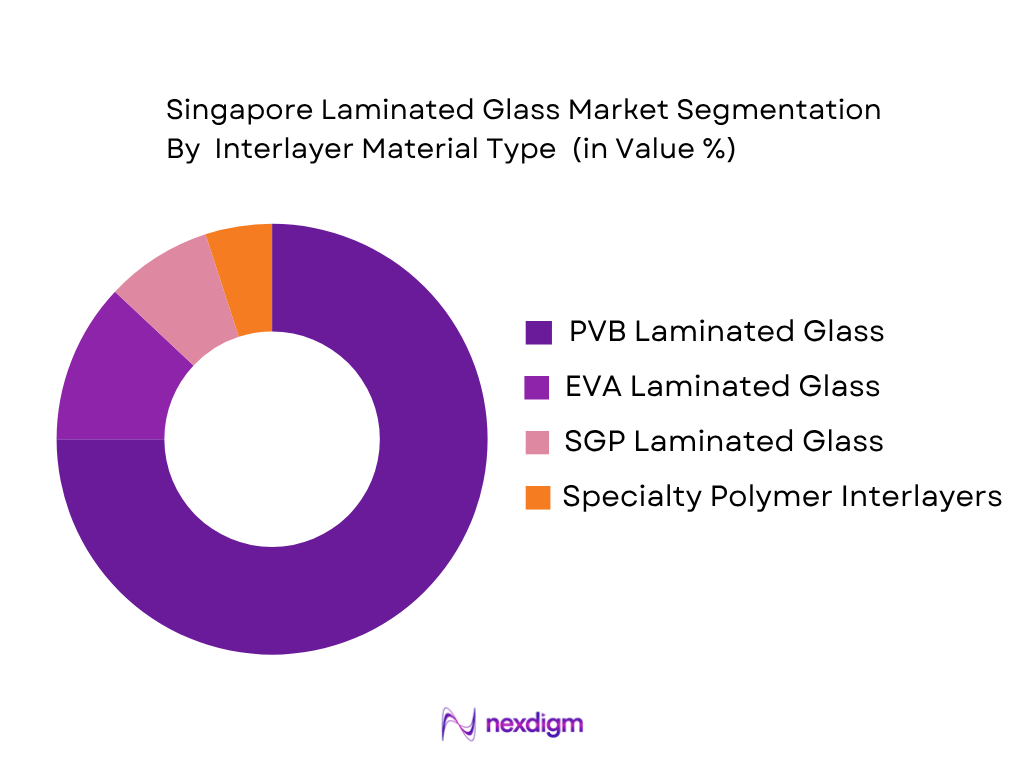
The Singapore Laminated Glass Market is segmented by interlayer material type into PVB laminated glass, EVA laminated glass, SGP laminated glass and specialty polymer interlayer laminated glass. PVB laminated glass holds the leading position due to its widespread application across architectural and automotive glazing systems. PVB interlayers provide strong adhesion, safety performance after breakage, acoustic benefits and UV resistance, making them suitable for Singapore’s commercial and residential buildings. The demand for PVB-based laminated glass is supported by strict safety requirements in high-rise developments and transportation infrastructure. Automotive applications also rely heavily on PVB laminated glass for windshield manufacturing due to passenger protection requirements. Growing demand for acoustic glazing in dense urban areas and solar-control solutions in tropical climates continues to strengthen adoption of advanced PVB laminated products.
Competitive Landscape
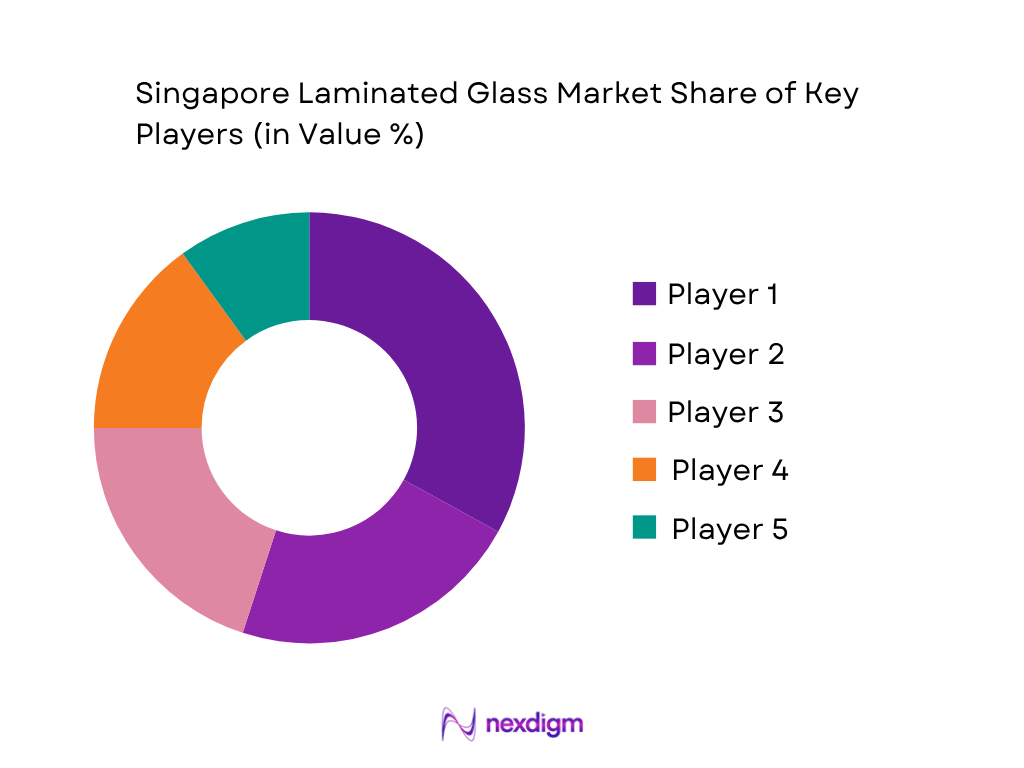
The Singapore Laminated Glass Market consists of multinational glass manufacturers, regional processors and specialized architectural glazing companies. The competitive environment is influenced by product certification, technical capabilities, sustainability compliance and relationships with construction developers and facade contractors. Companies compete through advanced glass processing technologies, solar-control solutions, customized architectural applications and project execution capabilities. Leading participants include AGC Glass, Saint-Gobain Glass, Guardian Glass, NSG Group and Singapore-based glass processors supplying commercial, residential and infrastructure projects.
| Company | Establishment Year | Headquarters | Product Portfolio | Singapore Market Presence | Major Applications | Technology Capability | Sustainability Focus |
| AGC Glass | 1907 | Japan | ~ | ~ | ~ | ~ | ~ |
| Saint-Gobain Glass | 1665 | France | ~ | ~ | ~ | ~ | ~ |
| Guardian Glass | 1932 | USA | ~ | ~ | ~ | ~ | ~ |
| NSG Group / Pilkington | 1918 | Japan | ~ | ~ | ~ | ~ | ~ |
| Singapore Safety Glass | 1980 | Singapore | ~ | ~ | ~ | ~ | ~ |
Singapore Laminated Glass Market Analysis
Growth Drivers
Green Building Development under Singapore Green Plan and Expansion of Energy-Efficient Glass Solutions
Singapore’s focus on sustainable urban development is increasing demand for high-performance laminated glass solutions used in green buildings, commercial towers and energy-efficient building envelopes. The Singapore Green Plan 2030 has accelerated adoption of environmentally responsible construction materials, including solar-control glazing, low-emissivity glass and advanced laminated systems that reduce heat gain in tropical climates. According to the Building and Construction Authority (BCA), Singapore had more than 2,500 Green Mark-certified buildings by 2024, demonstrating strong adoption of sustainable construction practices. The country’s electricity consumption reached approximately 57.6 TWh in 2023, with buildings accounting for a significant portion of energy demand, increasing the importance of efficient glazing systems for cooling-load reduction. The Urban Redevelopment Authority reported that Singapore’s population reached approximately 6.04 million residents in 2024, supporting continued demand for residential, commercial and institutional infrastructure. Laminated glass is increasingly specified in premium developments due to its safety performance, acoustic insulation properties and compatibility with solar-control coatings. The growth of net-zero and energy-efficient buildings, along with stricter environmental requirements, is encouraging developers and architects to replace conventional glazing systems with advanced laminated glass solutions.
Expansion of High-Rise Residential, Commercial Buildings and Transportation Infrastructure
Singapore’s limited land availability and urban density continue to drive vertical construction, increasing demand for laminated glass applications in high-rise residential buildings, office towers, retail developments and transportation infrastructure. The country’s construction sector remained active, with the Building and Construction Authority forecasting construction demand of approximately SGD 32 billion to SGD 38 billion in 2024, supported by public infrastructure projects and private sector developments. High-rise buildings require laminated glass for curtain walls, facades, windows and safety barriers due to its ability to retain fragments after breakage and provide enhanced occupant protection. Singapore’s transport infrastructure expansion, including MRT network development, also creates demand for safety glazing systems in stations and public facilities. The Land Transport Authority reported that Singapore’s rail network exceeded 260 km in 2024, supporting continued infrastructure upgrades requiring durable glazing solutions. Increasing urban density has also strengthened demand for acoustic laminated glass to reduce external noise from roads and transport corridors. Premium commercial developments in areas such as Marina Bay and the Central Business District increasingly incorporate large-format laminated glazing systems to achieve architectural aesthetics while meeting safety and sustainability requirements.
Market Challenges
Dependence on Imported Float Glass and Specialty Interlayers
The Singapore Laminated Glass Market faces challenges due to dependence on imported float glass and specialty interlayer materials such as PVB, EVA and SGP, which are essential for producing advanced laminated glass products. Singapore has limited domestic raw material availability for large-scale glass manufacturing and relies heavily on regional and international suppliers for processed glass inputs. Singapore’s total merchandise trade exceeded SGD 1.2 trillion in 2023, reflecting the country’s strong dependence on international supply chains for industrial materials. Specialty interlayers required for acoustic glazing, security glass and structural laminated applications are primarily sourced from overseas manufacturers, creating exposure to global logistics disruptions and supply availability fluctuations. The country’s manufacturing sector contributed approximately SGD 108 billion in value added in 2023, highlighting the importance of maintaining reliable industrial supply chains. Advanced laminated glass production requires strict quality control, controlled processing environments and specialized equipment, increasing operational complexity for local processors. Imported material dependency can increase lead times for customized architectural projects requiring specific glass thicknesses, colors or performance characteristics. This challenge is particularly relevant for premium developments requiring certified safety and energy-efficient glazing systems.
High Processing Investment Requirements and Strict Certification Standards
Laminated glass processing requires significant investment in specialized machinery, including cutting systems, washing equipment, clean-room facilities, lamination lines and autoclaves. Singapore’s construction sector operates under strict building quality and safety regulations, requiring glass suppliers to comply with performance standards and certification requirements. The Building and Construction Authority reported that Singapore’s construction industry continues to emphasize productivity improvement and quality assurance through regulatory frameworks. Advanced laminated glass applications such as security glazing, acoustic glass and smart glass require additional testing, technical expertise and installation capabilities. The country’s industrial electricity consumption remained substantial, with total electricity demand reaching approximately 57.6 TWh in 2023, highlighting the energy requirements associated with industrial processing activities. Local manufacturers and fabricators face challenges competing with larger regional suppliers that benefit from economies of scale and integrated production capabilities. Large-format glass panels used in skyscraper facades and commercial projects require specialized transportation and handling equipment due to weight and dimensional constraints. Skilled workforce availability is another challenge because laminated glass fabrication requires expertise in quality inspection, interlayer handling and customized architectural processing.
Market Opportunities
Expansion of Green Building Glass Solutions and Solar Control Laminated Glass Demand
Singapore’s sustainability-focused construction ecosystem creates opportunities for laminated glass manufacturers offering energy-efficient glazing solutions. The increasing adoption of Green Mark-certified buildings is encouraging developers to select glazing materials that improve thermal performance, reduce cooling requirements and enhance occupant comfort. Singapore recorded approximately 7.3 million international visitor arrivals in 2023, supporting continued development of hotels, commercial properties and mixed-use projects requiring premium architectural materials. The Building and Construction Authority continues promoting sustainable building practices, creating opportunities for solar-control laminated glass, low-E glazing and advanced facade solutions. Singapore’s tropical climate creates strong demand for glazing technologies capable of reducing solar heat transmission while maintaining natural daylight. Commercial buildings, data centers and premium residential developments increasingly require high-performance glass systems to improve operational efficiency. The country’s building stock also creates opportunities for renovation and upgrading of existing structures with energy-efficient glazing solutions. Manufacturers capable of supplying customized laminated glass with acoustic, thermal and safety features can benefit from growing demand for sustainable construction materials. Advanced glass processing localization and development of specialized glazing solutions represent key opportunities within Singapore’s evolving construction landscape.
Smart Laminated Glass Integration and High-Performance Glass Applications in Data Centers and Infrastructure
Singapore’s position as a regional technology and infrastructure hub creates opportunities for smart laminated glass, security glazing and high-performance glass applications. The country’s data center industry continues expanding due to its role as a digital infrastructure hub, increasing demand for specialized buildings requiring advanced safety, thermal management and architectural glazing solutions. According to the Infocomm Media Development Authority, Singapore’s digital economy contributed approximately 17.3% of GDP in 2022, supporting continued investment in digital infrastructure and technology facilities. Data centers and critical infrastructure facilities require advanced building materials with security, durability and energy-efficiency characteristics. Smart laminated glass solutions, including switchable privacy glass and electronically controlled glazing, are gaining relevance in premium offices, hospitality developments and smart buildings. Singapore’s airport infrastructure also supports demand for safety glazing, with Changi Airport handling approximately 58.4 million passenger movements in 2023, requiring continuous facility enhancement and modernization. Automotive laminated glass applications also represent an opportunity as Singapore develops advanced mobility solutions and electric vehicle infrastructure. Local companies investing in smart glass technologies, advanced fabrication capabilities and sustainable processing methods can capture demand from commercial, transportation and technology-driven construction projects.
Future Outlook
Over the next decade, the Singapore Laminated Glass Market is expected to demonstrate steady growth driven by green building initiatives, urban redevelopment, infrastructure modernization and increasing demand for energy-efficient glazing solutions. The adoption of solar-control laminated glass, acoustic glazing and smart glass technologies is expected to increase as developers focus on sustainability and occupant comfort. Singapore’s continued emphasis on environmentally responsible construction will support demand for advanced glass products. Existing building retrofits and premium commercial developments will create additional opportunities for laminated glass suppliers. Sustainable urban renewal projects, including energy-efficient building upgrades, are expected to strengthen demand for high-performance glazing systems. (Reuters)
Major Players
- AGC Glass Asia Pacific
- Saint-Gobain Glass Singapore
- Guardian Glass
- NSG Group / Pilkington
- SCHOTT Singapore
- Singapore Safety Glass
- GlassPoint Singapore
- Hup Hing Glass
- G-Tech Glass & Glazing
- Xinyi Glass Holdings
- Fuyao Glass
- Kibing Group
- Taiwan Glass
- Shenzhen CSG Holding
- LamiGlass
Key Target Audience
- Laminated Glass Manufacturers and Glass Processing Companies
- Real Estate Developers and Property Development Companies
- Architectural Consultants and Facade Engineering Companies
- Construction Contractors and Curtain Wall System Providers
- Automotive Manufacturers and Vehicle Glass Suppliers
- Investments and Venture Capitalist Firms
- Government and Regulatory Bodies (Building and Construction Authority, Enterprise Singapore, Singapore Green Building Council)
- Infrastructure Development Companies and Transportation Project Contractors
Research Methodology
Step 1: Identification of Key Variables
The initial phase involves developing a comprehensive ecosystem map covering laminated glass manufacturers, imported material suppliers, interlayer producers, construction companies, facade contractors and end users. Extensive secondary research is conducted to identify major variables influencing market performance, including application demand, technology adoption, supply chain structure and regulatory requirements.
Step 2: Market Analysis and Construction
This phase focuses on analyzing historical market trends, construction activity, import patterns and demand across architectural, automotive and infrastructure applications. Supply-side assessment includes evaluation of manufacturing capabilities, fabrication capacity, distribution networks and competitive positioning of major industry participants.
Step 3: Hypothesis Validation and Expert Consultation
Market assumptions are validated through discussions with glass processors, construction companies, facade contractors, architects and industry participants. These consultations provide operational insights regarding procurement practices, product specifications, project requirements and emerging technology adoption.
Step 4: Research Synthesis and Final Output
The final stage integrates primary and secondary research findings to develop a comprehensive market assessment. Competitive analysis, segmentation evaluation, application demand analysis and future growth factors are combined to provide a detailed outlook of the Singapore Laminated Glass Market.

- Executive Summary
- Research Methodology (Market Definition and Scope, Singapore Laminated Glass Market Classification, Architectural Laminated Glass Demand Assessment, Automotive Laminated Glass Consumption Mapping, Safety and Security Glazing Requirement Assessment, Acoustic Laminated Glass Application Analysis, Solar Control Laminated Glass Demand Evaluation, Domestic Glass Processing Capability Assessment, Float Glass Import Dependency Analysis, PVB EVA and SGP Interlayer Material Assessment, Glass Lamination Technology Mapping, High-Rise Construction Pipeline Assessment, Green Building Certification Impact Analysis, Facade and Curtain Wall System Demand Mapping, Infrastructure Project Glass Requirement Assessment, Replacement and Renovation Glass Demand Assessment, End-Use Industry Demand Analysis, Primary Industry Interviews, Top-Down Market Sizing, Bottom-Up Company Revenue and Volume Assessment, Import Trade Flow Analysis, Data Triangulation, Pricing Assessment, Forecasting Framework)

- Definition and Scope
- Singapore Laminated Glass Industry Evolution
- Singapore Laminated Glass Value Chain Analysis
- Singapore Laminated Glass Supply Chain Analysis
- End-User Ecosystem Analysis

- Growth Drivers (Green Building Development under Singapore Green Plan, Expansion of High-Rise Residential and Commercial Buildings, Increasing Demand for Safety Glazing Solutions, Growth of Premium Architectural Facades, Expansion of MRT and Transportation Infrastructure, Increasing Adoption of Energy-Efficient Glass Solutions, Demand for Acoustic Glass in Dense Urban Areas, Growth of Hospitality and Tourism Infrastructure, Replacement of Conventional Glass with Safety Laminated Glass, Increasing Smart Building Development)
- Market Challenges (Dependence on Imported Float Glass and Specialty Interlayers, High Manufacturing and Processing Investment Requirements, Limited Domestic Raw Material Availability, Energy-Intensive Glass Processing Operations, Strict Building Certification Requirements, Competition from Tempered Glass Products, Skilled Workforce Requirements, Limited Local Manufacturing Scale, Transportation and Handling Challenges for Large Glass Panels, Complex Installation Requirements)
- Market Opportunities (Expansion of Green Building Glass Solutions, Growth of Premium Commercial Facades, Increasing Demand for Solar Control Laminated Glass, Acoustic Laminated Glass Adoption in Urban Developments, Security Glass Applications in Critical Infrastructure, Smart Laminated Glass Integration, Sustainable Construction Material Demand, Advanced Glass Processing Localization, High-Performance Glass Demand in Data Centers, Automotive Laminated Glass Applications)
- Market Trends (Low-E Laminated Glass Adoption, Green Building Material Integration, Smart Glass Technology Development, Acoustic PVB Usage Growth, Solar-Control Glazing Solutions, Lightweight Automotive Glass Development, Large-Format Architectural Glass Adoption, Digital Glass Processing Technology, Sustainable Glass Manufacturing Practices, Energy-Efficient Building Envelope Design)
- Government Regulations and Standards (Singapore Building and Construction Authority Requirements, Green Mark Certification Standards, Building Control Regulations, Singapore Standards for Safety Glazing, Energy Efficiency Building Requirements, Fire Safety Regulations, Environmental Sustainability Requirements, Construction Product Certification Standards, Workplace Safety Requirements, Import Quality Compliance Regulations)
- SWOT Analysis
- Porter’s Five Forces Analysis
- PESTLE Analysis
- Stakeholder Ecosystem
- Competition Ecosystem

- By Market Value (2020-2025)
- By Laminated Glass Consumption Volume (2020-2025)
- By Architectural Laminated Glass Consumption Volume (2020-2025)
- By Automotive Laminated Glass Consumption Volume (2020-2025)
- By Safety and Security Laminated Glass Consumption Volume (2020-2025)

- By Product Type (In Value %)
Architectural Laminated Glass
Automotive Laminated Glass
Safety Laminated Glass
Security Laminated Glass
Acoustic Laminated Glass
Solar Control Laminated Glass
Decorative Laminated Glass
Smart Laminated Glass
Fire Resistant Laminated Glass
Bullet Resistant Laminated Glass - By Interlayer Material Type (In Value %)
Polyvinyl Butyral (PVB) Laminated Glass
Acoustic PVB Laminated Glass
Colored PVB Laminated Glass
Structural PVB Laminated Glass
Ethylene Vinyl Acetate (EVA) Laminated Glass
SentryGlas Plus (SGP) Laminated Glass
Ionoplast Interlayer Laminated Glass
Specialty Polymer Interlayer Laminated Glass - By Glass Thickness Type (In Value %)
Thin Laminated Glass
Standard Laminated Glass
Thick Laminated Glass
Multi-Layer Laminated Glass
Ultra-Thick Security Laminated Glass - By Application Area (In Value %)
Curtain Wall Systems
Building Facades
Structural Glazing Systems
Windows and Doors
Skylights and Canopies
Balustrades and Glass Railings
Interior Partitions
Automotive Windshields
Marine Glazing Applications
Public Infrastructure Glazing - By End-Use Industry (In Value %)
Commercial Real Estate
Residential Construction
Hospitality and Tourism Infrastructure
Transportation Infrastructure
Automotive Industry
Marine and Shipbuilding
Healthcare Facilities
Educational Institutions
Government Buildings
Industrial Facilities
Data Centers - By Performance Attribute (In Value %)
Impact Resistance Glass
Acoustic Insulation Glass
Solar Control Glass
Thermal Insulation Glass
UV Protection Glass
Security Resistant Glass
Blast Resistant Glass
Fire Resistant Glass
Privacy Glass Solutions

- Market Share of Major Players (By Singapore Revenue, Laminated Glass Sales Volume, Architectural Glass Sales Volume, Automotive Glass Sales Volume, Product Type, Interlayer Technology, Application Segment, Import Supply Network, Fabrication Capability, Project Execution Coverage)
- Cross Comparison Parameters (Singapore Laminated Glass Revenue, Architectural-Automotive-Security Glass Portfolio Breadth, PVB-EVA-SGP Interlayer Technology Capability, Green Building Project Exposure, Solar Control and Tropical Climate Glass Capability, Large-Format Glass Processing Capacity, Local Distribution and Installation Network, Technical Support and Certification Capability)
- SWOT Analysis of Major Players
- Competitive Positioning Matrix
- Pricing and Product Category Benchmarking
- Detailed Profiles of Major Companies
AGC Asia Pacific
Saint-Gobain Glass Singapore
Guardian Glass
NSG Group / Pilkington
SCHOTT Singapore
Singapore Safety Glass
GlassPoint Singapore
Shenzhen CSG Holding
Xinyi Glass Holdings
Fuyao Glass
Kibing Group
LamiGlass
Hup Hing Glass
Taiwan Glass
G-Tech Glass & Glazing

- Real Estate Developer Laminated Glass Procurement Assessment
- Commercial Building Glass Specification Analysis
- Green Building Developer Glass Requirement Assessment
- Architectural Consultant Glazing Selection Analysis
- Facade Contractor Laminated Glass Installation Assessment
- Aluminium System Provider Glass Demand Assessment

- By Market Value (2026-2035)
- By Laminated Glass Consumption Volume (2026-2035)
- By Architectural Laminated Glass Consumption Volume (2026-2035)
- By Automotive Laminated Glass Consumption Volume (2026-2035)
- By Safety and Security Laminated Glass Consumption Volume (2026-2035)


 Request a Sample
 Ask for Customization
 Get a Quote
 Enquire Now