

 Download PDF
 Download PDF
Market Overview
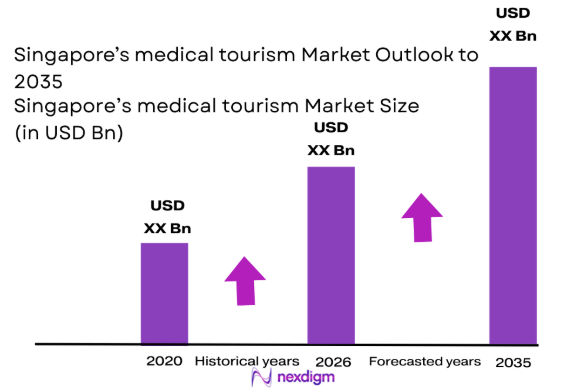
Singapore’s medical tourism sector represents one of the most advanced healthcare travel markets in Asia, supported by internationally accredited hospitals and high-precision medical technologies. Based on a recent historical assessment, Singapore generated approximately USD ~ billion in medical tourism revenue according to the Singapore Tourism Board and Ministry of Health data. The market is driven by rising demand for complex surgical procedures, oncology treatment, cardiology interventions, and advanced diagnostics offered by globally recognized healthcare institutions operating within the country’s integrated healthcare infrastructure.
Healthcare tourism activity is concentrated around major urban medical hubs including Singapore City and the Novena medical district, which host several internationally accredited hospitals and specialized treatment centers. These locations dominate the medical tourism landscape due to the presence of premium healthcare facilities, advanced robotic surgery capabilities, internationally trained physicians, and strong connectivity through Changi International Airport. Patients from Southeast Asia, the Middle East, and neighboring Asian economies prefer Singapore because of its strict clinical governance standards, efficient healthcare administration, and reliable post-treatment recovery services.
Market Segmentation
By Treatment Type
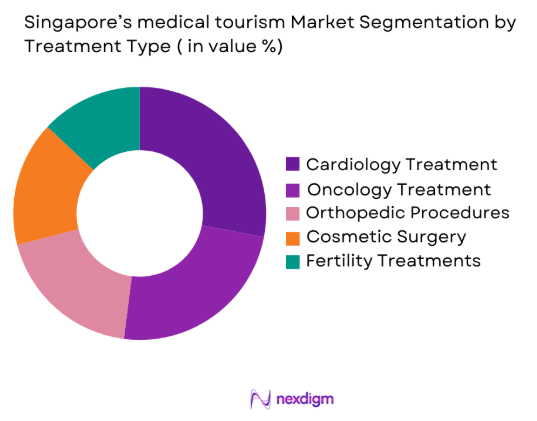
Singapore Medical Tourism market is segmented by product type into Cardiology Treatment, Oncology Treatment, Orthopedic Procedures, Cosmetic Surgery, and Fertility Treatments. Recently, Cardiology Treatment has a dominant market share due to factors such as demand patterns, brand presence, infrastructure availability, or consumer preference. Singapore’s hospitals are widely recognized for advanced cardiac care including minimally invasive cardiac surgery, angioplasty procedures, electrophysiology treatments, and heart failure management programs. International patients often seek these services due to strong clinical outcomes, internationally trained specialists, and availability of advanced diagnostic imaging equipment. The country’s healthcare system integrates advanced cardiovascular technologies such as robotic surgical platforms, AI-assisted diagnostics, and precision catheterization systems. Hospitals maintain internationally recognized accreditation standards which reinforce trust among global patients. Efficient patient management services and multilingual care coordination further strengthen Singapore’s position as a leading destination for cardiac treatment among international medical travellers.
By Service Provider
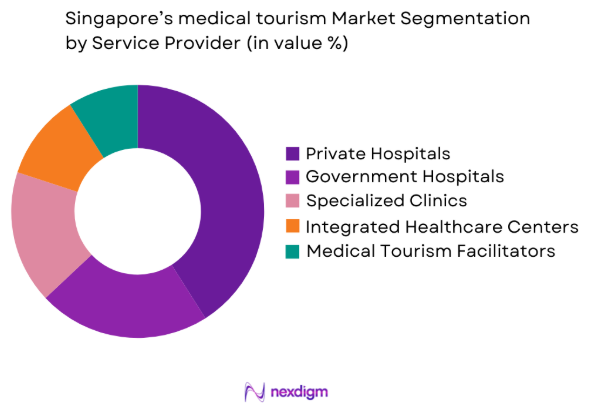
Singapore Medical Tourism market is segmented by product type into Private Hospitals, Government Hospitals, Specialized Clinics, Integrated Healthcare Centers, and Medical Tourism Facilitators. Recently, Private Hospitals has a dominant market share due to factors such as demand patterns, brand presence, infrastructure availability, or consumer preference. Leading private healthcare institutions provide premium international patient services including concierge medical travel assistance, specialized surgical units, luxury recovery facilities, and comprehensive diagnostic programs. International patients often select private hospitals because of shorter treatment waiting times, internationally trained specialists, and availability of cutting-edge surgical technologies. These hospitals also maintain partnerships with global insurance providers and medical travel facilitators, improving accessibility for foreign patients. Dedicated international patient departments coordinate visa assistance, accommodation arrangements, treatment scheduling, and post-treatment care. The presence of globally recognized private hospital brands significantly strengthens Singapore’s competitiveness within the global medical tourism landscape.
Competitive Landscape
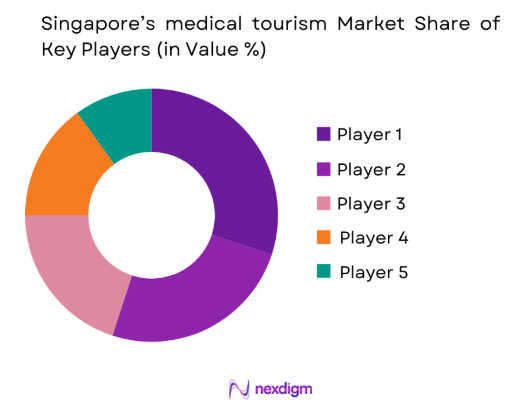
Singapore’s medical tourism industry is characterized by a concentrated competitive environment dominated by internationally recognized hospital groups and specialized healthcare providers. Major hospital networks maintain strong reputations for clinical excellence, advanced medical technologies, and internationally accredited healthcare services. Competition primarily focuses on treatment specialization, international patient services, and technological capabilities such as robotic surgery and precision diagnostics. Leading healthcare providers also invest heavily in international marketing initiatives, global physician recruitment, and partnerships with insurance companies and medical travel facilitators to strengthen their international patient inflow.
| Company Name | Establishment Year | Headquarters | Technology Focus | Market Reach | Key Products | Revenue | International Patient Services |
| Raffles Medical Group | 1976 | Singapore | ~ | ~ | ~ | ~ | ~ |
| IHH Healthcare | 1974 | Kuala Lumpur | ~ | ~ | ~ | ~ | ~ |
| Parkway Pantai | 1977 | Singapore | ~ | ~ | ~ | ~ | ~ |
| Thomson Medical Group | 1979 | Singapore | ~ | ~ | ~ | ~ | ~ |
| Farrer Park Hospital | 2016 | Singapore | ~ | ~ | ~ | ~ | ~ |
Singapore’s medical tourism Market Analysis
Growth Drivers
Expansion of Internationally Accredited Healthcare Infrastructure
The expansion of internationally accredited healthcare infrastructure is a key driver of Singapore’s medical tourism market. Global patients prioritize destinations with proven clinical standards and internationally recognized hospital accreditations that ensure safety and reliable outcomes. Singapore’s hospitals, accredited by global healthcare organizations, invest in advanced technologies like robotic surgery, high-precision imaging, and AI-driven diagnostics. These institutions offer specialized treatments, including cardiac surgery, oncology, and neurology, which are often unavailable in patients’ home countries. Multilingual patient coordination services and integrated treatment planning enhance the international patient experience. Continuous investment in infrastructure and strong clinical governance further support Singapore’s reputation as a leading destination for specialized medical care.
Rising Demand for Complex Specialized Medical Procedures from Regional Patients
Rising demand for complex specialized medical procedures from regional patients is driving significant growth in Singapore’s medical tourism sector. Many Southeast Asian countries lack the infrastructure to offer advanced treatments such as robotic oncology surgeries, cardiac interventions, and specialized neurological care. Singapore’s healthcare institutions provide internationally trained physicians, cutting-edge technologies, and multidisciplinary care teams to support these complex procedures. Regional patients increasingly seek high-precision treatments with strong clinical outcomes and reliable recovery. Digital patient management and teleconsultation systems enable seamless treatment coordination, while international insurance partnerships ease access. As healthcare awareness grows across emerging economies, Singapore remains a preferred destination for high-quality specialized treatments.
Market Challenges
High Cost of Advanced Medical Treatments Compared with Regional Alternatives
The high cost of advanced medical treatments in Singapore compared to regional alternatives poses a challenge for its medical tourism market. Premium hospitals in Singapore offer high clinical standards and advanced technologies but at significantly higher costs than countries like Thailand, India, and Malaysia, which also feature internationally accredited facilities. The substantial investments in advanced diagnostic equipment, robotic surgery, and digital healthcare infrastructure drive up treatment prices. While the quality justifies the cost for many, price sensitivity among medical tourists may push demand toward more affordable destinations. Limited insurance coverage for cross-border treatments and rising operational expenses further contribute to the cost disparity, affecting Singapore’s competitiveness.
Capacity Constraints in Premium Healthcare Facilities Serving International Patients
Capacity constraints in premium healthcare facilities are a significant challenge for Singapore’s medical tourism market, as hospitals balance domestic demand with international patient inflow. Leading hospitals often operate at high occupancy, limiting the number of international patients they can treat. Specialized departments such as oncology and cardiology require extensive resources and personnel, while workforce shortages and regulatory constraints slow capacity expansion. Managing logistics, including travel, accommodation, and recovery for international patients, further strains resources. Hospitals must prioritize domestic cases, sometimes resulting in delays for international patients. Addressing these capacity limitations will be crucial for sustaining growth in Singapore’s medical tourism sector and meeting increasing global demand.
Opportunities
Expansion of Integrated Medical and Wellness Tourism Programs
The expansion of integrated medical and wellness tourism programs offers a significant opportunity for Singapore’s healthcare tourism market, as international travelers seek holistic healthcare experiences. Healthcare providers are developing comprehensive packages that combine surgical treatments, rehabilitation, wellness consultations, and luxury accommodations. Singapore’s hospitality infrastructure supports these offerings with premium hotels and wellness resorts. Patients recovering from complex procedures benefit from structured rehabilitation programs, including physiotherapy, nutrition counseling, and mental wellness services. Wellness tourism programs focusing on preventive care and lifestyle medicine attract long-term health management seekers. As global demand shifts toward personalized healthcare, integrated medical and wellness tourism will drive further growth in Singapore’s healthcare tourism industry.
Adoption of Digital Health Platforms for International Patient Engagement
Adoption of digital health platforms presents a significant opportunity for Singapore’s medical tourism market by simplifying patient communication, treatment planning, and post-treatment monitoring. Telemedicine platforms, AI-driven diagnostics, and digital patient management systems enable international patients to consult specialists remotely before traveling for treatment. These platforms also support post-treatment recovery through remote monitoring, reducing the need for extended hospital stays. Digital tools help coordinate patient documentation, insurance approvals, travel, and appointments. Hospitals use digital marketing to reach international patients and promote specialized services. As digital health adoption grows globally, Singapore’s hospitals can enhance international patient engagement, improving accessibility and treatment coordination while strengthening their competitive position in medical tourism.
Future Outlook
Singapore’s medical tourism industry is expected to expand steadily as international patients increasingly seek high-precision medical treatments supported by advanced healthcare technologies. Continuous investments in hospital infrastructure, robotic surgery, and digital health platforms will strengthen Singapore’s competitiveness within the global healthcare tourism sector. Government initiatives supporting international patient services and healthcare innovation are likely to enhance market growth. Rising demand for specialized treatments and integrated wellness recovery programs will further reinforce the country’s position as a leading medical tourism destination.
Major Players
- Singapore General Hospital
- Raffles Medical Group
- Mount Elizabeth Hospital
- Gleneagles Hospital Singapore
- Parkway East Hospital
- Thomson Medical Centre
- National University Hospital Singapore
- Tan Tock Seng Hospital
- Farrer Park Hospital
- Changi General Hospital
- Mount Alvernia Hospital
- Novena Global Healthcare Group
- HealthwayMedical Group
- Fullerton Health Group
- IHH Healthcare Berhad
Key Target Audience
- Hospital networks and healthcare providers
- International medical tourism facilitators
- Pharmaceutical and biotechnology companies
- Healthcare technology companies
- Insurance and healthcare financing companies
- Private healthcare investors
- Investments and venture capitalist firms
- Government and regulatory bodies
Research Methodology
Step 1: Identification of Key Variables
The research process begins with identifying the primary market variables influencing the Singapore Medical Tourism market. These variables include treatment demand patterns, healthcare infrastructure, patient inflow trends, and regulatory factors shaping cross-border healthcare travel.
Step 2: Market Analysis and Construction
Extensive secondary research and data validation are conducted using healthcare databases, government publications, and industry reports. The collected information is structured to map treatment categories, healthcare providers, and international patient trends within the market.
Step 3: Hypothesis Validation and Expert Consultation
Market hypotheses are validated through consultations with healthcare professionals, hospital administrators, and medical tourism facilitators. Expert insights help refine assumptions regarding treatment demand, patient preferences, and healthcare infrastructure capabilities.
Step 4: Research Synthesis and Final Output
The final research output integrates quantitative data analysis with qualitative insights to construct a comprehensive market report. Data triangulation ensures accuracy while analytical models evaluate competitive positioning and long-term market growth patterns.

- Executive Summary
- Research Methodology (Definitions, Scope, Industry Assumptions, Market Sizing Approach, Primary & Secondary Research Framework, Data Collection & Verification Protocol, Analytic Models & Forecast Methodology, Limitations & Research Validity Checks)

- Market Definition and Scope
- Value Chain & Stakeholder Ecosystem
- Regulatory / Certification Landscape
- Sector Dynamics Affecting Demand
- Strategic Initiatives & Infrastructure Growth

- Growth Drivers
Advanced Healthcare Infrastructure and Internationally Accredited Hospitals
Rising Demand for HighQuality Specialized Medical Procedures
Government Initiatives Promoting Singapore as a Regional Healthcare Hub - Market Challenges
High Cost of Medical Treatments Compared with Regional Competitors
Capacity Constraints in Premium Healthcare Facilities
Complex International Insurance and Reimbursement Processes - Market Opportunities
Expansion of Digital Health Platforms for International Patient Access
Growth in Specialized Oncology and Cardiac Treatment Programs
Strategic Partnerships with International Insurance Providers - Trends
Rising Demand for Integrated Medical and Wellness Tourism Packages
Increasing Use of Teleconsultation for PreTreatment Planning
Growing Adoption of Robotic and Minimally Invasive Surgical Procedures - Government Regulations
- SWOT Analysis of Key Competitors
- Porter’s Five Forces

- By Market Value, 2020-2025
- By Installed Units, 2020-2025
- By Average System Price, 2020-2025
- By System Complexity Tier, 2020-2025

- By System Type (In Value%)
Cardiology Treatment Services
Oncology Treatment Programs
Orthopedic and Joint Replacement Services
Cosmetic and Reconstructive Surgery Services
Fertility and Reproductive Medicine Services - By Platform Type (In Value%)
Hospital-Based Medical Tourism Programs
Specialized Medical Tourism Clinics
Integrated Healthcare Tourism Packages
Digital Medical Tourism Booking Platforms
International Patient Service Centers - By Fitment Type (In Value%)
Standalone Medical Procedures
Integrated Treatment and Recovery Packages
Wellness and Medical Combination Programs
Post Treatment Rehabilitation Programs
Long Term Specialized Treatment Programs - By End User Segment (In Value%)
International Patients Seeking Specialized Care
Corporate Medical Travel Programs
Insurance Sponsored International Patients
Government Sponsored Medical Travelers
High Net Worth Private Medical Tourists - By Procurement Channel (In Value%)
Direct Hospital Booking
Medical Tourism Facilitators
Insurance and Healthcare Networks
Digital Healthcare Booking Platforms
International Referral Partnerships

- Market Share Analysis
- Cross Comparison Parameters (Hospital Accreditation, Treatment Specialization, International Patient Services, Technology Adoption, Global Referral Network, Surgical Success Rate, Patient Safety Standards, Average Treatment Cost, Insurance Partnerships, Medical Visa Facilitation)
- SWOT Analysis of Key Competitors
- Pricing & Procurement Analysis
- Key Players
Singapore General Hospital
Raffles Medical Group
Mount Elizabeth Hospital
Gleneagles Hospital Singapore
Parkway East Hospital
Thomson Medical Centre
National University Hospital Singapore
Tan Tock Seng Hospital
Farrer Park Hospital
Changi General Hospital
Mount Alvernia Hospital
Novena Global Healthcare Group
Healthway Medical Group
Fullerton Health Group
IHH Healthcare Berhad

- Increasing International Patient Preference for High Precision Treatments
- Growing Demand for Complex Surgical Procedures among Medical Travelers
- Expansion of Insurance Supported Cross Border Medical Treatments
- Rising Adoption of Concierge Healthcare Services for International Patients

- Forecast Market Value, 2026-2035
- Forecast Installed Units, 2026-2035
- Price Forecast by System Tier, 2026-2035
- Future Demand by Platform, 2026-2035


 Request a Sample
 Ask for Customization
 Get a Quote
 Enquire Now