
 Download PDF
 Download PDF
Market Overview
The Singapore medium and heavy lift helicopters market is valued at USD ~ billion in 2023. This market is primarily driven by increasing defense and military modernization efforts, the expansion of the oil and gas industry, and growing demand for helicopters in search and rescue operations. Additionally, the technological advancements in helicopter designs, including fuel efficiency and automated flight systems, have boosted market growth. The demand for helicopters is expected to increase further, with more focus on offshore and military applications.
The countries dominating the Singapore medium and heavy lift helicopters market include Singapore, Australia, and Malaysia. Singapore’s strategic location and strong defense budget have made it a leading player in the region, with a robust demand for both civil and military helicopters. Malaysia, with its growing offshore oil industry, and Australia, which has an expansive search and rescue and defense sector, also contribute significantly to the market. These countries’ strong aviation infrastructure and government support make them key players in the market. 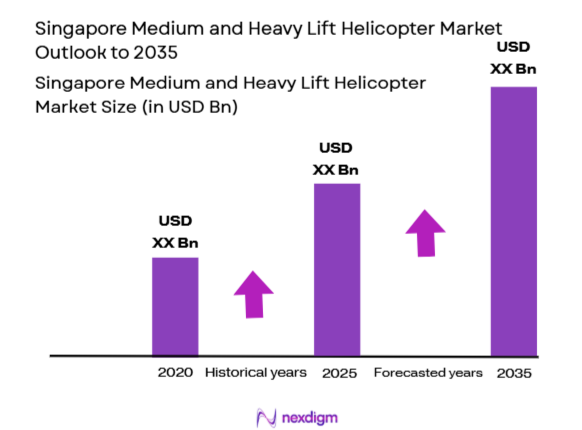
Market Segmentation
By System Type
The Singapore medium and heavy lift helicopters market is segmented by system type into utility helicopters, transport helicopters, search and rescue helicopters, offshore helicopters, and VIP transport helicopters. Transport helicopters dominate the market due to their wide usage in both military and civil sectors. The increasing need for transporting personnel and equipment for offshore oil and gas operations, coupled with growing defense demands, has made this segment a key player in the market. The versatility of transport helicopters, especially those equipped for both cargo and personnel, ensures their continued dominance in the market. 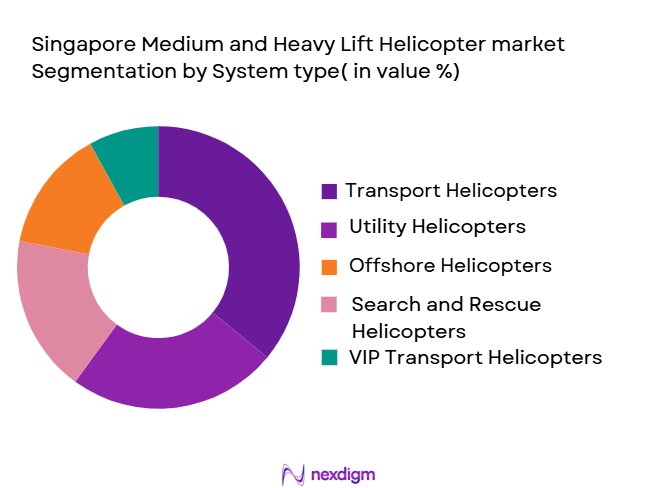
By Platform Type
The market is segmented by platform type into rotary-wing platforms, dual-use platforms, dedicated military platforms, civil aviation platforms, and hybrid platforms. The rotary-wing platforms segment dominates the market. These platforms are essential for medium and heavy lift helicopters, offering flexibility and operational efficiency. The high demand from the military and offshore industries, which rely heavily on these platforms for versatile applications, contributes to the dominance of rotary-wing platforms in the market. 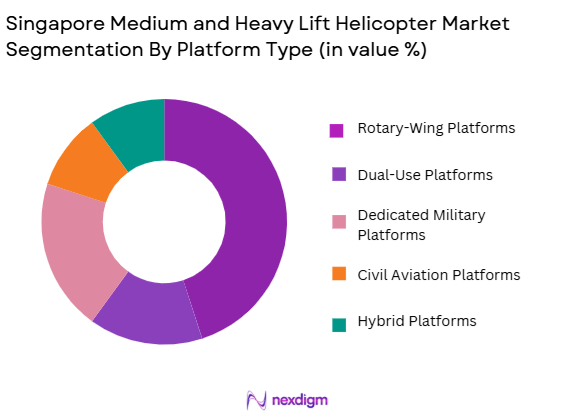
Competitive Landscape
The Singapore medium and heavy lift helicopters market is dominated by a few major players, including both local and international companies. These players include Airbus Helicopters, Boeing, Sikorsky Aircraft, Leonardo, and Bell Helicopter. Their dominance stems from their advanced helicopter designs, strong brand presence, and established customer relationships across various sectors, including defense, civil aviation, and offshore industries.
| Company | Establishment Year | Headquarters | Product Offerings | Key Market Segments | Global Presence | Strategic Partnerships |
| Airbus Helicopters | 1992 | France | ~ | ~ | ~ | ~ |
| Boeing | 1916 | USA | ~ | ~ | ~ | ~ |
| Sikorsky Aircraft | 1923 | USA | ~ | ~ | ~ | ~ |
| Leonardo | 1948 | Italy | ~ | ~ | ~ | ~ |
| Bell Helicopter | 1935 | USA | ~ | ~ | ~ | ~ |
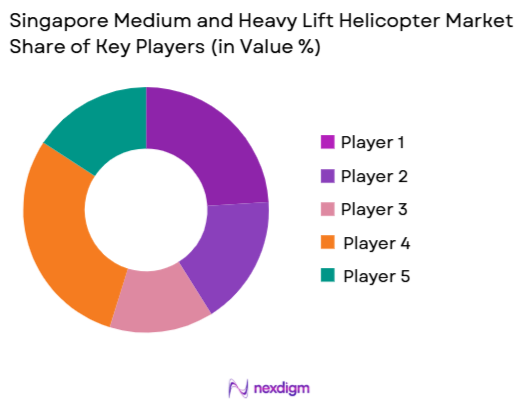
Singapore Medium and Heavy Lift Helicopter Market Analysis
Growth Drivers
Urbanization
Singapore’s urbanization continues to drive the demand for medium and heavy lift helicopters, particularly in sectors such as search and rescue, offshore oil and gas, and defense. With the country’s urban population expected to exceed ~million in 2024, the demand for rapid transport solutions and emergency services is increasing. The government’s investment in infrastructural development, including urban search and rescue, supports this trend, as helicopters offer timely solutions for transportation in congested urban areas. The high density and infrastructure expansion further emphasize the need for medium and heavy lift helicopters to serve critical sectors efficiently.
Industrialization
The industrial sector’s continued growth in Singapore has been a key growth driver for the medium and heavy lift helicopter market, especially in the offshore oil and gas industry. As of 2024, Singapore’s industrial production is expected to grow at a steady pace, with major sectors such as oil extraction, shipbuilding, and aerospace driving this expansion. These industries require reliable air transport solutions to move equipment, personnel, and goods to and from offshore platforms, fueling the demand for medium and heavy lift helicopters. With an industrial production value of USD ~billion in 2023, the demand for logistics and infrastructure support is expected to rise, promoting the use of helicopters for these services.
Restraints
High Initial Costs
Despite the growing demand, the high initial cost of acquiring medium and heavy lift helicopters remains a key restraint for the market. The upfront cost of purchasing a new helicopter can reach millions of dollars, making it a significant financial investment for governments and private enterprises. In 2024, the price of a medium-lift helicopter can range from USD ~ million to USD ~million, while heavy-lift models can exceed USD ~million, depending on the specifications and equipment. The financial burden of these investments, particularly for small to medium-sized operators, limits the accessibility of these helicopters, making it a challenge for market growth.
Technical Challenges
The technical challenges associated with medium and heavy lift helicopters, including their maintenance, repair, and operational efficiency, pose a significant restraint on the market. The helicopters require high levels of technical expertise and specialized training for their operation and maintenance. As of 2024, helicopter operators in Singapore face challenges in maintaining a skilled workforce capable of servicing advanced helicopter systems. Technical issues such as component wear and tear, fuel efficiency, and the cost of spare parts also add to the operational burden, making it more difficult for operators to remain competitive. These factors limit the rapid expansion of the market.
Opportunities
Technological Advancements
Technological advancements in medium and heavy lift helicopters offer significant opportunities for market growth in 2024. New innovations in engine efficiency, lightweight materials, and automation are pushing the boundaries of what these helicopters can achieve. Helicopters with hybrid-electric propulsion systems, for example, offer the potential for reduced operational costs and better fuel efficiency, addressing the growing environmental concerns in the aviation sector. These advancements present substantial opportunities for operators to upgrade their fleets with more advanced and cost-effective models. The continuous progress in autonomous flight systems also offers a glimpse into the future of helicopter operations, where increased automation could enhance operational efficiency and reduce human errors.
International Collaborations
International collaborations are a key opportunity for the growth of Singapore’s medium and heavy lift helicopter market. By engaging in joint ventures and partnerships with global aerospace manufacturers, local companies can access advanced helicopter technologies and increase their presence in international markets. For example, the ongoing collaboration between Singapore’s aerospace industry and major helicopter manufacturers like Boeing and Airbus enhances technological exchange and offers opportunities for growth in both military and civil helicopter segments. These collaborations help reduce R&D costs, promote innovation, and increase the competitiveness of Singaporean operators in the global aviation market.
Future Outlook
Over the next 5 years, the Singapore medium and heavy lift helicopters market is expected to see significant growth driven by continued investment in defense modernization, offshore oil and gas exploration, and technological innovations in the helicopter industry. The demand for advanced, multi-role helicopters is projected to rise as more countries in the Asia-Pacific region focus on upgrading their air defense capabilities and offshore transport operations. Additionally, ongoing developments in autonomous flight systems and more fuel-efficient engines will shape the future growth trajectory of the market.
Major Players in the Market
- Airbus Helicopters
- Boeing
- Sikorsky Aircraft
- Leonardo
- Bell Helicopter
- Enstrom Helicopter Corporation
- Kaman Aerospace
- Russian Helicopters
- Lockheed Martin
- Guimbal Helicopteres
- Korean Aerospace Industries
- HAL (Hindustan Aeronautics Limited)
- Mitsubishi Heavy Industries
- China Aviation Industry Corporation
- Guizhou Aircraft Industry
Key Target Audience
- Military and Defense Organizations
- Oil and Gas Industry Stakeholders
- Emergency Medical Services Providers
- Government Aviation Agencies
- Investment and Venture Capitalist Firms
- Helicopter OEMs
- Offshore Operators
- Regulatory Bodies
Research Methodology
Step 1: Identification of Key Variables
The initial phase involves defining all key market variables that directly impact the Singapore medium and heavy lift helicopters market. This will include identifying crucial economic drivers such as defense spending, offshore demand, and advancements in aviation technologies. Research methods will include a blend of secondary research and expert consultations to create a comprehensive understanding of the market dynamics.
Step 2: Market Analysis and Construction
In this phase, historical data regarding the medium and heavy lift helicopter market will be analyzed. This involves examining past sales data, market penetration, and growth patterns within the region. A comprehensive analysis of market activities, including the impact of major government policies, will provide insights into the future market trajectory.
Step 3: Hypothesis Validation and Expert Consultation
Expert consultations will be conducted with industry leaders, including key stakeholders in defense, aviation, and offshore sectors. Interviews with helicopter manufacturers, government regulators, and operators will provide real-world insights into the evolving market and technology trends. This validation step ensures the accuracy and relevance of the findings.
Step 4: Research Synthesis and Final Output
The final output will be synthesized from the collected data, expert opinions, and market analysis. Detailed forecasts will be made based on market trends, technological developments, and customer demands. Insights will be cross-verified with primary sources, such as aviation authorities and helicopter manufacturers, to ensure comprehensive and credible results.

- Executive Summary
- Research Methodology(Definitions, Scope, Industry Assumptions, Market Sizing Approach, Primary & Secondary Research Framework, Data Collection & Verification Protocol, Analytic Models & Forecast Methodology, Limitations & Research Validity Checks)

- Market Definition and Scope
- Value Chain & Stakeholder Ecosystem
- Regulatory / Certification Landscape
- Sector Dynamics Affecting Demand
- Strategic Initiatives & Infrastructure Growth

- Growth Drivers
Increasing Demand for Offshore Transport
Rising Need for Search and Rescue Operations
Growing Military Expenditures - Market Challenges
High Operational Costs
Regulatory Compliance Complexities
Limited Availability of Skilled Pilots - Trends
Emerging Hybrid Power Systems
Digitalization of Maintenance and Operations
Development of Autonomous Flight Capabilities
- Market Opportunities
Advancements in Fuel Efficiency and Technology
Increased Military and Civil Aviation Integration
Growing Investments in Infrastructure Development - Government regulations
Stringent Noise and Emission Standards
Evolving Airworthiness Certification Requirements
Helicopter Safety Regulations - SWOT analysis
Strengthening Military Capabilities in Asia-Pacific
Emerging Trends in Helicopter Automation
Challenges in Meeting Fuel Efficiency Standards - Porters 5 forces
Moderate Threat of New Entrants
High Bargaining Power of Suppliers
Low Bargaining Power of Buyers

- By Market Value, 2020-2025
- By Installed Units, 2020-2025
- By Average System Price, 2020-2025
- By System Complexity Tier, 2020-2025

- By System Type (In Value%)
Utility Helicopters
Transport Helicopters
Search & Rescue Helicopters
Offshore Helicopters
VIP Transport Helicopters - By Platform Type (In Value%)
Rotary-Wing Platforms
Dual-Use Platforms
Dedicated Military Platforms
Civil Aviation Platforms
Hybrid Platforms - By Fitment Type (In Value%)
Custom Fitment
Standard Fitment
Modified Fitment
OEM Fitment
Aftermarket Fitment - By EndUser Segment (In Value%)
Government / Military
Oil & Gas Industry
Emergency Medical Services
Search & Rescue Operations
VIP & Corporate Transport - By Procurement Channel (In Value%)
Direct Procurement
Government Tender
Third-Party Resellers
OEM Dealers
Leasing Companies

- Market Share Analysis
- CrossComparison Parameters(Market Value, Installed Units, System Complexity, Procurement Channel, Platform Type)
- SWOT Analysis of Key Competitors
- Pricing & Procurement Analysis
- Key Players
Singapore Technologies Aerospace
Boeing
Airbus Helicopters
Leonardo
Sikorsky Aircraft
Bell Helicopter
Enstrom Helicopter Corporation
Kaman Aerospace
Russian Helicopters
Lockheed Martin
Guimbal Helicopteres
Korean Aerospace Industries
HAL
China Aviation Industry Corporation
Guizhou Aircraft Industry
Mitsubishi Heavy Industries

- High Demand from Oil and Gas Sector for Heavy Lift Solutions
- Military Focus on Versatile Helicopters for Combat and Logistics
- Growing Civil Aviation Market for VIP Transport
- Increased Use of Helicopters in Disaster Relief and EMS

- Forecast Market Value, 2026-2035
- Forecast Installed Units, 2026-2035
- Price Forecast by System Tier, 2026-2035
- Future Demand by Platform, 2026-2035


 Request a Sample
 Ask for Customization
 Get a Quote
 Enquire Now