
 Download PDF
Market Overview
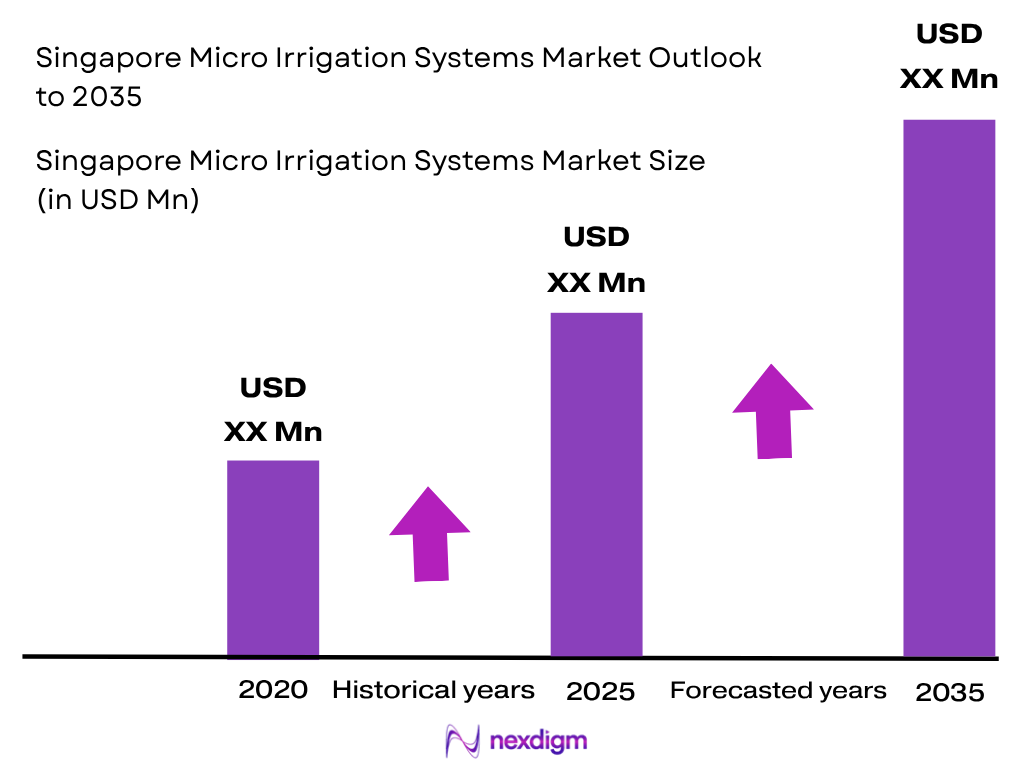
The Singapore Micro Irrigation Systems market is valued at ~USD XX million in 2024, supported by increasing adoption of controlled environment agriculture, urban farming initiatives, and advanced water management technologies. The market is driven by Singapore’s limited agricultural land availability, government focus on food resilience, and rising investments in vertical farming infrastructure. According to the Singapore Food Agency (SFA), the country aims to strengthen domestic food production through technology-enabled agriculture, increasing demand for precision irrigation systems. Micro irrigation solutions enable efficient water delivery, automated crop management, and optimized resource utilization across urban farms, greenhouses, and landscaping projects.
The Singapore Micro Irrigation Systems market is concentrated mainly in urban agricultural zones and commercial development areas due to the country’s compact geography and limited farmland availability. Regions such as Lim Chu Kang, Sungei Tengah, Kranji, and Tengah represent important agricultural clusters because of their concentration of vegetable farms, vertical farming facilities, and agri-technology projects. Lim Chu Kang remains a major agricultural area with greenhouse farms and high-tech cultivation facilities supported by government programs. Urban districts including Central Singapore, Marina Bay, and major residential developments also contribute demand through commercial landscaping and green building projects. The dominance of these locations is driven by increasing adoption of automated irrigation systems in vertical farms, rooftop gardens, urban landscaping projects, and sustainable building developments. Singapore’s focus on water efficiency and smart city infrastructure further supports demand for advanced irrigation technologies.
Market Segmentation
By Irrigation System Type
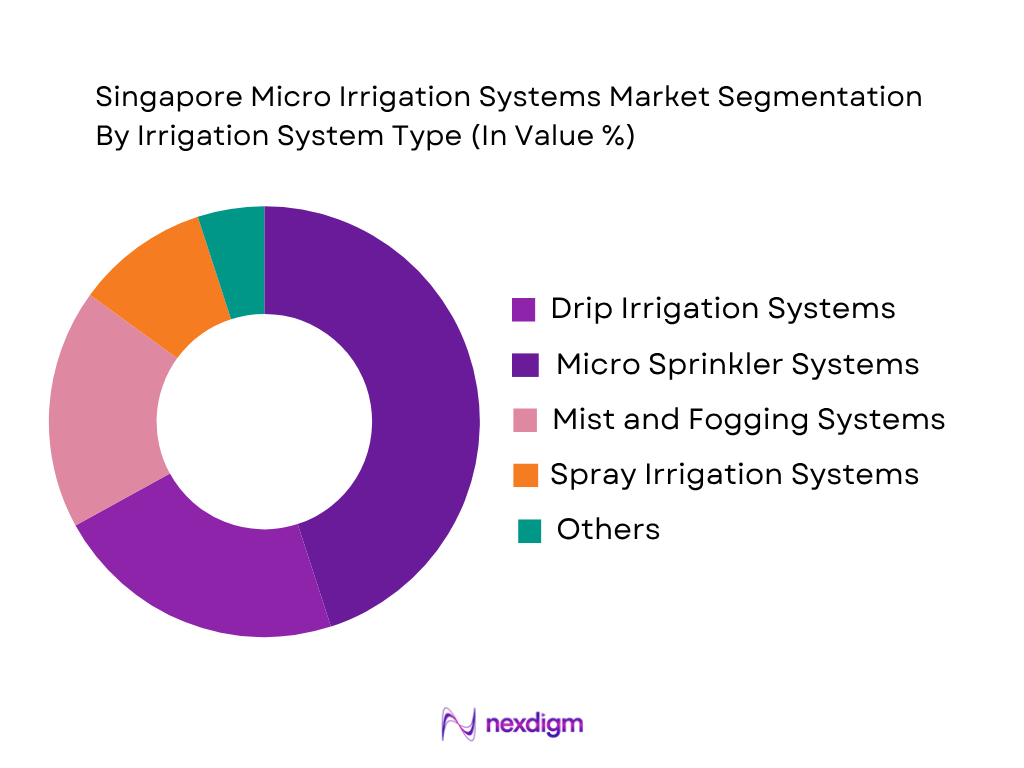
Singapore Micro Irrigation Systems market is segmented by irrigation system type into drip irrigation systems, micro sprinkler systems, mist irrigation systems, fogging systems, subsurface irrigation systems, and automated irrigation solutions. Among these, drip irrigation systems represent the dominant segment due to their suitability for controlled environment agriculture, hydroponic farming, and precision crop production. Drip irrigation provides accurate water delivery directly to plant roots, making it highly suitable for Singapore’s high-density urban farming environment where resource efficiency is critical. The increasing adoption of vertical farming and greenhouse cultivation has accelerated demand for drip systems integrated with fertigation and monitoring technologies. Commercial growers prefer drip irrigation because it supports consistent crop growth, reduces water wastage, and enables automation through sensors and digital controllers. The segment is further supported by government-supported agricultural technology initiatives encouraging efficient farming methods.
By Application Area
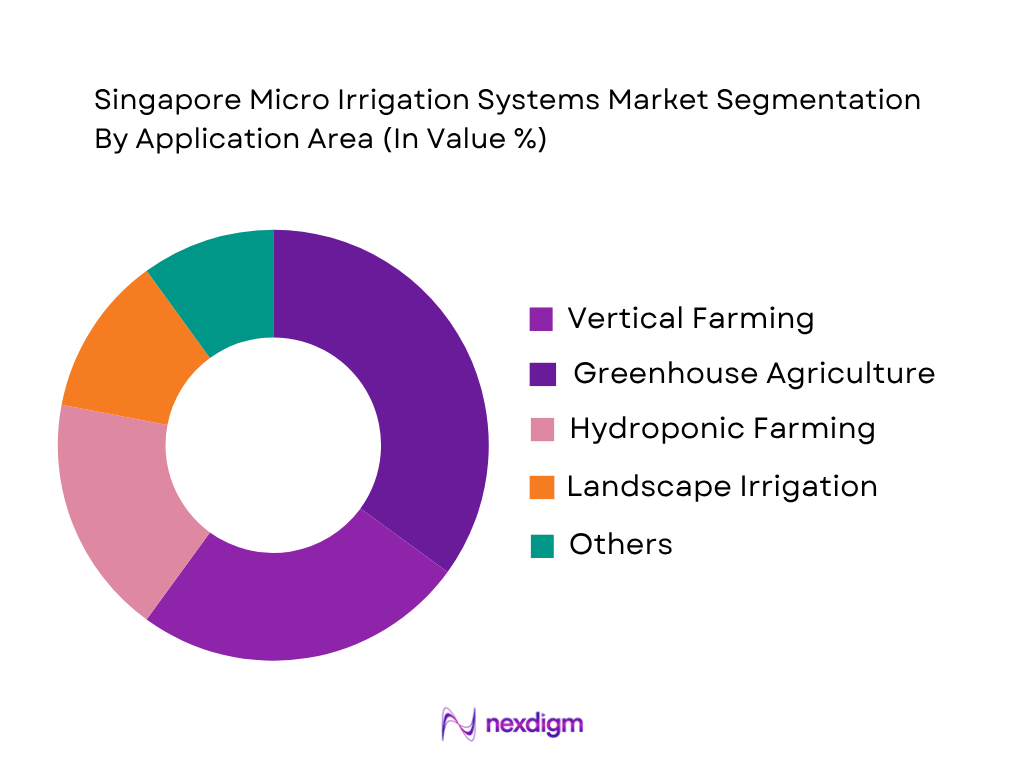
Singapore Micro Irrigation Systems market is segmented by application area into vertical farming, greenhouse agriculture, hydroponic cultivation, urban farming projects, commercial landscaping, municipal green spaces, and residential applications. Vertical farming represents the leading segment due to Singapore’s emphasis on technology-driven agriculture and limited availability of traditional farmland. Vertical farms require highly controlled irrigation systems to manage nutrient delivery, humidity levels, and crop growth cycles. Micro irrigation technologies are essential for hydroponic and indoor farming facilities because they provide precise water distribution and support automated crop management. Increasing investments in urban agriculture projects have strengthened demand for advanced irrigation solutions. Commercial landscaping is another important application area due to Singapore’s extensive green building developments, parks, and public landscaping projects. Automated irrigation systems are increasingly adopted in these areas to improve water efficiency and reduce manual maintenance requirements.
Competitive Landscape
The Singapore Micro Irrigation Systems market consists of global irrigation technology providers, agricultural technology companies, and specialized solution distributors. Competition is influenced by technology integration capabilities, automation features, installation support, and suitability for urban farming applications. International companies dominate the market due to their advanced irrigation technologies, while local providers contribute through project implementation, maintenance services, and customized solutions for Singapore’s urban agricultural ecosystem.
| Company | Establishment Year | Headquarters | Product Portfolio | Irrigation Technology | Smart Farming Capability | Key Applications | Distribution Network | Market Strength |
| Netafim | 1965 | Israel | ~ | ~ | ~ | ~ | ~ | ~ |
| Rivulis Irrigation | 1966 | Israel | ~ | ~ | ~ | ~ | ~ | ~ |
| Jain Irrigation Systems | 1986 | India | ~ | ~ | ~ | ~ | ~ | ~ |
| Rain Bird Corporation | 1933 | USA | ~ | ~ | ~ | ~ | ~ | ~ |
| Hunter Industries | 1981 | USA | ~ | ~ | ~ | ~ | ~ | ~ |
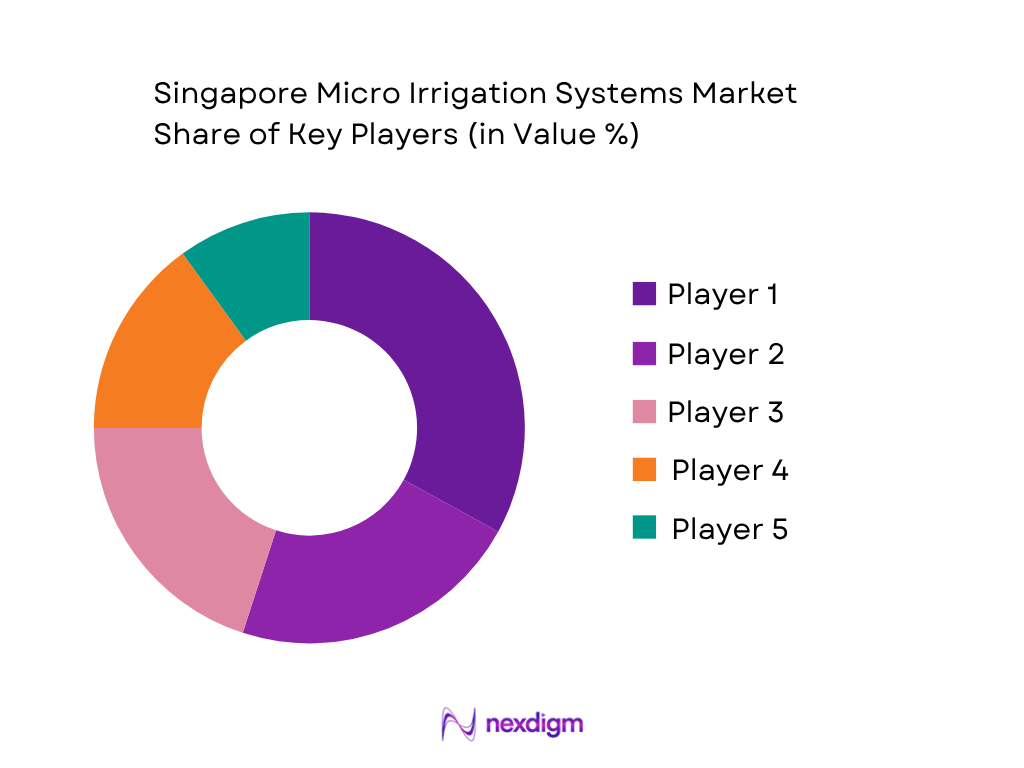
Singapore Micro Irrigation Systems Market Analysis
Growth Drivers
Increasing Urban Farming Development and Limited Land Availability for Agriculture
The Singapore Micro Irrigation Systems market is supported by the rapid development of urban farming solutions driven by land constraints and national food resilience objectives. Singapore has a total land area of approximately 735 square kilometers, according to national geographic statistics, limiting the availability of conventional agricultural land and increasing reliance on high-efficiency cultivation systems. The country imports more than 90% of its food supply, according to the Singapore Food Agency, encouraging investment in controlled environment agriculture, vertical farming, and technology-enabled food production. Micro irrigation systems are increasingly required in these facilities because they enable precise water delivery, nutrient management, and automated crop monitoring. Singapore’s urban agriculture ecosystem includes commercial indoor farms, rooftop farms, and greenhouse operations that require efficient irrigation infrastructure. The government’s 30 by 30 food resilience strategy supports the development of local agricultural capabilities, increasing demand for advanced farming technologies. As urban farming facilities expand, drip irrigation, mist irrigation, and automated fertigation systems are becoming essential components for maintaining productivity in limited spaces while optimizing water usage.
Rising Adoption of Controlled Environment Agriculture and Smart Irrigation Technologies
The adoption of controlled environment agriculture is a significant growth driver for the Singapore Micro Irrigation Systems market as farmers increasingly use technology-intensive cultivation methods. Singapore’s agricultural strategy emphasizes high-tech farming solutions such as vertical farms, hydroponics, and indoor cultivation systems to improve domestic food production efficiency. According to the Singapore Food Agency, the country has supported the development of local production capabilities for vegetables, eggs, and seafood under national food resilience programs. Controlled environment farms require advanced irrigation systems capable of delivering precise water volumes, nutrients, and environmental control. Singapore has a highly developed digital infrastructure, with internet penetration exceeding 90% of the population, according to World Bank digital indicators, supporting adoption of IoT-enabled agricultural technologies. Smart irrigation systems using sensors, automated controllers, and digital monitoring platforms allow farmers to optimize water application and reduce resource wastage. Increasing adoption of precision agriculture technologies among urban farms and commercial growers is strengthening demand for micro irrigation solutions integrated with automation and data analytics capabilities.
Market Challenges
High Initial Installation Costs and Dependence on Imported Irrigation Equipment
The Singapore Micro Irrigation Systems market faces challenges due to the high capital requirements associated with advanced irrigation infrastructure and dependence on imported technology components. Modern micro irrigation systems used in vertical farms and controlled environments require specialized equipment including emitters, pumps, filtration units, sensors, controllers, and automation platforms. Singapore’s limited domestic manufacturing base for agricultural equipment results in significant reliance on imported irrigation technologies and components. According to World Bank trade indicators, Singapore recorded merchandise imports exceeding USD 400 billion annually, reflecting its role as a highly trade-dependent economy. For smaller urban farming operators, the investment required for automated irrigation infrastructure, installation, and maintenance can create adoption barriers. Advanced systems also require integration with farm management software and environmental control systems, increasing technical complexity. The requirement for imported components may expose operators to supply chain disruptions and equipment replacement challenges. These factors can slow adoption among smaller agricultural businesses compared with larger commercial farming enterprises with stronger investment capabilities.
Complex System Design Requirements and Requirement for Skilled Technical Services
The Singapore Micro Irrigation Systems market is challenged by the complexity of designing, installing, and maintaining advanced irrigation systems for urban agriculture environments. Unlike traditional agricultural settings, vertical farms and indoor cultivation facilities require customized irrigation solutions based on crop type, growing medium, humidity conditions, and production methods. Proper system design requires technical expertise in water pressure management, filtration, nutrient delivery, and automation integration. Singapore’s agriculture sector increasingly relies on specialized farming technologies, creating demand for skilled professionals capable of managing advanced irrigation infrastructure. According to Singapore’s workforce statistics, the country has a resident workforce exceeding 3 million people, but specialized agricultural technology skills remain a developing area due to the relatively small size of the farming sector. Maintenance requirements for sensors, pumps, filtration systems, and automated controllers add operational complexity for farm operators. Small-scale urban farmers may face challenges in accessing technical support and training, limiting adoption of sophisticated irrigation technologies despite their efficiency benefits.
Market Opportunities
Expansion of Vertical Farming Infrastructure and IoT-Based Irrigation Management
The expansion of vertical farming infrastructure creates significant opportunities for the Singapore Micro Irrigation Systems market as technology-driven agriculture becomes increasingly important for domestic food production. Singapore continues to encourage high-tech farming models through initiatives focused on improving local food resilience and reducing dependence on imported food sources. The Singapore Food Agency has identified technology adoption as a key component of increasing local agricultural production capabilities. Vertical farms require precise irrigation management because crops are cultivated in controlled environments with limited space and optimized resource inputs. IoT-based irrigation systems provide opportunities through real-time monitoring of water consumption, nutrient delivery, and crop conditions. Singapore’s advanced digital ecosystem supports adoption of connected farming technologies, with digital connectivity reaching almost universal levels among households and businesses. Smart irrigation platforms enable farmers to automate irrigation schedules, reduce water wastage, and improve operational efficiency. As more commercial farms adopt automated cultivation systems, demand for integrated irrigation solutions combining sensors, analytics, and remote monitoring capabilities is expected to increase.
Government Food Resilience Programs and Sustainable Urban Agriculture Solutions
Government-supported food resilience programs and sustainable urban agriculture initiatives create opportunities for advanced micro irrigation technologies in Singapore. The country’s limited agricultural land and dependence on imported food have increased focus on developing efficient local production systems. Singapore’s national food strategy aims to strengthen domestic production through technology adoption, including vertical farming, controlled environment agriculture, and resource-efficient farming methods. According to the Singapore Food Agency, local production initiatives focus on improving productivity through innovative agricultural technologies rather than land expansion. Micro irrigation systems support these objectives by enabling efficient water management, precision nutrient application, and reduced resource consumption. Sustainable building developments and green landscaping projects also create additional opportunities for automated irrigation solutions. Singapore’s emphasis on environmental sustainability under the Green Plan 2030 encourages adoption of technologies that improve water efficiency and resource management. Advanced irrigation solutions incorporating water recycling, automated fertigation, and digital monitoring can support both agricultural applications and urban landscaping projects, expanding the addressable market for irrigation technology providers.
Future Outlook
Over the forecast period, the Singapore Micro Irrigation Systems market is expected to expand due to increasing adoption of urban farming technologies, controlled environment agriculture, and smart water management solutions. The development of vertical farming facilities and greenhouse projects will continue creating demand for precision irrigation technologies. Government initiatives supporting food resilience and sustainable agriculture are expected to encourage investment in automated irrigation systems. The integration of IoT sensors, artificial intelligence-based irrigation management, and digital farming platforms will reshape the irrigation ecosystem. Technology providers focusing on water efficiency, automation, and customized urban farming solutions are expected to benefit from increasing demand across agricultural and landscaping applications.
Major Players
- Netafim
- Rivulis Irrigation
- Jain Irrigation Systems
- Rain Bird Corporation
- Hunter Industries
- The Toro Company
- Metzer Group
- Valmont Industries
- Lindsay Corporation
- Mahindra EPC Irrigation
- Irritec S.p.A.
- Kifco Irrigation
- Hydroponics Singapore Providers
- Urban Farming Technology Companies
- Singapore Irrigation Solution Providers
Key Target Audience
- Vertical farming companies
- Greenhouse operators
- Urban agriculture technology providers
- Irrigation equipment manufacturers and distributors
- Landscape management companies
- Real estate developers and green building operators
- Investments and venture capitalist firms (Agriculture Technology Funds, Sustainable Technology Investment Funds)
- Government and regulatory bodies (Singapore Food Agency, Public Utilities Board, Economic Development Board)
Research Methodology
Step 1: Identification of Key Variables
The initial phase involves developing an ecosystem map covering major stakeholders operating within the Singapore Micro Irrigation Systems market. This includes irrigation equipment manufacturers, urban farming companies, greenhouse operators, technology providers, government organizations, and landscaping businesses. Key market variables related to technology adoption, water management requirements, and agricultural modernization are identified.
Step 2: Market Analysis and Construction
This phase focuses on analyzing historical market information related to irrigation technology deployment, application areas, product categories, and end-user adoption patterns. Supply-side evaluation includes assessment of manufacturers, distributors, installation providers, and technology integration companies operating within Singapore.
Step 3: Hypothesis Validation and Expert Consultation
Market assumptions are validated through discussions with irrigation solution providers, urban farming operators, agricultural technology companies, and industry stakeholders. These interactions provide insights into system requirements, adoption barriers, technology preferences, and future demand patterns.
Step 4: Research Synthesis and Final Output
The final stage integrates primary and secondary research findings to create a comprehensive market assessment. The analysis evaluates market segmentation, competitive positioning, technology trends, and future opportunities within Singapore’s micro irrigation ecosystem.

- Executive Summary
- Research Methodology (Market Definitions and Scope, Market Classification, Micro Irrigation System Mapping, Drip Irrigation Technology Assessment, Micro Sprinkler Technology Evaluation, Precision Agriculture Framework, Demand-Side Assessment, Supply-Side Assessment, Primary Industry Interviews, Agricultural Stakeholder Validation, Data Triangulation, Market Forecasting Framework, Regulatory Assessment, Research Limitations and Conclusions)

- Definition and Scope
- Market Evolution and Development of Urban Agriculture Practices
- Micro Irrigation Systems Value Chain Analysis
- Micro Irrigation Systems Supply Chain Analysis

- Growth Drivers (Increasing Urban Farming Development, Limited Land Availability for Agriculture, Government Support for Food Security Initiatives, Rising Adoption of Controlled Environment Agriculture, Increasing Water Conservation Requirements, Expansion of Vertical Farming Facilities, Growth of Smart Farming Technologies, Increasing Demand for Automated Irrigation Systems, Sustainable Urban Landscaping Development, Precision Agriculture Adoption)
- Market Challenges (High Initial Installation Costs, Limited Agricultural Land Availability, Dependence on Imported Irrigation Equipment, Complex System Design Requirements, Requirement for Skilled Technical Services, Maintenance of Sensors and Filtration Systems, Limited Awareness Among Small Urban Farmers, High Technology Integration Costs, Space Constraints in Urban Farming Facilities, Competition from Alternative Growing Systems)
- Market Opportunities (Expansion of Vertical Farming Infrastructure, Growth of IoT-Based Irrigation Management, AI-Enabled Water Optimization Solutions, Digital Agriculture Platform Integration, Sustainable Urban Food Production, Smart Green Building Irrigation Solutions, Expansion of Automated Fertigation Systems, Government Food Resilience Programs, Advanced Landscape Irrigation Solutions, Water Recycling and Resource Efficiency Technologies)
- Market Trends (Integration of IoT Sensors, Automated Irrigation Scheduling, AI-Based Crop Water Management, Growth of Vertical Farms, Adoption of Hydroponic Farming, Smart Greenhouse Technologies, Sustainable Water Management Practices, Cloud-Based Farm Monitoring, Precision Fertigation Adoption, Energy Efficient Irrigation Systems)
- Government Regulations and Initiatives (Singapore Food Agency Urban Agriculture Programs, Singapore Green Plan 2030, PUB Water Conservation Guidelines, National Water Efficiency Standards, Sustainable Agriculture Development Programs, Urban Farming Support Initiatives, Environmental Sustainability Regulations)
- SWOT Analysis
- Porter’s Five Forces Analysis
- PESTLE Analysis
- Stakeholder Ecosystem
- Competition Ecosystem

- By Market Value (2020-2025)
- By Installed Micro Irrigation Area (2020-2025)
- By Irrigation System Deployment Volume (2020-2025)
- By Average System Installation Capacity (2020-2025)
- By Agricultural Application Consumption (2020-2025)
- By Commercial Landscaping Irrigation Demand (2020-2025)
- By Controlled Environment Agriculture Deployment (2020-2025)

- By Irrigation System Type (In Value %)
Drip Irrigation Systems
Pressure Compensating Drip Systems
Inline Drip Irrigation Systems
Micro Sprinkler Irrigation Systems
Fogging and Mist Irrigation Systems
Subsurface Drip Irrigation Systems
Automated Irrigation Systems - By Application Area (In Value %)
Vertical Farming
Indoor Controlled Environment Agriculture
Greenhouse Agriculture
Hydroponic Farming Systems
Urban Farming Projects
Commercial Landscaping
Residential Landscape Irrigation
Municipal Green Spaces - By Component Type (In Value %)
Drippers and Emitters
Pipes and Tubing Systems
Filtration Units
Pressure Regulators
Pumps and Water Delivery Systems
Sensors and Monitoring Devices
Controllers and Automation Equipment
Fertigation Equipment - By Technology Integration (In Value %)
Conventional Micro Irrigation Systems
Sensor-Based Irrigation Systems
IoT Enabled Irrigation Systems
AI-Based Irrigation Management Systems
Cloud-Based Irrigation Monitoring Platforms
Automated Fertigation Systems - By End User (In Value %)
Commercial Vertical Farms
Agricultural Technology Companies
Greenhouse Operators
Government Agricultural Projects
Real Estate Developers
Hospitality and Commercial Facilities
Residential Users

- Market Share of Major Players (By Revenue, Product Category, Irrigation Technology, Application Segment, Distribution Network, Project Deployment)
- Cross Comparison Parameters (Product Portfolio Breadth, Drip Irrigation Technology Capability, Smart Irrigation Integration, IoT Sensor Compatibility, Automation System Capability, Vertical Farming Solution Portfolio, Installation Service Network, After-Sales Support Capability)
- SWOT Analysis of Major Players
- Detailed Profiles of Major Companies
Netafim
Rivulis Irrigation
Jain Irrigation Systems
Rain Bird Corporation
The Toro Company
Hunter Industries
Metzer Group
Valmont Industries
Lindsay Corporation
Mahindra EPC Irrigation
T-L Irrigation
Kifco Irrigation
Hydro Systems Singapore
TurfTech Singapore
Singapore Irrigation Solution Providers

- Urban Farming Operator Assessment
- Vertical Farming Industry Analysis
- Greenhouse Operator Requirement Assessment
- Landscaping Sector Analysis
- Purchasing Decision Analysis
- Technology Adoption Assessment

- By Market Value (2026-2035)
- By Installed Micro Irrigation Area (2026-2035)
- By Irrigation System Deployment Volume (2026-2035)
- By Average System Installation Capacity (2026-2035)
- By Agricultural Application Consumption (2026-2035)
- By Commercial Landscaping Irrigation Demand (2026-2035)
- By Controlled Environment Agriculture Deployment (2026-2035)


 Request a Sample
 Ask for Customization
 Get a Quote
 Enquire Now