
 Download PDF
Market Overview
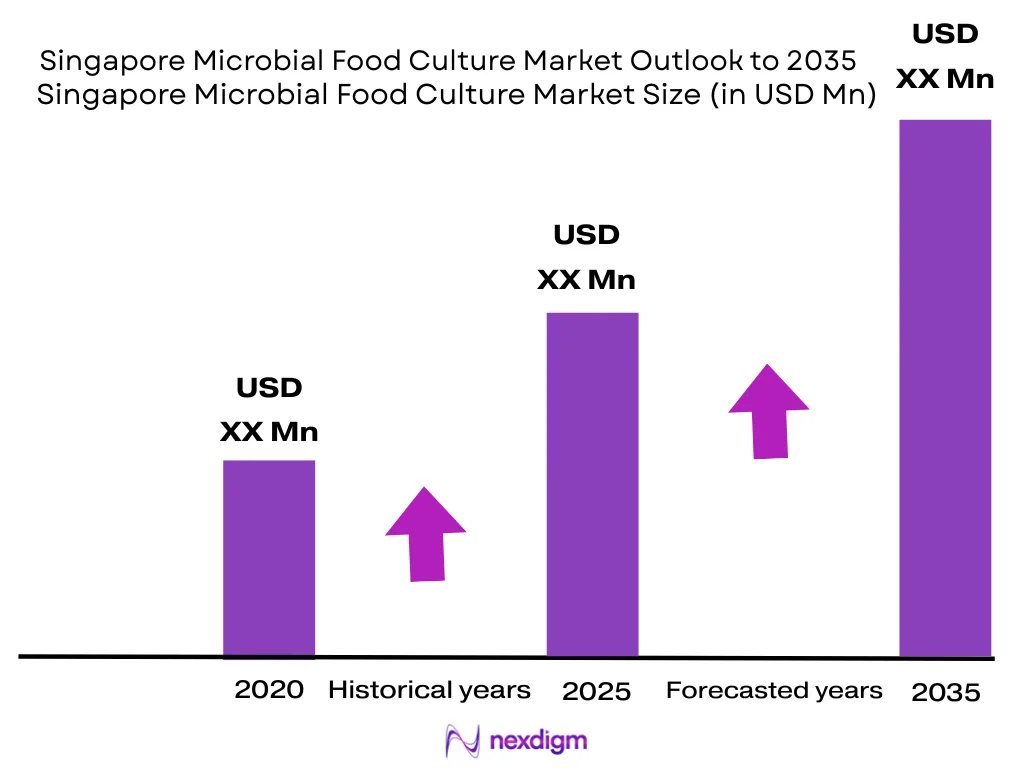
The Singapore Microbial Food Culture Market is valued at approximately USD ~ million and is forecast to expand at a CAGR of % during 2026–2035. Demand is driven by fermented dairy, sourdough, soy foods, probiotics, functional beverages, plant-based alternatives, and novel fermentation applications. Singapore’s population increased from approximately 5.92 million to 6.04 million, while nominal gross domestic product rose from nearly SGD 673 billion to SGD 731 billion, supporting premium food consumption and biotechnology investment. Jurong, Tuas, Senoko, Woodlands, one-north, and Singapore Science Park dominate the Singapore Microbial Food Culture Market because they concentrate food factories, biotechnology companies, pilot fermenters, ingredient distributors, laboratories, and cold-chain infrastructure. Jurong and Senoko support industrial food production, while one-north and Biopolis provide research and commercialization capabilities. Nurasa’s 3,840-square-metre Food Tech Innovation Centre includes precision-fermentation laboratories and bioreactors with capacities reaching 100 litres, strengthening Singapore’s role as a regional scale-up hub.
Market Segmentation
By Culture Type
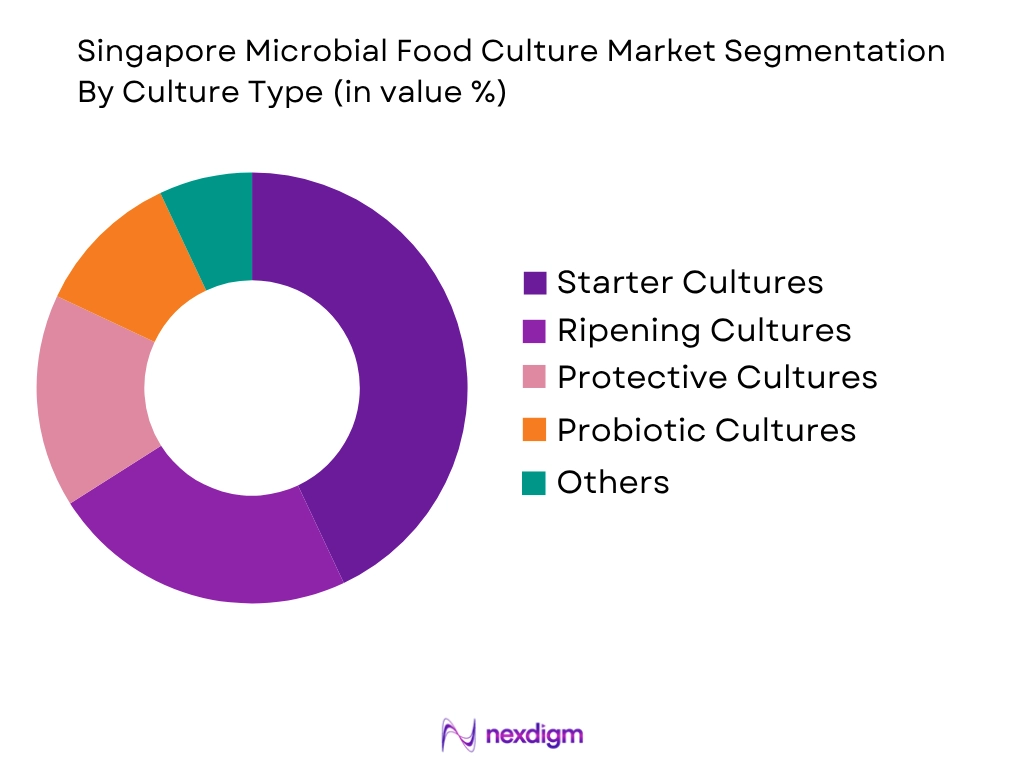
The Singapore Microbial Food Culture Market is segmented into starter cultures, probiotic cultures, protective cultures, adjunct and ripening cultures, customized mixed cultures, precision-fermentation strains, and biomass-fermentation cultures. Starter cultures hold the dominant position because they are required for recurring production of yoghurt, cultured milk, cheese, sourdough, tempeh, fermented soy products, and functional beverages. These cultures control acidification, texture, aroma, processing time, and product consistency. Singapore’s highly regulated manufacturing environment encourages defined direct-vat cultures rather than variable back-slopping systems. Probiotic cultures form an important specialist segment because functional-food producers require documented strains with validated identity and storage stability. Precision-fermentation and biomass-fermentation organisms represent smaller but strategically significant categories, supported by food-technology companies developing proteins, enzymes, lipids, flavours, and microbial biomass. New foods produced through fermentation may be classified as novel foods and require pre-market review by the Singapore Food Agency, making strain documentation and process characterization central to commercialization.
By Application
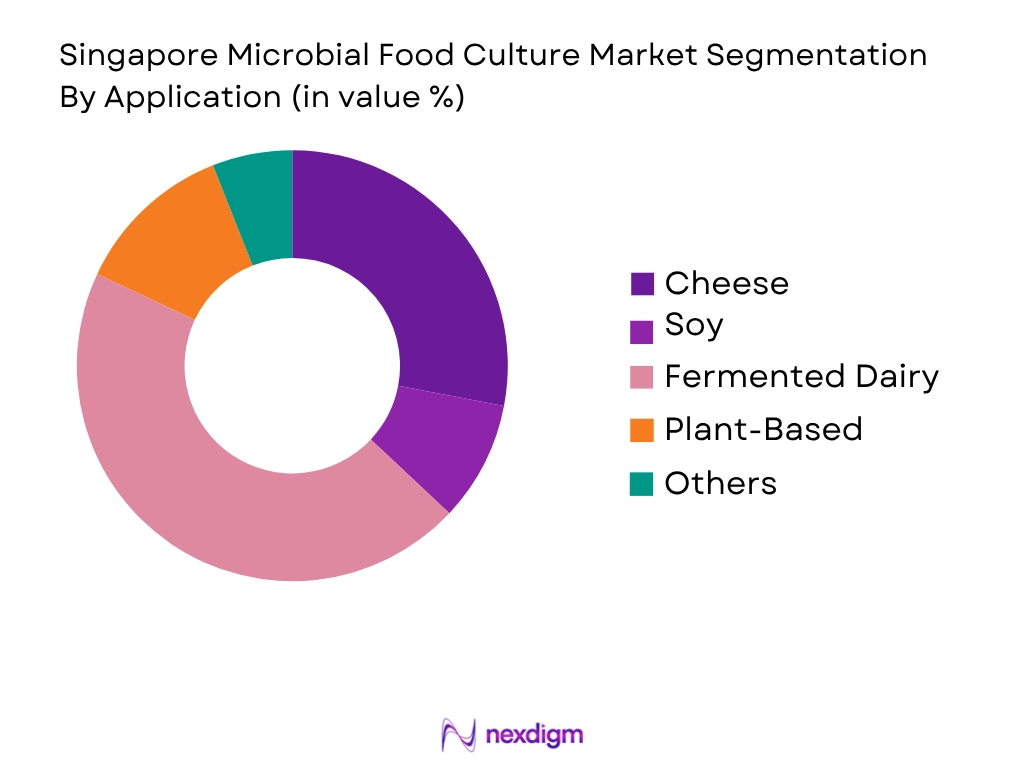
The Singapore Microbial Food Culture Market is segmented into fermented dairy, bakery and sourdough, soy and legume foods, fermented beverages, plant-based alternatives, probiotic foods, and alternative proteins. Fermented dairy products hold the dominant commercial position because yoghurt, cultured milk, probiotic drinks, cheese, and dairy desserts require culture dosing in every manufacturing batch. Starter organisms determine gel formation, acidity, flavour, viscosity, and post-acidification. However, Singapore differs from conventional dairy-led markets because soy fermentation, plant-based products, and precision fermentation account for a meaningful part of innovation activity. Tempeh, fermented tofu, soy beverages, kombucha, and plant-based yoghurt require cultures selected for protein modification, flavour improvement, and texture development. Alternative-protein companies also use engineered or selected microorganisms to produce proteins, functional ingredients, and biomass. Singapore’s shared pilot infrastructure and novel-food approval framework enable these companies to progress from laboratory fermentation toward food-grade pilot production, although commercial-scale adoption remains dependent on yield, downstream processing, regulatory clearance, and manufacturing economics.
Competitive Landscape
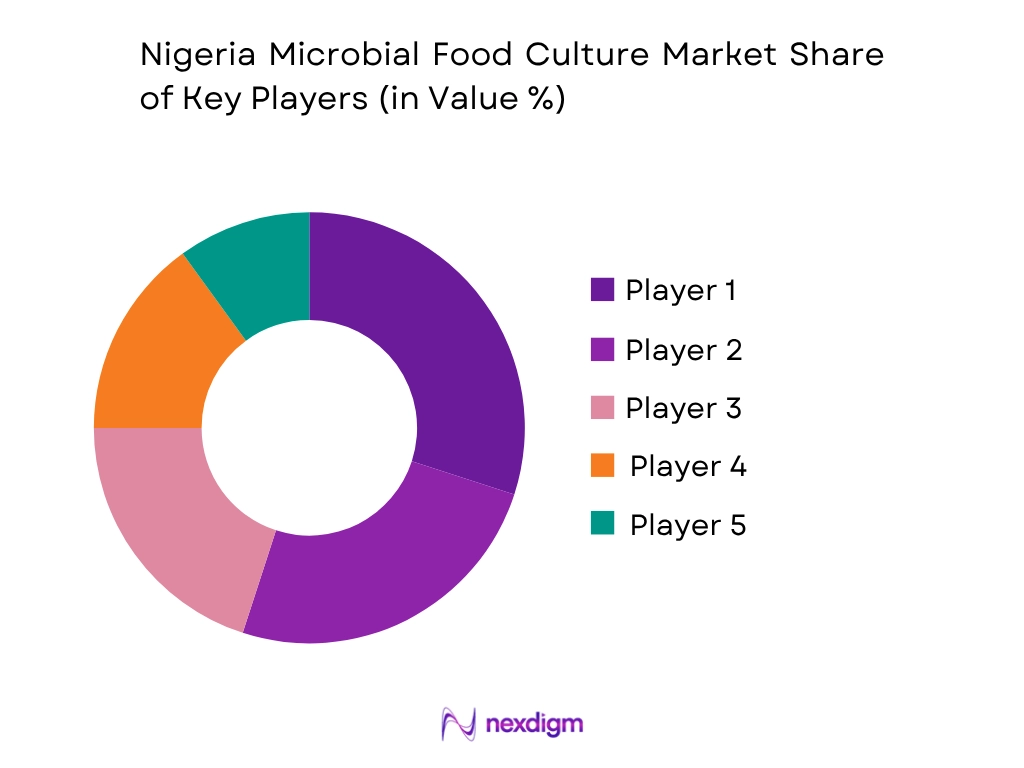
The Singapore Microbial Food Culture Market combines multinational bioscience companies with local food-technology and fermentation businesses. Novonesis, IFF, dsm-firmenich, Lallemand, and Lesaffre supply established starter, probiotic, protective, yeast, and ripening systems. Local companies such as ScaleUp Bio, TurtleTree, Sophie’s Bionutrients, Allozymes, and Prefer expand the competitive field into contract fermentation, microbial proteins, enzymes, and fermentation-derived food ingredients. Competition is shaped by strain-library depth, application support, regulatory documentation, pilot-scale access, fermentation yield, and Asia-Pacific commercialization capability.
| Company | Establishment Year | Headquarters | Core Culture or Technology Portfolio | Principal Applications | Product or Platform Format | Singapore Route to Market | Technical Capability | Strategic Differentiation |
| Novonesis | 2024 as merged entity | Lyngby, Denmark | ~ | ~ | ~ | ~ | ~ | ~ |
| International Flavors & Fragrances | 1958 | New York, United States | ~ | ~ | ~ | ~ | ~ | ~ |
| dsm-firmenich | 2023 as merged entity | Kaiseraugst and Maastricht | ~ | ~ | ~ | ~ | ~ | ~ |
| Lallemand | 1915 | Montreal, Canada | ~ | ~ | ~ | ~ | ~ | ~ |
| ScaleUp Bio | 2022 | Singapore | ~ | ~ | ~ | ~ | ~ | ~ |
Singapore Microbial Food Culture Market Analysis
Growth Drivers
Urban Consumer Density and Diversified Fermented-Food Demand
Singapore’s fully urbanized consumer base supports concentrated demand for microbial cultures used in yoghurt, probiotic drinks, cheese, sourdough, tempeh, fermented tofu, kombucha, plant-based alternatives, functional foods, and Asian condiments. Singapore’s total population reached approximately 6.04 million people in 2024, compared with around 5.92 million in 2023, adding roughly 120,000 residents within one year. The country’s limited land area concentrates consumers, food factories, supermarkets, convenience stores, central kitchens, restaurants, hotels, hospitals, and online grocery fulfilment operations within a compact distribution network. This density allows culture suppliers to serve multiple industrial customers from local refrigerated warehouses and technical centres. Defined starter cultures are particularly important because manufacturers supplying national retail and foodservice channels must reproduce the same acidity, flavour, texture, and storage performance across every batch. Yoghurt and cultured-milk processors require lactic acid bacteria that provide controlled acidification, gel formation, viscosity, and limited post-acidification. Bakeries require yeast and sourdough cultures that perform consistently in Asian-style breads, buns, frozen dough, and premium artisanal products. Soy processors need mould, yeast, or bacterial cultures suited to tempeh, fermented tofu, bean pastes, and non-dairy cultured products. Singapore’s high purchasing capacity also supports premium and functional foods. World Bank data placed national gross domestic product at USD 547.39 billion in 2024 and gross domestic product per person at USD 90,674.1. The Singapore economy expanded by 4.0 points in 2024, compared with weaker activity during the preceding period, strengthening household and foodservice demand. High disposable income supports products positioned around probiotics, protein, digestive wellness, clean labels, reduced sugar, and premium sensory profiles. Singapore’s multicultural population creates demand for European dairy cultures, Japanese and Korean ferments, Chinese soybean products, Southeast Asian tempeh, Indian cultured dairy, and Western sourdough. Culture suppliers therefore need wider strain portfolios than those serving markets dominated by a single fermented-food tradition. Urban distribution also makes shelf-life consistency important. Products may move through central warehouses, supermarket depots, e-commerce fulfilment centres, restaurants, and institutional caterers before consumption. Protective cultures that suppress selected spoilage yeasts or moulds can support this distribution system when combined with refrigeration, hygiene, and appropriate packaging. Population density further accelerates product testing because manufacturers can launch limited batches through concentrated retail and foodservice networks before expanding across the region. Singapore’s urban structure therefore drives the microbial food culture market through high consumer concentration, premium purchasing power, broad cultural demand, sophisticated distribution, and the commercial need to replace variable natural fermentation with standardized microbial systems.
Food Manufacturing, Biotechnology, and Fermentation Infrastructure
Singapore’s advanced manufacturing and biotechnology ecosystem is broadening microbial food culture demand beyond conventional dairy and bakery applications into precision fermentation, biomass fermentation, probiotics, enzymes, and alternative proteins. The economy reached USD 547.39 billion in 2024, while national output expanded by 4.0 points. Manufacturing remains a major economic activity, supported by highly automated plants, international ingredient companies, contract manufacturers, research facilities, and regional headquarters. This environment encourages processors to use cultures with documented strain identity, defined activity, reliable storage behaviour, and validated technical performance. Commercial yoghurt, cheese, sourdough, tempeh, fermented beverages, and plant-based products require cultures in every production cycle. Advanced food-technology companies additionally use microorganisms as production platforms for proteins, flavours, enzymes, fats, vitamins, and microbial biomass. Singapore’s fermentation infrastructure has expanded to support this transition. Nurasa’s Food Tech Innovation Centre occupies 3,840 square metres at Biopolis and contains food-grade precision-fermentation laboratories with bioreactors providing capacities of up to 100 litres. These facilities allow companies to move beyond benchtop experimentation and produce larger quantities for formulation, testing, regulatory evaluation, and customer trials. Singapore also developed dedicated food-grade precision-fermentation facilities with capacity reaching 10,000 litres, enabling companies to test process scale-up without immediately constructing their own factories. These assets are market-specific because fermentation businesses commonly fail during the transition from laboratory flasks to larger vessels. Changes in oxygen transfer, mixing, temperature gradients, foam, nutrient supply, and contamination risk can reduce microbial productivity even when a strain performs well at small scale. Shared infrastructure allows companies to optimize these variables before committing to full commercial production. Conventional food processors also benefit from the broader ecosystem. Automated pH monitoring, dosing systems, rapid microbial testing, genome-based strain identification, and predictive shelf-life tools can improve starter-culture performance and reduce batch variability. Industrial bakeries can monitor proofing and fermentation conditions, while plant-based manufacturers can screen cultures for flavour reduction and texture development. Singapore’s position as a regional food headquarters further supports investment. Multinational manufacturers can use local laboratories to adapt cultures for Asian raw materials such as soy, rice, coconut, oats, legumes, tea, and tropical fruits before deployment across Southeast Asia. The country’s ports, airfreight facilities, intellectual-property framework, and regulatory capability facilitate regional commercialization. Singapore’s food-manufacturing base therefore drives the microbial food culture market through high-value processing, shared fermentation capacity, biotechnology expertise, automated quality systems, and the integration of conventional cultures with advanced microbial production platforms.
Market Challenges
Import Dependence, Scale-Up Complexity, and Culture Supply Risk
Singapore’s microbial food culture industry depends substantially on imported commercial strains, specialized nutrients, processing aids, laboratory materials, and fermentation equipment. The country’s small domestic agricultural base means that many dairy ingredients, plant proteins, cereal substrates, and microbial preparations enter through international supply chains. Starter and probiotic cultures contain living organisms whose activity can decline during freight, customs handling, distributor storage, or repeated temperature exposure. Frozen cultures require continuous low-temperature conditions, while freeze-dried preparations still need protection from moisture, heat, oxygen, and unsuitable storage. Singapore’s sophisticated logistics reduce these risks but do not eliminate them. A culture can remain visually unchanged while losing sufficient activity to alter acidification time or fermentation yield. In yoghurt, weakened cultures may create poor texture, whey separation, delayed filling, or excessive post-acidification. In sourdough, culture underperformance can affect gas production, flavour, and proofing time. Precision-fermentation businesses face an additional challenge because the microorganism is not merely an ingredient; it is the production system itself. Laboratory performance may not translate directly into larger bioreactors. A strain that produces a target protein efficiently in a small vessel may perform differently when mixing, oxygen transfer, shear force, heat generation, foam, and nutrient gradients change. Singapore’s new facilities address part of this problem, but the movement from 100-litre development equipment to systems of up to 10,000 litres still requires substantial process engineering and validation. Downstream processing can become another bottleneck. After fermentation, companies may need to separate cells, concentrate products, remove impurities, purify proteins, stabilize ingredients, and confirm compositional consistency. These operations can determine whether a technically successful fermentation becomes a commercially viable food ingredient. Regulatory requirements increase the amount of evidence needed before launch. The Singapore Food Agency requires novel foods to undergo pre-market safety assessment, and its framework covers foods derived from precision fermentation, biomass fermentation, and other new production technologies. Applicants may need to document production organisms, genetic modifications, fermentation inputs, manufacturing controls, composition, toxicology, allergenicity, dietary exposure, and residual materials. This creates a higher commercialization burden than that faced by traditional starter cultures with established histories of safe use. Supply concentration is also relevant because proprietary strains may be controlled by a small number of international companies. Switching suppliers can require product reformulation, sensory testing, shelf-life studies, and regulatory reassessment. Singapore’s gross domestic product of USD 547.39 billion and per-person output of USD 90,674.1 provide capacity to manage these requirements, but smaller food-technology companies may lack the capital, technical staff, and production volume needed to absorb repeated scale-up failures. The central challenge is therefore not weak demand; it is coordinating imported biological materials, controlled logistics, process scale-up, downstream recovery, and regulatory evidence within a commercially sustainable model.
Specialized Talent Constraints and Regulatory-Technical Complexity
Singapore has a highly educated workforce, but microbial food cultures and advanced fermentation require specialists spanning food microbiology, fermentation engineering, synthetic biology, dairy science, process automation, analytical chemistry, regulatory affairs, and sensory development. These capabilities are not interchangeable. A dairy technologist must understand starter acidification, milk proteins, stabilizer interactions, bacteriophages, heat treatment, and post-acidification. A precision-fermentation engineer must manage strain productivity, bioreactor control, contamination risk, feed strategy, oxygen transfer, and downstream purification. Regulatory professionals must translate these technical systems into evidence acceptable to the Singapore Food Agency. Singapore’s economy expanded by 4.0 points in 2024, and its population reached approximately 6.04 million, creating strong competition for a limited pool of biotechnology, pharmaceutical, food-science, and engineering professionals. Microbial food companies compete for talent not only with food manufacturers but also with biomedical, chemicals, pharmaceutical, and advanced-manufacturing employers. This competition can slow product development and raise the operational burden associated with maintaining multidisciplinary teams. Novel-food regulation adds further complexity because companies must characterize both the food and the production process. SFA’s current requirements cover precision-fermentation and biomass-fermentation products and may require detailed information on the microorganism, genetic constructs, fermentation media, processing aids, manufacturing controls, compositional analysis, allergenicity, toxicology, and expected consumption. This means that a company cannot rely solely on a strong fermentation scientist; it also needs regulatory, analytical, quality, and food-formulation capability. Conventional food processors face their own skill constraints. Protective cultures need product-specific validation because a strain that inhibits spoilage in one formulation may not perform similarly in another. Probiotic cultures require strain-level identity and viability testing through the declared storage period. Plant-based fermentation requires understanding of protein chemistry, off-flavour compounds, antinutritional factors, and texture formation. Singapore’s shared facilities reduce equipment barriers but do not remove the need for experienced personnel who can design experiments and interpret results. The Food Tech Innovation Centre’s 3,840-square-metre facility and bioreactors of up to 100 litres provide useful infrastructure, yet companies still need trained teams to establish sterilization protocols, feeding strategies, sampling procedures, process controls, and cleaning systems. Technical knowledge must also be translated into factory-scale standard operating procedures that production workers can follow consistently. Smaller businesses may be able to develop a prototype but struggle to recruit enough specialists to manage scale-up, regulatory submission, quality assurance, supplier qualification, and commercial production simultaneously. This can create delays between technical proof of concept and market launch. The challenge therefore concerns depth and integration of expertise rather than general workforce availability. Singapore’s microbial food culture market will depend on stronger training pipelines, industry exchanges, shared technical services, contract fermentation, and regulatory support capable of helping companies move from strain discovery to repeatable food-grade manufacturing.
Market Opportunities
Precision Fermentation, Biomass Fermentation, and Advanced Culture Technologies
Singapore has a strong opportunity to expand microbial food culture activity by combining conventional starter systems with precision fermentation, biomass fermentation, genome-based strain selection, automation, and food-grade scale-up infrastructure. Current economic and institutional indicators provide a credible base for future development. National gross domestic product reached USD 547.39 billion in 2024, gross domestic product per person reached USD 90,674.1, and economic output expanded by 4.0 points. These indicators support investment in bioreactors, analytical equipment, application laboratories, downstream processing, and highly skilled technical teams. The Food Tech Innovation Centre provides 3,840 square metres of food-grade infrastructure and precision-fermentation bioreactors of up to 100 litres, while ScaleUp Bio-linked facilities have been designed for capacity reaching 10,000 litres. These current assets allow companies to test microorganisms across development stages without immediately building dedicated commercial plants. Precision fermentation can use selected or engineered organisms to produce dairy-equivalent proteins, egg proteins, enzymes, flavour molecules, vitamins, lipids, and bioactive compounds. Biomass fermentation can produce fungal, algal, or bacterial biomass that becomes the food ingredient itself. Conventional food culture businesses can also benefit from these technologies. Genome-based screening can verify strain identity and identify undesirable traits. High-throughput fermentation can compare multiple culture combinations under different temperatures, pH conditions, and substrates. Microencapsulation can improve probiotic survival during processing and storage. Improved freeze-drying can increase stability during regional distribution. Digital sensors can continuously monitor pH, dissolved oxygen, temperature, foam, agitation, and nutrient use. Data analytics can identify abnormal fermentation before an entire batch is lost. Singapore’s regulatory framework provides a defined route for evaluating new fermentation-derived foods, even though the evidence requirements are demanding. In 2025, the Singapore Food Agency committed SGD 42 million to 11 projects covering future foods and food safety. This public funding supports research into precision fermentation, sustainable food production, safety assessment, and related technical capabilities. The opportunity is market-specific because Singapore can serve as a development and validation location for products intended for much larger Asian markets. Companies can screen strains against soy, rice, oats, coconut, legumes, tea, tropical fruits, and other regional substrates before licensing technology or establishing production elsewhere. Precision fermentation also offers a pathway for producing food ingredients without depending entirely on local farmland, which is relevant to a land-constrained city-state. The greatest commercial potential lies in platforms that link strain development with application testing, regulatory documentation, downstream processing, sensory evaluation, and regional customer access. Singapore’s current economic scale, funding commitments, pilot facilities, and food-safety framework indicate that the country already possesses the institutional components needed to support future microbial culture innovation.
International Collaboration and Asia-Pacific Commercialization Hub
Singapore’s position as a regional headquarters, logistics centre, regulatory reference market, and biotechnology hub creates an opportunity to become the principal Asia-Pacific application and commercialization centre for microbial food cultures. International culture manufacturers can use Singapore to maintain regional inventory, conduct customer trials, adapt strains to Asian substrates, train food processors, and coordinate distribution across Malaysia, Indonesia, Thailand, Vietnam, the Philippines, China, India, Australia, and other markets. Singapore’s population of approximately 6.04 million is modest compared with neighbouring countries, but its economic output of USD 547.39 billion and gross domestic product per person of USD 90,674.1 provide a high-value domestic test market. Products can be introduced through sophisticated retail, foodservice, e-commerce, and premium hospitality channels before wider regional deployment. Collaboration can involve global bioscience companies, local biotechnology firms, ingredient distributors, contract fermenters, food manufacturers, investors, and government agencies. International suppliers contribute proprietary strains, phage-management systems, probiotic documentation, freeze-drying technology, and global application knowledge. Singapore partners contribute regulatory expertise, regional customer access, food-grade facilities, intellectual-property protection, and familiarity with Asian product formats. The 3,840-square-metre Food Tech Innovation Centre at Biopolis provides laboratories and bioreactors of up to 100 litres, while dedicated fermentation facilities with capacities reaching 10,000 litres support scale-up and demonstration production. These assets allow overseas start-ups to establish regional development activity without immediately constructing their own plants. Regulatory collaboration is another advantage. Singapore Food Agency’s novel-food framework has become relevant to companies developing foods through precision fermentation and biomass fermentation. The agency organized its 5th Roundtable on Novel Food Regulations in November 2024, bringing regulators, companies, and technical stakeholders together to discuss safety assessment and international alignment. Such engagement can reduce uncertainty for businesses planning launches in multiple jurisdictions. Singapore’s regional role also extends to technical services. An application centre can test dairy cultures in imported milk systems, sourdough cultures in Asian flour formulations, probiotics in beverages, and plant-based cultures in soy, coconut, oat, rice, or pea matrices. Results can then support customer qualification throughout Southeast Asia. International collaboration may also include strain licensing, joint ventures, contract research, downstream-processing partnerships, and regional distribution agreements. The opportunity is not limited to new food-technology companies. Conventional yoghurt, cheese, bakery, beverage, and soy-food manufacturers can use Singapore-based expertise to improve flavour, texture, shelf stability, and process efficiency. The most differentiated model would combine regional microbial inventory, shared pilot production, regulatory support, analytical testing, and commercial access. Singapore’s current facilities, regulatory engagement, economic capacity, and connectivity therefore support future market growth through technology transfer and regional commercialization rather than through domestic consumption alone.
Future Outlook
The Singapore Microbial Food Culture Market is expected to expand during 2026–2035 through a combination of conventional food fermentation and advanced biomanufacturing. Starter cultures will continue serving dairy, bakery, beverage, soy, and plant-based food manufacturers, while precision-fermentation and biomass-fermentation organisms will create new demand for strain development, process optimization, and pilot-scale production. Commercial starter cultures are likely to remain the largest category because they provide predictable fermentation and are repeatedly consumed in production. Direct-vat cultures reduce contamination risks and eliminate several mother-culture preparation steps. Freeze-dried systems will remain relevant for companies requiring manageable inventory and regional distribution flexibility. Probiotic cultures will support functional dairy, fermented drinks, wellness shots, and nutritional products. Manufacturers will increasingly evaluate cultures at the strain level rather than treating probiotics as a generic category. Viability during processing, storage, and consumption will remain central to product development and claim substantiation. Protective cultures can gain adoption in dairy, bakery fillings, plant-based products, and selected beverages as manufacturers seek biological methods for controlling spoilage. Their effectiveness depends on food composition, target organisms, temperature, packaging, and hygiene. They will therefore be positioned as part of a multi-hurdle preservation system rather than as replacements for sanitation or refrigeration.
Major Players
- Novonesis
- International Flavors & Fragrances
- dsm-firmenich
- Lallemand
- Lesaffre
- Kerry Group
- Sacco System
- CSK Food Enrichment
- Angel Yeast
- AB Biotek
- TurtleTree
- ScaleUp Bio
- Sophie’s Bionutrients
- Allozymes
- Prefer
Key Target Audience
- Dairy, cheese, and fermented-beverage manufacturers
- Bakery, sourdough, and soy-food processors
- Plant-based and alternative-protein companies
- Probiotic and functional-nutrition companies
- Food-ingredient importers and distributors
- Investments and venture capitalist firms
- Private-equity and strategic food-technology investors
- Government and regulatory bodies
Research Methodology
Step 1: Identification of Key Variables
The initial phase involves constructing an ecosystem map covering culture manufacturers, food processors, biotechnology companies, contract fermenters, ingredient distributors, scale-up facilities, and regulatory bodies. Desk research is used to define critical variables such as culture type, fermentation platform, dosage, application, processor scale, strain productivity, import dependence, and novel-food classification.
Step 2: Market Analysis and Construction
Historical information is compiled by culture type, application, microorganism, fermentation platform, customer category, and distribution model. The bottom-up approach evaluates processor output, batch frequency, culture dosage, pilot activity, and commercial adoption. The top-down approach reviews food-manufacturing activity, culture imports, supplier revenues, biotechnology investment, and fermentation infrastructure.
Step 3: Hypothesis Validation and Expert Consultation
Preliminary hypotheses are validated through computer-assisted telephone interviews with culture suppliers, microbiologists, fermentation engineers, food technologists, regulatory specialists, procurement managers, alternative-protein companies, and contract manufacturers. These discussions assess culture performance, trial activity, scale-up barriers, purchasing models, regulatory timelines, and technical-service requirements.
Step 4: Research Synthesis and Final Output
Supply-side and demand-side findings are triangulated to reconcile culture shipments, distributor inventory, processor consumption, and pilot-scale usage. Segment shares and forecasts are tested against application volumes, dosage assumptions, fermentation capacity, regulatory approvals, and expert feedback. The final output provides a consolidated assessment of market structure, competition, and future opportunities.

- Executive Summary
- Research Methodology (Market Definitions and Assumptions, Product Inclusion and Exclusion Criteria, Abbreviations, Market Sizing Approach, Top-Down Analysis, Bottom-Up Analysis, Culture-Dosage Consumption Model, Food-Manufacturing Output Assessment, Demand-Side Assessment, Supply-Side Assessment, Import-Based Supply Assessment, Primary Industry Interviews, Data Triangulation, Forecasting Framework, Scenario Analysis, Limitations and Future Conclusions)

- Definition and Scope
- Market Evolution and Industry Genesis
- Development of Commercial Food Fermentation in Singapore
- Transition from Traditional Fermentation to Standardized Microbial Systems
- Role of Singapore as an Asian Food-Innovation and Commercialization Hub
- Evolution of Dairy, Bakery, Beverage and Plant-Based Fermentation Applications

- Growth Drivers (Food-Manufacturing Innovation, Alternative-Protein Development, Demand for Functional and Probiotic Foods, Premium Fermented Dairy Consumption, Plant-Based Product Development, Regional Export Orientation, Shared Scale-Up Infrastructure and Advanced Biotechnology Capability)
- Market Challenges (Dependence on Imported Commercial Cultures, Limited Domestic Agricultural Feedstocks, High Biomanufacturing Operating Requirements, Scale-Up Complexity, Novel-Food Approval Requirements, Limited Industrial Fermentation Capacity, Skilled-Talent Competition and Commercialization Risk)
- Market Opportunities (Precision-Fermentation Ingredients, Biomass-Fermented Proteins, Asian Plant-Based Fermentation, Protective Cultures for Clean Labels, Personalized Probiotics, Side-Stream Valorisation, Regional Application Laboratories and Southeast Asian Market Expansion)
- Market Trends (Multi-Strain Culture Systems, Direct-Vat Inoculation, Clean-Label Bioprotection, Precision Fermentation, Biomass Fermentation, AI-Assisted Strain Screening, High-Throughput Bioprocessing, Fermented Plant Proteins, Postbiotic Ingredients and Sustainable Feedstock Utilization)
- SWOT Analysis
- Porter’s Five Forces Analysis
- PESTLE Analysis

- By Market Value (2020-2025)
- By Culture Consumption Volume (2020-2025)
- By Active Microbial Preparation Volume (2020-2025)


- Market Share of Major Players (By Value, Culture Volume, Application, Culture Type, Customer Segment and Distribution Model)
- Cross Comparison Parameters (Culture Portfolio Breadth, Microbial-Strain Library Depth, Dairy and Plant-Based Application Coverage, Precision and Biomass Fermentation Capability, Singapore Technical-Support Presence, Novel-Food Regulatory Support, Regional Asia-Pacific Distribution Reach, Product Innovation and Customization Capability)
- SWOT Analysis of Major Players
- Detailed Profiles of Major Companies
Novonesis
International Flavors & Fragrances
dsm-firmenich
Lallemand
Lesaffre
Kerry Group
Sacco System
CSK Food Enrichment
Angel Yeast
AB Biotek
TurtleTree
ScaleUp Bio
Sophie’s Bionutrients
Allozymes
Prefer

- Dairy Processor Analysis
- Bakery Manufacturer Analysis
- Soy and Plant-Based Food Processor Analysis
- Fermented Beverage Producer Analysis
- Alternative-Protein Company Analysis
- Functional-Nutrition Company Analysis

- By Market Value (2026-2035)
- By Culture Consumption Volume (2026-2035)
- By Active Microbial Preparation Volume (2026-2035)


 Request a Sample
 Ask for Customization
 Get a Quote
 Enquire Now