
 Download PDF
Market Overview
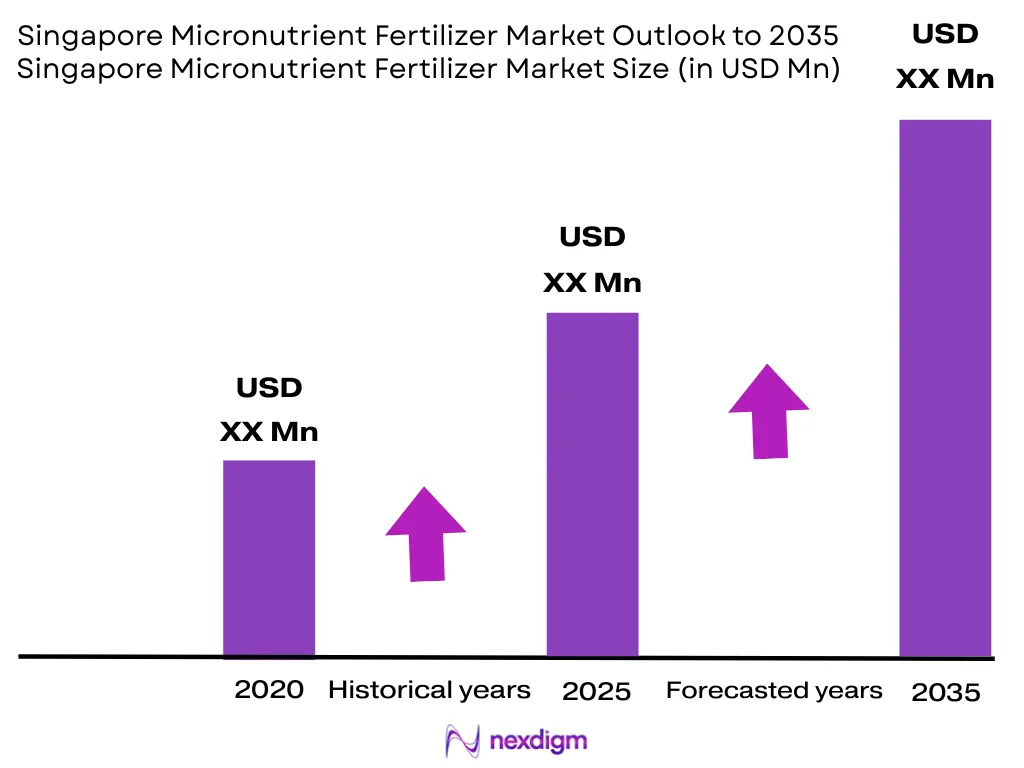
The Singapore Micronutrient Fertilizer Market was valued at approximately USD ~ million in 2024, compared to USD ~ million in 2023. The market is primarily driven by the expansion of vertical farming, hydroponic cultivation systems, and government-led food security initiatives. Singapore imports over 90% of its food requirements, creating strong demand for controlled-environment agriculture that relies heavily on micronutrient fertilizers. Rising investments in urban farming technologies, precision nutrient management, and greenhouse cultivation have further strengthened the adoption of zinc, iron, boron, and chelated micronutrient formulations across commercial farming operations.
Market Segmentation
By Nutrient Type
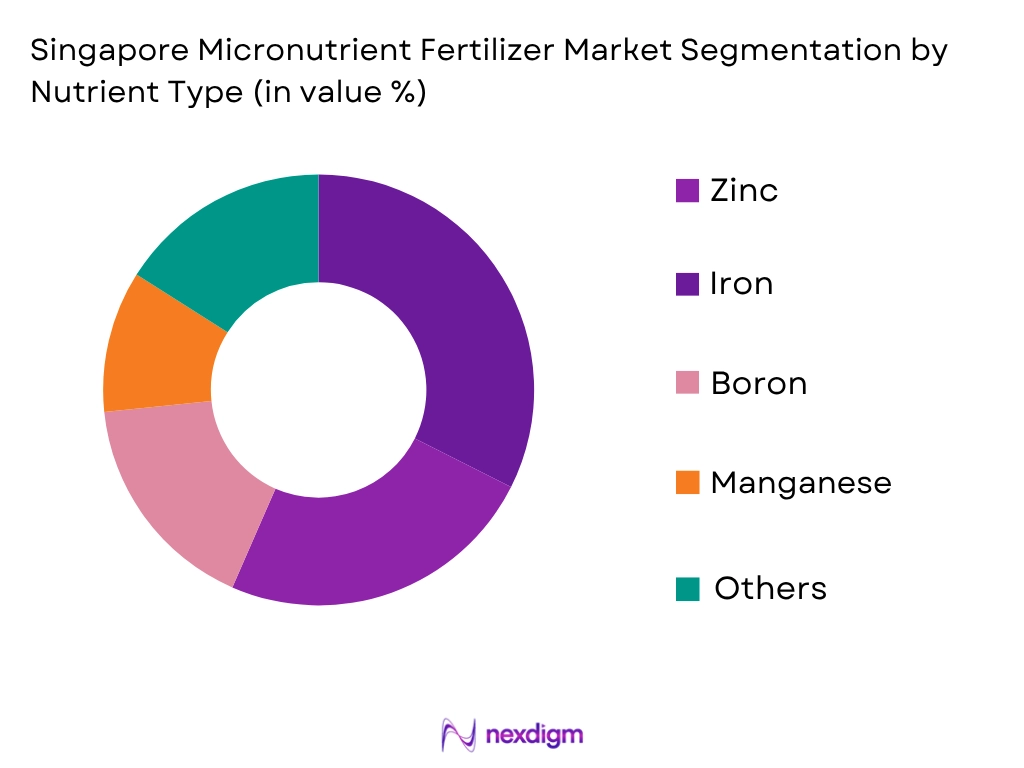
Singapore Micronutrient Fertilizer Market is segmented by micronutrient type into zinc fertilizers, iron fertilizers, boron fertilizers, manganese fertilizers, and others. Recently, zinc fertilizers have accounted for the dominant market share under this segmentation. Their dominance is primarily attributed to the extensive use of zinc in hydroponic systems, greenhouse vegetable production, and leafy crop cultivation. Zinc plays a crucial role in enzyme activation, chlorophyll production, and plant growth regulation, making it indispensable in controlled-environment agriculture. Singapore’s focus on maximizing crop productivity within limited agricultural land further encourages the use of zinc-based nutrient solutions. In addition, major hydroponic nutrient manufacturers and specialty fertilizer suppliers continue to offer zinc-enriched formulations tailored for vertical farming operations. The nutrient’s compatibility with fertigation systems and precision agriculture technologies has further strengthened its position, making zinc fertilizers the leading segment within the Singapore micronutrient fertilizer market.
By Farming System
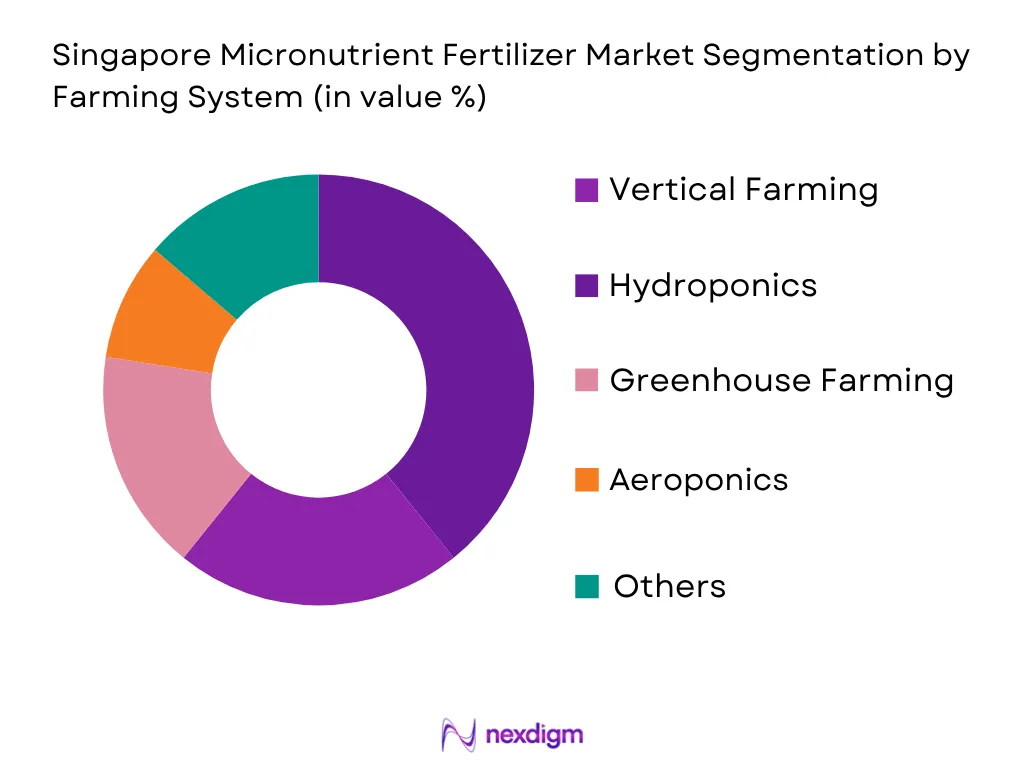
Singapore Micronutrient Fertilizer Market is segmented by farming system into vertical farming, hydroponics, greenhouse farming, aeroponics, and others. Recently, vertical farming has emerged as the dominant segment due to Singapore’s land scarcity and strong emphasis on food security. Vertical farms require highly precise nutrient management systems, resulting in substantial demand for water-soluble and chelated micronutrient fertilizers. Government support through urban farming initiatives and investments in agri-food technology has accelerated the establishment of commercial vertical farming facilities. These farms depend on optimized nutrient delivery to maximize yields while reducing resource consumption. Micronutrients such as zinc, iron, manganese, and boron are essential for maintaining crop quality and productivity in vertically controlled environments. The ability of vertical farming systems to produce crops year-round while minimizing climatic risks further contributes to their dominance, making them the largest consumer segment within Singapore’s micronutrient fertilizer industry.
Competitive Landscape
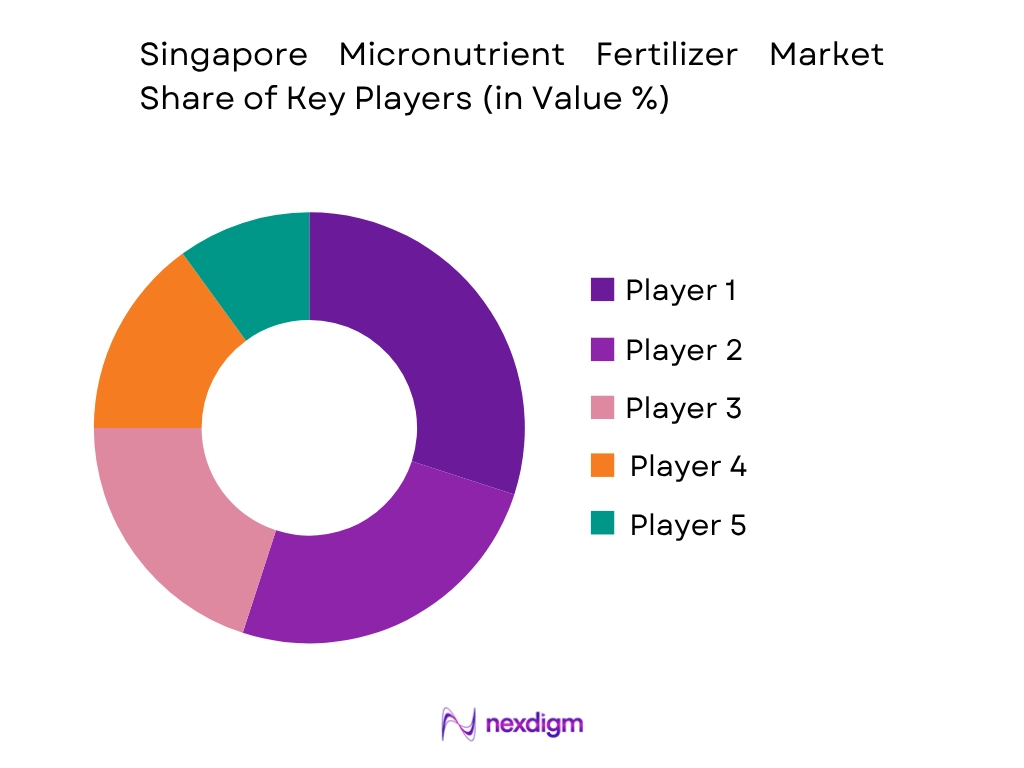
The Singapore Micronutrient Fertilizer Market is characterized by the presence of several international specialty fertilizer manufacturers and nutrient solution providers. Competition is primarily based on product innovation, nutrient efficiency, hydroponic compatibility, distribution partnerships, and customized solutions for controlled-environment agriculture. Global companies with strong expertise in specialty nutrition products dominate the market, supported by Singapore’s import-oriented agricultural input ecosystem.
| Company | Establishment Year | Headquarters | Micronutrient Portfolio | Chelated Products | Hydroponic Solutions | Distribution Network | R&D Focus | Urban Farming Presence |
| Yara International | 1905 | ~ | ~ | ~ | ~ | ~ | ~ | ~ |
| Haifa Group | 1966 | ~ | ~ | ~ | ~ | ~ | ~ | ~ |
| ICL Group | 1968 | ~ | ~ | ~ | ~ | ~ | ~ | ~ |
| SQM | 1968 | ~ | ~ | ~ | ~ | ~ | ~ | ~ |
| Nutrien Ltd | 2018 | ~ | ~ | ~ | ~ | ~ | ~ | ~ |
Singapore Micronutrient Fertilizer Market Analysis
Growth Drivers
Expansion of Controlled Environment Agriculture
Singapore’s micronutrient fertilizer market is strongly supported by the expansion of controlled environment agriculture (CEA), including vertical farms, hydroponic systems, and indoor cultivation facilities. According to the Singapore Food Agency (SFA), the country produced approximately 4,600 tonnes of vegetables locally in 2024, with a growing share originating from high-tech urban farms. Singapore’s population exceeded 6.04 million people in 2024, creating sustained pressure on domestic food production systems. The World Bank reported Singapore’s GDP at approximately USD 530 billion, reflecting strong investment capacity for agri-tech adoption. Controlled-environment farming systems rely heavily on micronutrients such as zinc, iron, boron, and manganese to optimize crop yields in nutrient-managed settings. Singapore’s land area remains limited at approximately 734 square kilometers, increasing dependence on intensive cultivation methods rather than traditional farming. Government-backed initiatives such as the “30 by 30” food security strategy continue encouraging adoption of advanced nutrient management solutions. Vertical farming facilities require precise nutrient formulations due to the absence of natural soil fertility, making micronutrient fertilizers an essential agricultural input. Growing production of leafy vegetables, herbs, and specialty crops under hydroponic systems continues to support demand for chelated micronutrients and water-soluble fertilizer formulations throughout Singapore’s urban agriculture ecosystem.
Government Food Security and Agri-Tech Investments
Singapore’s focus on food resilience continues to drive demand for micronutrient fertilizers through investments in agri-food technology. The Singapore Food Agency has allocated substantial funding under the Agri-Food Cluster Transformation Fund to improve domestic agricultural productivity. Singapore imports more than 90% of its food requirements, making local agricultural efficiency a strategic priority. According to the Ministry of Trade and Industry, Singapore’s nominal GDP exceeded SGD 720 billion in 2024, supporting continued public and private investment in advanced farming technologies. The country’s gross national income per capita remained above USD 80,000, enabling large-scale adoption of technologically intensive farming solutions. Micronutrient fertilizers are essential for maximizing crop productivity in vertical farms and hydroponic facilities operating under limited land availability. Singapore’s labor force exceeded 3.9 million workers in 2024, while urbanization remains concentrated across the entire city-state, encouraging innovation-driven agriculture. Government-supported agricultural projects emphasize resource efficiency, nutrient optimization, and sustainable production methods. These initiatives create favorable conditions for specialty fertilizers, particularly chelated micronutrients designed for fertigation and hydroponic systems. As Singapore seeks to increase domestic food production capacity while maintaining environmental sustainability, micronutrient fertilizers continue to play a critical role in achieving higher crop yields and improved nutritional quality.
Market Challenges
Limited Agricultural Land Availability
One of the primary challenges facing the Singapore micronutrient fertilizer market is the country’s extremely limited agricultural land base. Singapore’s total land area is approximately 734 square kilometers, while agricultural land occupies only a very small portion of total territory. According to the World Bank, the country remains one of the most urbanized economies globally, with nearly its entire population living in urban environments. Singapore’s population exceeded 6.04 million in 2024, creating significant competition for land between residential, industrial, commercial, and agricultural uses. As a result, conventional farming remains constrained, limiting the potential customer base for broad-acre micronutrient fertilizer applications. Unlike major agricultural economies, Singapore’s farming sector focuses primarily on high-value crops cultivated in controlled environments. This creates a niche market structure where fertilizer demand depends heavily on the growth of urban farming projects. Additionally, agricultural operators face challenges scaling production due to space limitations, reducing opportunities for large-volume fertilizer consumption. Although advanced cultivation systems partially mitigate these constraints, restricted land availability continues to limit the overall expansion of domestic agricultural activity. Consequently, micronutrient fertilizer suppliers must increasingly tailor products toward intensive cultivation systems rather than traditional agricultural applications.
Dependence on Imported Agricultural Inputs
Singapore’s micronutrient fertilizer market faces significant challenges arising from dependence on imported agricultural inputs. The country possesses limited domestic fertilizer manufacturing capacity and relies heavily on imports from countries such as China, India, Israel, the Netherlands, and Malaysia. Singapore’s merchandise imports exceeded SGD 600 billion in 2024 according to official trade statistics, reflecting its dependence on international supply chains. Global logistics disruptions, shipping bottlenecks, and geopolitical uncertainties can directly affect fertilizer availability and supply stability. The country imported over 90% of its food requirements, highlighting broader agricultural dependency on international markets. Singapore’s status as a trade hub supports efficient logistics infrastructure, yet fertilizer distributors remain exposed to fluctuations in global raw material availability. Controlled-environment agriculture systems require highly specialized nutrient formulations, making substitution options limited when supply disruptions occur. The Singapore economy recorded strong external trade activity exceeding SGD 1 trillion in total trade value, emphasizing the importance of stable international supply chains. For micronutrient fertilizer suppliers and farm operators, maintaining uninterrupted access to zinc, iron, boron, manganese, and chelated products remains critical. Any disruption in global fertilizer supply networks can impact nutrient availability for hydroponic and vertical farming operations, creating operational challenges for Singapore’s food production sector.
Market Opportunities
Expansion of Vertical Farming and Hydroponics
The continued expansion of vertical farming and hydroponic agriculture presents a major opportunity for the Singapore micronutrient fertilizer market. Singapore’s vegetable production exceeded 4,600 tonnes in 2024, with high-tech cultivation systems accounting for an increasing share of output. The country maintains one of the world’s highest GDP per capita levels, exceeding USD 80,000, supporting investments in advanced agricultural technologies. Urban farming facilities require continuous nutrient management because crops are cultivated without natural soil systems. Micronutrients such as zinc, iron, boron, manganese, and copper are critical for plant growth under hydroponic conditions. Singapore’s population of more than 6 million residents continues generating demand for fresh produce with shorter supply chains. The government’s food security strategy encourages development of local production capacity through technologically advanced farming models. Hydroponic systems offer opportunities for nutrient optimization, allowing specialized micronutrient fertilizer products to achieve higher adoption rates. Additionally, the increasing presence of commercial indoor farms creates demand for customized nutrient formulations tailored to crop-specific requirements. As urban agriculture expands across Singapore, suppliers capable of providing precision micronutrient solutions, fertigation-compatible products, and hydroponic nutrient blends are positioned to benefit from long-term market opportunities.
Innovation in Precision Nutrient Management
Advancements in precision agriculture and nutrient management technologies create substantial opportunities for micronutrient fertilizer suppliers in Singapore. The country remains a global leader in technology adoption, supported by GDP exceeding USD 530 billion and extensive investment in innovation ecosystems. Smart farming solutions increasingly incorporate sensors, automation systems, and nutrient monitoring technologies capable of measuring plant requirements in real time. Controlled-environment farms operating in Singapore utilize advanced fertigation systems where micronutrient delivery can be optimized according to crop growth stages. Singapore’s digital infrastructure supports widespread adoption of data-driven farming practices, enabling more efficient use of specialty fertilizers. Government agencies continue promoting agricultural technology development through funding programs and innovation grants. Precision nutrient management increases the effectiveness of micronutrient fertilizers while reducing waste and environmental impact. Demand for chelated micronutrients and highly soluble formulations is expected to rise as growers seek compatibility with automated nutrient delivery systems. Furthermore, Singapore’s strategic focus on sustainable food production encourages adoption of technologies that maximize yields using minimal land and water resources. These factors create favorable conditions for companies developing innovative micronutrient products specifically designed for smart agriculture and controlled-environment farming applications.
Future Outlook
The Singapore Micronutrient Fertilizer Market is expected to witness sustained expansion over the forecast period, supported by continued investments in urban agriculture, vertical farming, and food security initiatives. Growing adoption of controlled-environment agriculture will increase demand for high-efficiency micronutrient formulations. Advances in fertigation systems, nutrient monitoring technologies, and precision farming solutions are expected to enhance fertilizer utilization efficiency. Furthermore, increasing focus on sustainability and resource optimization will encourage the adoption of specialty micronutrient products tailored for hydroponic and greenhouse farming applications.
Major Players
- Yara International
- Haifa Group
- ICL Group
- SQM
- Nutrien Ltd.
- The Mosaic Company
- K+S Group
- Coromandel International
- Van Iperen International
- COMPO Expert
- Trade Corporation International
- Koch Agronomic Services
- Valagro (Syngenta Biologicals)
- Wilbur-Ellis Agribusiness
- Helena Agri-Enterprises
Key Target Audience
- Commercial Vertical Farm Operators
- Hydroponic Farming Companies
- Greenhouse Cultivation Companies
- Specialty Fertilizer Manufacturers
- Agri-Tech Solution Providers
- Investments and Venture Capitalist Firms
- Government and Regulatory Bodies
- Agricultural Input Distributors and Importers
Research Methodology
Step 1: Identification of Key Variables
The initial phase involves constructing a comprehensive ecosystem map of stakeholders operating within the Singapore Micronutrient Fertilizer Market. Extensive secondary research is conducted to identify supply-side and demand-side factors, including nutrient consumption patterns, farming systems, import dependencies, and crop-specific nutrient requirements. This stage establishes the critical variables influencing market performance.
Step 2: Market Analysis and Construction
Historical market data is collected and analyzed using a bottom-up approach. Revenue contributions from micronutrient fertilizer suppliers, distributors, and agricultural end-users are assessed. Volume consumption, import trends, product penetration, and nutrient application rates across farming systems are evaluated to establish market estimates and segmentation analysis.
Step 3: Hypothesis Validation and Expert Consultation
Market assumptions and preliminary findings are validated through structured interviews with fertilizer manufacturers, distributors, agronomists, hydroponic farm operators, and industry experts. These consultations provide operational insights regarding product demand, nutrient deficiencies, emerging trends, and competitive dynamics, helping refine market estimates.
Step 4: Research Synthesis and Final Output
The final phase integrates primary and secondary findings through data triangulation. Insights gathered from industry stakeholders are reconciled with market modeling outputs to generate accurate market sizing, segmentation, competitive benchmarking, and future outlook assessments for the Singapore Micronutrient Fertilizer Market.

- Executive Summary
- Research Methodology (Market Definitions and Assumptions, Abbreviations, Market Sizing Approach, Bottom-Up Market Assessment, Top-Down Validation Framework, Primary Expert Interviews, Secondary Research Sources, Demand-Supply Gap Analysis, Data Triangulation Methodology, Limitations and Conclusions)

- Definition and Scope
- Market Ecosystem and Industry Structure
- Evolution of Singapore’s Controlled Environment Agriculture Sector
- Agricultural Input Supply Chain Analysis
- Value Chain Analysis

- Growth Drivers (Food Security Initiatives, Vertical Farming Expansion, Controlled Environment Agriculture, Precision Nutrient Management, Hydroponic Cultivation Growth)
- Market Challenges (Limited Agricultural Land, Import Dependency, High Input Costs, Regulatory Compliance, Supply Chain Volatility)
- Market Opportunities (Smart Farming Integration, Specialty Nutrient Formulations, Sustainable Agriculture Solutions, Urban Farming Expansion, Agritech Investments)
- Market Trends (Hydroponic Nutrition Systems, Chelated Micronutrient Adoption, Data-Driven Fertigation, Climate-Resilient Farming, Customized Nutrient Programs)
- Government Regulations (Singapore Food Agency Regulations, Agri-Food Cluster Transformation Fund, Urban Farming Policies, Import and Chemical Standards, Environmental Sustainability Requirements)
- SWOT Analysis
- Stakeholder Ecosystem
- PESTLE Analysis
- Porter’s Five Forces Analysis
- Competition Ecosystem

- By Market Value (2020-2025)
- By Volume Consumption (2020-2025)
- By Average Selling Price (2020-2025)

- By Nutrient Type (In Value %)
Zinc Fertilizers
Iron Fertilizers
Boron Fertilizers
Manganese Fertilizers
Copper Fertilizers
Molybdenum Fertilizers
Chelated Micronutrients
Others - By Crop Type (In Value %)
Leafy Vegetables
Fruiting Vegetables
Herbs and Microgreens
Ornamental Plants
Fruits
Research Crops
Others - By Form Type (In Value %)
Chelated Micronutrients
Sulfate-Based Micronutrients
Oxide-Based Micronutrients
EDTA-Based Formulations
DTPA-Based Formulations
EDDHA-Based Formulations
Others - By Application Method (In Value %)
Fertigation
Foliar Application
Soil Application
Hydroponic Nutrient Delivery
Seed Treatment - By End User (In Value %)
Commercial Vertical Farms
Hydroponic Farms
Urban Farming Operators
Greenhouse Operators
Research Institutes
Landscaping and Turf Management
Government-Supported Farms

- Market Share of Major Players (By Value, Volume, Product Portfolio, Crop Coverage, Provincial Presence)
- Cross Comparison Parameters (Company Overview, Product Portfolio, Chelated Micronutrient Offerings, Hydroponic Solution Portfolio, Distribution Network Strength, Singapore Presence and Partnerships, Import and Supply Capabilities, Controlled Environment Agriculture Focus)
- SWOT Analysis of Major Players
- Pricing Analysis by Product Category and Nutrient Content
- Detailed Profiles of Major Companies
Yara International
Nutrien Ltd.
ICL Group
Haifa Group
The Mosaic Company
K+S Group
Coromandel International
Koch Agronomic Services
Valagro
Trade Corporation International
BASF Agricultural Solutions
Syngenta Crop Nutrition
SQM
Wilbur-Ellis Agribusiness
Helena Agri-Enterprises

- Demand Assessment by Farming System
- Nutrient Consumption Pattern Analysis
- Procurement and Purchasing Behavior
- Key Decision-Making Parameters
- Pain Point Analysis
- Adoption Barriers
- Product Preference Analysis
- Supplier Selection Criteria

- By Market Value (2026-2035)
- By Volume Consumption (2026-2035)
- By Average Selling Price (2026-2035)


 Request a Sample
 Ask for Customization
 Get a Quote
 Enquire Now