
 Download PDF
 Download PDF
Market Overview
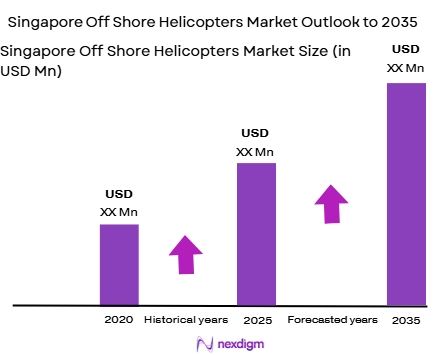
The Singapore offshore helicopters market is valued at approximately USD ~billion in 2024, driven by the growing offshore energy sector and increased demand for transportation services to offshore oil and gas platforms, as well as renewable energy installations. The market is propelled by the need for safe, efficient transportation of personnel and equipment to remote offshore sites, alongside technological advancements in helicopter safety and performance. Moreover, the government’s focus on infrastructure development and regulatory improvements are also fostering market growth.
The dominance of Singapore in the offshore helicopters market can be attributed to its strategic location as a regional hub for oil and gas activities in Southeast Asia. The country’s robust maritime infrastructure, well-established aviation regulatory frameworks, and proximity to major offshore oil and gas reserves make it a preferred location for offshore helicopter operations. Furthermore, Singapore’s advanced port facilities and connectivity enhance its role in the offshore energy sector, further reinforcing its market leadership.
Market Segmentation
By Helicopter Type
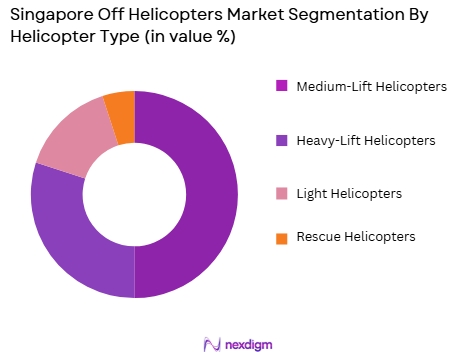
The Singapore offshore helicopters market is segmented by helicopter type into medium-lift helicopters, heavy-lift helicopters, light helicopters, and rescue helicopters. In 2024, medium-lift helicopters dominate the market, as they are the most versatile for offshore operations. These helicopters can transport a wide range of personnel and cargo, making them highly suitable for various offshore applications, including oil and gas exploration and renewable energy installations. Medium-lift helicopters are also popular due to their fuel efficiency, affordability, and operational range, making them the go-to choice for offshore transport.
By Platform Type
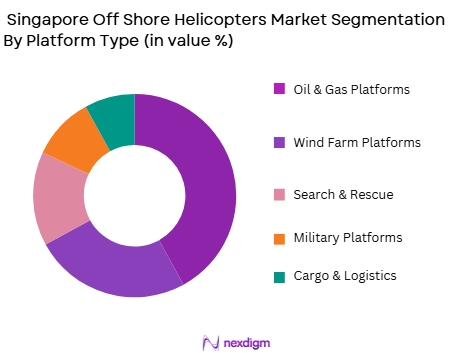
The market is also segmented by platform type into oil & gas platforms, wind farm platforms, search & rescue operations, military platforms, and cargo and logistics platforms. Oil and gas platforms account for the largest market share in 2024, as they remain the primary offshore operation for helicopters. Offshore oil exploration, particularly in Southeast Asia, continues to drive the demand for helicopters to transport personnel and equipment to these platforms. Additionally, the expansion of offshore wind energy farms further fuels the demand for helicopter services in this segment.
Competitive Landscape
The Singapore offshore helicopters market is highly competitive, with a few dominant players leading the industry. These companies offer a wide range of helicopter services for offshore operations, including personnel and cargo transport, emergency response, and specialized services for the oil and gas and renewable energy sectors. The consolidation of a few major players, such as Bristow Group and CHC Group, highlights their significant influence in the market. These companies have extensive fleets, strong service networks, and a proven track record in providing safe, reliable, and efficient offshore transportation.
| Company Name | Establishment Year | Headquarters | Helicopter Fleet Size | Service Coverage | Key Platforms | Market Share | Technology Use | Safety Record |
| Bristow Group | 1955 | United States | ~ | ~ | ~ | ~ | ~ | ~ |
| CHC Group | 1947 | Canada | ~ | ~ | ~ | ~ | ~ | ~ |
| S-76 Helicopters | 1993 | Singapore | ~ | ~ | ~ | ~ | ~ | ~ |
| Airbus Helicopters | 1992 | France | ~ | ~ | ~ | ~ | ~ | ~ |
| Leonardo Helicopters | 1948 | Italy | ~ | ~ | ~ | ~ | ~ | ~ |
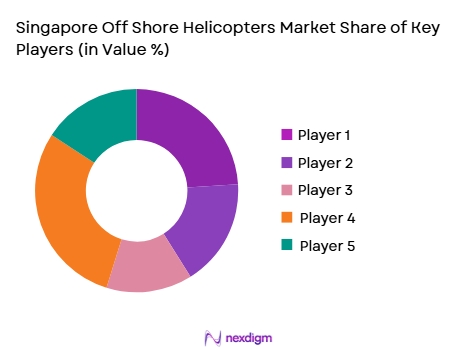
Singapore Offshore Helicopters Market Analysis
Growth Drivers
Increasing Demand for Offshore Oil and Gas Operations
The offshore oil and gas sector is a significant contributor to the demand for offshore helicopter services in Singapore. With the continuous need for transportation to offshore platforms, helicopters remain the most efficient means of reaching these locations. The rapid expansion of offshore drilling and exploration activities, particularly in Southeast Asia, has led to a higher demand for helicopter services to ensure safe and timely transportation of personnel and equipment. According to data from industry reports, Singapore’s oil and gas sector has seen substantial growth, further increasing the reliance on helicopters to support offshore projects.
Advancements in Helicopter Technology and Safety
Technological innovations in helicopter design, navigation systems, and safety protocols have been key growth drivers for the offshore helicopter market. Newer helicopters offer enhanced safety features, greater fuel efficiency, and the ability to operate in adverse weather conditions. These improvements ensure higher operational reliability and reduce risks associated with offshore transportation, leading to increased adoption in offshore operations. The development of long-range helicopters with improved fuel capacities has particularly bolstered the market’s growth, meeting the needs of offshore operations in distant, hard-to-reach locations.
Market Challenges
High Operational Costs and Maintenance
One of the major challenges faced by the offshore helicopter market is the high operational costs associated with maintaining and operating these aircraft. Helicopter operations require regular maintenance, which can be expensive due to the specialized nature of the aircraft and the harsh operating conditions. Furthermore, the cost of spare parts, fuel, and pilot training adds to the overall expenses. These high costs may limit the financial viability of small-scale operators and pose a challenge to the market’s growth in a competitive environment.
Regulatory Constraints and Airspace Management
Offshore helicopter operations are subject to stringent regulatory requirements that ensure the safety of passengers and crew. These regulations are often complex and can vary between countries, making it challenging for operators to navigate compliance requirements. Additionally, the management of airspace for offshore helicopter operations is becoming increasingly congested due to rising traffic. Operators must comply with multiple air traffic control regulations and ensure efficient coordination in high-traffic regions, which can hinder operational flexibility and lead to delays in some instances.
Opportunities
Expanding Demand for Helicopters in Renewable Energy Projects
As Singapore and other countries in the region increasingly focus on renewable energy sources, there is a growing opportunity for offshore helicopters in the wind energy sector. The development of offshore wind farms has led to a rising demand for helicopters to transport personnel and equipment to and from these sites. Offshore helicopters are ideal for servicing remote wind turbine locations, particularly in the South China Sea region, offering a new avenue of growth for operators in the offshore aviation industry.
Technological Integration for Improved Operational Efficiency
The integration of advanced technologies such as AI, data analytics, and remote diagnostics presents a significant opportunity for offshore helicopter operators. These technologies can enhance flight planning, improve operational efficiency, and reduce maintenance costs by predicting mechanical failures before they occur. Furthermore, the use of drones for inspection and maintenance tasks on offshore platforms can complement helicopter operations, providing more cost-effective and streamlined solutions to service offshore facilities.
Future Outlook
Over the next 5-10 years, the Singapore offshore helicopters market is expected to experience steady growth, driven by increasing demand for offshore energy exploration, especially in the oil, gas, and renewable energy sectors. Technological innovations, including the development of more fuel-efficient helicopters and advancements in safety systems, will further boost market growth. Additionally, the rise in offshore wind farm development and the growing need for emergency response operations will continue to support the expansion of the offshore helicopter market in Singapore.
Major Players
- Bristow Group
- CHC Group
- S-76 Helicopters
- Airbus Helicopters
- Leonardo Helicopters
- Bell Helicopter
- Sikorsky Aircraft Corporation
- PTDI
- NH Industries
- Russian Helicopters
- AgustaWestland
- Aerospatiale
- Turbomeca
- Mitsubishi Heavy Industries
- Kawasaki Heavy Industries
Key Target Audience
- Offshore oil and gas operators
- Wind energy companies
- Military and defense agencies
- Government regulators
- Aviation service providers
- Helicopter leasing firms
- Emergency and rescue organizations
- Investments and venture capitalist firms
Research Methodology
Step 1: Identification of Key Variables
The initial phase involves identifying all key variables influencing the offshore helicopters market. A thorough review of offshore oil and gas and wind energy projects is conducted through secondary research, utilizing databases, industry reports, and other credible sources to define these variables.
Step 2: Market Analysis and Construction
In this phase, historical data from offshore helicopter operators is gathered and analyzed. We evaluate factors such as fleet sizes, market penetration, and demand from key sectors like oil and gas, military, and renewable energy. This data is used to build a detailed market model.
Step 3: Hypothesis Validation and Expert Consultation
Experts in the offshore aviation industry, including helicopter operators, energy sector professionals, and aviation regulators, are consulted to validate market assumptions. Interviews and surveys are conducted to refine our market models and ensure accuracy.
Step 4: Research Synthesis and Final Output
The final phase includes synthesizing the gathered data and insights from consultations into a comprehensive report. All findings are validated through discussions with industry stakeholders to ensure the final output accurately reflects the market dynamics of the offshore helicopter sector.

- Executive Summary
- Research Methodology (Definitions, Scope, Industry Assumptions, Market Sizing Approach, Primary & Secondary Research Framework, Data Collection & Verification Protocol, Analytic Models & Forecast
Methodology, Limitations & Research Validity Checks)

- Market Definition and Scope
- Value Chain & Stakeholder Ecosystem
- Regulatory / Certification Landscape
- Sector Dynamics Affecting Demand
- Strategic Initiatives & Infrastructure Growth

- Growth Drivers
Increase in offshore oil & gas production
Expansion of offshore wind farms
Rising demand for emergency and rescue services - Market Challenges
High operational and maintenance costs
Stringent regulatory requirements
Limited availability of skilled personnel - Market Opportunities
Technological advancements in helicopter design
Increasing investments in renewable energy projects
Expansion of military and paramilitary operations - Trends
Automation and digitalization in helicopter operations
Integration of AI in flight safety and navigation systems
Growth of hybrid and electric propulsion systems - Government regulations
Civil Aviation Authority of Singapore (CAAS) regulations
International Maritime Organization (IMO) standards
Offshore Helicopter Transport Safety standards - SWOT analysis
- Porters 5 forces

- By Market Value,2020-2025
- By Installed Units,2020-2025
- By Average System Price,2020-2025
- By System Complexity Tier,2020-2025

- By System Type (In Value%)
Medium Helicopters
Heavy Lift Helicopters
Light Helicopters
Rescue Helicopters
VIP/Executive Helicopters - By Platform Type (In Value%)
Oil & Gas Platforms
Wind Farm Platforms
Search & Rescue Operations
Military Platforms
Cargo and Logistics Platforms - By Fitment Type (In Value%)
New Fitments
Retrofits
Upgrades
Custom Modifications
Equipment Standardization - By EndUser Segment (In Value%)
Oil & Gas Companies
Wind Energy Companies
Government & Military Agencies
Private Operators
Rescue and Emergency Services - By Procurement Channel (In Value%)
Direct Sales
Authorized Dealers
Leasing
Brokered Sales
Service Contracts

- Cross Comparison Parameters (Market Share, Technology Adoption, Regulatory Compliance, Service Offerings, Customer Base)
- SWOT Analysis of Key Competitors
- Pricing & Procurement Analysis
- Key Players
Sikorsky Aircraft Corporation
Airbus Helicopters
Leonardo Helicopters
Bell Helicopter
AgustaWestland
China Southern Airlines
Selex ES
Bristow Group
PHI Inc.
CHC Group
Babcock International
S-76 Helicopters
H225 Super Puma
SAAB AB
McDonnell Douglas

- Increasing demand from the oil and gas sector for efficient transport
- Government-driven projects boosting military demand
- Rising need for offshore wind energy-related transportation
- Expanding role of helicopters in emergency and rescue operations

- Forecast Market Value,2026-2035
- Forecast Installed Units,2026-2035
- Price Forecast by System Tier,2026-2035
- Future Demand by Platform,2026-2035


 Request a Sample
 Ask for Customization
 Get a Quote
 Enquire Now