
 Download PDF
Market Overview
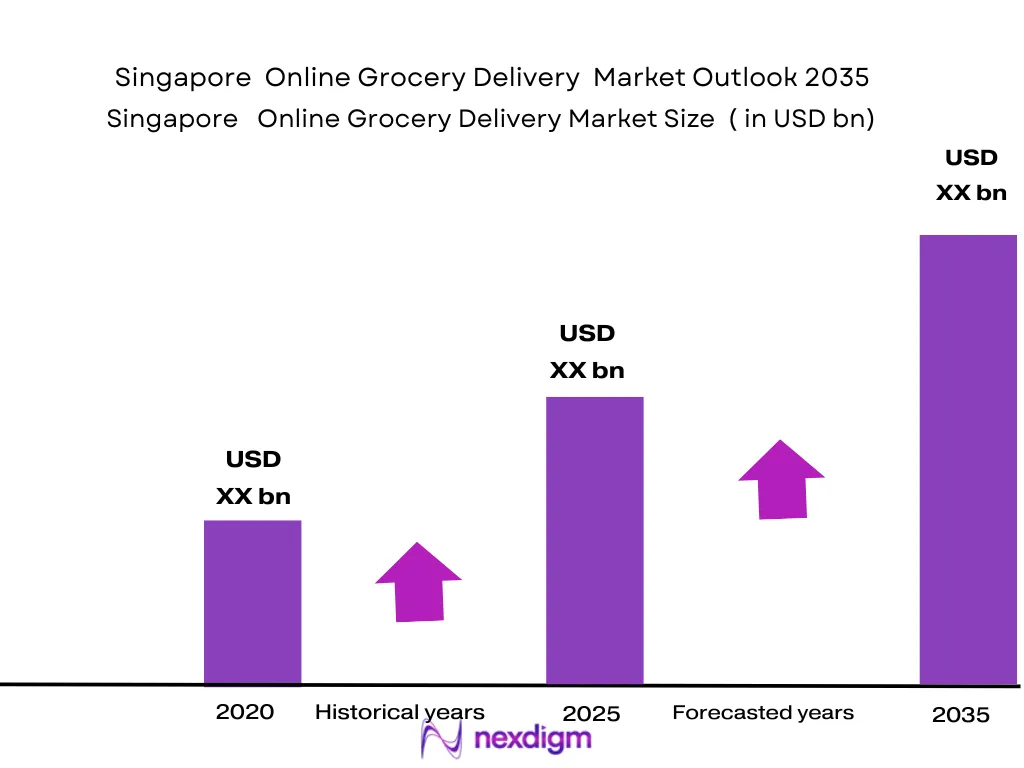
The Singapore Online Grocery Delivery market is valued at USD ~ billion, reflecting significant growth fueled by technological advancements and consumer behavior shifts. The market has been driven by the growing demand for convenience, especially in urbanized regions. Factors like the surge in e-commerce, increased smartphone penetration, and the COVID-19 pandemic, which accelerated the adoption of digital shopping, have played a key role in propelling the market. Additionally, the rise in health-consciousness among consumers, coupled with the demand for fresh and organic produce, has further boosted the online grocery sector. The market is set to maintain robust growth as it aligns with the demand for quick, efficient, and contactless services.
Singapore, with its advanced digital infrastructure and high internet penetration, dominates the online grocery delivery market. The city-state’s dense population, combined with urban convenience, makes it an ideal environment for online grocery services. Major cities like Singapore’s Central and Southern regions are at the forefront of market adoption, driven by consumers’ preference for time-saving solutions. Additionally, the presence of leading e-commerce platforms like RedMart (Lazada), FairPrice, and Cold Storage further cements Singapore’s position as a market leader in the region, thanks to their robust distribution networks and established consumer trust.
Market Segmentation
By Service Type
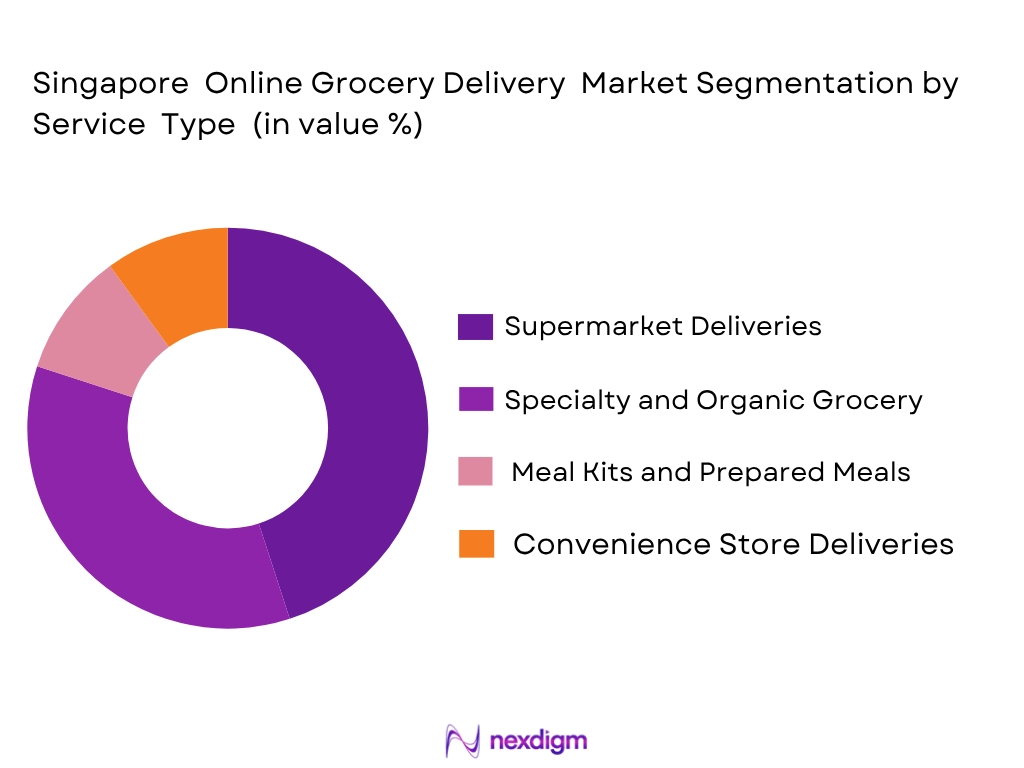
The market is segmented into Supermarket Deliveries, Specialty Grocery Deliveries, Meal Kits & Prepared Meals, and Convenience Store Deliveries. Supermarket Deliveries: Supermarket deliveries account for the majority of the market share due to the strong presence of online grocery giants like NTUC FairPrice and Cold Storage, who offer a wide array of products, from fresh produce to packaged goods, at competitive prices. These supermarkets have established loyal customer bases, making them dominant players in this segment. Their comprehensive product range, user-friendly platforms, and reliable delivery networks position them as the preferred choice for online grocery shoppers.Specialty Grocery Deliveries: Specialty grocery deliveries, including organic and eco-friendly options, have seen rapid growth. Health-conscious consumers and those seeking premium products prefer these services. The increasing demand for sustainable and organic products, along with the rise in dietary preferences such as gluten-free, vegan, and keto diets, is pushing this sub-segment forward. Brands like Little Farms and The Green Collective cater to niche market segments, providing tailored solutions to meet consumer demands for specialty items.
By Demographic Cohort
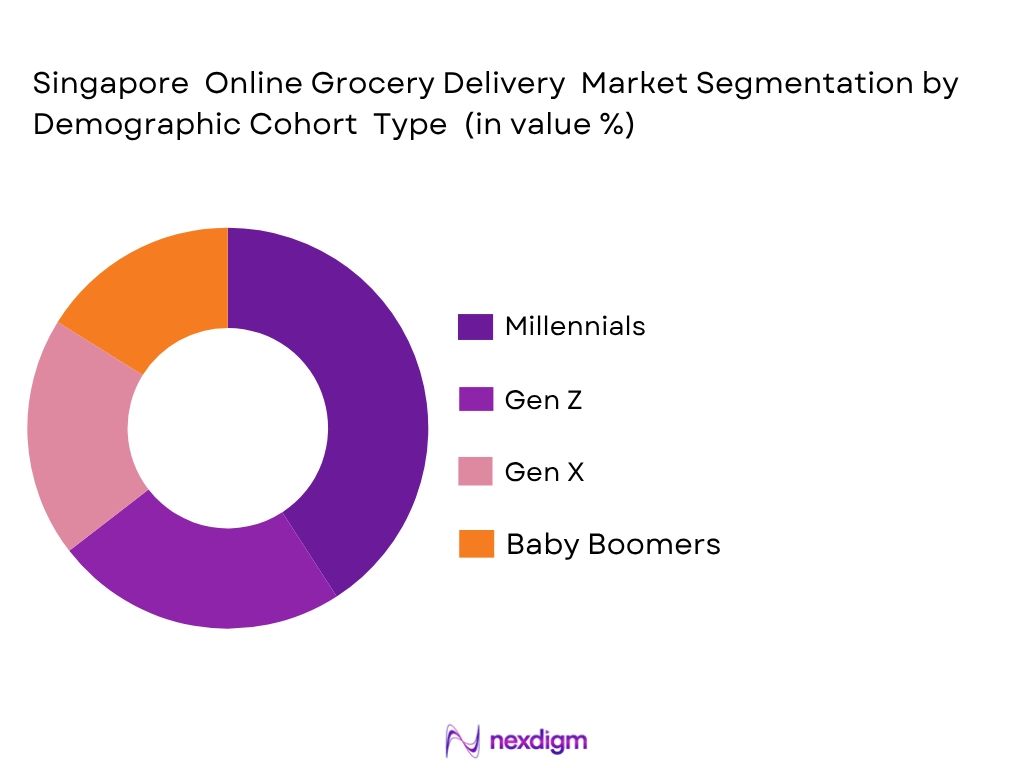
The market is segmented by demographic cohorts into Millennials, Gen Z, Gen X, Baby Boomers, and Families with Young Children.Millennials dominate the online grocery market, making up the largest consumer segment. Their strong affinity for technology and convenience aligns with the online grocery service model. With high disposable incomes and a preference for instant gratification, Millennials are likely to use online grocery services for convenience and time-saving. They are also more inclined to try out newer brands and services that offer a seamless digital shopping experience.Gen Z has emerged as a growing segment, driven by their comfort with technology and mobile-first behavior. This generation places a high emphasis on sustainability and ethical sourcing, making them more inclined to choose specialty and eco-friendly grocery delivery options. Gen Z’s increasing purchasing power and desire for convenience are expected to fuel continued growth in this segment.
Competitive Landscape
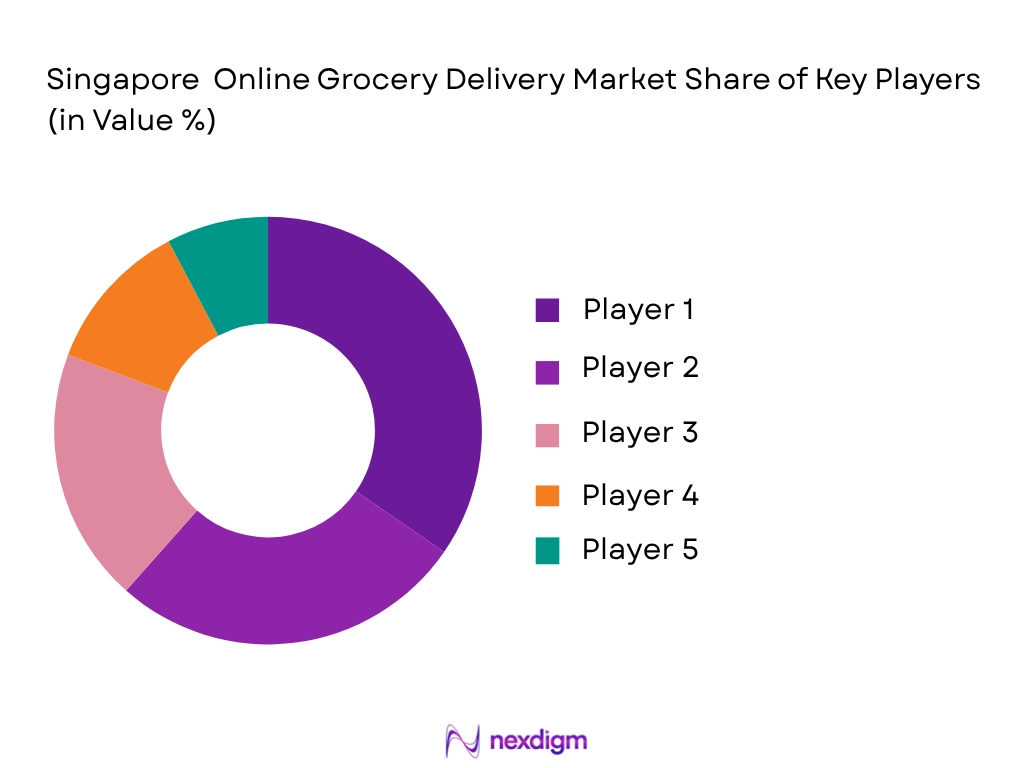
The Singapore Online Grocery Delivery market is highly competitive, dominated by a few key players. The market is characterized by a mix of established supermarket chains and emerging digital platforms. The competitive landscape is driven by well-established brands such as NTUC FairPrice, which has a long-standing presence in Singapore, and newer entrants like RedMart, which is a subsidiary of Lazada Group. These players have capitalized on their strong e-commerce platforms to provide seamless delivery experiences. In addition to them, GrabMart and Shopee Supermarket have emerged as significant players, tapping into the vast online consumer base in Singapore, using their already established app ecosystems.
| Company Name | Establishment Year | Headquarters | Product Portfolio | Delivery Speed | Mobile App Integration | E-commerce Platform | Consumer Base | Brand Recognition | Partnership Networks | Technology Adoption |
| NTUC FairPrice | 1973 | Singapore | ~ | ~ | ~ | ~ | ~ | ~ | ~ | ~ |
| RedMart (Lazada) | 2011 | Singapore | ~ | ~ | ~ | ~ | ~ | ~ | ~ | ~ |
| Cold Storage | 1900 | Singapore | ~ | ~ | ~ | ~ | ~ | ~ | ~ | ~ |
| GrabMart | 2012 | Singapore | ~ | ~ | ~ | ~ | ~ | ~ | ~ | ~ |
| Shopee Supermarket | 2009 | Singapore | ~ | ~ | ~ | ~ | ~ | ~ | ~ | ~ |
Singapore Online Grocery Delivery Market Analysis
Growth Drivers
Increased Demand for Contactless Shopping and Convenience
The growing demand for contactless shopping is one of the key drivers of the Singapore Online Grocery Delivery market. As consumers increasingly prioritize safety and convenience, especially after the pandemic, online grocery services provide an efficient and safer alternative to in-store shopping. Contactless delivery options, where customers can choose delivery slots and track their orders, have become crucial in meeting consumer needs for hassle-free shopping experiences. With more people working from home and busy lifestyles, convenience in purchasing groceries online has become a top priority, further propelling the growth of this market.
Rising Health Consciousness and Demand for Fresh Produce
With the increasing focus on health and wellness, the demand for fresh produce, organic items, and health-oriented groceries has surged. Consumers are now more inclined to purchase groceries that align with their health-conscious lifestyle, such as organic vegetables, gluten-free products, and other specialty food items. This rising trend has significantly influenced online grocery delivery services, as they provide a convenient way to access fresh and high-quality produce. Companies like Little Farms and The Green Collective are capitalizing on this demand by offering premium grocery options, positioning them as key players in this segment.
Market Opportunities
Expansion in Underserved Areas and Suburban Regions
While urban areas in Singapore dominate the online grocery delivery market, there is a significant opportunity for growth in underserved and suburban regions. Expanding into these areas presents a promising opportunity for online grocery providers to tap into new customer bases. As demand for convenience continues to grow, suburban residents seek easy access to fresh produce and essential goods. By improving logistics, delivery networks, and local partnerships, companies can cater to these regions, expanding their footprint and enhancing market penetration beyond the city center.
Partnerships with Local Farmers and Specialty Producers
Another significant opportunity lies in forming partnerships with local farmers and specialty producers. Consumers are increasingly seeking fresh, local, and sustainable products, which have gained popularity due to their perceived health benefits and environmental advantages. By partnering with local farms, grocery delivery services can provide customers with fresher and more sustainable options. This not only satisfies growing consumer demand but also supports local economies, enabling grocery providers to build stronger relationships with both suppliers and customers while offering unique value propositions.
Challenges
Intense Competition in Delivery Speed and Service Quality
One of the biggest challenges in the Singapore Online Grocery Delivery market is the intense competition among various players, particularly concerning delivery speed and service quality. With consumers expecting faster and more efficient services, companies must continually improve their logistics and delivery infrastructure. Major players like NTUC FairPrice, RedMart, and GrabMart face pressure to offer quicker delivery times, especially for perishable goods. The ability to differentiate based on delivery speed, product quality, and customer service has become a key competitive factor, pushing companies to invest heavily in their operations to maintain customer loyalty.
High Operational Costs and Delivery Infrastructure Needs
Maintaining an efficient and reliable delivery infrastructure is a costly challenge for online grocery services. From warehousing and inventory management to last-mile delivery logistics, the operational costs involved in running a large-scale grocery delivery service are substantial. Additionally, as demand for online grocery shopping grows, so does the need for more distribution centers, advanced technology, and a skilled workforce to handle increased volume. Managing these operational costs while maintaining affordable prices for consumers remains a critical challenge for companies seeking profitability in a highly competitive market.
Future Outlook
Over the next 5 years, the Singapore Online Grocery Delivery market is expected to experience steady growth, driven by advancements in technology, an increase in consumer reliance on online shopping, and ongoing shifts toward healthier and more sustainable lifestyles. Key trends such as the integration of artificial intelligence in personalized shopping experiences, the expansion of delivery services in suburban areas, and the adoption of eco-friendly packaging solutions will contribute to the market’s expansion. As consumer preferences evolve, online grocery platforms will need to focus on improving user experience, offering a broader range of products, and providing faster, more reliable delivery options.
Major Players
- NTUC FairPrice
- RedMart (Lazada Group)
- Cold Storage
- GrabMart (Grab Holdings)
- Shopee Supermarket
- Little Farms
- The Green Collective
- Honestbee (formerly)
- Giant Online (Giant Singapore)
- Dairy Farm Group
- FairPrice Xpress
- iShopChangi
- Lazada Singapore
- Sheng Siong Online
- Amazon Prime Now (Singapore)
Key Target Audience
- Investments and Venture Capitalist Firms
- Government and Regulatory Bodies (Singapore Economic Development Board)
- Large E-commerce Platforms (Lazada, Shopee)
- Supermarket Chains
- Corporate Buyers
- Health and Wellness Groups
- Sustainability-Focused Firms
- Logistics and Supply Chain Providers
Research Methodology
Step 1: Identification of Key Variables
The initial phase involves mapping the major stakeholders within the Singapore Online Grocery Delivery market. This includes identifying key variables such as consumer demographics, spending patterns, and product categories. We utilize secondary research from trusted sources such as government publications and market reports to gather data on market dynamics.
Step 2: Market Analysis and Construction
In this phase, historical data is analyzed to understand the evolution of the market. The data collected from reliable sources will allow us to assess key market variables like growth in online grocery penetration and the impact of digital transformation on consumer behavior. We focus on understanding how e-commerce platforms and supermarket chains are capitalizing on these changes.
Step 3: Hypothesis Validation and Expert Consultation
Market hypotheses will be tested through interviews with industry experts, including key players in e-commerce, supermarket chains, and logistics providers. These consultations provide in-depth insights into market drivers and challenges, enabling us to refine and validate the data used in our analysis.
Step 4: Research Synthesis and Final Output
The final phase involves synthesizing the findings from the previous steps. This includes further consultation with market players to refine the market forecast and validate assumptions, ensuring that the analysis is comprehensive and accurate. The final output will offer a thorough view of the Singapore Online Grocery Delivery market, with validated insights into growth drivers, challenges, and future opportunities.

- Executive Summary
- Research Methodology ((Market Definitions and Assumptions Abbreviations and Acronyms, Market Sizing Approach, Primary Research Framework, Consolidated Research Approach, Market Forecasting Techniques, Limitations of Study and Future Conclusions)

- Definition and Service Scope
- Market Genesis and Evolution of Online Grocery Formats
- Macro Trends in Consumer Behavior and Digital Transformation
- Integration of E-Commerce and Grocery Delivery Services
- Impact of Health and Sustainability Trends on Service Demand

- Growth Drivers
Increased Demand for Contactless Shopping and Convenience
Rising Health Consciousness and Demand for Fresh Produce
Digitalization and E-commerce Growth
COVID-19 Impact and Adoption of Online Shopping
Consumer Preference for Time-Saving Services - Market Opportunities
Expansion in Underserved Areas and Suburban Regions
Partnerships with Local Farmers and Specialty Producers
Integration with AI for Personalized Shopping Experiences
Increased Focus on Sustainable Packaging and Delivery Solutions
Incorporation of Last-Mile Delivery Innovations - Challenges
Intense Competition in Delivery Speed and Service Quality
High Operational Costs and Delivery Infrastructure Needs
Consumer Trust and Freshness of Delivered Goods
Managing Delivery Logistics and Demand Fluctuations
Regulatory and Compliance Issues in the E-commerce Sector - Market Trends
Shift Towards Subscription-Based and Personalized Delivery Plans
Increased Use of AI, Robotics, and Automation in Order Fulfillment
Growth in Green and Sustainable Grocery Delivery Solutions
Cross-Platform Integrations with Meal Planning and Recipe Apps
Growth in Hybrid Grocery Delivery Models - Government and Regulatory Environment
E-commerce Regulations and Online Business Licensing
Food Safety Standards and Delivery Compliance
Sustainability and Environmental Regulations
Data Privacy and Consumer Protection Laws - SWOT Analysis
- Stakeholder Ecosystem Mapping
- Porter’s Five Forces Analysis
- Service Delivery Cost Structure Dynamics

- By Revenue, 2020-2025
- By Order Volume, 2020-2025
- By Average Order Value, 2020-2025
- By Delivery Channel, 2020-2025
- By Digital Engagement Index, 2020-2025

- By Service Category (In Value %)
Supermarket Deliveries
Specialty and Organic Grocery
Meal Kits and Prepared Meals
Convenience Store Deliveries - By Demographic Cohort (In Value %)
Millennials
Gen Z
Gen X
Baby Boomers - By Membership Type (In Value %)
Subscription-Based Memberships
Pay-Per-Delivery
Corporate Group Deliveries
Flexible Delivery Plans - By Distribution Channel (In Value %)
Direct Online Platforms (Retailers’ Websites and Apps)
Third-Party Aggregators and Delivery Apps
Subscription-Based Delivery Platforms
Supermarket and E-commerce Partnerships - By Geography (In Value %)
Central Singapore
Eastern Singapore
Northern Singapore
Western Singapore
Southern Singapore

- Market Share of Major Players by Value/Volume
- Market Share of Major Players by Product Type
- Cross Comparison Parameters (Company Overview, Business Strategies, Recent Developments, Strength, Weakness, Organizational Structure, Revenues, Revenues by Product Type, Number of Touchpoints, Distribution Channels, Number of Dealers and Distributors, Margins, Production Plant, Capacity, Unique Value Offering and Others)
- SWOT Analysis of Major Competitors
- Pricing Benchmarking Across Service Formats
- Detailed Profiles of Key Market Players
NTUC FairPrice
RedMart (Lazada Group)
Cold Storage
GrabMart (Grab Holdings)
Shopee Supermarket
Little Farms
The Green Collective
Honestbee (formerly)
Giant Online (Giant Singapore)
Dairy Farm Group
FairPrice Xpress
iShopChangi
Lazada Singapore
Sheng Siong Online
Amazon Prime Now (Singapore)

- Market Demand by User Segment
- Service Consumption Patterns
- Subscription vs. Non-Subscription Usage Analytics
- Price Sensitivity and Willingness to Pay
- Decision Drivers and Pain Points

- By Revenue, 2026-2035
- By Order Volume, 2026-2035
- By Average Order Value, 2026-2035
- By Delivery Channel, 2026-2035
- By Digital Engagement Index, 2026-2035


 Request a Sample
 Ask for Customization
 Get a Quote
 Enquire Now