

 Download PDF
 Download PDF
- Insurance companies
- Digital insurers and insurtech firms
- Banks and bancassurance providers
- E-commerce platforms
- Mobility and travel platforms
- Investment and venture capitalist firms
- Government and regulatory bodies
- Technology platform providers
Market Overview
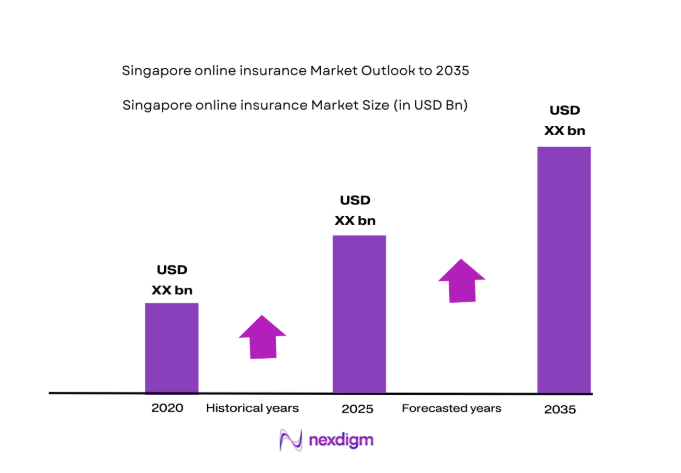
Singapore’s online insurance market reached approximately USD ~ billion in gross written premiums through digital channels, supported by strong insurer digitalization and widespread adoption of self-service financial platforms. Growth is driven by near-universal smartphone usage and seamless digital identity infrastructure enabling remote onboarding and instant underwriting. Insurers have expanded automated claims processing and app-based policy servicing, while aggregator platforms and embedded insurance partnerships accelerated online purchases across life, health, and travel categories, reinforcing sustained digital channel expansion nationwide.
Within Singapore, the central business district and financial corridor dominate online insurance activity due to concentration of insurers, fintech firms, and digitally literate professionals. Regional dominance is reinforced by Singapore’s position as a Southeast Asian insurance hub attracting expatriates and multinational employers requiring cross-border digital coverage. High income levels and advanced nationwide broadband infrastructure further enable widespread online insurance adoption and continuous product innovation leadership across Asia’s digital financial services ecosystem.
Market Segmentation
By Product Type
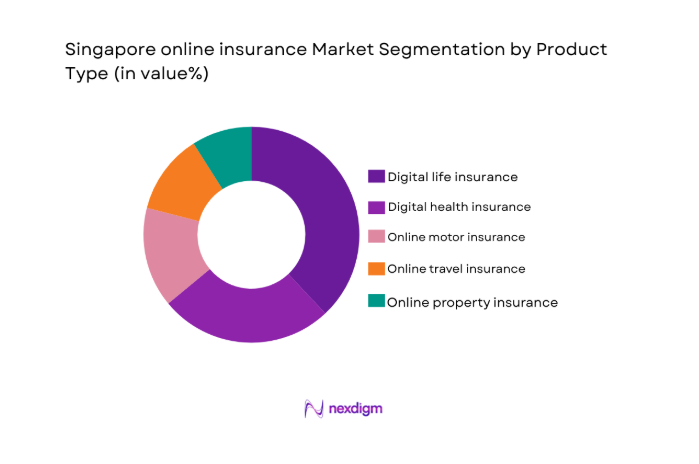
Singapore online insurance market is segmented by product type into digital life insurance, digital health insurance, online motor insurance, online travel insurance, and online property insurance. Recently, digital life insurance has a dominant market share due to strong savings-linked policy demand, tax-efficient protection planning, and insurer focus on simplified underwriting products. Singapore’s aging demographics and high financial literacy drive life coverage adoption through online advisory tools and instant issuance platforms, reinforcing sustained leadership of digital life products across direct-to-consumer and bancassurance channels.
By Platform Type
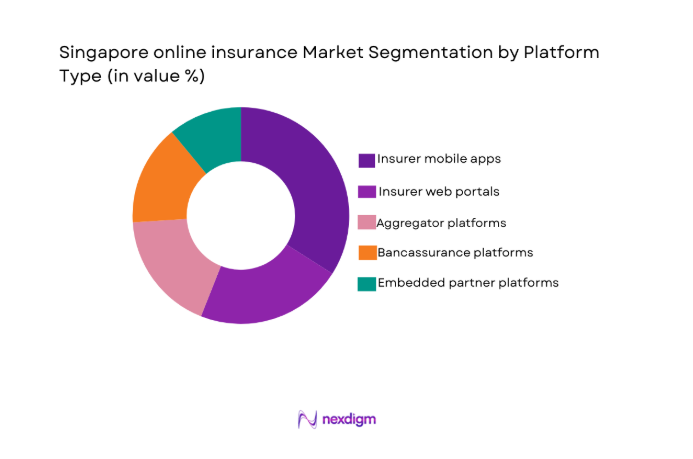
Singapore online insurance market is segmented by platform type into insurer mobile apps, insurer web portals, aggregator platforms, bancassurance platforms, and embedded partner platforms. Recently, insurer mobile apps have a dominant market share due to high smartphone reliance, biometric authentication convenience, and integrated claims tracking features. Major insurers prioritize mobile-first distribution strategies and loyalty ecosystems, while Singapore consumers prefer app-based financial management. This has positioned insurer-owned mobile applications as the leading digital platform for policy purchase, servicing, and renewal activity nationwide.
Competitive Landscape
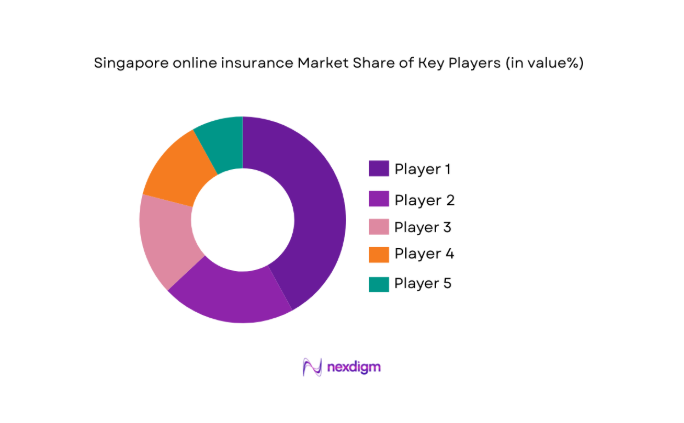
Singapore’s online insurance market shows moderate concentration with established insurers leveraging brand trust and regulatory licenses while digital-native insurers and fintech distributors intensify competition. Large incumbents dominate life and health segments through proprietary apps and bancassurance integration, whereas challenger insurers compete on pricing and user experience. Partnerships with banks, e-commerce firms, and mobility platforms shape distribution reach, and regulatory sandboxes encourage innovation. Competitive intensity remains high due to product commoditization and aggregator transparency.
| Company Name | Establishment Year | Headquarters | Technology Focus | Market Reach | Key Products | Revenue | Digital Channel Share |
| AIA Singapore | 1931 | Singapore | ~ | ~ | ~ | ~ | ~ |
| Prudential Singapore | 1931 | Singapore | ~ | ~ | ~ | ~ | ~ |
| Great Eastern | 1908 | Singapore | ~ | ~ | ~ | ~ | ~ |
| Singlife | 2014 | Singapore | ~ | ~ | ~ | ~ | ~ |
| FWD Singapore | 2013 | Singapore | ~ | ~ | ~ | ~ | ~ |
Singapore Online insurance Market Analysis
Growth Drivers
High Digital Financial Adoption and Mobile-First Consumer Behavior
Singapore’s population demonstrates one of the world’s highest digital financial engagement levels, with mobile banking and e-payments integrated into daily transactions across nearly all income segments. This behavior extends naturally into insurance purchasing, where consumers expect instant policy issuance, transparent pricing, and seamless claims submission through smartphones rather than physical advisory channels. The country’s nationwide high-speed connectivity and digital identity infrastructure enable frictionless onboarding and remote verification, reducing insurer acquisition costs and encouraging online distribution expansion. Financial literacy programs and mandatory retirement savings schemes have also increased awareness of protection and investment products, creating digitally informed consumers comfortable comparing and purchasing policies independently. Insurers have responded by investing heavily in app-based ecosystems integrating insurance with wealth management and health tracking services, reinforcing habitual engagement. Younger professionals and expatriate residents in particular prioritize convenience and speed over traditional advisory relationships, accelerating digital policy adoption. Regulatory encouragement of digital financial services and fintech partnerships further legitimizes online insurance as a trusted purchase channel. Aggregator platforms and embedded insurance in travel and e-commerce transactions expose consumers repeatedly to digital insurance options, normalizing online buying behavior. As a result, mobile-first financial habits act as a structural demand driver for sustained growth of Singapore’s online insurance market.
Regulatory Support and Innovation-Friendly Insurance Framework
Singapore’s insurance regulator maintains one of the most progressive and innovation-oriented supervisory regimes globally, explicitly encouraging digital distribution, open APIs, and fintech collaboration. Licensing frameworks for digital insurers and regulatory sandboxes allow companies to test online-only products and automated underwriting models under controlled conditions, accelerating innovation cycles. Strong data protection and cybersecurity regulations simultaneously build consumer trust in digital financial services, reducing perceived risk associated with online insurance purchases. Government initiatives promoting smart nation infrastructure and digital identity authentication provide foundational capabilities for remote onboarding and secure transactions across insurers. Cross-border financial hub positioning attracts multinational insurers and technology partners to base digital operations in Singapore, enhancing product diversity and technological sophistication. The regulatory emphasis on consumer protection and transparency aligns with digital channels offering standardized disclosures and comparison tools, supporting fair competition. Public-private collaboration in fintech accelerators and industry consortia fosters ecosystem integration between insurers, banks, and technology firms. Continuous modernization of insurance guidelines to accommodate AI underwriting and cloud platforms removes operational barriers for digital insurers. Consequently, regulatory support functions as a powerful structural enabler sustaining long-term expansion of the online insurance sector.
Market Challenges
Consumer Trust and Perceived Complexity in Fully Digital Insurance Purchases
Despite high digital literacy, many Singapore consumers still associate insurance with long-term financial commitments requiring professional advice, creating hesitation toward purely online purchases without human interaction. Complex policy terms, exclusions, and coverage comparisons remain difficult to interpret through digital interfaces alone, leading to reliance on advisors for reassurance. High-value life and health policies particularly involve risk perception and financial planning considerations that consumers may feel uncomfortable navigating independently. Instances of digital fraud and data breaches in broader financial services sectors reinforce caution regarding online transactions involving sensitive personal and health information. Older demographics and high-net-worth individuals demonstrate lower trust in automated underwriting decisions or algorithm-based recommendations, preferring personalized consultation. Insurers face challenges translating nuanced advisory value into intuitive digital journeys without oversimplifying product details. Claims disputes or perceived service failures in digital channels can disproportionately affect trust due to absence of interpersonal resolution mechanisms. Aggregator platforms intensify price transparency, sometimes reinforcing perception that online policies prioritize cost over coverage quality. Overcoming trust barriers requires sustained investment in user experience, transparency, and hybrid advisory models blending digital convenience with human assurance.
Intense Price Competition and Product Commoditization on Digital Platforms
Online insurance distribution in Singapore exposes consumers to instantaneous price comparisons across multiple insurers, significantly increasing price sensitivity and reducing brand loyalty. Standardized policy structures in travel, motor, and basic health insurance create limited differentiation, encouraging insurers to compete primarily on premiums rather than value-added features. Aggregator platforms amplify this commoditization by ranking products predominantly by price, reinforcing consumer perception of interchangeability among insurers. Digital-native insurers leverage lean operating models to offer aggressive pricing, pressuring incumbent insurers with higher legacy costs. Sustained price competition compresses margins and challenges profitability of online channels despite volume growth. Marketing and acquisition costs remain substantial due to intense digital advertising and promotional campaigns required to maintain visibility. Insurers attempting differentiation through wellness programs or bundled services face difficulty communicating these benefits succinctly in comparison interfaces. Commoditization risk is particularly acute in short-term policies such as travel and motor insurance where switching costs are negligible. Maintaining sustainable profitability while competing in transparent digital marketplaces remains a core structural challenge for Singapore’s online insurance sector.
Opportunities
Expansion of Embedded Insurance Across Digital Commerce Ecosystems
Singapore’s advanced digital economy integrates travel booking, mobility services, e-commerce, and financial payments into unified platforms, creating ideal conditions for embedded insurance distribution. Consumers increasingly encounter insurance options seamlessly within transaction journeys such as flight purchases, ride-hailing subscriptions, or online shopping checkouts, reducing friction associated with standalone policy search. Platform providers benefit from additional revenue streams while insurers gain access to high-volume contextual demand moments aligned with consumer needs. Data generated from transaction behavior enables insurers to design micro-duration or usage-based coverage tailored to specific activities, enhancing relevance and conversion rates. The country’s regulatory openness to fintech collaboration supports secure API integration between insurers and digital platforms. Embedded distribution also expands reach among younger consumers and gig-economy participants who may not proactively seek insurance products. As Singapore functions as a regional digital hub, successful embedded models can scale across Southeast Asia through multinational platform partnerships. Continuous growth of digital commerce transactions provides a large addressable base for contextual insurance offerings. Consequently, embedded insurance represents a major structural growth avenue for Singapore’s online insurance market.
AI-Driven Personalization and Automated Underwriting Innovation
Advances in artificial intelligence and data analytics enable insurers in Singapore to move beyond standardized digital policies toward highly personalized coverage and pricing. Integration of wearable health data, telematics driving behavior, and financial transaction patterns allows risk assessment tailored to individual lifestyles rather than demographic averages. Personalized recommendations improve perceived value and reduce commoditization pressures associated with price-only competition. Automated underwriting models can deliver instant approvals and dynamic premium adjustments, enhancing customer experience while lowering administrative costs. Singapore’s strong digital identity and data governance frameworks provide secure infrastructure for responsible data utilization in insurance analytics. Consumers accustomed to personalized digital services in banking and retail increasingly expect similar customization in insurance offerings. Insurers adopting AI-driven engagement platforms can provide proactive coverage suggestions aligned with life events or behavioral changes, strengthening retention. Regulatory recognition of algorithmic underwriting under controlled standards encourages adoption while maintaining consumer protection. As technological maturity increases, AI-enabled personalization presents a significant opportunity for differentiation and premium growth in the online insurance market.
Future Outlook
Singapore’s online insurance market is expected to expand steadily over the next five years driven by embedded distribution, AI-based underwriting, and mobile-centric customer engagement. Regulatory encouragement of digital innovation and regional hub positioning will attract new insurers and fintech partnerships. Consumers will increasingly adopt app-based policy management and automated claims processing. Product personalization and ecosystem integration across finance, mobility, and health platforms will further accelerate digital insurance penetration nationwide.
Major Players
- AIA Singapore
- Prudential Singapore
- Great Eastern
- Income Insurance
- Singlife
- FWD Singapore
- Manulife Singapore
- HSBC Life Singapore
- Etiqa Singapore
- Tokio Marine Singapore
- MSIG Singapore
- Chubb Singapore
- Zurich Singapore
- Aviva Singapore
- Allianz Singapore
Key Target Audience
Research Methodology
Step 1: Identification of Key Variables
Key variables such as digital premium volumes, policy counts, platform penetration, and consumer adoption indicators were identified through regulatory disclosures and insurer reporting. Demand drivers including mobile usage, fintech integration, and demographic factors were mapped to construct the analytical framework.
Step 2: Market Analysis and Construction
Market size and segmentation were constructed using insurer financial filings, regulatory statistics, and digital distribution data. Platform and product shares were derived by triangulating premium contributions across digital channels and online policy categories.
Step 3: Hypothesis Validation and Expert Consultation
Preliminary estimates and segmentation assumptions were validated through industry expert interviews and benchmarking against regional digital insurance markets. Regulatory guidelines and technology adoption trends were reviewed to confirm structural drivers and constraints.
Step 4: Research Synthesis and Final Output
Validated datasets and qualitative insights were synthesized into market models and competitive analysis. Findings were structured into segmentation, drivers, challenges, and opportunity frameworks to produce the final Singapore online insurance market outlook.

- Executive Summary
- Research Methodology (Definitions, Scope, Industry Assumptions, Market Sizing Approach, Primary & Secondary Research Framework, Data Collection & Verification Protocol, Analytic Models & Forecast Methodology, Limitations & Research Validity Checks)

- Market Definition and Scope
- Value Chain & Stakeholder Ecosystem
- Regulatory / Certification Landscape
- Sector Dynamics Affecting Demand
- Strategic Initiatives & Infrastructure Growth

- Growth Drivers
High digital penetration and mobile first consumer behavior in Singapore
Strong regulatory support for fintech and digital insurance innovation
Rising preference for instant policy issuance and self service insurance
Growth of embedded insurance across e commerce and mobility platforms
Increasing demand for flexible and personalized insurance products - Market Challenges
Consumer trust concerns in fully digital insurance purchases
Complex legacy integration for traditional insurers transitioning online
Cybersecurity and data privacy compliance requirements
Intense price competition on aggregator platforms
Limited differentiation in commoditized insurance products - Market Opportunities
Expansion of embedded insurance across digital ecosystems
AI driven personalized insurance pricing and coverage design
Cross border digital insurance offerings for expatriates - Trends
Adoption of usage based and on demand insurance models
Integration of insurance within super apps and digital wallets
End to end digital claims processing and automation
Growth of comparison led insurance purchasing behavior
Partnerships between insurers and fintech platforms - Government Regulations & Defense Policy
Monetary Authority of Singapore digital insurance licensing frameworks
Data protection and cybersecurity compliance standards
Open finance and API governance initiatives - SWOT Analysis
- Stakeholder and Ecosystem Analysis
- Porter’s Five Forces Analysis
- Competition Intensity and Ecosystem Mapping

- By Market Value, 2020-2025
- By Installed Units, 2020-2025
- By Average System Price, 2020-2025
- By System Complexity Tier, 2020-2025

- By System Type (In Value%)
Digital life insurance policies
Digital health and medical insurance
Online motor insurance
Online travel insurance
Online property and home insurance - By Platform Type (In Value%)
Insurer proprietary mobile applications
Insurer web portals
Insurance aggregator marketplaces
Bancassurance digital platforms
Embedded insurance APIs in partner ecosystems - By Fitment Type (In Value%)
Direct to consumer self service
Advisor assisted digital purchase
Employer sponsored digital portals
Partner embedded checkout insurance
Super app integrated insurance modules - By End User Segment (In Value%)
Individual retail consumers
Small and medium enterprises
Gig economy and self employed workers
High net worth individuals
Expatriate residents - By Procurement Channel (In Value%)
Insurer official websites and apps
Online comparison platforms
Digital bancassurance channels
E commerce platform integrations
Fintech and telecom apps

- Market structure and competitive positioning
Market share snapshot of major players - Cross Comparison Parameters (Premium pricing, Policy issuance time, Claims turnaround time, Digital onboarding experience, Product range)
- SWOT Analysis of Key Competitors
- Pricing & Procurement Analysis
- Key Players
AIA Singapore
Prudential Assurance Company Singapore
Great Eastern Life
Income Insurance Limited
Manulife Singapore
HSBC Life Singapore
Singlife
FWD Singapore
Etiqa Insurance Singapore
Tokio Marine Life Insurance Singapore
MSIG Insurance Singapore
Chubb Insurance Singapore
Zurich Insurance Singapore
Aviva Ltd Singapore
Allianz Insurance Singapore

- Individuals prioritize convenience speed and price transparency in digital insurance purchase
- SMEs adopt online insurance for simplified policy management and cost efficiency
- Gig workers demand flexible short term and usage based coverage models
- Expat residents rely on digital channels for accessible cross border insurance products

- Forecast Market Value, 2026-2035
- Forecast Installed Units, 2026-2035
- Price Forecast by System Tier, 2026-2035
- Future Demand by Platform, 2026-2035
Singapore online insurance market reached approximately USD ~ billion in digital gross written premiums based on regulatory and insurer disclosures. Singapore online insurance market size reflects direct online life, health, travel, and motor policy sales across insurer and aggregator platforms.
Singapore online insurance market is dominated by digital life insurance due to strong protection planning demand and savings-linked policy adoption. Singapore online insurance market leadership of life products is reinforced by insurer focus on simplified online underwriting and long-term financial planning tools.
Singapore online insurance market distribution is led by insurer mobile applications supported by widespread smartphone penetration and app-based financial management habits. Singapore online insurance market mobile channel strength is enhanced by biometric login, integrated claims, and policy servicing features.
Singapore online insurance market growth is driven by mobile-first consumer behavior, fintech integration, and regulatory support for digital insurance innovation. Singapore online insurance market expansion is also supported by embedded insurance partnerships across travel, e-commerce, and financial platforms.
Singapore online insurance market major players include AIA Singapore, Prudential Singapore, Great Eastern, Singlife, and FWD Singapore among others. Singapore online insurance market competition reflects both established insurers and digital-native providers leveraging app-based distribution.
Singapore online insurance market is expected to expand through embedded distribution, AI underwriting, and ecosystem integration across digital platforms. Singapore online insurance market future growth will be supported by regulatory innovation frameworks and high digital financial adoption.


 Request a Sample
 Ask for Customization
 Get a Quote
 Enquire Now