

 Download PDF
Market Overview
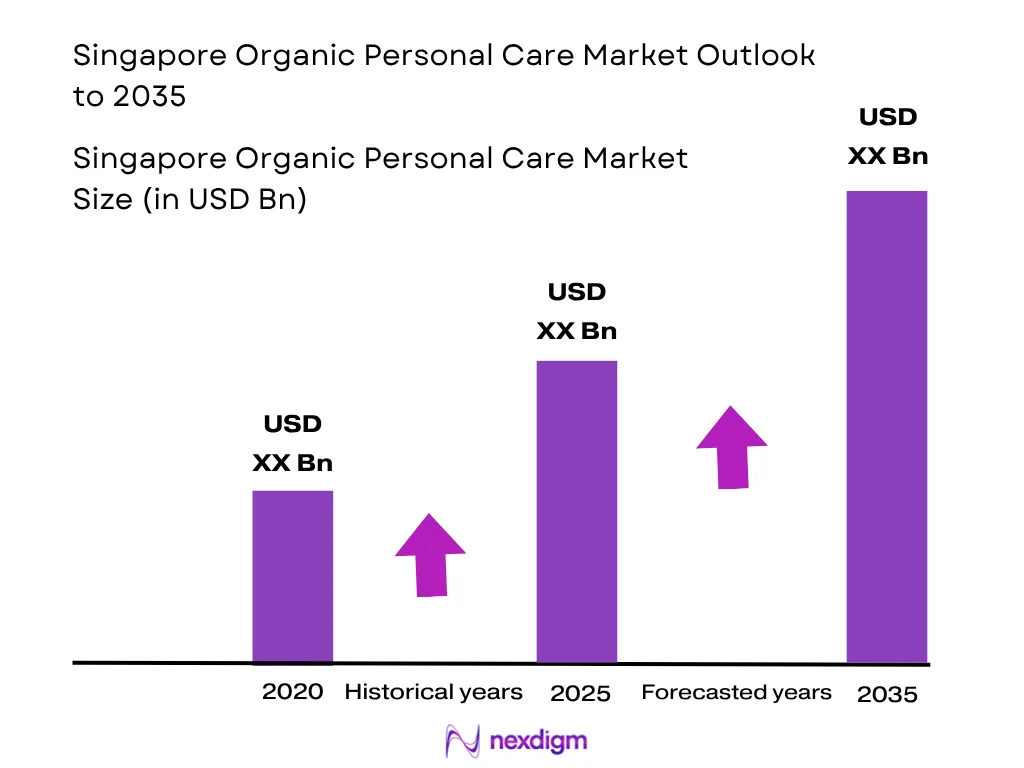
The Singapore Organic Personal Care Market is valued at USD ~ billion, with strong growth driven by increasing consumer preference for natural and eco-friendly products. The demand for organic personal care is propelled by a combination of health-conscious consumers, rising awareness about product safety, and environmental sustainability. As consumers become more informed about the harmful effects of chemicals in personal care products, they are shifting towards organic alternatives. This trend is also influenced by the rise in disposable income and a growing focus on wellness, which has led to an increased spending on premium, organic products.
Singapore is the dominant player in the organic personal care market within Southeast Asia. The country’s robust regulatory environment, stringent certifications, and focus on eco-consciousness contribute significantly to its leadership in the market. Additionally, Singapore serves as a regional hub for Halal and clean beauty products, benefiting from rising inbound tourism and a growing middle-class population that is inclined towards organic products. Other leading countries in the market include the United States and Germany, which are driven by their advanced retail infrastructure, rising organic product consumption, and strong consumer education on the benefits of organic products.
Market Segmentation
By Product Type
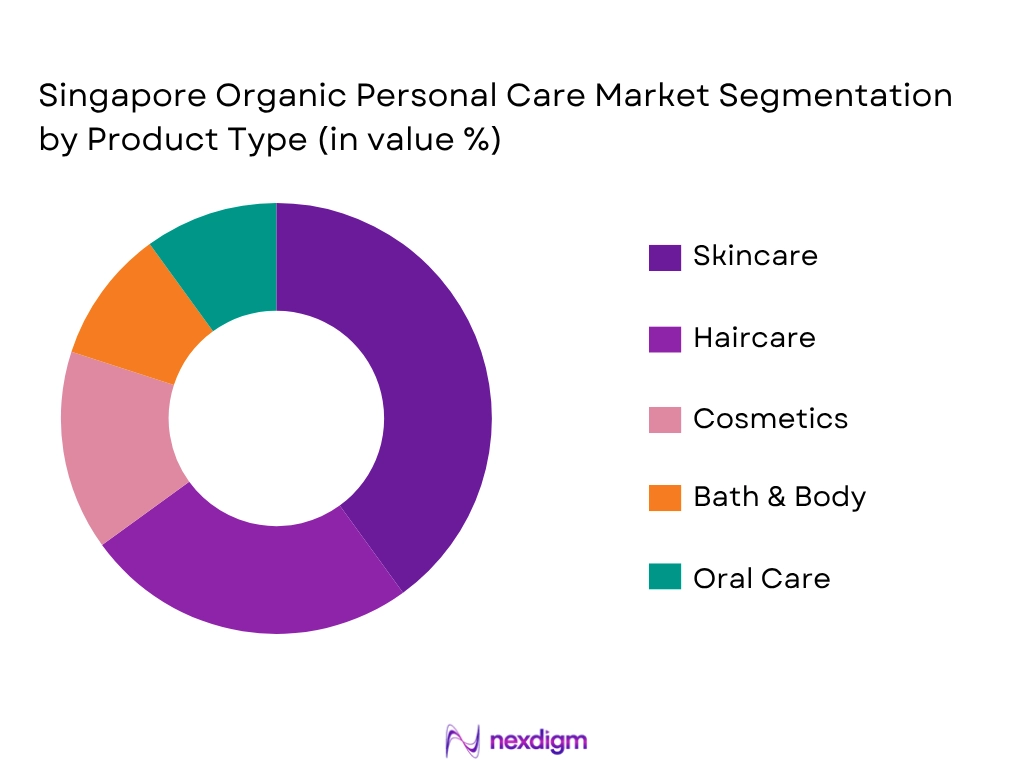
The Singapore Organic Personal Care Market is segmented into product categories such as Skin Care, Hair Care, Cosmetics, Bath & Body, and Oral Care. The skin care segment holds a dominant share of the market. This dominance is attributed to the increasing consumer awareness around skincare products’ ingredients and their impact on health. Consumers are more inclined towards organic skincare due to concerns over harmful chemicals in traditional skincare products. Brands offering anti-aging, moisturizing, and sun protection benefits with organic ingredients are gaining significant traction. Additionally, the rising demand for cruelty-free and eco-certified skincare options is fueling growth within this sub-segment.
By Distribution Channel
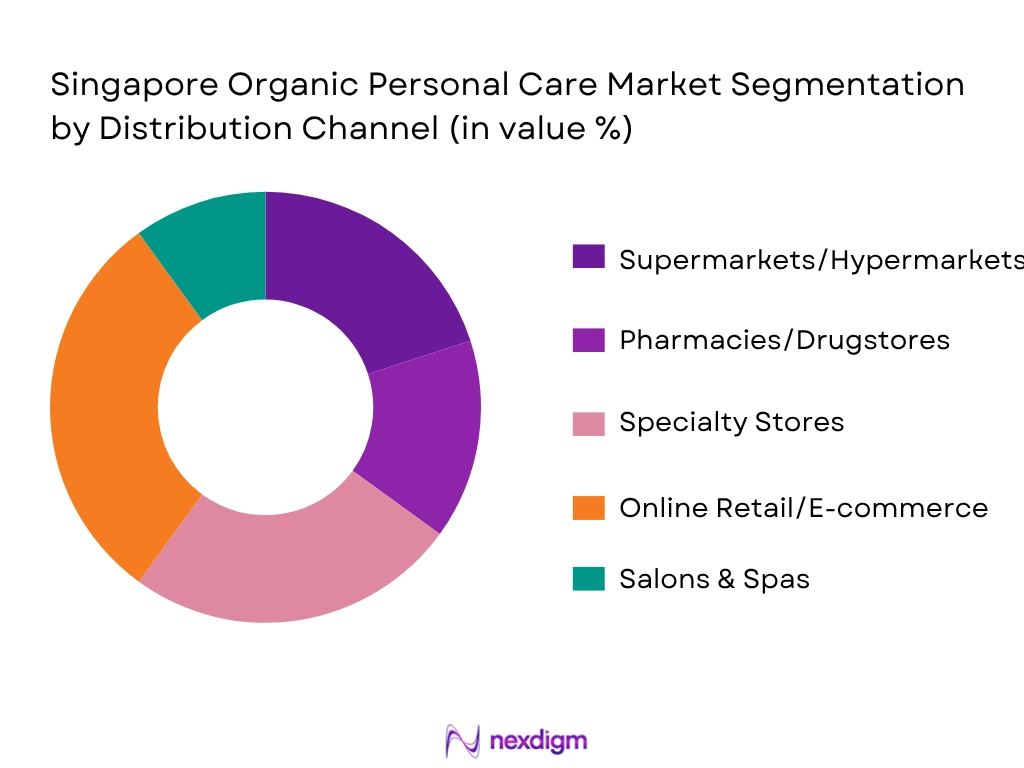
The market is also segmented by distribution channels, including Supermarkets/Hypermarkets, Pharmacies/Drugstores, Specialty Stores, Online Retail/E-commerce, and Salons & Spas. The Online Retail/E-commerce segment is witnessing rapid growth and is expected to dominate the market in 2024. This growth is driven by the convenience of online shopping, easy access to a wide range of organic products, and the increasing popularity of e-commerce platforms like Lazada and Shopee in Singapore. The COVID-19 pandemic accelerated the shift to online shopping, and this trend is likely to continue as consumers prefer the ease of purchasing organic personal care products from the comfort of their homes.
Competitive Landscape
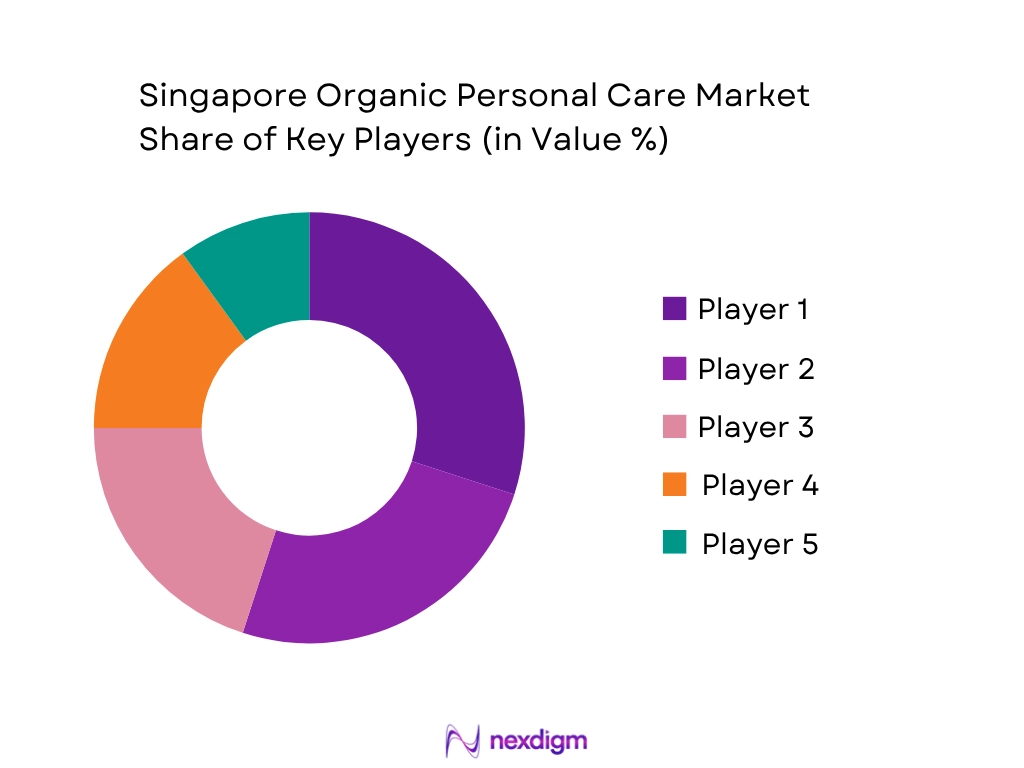
The Singapore Organic Personal Care Market is characterized by the dominance of both global and local players, which are continuously innovating to meet the growing consumer demand for organic and eco-friendly products. Major companies in this market include L’Oréal S.A., The Estée Lauder Companies Inc., Unilever plc, Beiersdorf AG, and Natura & Co. Holding S.A. These companies maintain a strong presence due to their diverse product portfolios, established retail networks, and sustainability initiatives. Their focus on eco-certifications and offering innovative organic product lines has enabled them to capture a significant share of the market.
| Company Name | Establishment Year | Headquarters | Product Portfolio | Distribution Channels | Sustainability Initiatives | R&D Focus |
| L’Oréal S.A. | 1909 | Paris, France | ~ | ~ | ~ | ~ |
| Unilever plc | 1929 | London, UK | ~ | ~ | ~ | ~ |
| Beiersdorf AG | 1882 | Hamburg, Germany | ~ | ~ | ~ | ~ |
| Natura & Co. Holding | 1969 | São Paulo, Brazil | ~ | ~ | ~ | ~ |
| The Estée Lauder Companies Inc. | 1946 | New York, USA | ~ | ~ | ~ | ~ |
Singapore Organic Personal Care Market Analysis
Growth Drivers
Health- and Eco-Conscious Consumers
A major driver of the Singapore Organic Personal Care market is the increasing number of health- and eco-conscious consumers. With rising awareness about the harmful effects of chemicals in personal care products, consumers are increasingly shifting toward organic alternatives. The Singapore government has supported this shift by promoting sustainable living through various initiatives such as the “Green Plan 2030,” which aims to enhance environmental sustainability. According to a 2024 report by the Singapore Economic Development Board (EDB), the country’s focus on promoting sustainability and eco-friendly practices is expected to spur further demand for organic products, particularly in personal care. In addition, the Singaporean population has been increasingly conscious of their health and wellness, with a greater inclination towards products that are chemical-free and environmentally friendly. The National Environment Agency (NEA) has also been actively working on reducing the carbon footprint of businesses, encouraging the use of sustainable materials. The country’s overall wellness market is growing, with organic products being perceived as healthier, non-toxic alternatives to traditional personal care items. As disposable income continues to rise in Singapore, it is expected that demand for premium organic personal care products will further increase in the coming years.
Influence of Social Media
Social media plays a crucial role in driving the growth of the Singapore Organic Personal Care market. With an increasing number of consumers turning to social media platforms like Instagram, Facebook, and TikTok for product recommendations, organic beauty brands are leveraging these platforms to boost their visibility. As of 2024, Singapore ranks among the top countries in terms of social media penetration, with over 90% of the population actively using social media, as reported by the Infocomm Media Development Authority. Influencers and content creators on these platforms often promote organic and sustainable beauty products, thereby educating consumers on the importance of organic ingredients in personal care. A study by the Singapore Tourism Board (STB) found that nearly 60% of online shoppers in Singapore are influenced by social media ads when making purchasing decisions. This has led to organic brands adopting influencer marketing as a strategy to engage with younger, eco-conscious consumers. Social media also helps in creating a transparent dialogue about the benefits of organic products, further driving consumer interest and purchasing behavior.
Market Challenges
High Raw-Material and Certification Costs
One of the primary challenges facing the Singapore Organic Personal Care market is the high cost of raw materials and certifications for organic products. Organic ingredients, which are essential for manufacturing eco-friendly personal care items, tend to be more expensive compared to conventional alternatives. The costs associated with obtaining organic certifications, such as COSMOS and USDA Organic, further increase the cost structure for manufacturers. In 2024, Singapore’s regulatory bodies, including the Agri-Food & Veterinary Authority of Singapore (AVA), have set stringent standards for organic certification, requiring compliance with strict environmental and sustainability practices. These costs are a significant barrier for small and mid-sized enterprises looking to enter the organic personal care market. Additionally, the global supply chain challenges resulting from events like the COVID-19 pandemic have made the procurement of organic raw materials even more costly. The Singapore Food Agency (SFA) has reported that the global prices for key organic ingredients such as aloe vera, coconut oil, and shea butter have risen significantly. This, coupled with the complexities of ensuring traceability of the organic supply chain, adds to the financial burden on businesses trying to meet demand while maintaining product quality and certification standards.
Supply-Chain Traceability Issues
Another challenge faced by the Singapore Organic Personal Care market is the issue of supply-chain traceability. As consumers become more aware of sustainability and ethical sourcing, they increasingly demand transparency regarding the origin and journey of the ingredients used in the products they buy. The Singapore government has acknowledged the importance of traceability in ensuring the authenticity of organic products, and in 2024, the Singapore Customs Department strengthened its focus on the traceability of organic certification processes. However, establishing a fully transparent and efficient supply chain remains a significant hurdle. Traceability issues are exacerbated by the complexity of the global organic supply chain, which involves multiple intermediaries, from farmers to manufacturers, all requiring certification. A report from the Singapore Trade and Industry Ministry found that supply chain inefficiencies in sourcing organic ingredients often lead to delays, affecting production timelines. Moreover, businesses face challenges in proving the authenticity of organic products due to a lack of standardized international certification processes. This creates a gap in consumer trust and undermines the market’s growth potential.
Market Opportunities
E-commerce and D2C Growth
E-commerce and Direct-to-Consumer (D2C) models present significant growth opportunities for the Singapore Organic Personal Care market. As consumer preferences shift towards online shopping, e-commerce platforms are becoming crucial channels for the distribution of organic personal care products. Singapore has a high internet penetration rate, with over 88% of the population actively shopping online, according to a 2024 report by the Singapore Internet Research Institute. This has facilitated the rise of online platforms such as Lazada, Shopee, and independent D2C websites where consumers can easily access a wide range of organic personal care products. The growing adoption of D2C models allows brands to directly engage with consumers, building brand loyalty and offering a more personalized shopping experience. Additionally, the increasing ease of online payments and delivery options in Singapore has created a conducive environment for e-commerce growth. According to the Singapore Retailers Association, the D2C e-commerce model is expected to grow by double digits in the coming years, driven by the shift in consumer behavior toward purchasing personal care products online. This growth in online channels opens up new avenues for organic personal care brands to reach a larger audience.
Rising Inbound Tourism
Rising inbound tourism also presents a growth opportunity for the Singapore Organic Personal Care market. With Singapore being a popular tourist destination, the demand for organic personal care products is expected to grow, particularly among international tourists who are increasingly seeking out natural and organic products. According to the Singapore Tourism Board (STB), tourism in Singapore is projected to reach pre-pandemic levels in 2024, with over 14 million visitors expected to arrive in the country. Many of these visitors are opting for eco-friendly products during their travels, which includes organic personal care products that align with their sustainability values. Tourists from countries with high awareness of organic products, such as the U.S., Japan, and the EU, are fueling this demand. In 2024, the Singapore Tourism Board reported that nearly 30% of tourists purchased beauty and wellness products during their stay, with a growing preference for organic and sustainably sourced products. This trend is expected to benefit the organic personal care market by increasing sales and encouraging global brands to expand their presence in Singapore’s retail and e-commerce markets.
Future Outlook
Over the next 5 years, the Singapore Organic Personal Care Market is expected to witness strong growth, driven by an increasing shift towards eco-conscious consumer behavior, heightened awareness regarding the harmful effects of synthetic chemicals, and the rising demand for cruelty-free and organic products. As sustainability becomes a key focus for consumers, organic brands are capitalizing on this trend by investing in innovative, sustainable production techniques and green packaging solutions. The market is also expected to benefit from government initiatives promoting sustainable product development and the growing popularity of e-commerce platforms.
Major Players
- L’Oréal S.A.
- The Estée Lauder Companies Inc.
- Unilever plc
- Beiersdorf AG
- Natura & Co. Holding S.A.
- Shiseido Company, Limited
- Johnson & Johnson (Consumer Health)
- The Body Shop (Natura & Co)
- Lush Fresh Handmade Cosmetics
- Weleda AG
- Dr. Bronner’s Magic Soaps
- Neal’s Yard Remedies
- Faith In Nature
- Kew Organics (Singapore)
- Allies of Skin (Singapore)
Key Target Audience
- Investments and Venture Capitalist Firms
- Government and Regulatory Bodies
- Organic Product Manufacturers
- E-commerce Platforms and Online Retailers
- Private Label Retailers
- Beauty and Wellness Retail Chains
- Distributors and Wholesalers
- Cosmetic Certification Bodies
Research Methodology
Step 1: Identification of Key Variables
The initial step of the research involves identifying key variables such as consumer preferences, product trends, and key regulatory frameworks. This is done through a combination of secondary research, including industry reports and databases, along with expert interviews to define the variables influencing the Singapore Organic Personal Care Market.
Step 2: Market Analysis and Construction
This phase involves compiling and analyzing historical data on the market, including trends in consumer behavior, product categories, and growth drivers. The goal is to understand the factors that are propelling the market forward and how these trends are expected to evolve in the coming years.
Step 3: Hypothesis Validation and Expert Consultation
In this phase, hypotheses regarding market growth drivers and challenges will be validated through interviews with industry experts and key stakeholders in the organic personal care space. This validation will help refine the analysis and ensure that the research findings are aligned with market realities.
Step 4: Research Synthesis and Final Output
The final phase involves synthesizing all data collected from various sources, including primary research and expert interviews, to produce a comprehensive report. This step will include a final check of all findings, ensuring the accuracy and relevance of the data before producing the final output.

- Executive Summary
- Research Methodology (Definition and Scope, Data Collection Framework, Triangulation & Validation, Primary & secondary research approaches, data sources, expert interviews, Quality & Bias Controls, Limitations and Assumptions)

- Definition and Scope
- Market Genesis and Evolution
- Timeline of Key Developments
- Socio‑Economic & Consumption Dynamics
- Market Structure and Business Cycle
- Supply Chain & Value Chain Analysis

- Growth Drivers (Health- and eco-conscious consumers, influence of social media – e.g. ~52% discover products via Instagram, clean beauty movement)
- Market Challenges (High raw-material and certification costs, supply-chain traceability issues, regulatory compliance burdens)
- Opportunities (E-commerce and D2C growth, rising inbound tourism, Singapore as regional hub for Halal & clean beauty)
- Market Trends (“Clean beauty” products, sustainable/refillable packaging, biotech/microbiome-based formulations, omni-channel retail)
- Regulatory Landscape (HSA cosmetics regulations and ASEAN Cosmetic Directive compliance; labeling and certification standards)
- SWOT Analysis (Strengths, Weaknesses, Opportunities, Threats of the Singapore market)
- Ecosystem Analysis (Stakeholder map: ingredient suppliers, manufacturers, distributors, retailers, certification bodies)
- Porter’s Five Forces (Industry rivalry, supplier/buyer power, barriers to entry, substitutes, new entrants)

- By Value (2020-2025)
- By Volume (2020-2025)
- By Average Price Trends (2020-2025)

- By Product Category (In Value%)
Skin Care
Hair Care
Cosmetics
Bath & Body
Oral Care - By Distribution Channel (In Value%)
Supermarkets/Hypermarkets
Pharmacies/Drugstores
Specialty Stores
Online Retail/E-commerce
Salons & Spas - Consumer Demographics (In Value%)
Women
Men
Children/Infants - By Price Tier (In Value%)
Mass Market
Mid-range
Premium/Luxury - By Certification Type (In Value%)
Certified Organic
Eco-certified [e.g., COSMOS, USDA Organic]
Natural/Non-certified

- Market Share of Key Players (Revenue, volume, market share, product segment)
- Cross Comparison Parameters (Company Overview; Business Strategy, Product Portfolio (organic product range, # of SKUs), Distribution Networks (channels, global reach), Sustainability & Certification (organic seals, eco-initiatives), Production Facilities & Capacity, R&D/Innovation Focus, Recent Developments)
- Category-Claim Benchmarking (baby-safe, sensitive-skin, lip care, soap, scalp care, deodorant, oral care, sun care)
- SWOT of Major Players (Strengths, Weaknesses of each competitor)
- Pack Architecture Analysis (price per ml, promo depth, assortment ladder, size normalization)
- Pricing Analysis (SKU-level pricing strategy, premium vs mass positioning)
- Detailed Profiles of Major Companies
L’Oréal S.A.
The Estée Lauder Companies Inc.
Unilever plc
Beiersdorf AG
Natura & Co Holding S.A.
Shiseido Company
Johnson & Johnson
The Body Shop (Natura & Co)
Lush Fresh Handmade Cosmetics
Weleda AG
Dr. Bronner’s Magic Soaps
Neal’s Yard Remedies
Faith In Nature
Kew Organics
Allies of Skin

- Consumer Demand & Utilization (Adoption rates of organic products; usage patterns by segment)
- Purchasing Power & Spending (Consumer income levels, discretionary spend on organic personal care)
- Regulatory Impact on Consumers (Awareness of organic certification, labeling transparency requirements)
- Consumer Needs, Preferences & Pain Points (Desire for safe, toxin-free ingredients; demand for efficacy; distrust of “greenwashing”)
- Purchase Decision-Making (Influence of influencers and social media, online reviews, retail experience, price sensitivity)

- By Value (2026-2035)
- By Volume (2026-2035)
- By Average Price (2026-2035)
- By Category Growth Contribution (2026-2035)


 Request a Sample
 Ask for Customization
 Get a Quote
 Enquire Now