
 Download PDF
Market Overview
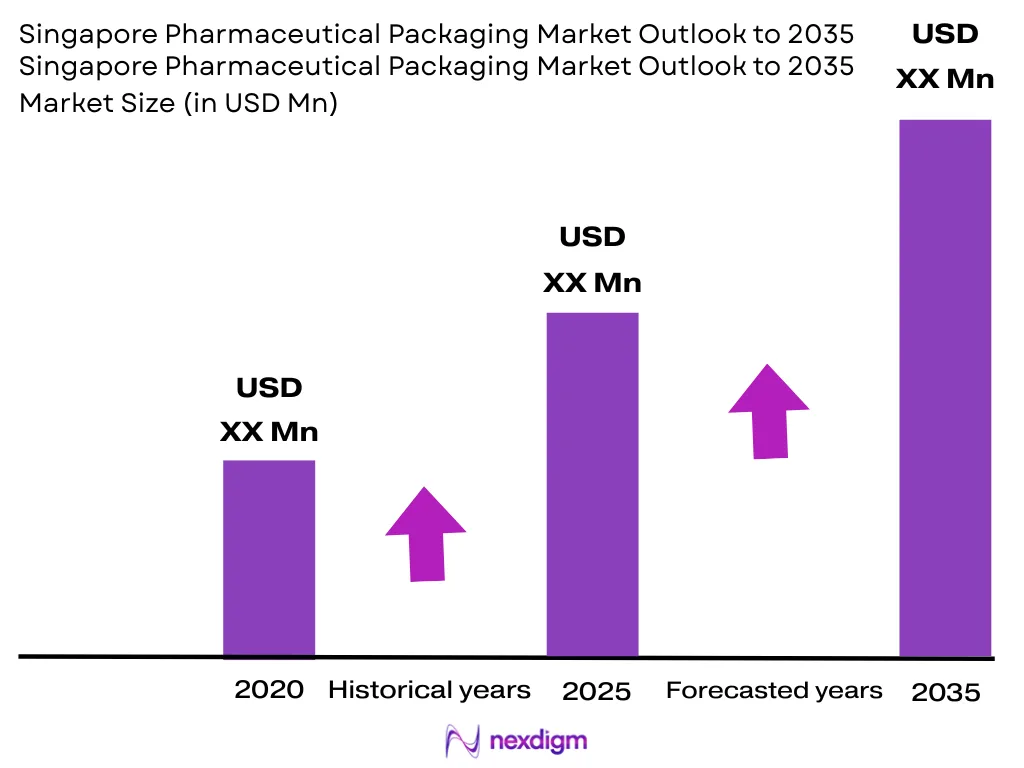
The Singapore Pharmaceutical Packaging Market was valued at USD ~ Million in 2024 and is anticipated to expand at a CAGR of ~% during 2026–2035. The market is primarily driven by Singapore’s positioning as a regional Contract Development and Manufacturing Organization (CDMO) hub for sterile fill-finish and biologics packaging, the country’s role as a regional export launchpad for specialty therapies, and continued growth in vaccine and biologics manufacturing. The Asia-Pacific Pharmaceutical Packaging Market, within which Singapore operates as an advanced and highly regulated node, is projected to grow from USD ~ billion in 2026 to USD ~ billion by 2031, at a CAGR of 6.62%, according to Mordor Intelligence, while Singapore’s own pharmaceuticals market is estimated to grow from USD ~ billion in 2025 to USD ~ billion by 2034. Singapore’s Health Sciences Authority (HSA) regulates pharmaceutical packaging and labeling under the Health Products Act, implemented in 2007, and the Health Products (Therapeutic Product) Regulations 2016, requiring all therapeutic products to display a control number, expiry date, and registration number, with applications processed through the PRISM electronic regulatory platform. Singapore’s harmonization with international frameworks including PIC/S and ICH, combined with its role as a regional export hub serving Malaysia, Indonesia, and Australia, continues to shape demand across vaccine, biologics, solid dosage, and medical device packaging applications.
Market Segmentation
By Packaging Type
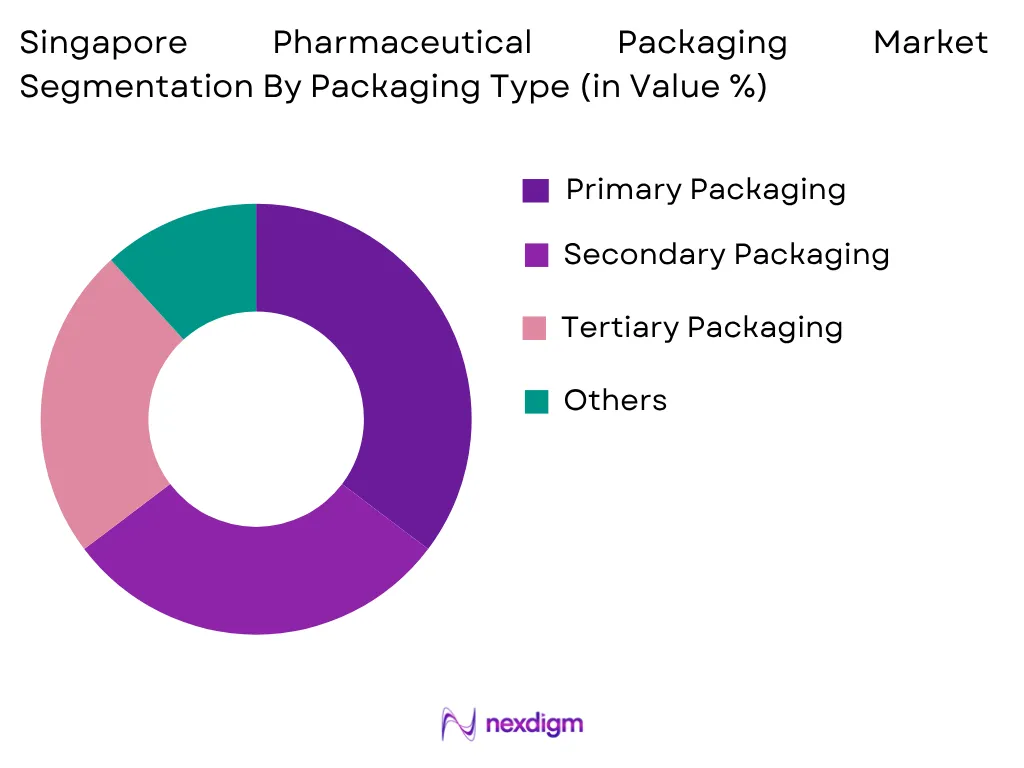
Among these, Primary Packaging, encompassing sterile barrier systems, vials, and prefilled syringes, holds a leading share of the Singapore Pharmaceutical Packaging Market, reflecting the country’s specialization in sterile fill-finish and biologics manufacturing. Thermo Fisher Scientific’s May 2023 opening of a 24,000 square meter sterile drug manufacturing facility in Singapore, featuring a high-speed, fully automated aseptic fill-finish line for small and large molecules, illustrates the scale of investment flowing into primary packaging capability within the country. Merck maintains several packaging facilities throughout Singapore for vaccines, biologics, and inhalers, including a dedicated fill-finish facility supporting Keytruda and the HPV vaccine Gardasil. Secondary Packaging, comprising cartons and serialized labels, continues to see steady demand as CDMOs increasingly offer secondary packaging with serialization as a core value-added service for biologics destined for regional markets, capitalizing on Singapore’s strong regulatory reputation.
By Application
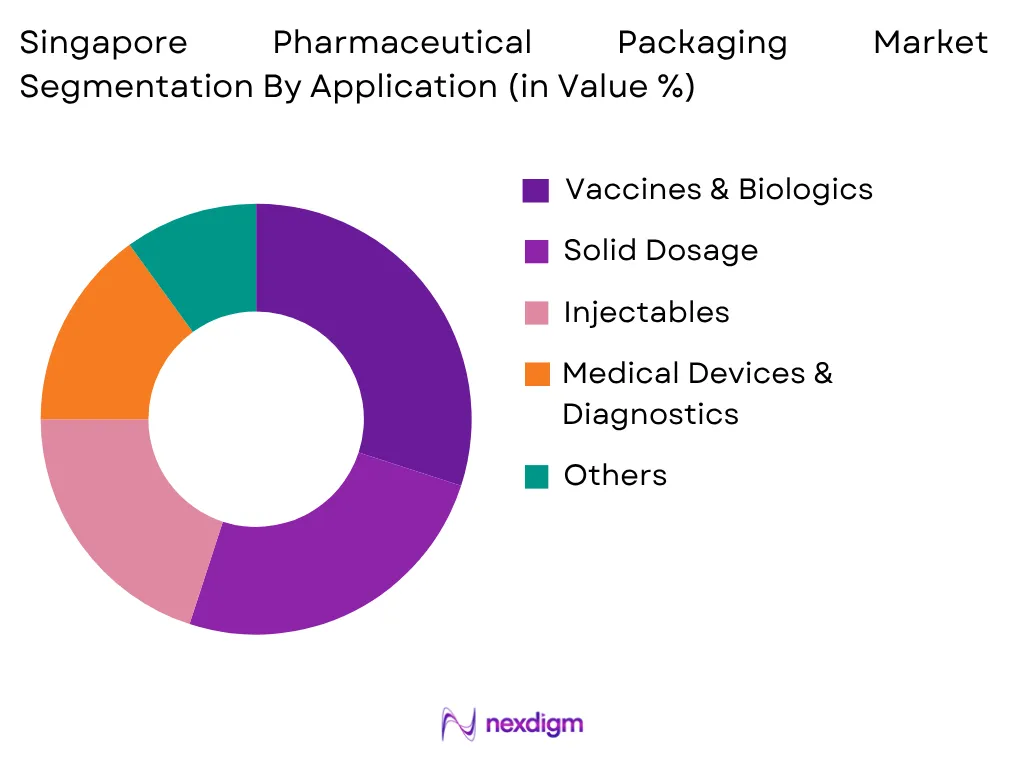
Vaccines & Biologics represent the fastest-growing application segment within the Singapore Pharmaceutical Packaging Market, supported by a strong clinical pipeline of innovative vaccine candidates and government emphasis on immunization programs. In June 2025, MSD (Merck & Co.) initiated the MOBILIZE-1 Phase 3 clinical trial for V181, a quadrivalent vaccine candidate, exemplifying the continued expansion of vaccine development activity with regional manufacturing implications for Singapore. The broader Asia-Pacific pharmaceutical packaging market is also witnessing growth in temperature-sensitive cell and gene therapies, creating demand for cryo-compatible vials, a trend that aligns closely with Singapore’s strategic emphasis on high-value biologics manufacturing and packaging finishing capabilities, complementing the country’s established strength in solid dosage and medical device packaging applications.
Competitive Landscape
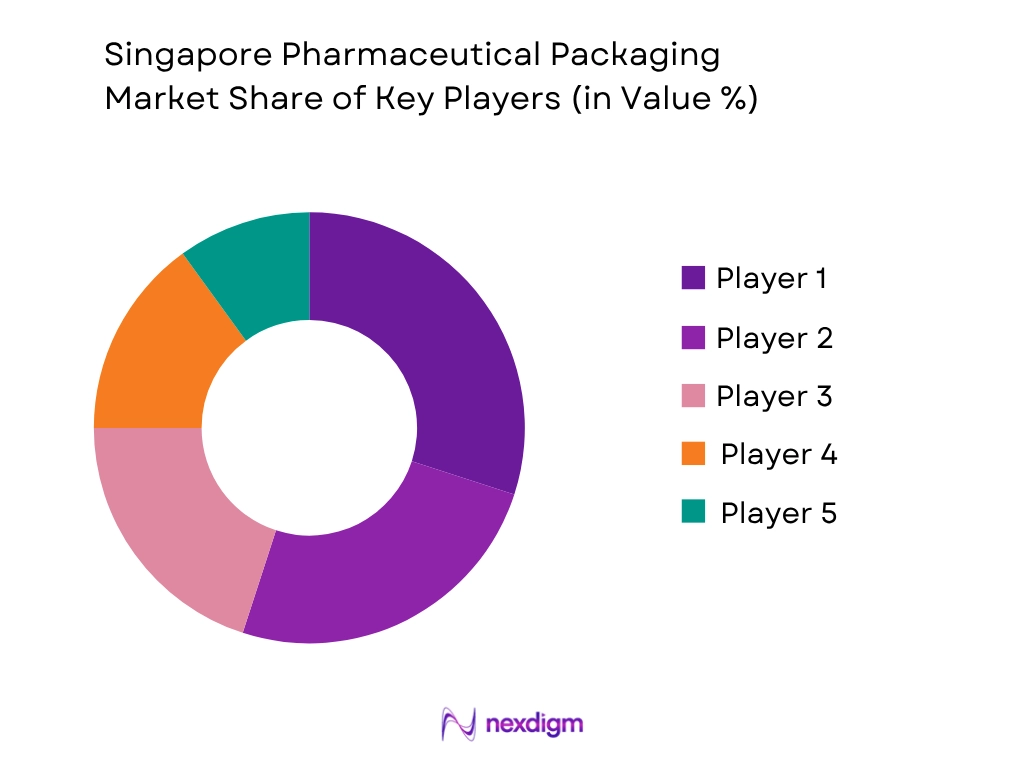
The Singapore Pharmaceutical Packaging Market is moderately fragmented, with a domestic sterile and flexible packaging specialist operating alongside multinational packaging conglomerates and global CDMOs that maintain substantial manufacturing and technical service operations in the city-state. Competition is primarily based on sterile fill-finish capability, serialization and track-and-trace integration, regulatory compliance with HSA and international PIC/S and ICH standards, and the ability to serve Singapore’s role as a regional export hub for specialty therapies. TAKO, a Singapore-based flexible and medical packaging manufacturer operating since 1979, has built a long-standing reputation serving the country’s medical, pharmaceutical, and biotech sectors with sterile barrier packaging solutions. Multinational players including Amcor, recognized as a star performer in the Asia-Pacific pharmaceutical packaging market for its high-barrier blister packs, plastic bottles, prefilled syringes, and specialty pouches, alongside Gerresheimer, AptarGroup, and Schott, continue to compete on the strength of their global technical know-how and long-standing partnerships with pharmaceutical manufacturers, CDMOs, and biotech firms operating across Singapore and the broader Southeast Asian region.
| Company | Establishment Year | Headquarters | Primary Product Portfolio | Pharmaceutical Packaging Portfolio
|
Manufacturing Presence | Major End-Use Industries | Key Strategic Focus | Certifications & Compliance |
| TAKO Flexibles | 1979 | ~ | ~ | ~ | ~ | ~ | ~ | ~ |
| Gerresheimer AG | 1864 | ~ | ~ | ~ | ~ | ~ | ~ | ~ |
| AptarGroup Inc. | 1992 | ~ | ~ | ~ | ~ | ~ | ~ | ~ |
| Amcor PLC | 1860 | ~ | ~ | ~ | ~ | ~ | ~ | ~ |
| Schott AG | 1884 | ~ | ~ | ~ | ~ | ~ | ~ | ~ |
Singapore Pharmaceutical Packaging Market Analysis
Growth Drivers
CDMO and Sterile Fill-Finish Hub Positioning
The Singapore Pharmaceutical Packaging Market is experiencing sustained growth due to the country’s positioning as a regional Contract Development and Manufacturing Organization hub specializing in sterile fill-finish, secondary packaging with serialization, and stability testing for biologics destined for regional markets. Thermo Fisher Scientific’s May 2023 opening of a 24,000 square meter sterile drug manufacturing facility, featuring a high-speed, fully automated aseptic fill-finish line for small and large molecules, strengthens the company’s vaccine supply chain flexibility for the Asia-Pacific region. Merck, the world’s oldest pharmaceutical and chemical company, founded in 1668, maintains several packaging facilities throughout Singapore for vaccines, biologics, and inhalers, alongside a dedicated fill-finish facility for Keytruda and the HPV vaccine Gardasil, and opened its first digital hub in the city-state in 2024. This concentration of high-value sterile manufacturing and packaging capability continues to reinforce Singapore’s position as a premier CDMO destination within the region.
Regional Export Hub Requiring Multi-Market Packaging Compliance
Singapore’s role as a regional export launchpad for specialty therapy distribution continues to drive demand for sophisticated, multi-market compliant pharmaceutical packaging. As a regional export hub, packaging manufactured in Singapore must satisfy not only local HSA requirements but also those of neighboring markets such as Malaysia, Indonesia, and Australia, requiring packaging providers to maintain robust compliance monitoring systems capable of adapting to cross-border regulatory nuances. Singapore’s harmonization with international frameworks including PIC/S and ICH provides originator pharmaceutical companies a strategic advantage in securing favorable formulary placement for patented products while leveraging the country as a launchpad for regional specialty therapy distribution, sustaining demand for packaging solutions engineered to meet multiple overlapping regulatory frameworks simultaneously.
Market Challenges
API Import Dependency Limiting Full Value Chain Localization
The Singapore Pharmaceutical Packaging Market faces a structural challenge stemming from the country’s dependency on imported Active Pharmaceutical Ingredients, primarily sourced from concentrated manufacturing regions, creating a persistent strategic vulnerability for the broader pharmaceutical supply chain. Singapore’s local capability remains focused on high-value finishing, packaging, and cold-chain logistics rather than primary API synthesis, meaning packaging providers and CDMOs operate within a value chain that remains exposed to upstream supply disruptions. This structural reality requires packaging companies and CDMOs to build resilience into their operations, ensuring that finishing and packaging capacity can flexibly absorb variability in API supply timing while maintaining consistent output for pharmaceutical manufacturers relying on Singapore’s packaging and fill-finish infrastructure.
Rapid Regulatory Updates Requiring Constant Compliance Monitoring
Singapore enforces some of the most stringent pharmaceutical packaging standards in Asia, shaped by both the Health Sciences Authority and harmonization with global frameworks including PIC/S and ICH, requiring packaging providers to constantly update processes to reflect evolving requirements for serialization, tamper evidence, and multilingual labeling. Singapore’s authorities frequently revise packaging guidelines, particularly in response to emerging health threats or new international best practices, and packaging providers must maintain robust compliance monitoring systems to avoid costly delays or product recalls. This rapid regulatory evolution, combined with pharmaceutical companies’ growing pressure to address fake medications and disjointed supply chains, requires sustained investment in compliance infrastructure and technical expertise across the country’s pharmaceutical packaging value chain.
Market Opportunities
Cryo-Compatible Vial Development for Cell and Gene Therapies
The growth of temperature-sensitive cell and gene therapies across the broader Asia-Pacific region is creating demand for cryo-compatible vials, presenting significant opportunities for Singapore-based packaging manufacturers and CDMOs to develop specialized capabilities in this high-value, technically demanding segment. Given Singapore’s existing strength in sterile fill-finish and biologics packaging, exemplified by Thermo Fisher Scientific’s advanced sterile drug manufacturing facility, the country is well positioned to capture growing regional demand for cryo-compatible packaging solutions supporting the expansion of cell and gene therapy manufacturing, an area where few Southeast Asian markets currently possess comparable regulatory sophistication and technical infrastructure.
GLP-1 and Prefilled Syringe Capacity Expansion
Regional capacity expansion trends in prefilled syringe manufacturing present meaningful opportunities for Singapore’s pharmaceutical packaging sector. Nipro Corporation’s October 2025 commitment of JPY 12 billion (USD 80 million) to expand pre-filled syringe output in Odate, Japan, targeting GLP-1 injectables, alongside Amcor’s November 2025 acquisition of a Rayong, Thailand, blister facility adding 2.4 billion cavities of capacity to serve Southeast Asian generics, illustrate the broader regional investment wave in injectable and generic packaging capacity. Singapore’s CDMOs and packaging specialists are well positioned to capture spillover demand from this regional capacity expansion, particularly for higher-value, technically sophisticated packaging applications requiring the country’s advanced regulatory and quality infrastructure.
Future Outlook
The Singapore Pharmaceutical Packaging Market is expected to witness sustained expansion over the forecast period, supported by continued growth in the country’s CDMO and sterile fill-finish sector, ongoing vaccine and biologics manufacturing investment, and Singapore’s strengthening position as a regional export hub for specialty therapies. Continued investment in cryo-compatible packaging technology and prefilled syringe capacity is expected to strengthen the market’s ability to serve the region’s expanding cell and gene therapy and GLP-1 injectable manufacturing base. The market is also likely to benefit from continued HSA regulatory harmonization with PIC/S and ICH standards, supporting long-term growth across vaccine, biologics, solid dosage, and medical device packaging applications.
Major Players
- TAKO Flexibles
- Amcor plc
- Gerresheimer AG
- AptarGroup Inc.
- Schott AG
- Dou Yee International
- Thermo Fisher Scientific
- Oliver Healthcare Packaging
- West Pharmaceutical Services
- Becton, Dickinson and Company (BD)
- CCL Industries
- Nipro Corporation
- Bilcare Research
- Lonza Group
- Berry Global Inc.
Key Target Audience
- Pharmaceutical Packaging Manufacturers and Converters
- Contract Development and Manufacturing Organizations (CDMOs)
- Originator and Generic Pharmaceutical Companies
- Vaccine and Biologics Manufacturers
- Medical Device Manufacturers
- Track-and-Trace and Serialization Technology Providers
- Investment and Venture Capitalist Firms
- Government and Regulatory Bodies (Health Sciences Authority (HSA), Ministry of Health (MoH), Economic Development Board (EDB))
- Raw Material Suppliers and Component Manufacturers
Research Methodology
Step 1: Identification of Key Variables
The research process begins with identifying the complete ecosystem of the Singapore Pharmaceutical Packaging Market, including raw material suppliers, packaging manufacturers, CDMOs, pharmaceutical companies, distributors, and regulatory authorities. Extensive secondary research is conducted using company annual reports, government publications, trade associations, customs statistics, industry journals, and proprietary databases to determine the variables influencing market demand, pricing, production, consumption, and technological developments.
Step 2: Market Analysis and Construction
Historical market information is collected and analyzed to estimate market size, production volumes, import-export activity, application-wise demand, and pricing trends. A combination of top-down and bottom-up approaches is used to estimate market revenues and validate segment-level performance. Consumption patterns across vaccines, biologics, solid dosage, and medical devices are evaluated to establish an accurate representation of the industry.
Step 3: Hypothesis Validation and Expert Consultation
The preliminary findings are validated through Computer-Assisted Telephone Interviews (CATIs) and structured discussions with pharmaceutical packaging manufacturers, procurement managers, CDMOs, regulatory experts, and senior executives operating within the Singapore pharmaceutical industry. These interviews help verify market assumptions, competitive developments, technology adoption trends, pricing dynamics, and future investment opportunities while refining the overall market estimates.
Step 4: Research Synthesis and Final Output
The final stage integrates insights obtained from primary interviews with quantitative information collected through secondary sources. Data triangulation techniques are applied to reconcile differences between supply-side and demand-side estimates, ensuring robust market forecasting. The report is then reviewed through multiple quality assurance checkpoints to deliver a comprehensive analysis covering market size, segmentation, competitive landscape, future outlook, and strategic recommendations for industry stakeholders.

- Executive Summary
- Research Methodology (Market Definitions and Assumptions, Abbreviations, Market Sizing Approach, Top-Down Analysis, Bottom-Up Analysis, Demand-Side Assessment, Supply-Side Assessment, Primary Industry Interviews, Secondary Research Validation, Data Triangulation, Forecasting Framework, Limitations and Future Conclusions)

- Definition and Scope
- Market Evolution and Industry Genesis
- Timeline of Major Industry Developments
- Pharmaceutical Packaging Industry Value Chain Analysis
- Supply Chain Analysis

- Growth Drivers (CDMO and Sterile Fill-Finish Hub Positioning, Regional Export Hub Requiring Multi-Market Packaging Compliance, Growth in Vaccine and Biologics Manufacturing, Rising Chronic Disease Treatment Demand, Expansion of Cell and Gene Therapy Manufacturing, Premiumization of Packaging Formats)
- Market Challenges (API Import Dependency Limiting Full Value Chain Localization, Rapid Regulatory Updates Requiring Constant Compliance Monitoring, High Implementation Costs, Cross-Border Regulatory Complexity, Disjointed Supply Chains)
- Market Opportunities (Cryo-Compatible Vial Development for Cell and Gene Therapies, GLP-1 and Prefilled Syringe Capacity Expansion, Smart and Connected Packaging Technologies, Sustainable Biopolymer Packaging Development, Regional Export-Oriented Manufacturing)
- Market Trends (Growth of Cryo-Compatible and Temperature-Sensitive Packaging, Sterile Fill-Finish Capacity Expansion, Digital Track-and-Trace Adoption, Biopolymer and Sustainable Material Innovation, Consolidation Through Mergers and Acquisitions)
- Government Regulations (Health Products Act 2007, Health Products (Therapeutic Product) Regulations 2016, PRISM Regulatory Information System, PIC/S and ICH Harmonization, HSA Serialization and Labeling Requirements)
- Import and Export Analysis (Trade Volume, Major Import Sources, Export Destinations, HS Code Analysis, Trade Balance)
- Raw Material Availability Analysis (Medical-Grade Polymers, Borosilicate Glass, Tyvek Sterile Barrier Material, Aluminum Foil, Elastomer Compounds)
- Technology Landscape (Aseptic Fill-Finish Technology, Cleanroom Packaging Systems, GS1 Serialization Standards, Cryo-Compatible Vial Technology, Cold Chain Monitoring Systems)
- Sustainability Assessment (Biopolymer Packaging Development, Recycled Content Adoption, Carbon Footprint Reduction, Sterile Material Waste Reduction, Circular Economy Initiatives)
- PESTLE Analysis
- SWOT Analysis
- Porter’s Five Forces Analysis
- Stakeholder Ecosystem
- Competition Ecosystem

- By Market Value (2020-2025)
- By Volume Consumption (2020-2025)
- By Average Selling Price (2020-2025)

- By Packaging Type (In Value %)
Primary Packaging (Sterile Barrier Systems, Vials & Prefilled Syringes)
Secondary Packaging (Cartons & Serialized Labels)
Tertiary Packaging (Shrink Wrap & Pallets) - By Material (In Value %)
Plastic (PVC, PP & Medical-Grade Polymers)
Glass
Tyvek & Sterile Barrier Films
Aluminum Foil & Laminates - By Application (In Value %)
Vaccines & Biologics
Solid Dosage (Tablets & Capsules)
Injectables
Medical Devices & Diagnostics - By Technology (In Value %)
Serialization & Track-and-Trace
Sterile Barrier & Cleanroom Packaging
Cold Chain & Cryo-Compatible Packaging - By End User (In Value %)
Contract Development and Manufacturing Organizations (CDMOs)
Originator Pharmaceutical Companies
Generic and Branded Generic Manufacturers
Medical Device Manufacturers

- Market Share of Major Players (By Value, Volume, Material, Application Industry, Product Category)
- Cross Comparison Parameters (Product Portfolio Breadth, Sterile Fill-Finish Capability, Serialization Technical Support Capability, Manufacturing Capacity, Regulatory Compliance & Certifications, Pharmaceutical Customer Base, Innovation & New Product Launch Frequency)
- SWOT Analysis of Major Players
- Pricing Analysis by Product Category and SKU
- Production Capacity Analysis
- Manufacturing Footprint Analysis
- Distribution Network Analysis
- Innovation Benchmarking
- Detailed Profiles of Major Companies
TAKO Flexibles
Amcor plc
Gerresheimer AG
AptarGroup Inc.
Schott AG
Dou Yee International
Thermo Fisher Scientific
Oliver Healthcare Packaging
West Pharmaceutical Services
Becton, Dickinson and Company (BD)
CCL Industries
Nipro Corporation
Bilcare Research
Lonza Group
Berry Global Inc.

- Consumption Pattern Analysis (Industrial Usage, Batch Size, Product Category Penetration, Seasonal Demand, Reformulation Activity)
- Purchasing Criteria (Barrier Performance, Regulatory Compliance, Cost Efficiency, Serialization Capability, Sterility Assurance, Supply Reliability)
- Procurement and Supplier Selection Analysis
- Sustainable Packaging Adoption Assessment
- Premium vs Conventional Packaging Demand
- Product Attribute Preference Analysis (Barrier Consistency, Sterility Assurance, Seal Integrity, Recyclability, Tamper Evidence, Serialization Accuracy)
- Regulatory Compliance Influence on Product Development
- Pain Point Analysis
- Decision-Making Process

- By Market Value (2026-2035)
- By Volume Consumption (2026-2035)
- By Average Selling Price (2026-2035)


 Request a Sample
 Ask for Customization
 Get a Quote
 Enquire Now