
 Download PDF
Market Overview
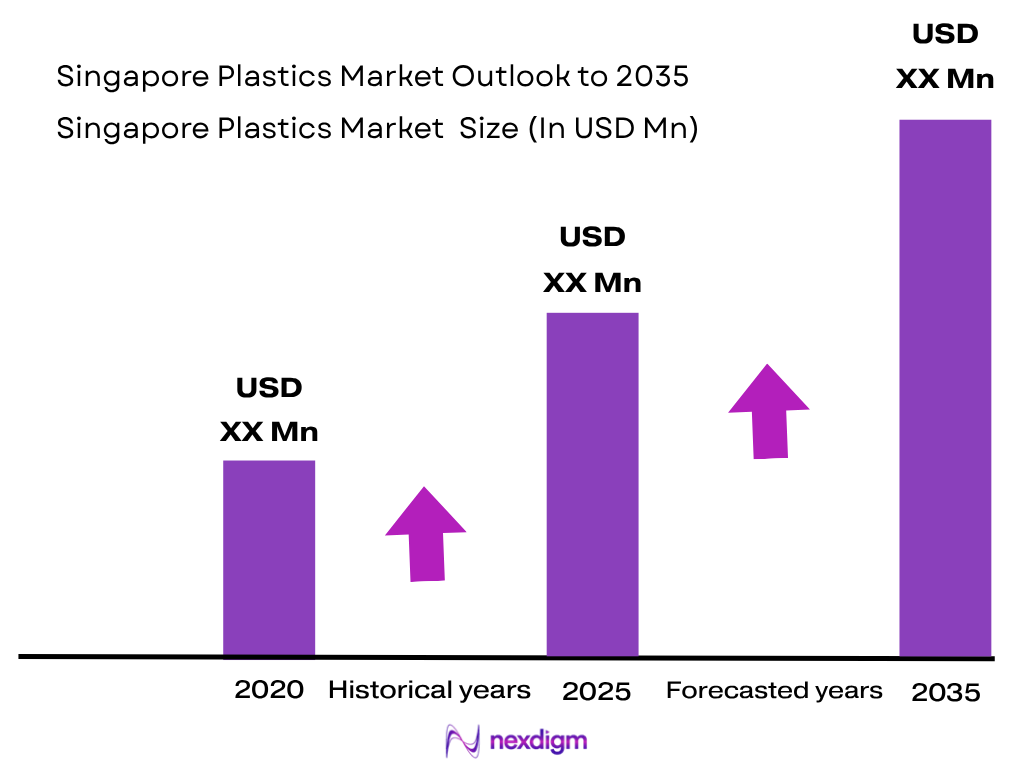
The Singapore Plastics Market is valued at approximately USD ~XX billion, based on the latest historical assessment, compared with USD ~XX billion in the preceding annual period. Demand is supported by a manufacturing economy whose total output increased from S$410.9 billion to S$429.6 billion, including S$181.2 billion from electronics and S$95.2 billion from chemicals. Singapore’s integrated petrochemical, packaging, electronics and precision-engineering industries consequently provide a diversified demand base for commodity and engineering polymers.
Jurong Island, Tuas and Singapore’s western manufacturing corridor dominate the Singapore Plastics Market because they concentrate petrochemical production, polymer feedstocks, chemical facilities, converters and logistics infrastructure. ExxonMobil’s Singapore chemical complex alone has 1.9 million tonnes of annual ethylene capacity, supporting commodity and performance plastics production. The wider manufacturing ecosystem generated S$116.6 billion in value added, compared with S$108.6 billion in the preceding annual period, reinforcing western Singapore’s role as the country’s principal polymer-production and conversion hub.
Market Segmentation
By Polymer Type
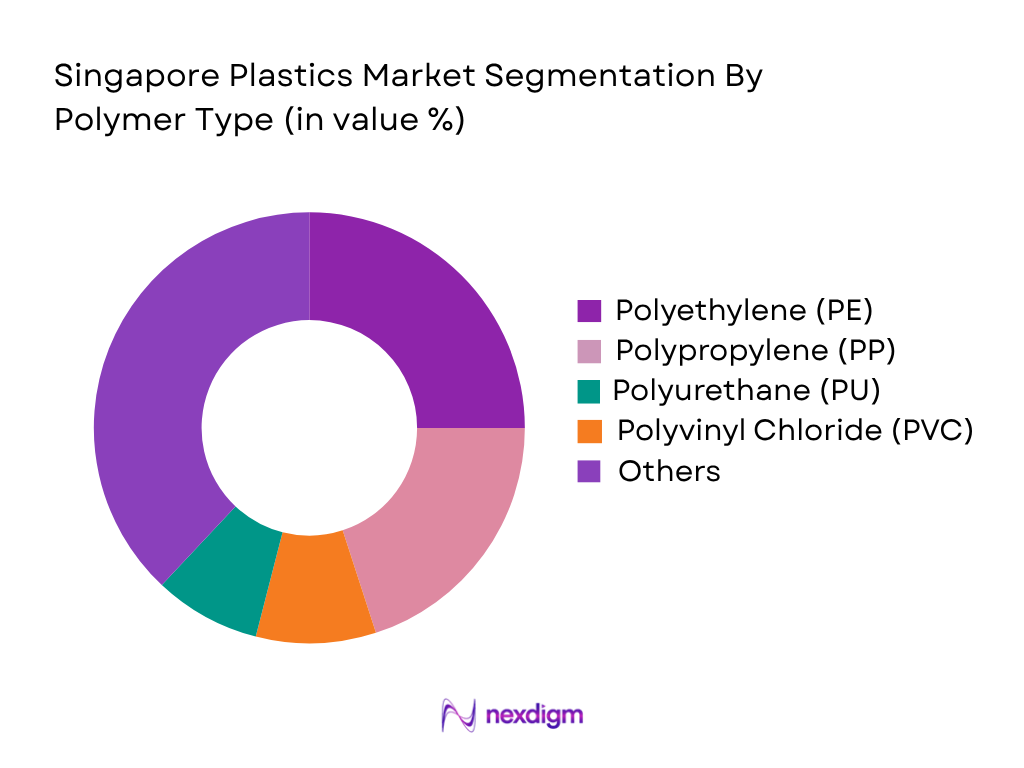
The Singapore Plastics Market is segmented into polyethylene, polypropylene, polyurethane, polyvinyl chloride, polyethylene terephthalate, polystyrene, ABS and other engineering and specialty polymers. Polyethylene is the dominant sub-segment, reflecting its extensive use in flexible packaging, rigid containers, industrial films, liners and other converted products. Singapore also possesses a strong domestic petrochemical foundation supporting polyethylene availability; ExxonMobil operates an integrated chemical complex with 1.9 million tonnes of annual ethylene production capacity. The significance of polyethylene is also consistent with the latest Singapore plastics product hierarchy, which identifies PE as the leading resin category. However, Singapore differs from many regional markets because engineering polymers also have substantial relevance. Electronics manufacturing generated S$181.2 billion of output, while precision engineering generated S$52.0 billion, supporting demand for polycarbonate, polyamide, PBT, ABS, POM and other high-specification materials used in electrical, semiconductor and precision components.
By End-Use Industry
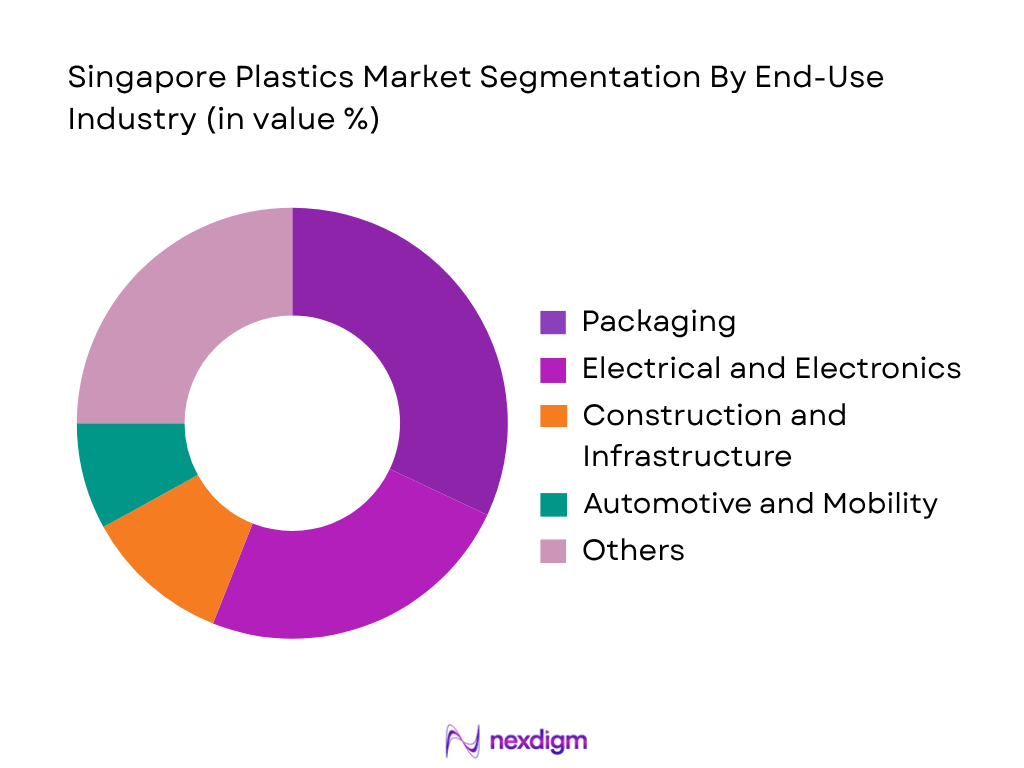
The Singapore Plastics Market is segmented into packaging, electrical and electronics, construction, automotive and mobility, medical devices, industrial and precision engineering, and other applications. Packaging represents the dominant sub-segment, supported by extensive consumption of polyethylene, polypropylene and PET across flexible films, containers, food-contact packaging and protective formats. Packaging waste, including plastics, accounts for about one-third of domestic waste disposed of in Singapore, demonstrating the material intensity of packaging consumption. At the same time, electrical and electronics represent an unusually important plastics demand center because Singapore’s electronics cluster generated S$181.2 billion of manufacturing output. Precision engineering added another S$52.0 billion, while biomedical manufacturing generated S$32.5 billion. These sophisticated downstream industries support the use of engineering plastics requiring flame resistance, chemical resistance, dimensional stability, cleanroom compatibility and tight tolerances, giving Singapore a more technically diversified plastics demand structure than many conventional packaging-led markets.
Competitive Landscape
The Singapore Plastics Market combines large integrated petrochemical producers with international engineering-resin suppliers and specialized domestic converters. ExxonMobil benefits from extensive local petrochemical production, while SABIC, BASF, Covestro and Celanese participate in engineering thermoplastics, specialty compounds and high-performance applications. Competitive differentiation increasingly depends on polymer-grade breadth, application engineering, electronics and semiconductor exposure, regional distribution capability and circular-material development. Singapore’s position as an advanced manufacturing hub also favors companies capable of serving technically demanding OEM requirements rather than competing solely in commodity plastics.
| Major Player | Establishment Year | Headquarters | Singapore Footprint | Polymer Portfolio | Product/Application Capability | Major End-Use Exposure | Technical/R&D Positioning | Circularity Focus |
| ExxonMobil | 1999 | Spring, Texas, USA | ~ | ~ | ~ | ~ | ~ | ~ |
| SABIC | 1976 | Riyadh, Saudi Arabia | ~ | ~ | ~ | ~ | ~ | ~ |
| BASF | 1865 | Ludwigshafen, Germany | ~ | ~ | ~ | ~ | ~ | ~ |
| Covestro | 2015 | Leverkusen, Germany | ~ | ~ | ~ | ~ | ~ | ~ |
| Celanese | 1918 | Irving, Texas, USA | ~ | ~ | ~ | ~ | ~ | ~ |
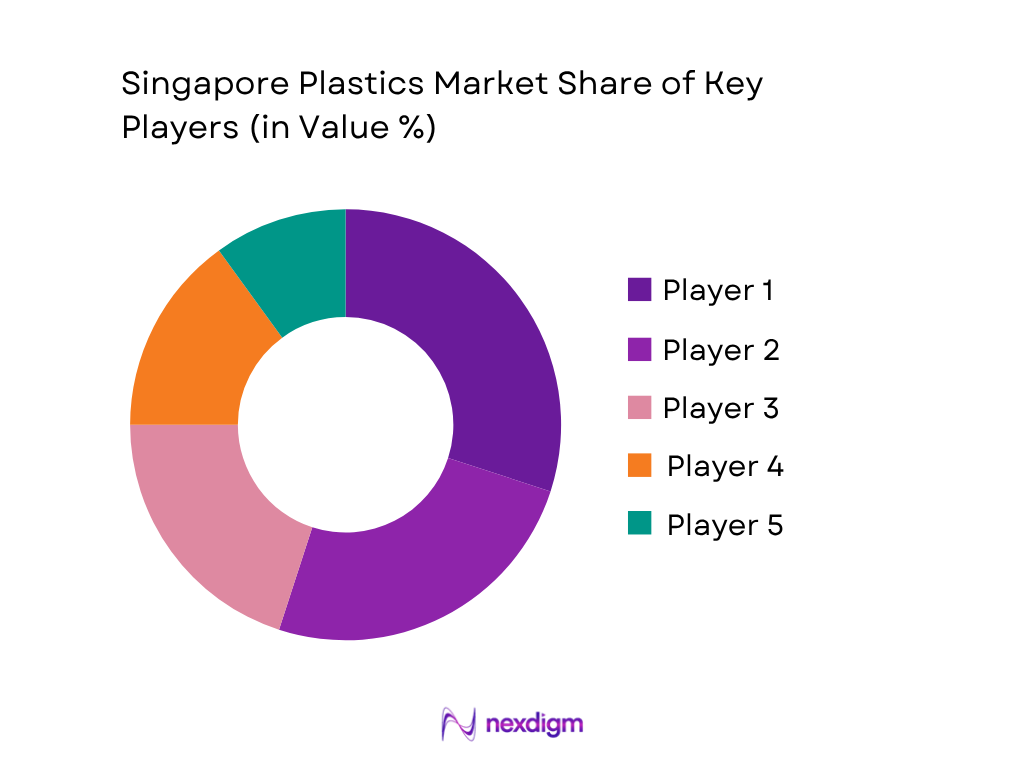
Singapore Plastics Market Analysis
Growth Drivers
Expansion of Electronics, Chemicals and Precision Manufacturing
Singapore’s plastics demand is supported by the scale and technical depth of its manufacturing base, particularly electronics, chemicals and precision engineering, which consume commodity resins, engineering thermoplastics, films, molded components and specialty compounds. Singapore Economic Development Board data show total manufacturing output of S$429.6 billion in 2024, including S$181.2 billion from electronics, S$95.2 billion from chemicals and S$52.0 billion from precision engineering. These sectors directly use polymers in semiconductor handling systems, connectors, housings, cleanroom components, industrial packaging, protective films and chemical-resistant parts. Manufacturing also generated S$116.6 billion in value added, indicating substantial downstream industrial activity relevant to plastic converters and compounders. The IMF reported Singapore’s 2024 nominal GDP at US$547.5 billion, with a population of 6.0 million and GDP per capita of US$90,689. This combination of high-value manufacturing and strong domestic economic capacity supports demand for polyethylene, polypropylene, polycarbonate, polyamide, PBT, POM and other engineering materials, while creating opportunities for suppliers offering precision processing, cleanroom capability, material traceability, advanced compounding and application-specific polymer grades.
Strong Trade and Re-Export Ecosystem for Polymer Materials
Singapore’s position as a regional trade and re-export hub materially strengthens the plastics industry because resin producers, distributors, converters and downstream manufacturers can source and redistribute polymers across Southeast Asia through an established international logistics system. Enterprise Singapore recorded S$1.3 trillion of merchandise trade in 2024, while total exports of goods reached S$675 billion and total services trade reached S$998 billion. This trade infrastructure is directly relevant to plastics because Singapore handles specialty resins, additives, masterbatches, petrochemical intermediates and converted plastic products serving regional electronics, medical, packaging and industrial supply chains. The trading ecosystem complements polymer and chemical manufacturing concentrated around Jurong and Tuas and enables companies to combine inventory, processing and regional distribution functions. The IMF reported nominal GDP of US$547.5 billion in 2024, supported by a population of 6.0 million and GDP per capita of US$90,689. For plastics companies, the scale of Singapore’s merchandise flows reduces dependence on local consumption alone and provides access to regional demand centers requiring polyethylene, polypropylene, engineering resins, films, compounds and technically specified plastic components.
Market Challenges
Limited Recovery of Plastic Waste for Circular Feedstock
Plastic waste recovery remains a structural challenge for Singapore’s plastics market because large material volumes continue moving to disposal rather than returning to the domestic polymer value chain. National Environment Agency data show that Singapore generated 918,000 tonnes of plastic waste in 2024, of which only 43,000 tonnes were recycled, while 875,000 tonnes were disposed of. These figures illustrate the difficulty of recovering mixed films, contaminated packaging, multilayer structures and lower-value plastics within a land-constrained economy. The problem directly affects converters seeking dependable post-consumer resin because limited recovery reduces availability of consistent, traceable and sufficiently pure feedstock for food-contact packaging, electronics and other specification-sensitive applications. NEA also recorded 6.658 million tonnes of total waste generated in 2024, underscoring the scale of material-management requirements. The IMF reported Singapore’s 2024 nominal GDP at US$547.5 billion, with 6.0 million residents and GDP per capita of US$90,689. Consequently, a high-output economy generates significant polymer throughput, while the 875,000 tonnes of disposed plastics demonstrate that domestic circular feedstock recovery remains considerably below the volume requiring end-of-life management.
Rising Packaging Compliance and Producer Responsibility Requirements
Packaging regulation is increasing operational complexity for plastic converters, brand owners, importers and retailers in Singapore. Under the National Environment Agency’s Mandatory Packaging Reporting framework, businesses supplying regulated goods must comply when annual turnover exceeds S$10 million, submit packaging information and 3R plans every year, and retain associated records for 5 years. The Beverage Container Return Scheme, operating from 1 April 2026, adds producer-responsibility requirements for regulated plastic and metal beverage containers ranging from 150 millilitres to 3 litres, with a 10-cent deposit attached to eligible containers. More than 1,000 reverse vending machines were deployed at launch, requiring producers and packaging suppliers to coordinate labeling, barcodes, collection logistics and product registration. These obligations place greater emphasis on recyclability, material identification, packaging redesign and data management across the plastics supply chain. The IMF recorded Singapore’s 2024 nominal GDP at US$547.5 billion, with 6.0 million residents and GDP per capita of US$90,689. The regulatory transition therefore affects plastics companies operating within a large, high-income manufacturing and consumer economy where packaged-product flows are commercially significant.
Market Opportunities
Expansion of Closed-Loop Beverage Packaging and Recycled Polymers
Singapore’s transition toward closed-loop beverage packaging creates a substantial opportunity for recyclers, PET processors, sorting-technology suppliers and converters capable of utilizing cleaner post-consumer polymer feedstock. The National Environment Agency’s Beverage Container Return Scheme commenced on 1 April 2026 and covers eligible plastic and metal beverage containers ranging from 150 millilitres to 3 litres. More than 1,000 reverse vending machines were available at launch, establishing a dedicated collection infrastructure that separates beverage containers from mixed municipal recyclables. The opportunity is particularly relevant because NEA recorded 918,000 tonnes of plastic waste generated in 2024, comprising 43,000 tonnes recycled and 875,000 tonnes disposed of. This large recovery gap provides room for investment in collection, sorting, washing, flaking, pelletizing and recycled-resin quality assurance. The IMF reported Singapore’s 2024 nominal GDP at US$547.5 billion, population at 6.0 million and GDP per capita at US$90,689. Combining this economic base with dedicated collection infrastructure creates favorable conditions for recycled PET, HDPE and PP applications, bottle-to-bottle recycling, food-grade recyclate development, digital traceability and domestic circular-polymer compounding.
Higher-Value Engineering Plastics for Advanced Manufacturing
Higher-value engineering plastics represent a significant opportunity for Singapore because its advanced manufacturing base already creates substantial demand for precision, heat-resistant, flame-retardant and chemically resistant polymer components. Singapore Economic Development Board data show S$429.6 billion of manufacturing output in 2024, including S$181.2 billion from electronics, S$52.0 billion from precision engineering and S$32.5 billion from biomedical manufacturing. EDB also recorded S$13.5 billion of fixed-asset investment commitments in 2024, including S$11.1 billion from manufacturing, with semiconductor and biomedical projects forming important investment areas. These industries require polycarbonate, polyamide, PBT, POM, LCP, TPU and other specialty thermoplastics for connectors, diagnostic equipment, wafer-handling components, device housings and precision molded parts. The IMF reported Singapore’s 2024 nominal GDP at US$547.5 billion, a population of 6.0 million and GDP per capita of US$90,689. This combination of manufacturing investment and high economic productivity supports future expansion in technical compounding, cleanroom molding, micro-molding, high-precision tooling and qualified polymer supply for semiconductor, healthcare, electronics and precision-engineering customers.
Future Outlook
The Singapore Plastics Market is expected to expand at approximately ~X.X% CAGR during 2026–2035, supported by advanced manufacturing, semiconductor investment, specialty chemicals, precision engineering and increasing requirements for technically differentiated polymers. Future demand is expected to shift progressively from conventional commodity applications toward engineering plastics, high-performance thermoplastics, recyclable packaging and circular polymer systems. Singapore’s established petrochemical infrastructure and advanced manufacturing ecosystem provide a strong foundation for this transition.
Electronics and semiconductor manufacturing will remain particularly important. Singapore’s electronics manufacturing output reached S$181.2 billion, while the sector generated S$46.8 billion of value added in the latest annual manufacturing census. These industries require polymer solutions such as polycarbonate, polyamide, PBT, LCP, PEEK and flame-retardant compounds for connectors, housings, wafer-handling equipment, trays and precision components. This creates scope for suppliers positioned beyond conventional PE and PP applications.
Major Players
- ExxonMobil Asia Pacific
- Aster Chemicals and Energy
- LyondellBasell Industries Asia Pacific
- Mitsui Chemicals Asia Pacific
- Sumitomo Chemical Asia
- Asahi Kasei Plastics Singapore
- BASF South East Asia
- SABIC Asia Pacific
- Covestro Singapore
- Celanese Singapore
- Denka Singapore
- Sunningdale Tech
- Hi-P International
- Amcor Flexibles Singapore
- EPE Packaging Singapore
Key Target Audience
- Petrochemical and Polymer Resin Producers
- Plastic Converters and Precision Injection Molding Manufacturers
- Packaging and Flexible Film Manufacturers
- Electronics, Semiconductor and Medical Device Manufacturers
- Polymer Distributors, Compounders and Masterbatch Suppliers
- Plastic Recycling and Circular Polymer Companies
- Investments and Venture Capitalist Firms
- Government and Regulatory Bodies (National Environment Agency, Ministry of Sustainability and the Environment, Ministry of Trade and Industry, Economic Development Board, Enterprise Singapore)
Research Methodology
Step 1: Identification of Key Variables
The initial phase involves constructing an ecosystem map covering petrochemical producers, polymer suppliers, resin distributors, compounders, converters, packaging companies, precision molders, recyclers and major end-user industries within the Singapore Plastics Market. Secondary research identifies critical variables including resin consumption, domestic production, imports, exports, converter activity, processing technologies, end-use demand and recycled-material penetration.
Step 2: Market Analysis and Construction
Historical market information is analyzed using both top-down and bottom-up approaches. The top-down framework assesses plastics demand against Singapore’s chemicals, electronics, precision engineering, packaging and biomedical manufacturing sectors. The bottom-up model evaluates polymer suppliers, converter throughput, trade flows and application-specific consumption, with reconciliation undertaken to avoid double counting resin and converted-product revenues.
Step 3: Hypothesis Validation and Expert Consultation
Market hypotheses are validated through computer-assisted telephone interviews and structured consultations with resin suppliers, compounders, plastic converters, packaging manufacturers, electronics suppliers, medical-component manufacturers and recycling companies. Discussions focus on polymer grade demand, capacity utilization, customer qualification requirements, imported versus domestically sourced materials, engineering-plastics adoption and changes in recycled-content requirements.
Step 4: Research Synthesis and Final Output
The final phase triangulates company information, trade indicators, government statistics, industry data and primary consultations. Bottom-up findings are benchmarked against macro-level manufacturing and end-use activity to identify inconsistencies. The validated model is then used to establish market size, polymer segmentation, end-use segmentation, competitive positioning and the long-term outlook for the Singapore Plastics Market through 2035.

- Executive Summary
- Research Methodology (Market Definition and Scope, Singapore Plastics Market Classification, Polymer Resin Demand Assessment, Petrochemical Feedstock Integration Mapping, Plastic Conversion Industry Assessment, Engineering Plastics Application Analysis, Circular Plastics Ecosystem Evaluation, Plastic Waste Recovery Framework Assessment, Import-Export and Re-Export Analysis, End-Use Industry Demand Mapping, Polymer Processing Technology Assessment)

- Definition and Scope
- Singapore Plastics Industry Evolution and Development of Petrochemical, Engineering Plastics and Precision Conversion Ecosystem
- Polymer Manufacturing, Engineering Resin Distribution and Plastic Processing Industry Structure
- Singapore Plastics Value Chain Analysis
- Singapore Plastics Supply Chain Analysis
- Petrochemical Feedstock, Polymer Producer, Resin Distributor, Compounder, Masterbatch Supplier, Plastic Converter, OEM and Recycler Ecosystem Analysis
- Plastic Manufacturing and Conversion Integration Assessment Across Packaging, Electronics, Semiconductor, Healthcare and Industrial Applications

- Growth Drivers (Jurong Island Petrochemical Integration, Expansion of Semiconductor Manufacturing, Strong Electronics Manufacturing Base, Growth of Medical Technology Manufacturing, Advanced Packaging Demand, Precision Plastics Manufacturing Capability, ASEAN Re-Export Connectivity, Specialty Chemicals Ecosystem)
- Market Challenges (Low Domestic Plastic Recycling Rate, Limited Land Availability for Waste Processing, Dependence on Imported Specialty Engineering Resins, High Manufacturing Operating Costs, Competition from Lower-Cost ASEAN Plastic Converters, Mixed Plastic Waste Recovery Constraints, Recycled Feedstock Contamination, Decarbonization Requirements)
- Market Opportunities (Chemical Recycling Integration, High-Purity Recycled PET, Engineering Plastics for Semiconductor Applications, Medical-Grade Polymer Processing, Sustainable Flexible Packaging, Circular Polymer Feedstock, Precision Micro-Molding, Specialty Compounding, High-Performance Polymers)
- Market Trends (Circular Polymer Adoption, Mass-Balance Feedstocks, Mono-Material Flexible Packaging, Precision Micro-Molding, Cleanroom Plastic Conversion, Lightweighting, Advanced Resin Compounding, Automation and Smart Manufacturing, Recycled Content Integration)
- Regulatory and Standards Landscape (Resource Sustainability Act, Mandatory Packaging Reporting Framework, Beverage Container Return Scheme, Zero Waste Masterplan, Singapore Green Plan, Basel Convention Plastic Waste Controls, Packaging 3R Requirements, Food-Contact Material Requirements)
- SWOT Analysis
- Porter’s Five Forces Analysis
- PESTLE Analysis
- Stakeholder Ecosystem
- Competition Ecosystem

- By Market Value (2020-2025)
- By Polymer Consumption Volume (2020-2025)
- By Domestic Plastic Conversion Volume (2020-2025)
- By Virgin Polymer Consumption Volume (2020-2025)
- By Recycled Polymer Consumption Volume (2020-2025)
- By Plastic Import Volume (2020-2025)
- By Plastic Export and Re-Export Volume (2020-2025)

- By Polymer Type (In Value %)
Polyethylene (PE)
High-Density Polyethylene (HDPE)
Low-Density Polyethylene (LDPE)
Linear Low-Density Polyethylene (LLDPE)
Polypropylene (PP)
Polyethylene Terephthalate (PET)
Polyvinyl Chloride (PVC)
Polystyrene and Expanded Polystyrene (PS and EPS)
Polycarbonate (PC)
Polyamide (PA)
ABS and Other Engineering Plastics - By Product Type (In Value %)
Flexible Plastic Films
Rigid Plastic Packaging
Plastic Bottles, Preforms, Caps and Closures
Injection-Molded Plastic Components
Precision Plastic Components
Plastic Sheets and Profiles
Industrial Plastic Components
Protective Plastic and Foam Packaging
Medical Plastic Components
Semiconductor and Electronics Plastic Components - By Application Type (In Value %)
Food and Beverage Packaging
Consumer and Industrial Packaging
Semiconductor Component Applications
Electronics and Electrical Applications
Medical and Healthcare Applications
Precision Engineering Applications
Automotive and Mobility Applications
Industrial Equipment Applications
Construction and Infrastructure Applications - By Processing Technology (In Value %)
Injection Molding
Precision Injection Molding
Micro-Molding
Extrusion
Film Extrusion
Blow Molding
Thermoforming
Polymer Compounding
Masterbatch Processing
Cleanroom Plastic Manufacturing - By End-Use Industry (In Value %)
Packaging
Electrical and Electronics
Semiconductor Manufacturing
Healthcare and Medical Devices
Industrial and Precision Engineering
Consumer Goods
Automotive and Mobility
Construction and Infrastructure
Aerospace and High-Performance Engineering
Logistics and Protective Packaging - By Resin Source (In Value %)
Virgin Petrochemical Resin
Post-Industrial Recycled Resin
Post-Consumer Recycled Resin
Mechanically Recycled Polymer
Chemically Recycled Polymer
Mass-Balance Circular Polymer
Bio-Based Polymer
Biodegradable and Compostable Polymer

- Market Share of Major Players (By Revenue, Polymer Volume, Polymer and Product Portfolio, End-Use Industry, Processing Technology, Manufacturing Footprint, Regional Distribution Network, Customer Segment Distribution)
- Cross Comparison Parameters (Singapore Plastics Revenue, Polymer and Engineering Resin Portfolio Breadth, Installed Plastic Processing Capacity, Precision Molding and Cleanroom Capability, Electronics and Semiconductor Customer Exposure, Packaging and Industrial Application Coverage, Singapore Manufacturing and Regional Distribution Footprint, Recycled and Circular Polymer Capability)
- SWOT Analysis of Major Players
- Competitive Positioning Matrix
- Polymer and Product Portfolio Benchmarking
- Pricing and Resin Category Benchmarking
- Manufacturing and Processing Technology Assessment
- Customer Industry and Regional Distribution Assessment
- Detailed Profiles of Major Companies
ExxonMobil Asia Pacific
Aster Chemicals and Energy
LyondellBasell Industries Asia Pacific
Mitsui Chemicals Asia Pacific
Sumitomo Chemical Asia
Asahi Kasei Plastics Singapore
BASF South East Asia
SABIC Asia Pacific
Covestro Singapore
Celanese Singapore
Denka Singapore
Sunningdale Tech
Hi-P International
Amcor Flexibles Singapore
EPE Packaging Singapore

- Packaging Manufacturer Polymer Procurement Assessment
- Semiconductor Manufacturer Engineering Plastic Requirement Analysis
- Electronics Manufacturer Resin and Precision Component Assessment
- Medical Device Manufacturer Polymer Requirement Analysis
- Industrial OEM Plastic Component Procurement Assessment
- Food and Beverage Manufacturer Packaging Material Analysis
- Automotive and Mobility Component Manufacturer Assessment
- Aerospace and Precision Engineering Customer Analysis
- Brand Owner Recycled Content and Sustainable Packaging Adoption Analysis

- By Market Value (2026-2035)
- By Polymer Consumption Volume (2026-2035)
- By Domestic Plastic Conversion Volume (2026-2035)
- By Virgin Polymer Consumption Volume (2026-2035)
- By Recycled Polymer Consumption Volume (2026-2035)
- By Plastic Import Volume (2026-2035)
- By Plastic Export and Re-Export Volume (2026-2035)
- By Engineering Plastics Consumption Volume (2026-2035)


 Request a Sample
 Ask for Customization
 Get a Quote
 Enquire Now