
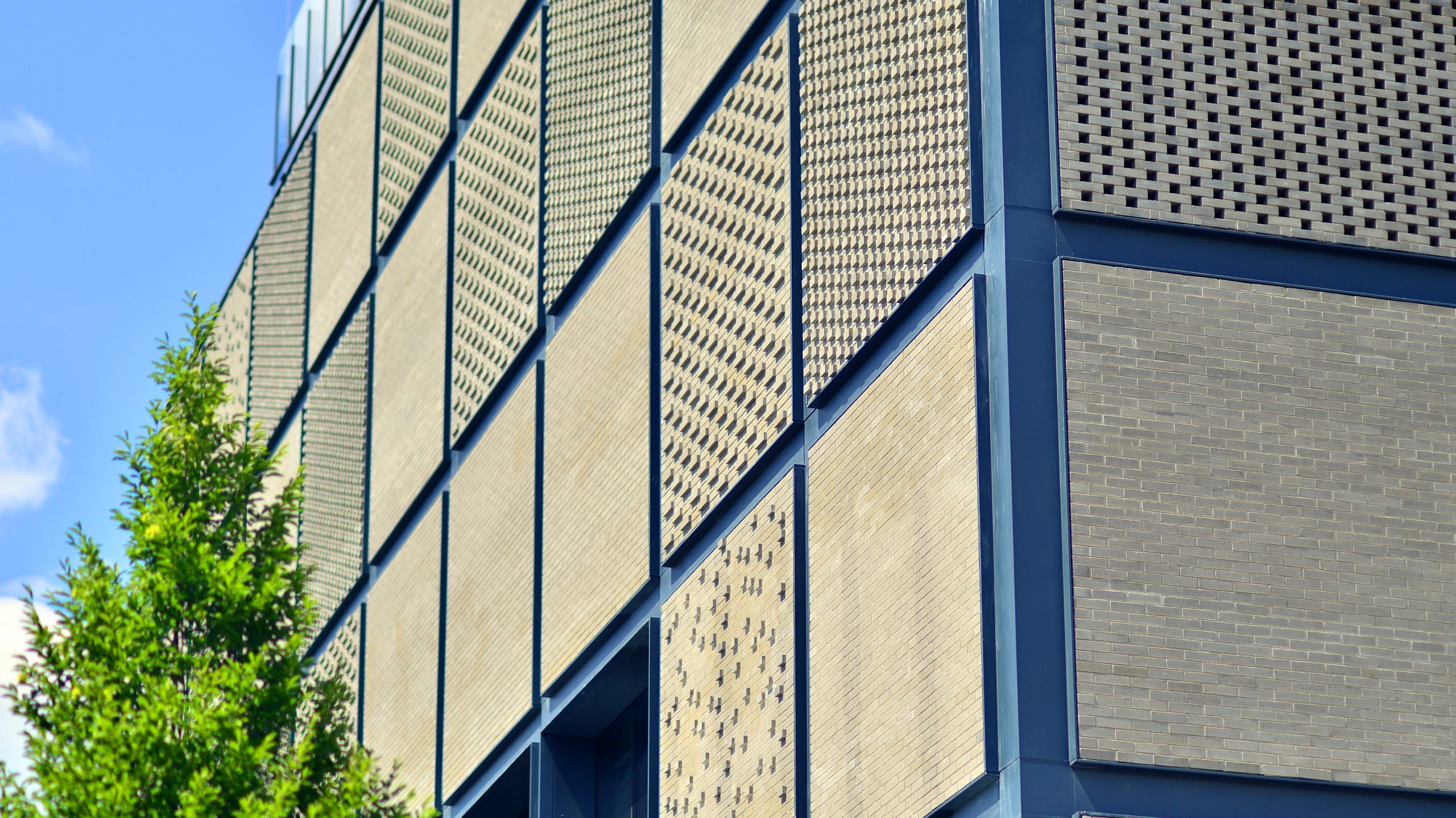
 Download PDF
Market Overview
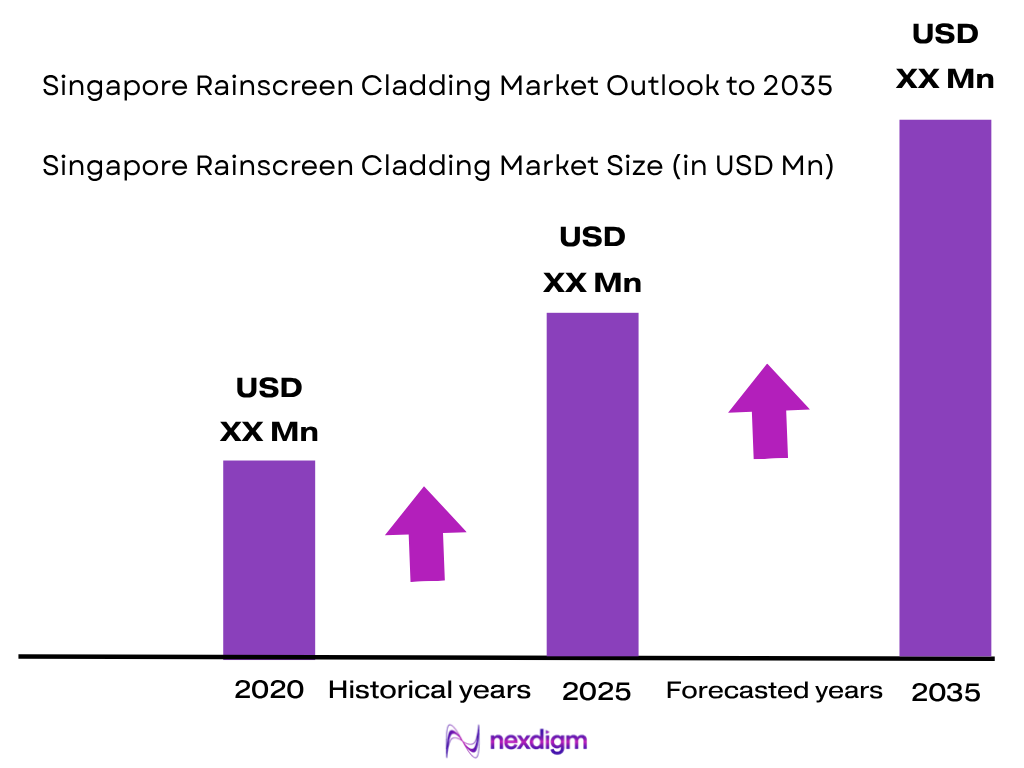
The Singapore Rainscreen Cladding Market is valued at approximately USD ~ million, based on historical market analysis. Supporting construction contracts increased from S$33.8 billion to S$44.2 billion, while certified construction output increased from approximately S$34.8 billion to S$38.4 billion. Demand for rainscreen façades is supported by high-rise residential, commercial, institutional and industrial development alongside stringent external-wall fire requirements, tropical moisture management, building-envelope modernization and increasing adoption of durable, maintainable façade systems.
Central Singapore, Marina Bay, the Downtown Core, Jurong, Woodlands and Changi represent important rainscreen-cladding demand locations due to concentrations of commercial towers, mixed-use developments, industrial buildings, transport infrastructure and institutional assets. Construction demand moved from S$33.8 billion to S$44.2 billion, with the latter including S$15.1 billion of residential, S$5.0 billion of commercial and S$4.7 billion of industrial contracts. These building-intensive categories create recurring façade specification opportunities across major urban development corridors.
Market Segmentation
By Cladding Material
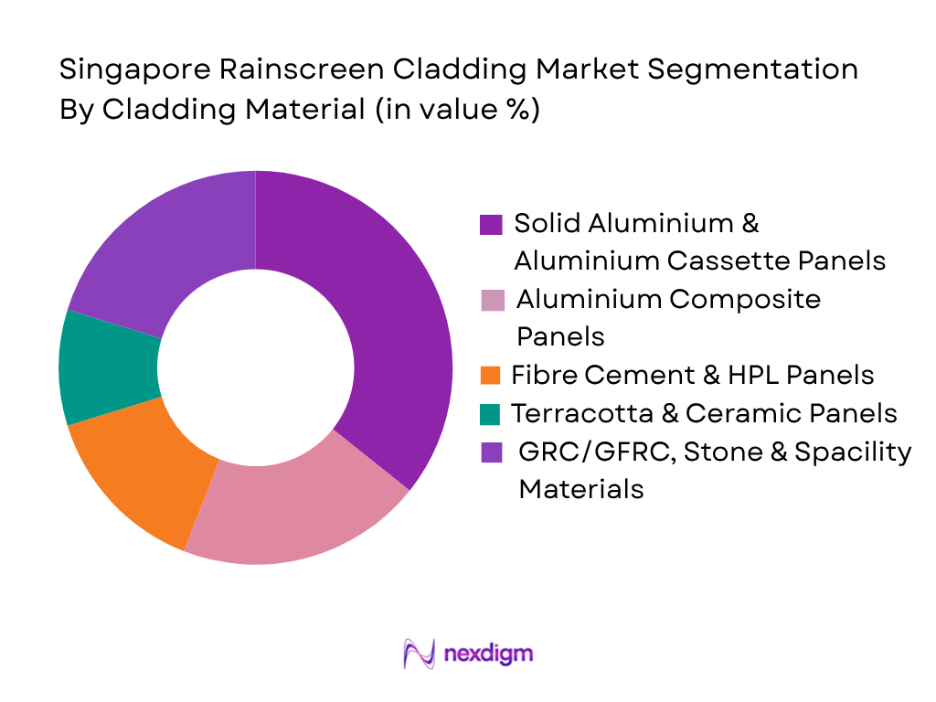
The Singapore Rainscreen Cladding Market is segmented into solid aluminium and aluminium cassette panels, aluminium composite panels, fibre cement and HPL panels, terracotta and ceramic panels, and GRC/GFRC, stone and specialty materials. Solid aluminium and aluminium cassette panels hold the dominant market share due to their suitability for high-rise applications, architectural flexibility, relatively low weight, corrosion resistance and compatibility with mechanically fixed ventilated façade systems. Their positioning is strengthened by Singapore’s external-wall fire requirements. For buildings exceeding 15 metres in height, SCDF requires external walls to be constructed wholly of non-combustible materials, subject to prescribed exceptions for finishes. Homogeneous external-wall cladding must meet at least limited-combustibility requirements, while composite panels are subject to additional fire-performance provisions. These requirements increase the specification relevance of appropriately tested metal façade assemblies, particularly for high-rise commercial, institutional and residential developments.
By Building Type
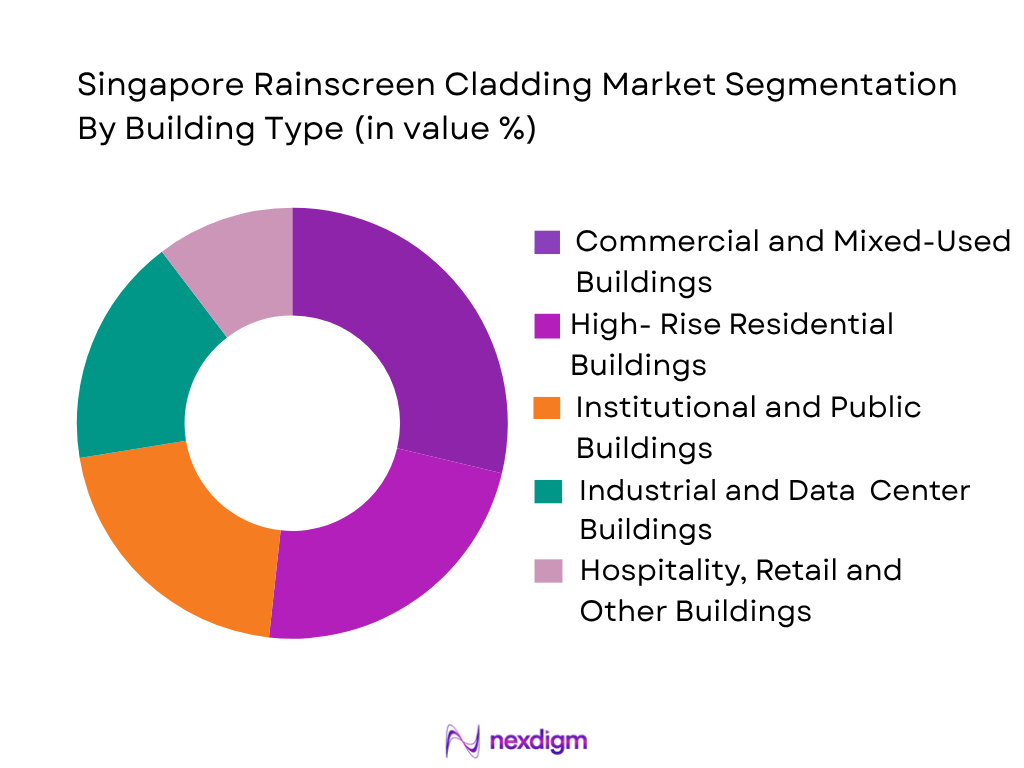
The Singapore Rainscreen Cladding Market is segmented into commercial and mixed-use buildings, high-rise residential buildings, institutional and public buildings, industrial and data center buildings, and hospitality, retail and other buildings. Commercial and mixed-use buildings hold the dominant market share, supported by Singapore’s concentration of high-value office, retail, integrated and urban-redevelopment projects where façade appearance and envelope performance are central design considerations. BCA recorded S$5.0 billion in commercial construction demand and S$11.7 billion in institutional and other construction demand in 2024. High-rise commercial assets also require façade systems capable of addressing wind-driven rain, solar exposure, corrosion, maintenance access and fire performance. Rainscreen assemblies provide architects with material and finish flexibility while separating the exterior protective layer from the underlying weather-control system. Asset-enhancement projects additionally create opportunities to replace aging exterior panels without reconstructing the primary building structure.
Competitive Landscape
The Singapore Rainscreen Cladding Market comprises domestic façade engineering and installation specialists alongside international cladding-material and fixing-system suppliers. Competition is shaped by material access, BCA contractor registration, façade engineering, fire-compliance capability, fabrication capacity, installation expertise and established relationships with architects and main contractors. The BCA CR16 Curtain Walls register currently contains 29 L5 contractors, illustrating the specialist contracting ecosystem supporting façade projects.
| Major Player | Establishment Year | Headquarters / Main Base | Core Façade Capability | Cladding Capability | Engineering & Design | Fabrication Capability | Installation Capability | BCA / Project Positioning |
| Bond Building Products Pte. Ltd. | 2005 | Singapore | ~ | ~ | ~ | ~ | ~ | ~ |
| GTM Aluminium Pte. Ltd. | 1984 | Singapore | ~ | ~ | ~ | ~ | ~ | ~ |
| Merdeka Construction Co. Pte. Ltd. | 1980 | Singapore | ~ | ~ | ~ | ~ | ~ | ~ |
| Citiwall Pte. Ltd. | 1999 | Singapore | ~ | ~ | ~ | ~ | ~ | ~ |
| Deshin Engineering & Construction Pte. Ltd. | 1991 | Singapore | ~ | ~ | ~ | ~ | ~ | ~ |
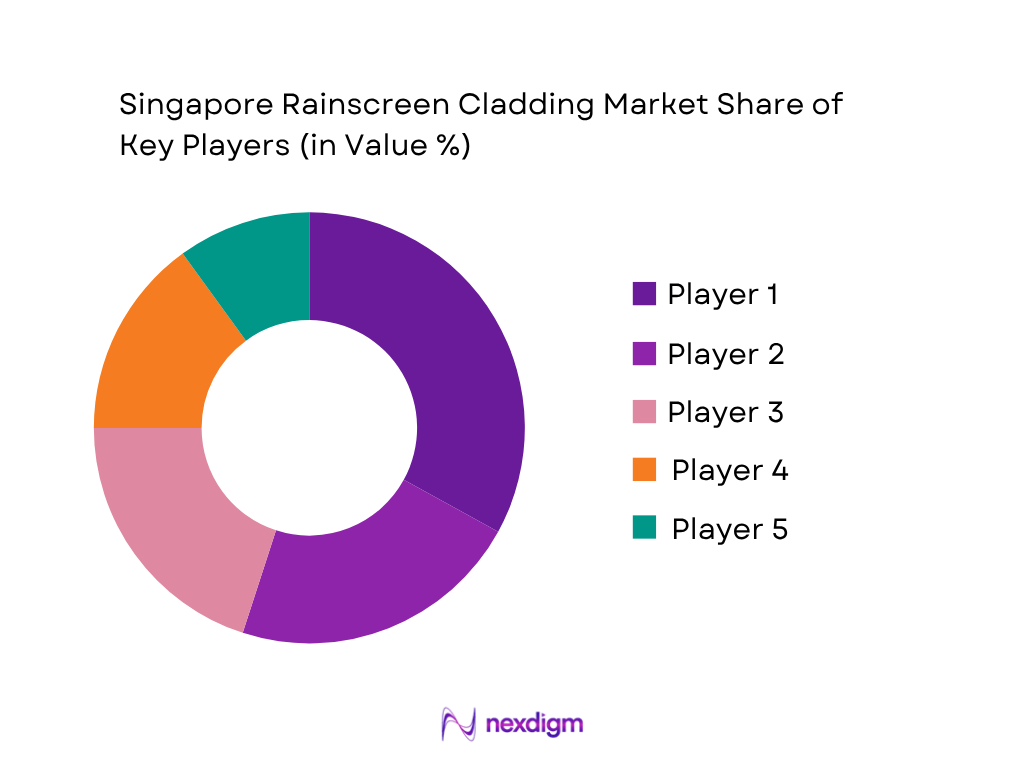
Singapore Rainscreen Cladding Market Analysis
Growth Drivers
Strong Building Construction Pipeline Expanding Addressable Façade Installation
Singapore’s sustained construction activity is creating a direct demand base for rainscreen cladding across high-rise residential, commercial, institutional, healthcare and industrial buildings. The Building and Construction Authority recorded S$44.2 billion of construction contracts awarded in 2024, while preliminary construction demand reached S$50.5 billion in 2025 and certified construction output reached approximately S$41.7 billion. This pipeline supports demand for aluminium cassette panels, ventilated metal façades, fibre-cement panels, GRC/GFRC elements and mechanically fixed exterior systems. Major developments progressing through 2026 include Changi Airport Terminal 5, Marina Bay Sands IR2, Tengah General and Community Hospital, Downtown Line 2 Extension and Thomson-East Coast Line Extension. Singapore’s economic capacity further supports investment in high-specification building envelopes, with 2024 nominal GDP of US$547.5 billion, a population of 6.0 million and GDP per capita of US$90,689. For rainscreen suppliers, this combination of construction activity and dense high-rise development generates requirements for complete façade assemblies incorporating panels, subframes, brackets, anchors, insulation, membranes, cavity detailing and fire-stopping interfaces.
Stringent High-Rise External-Wall Fire Requirements Supporting Performance-Based Rainscreen Systems
Singapore’s regulatory environment directly influences rainscreen-cladding material selection and supports demand for compliant aluminium, mineral-based and engineered façade assemblies. Under the Singapore Fire Code, an external wall exceeding 15 metres in building height, or situated within 1 metre of a relevant boundary, must generally be constructed wholly from non-combustible materials apart from qualifying finishes and internal linings. Composite panels used as external-wall cladding are subject to additional provisions, including installation against a 1-hour fire-rated wall under specified applications. These requirements influence panel cores, subframes, cavity barriers, insulation and complete façade-system design. The regulatory requirement is particularly relevant because Singapore recorded S$44.2 billion of construction contracts in 2024, followed by preliminary demand of S$50.5 billion in 2025, creating a substantial flow of buildings progressing through specification and construction. Singapore also recorded US$547.5 billion in nominal GDP, GDP per capita of US$90,689, and a population of 6.0 million in 2024. This combination favors suppliers offering documented fire performance, mechanically engineered fixing systems and compliant non-combustible rainscreen assemblies.
Market Challenges
Strict Fire-Compliance Requirements Increase Façade Specification and System-Integration Complexity
Fire compliance represents a significant technical challenge for the Singapore Rainscreen Cladding Market because regulatory requirements apply to the complete external-wall assembly rather than solely to the visible panel. External walls exceeding 15 metres in height, or positioned within 1 metre of a relevant boundary, generally require non-combustible construction. Composite panels can require installation against a 1-hour fire-rated wall, while additional provisions involve complete assembly testing and core-material performance. Certain building configurations also involve quantitative thresholds of 15 metres or 7.5 metres and compartment floor areas ranging from 150 square metres to 3,000 square metres. Consequently, panel material, insulation, cavity design, subframes, interfaces and fire-stopping must be coordinated with the overall building fire strategy. This complexity affects a construction environment that recorded S$44.2 billion of demand in 2024 and preliminary demand of S$50.5 billion in 2025. Singapore’s 2024 nominal GDP of US$547.5 billion, population of 6.0 million and GDP per capita of US$90,689 reinforce the scale of its high-value built environment. Rainscreen suppliers therefore require tested systems, technical documentation and close coordination with façade engineers and fire-safety professionals.
Maturing High-Rise Building Stock Creates Inspection, Access and Rectification Complexity
Singapore’s maturing building stock generates façade maintenance requirements while creating significant technical difficulties for rainscreen contractors undertaking repairs and recladding. The Periodic Façade Inspection regime requires applicable buildings more than 20 years old to undergo façade inspection every 7 years, with the regime covering buildings exceeding 13 metres in height subject to specified exemptions. More than 4,000 buildings can enter the inspection process annually. Defects involving cladding boards, attachments, joints and exterior components can consequently require rectification. Recladding existing buildings is more complicated than greenfield installation because contractors must address occupied premises, legacy façade systems, deteriorated fixings, restricted access and existing structural substrates. These requirements coincide with substantial new construction: Singapore recorded S$44.2 billion of construction demand in 2024, preliminary demand of S$50.5 billion in 2025, and construction output of approximately S$41.7 billion. Singapore also recorded US$547.5 billion in nominal GDP, 6.0 million residents and GDP per capita of US$90,689 in 2024. Specialist contractors must therefore maintain sufficient engineering, access and installation capabilities to address new construction and inspection-driven rectification simultaneously.
Market Opportunities
Green Building Upgrades and Façade Modernization Creating Scope for High-Performance Rainscreen Systems
Singapore’s expanding green-building stock creates a substantial foundation for future rainscreen-cladding opportunities in façade modernization, thermal-envelope improvement and lower-carbon material specification. Singapore recorded 2,590 Green Mark-certified buildings as of March 2025, and these buildings collectively deliver more than 4.2 billion kWh of annual energy savings. Rainscreen systems can support building-performance objectives through ventilated cavities, compatible insulation, solar-responsive exterior surfaces, durable panels and materials supported by environmental product documentation. The opportunity extends into existing buildings because properties more than 20 years old covered by the Periodic Façade Inspection regime require inspection every 7 years, with more than 4,000 buildings potentially entering inspection annually. Current construction conditions provide an additional demand foundation, with S$44.2 billion of construction demand recorded in 2024 and preliminary demand of S$50.5 billion in 2025. Singapore’s economic base remains supportive, with 2024 nominal GDP of US$547.5 billion, a population of 6.0 million and GDP per capita of US$90,689. These conditions create opportunities for non-combustible panels, recyclable aluminium, mineral-based cladding, thermally optimized subframes and maintainable modular rainscreen assemblies.
Data Center and High-Specification Industrial Development Opening a New Façade Demand Channel
Singapore’s digital-infrastructure development provides a future growth channel for rainscreen-cladding suppliers serving technically demanding data centers and advanced industrial buildings. The Green Data Centre Roadmap launched in 2024 establishes a framework associated with at least 300 MW of additional data-center capacity, reflecting the scale of Singapore’s digital-infrastructure requirements. Data centers require durable exterior envelopes capable of weather protection, controlled maintenance, large-elevation treatment and integration with mechanical ventilation and heat-rejection infrastructure. Metal rainscreens, aluminium cassette systems and perforated screening panels are relevant to these building requirements because they combine exterior protection with modular access and architectural treatment. The opportunity is reinforced by broader construction activity: Singapore recorded S$44.2 billion of construction demand in 2024, preliminary demand of S$50.5 billion in 2025, and approximately S$41.7 billion of certified construction output. Singapore’s economic position provides further support, with 2024 nominal GDP of US$547.5 billion, a population of 6.0 million and GDP per capita of US$90,689. Suppliers offering corrosion-resistant aluminium, non-combustible assemblies, removable panels, engineered subframes and BIM-coordinated fabrication are consequently positioned to address this higher-specification demand channel.
Future Outlook
The Singapore Rainscreen Cladding Market is forecast to expand at approximately ~% CAGR during 2026–2035, supported by a continuing pipeline of high-rise development, institutional construction, building upgrading, façade inspection and green-building investment. Future demand is expected to increasingly favor non-combustible systems, durable metal façades, mineral-based panels, ventilated assemblies and solutions designed around lifecycle maintenance rather than aesthetics alone.
Singapore’s broader construction pipeline provides an important demand foundation. Actual construction demand reached S$44.2 billion in 2024 and increased further to a preliminary S$50.5 billion in 2025. BCA subsequently projected construction output of S$43 billion to S$46 billion for 2026. Major projects include Changi Airport Terminal 5, public housing programs, institutional developments, transport projects and urban redevelopment. These projects create addressable opportunities for aluminium cladding, ventilated façades, screening systems, institutional envelopes and other architectural exterior systems.
Major Players
- Bond Building Products Pte. Ltd.
- AGL Facade Systems Pte. Ltd.
- GTM Aluminium Pte. Ltd.
- Merdeka Construction Co. Pte. Ltd.
- FTE Project Pte. Ltd.
- Citiwall Pte. Ltd.
- Deshin Engineering & Construction Pte. Ltd.
- Alfrench Facade Pte. Ltd.
- Choon Hin Stainless Steel Pte. Ltd.
- Far Eastern GRC Pte. Ltd.
- fischer Singapore
- EQUITONE / Etex
- Trespa International
- Swisspearl
- Rockpanel
Key Target Audience
- Rainscreen Cladding and Architectural Façade System Manufacturers
- Façade Engineering, Fabrication and Installation Contractors
- Property Developers and Real Estate Development Companies
- REITs, Commercial Property Owners and Asset Managers
- Architectural Cladding Material, Subframe, Anchor and Insulation Suppliers
- Main Contractors and Design-and-Build Construction Companies
- Investments and Venture Capitalist Firms
- Government and Regulatory Bodies (Building and Construction Authority, Singapore Civil Defence Force, Ministry of National Development, Housing & Development Board)
Research Methodology
Step 1: Identification of Key Variables
The initial phase involves constructing an ecosystem map covering major stakeholders in the Singapore Rainscreen Cladding Market, including material suppliers, façade contractors, architects, developers, building owners and regulators. Key variables include installed façade area, cladding material, building type, fixing technology, fire performance, contractor capability, new-build activity, recladding demand and project specifications.
Step 2: Market Analysis and Construction
Historical construction activity, building completions, façade project pipelines and material specifications are analyzed using top-down and bottom-up approaches. Demand is assessed across commercial, residential, institutional, hospitality and industrial buildings, while supply-side analysis evaluates material availability, local fabrication, specialist contractors, international brands and installation capabilities.
Step 3: Hypothesis Validation and Expert Consultation
Market hypotheses are validated through computer-assisted telephone interviews with façade contractors, architects, developers, building-envelope specialists, cladding suppliers and construction companies. These consultations provide insights into specification preferences, material substitution, fire-compliance requirements, installation practices, project lead times, recladding activity and competitive positioning within Singapore’s façade ecosystem.
Step 4: Research Synthesis and Final Output
Primary findings are triangulated with construction statistics, regulatory requirements, company disclosures, façade inspection requirements and project-level information. Bottom-up assessments of façade materials and contractor activity are reconciled with top-down building-construction indicators to establish the market structure, segmentation, competitive landscape and outlook for the Singapore Rainscreen Cladding Market.

- Executive Summary
- Research Methodology (Market Definitions and Assumptions, Singapore Rainscreen Cladding Market Classification, Ventilated Façade System Scope, Cladding Material Mapping, Rainscreen Assembly Mapping, Façade Subframe Assessment, Mechanical Fixing and Anchor Assessment, Insulation and Cavity Assessment, Fire-Safe Cladding Assessment, High-Rise Façade Assessment, Tropical Weather Performance Assessment, New-Build versus Recladding Assessment, Installed Façade Area Assessment, Contractor and Applicator Mapping, Specification-Side Assessment, Supply-Side Assessment, Demand-Side Assessment, Top-Down Market Sizing, Bottom-Up Project-Level Market Sizing, Primary Interviews with Façade Contractors and Specifiers, Construction Project Pipeline Assessment, Data Triangulation, Forecasting Framework)

- Definition and Scope
- Singapore Rainscreen Cladding Industry Evolution and Development of Ventilated Façades, Solid Aluminium Rainscreen Systems, Aluminium Composite Cladding, Aluminium Cassette Systems, Fibre Cement Façades, High-Pressure Laminate Panels, Terracotta Rainscreens, Ceramic Cladding, Natural Stone Façades, GRC/GFRC Panels, Perforated Metal Screens, Insulated Façade Systems, Concealed-Fixing Systems, Non-Combustible Façade Assemblies, Low-Carbon Cladding Materials, High-Performance Building Envelopes
- Rainscreen Cladding Value Chain Analysis
- Rainscreen Cladding Supply Chain Analysis
- Aluminium Coil and Sheet Suppliers, Composite Panel Manufacturers, Fibre Cement Panel Manufacturers, HPL Panel Manufacturers, Terracotta and Ceramic Panel Suppliers, Natural Stone Suppliers, GRC/GFRC Manufacturers, Insulation Suppliers, Membrane Suppliers, Aluminium and Stainless-Steel Subframe Suppliers, Anchor and Fastener Suppliers, Façade System Designers, Façade Consultants, Fabricators, Specialist Façade Contractors, Main Contractors, Architects, Property Developers, REITs, Building Owners, Facility Managers

- Growth Drivers (High-Rise Building Envelope Requirements, Commercial and Mixed-Use Development Pipeline, Building Recladding and Asset Enhancement, Tropical Rain and Moisture Management, Green Building Adoption, Façade Energy Performance Requirements, Non-Combustible Cladding Demand, Data Center and Advanced Manufacturing Construction, Building Maintainability Requirements, Premium Architectural Façade Demand)
- Market Challenges (Stringent External-Wall Fire Requirements, Composite Panel Compliance Risk, Imported Cladding Material Dependence, High-Rise Installation Complexity, Façade Access Constraints, Skilled Installation Requirements, Tropical Corrosion and Weathering, Interface Coordination with Curtain Walls, Water-Ingress Risk, Existing-Building Recladding Complexity, Limited Local Manufacturing Scale)
- Market Opportunities (Non-Combustible Aluminium Rainscreens, Fibre Cement Façades, Terracotta and Ceramic Systems, GRC/GFRC Rainscreen Assemblies, Existing-Building Recladding, Green Mark-Oriented Façade Upgrades, Low-Embodied-Carbon Panels, High-Performance Insulated Façades, Data Center Cladding, Institutional Building Façades, Modular and Prefabricated Façade Assemblies, Design-for-Maintainability Solutions)
- Market Trends (Ventilated Façade Adoption, Shift toward Non-Combustible Materials, Concealed Mechanical Fixings, Lightweight Large-Format Panels, Perforated Aluminium Screens, BIM-Enabled Façade Engineering, Prefabricated Façade Assemblies, Low-Carbon Aluminium, Environmental Product Declarations, Design for Maintainability, Integrated Solar-Shading Façades, Digital Façade Inspection)
- Government Regulations and Standards (Singapore Fire Code External-Wall Requirements, SCDF External Wall Finish Requirements, Composite Panel Fire-Safety Requirements, BS 476 Fire Testing Requirements, EN 13501-1 Fire Classification, BCA Building Control Requirements, BCA Green Mark Requirements, Building Envelope Thermal Transfer Value Requirements, Periodic Façade Inspection Requirements, Façade Access and Maintainability Requirements, BCA CR16 Curtain Wall Contractor Registration)
- SWOT Analysis
- Porter’s Five Forces Analysis
- PESTLE Analysis
- Stakeholder Ecosystem
- Rainscreen Cladding Specification and Construction Ecosystem

- By Market Value (2020-2025)
- By Installed Rainscreen Cladding Area (2020-2025)
- By New-Build Rainscreen Cladding Area (2020-2025)
- By Recladding and Façade Replacement Area (2020-2025)
- By Metal Rainscreen Cladding Area (2020-2025)
- By Fibre Cement and HPL Cladding Area (2020-2025)
- By Terracotta and Ceramic Cladding Area (2020-2025)
- By Natural Stone Cladding Area (2020-2025)
- By GRC/GFRC Cladding Area (2020-2025)
- By Ventilated Façade Subframe Installation Volume (2020-2025)
- By Commercial and Mixed-Use Façade Demand (2020-2025)
- By Residential Façade Demand (2020-2025)
- By Institutional and Public-Building Façade Demand (2020-2025)
- By Industrial and Data Center Façade Demand (2020-2025)

- By Cladding Material (In Value %)
Solid Aluminium Panels
Aluminium Composite Panels
Aluminium Cassette Panels
Perforated and Expanded Metal Panels
Fibre Cement Panels
High-Pressure Laminate Panels
Terracotta Panels
Ceramic and Porcelain Panels
Natural Stone Panels
GRC/GFRC Panels
Stainless-Steel and Specialty Metal Panels
Other Architectural Rainscreen Materials - By Rainscreen System Type (In Value %)
Pressure-Equalized Rainscreen Systems
Drained and Back-Ventilated Systems
Open-Jointed Rainscreen Systems
Closed-Joint Rainscreen Systems
Insulated Ventilated Façade Systems
Cassette Rainscreen Systems
Panelized Rainscreen Systems
Custom-Engineered Architectural Rainscreens - By Fixing System (In Value %)
Exposed Rivet Fixing Systems
Exposed Screw Fixing Systems
Concealed Mechanical Fixing Systems
Undercut Anchor Systems
Hook-and-Rail Systems
Cassette Fixing Systems
Adhesive-Assisted Fixing Systems
Hybrid Mechanical Fixing Systems - By Building Type (In Value %)
Commercial Office Buildings
Mixed-Use Developments
High-Rise Residential Buildings
Hotels and Hospitality Buildings
Retail and Lifestyle Developments
Institutional and Educational Buildings
Healthcare Facilities
Industrial and Advanced Manufacturing Buildings
Data Centers
Transport and Aviation Buildings
Public and Civic Buildings - By Project Type (In Value %)
New-Build Façade Installation
Façade Replacement and Recladding
Major Addition and Alteration Works
Building Asset Enhancement
Façade Fire-Safety Rectification
Façade Energy-Performance Upgrades
Periodic Façade Repair and Replacement

- Market Share of Major Players (By Singapore Revenue, Rainscreen Project Portfolio, Installed Façade Area, Aluminium Cladding Capability, Composite Panel Capability, Fibre Cement and HPL Capability, Terracotta and Ceramic Capability, GRC/GFRC Capability, Subframe and Fixing-System Capability, BCA CR16 Registration, High-Rise Project Exposure, Design and Engineering Capability, Fabrication Capability, Installation Capability)
- Cross Comparison Parameters (Rainscreen Cladding Material and Panel Portfolio, BCA CR16 Façade Contracting and Installation Capability, SCDF Fire-Code-Compliant Non-Combustible Cladding Capability, Ventilated Subframe-Anchor and Concealed-Fixing System Capability, High-Rise Wind-Water and Tropical Weather Performance Engineering, In-House Design-Fabrication-Installation Integration, Green Mark-Low-Embodied-Carbon and EPD-Backed Façade Offering, Singapore Commercial-Residential-Institutional-Industrial Rainscreen Project Portfolio)
- SWOT Analysis of Major Players
- Competitive Positioning Matrix
- Major Companies
Bond Building Products Pte. Ltd.
AGL Facade Systems Pte. Ltd.
GTM Aluminium Pte. Ltd.
Merdeka Construction Co. Pte. Ltd.
FTE Project Pte. Ltd.
Citiwall Pte. Ltd.
Deshin Engineering & Construction Pte. Ltd.
Alfrench Facade Pte. Ltd.
Choon Hin Stainless Steel Pte. Ltd.
Far Eastern GRC Pte. Ltd.
fischer Singapore
EQUITONE / Etex
Trespa International
Swisspearl
Rockpanel

- Property Developer Façade Specification Assessment
- Architect Material Selection Assessment
- Façade Consultant System Specification Assessment
- Main Contractor Procurement Assessment
- Specialist Façade Contractor Requirement Assessment
- REIT and Institutional Owner Recladding Assessment
- Facility Manager Maintainability Assessment
- Commercial Building Façade Requirement Assessment
- High-Rise Residential Façade Requirement Assessment
- Data Center and Industrial Façade Requirement Assessment

- By Market Value (2026-2035)
- By Installed Rainscreen Cladding Area (2026-2035)
- By New-Build Rainscreen Cladding Demand (2026-2035)
- By Recladding and Façade Replacement Demand (2026-2035)
- By Aluminium Rainscreen Cladding Demand (2026-2035)
- By Fibre Cement and HPL Cladding Demand (2026-2035)
- By Terracotta and Ceramic Cladding Demand (2026-2035)
- By GRC/GFRC Rainscreen Demand (2026-2035)
- By Non-Combustible Cladding Demand (2026-2035)
- By Commercial and Mixed-Use Building Demand (2026-2035)
- By High-Rise Residential Building Demand (2026-2035)
- By Institutional and Public-Building Demand (2026-2035)


 Request a Sample
 Ask for Customization
 Get a Quote
 Enquire Now