
 Download PDF
 Download PDF
Market Overview
The Singapore renewable energy market is projected to reach USD ~ billion, with growth fueled by advancements in solar and wind energy technologies, regulatory support, and investment in green infrastructure. This market is driven by the government’s efforts to enhance energy security, reduce carbon emissions, and diversify energy sources, leading to a rapidly growing demand for renewable energy solutions. The integration of renewable energy in the grid system and the increasing adoption of smart grid technology also contribute significantly to the market’s expansion.
The dominant cities driving this market include Singapore, with its strategic location, advanced infrastructure, and strong government policies promoting sustainable energy solutions. The country’s efforts in achieving its green energy goals and investment in renewable technologies have made it a leader in the region. The government’s commitment to sustainability, alongside international collaborations and partnerships, also contributes to its dominance in renewable energy adoption across the ASEAN region. 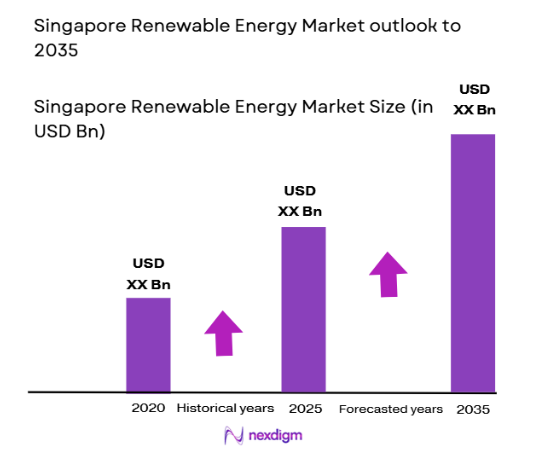
Market Segmentation
By System Type:
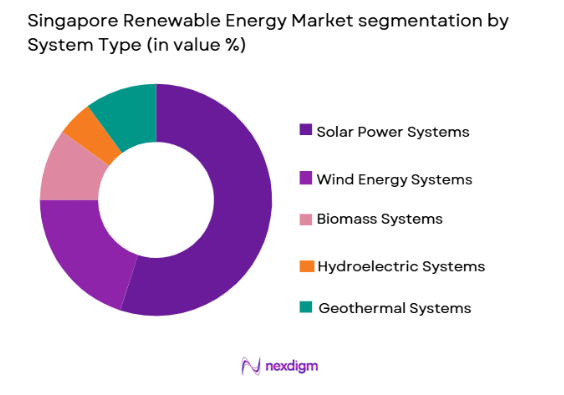
Singapore’s renewable energy market is segmented by system type into solar power systems, wind energy systems, biomass systems, hydroelectric systems, and geothermal systems. Recently, solar power systems have had a dominant market share due to factors such as strong government incentives, favorable weather conditions, and growing environmental awareness among businesses and residents. The country’s high solar irradiation makes solar power a viable and attractive option, with numerous projects in both residential and commercial sectors. Furthermore, the advancement of solar technologies and cost reductions have made solar energy the most accessible and widely adopted renewable energy solution in Singapore.
By Platform Type:
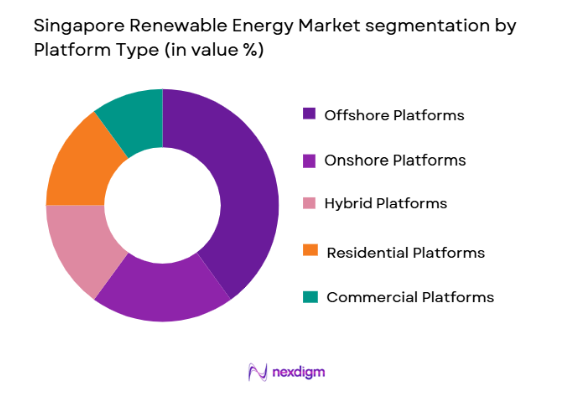
The market is segmented by platform type into onshore platforms, offshore platforms, hybrid platforms, residential platforms, and commercial platforms. Offshore platforms have seen a notable increase in their market share recently due to the country’s commitment to large-scale renewable energy projects. These platforms are crucial for the country’s strategy of increasing renewable energy output, especially in the face of limited land availability. Offshore wind farms and floating solar panels are becoming increasingly popular, providing significant capacity for energy generation while reducing land-use conflicts. As the technology matures, offshore platforms are expected to play a key role in Singapore’s energy future.
Competitive Landscape
The competitive landscape of the Singapore renewable energy market is marked by consolidation, with major players focusing on technological innovation, regulatory compliance, and strategic partnerships to maintain their competitive edge. Leading companies are investing heavily in renewable energy solutions, particularly in solar and wind power, while also exploring emerging opportunities such as energy storage systems and smart grids. As the market becomes more competitive, partnerships between local and international firms are increasingly common to meet the growing demand for sustainable energy solutions.
| Company Name | Establishment Year | Headquarters | Technology Focus | Market Reach | Key Products | Revenue (USD Billion) | Additional Parameter |
| Sembcorp Industries | 1998 | Singapore | ~ | ~ | ~ | ~ | ~ |
| Keppel Corporation | 1968 | Singapore | ~ | ~ | ~ | ~ | ~ |
| Sunseap Group | 2011 | Singapore | ~ | ~ | ~ | ~ | ~ |
| Vena Energy | 2018 | Singapore | ~ | ~ | ~ | ~ | ~ |
| First Solar | 1999 | USA | ~ | ~ | ~ | ~ | ~ |
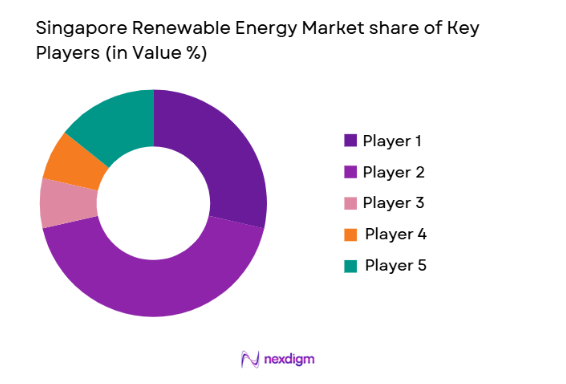
Singapore Renewable Energy Market Analysis
Growth Drivers
Government Incentives for Renewable Energy:
The Singapore government’s active role in promoting renewable energy solutions has played a significant role in the growth of the market. With incentives such as tax rebates, subsidies, and grants for renewable energy projects, the government has made it easier for businesses and residents to invest in sustainable energy solutions. These incentives reduce the initial capital costs for projects, making renewable energy a more accessible option. Moreover, the government’s goal to achieve net-zero emissions by 2050 further pushes the market’s expansion. Singapore’s commitment to reducing its carbon footprint has also resulted in increased investments in renewable energy infrastructure, further fueling growth. Government policies that encourage clean energy production, along with public-private partnerships, have contributed to the success of renewable energy in Singapore.
Technological Advancements in Renewable Energy:
Technological advancements in renewable energy systems have significantly contributed to the growth of the market. Innovations in solar panels, energy storage systems, and wind turbine technologies have not only made renewable energy more efficient but also more cost-effective. As these technologies continue to evolve, the production costs of renewable energy systems are expected to decrease further, making them more attractive to investors and consumers. Solar and wind power technologies, in particular, have seen substantial improvements in terms of energy output and efficiency. Additionally, the integration of smart grid systems, which optimize energy distribution and storage, has enhanced the reliability and scalability of renewable energy in Singapore.
Market Challenges
High Initial Investment in Renewable Energy Projects:
One of the key challenges facing the Singapore renewable energy market is the high initial investment required for large-scale renewable energy projects. While government incentives help mitigate some of the costs, the upfront capital needed for projects like solar farms, wind turbines, and energy storage systems can be substantial. This financial barrier can be a deterrent for smaller firms looking to enter the market, limiting competition and innovation. Additionally, securing financing for renewable energy projects may require companies to engage in complex negotiations with investors, which can further delay the deployment of new technologies. However, despite these challenges, the long-term financial benefits of renewable energy systems, such as lower operating costs and energy independence, continue to drive market growth.
Regulatory and Compliance Barriers:
Regulatory and compliance barriers remain another challenge for the renewable energy market in Singapore. While the government has made strides in supporting the growth of renewable energy, the regulatory framework is still evolving. Companies must comply with a complex set of regulations, including permitting requirements, environmental impact assessments, and grid integration standards. These regulations can be time-consuming and costly for developers, delaying project timelines. Furthermore, international companies entering the market may face additional hurdles related to local regulations, which could hinder their ability to quickly scale operations. These challenges could slow the pace of adoption for renewable energy technologies in the region.
Opportunities
Expansion of Offshore Wind Projects:
With limited land availability in Singapore, offshore wind projects present a significant opportunity for expanding renewable energy capacity. Offshore wind farms offer high potential for energy generation due to the region’s favorable maritime conditions. The Singaporean government has already shown strong support for offshore wind initiatives, with plans to expand capacity in the coming years. This market segment is expected to attract significant investment, both from local and international firms, who are keen to capitalize on the untapped potential of offshore wind power. Additionally, offshore wind projects can complement the country’s solar energy infrastructure, creating a diversified and reliable renewable energy mix. This expansion will not only help Singapore achieve its sustainability goals but also position it as a leader in the global offshore wind market.
Growth of Energy Storage Solutions:
The growing need for energy storage solutions is another major opportunity for the Singapore renewable energy market. As renewable energy production can be intermittent, with fluctuations in energy generation from solar and wind, effective energy storage systems are critical to ensuring a stable and reliable energy supply. Singapore’s commitment to enhancing its energy storage infrastructure is opening up new avenues for market growth. Innovations in battery storage technologies, such as lithium-ion and solid-state batteries, are making it more feasible to store excess energy produced during peak periods and distribute it when demand is high. Furthermore, the development of large-scale energy storage systems can improve grid stability, reduce reliance on fossil fuels, and support Singapore’s long-term sustainability goals.
Future Outlook
The future outlook for the Singapore renewable energy market is highly optimistic, with strong growth expected across the next five years. The market will continue to benefit from technological advancements in solar, wind, and energy storage systems, along with increasing government support for renewable energy initiatives. Key developments in offshore wind power, smart grid technology, and energy storage will drive the expansion of renewable energy capacity. As Singapore strengthens its commitment to sustainability, the market is expected to see an increasing number of international partnerships and investments. The shift towards cleaner energy sources, coupled with evolving regulations and consumer demand for sustainable solutions, positions the market for continued growth and innovation.
Major Players
- Sembcorp Industries
- Keppel Corporation
- Sunseap Group
- Vena Energy
- First Solar
- Siemens Gamesa
- GE Renewable Energy
- EDPR
- Vestas
- Orsted
- Envision Energy
- TotalEnergies
- Shell
- Jinko Solar
- Longi Solar
Key Target Audience
- Investments and venture capitalist firms
- Government and regulatory bodies
- Energy utilities and infrastructure providers
- Renewable energy technology developers
- Independent power producers (IPPs)
- Real estate developers and property managers
- Environmental NGOs and sustainability advocates
- Corporate sustainability departments
Research Methodology
Step 1: Identification of Key Variables
This step involves identifying and defining the key variables and factors that impact the renewable energy market in Singapore, including technology trends, government policies, and consumer preferences.
Step 2: Market Analysis and Construction
Data is gathered through primary and secondary research to construct a comprehensive understanding of the market’s size, segmentation, and competitive dynamics.
Step 3: Hypothesis Validation and Expert Consultation
In this step, industry experts, government bodies, and corporate leaders are consulted to validate the findings and hypotheses about market trends and future projections.
Step 4: Research Synthesis and Final Output
The research findings are synthesized to create the final report, ensuring that all relevant data and insights are integrated into a coherent market analysis.

- Executive Summary
- Research Methodology (Definitions, Scope, Industry Assumptions, Market Sizing Approach, Primary & Secondary Research Framework, Data Collection & Verification Protocol, Analytic Models & Forecast Methodology, Limitations & Research Validity Checks)

- Market Definition and Scope
- Value Chain & Stakeholder Ecosystem
- Regulatory / Certification Landscape
- Sector Dynamics Affecting Demand
- Strategic Initiatives & Infrastructure Growth

- Growth Drivers
Government incentives for renewable energy
Rising demand for sustainable energy solutions
Technological advancements in energy storage
Environmental concerns driving energy policy
Integration of renewable energy into national grid - Market Challenges
High initial investment for renewable energy projects
Intermittency of renewable energy sources
Limited land availability for large-scale projects
Regulatory and compliance barriers
Dependency on imports for energy components - Market Opportunities
Expansion of offshore renewable energy projects
Partnerships with international renewable tech firms
Growth of energy storage solutions for grid stability - Trends
Increased adoption of smart grid technologies
Rise in decentralized energy generation
Growth in energy efficiency technologies
Use of AI for energy management
Shift towards hybrid renewable energy systems - Government Regulations & Defense Policy
Supportive renewable energy policies and subsidies
Grid stability and energy storage regulations
Energy export and import regulations - SWOT Analysis
- Stakeholder and Ecosystem Analysis
- Porter’s Five Forces Analysis
- Competition Intensity and Ecosystem Mapping

- By Market Value, 2020-2025
- By Installed Units, 2020-2025
- By Average System Price, 2020-2025
- By System Complexity Tier, 2020-2025

- By System Type (In Value%)
Solar Power Systems
Wind Energy Systems
Hydropower Systems
Geothermal Systems
Biomass Systems - By Platform Type (In Value%)
Onshore Platforms
Offshore Platforms
Hybrid Platforms
Residential Platforms
Commercial Platforms - By Fitment Type (In Value%)
Ground-Mounted Solutions
Roof-Mounted Solutions
Floating Systems
Portable Systems
Utility-Scale Solutions - By EndUser Segment (In Value%)
Residential Users
Commercial Users
Industrial Users
Government and Public Sector
Private Sector / Technology Firms - By Procurement Channel (In Value%)
Direct Procurement
Government Tenders
Private Sector Procurement
Online Bidding Platforms
Third-party Distributors - By Material / Technology (In Value%)
Solar PV Panels
Wind Turbine Components
Battery Storage Systems
Hydropower Equipment
Geothermal Power Plant Components

- Market structure and competitive positioning
- Market share snapshot of major players
- CrossComparison Parameters (System Type, Platform Type, Procurement Channel, EndUser Segment, Fitment Type, Technology Adoption, Pricing Strategies, Supply Chain, Sustainability Efforts, Government Collaboration)
- SWOT Analysis of Key Players
- Pricing & Procurement Analysis
- Key Players
Sembcorp Industries
Keppel Corporation
Sunseap Group
Vena Energy
First Solar
Sungrow Power Supply
Siemens Gamesa
GE Renewable Energy
EDP Renewables
Envision Energy
Ørsted
Mitsubishi Heavy Industries
Lightsource BP
TotalEnergies
Shell Renewables

- Residential consumers increasingly adopting solar panels
- Commercial sector investing in energy efficiency solutions
- Industrial users shifting to renewable energy for cost savings
- Government focusing on large-scale renewable energy projects

- Forecast Market Value, 2026-2035
- Forecast Installed Units, 2026-2035
- Price Forecast by System Tier, 2026-2035
- Future Demand by Platform, 2026-2035


 Request a Sample
 Ask for Customization
 Get a Quote
 Enquire Now