
 Download PDF
Market Overview
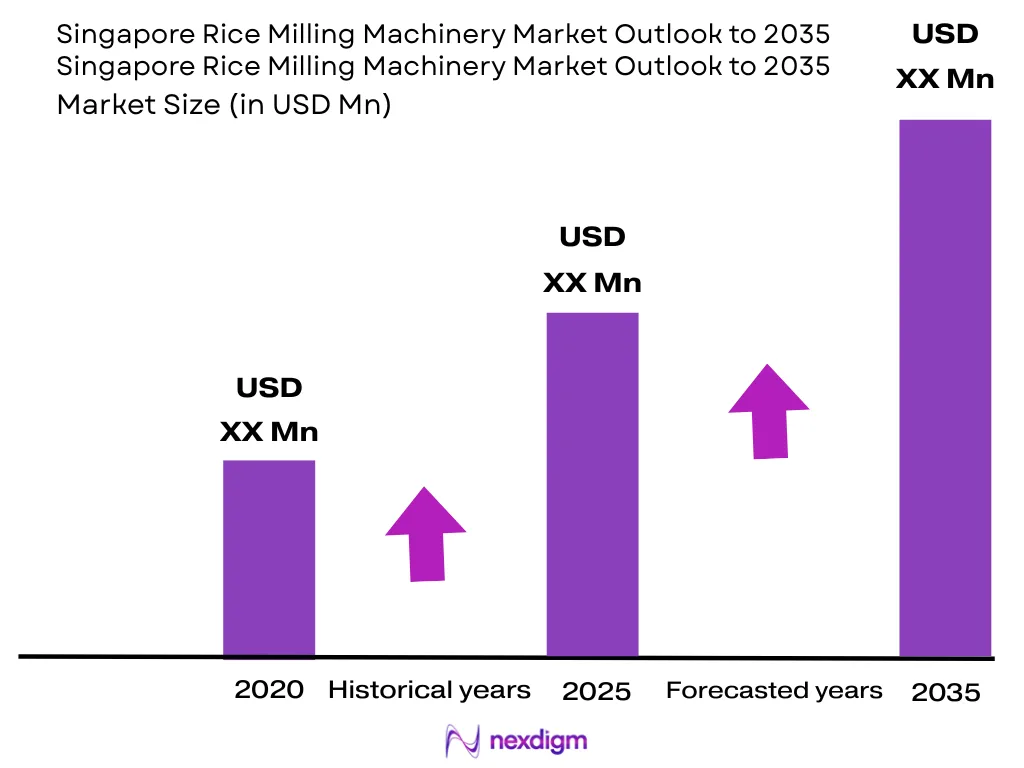
The Singapore Rice Milling Machinery Market was valued at USD ~ Million in 2024, supported by the city-state’s strategic position as a leading rice trading hub and import-processing center in Southeast Asia. According to data published by the Singapore Food Agency (SFA) and Enterprise Singapore, Singapore imports virtually all of its rice consumption requirements, with total rice imports exceeding 400,000 metric tons annually to serve a population of approximately 6 million residents and a substantial food services and hospitality sector. Continuous investment in high-efficiency rice processing and repackaging infrastructure, growing demand for premium and specialty rice varieties, increasing adoption of fully automated processing systems, and government-led food security diversification initiatives under the ’30 by 30′ food strategy are key factors driving equipment demand. Singapore’s unique position as a regional rice trading and redistribution center further amplifies machinery investment, as processors upgrade facilities to meet the quality standards of both domestic consumers and re-export markets across Southeast Asia.
Market Segmentation
By Machinery Type
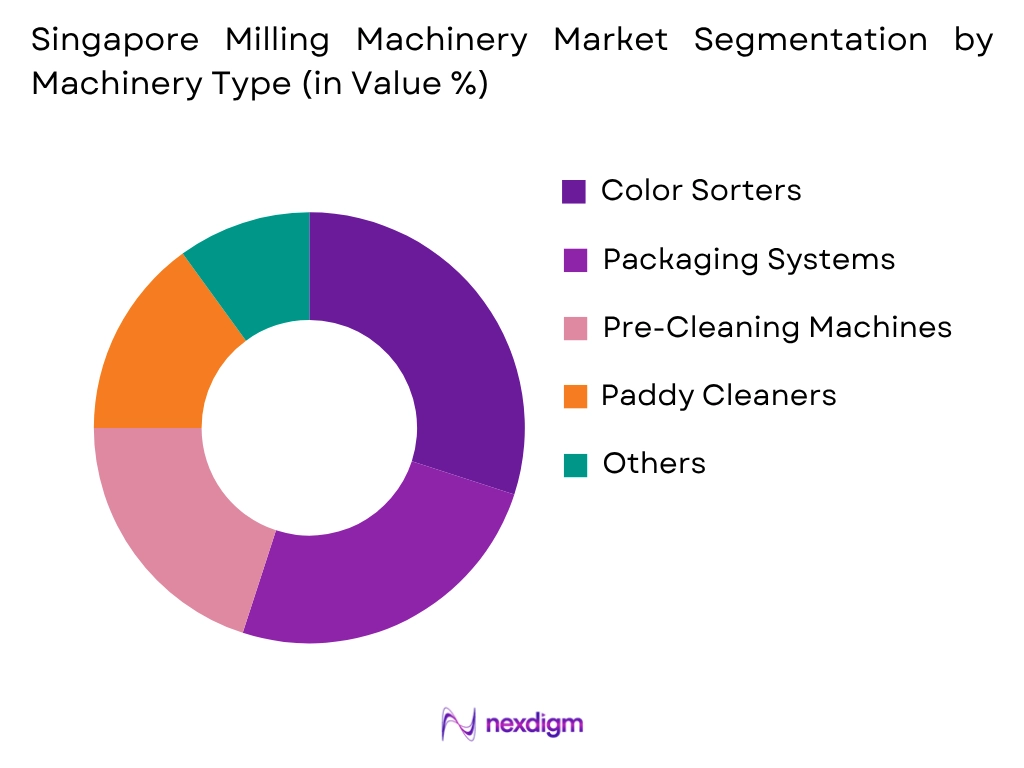
Singapore Rice Milling Machinery Market is segmented by machinery type into Pre-Cleaning Machines, Paddy Cleaners, Destoners, Rubber Roll Huskers, Paddy Separators, Rice Whiteners, Rice Polishers, Color Sorters, Rice Graders, Length Graders, Packaging Systems, and Complete Rice Milling Plants. Recently, Color Sorters and Packaging Systems hold the dominant market share within this segmentation due to their critical role in achieving the premium quality standards demanded by Singapore’s discerning consumer base and export-quality re-processing requirements. Singapore’s rice processors focus extensively on quality differentiation, grain consistency, and presentation standards that align with the expectations of modern retail, food service, and institutional buyers. The expansion of premium and specialty rice consumption, including jasmine, basmati, and Japanese short-grain varieties, has encouraged processors to invest heavily in precision sorting, grading, and packaging technologies. Furthermore, replacement demand from aging equipment and increasing adoption of high-capacity integrated processing lines have reinforced the strong position of sorting and packaging equipment categories. Their direct influence on final product quality, traceability, and market positioning makes them strategic investments for rice processing and trading companies operating in Singapore’s highly competitive food industry.
By Automation Level
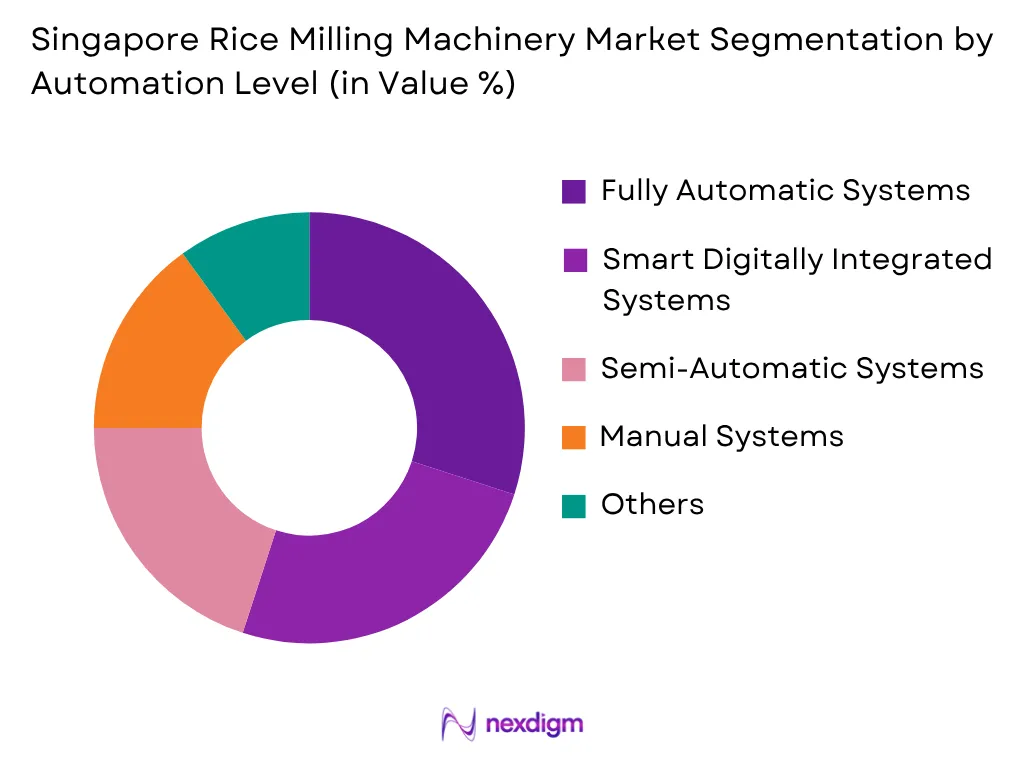
Singapore Rice Milling Machinery Market is segmented by automation level into Manual Systems, Semi-Automatic Systems, Fully Automatic Systems, and Smart Digitally Integrated Systems. Currently, Fully Automatic and Smart Digitally Integrated Systems dominate the market, reflecting Singapore’s high labor costs, stringent food safety standards, and the advanced technological sophistication of its food processing industry. Singapore’s rice processing enterprises operate in one of the world’s most competitive and regulated food environments, where automation is not merely an efficiency advantage but a practical necessity given the city-state’s extremely tight labor market and high minimum wage environment. Smart milling systems equipped with IoT sensors, predictive maintenance platforms, and digital quality monitoring tools are increasingly standard among Singapore’s leading rice processors. Real-time process control, energy optimization, and automated documentation for food safety compliance further drive adoption of advanced automation technologies. As Singapore’s food industry continues its transition toward smart manufacturing under the Industry Transformation Map for food, rice processors are investing in connected and data-driven processing solutions that maximize output quality and operational efficiency within constrained industrial footprints.
Competitive Landscape
The Singapore Rice Milling Machinery Market is characterized by the presence of global technology leaders and specialized regional distributors serving the city-state’s highly sophisticated and quality-focused rice processing industry. International companies such as Bühler Group, Satake Corporation, and Yanmar Holdings maintain strong positions through advanced milling and sorting technologies, while regional distribution networks facilitate access to a range of processing solutions. Competition is primarily driven by equipment technological sophistication, energy efficiency, automation capability, compact footprint design suited to Singapore’s space constraints, food safety compliance features, service network responsiveness, and total cost of ownership. Singapore’s processors prioritize long-term reliability, digital integration, and vendor support quality over initial purchase price, reflecting the premium orientation of the market.
| Company | Establishment Year | Headquarters | Rice Milling Portfolio | Automation Capability
|
Color Sorting Technology | Service Network | Turnkey Plant Solutions | Processing Capacity Range |
| Bühler Group | 1860 | ~ | ~ | ~ | ~ | ~ | ~ | ~ |
| Satake Corporation | 1896 | ~ | ~ | ~ | ~ | ~ | ~ | ~ |
| Milltec Machinery | 1998 | ~ | ~ | ~ | ~ | ~ | ~ | ~ |
| Yanmar Holdings | 1912 | ~ | ~ | ~ | ~ | ~ | ~ | ~ |
| GEA Group | 1881 | ~ | ~ | ~ | ~ | ~ | ~ | ~ |
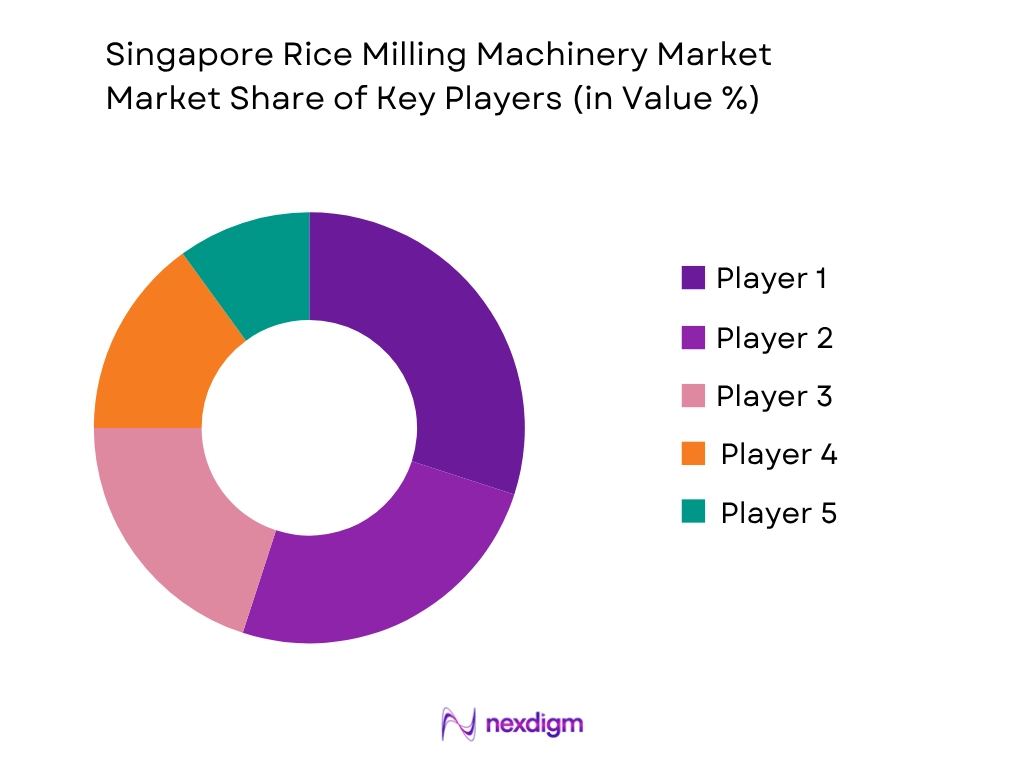
Singapore Rice Milling Machinery Market Analysis
Growth Drivers
Strategic Rice Trading Hub Status and Expansion of High-Value Rice Processing Infrastructure
Singapore’s rice milling machinery market is underpinned by the city-state’s long-established role as Southeast Asia’s premier rice trading and redistribution hub, which generates sustained investment in modern processing and quality upgrading facilities. According to the Singapore Food Agency (SFA), Singapore imports rice from more than 20 approved source countries to ensure supply resilience, with major origins including Thailand, Vietnam, India, and Pakistan. Enterprise Singapore has reported that the food manufacturing sector contributes significantly to Singapore’s broader manufacturing output, with ongoing investment in facility modernization and productivity enhancement. Singapore’s Jurong, Tuas, and Pioneer food processing zones house some of the most technologically advanced rice processing and repackaging facilities in the region. The combination of high import volumes, premium quality expectations from domestic consumers, and re-export requirements to regional markets creates sustained demand for precision color sorters, high-efficiency polishers, automated grading lines, and sophisticated packaging systems. Singapore-based trading companies and food processors consistently invest in equipment that maximizes rice quality, consistency, and presentation to maintain competitive positioning in both domestic retail and regional export channels. The city-state’s world-class logistics infrastructure, including the Port of Singapore, further enhances its attractiveness as a rice processing and distribution center, reinforcing long-term machinery investment demand.
Food Security Diversification Initiatives and Smart Food Manufacturing Investment
Singapore’s government-led food security and smart manufacturing programs are creating structured demand for advanced rice processing technologies. The Singapore Food Agency’s food security strategy targets supply source diversification and processing efficiency improvements as central pillars of national food resilience. According to the Ministry of Trade and Industry, Singapore’s GDP per capita ranks among the highest in the world, and the food manufacturing sector benefits from a highly educated and technically capable workforce that enables rapid adoption of advanced machinery and digital systems. The Singapore Economic Development Board (EDB) and Enterprise Singapore actively support food manufacturers in upgrading their production capabilities through productivity grants, research and development support, and industry transformation programs. Under the Industry Transformation Map for food manufacturing, processors are incentivized to adopt smart manufacturing technologies including IoT-enabled processing equipment, digital quality monitoring systems, and energy-efficient machinery. Rice processing facilities in Singapore are increasingly integrating automated documentation, traceability systems, and quality management platforms that align with Singapore Food Agency compliance requirements and international food safety standards such as HACCP and ISO 22000. The convergence of food security policy, government co-investment in manufacturing productivity, and Singapore’s advanced digital infrastructure is creating a uniquely favorable environment for investment in sophisticated rice milling and processing machinery.
Market Challenges
High Operational Costs and Space Constraints in Singapore’s Industrial Zones
A defining challenge facing the Singapore rice milling machinery market is the high cost of land, labor, and utilities within Singapore’s constrained industrial environment. Industrial land rental rates in Singapore’s food processing zones are among the highest in Southeast Asia, significantly increasing the total cost of operating rice processing facilities and placing pressure on equipment investment budgets. The Ministry of Manpower has reported that Singapore’s tight labor market and foreign worker levy system substantially increase the cost of operating labor-intensive processing lines, reinforcing the economic case for automation but also raising total capital expenditure requirements. Energy costs in Singapore, while supported by a reliable grid, remain elevated compared to regional peers due to the city-state’s import-dependent energy supply. These high operational costs mean that rice processing facilities in Singapore must operate at high utilization rates and achieve maximum efficiency from installed machinery to remain economically viable. Furthermore, the limited physical footprint of Singapore’s industrial facilities constrains the size and configuration of rice milling installations, requiring compact, high-throughput equipment designs that may command significant price premiums over larger-format machinery used in neighboring countries. The combination of high costs across land, labor, and energy creates ongoing margin pressure for rice processors and can limit the scale and frequency of machinery investment cycles.
Complete Import Dependency for Paddy Supply and Exposure to Regional Rice Market Volatility
Singapore’s complete dependence on imported rice, with no domestic paddy cultivation, creates a structural vulnerability that directly affects rice processing volumes, facility utilization rates, and machinery investment confidence. Disruptions to global rice supply chains, such as export restrictions imposed by major producing countries, can reduce the availability of specific rice varieties and affect the throughput of processing facilities optimized for particular grain types. The International Monetary Fund and the Food and Agriculture Organization of the United Nations have documented how rice export restrictions and supply shocks in major producing countries can rapidly affect the cost and availability of imported paddy. Price volatility in the global rice market, influenced by weather events, currency movements, and policy changes in Thailand, Vietnam, and India, can compress processing margins and delay capital investment decisions. Additionally, changes in trade relationships or logistical disruptions at key transshipment ports can temporarily reduce import volumes, affecting processing plant utilization. Since Singapore’s rice processing infrastructure is calibrated to handle imported paddy and semi-milled rice rather than domestically grown grain, the market’s machinery demand is inherently tied to the stability and availability of international rice supplies, making it more susceptible to external supply chain shocks than markets with significant domestic production bases.
Market Opportunities
Increasing Adoption of Smart Sorting, Digital Traceability, and Precision Processing Technologies
Singapore’s rice processing industry presents compelling opportunities for suppliers of advanced automation and smart processing solutions, driven by the city-state’s world-leading food manufacturing standards and technology adoption culture. Singapore’s food processors operate in an environment where precision, consistency, and traceability are non-negotiable requirements for serving premium retail, food service, and institutional channels. Automated color sorters, hyperspectral inspection systems, digital process controls, blockchain-enabled traceability platforms, and real-time quality monitoring tools enable processors to differentiate their products and meet the exacting requirements of Singapore’s sophisticated buyers. Singapore’s Smart Nation initiative and the broader Industry 4.0 transformation of its manufacturing sector create a uniquely supportive environment for rice processing technology adoption. Enterprise Singapore’s productivity grants and the Food Industry Transformation Map co-investment programs reduce the effective capital cost of machinery upgrades for qualifying processors. As Singapore-based companies seek to serve both premium domestic consumers and high-value export markets across Asia, demand for intelligent, connected, and data-driven milling and sorting systems continues to expand. The growing importance of food safety documentation, allergen control, and sustainability reporting among Singapore’s food companies further accelerates investment in advanced processing technologies that provide automated compliance and quality assurance capabilities.
Expansion of Premium, Specialty, and Functional Rice Processing for Regional Export Markets
The growing regional and global demand for premium, specialty, and functional rice products creates significant opportunities for Singapore-based rice processors and their machinery suppliers. Singapore’s location at the crossroads of Southeast Asia, its world-class port infrastructure, and its reputation for product quality and reliability position it as an ideal hub for processing and distributing specialty rice varieties including jasmine, basmati, Japanese short-grain, red rice, black rice, and functional fortified rice to markets across the Asia-Pacific region. Processing premium and specialty varieties requires sophisticated equipment including high-resolution color sorters capable of detecting subtle color variations, precision length graders for variety-specific sizing, and advanced polishing systems that preserve grain integrity and aromatic properties. Singapore-based food companies such as Wilmar International and Olam International have demonstrated the viability of Singapore as a regional food processing and distribution hub, with extensive networks reaching consumers across Asia, Africa, and beyond. Rising health consciousness among Asian consumers is driving demand for brown rice, germinated rice, and nutritionally enhanced rice products that require specialized processing equipment. As Singapore processors invest in product diversification and value-added processing to capture premium market segments, demand for technologically sophisticated rice milling and processing machinery is expected to grow steadily throughout the forecast period.
Future Outlook
The Singapore Rice Milling Machinery Market is expected to witness steady growth over the forecast period, supported by increasing investments in smart processing technologies, rising demand for premium and specialty rice products, and continued modernization of food manufacturing infrastructure. Growing focus on food safety compliance, digital traceability, and energy efficiency will continue to encourage machinery upgrades across commercial processing facilities. Furthermore, Singapore’s Smart Nation and Industry Transformation Map initiatives, along with government co-investment in food manufacturing productivity, are anticipated to accelerate adoption of advanced automation and digital processing solutions. Singapore’s enduring role as a regional rice trading hub and its expanding food export capabilities are also expected to contribute to sustained long-term machinery demand throughout the forecast period.
Major Players
- Satake Corporation
- Bühler Group
- Milltec Machinery
- Alapala Machine Industry
- Alvan Blanch Group
- Prima Limited
- Olam International
- Wilmar International
- Golden Resources Food International
- Zhengzhou VOS Machinery
- Hunan Chenzhou Grain & Oil Machinery
- Wuhan Anon Tech
- GEA Group
- PETKUS Technologie
- Yanmar Holdings
Key Target Audience
- Rice Processing Plant Owners and Operators
- Agricultural and Food Equipment Manufacturers
- Grain Processing Equipment Distributors
- Rice Trading and Distribution Companies
- Food Processing and Packaging Companies
- Investments and Venture Capitalist Firms
- Government and Regulatory Bodies (SFA – Singapore Food Agency, Enterprise Singapore, EDB – Economic Development Board, NEA – National Environment Agency)
- Food Processing Infrastructure and Industrial Park Development Companies
Research Methodology
Step 1: Identification of Key Variables
The initial phase involves constructing a comprehensive ecosystem map covering rice importers and traders, rice processing plant operators, equipment manufacturers, distributors, technology providers, and regulatory authorities within the Singapore Rice Milling Machinery Market. Extensive secondary research is conducted using industry databases, trade publications, company reports, and government statistics to identify the critical variables influencing market performance.
Step 2: Market Analysis and Construction
Historical industry data is compiled and analyzed to evaluate machinery installations, equipment replacement cycles, processing capacity additions, and revenue generation across major industrial zones. Market sizing is developed through both demand-side and supply-side assessments, enabling a robust understanding of industry dynamics and competitive positioning.
Step 3: Hypothesis Validation and Expert Consultation
Market assumptions and preliminary findings are validated through computer-assisted telephone interviews (CATIs) and consultations with rice processing plant operators, machinery manufacturers, distributors, and industry experts. These interactions provide operational insights, purchasing behavior trends, technology adoption patterns, and future investment perspectives.
Step 4: Research Synthesis and Final Output
The final phase involves triangulating data obtained from primary interviews, secondary sources, and proprietary databases. Information regarding product segments, machinery demand, processing zone activity, and competitive developments is consolidated to produce a comprehensive and validated assessment of the Singapore Rice Milling Machinery Market.

- Executive Summary
- Research Methodology (Market Definitions and Assumptions, Abbreviations, Market Sizing Approach, Top-Down Analysis, Bottom-Up Analysis, Demand-Side Assessment, Supply-Side Assessment, Primary Industry Interviews with Rice Processors and Equipment Distributors, Trade Data Analysis, Data Triangulation, Forecasting Framework, Limitations and Future Conclusions)

- Definition and Scope
- Market Evolution and Industry Genesis
- Timeline of Major Industry Developments in Rice Processing Industry
- Singapore Rice Production and Processing Ecosystem
- Rice Milling Industry Value Chain Analysis

- Growth Drivers (Rising Re-Processed Rice Volumes, Expansion of Commercial Rice Processing Facilities, Growing Demand for Premium and Specialty Rice Quality, Increasing Processing Efficiency Requirements, Adoption of Automated and Smart Milling Technologies)
- Market Challenges (High Land and Operational Costs, Dependence on Imported Rice and Machinery Components, Limited Processing Scale Compared to Regional Peers, Skilled Workforce Constraints, Space Constraints in Industrial Zones)
- Market Opportunities (Color Sorting Expansion, Smart Mill Automation, Energy-Efficient Milling Solutions, Rice Bran Value Recovery Systems, Integrated Turnkey Milling and Reprocessing Plants)
- Market Trends (IoT-Enabled Milling Equipment, Optical Sorting Adoption, High Yield Milling Systems, Low Broken Rice Technologies, Digital Monitoring and Traceability Platforms)
- Government Regulations (SFA Quality and Food Safety Standards, Enterprise Singapore Equipment Compliance, Industrial Safety Requirements, Environmental Sustainability Standards, Energy Efficiency Regulations)
- SWOT Analysis
- Porter’s Five Forces Analysis
- PESTLE Analysis
- Stakeholder Ecosystem
- Competition Ecosystem
- Rice Processing Cluster Analysis
- Rice Processing Infrastructure Assessment
- Machinery Technology and Innovation Assessment

- By Market Value (2020-2025)
- By Units Installed (2020-2025)
- By Average Selling Price (2020-2025)

- By Machinery Type (In Value %)
Pre-Cleaning Machines
Paddy Cleaners
Destoners
Rubber Roll Huskers
Paddy Separators
Rice Whitener Machines
Rice Polishers
Rice Graders
Color Sorters
Length Graders
Packaging and Bagging Systems
Complete Rice Milling Plants - By Milling Capacity (In Value %)
Less than 2 Tons/Hour
2–5 Tons/Hour
5–10 Tons/Hour
10–20 Tons/Hour
Above 20 Tons/Hour - By Automation Level (In Value %)
Manual Systems
Semi-Automatic Systems
Fully Automatic Systems
Smart and Digitally Integrated Systems - By Rice Processing Stage (In Value %)
Pre-Processing Equipment
Husking Equipment
Whitening Equipment
Polishing Equipment
Sorting and Grading Equipment
Packaging Equipment
- By End User (In Value %)
Small-Scale Rice Processors
Medium-Scale Rice Processors
Large Commercial Rice Processors
Rice Trading and Distribution Companies
Integrated Food Processing Companies - By Processing Zone (In Value %)
Jurong Industrial Estate
Tuas Food Zone
Senoko Food Hub
Woodlands Industrial Zone
Pioneer Food Zone
Other Industrial and Food Processing Areas

- Market Share of Major Players (By Value, Units Sold, Installed Base, Product Category, Milling Capacity Segment)
- Cross Comparison Parameters (Rice Milling Capacity Range, Head Rice Recovery Performance, Energy Consumption per Ton Processed, Automation and Digital Integration Capability, Color Sorting Accuracy, After-Sales Service Network Strength, Spare Parts Availability and Lead Time, Turnkey Plant Installation Expertise)
- SWOT Analysis of Major Players
- Pricing Analysis by Equipment Category and Capacity
- Distributor and Dealer Network Assessment
- Detailed Profiles of Major Companies
Satake Corporation
Bühler Group
Milltec Machinery
Alapala Machine Industry
Alvan Blanch Group
Prima Limited
Olam International
Wilmar International
Golden Resources Food International
Zhengzhou VOS Machinery
Hunan Chenzhou Grain & Oil Machinery
Wuhan Anon Tech
GEA Group
PETKUS Technologie
Yanmar Holdings

- Milling Capacity Utilization Assessment (Plant Throughput, Downtime, Processing Efficiency, Recovery Rates, Operational Hours)
- Investment and Procurement Analysis (Capex Allocation, Equipment Replacement Cycles, Financing Patterns, Vendor Selection Criteria)
- Rice Recovery and Yield Optimization Assessment (Head Rice Yield, Broken Rice Ratio, Bran Recovery, Milling Losses, Product Quality Consistency)
- Operational Pain Point Analysis (Maintenance Costs, Labor Dependency, Energy Consumption, Spare Parts Availability, Machine Downtime)
- Technology Adoption Assessment (Automation Penetration, Smart Controls Usage, Sensor Integration, Data Monitoring, Predictive Maintenance Adoption)

- By Market Value (2026-2035)
- By Units Installed (2026-2035)
- By Average Selling Price (2026-2035)


 Request a Sample
 Ask for Customization
 Get a Quote
 Enquire Now