
 Download PDF
Market Overview
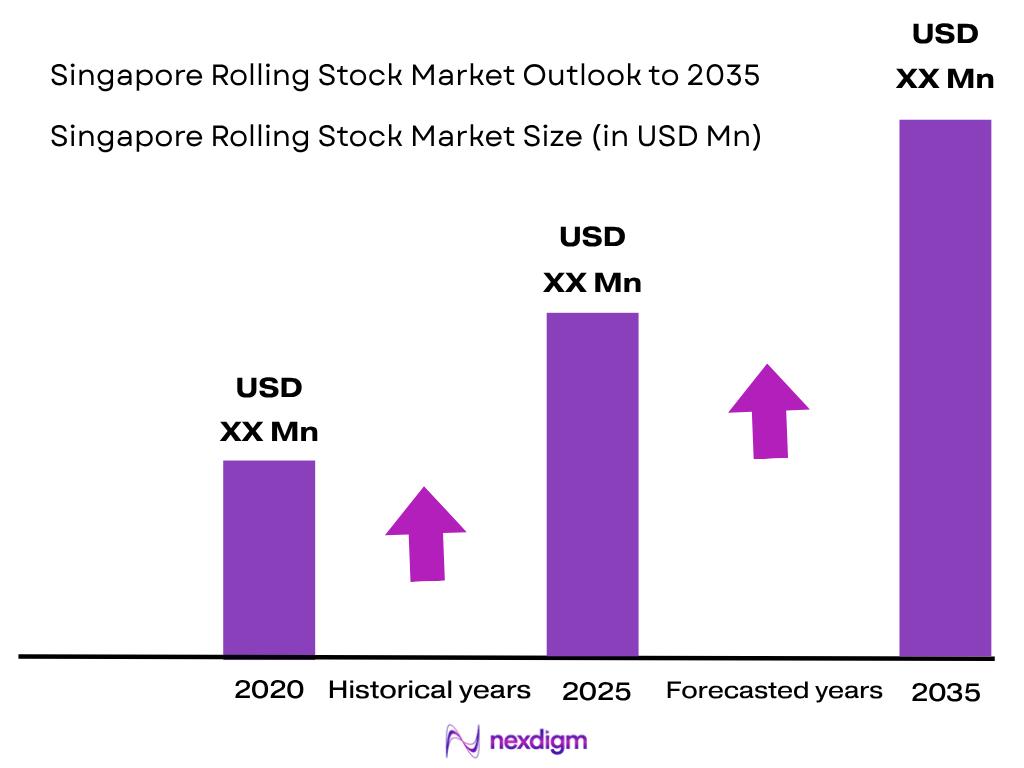
The Singapore Rolling Stock Market is estimated at ~USD XX billion in 2024, supported by continuous MRT network expansion, fleet replacement initiatives, rail reliability improvement programs, and increasing urban mobility demand. The market growth is primarily driven by Singapore’s dependence on rail-based public transportation, with the rail network serving as a critical component of the country’s land transport system. The replacement of aging MRT trains, adoption of automated train technologies, and investment in next-generation rolling stock are strengthening market demand.
Singapore represents a highly concentrated rolling stock market due to its urbanized geography and dependence on mass transit systems. The Central Region, including areas such as Downtown Singapore, Jurong, and Tampines, dominates rolling stock demand due to high passenger movement, commercial activity, and MRT network density. Singapore’s Land Transport Authority continues expanding and upgrading rail infrastructure to support population mobility and reduce road congestion. The dominance of urban rail applications differentiates Singapore from larger geographic markets where intercity railway networks contribute significantly to rolling stock demand.
Market Segmentation
By Rolling Stock Type
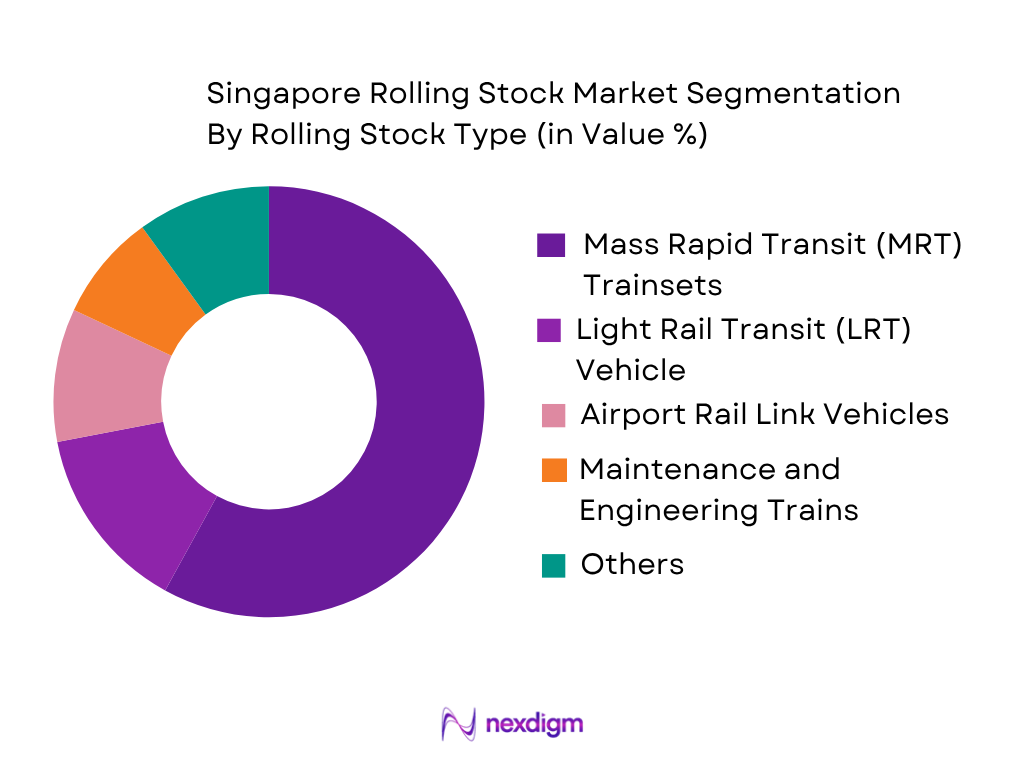
Singapore Rolling Stock Market is segmented by rolling stock type into MRT trainsets, LRT vehicles, airport rail vehicles, maintenance trains, and automated transit vehicles. MRT trainsets represent the dominant segment due to Singapore’s extensive urban metro dependency and continuous fleet modernization requirements. The MRT network forms the backbone of public transportation, requiring regular procurement of passenger trains, replacement vehicles, and technology upgrades. Large-scale projects such as Thomson-East Coast Line expansion and ongoing fleet renewal programs support demand for metro rolling stock. Automated metro technology adoption further strengthens this segment as Singapore operates one of the world’s largest fully automated urban rail systems.
By Propulsion and Power System
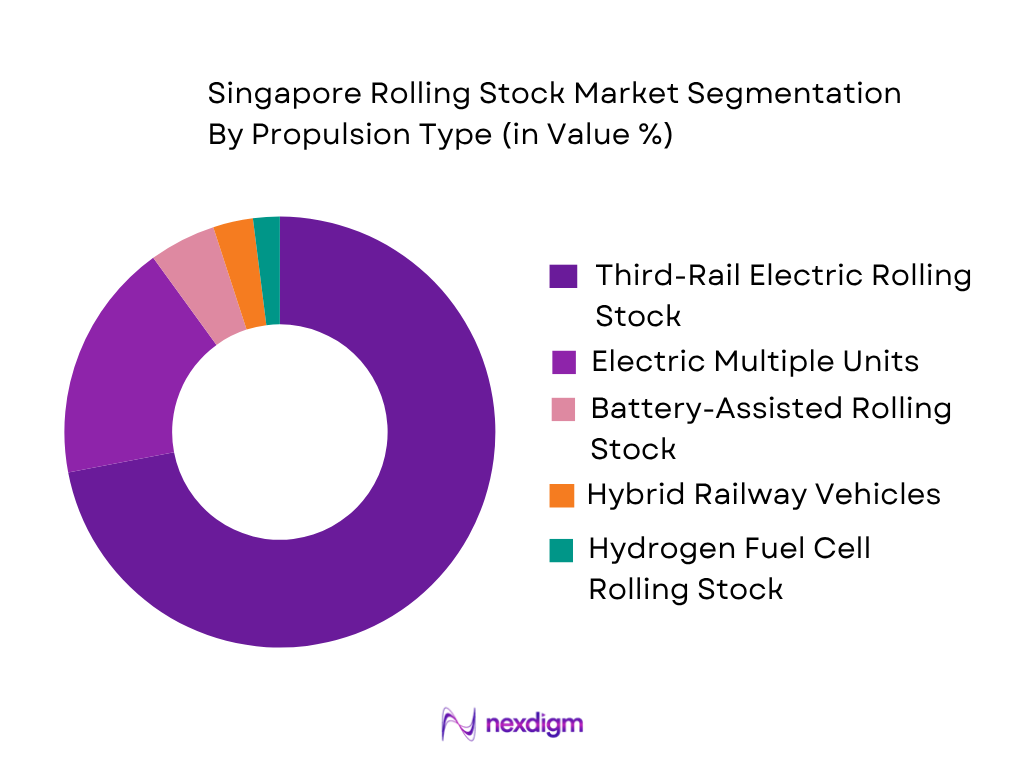
The Singapore Rolling Stock Market is segmented by propulsion type into third-rail electric systems, electric multiple units, battery-assisted systems, hybrid vehicles, and alternative propulsion technologies. Third-rail electric rolling stock dominates due to Singapore’s MRT and LRT infrastructure being primarily designed around electrified urban rail operations. The country’s focus on sustainable public transport and low-emission mobility supports continued investment in electric rolling stock. Increasing attention toward energy efficiency, regenerative braking systems, and smart energy management is encouraging upgrades to existing electric fleets. Future adoption of battery-assisted technologies is expected to support specialized applications such as maintenance vehicles and short-distance autonomous rail systems.
Competitive Landscape
The Singapore Rolling Stock Market is characterized by strong participation from global railway technology companies due to the absence of large domestic rolling stock manufacturers. Major players compete through rolling stock supply, signaling integration, fleet modernization contracts, maintenance services, and digital railway solutions. Companies with extensive metro automation expertise and experience in urban rail systems maintain competitive advantages.
| Company | Establishment Year | Headquarters | Key Market Focus | Singapore Market Presence | Rolling Stock Portfolio | Technology Capability | Maintenance & Lifecycle Services |
| Alstom | 1928 | Saint-Ouen, France | ~ | ~ | ~ | ~ | ~ |
| Siemens Mobility | 1847 | Munich, Germany | ~ | ~ | ~ | ~ | ~ |
| CRRC Corporation Limited | 2007 | Beijing, China | ~ | ~ | ~ | ~ | ~ |
| Kawasaki Railways | 1896 | Kobe, Japan | ~ | ~ | ~ | ~ | ~ |
| Hitachi Rail | 2015 | Tokyo, Japan | ~ | ~ | ~ | ~ | ~ |
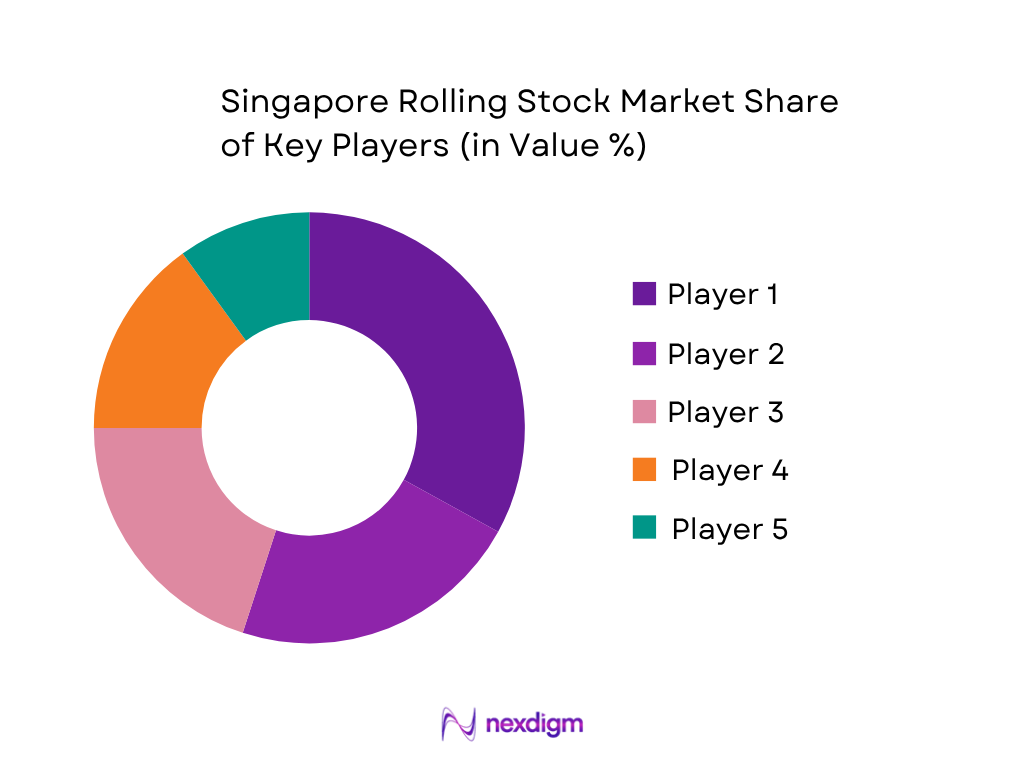
Singapore Rolling Stock Market Analysis
Growth Drivers
Fleet Renewal Programs
Singapore’s rolling stock modernization is supported by continuous investment in maintaining a reliable urban rail network, with rail transport forming a critical component of the country’s high-density mobility ecosystem. The country recorded a population of approximately 6.0 million people in 2024, according to national demographic statistics, increasing pressure on public transportation capacity and fleet reliability. The Land Transport Authority (LTA) operates long-term asset renewal programs covering MRT trains, signaling systems, and depot infrastructure. Singapore’s MRT network exceeded 260 km of operational rail lines, creating sustained demand for replacement trainsets, upgraded propulsion systems, and enhanced passenger capacity solutions. The country’s GDP per capita remained above USD 80,000 in 2024 according to international economic indicators, supporting government capability to fund advanced transportation infrastructure. Fleet renewal initiatives are focused on improving train availability, reducing service disruptions, and integrating energy-efficient rolling stock technologies. Replacement programs for older MRT fleets, including trains operating on the North-South and East-West Lines, are creating opportunities for global rolling stock suppliers specializing in metro vehicles, refurbishment, and lifecycle management services.
MRT Network Expansion
Expansion of Singapore’s MRT network is a major driver for rolling stock demand as the government continues developing rail-based mobility solutions to support urban connectivity. Singapore’s total land area remains approximately 735 square kilometers, making high-capacity rail transportation essential for efficient land use and commuter movement. The Land Transport Authority continues expanding MRT infrastructure through projects such as the Cross Island Line and Jurong Region Line, which require additional metro trainsets, signaling integration, and automated rail technologies. The country recorded more than 7 million daily public transport journeys across rail and bus systems, reflecting strong dependence on mass transit infrastructure. Economic activity remains concentrated around urban commercial districts, manufacturing hubs, and residential developments, increasing demand for reliable passenger rail services. MRT expansion projects are also aligned with Singapore’s long-term mobility strategy to reduce road dependency and improve sustainable transportation access. Growing investment in automated metro operations is supporting demand for driverless rolling stock, advanced train control systems, and digital fleet management solutions.
Market Challenges
High Dependence on Imported Rolling Stock
Singapore’s rolling stock market faces structural challenges due to its reliance on international manufacturers for train supply, technology integration, and specialized railway components. The country does not maintain a large domestic rolling stock manufacturing base because of limited land availability and the highly specialized nature of railway vehicle production. Singapore’s GDP reached more than USD 500 billion in nominal terms according to international economic databases, allowing investment in advanced imported rail technologies, but local production remains limited. Most MRT vehicles, propulsion equipment, signaling systems, and specialized components are sourced from global suppliers located in Europe, China, and Japan. This dependency creates exposure to international supply chain disruptions, foreign exchange fluctuations, and longer procurement lead times. Singapore’s railway ecosystem requires compliance with strict technical standards related to safety, automation, tropical climate operation, and reliability performance. Imported rolling stock must undergo extensive testing and integration before entering commercial service, increasing project complexity. The dependence on overseas suppliers also creates challenges in maintaining a localized ecosystem for component manufacturing and technical workforce development.
Complex Railway System Integration Requirements
Singapore’s rolling stock market faces challenges associated with integrating new trains into an advanced and highly automated urban rail network. The country operates multiple MRT lines with different generations of signaling, train control systems, and infrastructure configurations, requiring precise compatibility between new rolling stock and existing railway assets. Singapore’s rail network exceeded 260 km of operational MRT lines and includes multiple automated metro systems, creating complex technical requirements for new vehicle deployment. The integration process requires testing of propulsion systems, communication networks, signaling interfaces, platform compatibility, and safety systems. The tropical environment, characterized by high humidity levels and frequent rainfall, further requires specialized engineering solutions for corrosion resistance, electrical protection, and equipment durability. The country’s high service reliability expectations mean that new rolling stock must undergo extensive validation before passenger operation. International suppliers must adapt global train platforms to Singapore-specific operating conditions, increasing engineering requirements. These integration challenges can extend project timelines and require significant coordination between rolling stock manufacturers, infrastructure operators, and technology providers.
Market Opportunities
Smart Railway Technologies
Singapore’s focus on intelligent transportation systems creates opportunities for rolling stock suppliers offering digital railway technologies, predictive analytics, and automated maintenance solutions. The country has positioned itself as a leading smart city economy, with digital infrastructure investment supporting advanced mobility management. Singapore’s population density exceeds 8,000 people per square kilometer, increasing the importance of efficient railway operations and technology-enabled capacity management. Smart railway solutions can improve train availability through real-time monitoring, condition-based maintenance, and artificial intelligence-supported fault detection. The Land Transport Authority has increasingly adopted digital tools for transportation planning, operational monitoring, and infrastructure management. Rolling stock manufacturers with capabilities in Internet of Things sensors, automated diagnostics, and fleet performance analytics can support Singapore’s objective of maintaining high rail reliability standards. Digitalization opportunities extend across train communication systems, passenger information platforms, maintenance scheduling, and asset management systems. As Singapore continues upgrading its MRT ecosystem, demand is expected to increase for integrated rolling stock solutions combining physical train assets with advanced software-based operational technologies.
Autonomous Metro Expansion
Autonomous train technology represents a significant opportunity within Singapore’s rolling stock market due to the country’s existing experience with automated urban rail systems. Singapore operates some of the world’s most advanced driverless metro networks, including fully automated MRT lines supported by advanced signaling and train control technologies. The country’s public transportation system recorded millions of daily passenger journeys, requiring highly reliable and scalable rail operations. Autonomous rolling stock enables improved service frequency, optimized energy consumption, and enhanced operational efficiency. Singapore’s limited land availability, with approximately 735 square kilometers of territory, increases the importance of maximizing transport capacity through intelligent rail systems rather than road expansion. Future MRT developments and fleet upgrades are expected to prioritize automated train operation, advanced communication-based train control systems, and AI-supported railway management. Opportunities exist for global suppliers specializing in autonomous metro vehicles, automated signaling integration, and digital train supervision technologies. The continued adoption of driverless systems supports long-term demand for technologically advanced rolling stock solutions designed specifically for dense urban environments.
Future Outlook
The Singapore Rolling Stock Market is expected to experience steady growth driven by rail network expansion, replacement of aging fleets, automation adoption, and increasing demand for efficient urban transportation. Future investments will focus on improving rail reliability, enhancing passenger capacity, and adopting sustainable railway technologies. Smart maintenance systems, autonomous train operations, and digital railway platforms will become important areas of development as Singapore continues strengthening its position as a global smart mobility hub.
Major Players
- Alstom
- Siemens Mobility
- CRRC Corporation
- Hitachi Rail
- Kawasaki Railways
- Mitsubishi Heavy Industries
- Hyundai Rotem
- Stadler Rail
- CAF
- Thales
- Wabtec Corporation
- Knorr-Bremse
- Toshiba Infrastructure Systems
- Nippon Sharyo
- Talgo
Key Target Audience
- Mass Rapid Transit Operators
- Government and Regulatory Bodies (Land Transport Authority Singapore, Ministry of Transport Singapore)
- Urban Rail Infrastructure Developers
- Rolling Stock Manufacturers and Technology Providers
- Railway Maintenance and Asset Management Companies
- Smart Mobility Solution Providers
- Investments and Venture Capitalist Firms
- Railway Component Suppliers
Research Methodology
Step 1: Identification of Key Variables
The initial phase involves developing a comprehensive ecosystem framework covering railway operators, rolling stock suppliers, infrastructure authorities, technology providers, and maintenance companies operating within Singapore’s rail ecosystem. Extensive secondary research is conducted using transportation databases, government publications, railway infrastructure reports, and industry sources to identify major market variables affecting rolling stock demand.
Step 2: Market Analysis and Construction
This stage focuses on evaluating rolling stock deployment patterns, MRT and LRT expansion activities, fleet replacement requirements, propulsion technologies, and maintenance demand. Historical railway investments, passenger mobility trends, procurement activities, and infrastructure development plans are analyzed to construct the market framework and estimate segment-level dynamics.
Step 3: Hypothesis Validation and Expert Consultation
Market assumptions are validated through discussions with railway operators, technology suppliers, rolling stock manufacturers, and infrastructure stakeholders. Expert consultation provides insights into procurement strategies, operational challenges, maintenance requirements, automation adoption, and future technology trends influencing Singapore’s rolling stock industry.
Step 4: Research Synthesis and Final Output
The final stage combines quantitative analysis with qualitative industry insights to develop a comprehensive market outlook. Data triangulation is performed by comparing supply-side information, demand-side requirements, fleet expansion plans, and technology adoption trends to ensure accurate and reliable market conclusions.

- Executive Summary
- Research Methodology (Market Definitions and Assumptions, Rolling Stock Classification Framework, Abbreviations, Market Sizing Approach, Top-Down Market Assessment, Bottom-Up Market Validation, Demand-Side Assessment, Supply-Side Assessment, Primary Industry Interviews, Railway Operator Consultations, Data Triangulation, Forecasting Framework, Market Limitations and Future Considerations)

- Definition and Scope
- Singapore Rail Transportation Ecosystem Overview
- Evolution of Singapore Railway Infrastructure and Rolling Stock Development
- Major Railway Expansion and Modernization Milestones
- Singapore Rolling Stock Value Chain Analysis
- Rolling Stock Manufacturing and Supply Ecosystem
- Railway Operations and Maintenance Ecosystem
- Rail Infrastructure and Rolling Stock Interdependency Analysis
- Urban Rail Mobility Landscape Analysis

- Growth Drivers (Fleet Renewal Programs, MRT Network Expansion, Rail Reliability Enhancement Initiatives, Urban Population Mobility Demand, Autonomous Train Technology Adoption, Public Transportation Electrification)
- Market Challenges (High Dependence on Imported Rolling Stock, Limited Domestic Manufacturing Base, Complex Railway System Integration Requirements, High Maintenance Standards, Land Availability Constraints, Long Asset Replacement Cycles)
- Market Opportunities (Cross-Border Rail Connectivity Development, Smart Railway Technologies, Predictive Maintenance Solutions, Autonomous Metro Expansion, Energy-Efficient Rolling Stock Adoption, Railway Digitalization)
- Market Trends (Driverless Metro Technology Adoption, Condition-Based Maintenance Systems, Railway Asset Digital Twins, Energy-Efficient Train Systems, Passenger Experience Enhancement Technologies, Automated Train Operations)
- Government Regulations and Industry Standards (Railway Safety Regulations, Land Transport Authority Standards, Rail Reliability Requirements, Train Control System Compliance, Asset Maintenance Regulations, Environmental Sustainability Requirements)
- SWOT Analysis
- Porter’s Five Forces Analysis
- PESTLE Analysis
- Stakeholder Ecosystem Analysis

- By Market Value (2020-2025)
- By Fleet Deployment Volume (2020-2025)
- By Rolling Stock Procurement Value (2020-2025)
- By New Rolling Stock Deliveries (2020-2025)
- By Fleet Modernization and Replacement Demand (2020-2025)

- By Rolling Stock Type (In Value %)
Mass Rapid Transit (MRT) Trainsets
Light Rail Transit (LRT) Vehicles
Metro Passenger Coaches
Automated Metro Rolling Stock
Airport Rail Link Vehicles
Specialized Railway Service Vehicles - By Propulsion and Power System (In Value %)
Electric Multiple Units (EMU)
Third-Rail Powered Rolling Stock
Overhead Electrified Rolling Stock
Battery-Assisted Rolling Stock
Hybrid Railway Vehicles - By Railway Application (In Value %)
Urban Passenger Transportation
Airport Connectivity Rail Systems
Maintenance and Infrastructure Support Operations
Automated Transit Systems
Regional Rail Connectivity - By Procurement Type (In Value %)
New Rolling Stock Procurement
Fleet Replacement Programs
Mid-Life Refurbishment
Component Upgrade Programs
Rail Vehicle Modernization - By Component Type (In Value %)
Traction Systems
Bogies and Wheelsets
Train Control and Signaling Systems
Passenger Information Systems
Doors and Platform Interface Systems
Braking Systems
Interior and Passenger Comfort Systems - By End User (In Value %)
Mass Rapid Transit Operators
Light Rail Transit Operators
Government Transport Authorities
Rail Asset Management Companies
Maintenance Service Providers

- Market Share of Major Players (By Rolling Stock Supply, Fleet Modernization Projects, Maintenance Contracts, Technology Solutions)
- Cross Comparison Parameters (Rolling Stock Fleet Portfolio, MRT/LRT Vehicle Supply Experience, Automated Train Technology Capability, Train Control System Integration Expertise, Fleet Maintenance Capability, Railway Digitalization Solutions, Local Project Execution Experience, Energy-Efficient Rolling Stock Development)
- SWOT Analysis of Major Players
- Detailed Profiles of Major Companies
Alstom
Siemens Mobility
CRRC Corporation
Hitachi Rail
Mitsubishi Heavy Industries
Kawasaki Railways
Hyundai Rotem
Stadler Rail
CAF
Thales
Wabtec Corporation
Knorr-Bremse
Toshiba Infrastructure Systems
Nippon Sharyo
Talgo

- Railway Passenger Mobility Assessment
- Passenger Experience Analysis
- Urban Mobility Behavior Assessment
- Railway Operator Requirements Analysis
- Rolling Stock Performance Evaluation

- By Market Value (2026-2035)
- By Fleet Deployment Volume (2026-2035)
- By Rolling Stock Procurement Value (2026-2035)
- By New Rolling Stock Deliveries (2026-2035)
- By Fleet Modernization and Replacement Demand (2026-2035)


 Request a Sample
 Ask for Customization
 Get a Quote
 Enquire Now