

 Download PDF
Market Overview
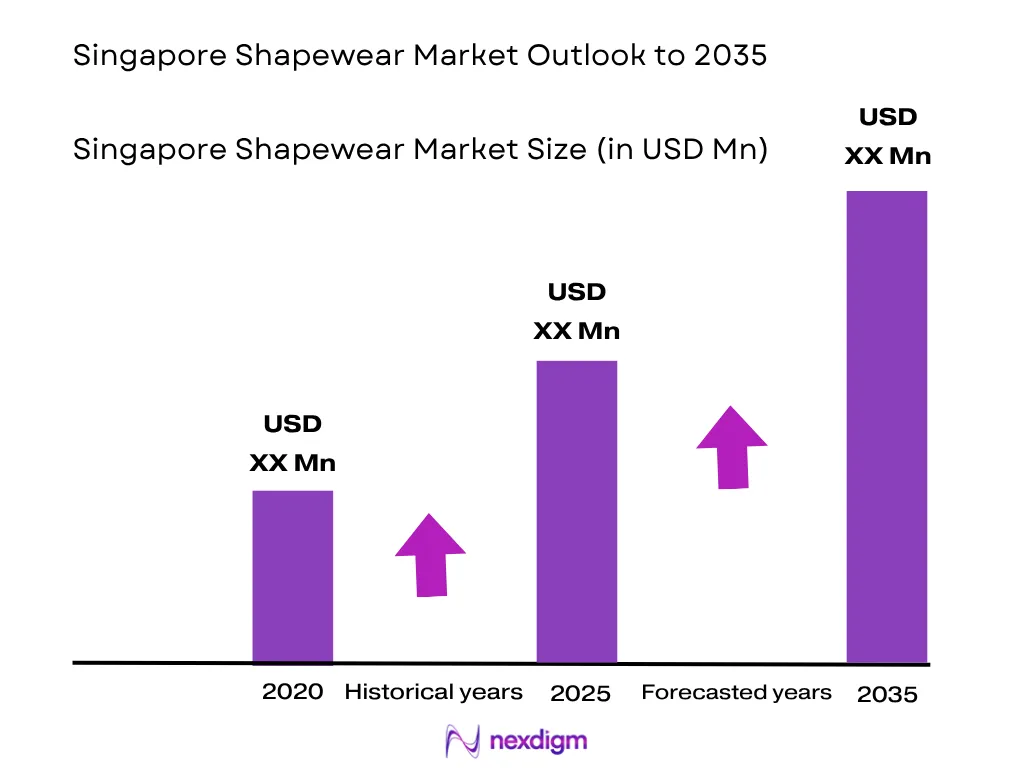
Singapore shapewear market is valued at USD ~million, after rising from USD ~ million. Demand is driven by premium innerwear adoption, e-commerce penetration, workplace fashion, postpartum bodywear, and comfort-led shaping garments. Singapore’s broader retail context supports this, with total population at 6.04 million and continued recovery in apparel, beauty, and tourist-linked fashion spending.
Singapore’s shapewear market is concentrated in Orchard Road, Marina Bay, CBD, Tampines, Jurong East, and online nationwide fulfilment corridors. Orchard Road and Marina Bay dominate due to premium department stores, tourist footfall, and lingerie counters, while suburban malls drive repeat mass-premium purchases. Singapore received 16.5 million international visitors, up from about 13.6 million, supporting fashion and intimate-apparel retail demand across tourist-heavy shopping districts.
Market Segmentation
By Product Type
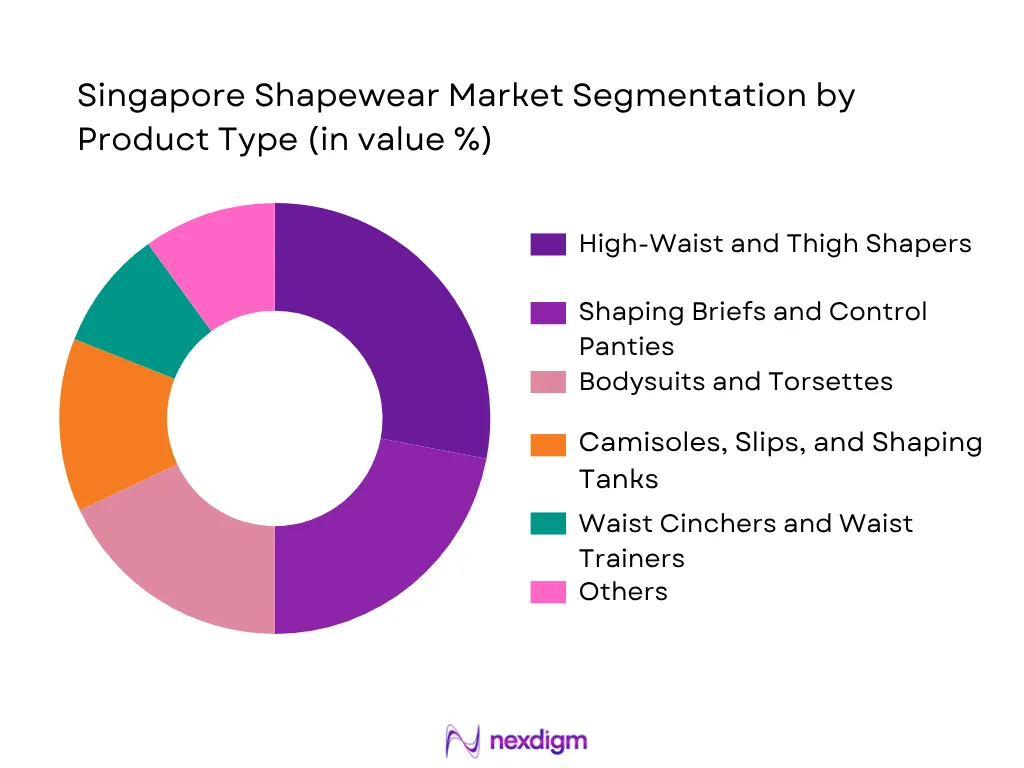
Singapore shapewear market is segmented by product type into shaping briefs, high-waist shorts, bodysuits, waist cinchers, shaping camisoles, postpartum shapewear, and men’s compression shapewear. High-waist shorts and thigh shapers hold the dominant share because they address the most common use cases in Singapore’s humid, office-led, and occasion-led fashion environment: tummy control, thigh smoothing, chafing reduction, and no-visible-line styling under dresses, workwear, and eveningwear. Their dominance is also supported by stronger repeat purchase compared with bodysuits, broader size availability, lower fitting complexity, and stronger online conversion across marketplaces. The segment benefits from demand among working professionals, bridal shoppers, postpartum consumers, and plus-size buyers seeking functional shaping without the discomfort associated with corset-style products.
By Distribution Channel
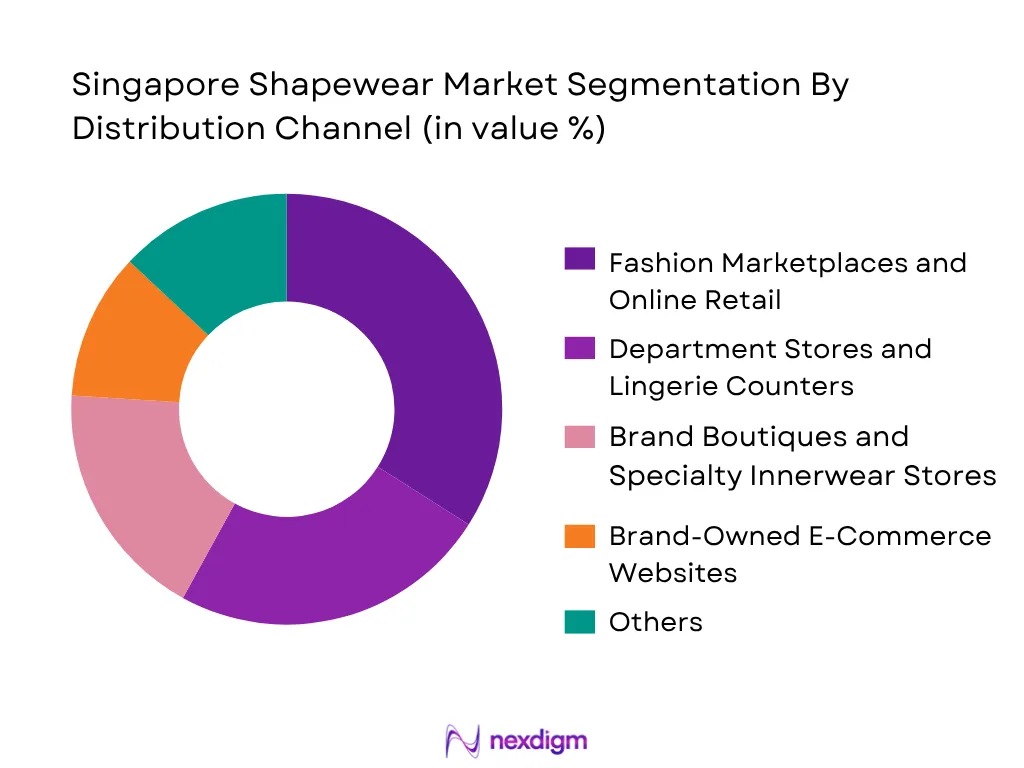
Singapore shapewear market is segmented by distribution channel into department stores, specialty innerwear stores, fashion marketplaces, brand-owned e-commerce, social commerce, and pharmacies or maternity stores. Fashion marketplaces and online retail dominate because shapewear is increasingly discovered through search, reviews, influencer styling, and price comparison. Online channels offer wider size depth, more nude-tone options, imported SKUs, discreet purchasing, and frequent promotional pricing. Singapore’s compact logistics network also supports fast delivery and easy returns, making online shapewear purchases practical despite fit-related uncertainty. Offline retail remains important for premium fitting and first-time buyers, but marketplace-led repeat purchases are stronger for high-waist shorts, shaping briefs, camisoles, and value-priced imported shapewear.
Competitive Landscape
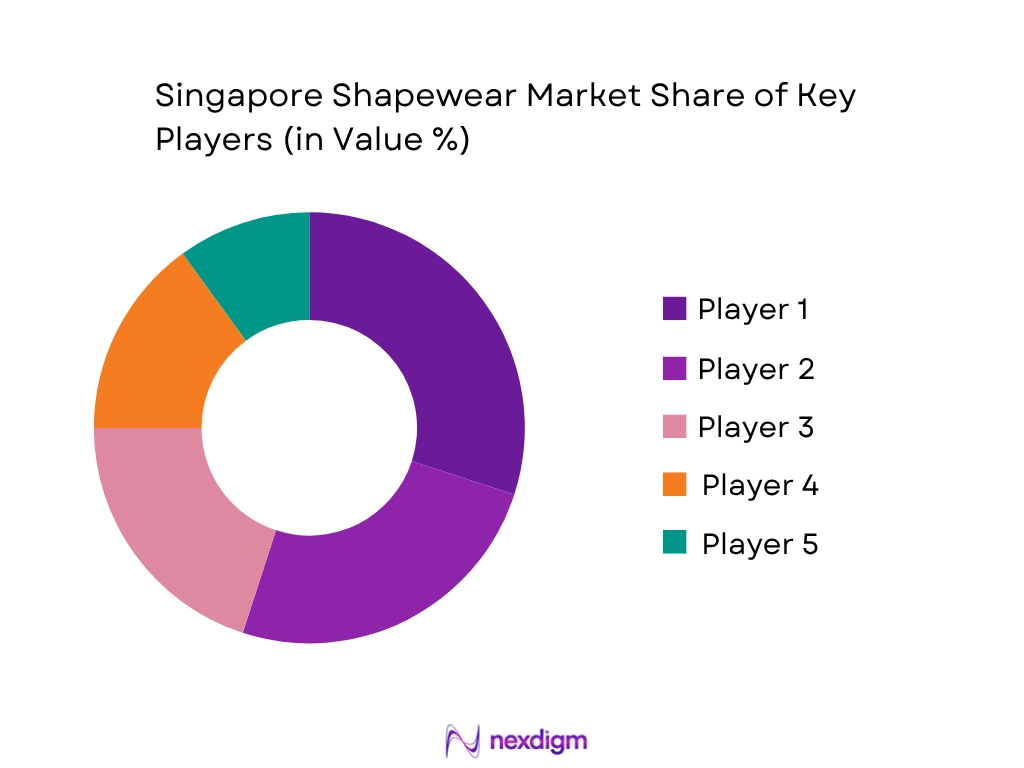
The Singapore shapewear market is moderately fragmented, with global innerwear brands, department-store labels, fast-fashion players, and online-first D2C brands competing across different price bands. Triumph, Wacoal, Marks & Spencer, UNIQLO, and SKIMS represent different strategic positions: fit-led premium lingerie, Japanese innerwear engineering, department-store basics, affordable comfort wear, and celebrity-led digital shapewear. Global shapewear research also identifies online retail, fabric innovation, and body-confidence fashion as core growth forces.
| Player | Establishment Year | Headquarters | Singapore Positioning | Core Shapewear Range | Key Channel | Price Positioning | Fit / Size Strength | Market-Specific Advantage |
| Triumph | 1886 | Bad Zurzach, Switzerland | ~ | ~ | ~ | ~ | ~ | ~ |
| Wacoal | 1949 | Kyoto, Japan | ~ | ~ | ~ | ~ | ~ | ~ |
| Marks & Spencer | 1884 | London, UK | ~ | ~ | ~ | ~ | ~ | ~ |
| UNIQLO | 1949 | Yamaguchi, Japan | ~ | ~ | ~ | ~ | ~ | ~ |
| SKIMS | 2019 | Los Angeles, USA | ~ | ~ | ~ | ~ | ~ | ~ |
Singapore Shapewear Market Analysis
Growth Drivers
Comfort-Led Innerwear
Comfort-led innerwear is a key growth driver for the Singapore shapewear market because the category is used in a dense, urban, office-heavy market where consumers require breathable shaping garments suitable for daily commuting, workplace dressing, and humid weather. Singapore’s total population stood at 6.04 million in mid-2024 and increased to 6.11 million in mid-2025, expanding the addressable base for apparel and innerwear consumption. The working-consumer base is also relevant, as median gross monthly income of full-time employed residents increased from S$5,197 in 2023 to S$5,500 in 2024 and S$5,775 in 2025, supporting discretionary spending on better-quality comfort apparel. Retail exposure remains significant, with Singapore’s estimated total retail sales value at S$4.0 billion in September 2024, of which online retail accounted for S$552 million. For shapewear brands, this supports demand for seamless briefs, high-waist shorts, light-control camisoles, and no-visible-line garments positioned as functional daily innerwear rather than occasional compression products.
Body-Positive Styling
Body-positive styling supports the Singapore shapewear market by shifting demand from restrictive body correction to smoothing, confidence-led styling across workwear, occasionwear, maternity dressing, and online fashion purchases. Singapore’s female participation in the resident labour force is structurally important for this segment: women accounted for 47.6 out of every 100 resident labour-force participants in 2024, while the employment rate for resident females aged 25 to 64 increased from 76.6 in 2023 to 78.3 in 2024. This enlarges the active professional consumer base for shapewear used under dresses, trousers, uniforms, and formalwear. Tourism also reinforces occasion-led fashion demand: Singapore recorded 16.5 million international visitor arrivals in 2024, while tourism receipts reached about S$29.8 billion, supporting retail traffic in Orchard Road, Marina Bay, and airport-linked shopping corridors where premium lingerie and shapewear are sold. For brands, the opportunity is strongest in lightweight bodysuits, smoothing shorts, nude-tone ranges, and inclusive styling-led merchandising.
Market Challenges
Fit Inconsistency
Fit inconsistency is a major challenge in the Singapore shapewear market because the consumer base is demographically mixed, digitally connected, and exposed to imported sizing systems from Asia, Europe, the United States, and cross-border marketplaces. Singapore’s population base reached 6.04 million in mid-2024, including 3.64 million citizens and a non-resident population that drove much of the increase; by mid-2025, total population rose to 6.11 million, comprising 4.20 million residents and 1.91 million non-residents. This diversity complicates shapewear sizing, torso length, compression preference, hip-to-waist ratio, and skin-tone assortment. Fit risk is heightened in online channels because Singapore had 12,698,000 total broadband subscriptions in December 2024 and 1,446,500 residential wired broadband subscriptions, creating a highly digital shopping environment where consumers compare international shapewear SKUs without physical fitting. For retailers, inconsistent fit increases friction in bodysuits, waist cinchers, high-control shorts, and postpartum shapewear, where size precision directly affects comfort and repeat purchase.
High Return Rates
High return-rate exposure is a market challenge for Singapore shapewear because the category depends heavily on online discovery, size-sensitive compression, and consumer expectations around comfort. While official public agencies do not publish a shapewear-specific return-rate statistic, Singapore’s retail data shows why the risk is material: total retail sales value was S$4.0 billion in July 2024, with online retail sales at about S$476 million; in September 2024, total retail sales value was again S$4.0 billion, with online retail sales at about S$552 million. Apparel retail was also volatile: wearing apparel and footwear sales declined by 10.3 points on a year-on-year basis in July 2024, declined by 16.2 points in April 2024, and declined by 13.1 points year-on-year in January 2026 before rising 8.8 points in February 2026. For shapewear, this volatility matters because return risk is higher when consumers cannot test compression strength, waistband rolling, thigh grip, torso length, and garment visibility before purchase.
Market Opportunities
Inclusive Sizing
Inclusive sizing is a strong opportunity for the Singapore shapewear market because the country combines high purchasing power, a diverse resident and non-resident base, and rising participation of women in professional employment. Singapore’s total population reached 6.04 million in mid-2024 and 6.11 million in mid-2025, with 1.91 million non-residents in mid-2025 adding further diversity to body types, sizing expectations, and brand preferences. The female employment base is also expanding in relevance: resident females aged 25 to 64 recorded an employment rate of 78.3 in 2024, while females made up 47.6 out of every 100 resident labour-force participants. Median gross monthly income among full-time employed residents increased to S$5,500 in 2024 and S$5,775 in 2025, supporting purchases of better-fitting, higher-comfort garments. These numbers justify broader ranges in band size, hip size, thigh fit, torso length, compression intensity, and nude shades. Brands that offer Asian-fit grading, plus-size continuity, petite sizing, and maternity-to-postpartum transitions can reduce fit friction and improve repeat purchases.
Men’s Compression Wear
Men’s compression wear is an emerging opportunity in the Singapore shapewear market because the addressable base extends beyond fashion shapewear into posture support, smoothing undershirts, abdominal compression, active commuting, and wellness-oriented bodywear. Singapore’s labour-force structure supports this opportunity: resident males aged 25 to 64 recorded an employment rate of 88.8 in 2024, while the country’s overall labour-force participation rate stood at 68.2 in 2024 and 67.9 in 2025. Work-related body strain also provides a functional angle: MOM reported 587 workplace major injuries in 2024, while work-related musculoskeletal disorders averaged 338 reported cases per year from 2020 to the first half of 2024, with 122 cases reported in the first half of 2024. While compression shapewear is not a medical substitute, these indicators support demand for comfort-led undershirts, posture-oriented base layers, waist-smoothing vests, and compression shorts among office workers, drivers, gym users, and active commuters. The opportunity is strongest for discreet, breathable, light-to-medium control products suited to Singapore’s humid climate.
Future Outlook
Singapore shapewear market is expected to expand at a forecast CAGR of 9.34%, supported by rising acceptance of comfort-led bodywear, premium lingerie spending, imported D2C brands, and online-first purchasing. Future demand will be shaped by breathable tropical fabrics, no-VPL construction, inclusive nude shades, postpartum recovery wear, and men’s compression garments. The category will increasingly sit between lingerie, athleisure, maternity wear, and occasionwear rather than remain a niche undergarment category.
Major Players
- Triumph
- Wacoal
- Sloggi
- Marks & Spencer
- UNIQLO
- Cotton On Body
- 6IXTY8IGHT
- ZALORA
- SHEIN
- SKIMS
- Spanx
- Sorella
- Sabina
- Envy Her
- Plié
Key Target Audience
- Shapewear and intimate-apparel manufacturers
- Premium lingerie and bodywear brands
- Fashion marketplace operators
- Department store and specialty retail chains
- Maternity, wellness, and postpartum-care retailers
- Apparel importers and distributors
- Investments and venture capitalist firms
- Government and regulatory bodies (Enterprise Singapore, Singapore Customs, Inland Revenue Authority of Singapore, Competition and Consumer Commission of Singapore)
Research Methodology
Step 1: Identification of Key Variables
The initial phase involves mapping Singapore’s shapewear ecosystem across product types, price bands, retail channels, consumer groups, and import-led brand availability. Variables include SKU pricing, compression level, size range, marketplace visibility, retail touchpoints, and fit-related purchase drivers.
Step 2: Market Analysis and Construction
Historical revenue, apparel retail indicators, online channel dynamics, and brand-level SKU availability are assessed to construct the Singapore shapewear market. The analysis combines top-down apparel and lingerie demand mapping with bottom-up SKU, channel, and pricing checks.
Step 3: Hypothesis Validation and Expert Consultation
Market hypotheses are validated through interviews with lingerie retailers, apparel distributors, e-commerce sellers, maternity retailers, and fashion category managers. These discussions refine assumptions around product mix, online conversion, return rates, and premium versus value demand.
Step 4: Research Synthesis and Final Output
The final stage triangulates secondary research, marketplace observations, retail checks, and expert inputs into a validated market view. The output includes market sizing, segmentation, competitive positioning, growth drivers, future outlook, and actionable recommendations for business users.

- Executive Summary
- Research Methodology (Market Definitions and Assumptions, Shapewear Taxonomy, Abbreviations, TAM/SAM/SOM Sizing, Top-Down Apparel Spend Allocation, Bottom-Up SKU and Channel Mapping, Price-Band Normalization, Marketplace Scraping, Mall Retail Store Checks, Primary Interviews with Lingerie Retailers and E-Commerce Sellers, Consumer Fit and Comfort Survey, Limitations and Forecast Assumptions)

- Definition and Scope
- Market Genesis
- Evolution of Shapewear from Occasion Wear to Everyday Seamless Innerwear
- Business Cycle
- Supply Chain and Value Chain Analysis
- Import-Dependent Brand and Distributor Ecosystem
- Retail, Marketplace, and D2C Operating Model

- Growth Drivers (Comfort-Led Innerwear, Body-Positive Styling, Bridal Demand, Hybrid Work Wardrobes, Social Media Discovery)
- Market Challenges (Fit Inconsistency, High Return Rates, Heat and Humidity Discomfort, Price Sensitivity, Marketplace Counterfeits)
- Market Opportunities (Inclusive Sizing, Men’s Compression Wear, Postpartum Recovery Wear, Premium Seamless Basics, AI Fit Recommendation)
- Trends (No-VPL Garments, Sculpting Bodysuits, Nude-Tone Expansion, TikTok-Led Discovery, Pop-Up Fittings, D2C Subscriptions)
- Regulatory Landscape (GST on Imports, Consumer Goods Safety Requirements, Textile Labelling, Care Instructions, Country-of-Origin Declaration)
- SWOT Analysis (Brand Equity, Fit Trust, Channel Margin, Inventory Risk)
Stakeholder Ecosystem (Importers, Distributors, Mall Retailers, Marketplaces, Alteration Specialists, Fulfilment Partners) - Porter’s Five Forces (Marketplace Bargaining Power, Substitute Innerwear, Brand Switching, Import Competition, Retail Shelf Access)
- Competition Ecosystem (Premium Innerwear Brands, Value Fast-Fashion Players, Custom-Fit Local Brands, Global D2C Labels)

- By Value (2020-2025)
- By Volume (2020-2025)
- By Average Selling Price (2020-2025)
- By Online Gross Merchandise Value (2020-2025)
- By Offline Retail Sell-Out Value (2020-2025)

- By Product Type (In Value %)
Shaping Briefs and Control Panties
High-Waist Shorts and Thigh Shapers
Bodysuits and Torsettes
Waist Cinchers and Waist Trainers
Camisoles, Slips, and Shaping Tanks
Postpartum and Maternity Shapewear
Men’s Compression and Posture Shapewear - By Compression Level (In Value %)
Light Control
Medium Control
Firm Control
Extra-Firm / Sculpting Control
Medical-Adjacent Post-Surgical Compression - By Consumer Group (In Value %)
Working Professionals
Occasion and Bridal Buyers
Postpartum and Maternity Consumers
Plus-Size and Curve Consumers
Athleisure and Wellness Consumers
Male Compression-Wear Users - By Price Positioning (In Value %)
Mass-Market Value Shapewear
Mid-Premium Department Store Brands
Premium International Labels
Luxury / Celebrity-Led D2C Shapewear
Custom-Fit and Made-to-Measure Shapewear - By Distribution Channel (In Value %)
Department Stores and Lingerie Counters
Brand Boutiques and Specialty Innerwear Stores
Fashion Marketplaces
Brand-Owned E-Commerce Websites
Social Commerce and Live Commerce
Pharmacies, Wellness Stores, and Maternity Retailers - By Retail Location Cluster (In Value %)
Orchard Road and CBD Premium Retail Cluster
Marina Bay and Tourist Retail Cluster
Suburban Mall Cluster
Heartland Value Retail Cluster
Online-Only Singaporewide Fulfilment - By Fabric and Technology (In Value %)
Nylon-Spandex Seamless Knit
Cotton-Blend Breathable Shapewear
Mesh Panel and Zoned Compression
Moisture-Wicking Tropical-Climate Fabric
Bonded Edge / No-VPL Construction
Sustainable and Recycled Yarn Shapewear

- Market Share of Major Players (Value, Volume, Online GMV, Offline Shelf Presence)
- Market Share by Product Type (Briefs, Shorts, Bodysuits, Waist Trainers, Camisoles, Postpartum Shapewear)
- Cross Comparison Parameters (Product Breadth, Compression-Level Coverage, Singapore Size Range Availability, Fabric Breathability for Humid Climate, Online Marketplace Rating and Review Density, Price Band and Promotion Intensity, Retail Touchpoint Presence, Return and Fit-Support Policy)
- SWOT Analysis of Major Players (Brand Pull, Fit Credibility, Channel Control, Inventory Depth)
- Pricing Analysis by SKU Basket (Control Briefs, High-Waist Shorts, Bodysuits, Waist Cinchers, Shaping Camisoles)
- Detailed Profiles of Major Companies
Triumph
Wacoal
Sloggi
Marks & Spencer
UNIQLO
Cotton On Body
6IXTY8IGHT
ZALORA
SHEIN
SKIMS
Spanx
Sorella
Sabina
Envy Her
Plié

- Demand and Utilization (Daily Wear, Occasion Wear, Bridal, Office Wear, Postpartum, Athleisure)
- Purchasing Power and Spend Bands (Entry Price, Mid-Premium Basket, Premium Multi-SKU Basket, Custom-Fit Ticket Size)
- Needs and Pain Points (Breathability, Rolling Waistbands, Thigh Chafing, Visible Lines, Size Accuracy, Skin-Tone Matching)
- Decision-Making Journey (Online Research, Fit Reviews, Mall Trial, Marketplace Price Check, Return Policy Review)
- Consumer Cohort Analysis (Gen Z, Millennial Professionals, New Mothers, Plus-Size Buyers, Tourists, Male Wellness Users)

- By Value (2026-2035)
- By Volume (2026-2035)
- By Average Selling Price (2026-2035)
- By Online GMV (2026-2035)
- By Premium and Custom-Fit Revenue Pool(2026-2035)


 Request a Sample
 Ask for Customization
 Get a Quote
 Enquire Now