
 Download PDF
Market Overview
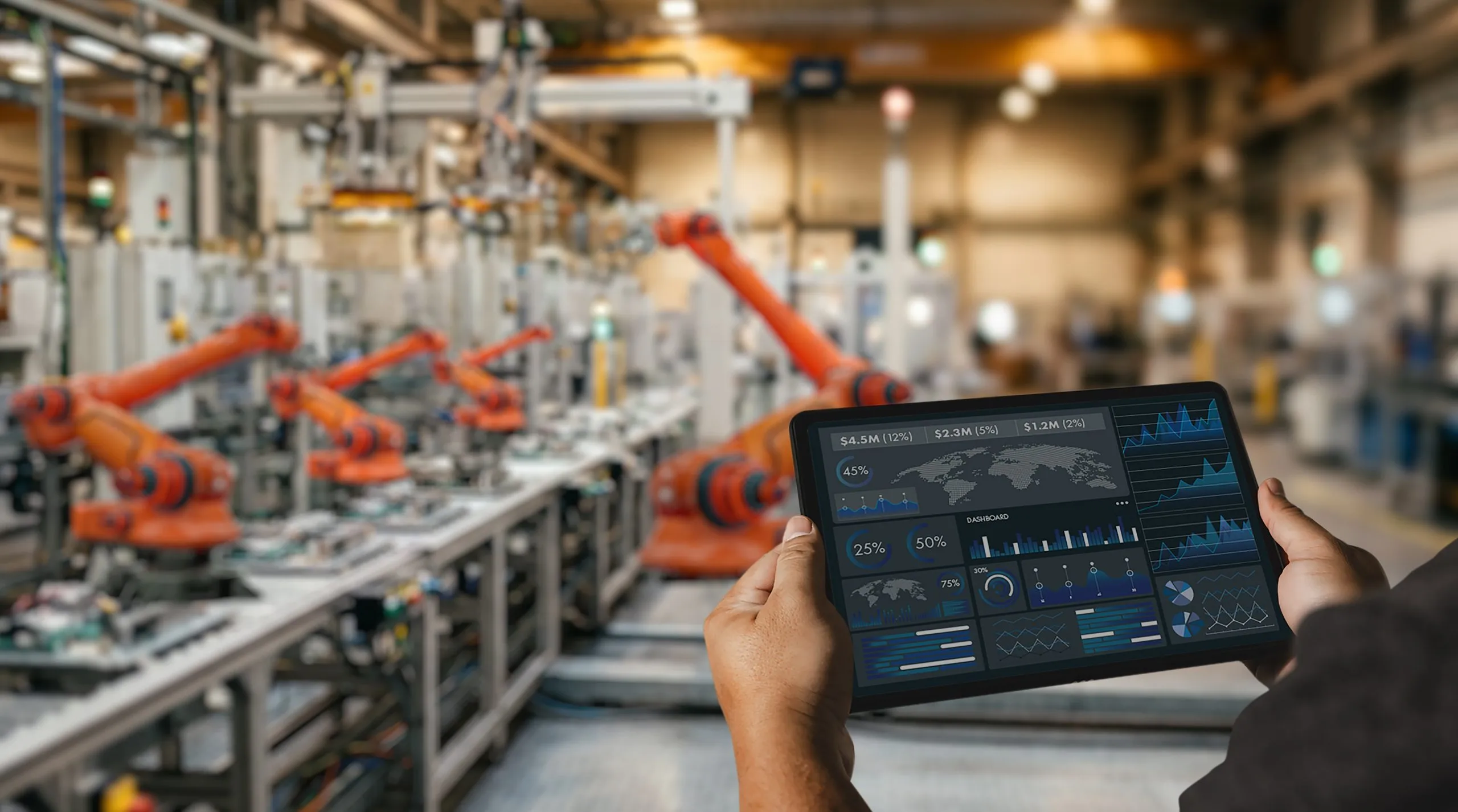
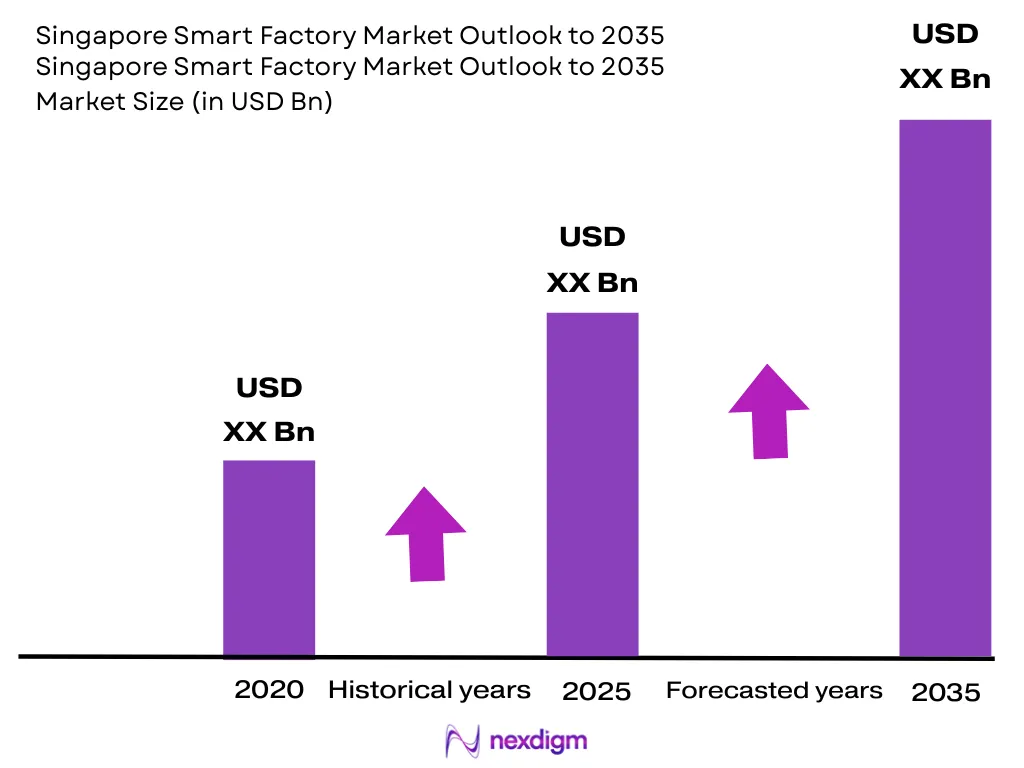
The Singapore Smart Factory Market is valued at USD ~ Billion in 2024 based on a five-year historical assessment, driven by the country’s strong focus on advanced manufacturing, digital transformation, and Industry 4.0 adoption. According to the Singapore Economic Development Board (EDB), the manufacturing sector contributed approximately S$113 billion in nominal value-added in 2023, while the Department of Statistics Singapore (SingStat) reported that manufacturing accounted for S$519.7 billion in total output during the same period. The Government continues to accelerate factory digitalization through initiatives such as the Smart Nation programme, the Advanced Manufacturing Training Academy (AMTA), and the Smart Industry Readiness Index (SIRI). Increasing adoption of Industrial Internet of Things (IIoT), robotics, artificial intelligence, cloud manufacturing, and digital twins is enabling manufacturers to improve productivity, optimize asset utilization, and strengthen global competitiveness across high-value manufacturing industries.
Market Segmentation
By Technology
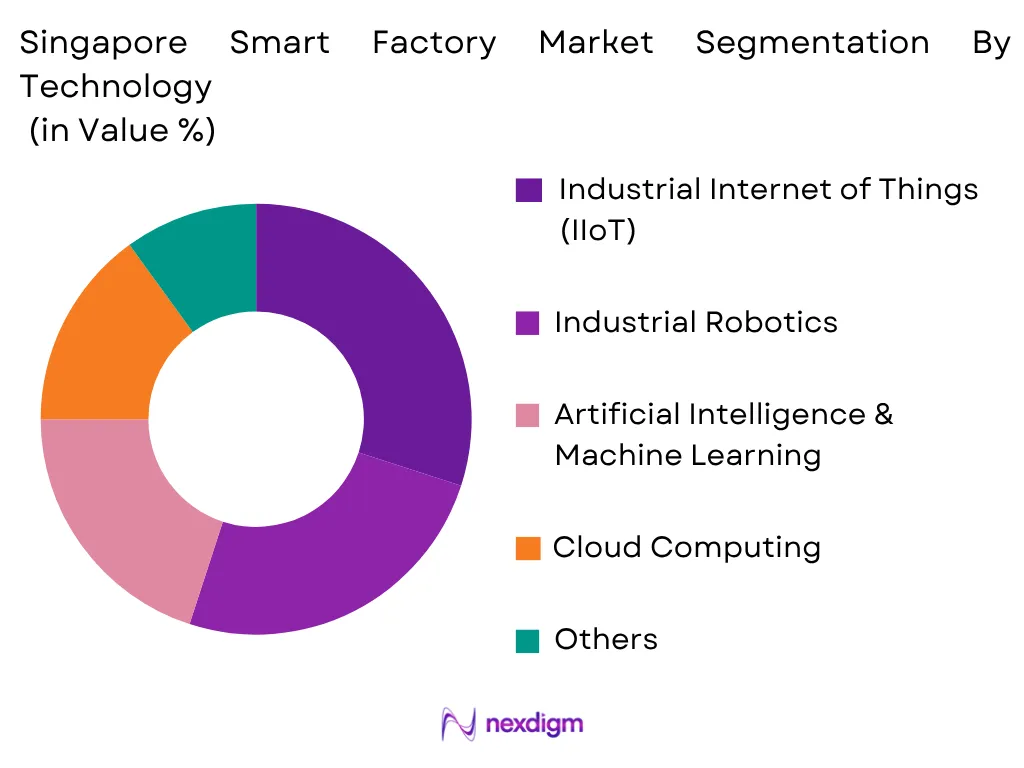
The Industrial Internet of Things (IIoT) segment dominates the Singapore Smart Factory Market because it forms the technological backbone of connected manufacturing environments. IIoT enables seamless communication between industrial equipment, sensors, manufacturing execution systems (MES), enterprise resource planning (ERP) platforms, and cloud-based analytics solutions, allowing manufacturers to monitor production processes in real time and optimize operational performance. Singapore’s high-value industries—including semiconductor manufacturing, biomedical production, aerospace engineering, electronics, and precision engineering—require highly connected production environments capable of minimizing downtime while maintaining stringent quality standards. IIoT also supports predictive maintenance, asset performance management, energy optimization, remote equipment monitoring, and supply chain visibility, making it indispensable for Industry 4.0 implementation. The government’s Smart Industry Readiness Index (SIRI), advanced digital infrastructure, and nationwide 5G deployment further accelerate IIoT adoption. As manufacturers continue investing in factory digitalization, IIoT remains the most widely implemented technology across both greenfield smart factories and digitally upgraded manufacturing facilities.
By End User Industry
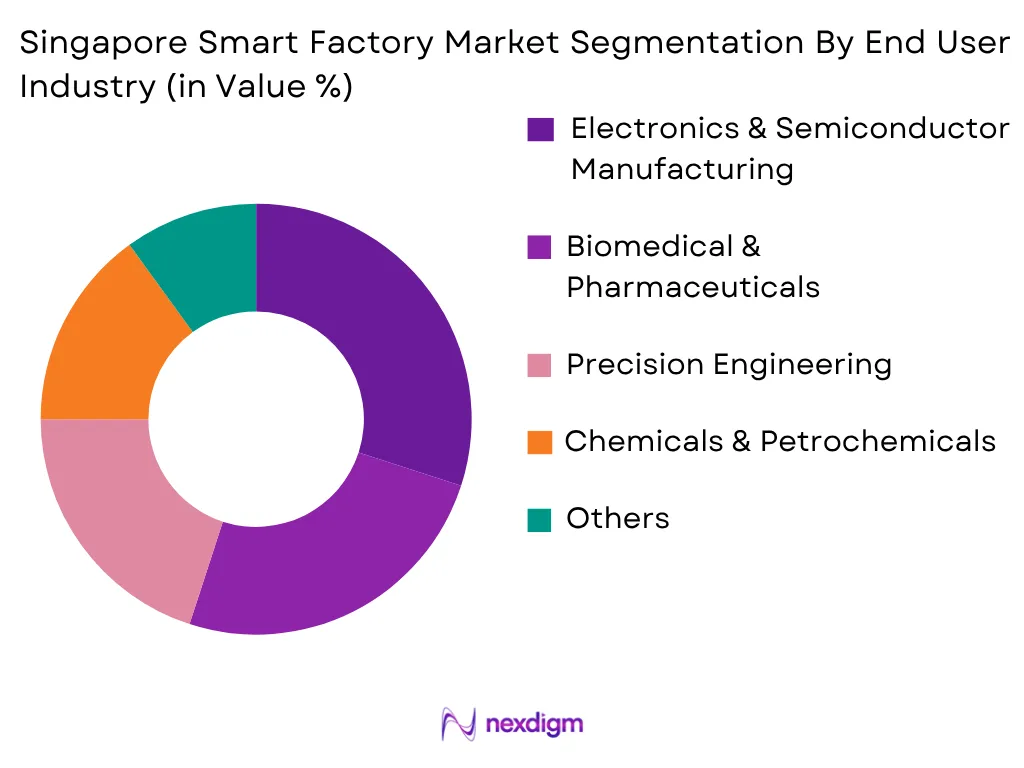
The Electronics & Semiconductor Manufacturing segment accounts for the largest share of the Singapore Smart Factory Market due to the country’s position as one of the world’s leading semiconductor manufacturing and electronics production hubs. Semiconductor fabrication facilities require extremely high levels of automation, process precision, contamination control, and real-time monitoring, making smart factory technologies essential for maintaining production efficiency and product quality. Industrial robotics, artificial intelligence, machine vision, digital twins, autonomous material handling systems, and IIoT-enabled production monitoring are widely deployed throughout semiconductor manufacturing facilities to improve yield, reduce defects, and optimize equipment utilization. Singapore’s strong ecosystem of global semiconductor manufacturers, precision engineering companies, research institutes, and advanced manufacturing centers further reinforces technology adoption. Continuous investments in chip manufacturing capacity, advanced packaging technologies, and next-generation electronics production are driving sustained demand for integrated smart manufacturing solutions. As semiconductor production becomes increasingly complex, manufacturers continue investing in intelligent automation platforms capable of supporting highly connected, data-driven production environments.
Competitive Landscape
The Singapore Smart Factory Market is highly competitive and technology-driven, with global industrial automation companies, industrial software providers, robotics manufacturers, and cloud technology firms playing a dominant role. The market is characterized by strategic collaborations between multinational manufacturers, government agencies, research institutes, and technology providers to accelerate Industry 4.0 adoption. Companies compete through integrated automation solutions that combine Industrial Internet of Things (IIoT), artificial intelligence, industrial robotics, machine vision, manufacturing execution systems (MES), digital twins, cloud computing, and industrial cybersecurity. Singapore’s strong digital infrastructure, Smart Nation initiative, and advanced manufacturing ecosystem continue to attract leading automation vendors to establish regional headquarters, innovation centers, and demonstration facilities within the country.
| Company | Establishment Year | Headquarters | Primary Product/Service Portfolio | Automation Technology Focus
|
Network Presence | Major End-Use Industries | Key Strategic Focus | Certifications & Compliance |
| Siemens AG | 1847 | ~ | ~ | ~ | ~ | ~ | ~ | ~ |
| Schneider Electric | 1836 | ~ | ~ | ~ | ~ | ~ | ~ | ~ |
| ABB Ltd. | 1988 | ~ | ~ | ~ | ~ | ~ | ~ | ~ |
| Rockwell Automation | 1903 | ~ | ~ | ~ | ~ | ~ | ~ | ~ |
| Honeywell International Inc. | 1906 | ~ | ~ | ~ | ~ | ~ | ~ | ~ |
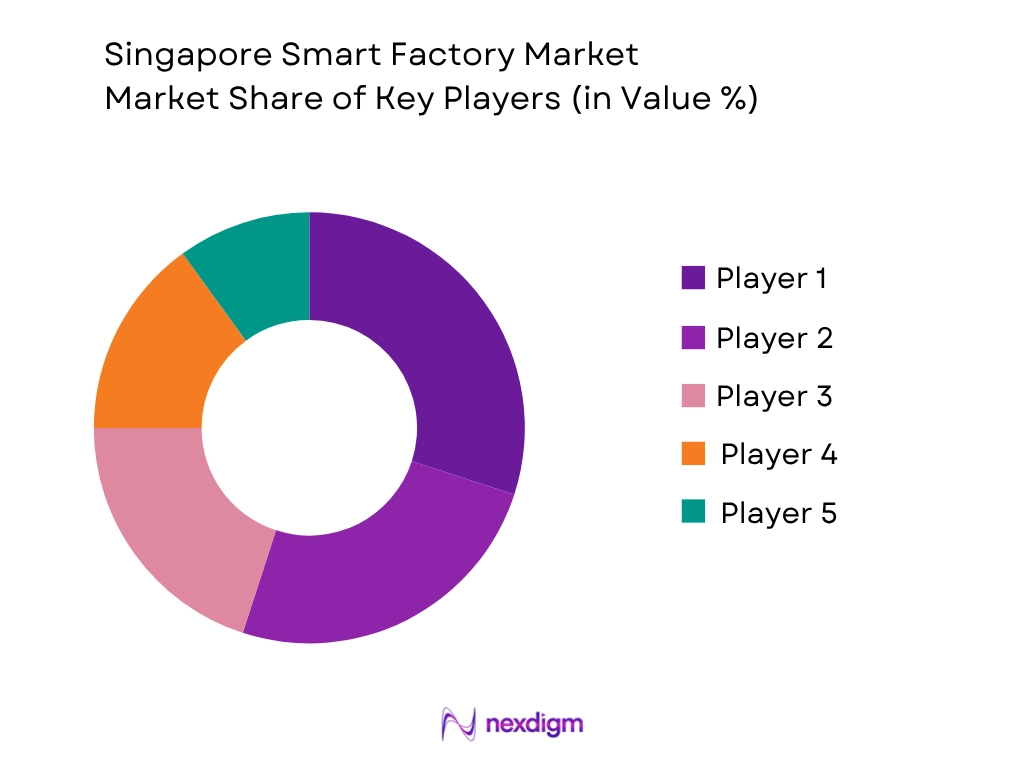
Singapore Smart Factory Market Analysis
Growth Drivers
Advanced Manufacturing and Semiconductor Industry Expansion
Singapore’s position as a global advanced manufacturing hub is a major driver for the Smart Factory Market. According to the Singapore Economic Development Board (EDB), the manufacturing sector generated approximately S$113 billion in nominal value-added in 2023, while the Department of Statistics Singapore (SingStat) reported total manufacturing output of S$519.7 billion. Electronics manufacturing, particularly semiconductor production, remains the country’s largest manufacturing segment, requiring high levels of automation, machine vision, robotics, artificial intelligence, and Industrial Internet of Things (IIoT) technologies. The World Bank estimated Singapore’s GDP at approximately USD 530 billion in 2024, reflecting continued investment in high-value manufacturing industries. Singapore also remains one of the world’s leading semiconductor production hubs, supporting global demand for advanced chips used in artificial intelligence, electric vehicles, consumer electronics, and industrial automation. Manufacturers are increasingly deploying digital twins, predictive maintenance systems, cloud manufacturing platforms, autonomous material handling systems, and advanced analytics to improve production efficiency and product quality. Continuous investments in semiconductor fabrication, precision engineering, aerospace, biomedical sciences, and electronics manufacturing continue to strengthen demand for comprehensive smart factory technologies throughout Singapore’s industrial ecosystem.
Government-Led Industry 4.0 and Digital Transformation Initiatives
Government support continues to accelerate smart manufacturing adoption across Singapore through coordinated industrial transformation policies. The Singapore Economic Development Board (EDB) and Enterprise Singapore actively promote Industry 4.0 implementation through initiatives including the Smart Industry Readiness Index (SIRI), Advanced Manufacturing Training Academy, and digital transformation support programmes. According to the Department of Statistics Singapore, manufacturing contributes approximately 20% of Singapore’s GDP, making industrial productivity a national priority. The International Monetary Fund (IMF) projects Singapore’s economy to remain among Asia’s most advanced, supported by continued investment in innovation, digital infrastructure, and advanced technologies. Singapore’s nationwide high-speed connectivity, industrial cloud infrastructure, and extensive 5G deployment enable manufacturers to integrate AI-powered production systems, IIoT sensors, industrial analytics, robotics, and manufacturing execution systems across production facilities. In addition, the government’s Research, Innovation and Enterprise (RIE) initiatives continue supporting automation, precision engineering, advanced materials, and digital manufacturing research. These strategic investments enable manufacturers to improve productivity, reduce operational downtime, optimize resource utilization, and strengthen Singapore’s position as a regional leader in advanced manufacturing and smart factory deployment.
Market Challenges
High Implementation Costs and Integration of Legacy Manufacturing Systems
Despite Singapore’s technological maturity, the implementation of smart factory solutions remains capital intensive, particularly for manufacturers operating legacy production infrastructure. Advanced manufacturing requires significant investment in industrial robotics, Industrial Internet of Things (IIoT) devices, machine vision systems, digital twins, artificial intelligence platforms, cloud computing, manufacturing execution systems (MES), cybersecurity, and workforce upskilling. According to the Department of Statistics Singapore, the manufacturing sector comprises thousands of enterprises ranging from multinational corporations to small and medium-sized manufacturers, many operating production equipment installed before Industry 4.0 technologies became mainstream. Integrating advanced automation solutions with older programmable logic controllers (PLCs), supervisory control and data acquisition (SCADA) systems, and enterprise software often requires complex system redesign and temporary production interruptions. Small and medium-sized enterprises may face additional financial constraints despite government grants supporting digital transformation. As manufacturing technologies continue evolving rapidly, companies must also continuously upgrade software platforms, industrial communication protocols, and cybersecurity systems, making long-term implementation planning increasingly challenging for manufacturers across multiple industrial sectors.
Shortage of Advanced Digital Manufacturing Talent
Singapore’s rapid expansion of advanced manufacturing has significantly increased demand for professionals specializing in artificial intelligence, robotics engineering, industrial cybersecurity, industrial data analytics, automation engineering, cloud computing, and digital manufacturing. According to the Ministry of Manpower (MOM) and SkillsFuture Singapore, advanced manufacturing remains one of the country’s priority sectors for workforce development due to increasing demand for Industry 4.0 skills. The widespread deployment of AI-enabled production systems, Industrial Internet of Things (IIoT), machine learning, predictive maintenance, autonomous robotics, and digital twins requires multidisciplinary technical expertise that remains highly competitive globally. Manufacturers increasingly compete for engineers capable of integrating operational technology (OT) with information technology (IT), implementing industrial cloud platforms, and managing complex automation systems. Workforce shortages may lengthen implementation timelines, increase dependence on external system integrators, and slow digital transformation for some manufacturing facilities. Although government initiatives continue strengthening technical education and professional reskilling programmes, ensuring an adequate supply of Industry 4.0 specialists remains a critical challenge as Singapore accelerates the modernization of its manufacturing ecosystem.
Market Opportunities
Artificial Intelligence, Digital Twin and Industrial IoT Adoption
Singapore’s advanced digital infrastructure creates substantial opportunities for the deployment of artificial intelligence, Industrial Internet of Things (IIoT), digital twin technology, and industrial analytics across manufacturing facilities. The Smart Nation initiative continues encouraging digital transformation across industrial sectors by promoting intelligent manufacturing, cloud adoption, automation, and data-driven decision making. Semiconductor, biomedical, aerospace, and precision engineering manufacturers increasingly implement AI-enabled quality inspection, predictive maintenance, autonomous production scheduling, and real-time operational analytics to improve productivity and product consistency. Digital twin technology enables manufacturers to simulate production processes, optimize factory layouts, reduce equipment downtime, and improve production planning before implementing physical changes. IIoT-enabled sensors provide continuous operational data that support machine learning models capable of predicting equipment failures and optimizing maintenance schedules. These technologies significantly enhance operational efficiency while reducing waste, energy consumption, and production variability. As Singapore continues strengthening its position as a regional advanced manufacturing hub, demand for integrated Industry 4.0 solutions is expected to expand across both multinational corporations and domestic manufacturers.
Growth of High-Value Manufacturing and Smart Industrial Ecosystems
Singapore’s emphasis on high-value manufacturing continues creating favorable conditions for smart factory deployment across multiple industrial sectors. According to the Singapore Economic Development Board (EDB), the country continues attracting global investments in semiconductors, advanced electronics, pharmaceuticals, precision engineering, aerospace, and sustainable manufacturing. Industrial clusters such as Jurong Innovation District, Tuas Biomedical Park, and advanced manufacturing campuses integrate manufacturers with research institutes, technology providers, and innovation centers to accelerate Industry 4.0 implementation. These industrial ecosystems increasingly require advanced robotics, collaborative robots (cobots), industrial automation software, autonomous material handling systems, industrial cybersecurity, and cloud manufacturing platforms to maintain global competitiveness. Singapore’s strong intellectual property protection, digital infrastructure, logistics capabilities, and highly connected supply chains further encourage multinational companies to establish advanced manufacturing facilities within the country. As manufacturers continue expanding production capacity while pursuing operational excellence and sustainability objectives, opportunities for automation vendors, industrial software developers, robotics manufacturers, and system integration companies are expected to strengthen across Singapore’s smart manufacturing landscape.
Future Outlook
The Singapore Smart Factory Market is expected to experience strong and sustained growth over the coming years, supported by continuous investments in advanced manufacturing, digital transformation, and Industry 4.0 technologies. Singapore’s position as a global manufacturing hub for semiconductors, biomedical products, aerospace engineering, precision engineering, and advanced electronics will continue driving demand for intelligent production systems capable of improving operational efficiency, productivity, and product quality. Government initiatives promoting automation, artificial intelligence, industrial digitalization, and advanced manufacturing are expected to further accelerate smart factory adoption across both multinational corporations and local manufacturers.
Major Players
- Siemens AG
- Schneider Electric
- ABB Ltd.
- Rockwell Automation
- Honeywell International Inc.
- Emerson Electric Co.
- Mitsubishi Electric Corporation
- Omron Corporation
- Bosch Rexroth AG
- Yokogawa Electric Corporation
- FANUC Corporation
- Cisco Systems Inc.
- SAP SE
- AVEVA Group plc
- Dassault Systèmes
Key Target Audience
- Advanced Manufacturing Companies
- Industrial Automation Equipment Manufacturers
- Industrial Software & Cloud Platform Providers
- Semiconductor Manufacturing Companies
- Engineering, Procurement & Construction (EPC) Companies
- Investments and Venture Capitalist Firms
- Government and Regulatory Bodies (Singapore Economic Development Board (EDB), Enterprise Singapore, Agency for Science, Technology and Research (ASTAR), Infocomm Media Development Authority (IMDA), JTC Corporation))*
- Industrial Robotics and System Integration Companies
Research Methodology
Step 1: Identification of Key Variables
The initial phase involves constructing a comprehensive ecosystem map covering all major stakeholders operating within the Singapore Smart Factory Market. Extensive desk research is conducted using government publications, manufacturing databases, company annual reports, industrial associations, technology white papers, and proprietary industry sources. The primary objective is to identify and define the critical variables influencing market performance, including Industry 4.0 adoption, industrial automation deployment, robotics penetration, IIoT implementation, manufacturing output, digital infrastructure, cloud adoption, and government-led manufacturing transformation initiatives.
Step 2: Market Analysis and Construction
In this phase, historical market information relating to the Singapore Smart Factory Market is compiled and analyzed to estimate market size and identify industry trends. Both top-down and bottom-up methodologies are employed to evaluate manufacturing digitalization, industrial automation investments, smart factory deployment, enterprise technology spending, and software adoption across different manufacturing industries. Market segmentation is validated through analysis of technology penetration, component demand, application trends, enterprise size, and end-user industries while ensuring consistency through multiple independent data sources.
Step 3: Hypothesis Validation and Expert Consultation
Market hypotheses are formulated using secondary research findings and subsequently validated through Computer-Assisted Telephone Interviews (CATI) and structured consultations with industry experts. Respondents include industrial automation vendors, semiconductor manufacturers, pharmaceutical companies, precision engineering firms, robotics suppliers, cloud platform providers, system integrators, and government stakeholders. These consultations provide valuable commercial, technical, and operational insights that refine market assumptions, validate technology adoption trends, evaluate competitive positioning, and strengthen future market forecasts.
Step 4: Research Synthesis and Final Output
The final stage integrates findings from secondary research, primary interviews, and quantitative analysis to develop a comprehensive assessment of the Singapore Smart Factory Market. Data generated using the bottom-up approach are cross-validated through top-down analysis and multiple independent information sources to ensure consistency and reliability. The final report is further verified through discussions with key market participants regarding automation investments, emerging technologies, digital transformation initiatives, pricing trends, competitive developments, and manufacturing innovation, ensuring an accurate and robust market assessment.

- Executive Summary
- Research Methodology (Market Definitions and Assumptions, Abbreviations, Market Sizing Approach, Top-Down Analysis, Bottom-Up Analysis, Demand-Side Assessment, Supply-Side Assessment, Primary Industry Interviews, Secondary Research Validation, Data Triangulation, Forecasting Framework, Limitations and Future Conclusions)

- Definition and Scope
- Market Evolution and Industry Genesis
- Timeline of Major Industry Developments
- Smart Factory Industry Value Chain Analysis
- Supply Chain Analysis

- Growth Drivers (Smart Nation Initiative, Industry 4.0 Adoption, Manufacturing Digitalization, Semiconductor Industry Expansion, Rising Industrial Automation Investments, AI & IIoT Integration, Government Productivity Grants, Advanced Manufacturing Transformation)
- Market Challenges (High Technology Implementation Cost, Skilled Talent Shortage, Legacy Manufacturing Infrastructure, Cybersecurity Risks, Data Integration Complexity, SME Adoption Barriers, High System Integration Costs, Rapid Technology Obsolescence)
- Market Opportunities (Expansion of Advanced Manufacturing, AI-Driven Factory Automation, Digital Twin Adoption, Smart Semiconductor Manufacturing, Industrial Cloud Deployment, Robotics-as-a-Service, Green Smart Manufacturing, Private 5G Industrial Networks)
- Market Trends (Collaborative Robots (Cobots), AI-Based Quality Inspection, Hyperautomation, Industrial Edge Computing, Smart Warehousing, Autonomous Mobile Robots (AMRs), Predictive Analytics, Industrial Cybersecurity Platforms)
- Government Regulations (Smart Nation Strategy, Singapore Advanced Manufacturing Initiative, Enterprise Singapore Standards, Cyber Security Agency (CSA) Industrial Security Framework, IMDA Digital Transformation Programs, Workplace Safety & Health Regulations, Data Protection Regulations (PDPA), Green Manufacturing Policies)
- SWOT Analysis
- PESTLE Analysis
- Porter’s Five Forces Analysis
- Stakeholder Ecosystem
- Competition Ecosystem

- By Market Value (2020-2025)
- By Installed Base of Connected Factory Units (2020-2025)
- By Average Deployment Cost (2020-2025)

- By Component (In Value %)
Industrial Hardware
Industrial Software
Industrial Services
Industrial Connectivity Solutions
Cloud & Edge Infrastructure - By Technology (In Value %)
Industrial Internet of Things (IIoT)
Artificial Intelligence & Machine Learning
Industrial Robotics
Machine Vision Systems
Digital Twin Technology
Cloud Computing
Edge Computing
Additive Manufacturing (3D Printing)
Augmented Reality & Virtual Reality
Cyber-Physical Systems - By Deployment Model (In Value %)
On-Premise
Cloud-Based
Hybrid - By End User Industry (In Value %)
Electronics & Semiconductor Manufacturing
Biomedical & Pharmaceuticals
Precision Engineering
Food & Beverage Manufacturing
Chemicals & Petrochemicals
Logistics & Warehousing
Aerospace & Defense
Marine & Offshore Engineering
Advanced Materials Manufacturing
Printing & Packaging - By Region (In Value %)
Central Region
East Region
West Region
North Region
North-East Region

- Market Share of Major Players (By Revenue, Technology Offering, Industry Vertical, Deployment Model, Enterprise Size)
- Cross Comparison Parameters (Industrial Automation Portfolio, IIoT Platform Capability, AI & Analytics Integration, Robotics Portfolio, Digital Twin Capability, Semiconductor Manufacturing Expertise, Industrial Cybersecurity Solutions, Local System Integration Capability)
- SWOT Analysis of Major Players
- Pricing Analysis (Industrial Automation Systems, Industrial Software Platforms, Robotics Solutions, MES Software, Predictive Maintenance Solutions)
- Detailed Profiles of Major Companies
Siemens AG
Schneider Electric
ABB Ltd.
Rockwell Automation
Honeywell International Inc.
Emerson Electric Co.
Mitsubishi Electric Corporation
Omron Corporation
Bosch Rexroth AG
Yokogawa Electric Corporation
FANUC Corporation
Cisco Systems Inc.
SAP SE
AVEVA Group plc
Dassault Systèmes

- Manufacturing Digital Maturity Assessment (Automation Level, Connected Assets, Digital Readiness, Industry 4.0 Adoption)
- Operational Performance Analysis (Overall Equipment Effectiveness (OEE), Production Throughput, Downtime Reduction, Asset Utilization)
- Technology Adoption Analysis (IIoT Deployment, AI Integration, Robotics Density, Cloud Manufacturing Adoption)
- Investment and Budget Allocation Analysis (Digital Transformation Spending, Automation Investment, ROI Expectations, Technology Refresh Cycle)
- Needs, Desires and Pain Point Analysis (Labor Productivity, Quality Consistency, Equipment Downtime, Energy Efficiency, Workforce Availability)
- Vendor Selection Criteria (Technology Compatibility, Integration Capability, Cybersecurity Standards, Local Technical Support, System Scalability)
- Decision-Making Process (Technical Evaluation, Financial Assessment, Vendor Qualification, Regulatory Compliance)

- By Market Value (2026-2035)
- By Installed Base of Connected Factory Units (2026-2035)
- By Average Deployment Cost (2026-2035)


 Request a Sample
 Ask for Customization
 Get a Quote
 Enquire Now