

 Download PDF
 Download PDF
Market Overview
The Singapore Solar EPC Market is valued at approximately USD ~ billion based on a recent historical assessment. The market is driven by increasing investments in solar infrastructure and rising government initiatives aimed at enhancing renewable energy capacity. The country’s commitment to reducing carbon emissions and achieving its renewable energy targets has further accelerated demand for solar energy solutions. With a growing interest in sustainable energy, the market is also witnessing technological advancements that drive efficiency and reduce installation costs, contributing to the overall market growth.
Singapore has emerged as a leader in Southeast Asia’s solar energy market, driven by its proactive regulatory environment, strategic location, and consistent push for sustainability. As a key hub for solar installations, Singapore benefits from its advanced infrastructure, favorable policies, and strong international partnerships. The city-state’s emphasis on reducing its reliance on fossil fuels, along with its investments in research and development, has established it as a regional leader in clean energy adoption. These factors enable Singapore to remain at the forefront of solar energy solutions in the region.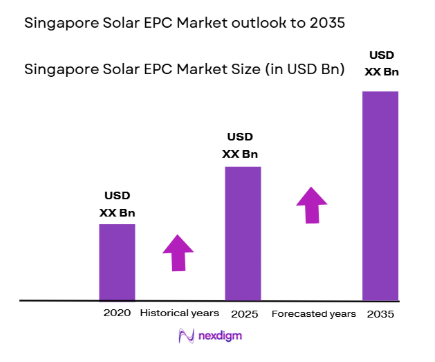
Market Segmentation
By System Type:
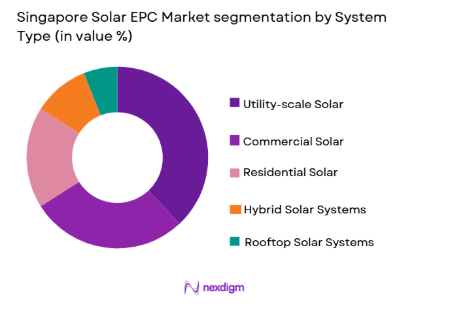
The Singapore Solar EPC Market is segmented by system type into utility-scale solar systems, commercial solar systems, residential solar systems, hybrid solar systems, and rooftop solar systems. Recently, utility-scale solar systems have dominated the market due to the high demand for large-scale solar power plants that meet the growing energy needs of both residential and commercial sectors. The expansion of solar farms and the integration of solar power into grid infrastructure have been key factors contributing to the rise of utility-scale systems. Additionally, advancements in solar panel efficiency and cost reductions have made large-scale solar projects more viable for utility operators and developers.
By Platform Type:
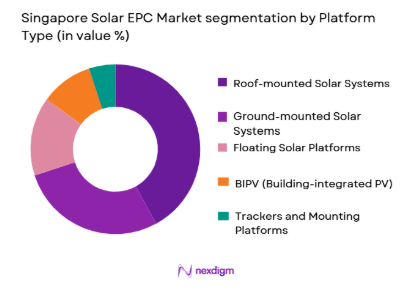
The Singapore Solar EPC Market is segmented by platform type into ground-mounted solar systems, roof-mounted solar systems, floating solar platforms, BIPV (Building-integrated Photovoltaic), and trackers and mounting platforms. Recently, roof-mounted solar systems have dominated the market due to their versatility and ease of installation in both residential and commercial buildings. As the demand for residential solar systems grows, roof-mounted solutions have become an increasingly popular choice for homeowners and businesses looking to reduce their energy costs and carbon footprint. Furthermore, the government’s support for solar energy adoption has facilitated the widespread use of roof-mounted solar solutions.
Competitive Landscape
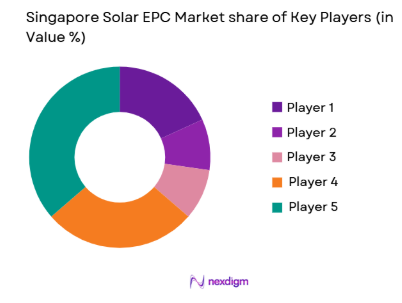
The competitive landscape of the Singapore Solar EPC Market is marked by the presence of both local and international players who are investing heavily in technological advancements and expanding their market presence. The market has seen consolidation in recent years with key players focusing on increasing their operational efficiencies and enhancing their product offerings to maintain a competitive edge. Strategic partnerships and collaborations with local government bodies and private firms have also been crucial in securing large-scale solar projects. Major players have expanded their services across multiple regions, which has enabled them to cater to growing demand and capitalize on the region’s renewable energy initiatives.
| Company Name | Establishment Year | Headquarters | Technology Focus | Market Reach | Key Products | Revenue (USD) | Additional Parameter |
| Sembcorp Industries | 1998 | Singapore | ~ | ~ | ~ | ~ | ~ |
| Sunseap Group | 2011 | Singapore | ~ | ~ | ~ | ~ | ~ |
| REC Group | 1996 | Singapore | ~ | ~ | ~ | ~ | ~ |
| First Solar | 1999 | USA | ~ | ~ | ~ | ~ | ~ |
| Trina Solar | 1997 | China | ~ | ~ | ~ | ~ | ~ |
Singapore Solar EPC Market Analysis
Growth Drivers
Government Initiatives to Promote Renewable Energy:
The Singapore government has made significant strides in supporting solar energy adoption through policies, incentives, and regulatory frameworks. These efforts have been a major growth driver for the solar EPC market. Government-led initiatives such as the SolarNova program and green energy targets have provided substantial funding and incentives for solar projects. The government’s push for energy diversification, especially with the country’s limited natural resources, has accelerated the shift towards renewable energy sources like solar power. With increased subsidies, tax rebates, and the development of solar parks, government initiatives play a critical role in bolstering the growth of the market. Furthermore, these policies align with Singapore’s long-term sustainability goals, which has spurred further market development. The government is also driving the adoption of energy-efficient technologies, making solar energy a more attractive investment for both public and private sectors. As a result, these governmental efforts have proven to be a significant enabler for solar energy growth and market expansion.
Technological Advancements in Solar Power Solutions:
Technological advancements in solar energy technologies have greatly influenced the growth of the Singapore Solar EPC market. Innovations in solar panel efficiency, energy storage systems, and the integration of smart grid technologies have made solar solutions more affordable and efficient. These advancements have allowed solar power to compete effectively with traditional energy sources. Additionally, the development of hybrid solar systems, which combine solar energy with other renewable sources like wind or energy storage, has created more flexible and reliable solutions for both residential and commercial users. The continuous innovation in materials, such as the use of bifacial solar panels, has increased energy production and system longevity. These technological breakthroughs, along with the declining cost of solar panels, have made solar energy more accessible to a wider range of consumers, propelling the market toward rapid growth.
Market Challenges
High Initial Capital Investment:
One of the main challenges faced by the Singapore Solar EPC market is the high upfront capital investment required for solar energy projects. While the long-term benefits of solar power, such as cost savings on energy bills and environmental sustainability, are well-known, the initial cost of solar panel installation and infrastructure remains a barrier for many businesses and homeowners. Despite government incentives and subsidies, the costs involved in setting up large-scale solar systems or retrofitting buildings with solar panels can be prohibitively expensive. Moreover, the costs associated with the integration of solar technologies with existing energy systems add to the overall expense. This high capital requirement can deter potential investors from adopting solar energy solutions, particularly in a competitive market with other energy alternatives. As a result, the high initial cost remains a significant challenge in the widespread adoption of solar energy in Singapore.
Regulatory and Compliance Barriers:
While the Singapore government is highly supportive of solar energy adoption, navigating the complex regulatory and certification processes can still pose challenges. The regulatory environment, which involves stringent safety standards, building codes, and approval processes, can delay the development and installation of solar projects. Additionally, there are still some uncertainties related to grid integration and the regulatory framework for energy storage systems that are often associated with solar power systems. Compliance with these regulations can add to the project timeline and costs, making it difficult for developers to meet the growing demand for solar installations. Furthermore, the lack of standardized certification processes in some areas may lead to confusion among stakeholders and create additional hurdles in the project approval process. Thus, the regulatory and compliance barriers continue to be a challenge for the solar EPC market in Singapore.
Opportunities
Expansion of Rooftop Solar Installations:
With limited land area and a strong push towards sustainability, rooftop solar installations present a significant opportunity for growth in the Singapore Solar EPC market. The dense urban landscape in Singapore, with numerous commercial and residential buildings, offers an ideal setting for rooftop solar solutions. The growing trend of green building certifications and energy-efficient construction has further enhanced the appeal of rooftop solar systems. Additionally, the government’s support for solar adoption on both residential and commercial buildings through incentives and rebates has accelerated the deployment of rooftop solar solutions. As more building owners and developers recognize the value of integrating solar power into their properties, rooftop solar installations are expected to grow exponentially, creating substantial opportunities for solar EPC companies. This shift is also aligned with Singapore’s aim to achieve its solar energy targets, further strengthening the market’s prospects.
Solar Energy Storage Integration:
Another key opportunity lies in the integration of solar energy with energy storage systems. The development and deployment of advanced energy storage technologies, such as lithium-ion and solid-state batteries, have made it possible to store excess energy generated by solar systems. This stored energy can then be used during periods of low solar generation or peak demand, improving the reliability and efficiency of solar power systems. Energy storage not only helps in stabilizing the grid but also enables residential and commercial users to become more self-reliant and reduce their reliance on the national grid. With Singapore’s ongoing focus on sustainability and energy efficiency, the integration of solar energy with storage systems presents a substantial growth opportunity for the market. Companies that can offer bundled solutions combining solar power and energy storage will be well-positioned to capture market share in the coming years.
Future Outlook
Over the next five years, the Singapore Solar EPC Market is expected to experience steady growth driven by advancements in solar technology, continued government support, and the increasing demand for renewable energy solutions. The adoption of solar power is expected to increase across both residential and commercial sectors, as more buildings integrate solar technologies to meet sustainability goals. Technological developments in energy storage and smart grid systems will further enhance the attractiveness of solar energy, enabling greater grid stability and energy efficiency. With regulatory support and initiatives aimed at achieving ambitious renewable energy targets, the market is set to expand rapidly, creating new opportunities for EPC companies and developers.
Major Players
- Sembcorp Industries
- Sunseap Group
- REC Group
- First Solar
- Trina Solar
- Canadian Solar
- JinkoSolar
- LONGi Green Energy
- Enphase Energy
- Siemens Gamesa
- Vestas Wind Systems
- SolarEdge Technologies
- BrightSource Energy
- Yingli Green Energy
- JA Solar Technology
Key Target Audience
- Investments and venture capitalist firms
- Government and regulatory bodies
- Energy producers
- Renewable energy developers
- Property developers
- Utility companies
- Financial institutions
- Energy storage solution providers
Research Methodology
Step 1: Identification of Key Variables
This involves identifying the key factors that influence the solar EPC market, including government policies, technological advancements, and market demand.
Step 2: Market Analysis and Construction
We gather and analyze market data, including current market size, trends, and key drivers, to build a detailed model of the market.
Step 3: Hypothesis Validation and Expert Consultation
Interviews with industry experts, key stakeholders, and market participants are conducted to validate hypotheses and ensure accuracy in predictions.
Step 4: Research Synthesis and Final Output
The collected data and insights are synthesized into a comprehensive report, providing an overview of market trends, opportunities, and growth drivers.

- Executive Summary
- Research Methodology (Definitions, Scope, Industry Assumptions, Market Sizing Approach, Primary & Secondary Research Framework, Data Collection & Verification Protocol, Analytic Models & Forecast Methodology, Limitations & Research Validity Checks)

- Market Definition and Scope
- Value Chain & Stakeholder Ecosystem
- Regulatory / Certification Landscape
- Sector Dynamics Affecting Demand
- Strategic Initiatives & Infrastructure Growth

- Growth Drivers
Government Initiatives to Promote Renewable Energy
Increasing Adoption of Clean Energy Technologies
Falling Solar Installation Costs
Rising Demand for Sustainable Energy Solutions
Technological Advancements in Solar Panel Efficiency - Market Challenges
High Initial Capital Investment for Solar Projects
Regulatory Hurdles in Solar Energy Adoption
Intermittent Energy Generation from Solar Power
Supply Chain Disruptions in Solar Equipment
Complexity in Integrating Solar Systems with Grid - Market Opportunities
Expansion in Rooftop Solar Installations
Growth in Solar Storage Solutions
Partnerships for Large-scale Solar Projects - Trends
Rise in Demand for Energy-efficient Solar Solutions
Shift Toward Green Energy Adoption in Commercial Sector
Increased Investments in Solar R&D
Integration of Solar with Smart Grid Technology
Growing Preference for Hybrid Solar Systems - Government Regulations & Defense Policy
Energy Storage Integration Regulations
Incentive Policies for Solar Power Investments
Solar Grid Interconnection Standards - SWOT Analysis
- Stakeholder and Ecosystem Analysis
- Porter’s Five Forces Analysis
- Competition Intensity and Ecosystem Mapping

- By Market Value, 2020-2025
- By Installed Units, 2020-2025
- By Average System Price, 2020-2025
- By System Complexity Tier, 2020-2025

- By System Type (In Value%)
Utility-scale Solar Systems
Commercial Solar Systems
Residential Solar Systems
Hybrid Solar Systems
Rooftop Solar Systems - By Platform Type (In Value%)
Ground-mounted Solar Systems
Roof-mounted Solar Systems
Floating Solar Platforms
BIPV (Building-integrated Photovoltaic)
Trackers and Mounting Platforms - By Fitment Type (In Value%)
Grid-connected Solar Systems
Off-grid Solar Systems
Hybrid Systems
Integrated Systems
Microgrids - By EndUser Segment (In Value%)
Residential Sector
Commercial Sector
Industrial Sector
Government Sector
Energy Service Providers - By Procurement Channel (In Value%)
Direct Procurement
Government Tenders
Private Sector Procurement
Online Platforms
Distributors and Resellers - By Material / Technology (In Value%)
Monocrystalline Solar Panels
Polycrystalline Solar Panels
Thin-film Solar Panels
Perovskite Solar Panels
Bifacial Solar Panels

- Market Share Analysis
- Cross Comparison Parameters (System Type, Platform Type, Procurement Channel, End User Segment, Fitment Type, Installation Method, Project Scale, Government Initiatives, Technology Integration, Regulatory Compliance)
- SWOT Analysis of Key Competitors
- Pricing & Procurement Analysis
- Key Players
First Solar
SunPower Corporation
Siemens Gamesa
Larsen & Toubro
Canadian Solar
Enel Green Power
Abengoa Solar
JinkoSolar
SMA Solar Technology
Trina Solar
Sungrow Power Supply
ACWA Power
Tata Power Solar Systems
Kuwait Solar Company
Green Energy Solutions

- Residential Sector Increasing Investment in Solar
- Commercial Sector Adapting to Sustainability Mandates
- Government’s Role in Solar Energy Policy and Procurement
- Energy Service Providers Expanding Solar-based Offerings

- Forecast Market Value, 2026-2035
- Forecast Installed Units, 2026-2035
- Price Forecast by System Tier, 2026-2035
- Future Demand by Platform, 2026-2035


 Request a Sample
 Ask for Customization
 Get a Quote
 Enquire Now