
 Download PDF
 Download PDF
Market Overview
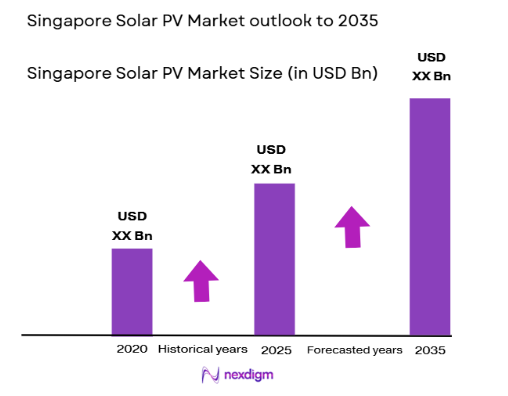
The Singapore Solar PV market is expected to achieve a market size of USD ~ billion, based on a recent historical assessment. The growth is driven by the government’s aggressive push for renewable energy adoption, with significant investments in solar energy projects. Additionally, the country’s favorable policies, including tax incentives, grants, and an increased focus on sustainability, have accelerated the deployment of solar energy systems. The market is also supported by growing consumer awareness and the rising demand for energy-efficient solutions, making solar power an increasingly viable option for both residential and commercial applications.
Singapore has emerged as a dominant player in the Southeast Asian solar PV market. The city-state’s role as a regional hub for clean energy initiatives and innovations has contributed to its leadership. With initiatives like the SolarNova program and extensive government incentives, Singapore has accelerated its solar PV installations. The nation’s strategic location, high solar irradiance, and commitment to sustainability have further enhanced its position as a key player in the global solar market. These factors, coupled with strong urban infrastructure, make Singapore a key driver of solar energy growth in the region.
Market Segmentation
By System Type:
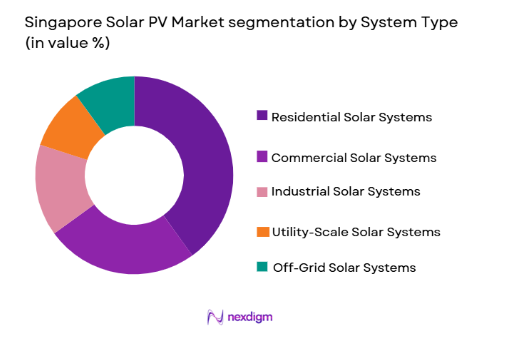
The Singapore Solar PV market is segmented by system type into residential solar systems, commercial solar systems, industrial solar systems, utility-scale solar systems, and off-grid solar systems. Recently, residential solar systems have dominated the market share due to increasing adoption of solar technologies by homeowners who aim to reduce energy costs and their carbon footprint. With strong government incentives and a rise in the adoption of home energy storage systems, residential solar systems continue to lead the market. The availability of affordable financing options and a focus on sustainable living have further contributed to this dominance.
By Platform Type:
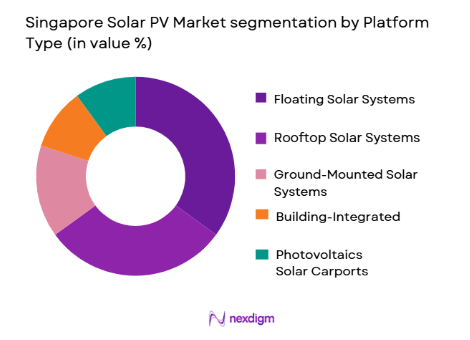
The Singapore Solar PV market is segmented by platform type into rooftop solar systems, ground-mounted solar systems, floating solar systems, building-integrated photovoltaics (BIPV), and solar carports. Floating solar systems have a dominant market share due to the scarcity of land and the need for space-efficient energy solutions. Singapore’s geographical layout and emphasis on maximizing the use of available water bodies, such as reservoirs, have made floating solar systems a popular solution. These systems also provide higher energy yields compared to traditional rooftop systems, further solidifying their market leadership.
Competitive Landscape
The competitive landscape of the Singapore Solar PV market is highly consolidated, with several key players dominating the market. These companies are leveraging technological innovations, government support, and competitive pricing to maintain their positions. The influence of major players is evident through partnerships with local and international stakeholders, and their ability to scale solar PV systems rapidly across various sectors. As the market continues to grow, consolidation is expected to strengthen, with dominant players further expanding their operations to meet rising demand.
| Company Name | Establishment Year | Headquarters | Technology Focus | Market Reach | Key Products | Revenue (USD) | Additional Parameter |
| Sembcorp Industries | 1998 | Singapore | ~ | ~ | ~ | ~ | ~ |
| REC Solar | 1996 | Singapore | ~ | ~ | ~ | ~ | ~ |
| Sunseap | 2011 | Singapore | ~ | ~ | ~ | ~ | ~ |
| Vena Energy | 2017 | Singapore | ~ | ~ | ~ | ~ | ~ |
| First Solar | 1999 | United States | ~ | ~ | ~ | ~ | ~ |
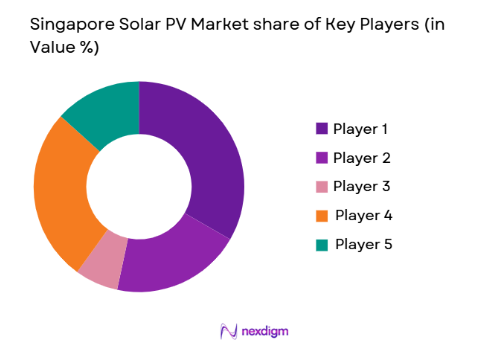
Singapore Solar PV Market Analysis
Growth Drivers
Government Incentives for Renewable Energy:
The Singapore Solar PV market is significantly driven by government incentives such as the SolarNova program and tax credits, which make solar energy systems more affordable for residential and commercial consumers. These initiatives are designed to encourage solar adoption, reduce reliance on fossil fuels, and contribute to the nation’s clean energy goals. With a strong emphasis on sustainability, Singapore’s government continues to offer rebates and grants, thus fostering market growth. Moreover, the introduction of financial support schemes, such as subsidies for rooftop solar systems, enhances the accessibility of solar solutions, allowing more households and businesses to invest in clean energy solutions. These incentives have attracted both local and international investments, accelerating the expansion of solar PV projects across Singapore. The supportive policy framework has played a pivotal role in reducing the upfront costs of solar systems, making them a viable and attractive investment for a wider range of consumers.
Rising Demand for Clean Energy Solutions:
Singapore’s growing emphasis on reducing its carbon footprint and achieving sustainability goals has contributed to an increased demand for clean energy solutions. With global pressure to combat climate change and a rising focus on reducing greenhouse gas emissions, the adoption of solar energy has been a key factor in meeting these targets. Additionally, the increasing awareness of environmental concerns among consumers and businesses alike has made renewable energy sources, such as solar PV, an attractive alternative to traditional fossil fuels. As energy demand continues to rise across sectors, the need for reliable and cost-effective energy sources is more pressing. Solar energy, being an abundant and renewable resource, is poised to play a critical role in Singapore’s energy mix, driving long-term growth in the solar PV market.
Market Challenges
High Initial Investment Cost:
A key challenge facing the Singapore Solar PV market is the high initial investment required for solar installations. Although the government provides substantial incentives, the upfront costs for purchasing, installing, and maintaining solar systems remain relatively high. Many consumers, especially in the residential sector, are deterred by these initial costs, despite the long-term savings on energy bills. The cost of solar panels, inverters, and batteries, along with the expense of professional installation services, creates a financial barrier that limits the widespread adoption of solar technology. Additionally, while the price of solar panels has dropped significantly in recent years, the costs of system installation and energy storage solutions continue to present a challenge for some market segments.
Land and Space Constraints:
Singapore’s limited land area and high population density present significant challenges to the widespread adoption of solar energy. With limited available land for large-scale solar projects, the government and private sector have increasingly turned to innovative solutions such as floating solar panels and rooftop installations. However, these solutions are not always feasible in all urban areas, and the space constraints limit the potential for expansion. As a result, Singapore faces challenges in scaling up its solar capacity in a manner that meets the growing energy demands of its population and businesses. The high cost of land further exacerbates this issue, making it challenging to implement large utility-scale solar projects that could significantly boost the country’s solar energy capacity.
Opportunities
Growth in Floating Solar Technology:
Floating solar systems present a significant opportunity for the Singapore Solar PV market due to the country’s limited land availability. By utilizing the water surfaces of reservoirs, these systems allow for efficient use of otherwise unused space. Floating solar systems have become a leading solution in Singapore’s solar market, and the country has become a global leader in deploying these systems. As Singapore continues to focus on sustainable development and the efficient use of land and water resources, the adoption of floating solar technology is expected to grow rapidly. The successful implementation of floating solar projects not only offers a viable alternative to land-based installations but also delivers higher efficiency by reducing temperature-related losses that affect conventional solar panels.
Expanding Solar + Storage Market:
With the increasing demand for energy independence and the need to optimize solar power utilization, there is a significant opportunity for the growth of the solar energy storage market. Solar + storage solutions combine solar panels with advanced battery storage technologies, allowing consumers to store excess energy generated during the day for use during the night or during periods of peak demand. This integration is crucial for overcoming the intermittent nature of solar energy and ensuring a stable energy supply. As the costs of battery storage systems continue to decrease, more households and businesses are expected to adopt solar + storage solutions, providing a substantial growth opportunity for the Singapore Solar PV market.
Future Outlook
The Singapore Solar PV market is expected to experience significant growth over the next five years, driven by advancements in technology, government policies, and increasing demand for renewable energy solutions. The adoption of solar technologies, particularly floating solar systems, will play a crucial role in meeting the country’s renewable energy goals. Technological advancements in energy storage will further enhance the efficiency and reliability of solar power, making it an even more attractive option for both residential and commercial consumers. With continued regulatory support, the solar PV market in Singapore is poised for expansion, offering a promising future for clean energy solutions.
Major Players
- Sembcorp Industries
- REC Solar
- Sunseap
- Vena Energy
- First Solar
- Longi Solar
- Trina Solar
- JinkoSolar
- Canadian Solar
- Sungrow Power
- E.ON
- SolarEdge
- Enphase Energy
- GCL-Poly Energy
- Tata Power Solar
Key Target Audience
- Investments and venture capitalist firms
- Government and regulatory bodies
- Energy utilities and service providers
- Commercial enterprises
- Residential consumers
- Solar equipment manufacturers
- Technology innovators in renewable energy
- Energy storage system providers
Research Methodology
Step 1: Identification of Key Variables
This involves defining the key factors and variables impacting the market, such as government regulations, technological advancements, and consumer preferences, that drive the solar PV market.
Step 2: Market Analysis and Construction
The collected data is analyzed, and the market structure is established based on identified variables, focusing on segmentation and industry trends.
Step 3: Hypothesis Validation and Expert Consultation
Market assumptions are tested through consultation with industry experts, companies, and stakeholders to ensure the accuracy of predictions and market insights.
Step 4: Research Synthesis and Final Output
The final analysis is synthesized into a comprehensive market report that provides insights, forecasts, and strategic recommendations for stakeholders in the market.

- Executive Summary
- Research Methodology (Definitions, Scope, Industry Assumptions, Market Sizing Approach, Primary & Secondary Research Framework, Data Collection & Verification Protocol, Analytic Models & Forecast Methodology, Limitations & Research Validity Checks)

- Market Definition and Scope
- Value Chain & Stakeholder Ecosystem
- Regulatory / Certification Landscape
- Sector Dynamics Affecting Demand
- Strategic Initiatives & Infrastructure Growth

- Growth Drivers
Government Incentives for Renewable Energy
Technological Advancements in Solar Panel Efficiency
Increasing Electricity Demand in Singapore
Declining Solar Panel Costs
Rising Environmental Concerns - Market Challenges
Limited Land Availability for Solar Installations
High Initial Investment Costs
Intermittent Solar Power Generation
Regulatory and Permitting Delays
Energy Storage Integration Challenges - Market Opportunities
Expansion of Floating Solar Systems
Adoption of Solar + Storage Solutions
Growing Demand for Energy-efficient Buildings - Trends
Rise of Smart Solar Grids
Increase in Residential Solar Installations
Development of Solar Energy Storage Technologies
Integration of AI in Solar PV Systems
Focus on Sustainable and Green Technologies - Government Regulations & Defense Policy
Solar Energy Policy and Incentives
Solar Power Procurement Guidelines
Government Support for Clean Energy Transition - SWOT Analysis
- Stakeholder and Ecosystem Analysis
- Porter’s Five Forces Analysis
- Competition Intensity and Ecosystem Mapping

- By Market Value, 2020-2025
- By Installed Units, 2020-2025
- By Average System Price, 2020-2025
- By System Complexity Tier, 2020-2025

- By System Type (In Value%)
Residential Solar Systems
Commercial Solar Systems
Industrial Solar Systems
Utility-scale Solar Systems
Off-grid Solar Systems - By Platform Type (In Value%)
Rooftop Solar Systems
Ground-mounted Solar Systems
Floating Solar Systems
Building Integrated Photovoltaics (BIPV)
Solar Carports - By Fitment Type (In Value%)
Roof-mounted Systems
Ground-mounted Systems
Integrated Systems
Hybrid Systems
Modular Systems - By EndUser Segment (In Value%)
Residential Consumers
Commercial Enterprises
Industrial Enterprises
Utilities
Government Institutions - By Procurement Channel (In Value%)
Direct Procurement
Government Tenders
Private Sector Procurement
Third-party Distributors
Online Platforms - By Material / Technology (in Value%)
Monocrystalline Silicon
Polycrystalline Silicon
Thin-film Solar Cells
Bifacial Solar Panels
Perovskite Solar Cells

- Market structure and competitive positioning
- Market share snapshot of major players
- CrossComparison Parameters (System Type, Platform Type, Procurement Channel, EndUser Segment, Fitment Type, Material, Technology, Market Value, Installed Units, Average System Price)
- SWOT Analysis of Key Players
- Pricing & Procurement Analysis
- Key Players
Sembcorp Industries
Suntec Solar
Tuas Power
REC Solar
Vena Energy
First Solar
Longi Solar
Trina Solar
JinkoSolar
Canadian Solar
Sungrow Power
E.ON
SolarEdge
Enphase Energy
GCL-Poly Energy

- Rising Adoption of Solar in Residential Properties
- Government Entities Leading Solar Installations
- Corporates Shifting to Solar to Lower Energy Costs
- Energy-intensive Industries Expanding Solar Deployment

- Forecast Market Value, 2026-2035
- Forecast Installed Units, 2026-2035
- Price Forecast by System Tier, 2026-2035
- Future Demand by Platform, 2026-2035


 Request a Sample
 Ask for Customization
 Get a Quote
 Enquire Now