
 Download PDF
Market Overview
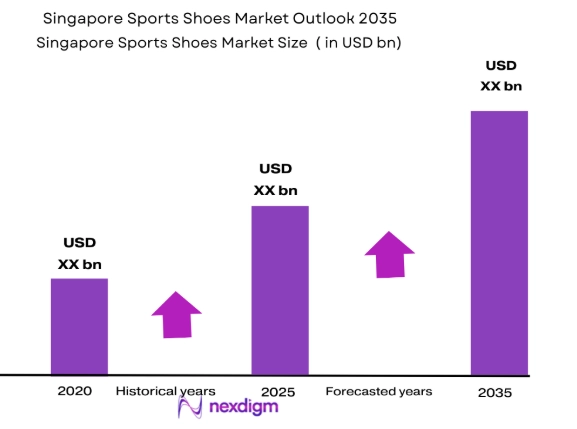
The Singapore Sports Shoes Market is valued at USD ~ billion, based on a five-year historical analysis, and is forecast to grow at a CAGR of 4.2% during 2024–2030. Demand is driven by fitness-oriented urban lifestyles, premium athletic footwear adoption, running culture, and digital retail expansion. The wider Singapore athletic footwear market is valued at USD 2.4 billion in 2025 and projected to reach USD 3.7 billion by 2033, supporting sustained category expansion.
Singapore’s sports shoes demand is concentrated in Central Region, Orchard Road, Marina Bay, Tampines, Jurong East, and suburban mall clusters, because these areas combine high retail density, office footfall, tourist spending, gyms, schools, and sports facilities. Singapore’s total population reached around 6.04 million in the latest completed annual dataset, while sport participation remains structurally supported by national programmes and ActiveSG academies serving over 8,000 participants per season.
Market Segmentation
By Product Type
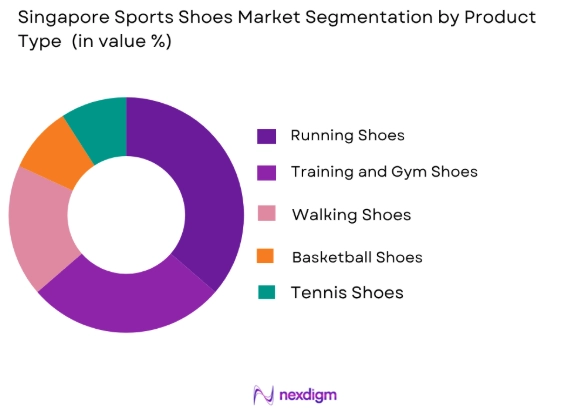
Singapore Sports Shoes Market is segmented by product type into running shoes, training and gym shoes, walking shoes, basketball shoes, football shoes, tennis shoes, and others. Recently, running shoes have held a dominant market share under product type, driven by Singapore’s strong culture of walking, jogging, marathon participation, and recreational fitness. Running shoes are also widely purchased for non-sport daily wear because they offer cushioning, breathable uppers, arch support, and compatibility with office-to-leisure dressing. Brands such as Nike, ASICS, Adidas, New Balance, Hoka, and On Running have strengthened the segment through performance-oriented launches, running clubs, mall-based experiential stores, and online drops. The segment also benefits from Singapore’s compact urban structure, where commuting, gym routines, and weekend outdoor activities overlap. Consumers increasingly prefer shoes that combine comfort, performance, and lifestyle aesthetics, making running footwear a broader athleisure product rather than a niche sports product.
By Distribution Channel
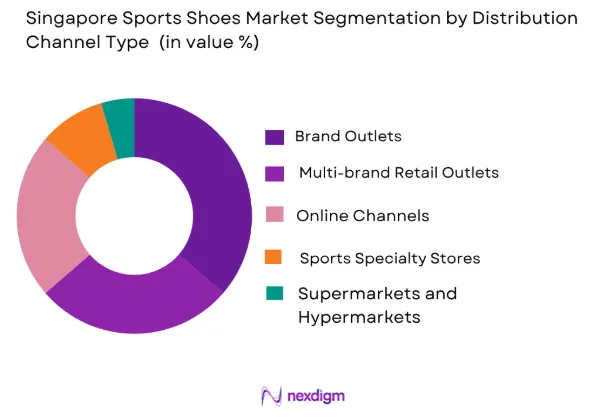
Singapore Sports Shoes Market is segmented by distribution channel into brand outlets, multi-brand retail stores, online channels, sports specialty stores, department stores, and others. Recently, brand outlets have maintained a dominant market share under distribution channel, supported by the strong presence of global sportswear companies in Orchard Road, Jewel Changi Airport, Marina Bay Sands, VivoCity, Suntec City, and major suburban malls. Brand outlets dominate because consumers buying sports shoes often want size trials, gait comfort checks, product authenticity, immediate exchange support, and access to exclusive launches. Premium brands also use mono-brand stores to showcase technology such as foam cushioning, carbon plates, breathable mesh, stability soles, and sustainability-led materials. While online channels are growing quickly due to marketplace convenience, official brand stores remain highly relevant in Singapore because the market is compact, mall penetration is high, and shoppers often combine physical browsing with online price comparison before completing purchases.
Competitive Landscape
The Singapore Sports Shoes Market is led by global athletic footwear brands with strong retail networks, premium positioning, and high consumer recall. Nike, Adidas, Puma, ASICS, and New Balance remain among the most visible companies, supported by flagship stores, e-commerce platforms, sports partnerships, limited-edition collections, and active engagement with runners, gym users, students, and sneaker consumers. Competition is concentrated but dynamic, as specialist running brands such as Hoka and On Running are gaining relevance.
| Company | Establishment Year | Headquarters | Core Positioning | Key Sports Shoe Categories | Singapore Channel Strength | Technology Focus | Consumer Base | Competitive Advantage |
| Nike | 1964 | Beaverton, USA | ~ | ~ | ~ | ~ | ~ | ~ |
| Adidas | 1949 | Herzogenaurach, Germany | ~ | ~ | ~ | ~ | ~ | ~ |
| Puma | 1948 | Herzogenaurach, Germany | ~ | ~ | ~ | ~ | ~ | ~ |
| ASICS | 1949 | Kobe, Japan | ~ | ~ | ~ | ~ | ~ | ~ |
| New Balance | 1906 | Boston, USA | ~ | ~ | ~ | ~ | ~ | ~ |
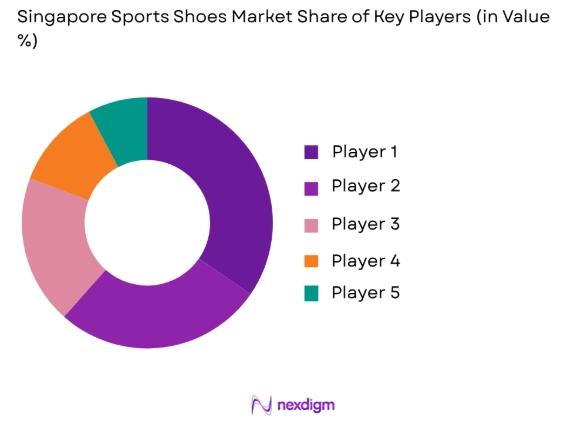
Singapore Sports Shoes Market Analysis
Growth Drivers
Rising Participation in Fitness and Sports Activities
Singapore Sports Shoes Market is strongly driven by rising participation in running, gym training, walking, cycling, indoor sports, and community fitness programmes. Consumers are increasingly purchasing specialized footwear for different activities instead of relying on one generic pair. Running clubs, marathon events, school sports, corporate wellness programmes, and public fitness initiatives have encouraged repeat demand for running shoes, training shoes, and walking shoes. The country’s compact urban environment also supports active commuting and recreational walking, making comfort-based sports shoes relevant for daily use. This has expanded the consumer base beyond athletes to include office workers, students, older adults, and casual fitness users.
Growth of Athleisure and Casual Sportswear Trends
Athleisure has become a major growth driver for Singapore Sports Shoes Market as consumers increasingly wear sports shoes for casual, work, travel, and lifestyle purposes. Sports footwear is no longer limited to gyms or sports grounds; it is now part of daily fashion. Brands such as Nike, Adidas, New Balance, Puma, and On Running benefit from this shift through sneakers that combine comfort, performance, and design appeal. Younger consumers are especially influenced by social media, celebrity endorsements, sneaker drops, and streetwear culture. This trend increases purchase frequency because consumers buy sports shoes not only for function but also for styling, brand identity, and seasonal collections.
Market Challenges
Intense Market Competition
Singapore Sports Shoes Market faces intense competition due to the presence of several global and regional brands operating across similar price points and product categories. Nike, Adidas, Puma, ASICS, New Balance, Skechers, Decathlon, Hoka, and On Running compete for the same consumer groups through flagship stores, online channels, discounts, influencer campaigns, and product launches. This creates pressure on pricing, margins, and customer retention. Consumers can easily compare prices across malls, marketplaces, and official websites, making loyalty harder to sustain. Smaller brands also struggle to gain visibility because premium retail space is expensive and dominated by established international players.
Price Sensitivity Among Consumers
Price sensitivity remains a major challenge in Singapore Sports Shoes Market despite the country’s high-income consumer base. Many buyers compare prices across online marketplaces, brand outlets, seasonal sales, and overseas e-commerce platforms before purchasing. Mid-range and mass-market consumers often delay purchases until promotional periods such as Great Singapore Sale, 11.11, 12.12, Black Friday, or brand clearance events. Premium running and lifestyle shoes can be expensive, which limits frequent replacement among value-conscious consumers. This forces brands and retailers to maintain discount strategies, bundle offers, loyalty points, and outlet sales, which can reduce profitability and weaken full-price product positioning.
Opportunities
Growing Demand for Sustainable and Eco-friendly Sports Shoes
Singapore Sports Shoes Market has a strong opportunity in sustainable and eco-friendly sports shoes as consumers become more conscious about material sourcing, waste reduction, and responsible consumption. Brands can benefit by offering shoes made with recycled polyester, plant-based materials, low-carbon soles, and recyclable packaging. Sustainability-led collections are especially relevant among younger urban consumers who prefer brands aligned with environmental values. Retailers can also introduce take-back programmes, repair services, and circular footwear campaigns to increase customer engagement. As sustainability becomes part of brand differentiation, companies that combine performance, comfort, and credible environmental claims can strengthen long-term consumer loyalty.
Expansion of Online and Direct-to-Consumer Channels
Expansion of online and direct-to-consumer channels presents a major opportunity for Singapore Sports Shoes Market. Consumers increasingly research products online, compare reviews, check sizes, and purchase through official websites, mobile apps, marketplaces, and social commerce platforms. Brands can use direct channels to control pricing, launch exclusive products, collect customer data, and offer personalized recommendations. Online retail also helps niche and specialist brands reach consumers without relying only on expensive mall locations. Features such as virtual fit tools, easy returns, loyalty programmes, and limited online drops can improve conversion. This opportunity is especially important as younger consumers prefer convenience, speed, and digital-first shopping experiences.
Future Outlook
Over the next five years, the Singapore Sports Shoes Market is expected to expand steadily as active lifestyles, gym memberships, recreational running, and athleisure dressing continue to influence footwear purchases. The market will benefit from premiumization, direct-to-consumer retail, and rising consumer interest in shoes that combine performance, comfort, and style.Growth will also be supported by Singapore’s role as a regional retail and tourism hub. Flagship stores, airport retail, integrated malls, and online marketplaces will continue to give global footwear brands high visibility. Consumers are expected to shift toward lightweight, sustainable, and specialized shoes for running, training, walking, and lifestyle usage.Key future growth themes include recycled materials, carbon-plated running shoes, AI-assisted fit recommendations, omnichannel loyalty programmes, influencer-led launches, and limited-edition sneaker collaborations. At the same time, price sensitivity, counterfeit risks, and intense competition will pressure margins, especially for mid-range brands.
Major Players
- Nike
- Adidas
- Puma
- ASICS
- New Balance
- Skechers
- Under Armour
- Reebok
- Fila
- Mizuno
- Converse
- Vans
- Decathlon
- On Running
- Hoka
Key Target Audience
- Sports footwear manufacturers
- Sportswear and athletic apparel companies
- Footwear distributors and importers
- Online fashion and sports retail platforms
- Mall developers and retail space owners
- Investments and venture capitalist firms
- Government and regulatory bodies, including Sport Singapore, Enterprise Singapore, Singapore Customs, Competition and Consumer Commission of Singapore, and Health Promotion Board
- Fitness chains, sports clubs, and wellness operators
Research Methodology
Step 1: Identification of Key Variables
The initial phase involves constructing an ecosystem map for the Singapore Sports Shoes Market, covering manufacturers, importers, distributors, online retailers, sports stores, gyms, and consumer groups. This step uses secondary and proprietary datasets to identify the key demand variables influencing product adoption, pricing, channel movement, and brand positioning.
Step 2: Market Analysis and Construction
In this phase, historical data for Singapore’s sports shoes and athletic footwear categories is compiled and analyzed. This includes reviewing retail sales movement, consumer preference patterns, product mix, brand availability, import dependence, and distribution channel contribution to construct a reliable market size framework.
Step 3: Hypothesis Validation and Expert Consultation
Market hypotheses are validated through structured discussions with industry professionals, including retailers, distributors, category managers, and footwear brand representatives. These consultations provide operational insights on product demand, margins, inventory movement, online conversion, premiumization, and competitive positioning across major retail clusters.
Step 4: Research Synthesis and Final Output
The final phase integrates desk research, trade insights, retailer feedback, and bottom-up market modelling to produce validated findings. Product categories, sales channels, consumer segments, and major players are cross-checked to ensure the final Singapore Sports Shoes Market report reflects practical market conditions and commercial realities.

- Executive Summary
- Research Methodology (Market Definitions and Assumptions Abbreviations, Market Sizing Approach, Consolidated Research Approach, Understanding Market Potential Through In-Depth Industry Interviews, Primary Research Approach, Limitations and Future Conclusions)

- Definition and Scope
- Market Dynamics Overview
- Market Genesis
- Major Players and Market Timeline
- Business Cycle and Trends
- Supply Chain and Value Chain Analysis

- Growth Drivers
Rising Participation in Fitness and Sports Activities
Increasing Health and Wellness Awareness
Growth of Athleisure and Casual Sportswear Trends
Expansion of E-commerce and Omnichannel Retail
Rising Demand for Branded and Premium Sports Shoes - Market Challenges
High Import Dependence and Supply Chain Disruptions
Intense Market Competition
Price Sensitivity Among Consumers
Counterfeit and Grey Market Products
Changing Consumer Preferences and Short Product Lifecycles - Opportunities
Growing Demand for Sustainable and Eco-friendly Sports Shoes
Expansion of Online and Direct-to-Consumer Channels
Innovation in Lightweight and Performance-based Footwear
Rising Adoption of Smart and Customized Sports Shoes
Increasing Demand from Youth and Fitness-focused Consumers - Key Trends
Shift Toward Athleisure and Lifestyle Sports Footwear
Rising Popularity of Limited-edition and Collaborated Sneakers
Increasing Preference for Sustainable Materials
Growth of Digital Retail and Social Commerce
Demand for Comfort, Cushioning, and Performance Technology - Government Regulations
- SWOT Analysis
- Porter’s Five Forces

- By Value, 2020–2025
- By Volume, 2020–2025
- By Average Price, 2020–2025

- By Product Type (In Value %)
Running Shoes
Training and Gym Shoes
Walking Shoes
Basketball Shoes
Football Shoes
Tennis Shoes
Others - By Consumer Type (In Value %)
Men
Women
Kids - By Price Range (In Value %)
Mass/Economy
Mid-range
Premium
Luxury - By End User (In Value %)
Professional Athletes
Fitness Enthusiasts
Casual Users
Students and Youth
Others - By Distribution Channel (In Value %)
Brand Outlets
Multi-brand Retail Stores
Online Channels
Sports Specialty Stores
Supermarkets and Hypermarkets
Others - By Region (In Value %)
Central Region
East Region
North Region
North-East Region
West Region

- Market Share of Major Players by Value/Volume
- Market Share of Major Players by Product Type
- Cross Comparison Parameters (Company Overview Business Strategies, Recent Developments, Strengths and Weaknesses, Organizational Structure, Revenues, Revenues by Product Type, Number of Retail Touchpoints, Distribution Channels, Dealer and Distributor Network, Margins, Manufacturing/Import Capabilities, Unique Value Offering, Others)
- SWOT Analysis of Major Players
- Pricing Analysis Based on Product Categories for Major Players
- Detailed Profiles of Major Companies
Nike
Adidas
Puma
ASICS
New Balance
Skechers
Under Armour
Reebok
Fila
Mizuno
Converse
Vans
Decathlon
On Running
Hoka

- Market Demand and Utilization
- Purchasing Power and Budget Allocations
- Brand Preferences and Buying Behavior
- Needs, Desires, and Pain Point Analysis
- Decision-Making Process

- By Value, 2026–2035
- By Volume, 2026–2035
- By Average Price, 2026–2035


 Request a Sample
 Ask for Customization
 Get a Quote
 Enquire Now