
 Download PDF
Market Overview
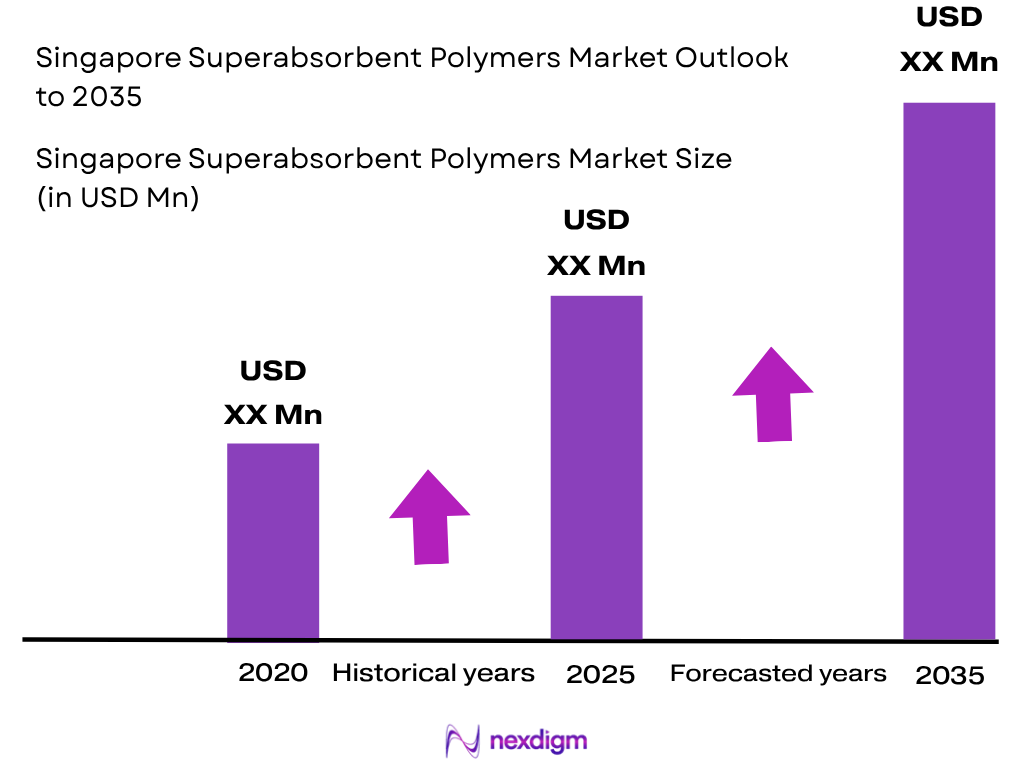
The Singapore Superabsorbent Polymers Market is valued at ~USD XX million in 2024, compared with ~USD XX million in 2023, supported by demand from disposable hygiene products, healthcare applications, industrial absorbents, and regional manufacturing supply chains. Singapore’s established petrochemical ecosystem, advanced specialty-chemical infrastructure, and access to Southeast Asian hygiene-product manufacturers support the consumption and distribution of SAP materials. Demand is particularly influenced by high-performance absorbency requirements, thinner hygiene-product designs, and the country’s role as a regional chemical and logistics hub.
Singapore’s SAP ecosystem is concentrated around major industrial and commercial clusters, particularly Jurong Island and western Singapore, where petrochemical, specialty chemical, logistics, and advanced manufacturing infrastructure are closely integrated. Singapore recorded ~XX million residents in 2024 and maintained extensive international trade connectivity, supporting demand for imported specialty polymers and downstream manufacturing inputs. The country’s proximity to major Southeast Asian hygiene-product manufacturing markets, combined with port infrastructure and established chemical distribution networks, strengthens its position as a regional supply and re-export location for superabsorbent polymers.
Market Segmentation
By Product Type
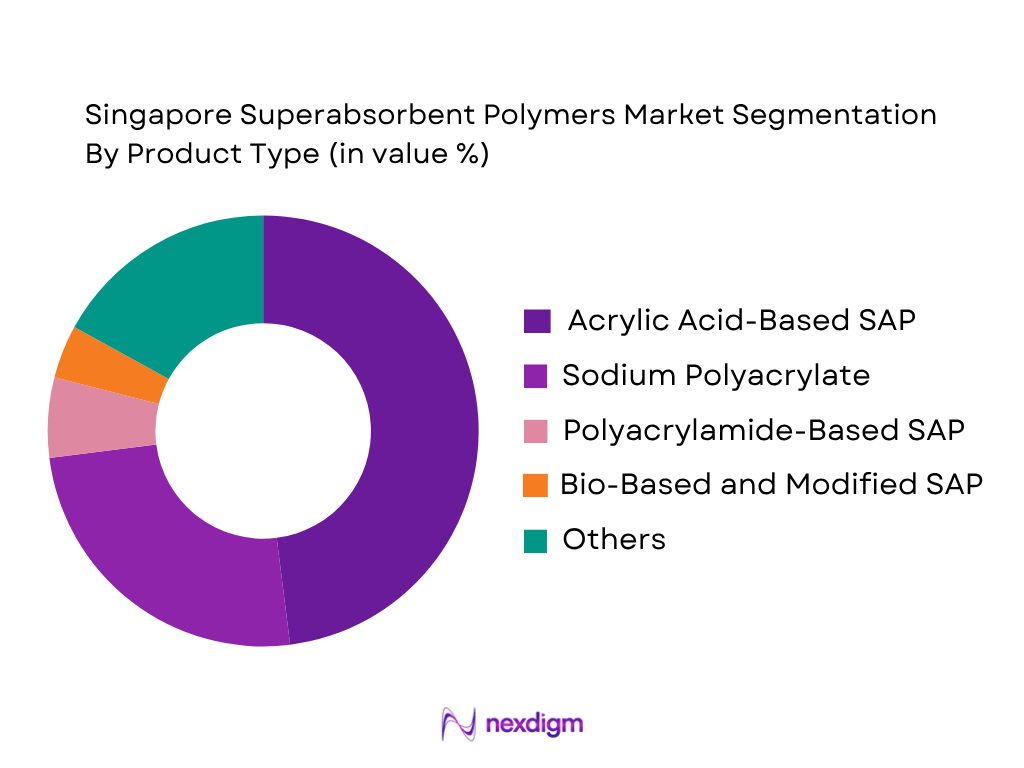
The Singapore Superabsorbent Polymers Market is segmented by product type into acrylic acid-based SAP, sodium polyacrylate, polyacrylate/polyacrylamide copolymers, polyacrylamide-based SAP, bio-based and modified SAP, and other specialty SAP grades. Acrylic acid-based SAP accounts for the dominant share at ~XX.X% in 2024, supported by its established use in disposable hygiene products and its ability to provide high liquid absorption and retention. Sodium polyacrylate remains an important chemistry because of its strong swelling characteristics and established commercial processing routes. Demand from baby diapers and feminine hygiene products continues to favor established acrylic-based formulations because manufacturers require consistent absorption, retention, gel strength, and compatibility with thinner absorbent cores. Surface modification and crosslinking technologies further improve absorption under load and liquid distribution. Singapore’s advanced chemical infrastructure also supports the handling, formulation, storage, and regional distribution of specialty polymer grades. Specialty and modified SAP products are expected to gain attention as hygiene manufacturers seek improved performance, lower material loading, and differentiated absorbency characteristics.
By Application
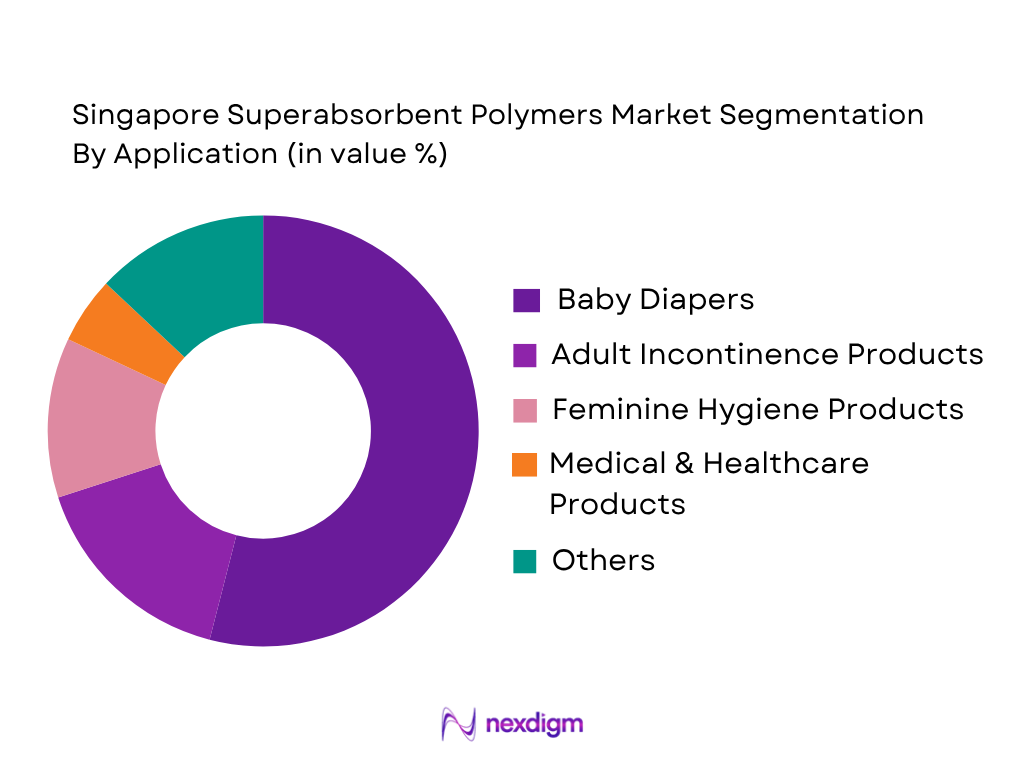
The Singapore Superabsorbent Polymers Market is segmented by application into baby diapers, adult incontinence products, feminine hygiene products, medical absorbent products, agriculture and horticulture, industrial absorbent applications, and other specialty applications. Baby diapers represent the leading application with a ~XX.X% share in 2024, reflecting the extensive use of SAP in modern disposable diaper absorbent cores. SAP enables manufacturers to achieve high fluid retention while reducing absorbent-core thickness, supporting lightweight and compact hygiene products. Adult incontinence products represent another important application as healthcare and elderly-care requirements increase across developed Asian markets. Feminine hygiene products also use SAP to improve fluid retention and product comfort. Medical applications require controlled absorption and material consistency, while industrial applications use specialty SAP grades for fluid containment and moisture management. Singapore’s role as a regional manufacturing, logistics, and chemical distribution center additionally creates demand associated with supplying downstream manufacturers across Southeast Asia.
Competitive Landscape
The Singapore Superabsorbent Polymers Market involves global polymer manufacturers, specialty chemical companies, and regional suppliers serving hygiene-product manufacturers and industrial customers. Competition is influenced by polymer chemistry, absorption performance, product consistency, supply reliability, technical support, and regional distribution capabilities. Major international SAP suppliers participate through direct sales, regional subsidiaries, distributors, or supply arrangements with hygiene manufacturers. The competitive environment also reflects Singapore’s position as a chemical and logistics hub serving Southeast Asian markets.
| Company | Establishment Year | Headquarters | SAP Product Portfolio | Key Application Exposure | Regional Supply Capability | Technology Focus | Distribution Model |
| Sumitomo Seika Chemicals Co., Ltd. | 1944 | Japan | ~ | ~ | ~ | ~ | ~ |
| Nippon Shokubai Co., Ltd. | 1941 | Japan | ~ | ~ | ~ | ~ | ~ |
| BASF SE | 1865 | Germany | ~ | ~ | ~ | ~ | ~ |
| LG Chem Ltd. | 1947 | South Korea | ~ | ~ | ~ | ~ | ~ |
| Evonik Industries AG | 2007 | Germany | ~ | ~ | ~ | ~ | ~ |
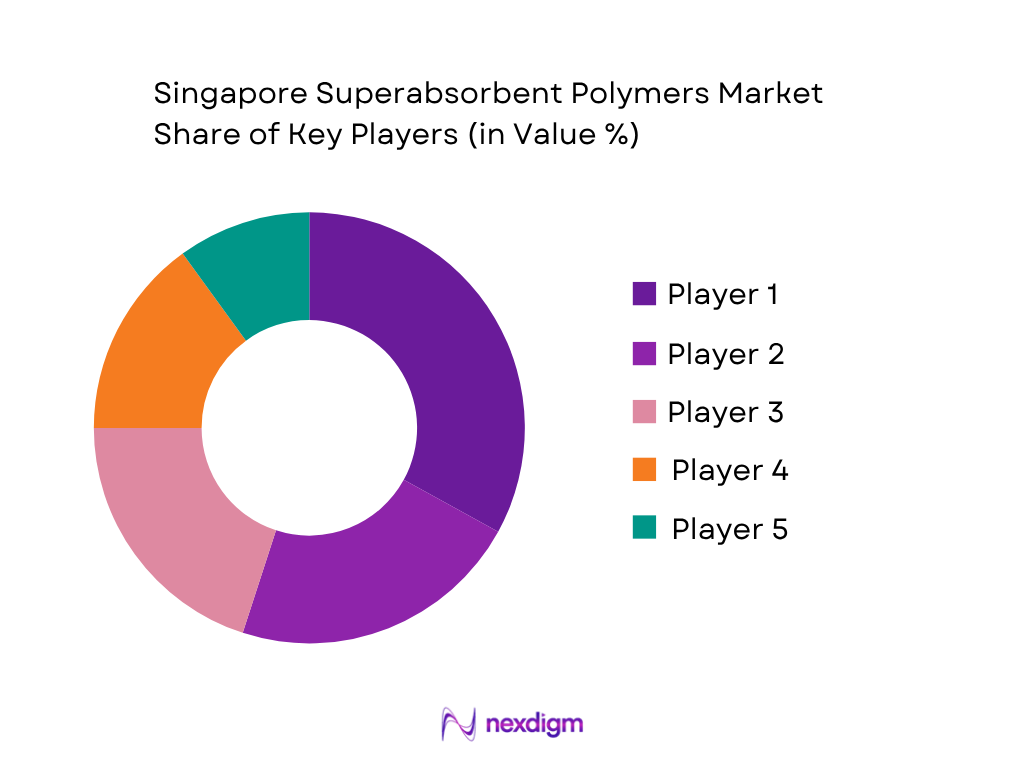
Singapore Superabsorbent Polymers Market Analysis
Growth Drivers
Expansion of SAP Manufacturing Capacity on Jurong Island
Singapore’s integrated energy and chemicals ecosystem provides a strong industrial base for superabsorbent polymer-related manufacturing, specialty polymer processing, and regional chemical supply. Jurong Island hosts more than 100 energy and chemicals companies, while the sector employs more than 27,000 workers and contributes around 3% of Singapore’s GDP, demonstrating the depth of the country’s chemical manufacturing infrastructure. The chemicals sector also represented roughly one-quarter of manufacturing output in 2024, while total manufacturing output reached S$423.6 billion. This concentration of refining, petrochemical, specialty-chemical, utilities, logistics, and technical-service capabilities can support SAP producers through established feedstock handling, industrial utilities, storage, and export infrastructure. Singapore’s chemical cluster recorded 4.3% growth in output in 2024, with petrochemicals increasing 4.0%, reinforcing the operating environment for polymer-intensive industries. The presence of more than 100 companies within Jurong Island also facilitates supplier integration and access to industrial services required for high-specification polymer production. For SAP, this ecosystem is particularly relevant to acrylic-acid-based chemistry, surface-crosslinked materials, specialty absorbent grades, and regional supply operations serving hygiene-product manufacturers across Southeast Asia.
Southeast Asian Disposable Hygiene Demand
Singapore’s strategic position within Southeast Asia supports SAP demand through regional trade, chemical distribution, and connections with downstream hygiene-product manufacturing. Singapore’s energy and chemicals ecosystem includes more than 100 companies, while its integrated Jurong Island infrastructure provides established links across refining, petrochemicals, specialty chemicals, logistics, storage, and industrial services. The broader chemicals sector contributed approximately 3% of Singapore’s GDP and around one-quarter of manufacturing output, creating an industrial platform suited to supplying high-performance materials used by regional converters. Singapore’s manufacturing base generated S$423.6 billion of total output in 2024, while the chemicals cluster expanded by 4.3%, demonstrating continued industrial activity relevant to specialty-material demand. The country’s position as an Asian chemicals hub is further reinforced by more than S$60 billion invested by global chemicals companies and more than 27,000 skilled workers across the energy and chemicals sector. For SAP, this infrastructure supports imported polymer grades, regional warehousing, technical distribution, and supply arrangements with hygiene-product manufacturers producing diapers, feminine hygiene products, and adult incontinence products for Southeast Asian markets. The combination of chemical expertise and trade connectivity creates a strong platform for high-absorbency material suppliers seeking regional customers rather than relying solely on Singapore’s relatively small domestic consumer base.
Market Challenges
Dependence on Imported Acrylic Acid and Specialty Feedstocks
Singapore’s SAP industry faces structural exposure to imported upstream feedstocks because the country has no domestic crude-oil or natural-gas reserves and operates as an internationally connected refining and chemicals hub. Although Jurong Island integrates refining, petrochemicals, specialty chemicals, storage, utilities, and logistics, SAP production remains exposed to international availability and transportation conditions for acrylic acid and other specialty inputs. The scale of the surrounding chemical ecosystem is substantial, with more than 100 companies operating on Jurong Island and cumulative investment exceeding S$50 billion over the island’s development period. At the same time, Singapore’s chemicals cluster experienced different performance across subsectors in 2024: overall chemicals output increased 4.3%, while the specialties segment contracted 26.2% in the fourth quarter. Such variation highlights the sensitivity of specialty chemical operations to feedstock conditions, plant utilization, product mix, and external demand. SAP producers therefore need reliable procurement channels, inventory planning, supplier diversification, and technical qualification of alternative raw materials. The challenge becomes more significant for high-performance hygiene-grade SAP because product qualification depends on tightly controlled polymer properties, including absorption capacity, retention, permeability, gel strength, and particle-size distribution. Singapore’s import-oriented industrial structure therefore creates an ongoing need to manage upstream supply continuity while maintaining consistent polymer specifications for downstream hygiene applications.
High Energy and Utility Requirements
SAP production and related polymer processing can face substantial exposure to energy, utilities, and environmental-management requirements because Singapore operates a highly developed but resource-constrained industrial economy. The energy and chemicals sector contributes approximately 3% of GDP, accounts for roughly one-quarter of manufacturing output, and employs more than 27,000 people, illustrating the scale of industrial operations concentrated within a limited geographic area. Jurong Island also contains more than 100 companies, creating substantial demand for electricity, steam, water, cooling, storage, and logistics services. Energy intensity is particularly relevant to polymer manufacturing because upstream chemical conversion, purification, polymerization, drying, surface treatment, and material handling require controlled industrial conditions. Singapore is simultaneously pursuing decarbonization of the energy and chemicals sector; official industry information indicates that around one-third of Singapore’s greenhouse-gas emissions are associated with refining and petrochemicals. This increases the strategic importance of energy efficiency, emissions management, resource efficiency, and lower-carbon production pathways for chemical manufacturers. For SAP producers, these requirements can influence plant configuration, process optimization, feedstock selection, waste management, and investment priorities. The challenge is therefore not limited to utility availability but extends to maintaining competitive manufacturing economics while meeting increasingly demanding environmental and resource-efficiency objectives within Singapore’s dense industrial environment.
Market Opportunities
Expansion of High-Performance Hygiene-Grade SAP
Singapore offers an opportunity to develop and distribute higher-performance SAP grades because its chemical ecosystem combines advanced manufacturing infrastructure, technical talent, regional connectivity, and established specialty-chemical capabilities. The energy and chemicals sector employs more than 27,000 workers, while Jurong Island hosts more than 100 companies, creating access to industrial engineering, chemical-processing, logistics, and technical-service capabilities. The sector contributes approximately 3% of Singapore’s GDP and around one-quarter of manufacturing output, providing a substantial industrial platform for specialty-material development. Singapore is also actively repositioning Jurong Island toward specialty chemicals, sustainable materials, circular feedstocks, and low-carbon technologies. The country’s chemical cluster increased output by 4.3% in 2024, while the petroleum and petrochemicals segments increased 6.1% and 4.0%, respectively. These conditions create an opportunity for SAP suppliers to move beyond conventional absorbency grades toward surface-crosslinked, high-retention, high-absorption-under-load, and thinner-core-compatible materials. Such products can support manufacturers seeking improved diaper performance while reducing absorbent-core thickness and material loading. Singapore’s role as a regional chemicals hub also allows advanced SAP grades to be positioned for customers outside the domestic market, particularly across Southeast Asian hygiene manufacturing networks. This creates an opportunity spanning product development, regional technical support, specialty distribution, and higher-value polymer applications.
Sustainable and Bio-Based SAP Development
The transition of Singapore’s chemical industry toward sustainable materials creates an opportunity for SAP suppliers to develop lower-impact absorbent polymers, bio-based feedstocks, improved resource efficiency, and technologies supporting more sustainable hygiene-product systems. Singapore’s energy and chemicals sector is already pursuing transformation toward specialty chemicals, sustainable materials, circular feedstocks, and low-carbon technologies. Jurong Island has attracted more than S$50 billion in investment and hosts more than 100 companies, providing a substantial industrial ecosystem for collaborative technology development. Singapore’s Sustainable Jurong Island strategy includes a target to increase sustainable-product production to 1.5 times its baseline level by 2030, while current progress has reached 1.4 times that baseline. The sector also has more than 27,000 workers, supporting the technical capabilities needed for process development and advanced materials innovation. For SAP, these conditions can support development of bio-based or modified polymer systems, lower-resource manufacturing routes, improved absorbent-core efficiency, and technologies designed to address end-of-life challenges. The opportunity is particularly relevant to premium hygiene products, where manufacturers increasingly require high absorbency alongside material-efficiency and sustainability objectives. Singapore can also function as a regional technology, formulation, testing, and distribution center, allowing advanced SAP technologies developed or commercialized locally to reach downstream hygiene manufacturers throughout Southeast Asia.
Future Outlook
The Singapore Superabsorbent Polymers Market is expected to expand over the forecast period, supported by continued demand for high-performance hygiene materials and specialty absorbent polymers. Growth is expected to be linked to premium disposable hygiene products, adult incontinence applications, healthcare materials, and regional Southeast Asian manufacturing requirements. Advances in surface-crosslinked SAP, high-retention formulations, and thinner absorbent-core designs are expected to influence product development. Singapore’s chemical infrastructure and regional logistics connectivity can further support specialty SAP distribution and re-export activities.
Major Players
- Sumitomo Seika Chemicals Co., Ltd.
- Nippon Shokubai Co., Ltd.
- BASF SE
- LG Chem Ltd.
- Evonik Industries AG
- Sanyo Chemical Industries, Ltd.
- Mitsubishi Chemical Group Corporation
- Formosa Plastics Corporation
- Wanhua Chemical Group Co., Ltd.
- SNF Group
- Yixing Danson Technology Co., Ltd.
- Kao Corporation
- SABIC
- Satellite Chemical Co., Ltd.
- Chase Corporation
Key Target Audience
- Disposable Hygiene Product Manufacturers
- Adult Incontinence Product Manufacturers
- Feminine Hygiene Product Manufacturers
- Medical Absorbent Product Manufacturers
- Specialty Chemical and Polymer Distributors
- Investments and Venture Capitalist Firms (Industrial Chemicals, Advanced Materials and Hygiene Manufacturing)
- Government and Regulatory Bodies (Singapore Economic Development Board, Enterprise Singapore, National Environment Agency)
- Industrial Manufacturing and Specialty Materials Companies
Research Methodology
Step 1: Identification of Key Variables
The initial phase involves mapping the Singapore Superabsorbent Polymers ecosystem, including SAP manufacturers, chemical feedstock suppliers, importers, distributors, hygiene-product manufacturers, medical-product companies, and industrial users. Secondary research is used to identify polymer chemistries, applications, production infrastructure, trade flows, and downstream demand variables relevant to Singapore’s SAP industry.
Step 2: Market Analysis and Construction
Historical market information is compiled across consumption, imports, exports, domestic production, and apparent consumption. The analysis separately evaluates hygiene-grade and industrial-grade SAP, while product chemistry, absorption performance, application demand, and downstream manufacturing activity are incorporated into the market construction. Top-down and bottom-up approaches are reconciled to establish the market baseline.
Step 3: Hypothesis Validation and Expert Consultation
Market hypotheses are developed around SAP consumption patterns, procurement structures, imported product grades, regional supply relationships, and application-level demand. These hypotheses are validated through discussions with industry participants covering polymer manufacturing, hygiene-product conversion, chemical distribution, procurement, and specialty applications. Expert inputs are used to refine product and application assumptions.
Step 4: Research Synthesis and Final Output
The final phase integrates supply-side, demand-side, trade, manufacturing, and application-level findings into a consolidated Singapore Superabsorbent Polymers Market assessment. Company-level information is evaluated against product portfolios, regional supply capabilities, technology positioning, and downstream application exposure. Data triangulation is then used to finalize market segmentation, competitive analysis, and the long-term outlook.

- Executive Summary
- Research Methodology (Market Definition and Scope, Singapore Superabsorbent Polymers Market Classification, SAP Product Mapping, Polymer Chemistry Assessment, Absorption Performance Benchmarking, Hygiene Application Mapping, Downstream Manufacturing Assessment, Domestic Production Capacity Mapping, Import and Export Trade Analysis, Acrylic Acid and Monomer Supply Assessment, Feedstock Integration Analysis, Demand-Side Assessment, Supply-Side Assessment, Top-Down Market Sizing, Bottom-Up Market Sizing, Primary Industry Interviews, Data Triangulation, Forecasting Framework, Market Share Validation, Limitations and Future Conclusions)

- Definition and Scope
- Singapore Superabsorbent Polymers Industry Evolution
- Singapore Superabsorbent Polymers Value Chain Analysis
- Singapore Superabsorbent Polymers Supply Chain Analysis

- Growth Drivers (Expansion of SAP Manufacturing Capacity on Jurong Island, Southeast Asian Disposable Hygiene Demand, Regional Diaper Manufacturing Growth, Established Petrochemical and Specialty Chemical Infrastructure, Expansion of Hygiene and Healthcare Applications, Strong Chemical Export Connectivity, Advanced Polymer Manufacturing Capabilities, Growth of High-Performance Absorbent Materials)
- Market Challenges (Dependence on Imported Acrylic Acid and Specialty Feedstocks, High Energy and Utility Requirements, Limited Domestic Downstream Hygiene Market, Exposure to Regional Hygiene Manufacturing Cycles, Environmental Compliance Requirements, Concentration of SAP Production Infrastructure, Competition from Other Asian Manufacturing Hubs, Logistics and Export Dependency, End-of-Life Management Challenges for SAP-Containing Products)
- Market Opportunities (Expansion of High-Performance Hygiene-Grade SAP, Surface-Crosslinked SAP Development, Southeast Asian Diaper Manufacturing Supply, Adult Incontinence Applications, Sustainable and Bio-Based SAP, Medical Absorbent Materials, Agricultural Water-Retention Applications, Specialty Industrial Absorbents, Regional SAP Export and Distribution, Advanced Polymer Research and Development)
- Market Trends (High-Retention SAP Adoption, Thinner Absorbent-Core Development, Surface-Crosslinked Polymer Technology, Premium Hygiene Product Development, Regional Hygiene Manufacturing Integration, Sustainable SAP Development, Bio-Based Polymer Research, High Absorbency Under Load, Automated SAP Handling and Dispensing, Specialty Industrial SAP Applications)
- Government Regulations and Standards (Singapore National Environment Agency Chemical and Environmental Requirements, Singapore Civil Defence Force Hazardous Materials Requirements, Ministry of Sustainability and the Environment Environmental Regulations, Singapore Standards for Chemical Products, Workplace Safety and Health Chemical Requirements, Hazardous Substances Control Requirements, Industrial Waste Management Requirements, Product Safety and Labelling Requirements, Import and Export Chemical Controls)
- SWOT Analysis
- Porter’s Five Forces Analysis
- PESTLE Analysis
- Stakeholder Ecosystem
- Competition Ecosystem

By Market Value (2020-2025)
By SAP Consumption Volume (2020-2025)
By Domestic SAP Production Volume (2020-2025)
By Import Volume (2020-2025)
By Export Volume (2020-2025)

- By Product Type (In Value %)
Acrylic Acid-Based SAP
Sodium Polyacrylate
Polyacrylate / Polyacrylamide Copolymers
Polyacrylamide-Based SAP
Bio-Based and Modified SAP
Other Specialty SAP Grades - By Polymer Chemistry (In Value %)
Sodium Polyacrylate
Crosslinked Polyacrylate
Polyacrylate Copolymers
Polyacrylamide-Modified SAP
Surface-Crosslinked Acrylic Polymers
Bio-Based Modified Absorbent Polymers - By Absorption Performance (In Value %)
Standard Absorbency SAP
High Absorbency SAP
High Centrifuge Retention Capacity SAP
High Absorbency Under Load SAP
Fast-Absorption SAP
High Gel Strength SAP
Surface-Crosslinked High-Retention SAP - By Application (In Value %)
Baby Diapers
Adult Incontinence Products
Feminine Hygiene Products
Medical Absorbent Products
Agriculture and Horticulture
Industrial Absorbent Applications
Water-Swelling Cable Materials
Other Specialty Applications - By End-Use Industry (In Value %)
Disposable Hygiene Industry
Baby Care Industry
Adult Incontinence and Elderly Care Industry
Feminine Hygiene Industry
Healthcare and Medical Products Industry
Agriculture and Horticulture Industry
Cable and Electrical Materials Industry
Industrial Manufacturing Industry - By Distribution Channel (In Value %)
Direct Manufacturer Supply
Direct Industrial Sales
Specialty Chemical Distributors
Hygiene Raw Material Distributors
Industrial Chemical Distributors
Healthcare Product Suppliers
Agricultural Input Distributors
Online Industrial Chemical Platforms
Regional Export and Re-Export Channels

- Market Share of Major Players (By Singapore Revenue, SAP Sales Volume, Domestic Production Volume, Import Volume, Export Volume, Hygiene-Grade Sales, Product Chemistry, Absorption Performance, Production Capacity, Regional Supply Coverage, Customer Industry Coverage, Application Portfolio)
- Cross Comparison Parameters (SAP Production Capacity, Singapore Manufacturing Footprint, Hygiene-Grade Product Portfolio Breadth, Polymer Chemistry Portfolio, Absorption Performance Portfolio, Regional Export Capability, Application Coverage, Distribution Network Reach)
- SWOT Analysis of Major Players
- Detailed Profiles of Major Companies
Sumitomo Seika Chemicals Co., Ltd.
Nippon Shokubai Co., Ltd.
BASF SE
LG Chem Ltd.
Sanyo Chemical Industries, Ltd.
Evonik Industries AG
Formosa Plastics Corporation
Mitsubishi Chemical Group Corporation
Wanhua Chemical Group Co., Ltd.
SNF Group
Chase Corporation
Yixing Danson Technology Co., Ltd.
Satellite Chemical Co., Ltd.
Kao Corporation
Saudi Basic Industries Corporation (SABIC)

- Disposable Diaper Manufacturer SAP Procurement Assessment
- Feminine Hygiene Manufacturer SAP Requirement Analysis
- Adult Incontinence Product Manufacturer SAP Qualification Assessment
- Medical Absorbent Product Manufacturer SAP Application Assessment
- Regional Hygiene Product Converter Procurement Assessment
- Industrial Cable Manufacturer Water-Swelling Material Assessment
- Agricultural Water-Retention SAP Application Assessment
- Chemical Distributor SAP Inventory and Regional Supply Assessment

- By Market Value (2026-2035)
- By SAP Consumption Volume (2026-2035)
- By Domestic SAP Production Volume (2026-2035)
- By Import Volume (2026-2035)
- By Export Volume (2026-2035)


 Request a Sample
 Ask for Customization
 Get a Quote
 Enquire Now