
 Download PDF
Market Overview
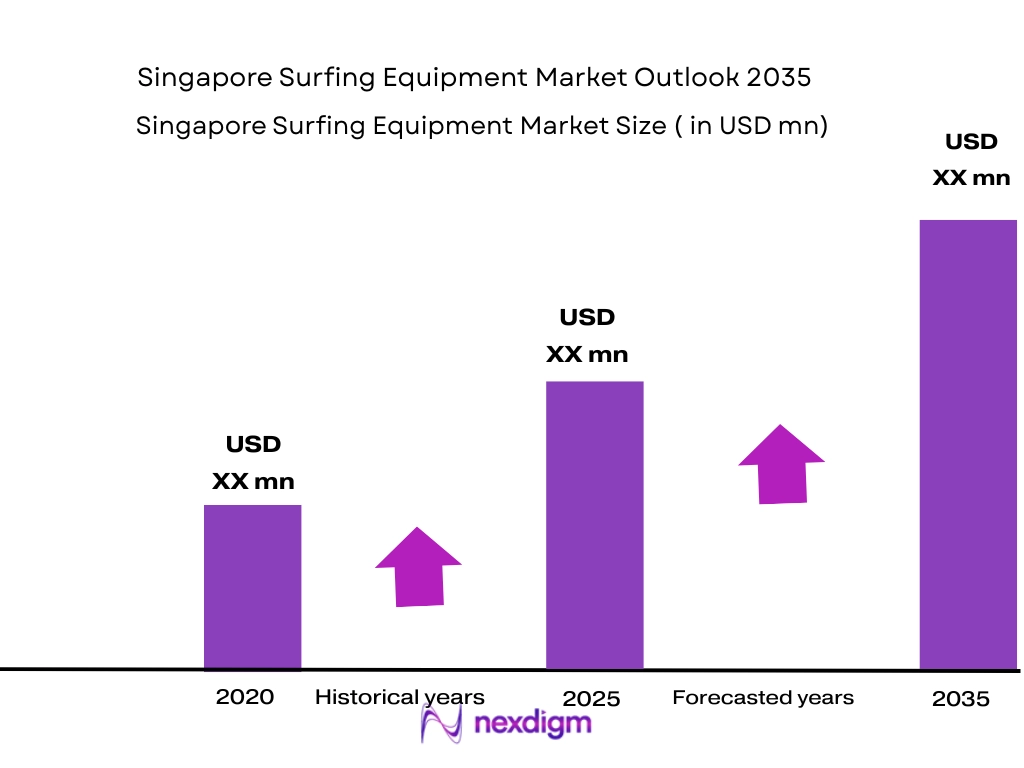
The Singapore surfing equipment market is valued at USD ~ million, driven by the growing interest in water sports among locals and tourists. The market has seen a steady increase in demand for surfboards, wetsuits, and accessories, particularly due to rising awareness of outdoor recreation and the country’s well-established beach destinations. Government initiatives promoting water sports and outdoor activities have further catalyzed market growth. The market is also bolstered by the surge in surfing tourism, which attracts international tourists to Singapore’s coastal regions.
Singapore, being an island city-state with a highly developed tourism sector, leads the market in Southeast Asia. Its prime coastal locations, such as East Coast Park and Sentosa Island, attract both local surfers and international visitors. While the country’s year-round warm weather and stable surfing conditions favor the market, the proximity to major surf hubs like Indonesia and Australia also strengthens Singapore’s position in the regional surfing market. Additionally, the growing emphasis on eco-tourism and sustainable products has made Singapore a key player in the eco-conscious segment of the surfing equipment market.
Market Segmentation
By Product Type
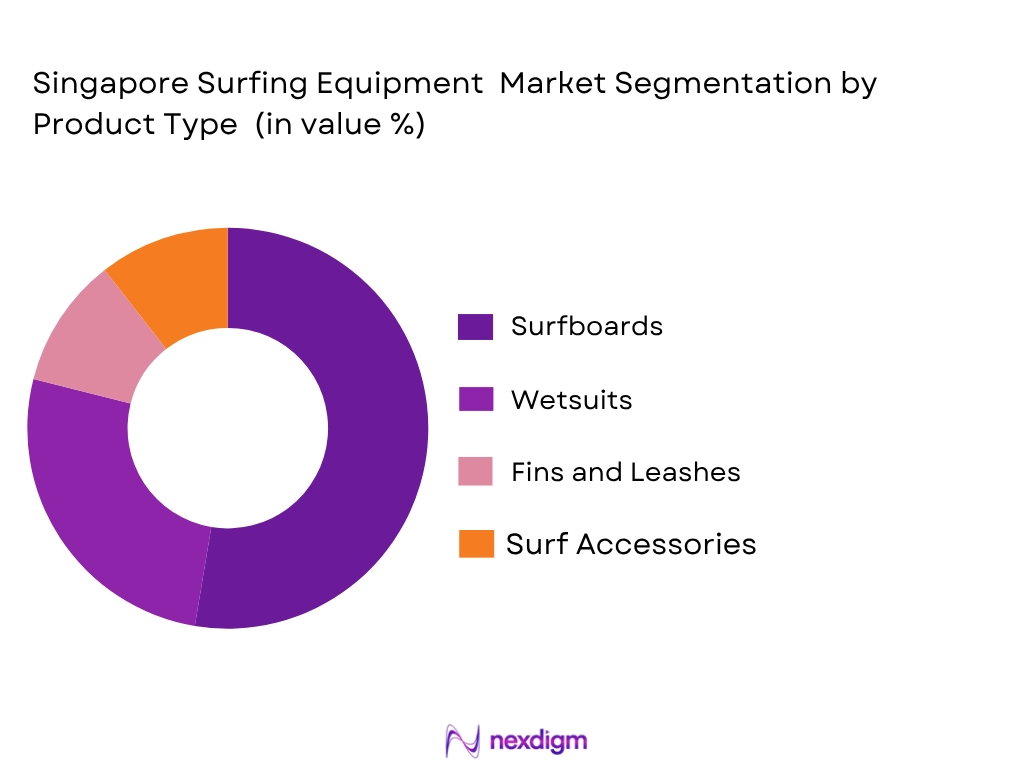
The Singapore surfing equipment market is segmented by product type into. surfboards, wetsuits, fins and leashes, and surf accessories Among these, surfboards dominate the market due to their high demand from both recreational surfers and professional athletes. Surfboards come in various sizes and styles, catering to different levels of expertise and surf conditions. The strong presence of surfboard brands, such as Rip Curl and Quiksilver, further supports their dominant position in the market. The variety and specialization of surfboards in terms of material, design, and performance are key factors contributing to the continued market growth.
By End User
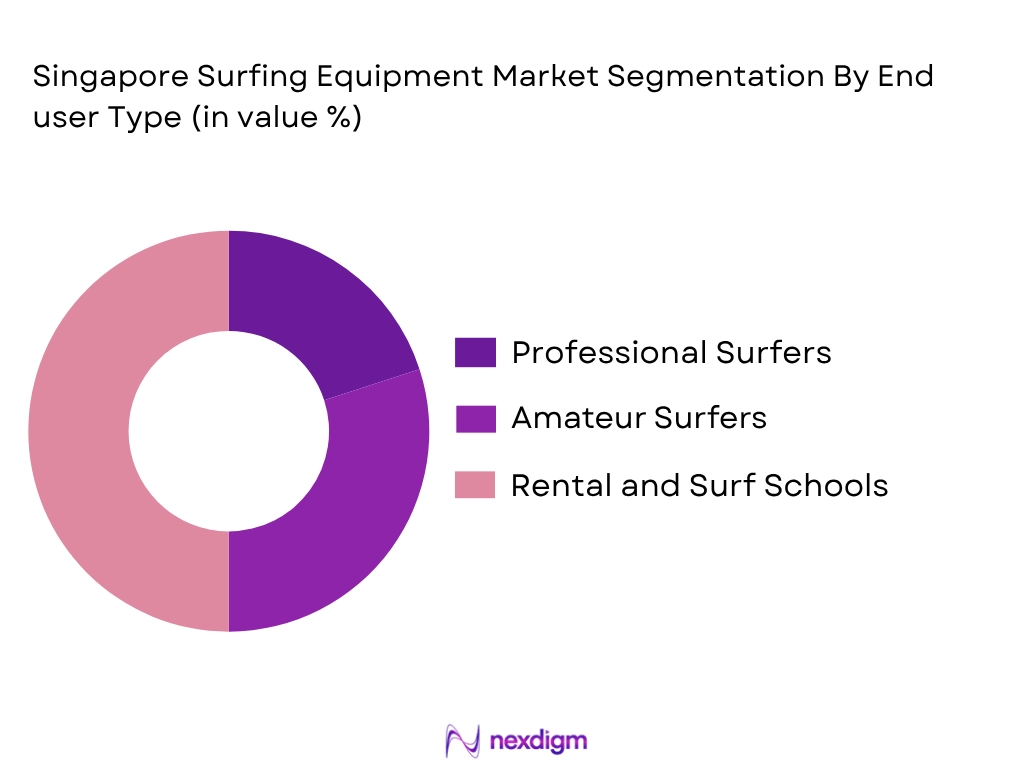
The market is segmented by end user into professional surfers, amateur surfers, and rental and surf schools. The rental and surf school segment holds the largest market share due to the growing interest in surfing as a recreational activity for tourists and local residents. The increase in surf schools offering lessons and equipment rentals is a significant driver. As tourism continues to be a major economic contributor in Singapore, surf schools capitalize on both local interest and the influx of tourists seeking guided surfing experiences.
Competitive Landscape
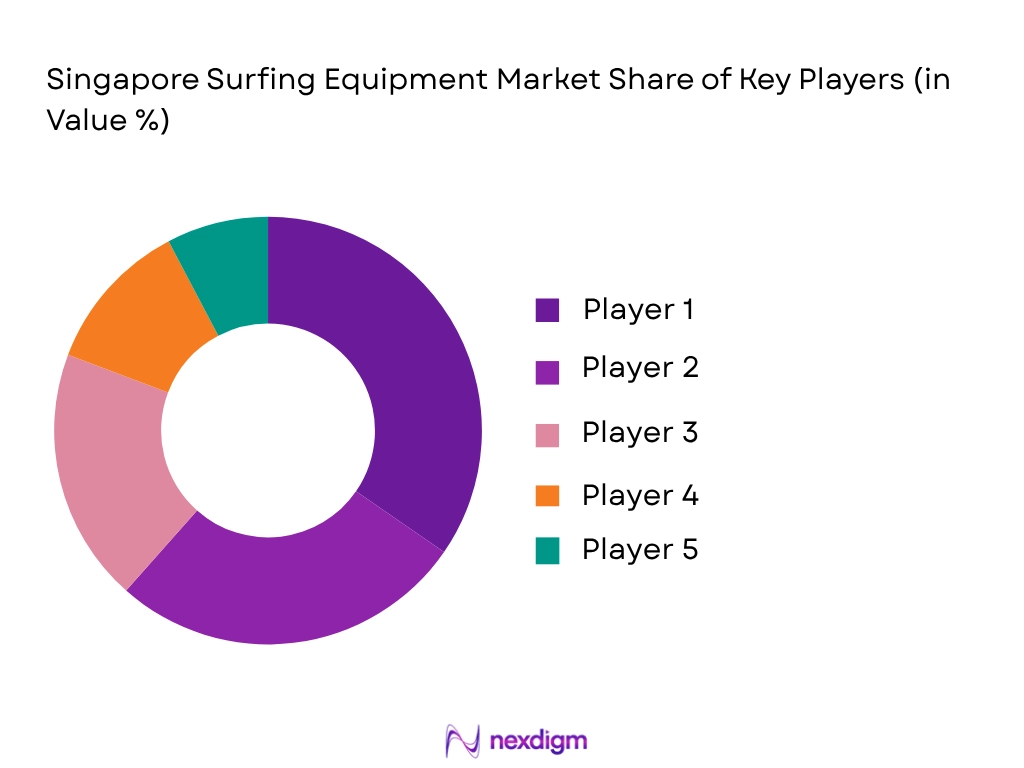
The Singapore surfing equipment market is dominated by a few key players, both global and local. International brands like Rip Curl, Quiksilver, and O’Neill lead the market due to their strong brand recognition and extensive distribution networks. Additionally, local brands that focus on eco-friendly products, such as sustainable surfboards and accessories, are gaining traction, tapping into the environmentally conscious consumer base. The dominance of global brands is supported by their innovation in product offerings, while local brands focus on niche markets with specialized products.
| Company Name | Establishment Year | Headquarters | Product Focus | Key Differentiator | Distribution Channels | Key Markets |
| Rip Curl | 1969 | Australia | ~ | ~ | ~ | ~ |
| Quiksilver | 1969 | USA | ~ | ~ | ~ | ~ |
| O’Neill | 1952 | USA | ~ | ~ | ~ | ~ |
| Roxy | 1990 | USA | ~ | ~ | ~ | ~ |
| Lost Surfboards | 1985 | USA | ~ | ~ | ~ | ~ |
Singapore Surfing Equipment Market Analysis
Growth Drivers
Increasing Popularity of Surfing in Singapore
Surfing in Singapore has become increasingly popular due to its vibrant outdoor lifestyle and growing beach culture. The country’s beaches, including East Coast Park and Sentosa, attract both locals and tourists. As more people seek outdoor activities for fitness and leisure, surfing is gaining momentum, especially among the younger population. The appeal of water sports and the rise of surf schools that offer lessons and equipment rentals further fuel the interest in surfing. With global trends pushing for healthier, active lifestyles, the growing enthusiasm for surfing, especially among Singapore’s youth and tourists, plays a significant role in driving the market for surfing equipment in the country.
Government Support for Sports and Tourism
The Singapore government actively supports the growth of sports and outdoor recreation, including surfing. Through initiatives by agencies like the Singapore Sports Council, the government has been promoting water sports activities by improving infrastructure, offering grants for sports facilities, and organizing events. These efforts not only enhance the local sports ecosystem but also position Singapore as a hub for regional surfing tourism. Government support for outdoor and beach sports, along with policies aimed at boosting tourism, contributes to the rising demand for surfing equipment. This support plays a crucial role in fostering an environment conducive to the development of the surfing market in Singapore.
Market Challenges
High Import Costs
A major challenge faced by the Singapore surfing equipment market is the high cost of importing products. As Singapore has limited local production of surfing gear, most equipment, including surfboards, wetsuits, and accessories, is imported. The costs associated with shipping, customs duties, and tariffs contribute to the overall high pricing of these products. This increases the barrier to entry for new brands and reduces the affordability of high-quality equipment for local consumers. Moreover, international shipping delays and fluctuating freight costs can further affect market stability, making it more difficult for businesses to maintain competitive pricing in the market.
Limited Surfing Locations and Accessibility
Despite its coastal geography, Singapore has limited natural surfing locations, which restricts the scope of surfing activities. The city-state lacks large, consistent surfable waves, which means that many surfers are reliant on man-made locations, such as wave pools or artificial surf parks. While these facilities have seen growth, they cannot fully replicate the experience of traditional surfing locations like Bali or the Gold Coast, Australia. The lack of natural, accessible surf spots hampers the full potential of the surfing market, limiting the growth of the sport and, consequently, the demand for related equipment.
Opportunities
Growth of Surf Tourism in Southeast Asia
Southeast Asia has emerged as a popular surfing destination, with countries like Indonesia, the Philippines, and Thailand attracting surfers from around the world. As Singapore serves as a regional hub for tourism, the country is benefiting from this trend. Singapore’s role as a gateway to other popular surf spots in the region opens up a promising opportunity for the surfing equipment market. Surfers passing through Singapore often purchase equipment, accessories, and surf-related merchandise, contributing to market growth. Moreover, Singapore’s infrastructure and tourism-friendly policies encourage international surfing events, further solidifying its position in the regional surfing tourism ecosystem.
Emerging Trends in Eco-Friendly Surfing Equipment
As environmental awareness continues to rise, eco-friendly surfing equipment is gaining traction in Singapore’s market. Consumers are increasingly prioritizing sustainable alternatives, such as surfboards made from recycled materials or wetsuits produced with eco-conscious processes. The growing preference for eco-friendly products, driven by the global sustainability movement, presents an opportunity for businesses to introduce environmentally responsible products into the market. Companies that focus on creating green, sustainable, and ethical products can capitalize on this trend, gaining customer loyalty and differentiation in the market. This emerging trend also aligns with Singapore’s emphasis on environmental conservation, further promoting the adoption of eco-friendly surfing gear.
Future Outlook
Over the next 5-6 years, the Singapore surfing equipment market is expected to show steady growth driven by a rising interest in water sports and recreational activities. Increased disposable income and a growing culture of fitness among the population, coupled with Singapore’s vibrant tourism industry, are expected to drive the market forward. Additionally, innovations in eco-friendly surfboard materials and sustainable accessories will likely expand the market’s appeal to environmentally conscious consumers. As the surfing trend grows, more rental services and surf schools are expected to open, particularly targeting the burgeoning middle-class and tourism segments.
Major Players
- Rip Curl
- Quiksilver
- O’Neill
- Roxy
- Lost Surfboards
- Billabong
- Channel Islands Surfboards
- Firewire Surfboards
- FCS
- Dakine
- Northcore
- Hurley
- Shaper Studios
- Vissla
- Roark Revival
Key Target Audience
- Investments and venture capitalist firms
- Government and regulatory bodies
- Surf Schools and Academies
- Professional Surfers
- Amateur Surfers
- Sporting Goods Retailers
- E-commerce platforms and online retailers
- Eco-tourism companies and sustainable product manufacturers
Research Methodology
Step 1: Identification of Key Variables
The first phase involves identifying the primary factors driving the Singapore surfing equipment market. This is achieved through extensive secondary research, gathering data from industry reports, market analyses, and interviews with key stakeholders in the surfing and tourism sectors.
Step 2: Market Analysis and Construction
In this phase, historical data related to the market’s growth trends, product demand, and consumer behavior are analyzed to construct a reliable market model. Market growth drivers, such as tourism, government initiatives, and sustainability trends, are assessed to predict the market’s trajectory.
Step 3: Hypothesis Validation and Expert Consultation
After developing hypotheses based on initial research, expert consultations are conducted through interviews with industry practitioners, manufacturers, and distributors. These experts provide insights into emerging trends, consumer preferences, and challenges faced by the market players.
Step 4: Research Synthesis and Final Output
The final stage involves synthesizing the data obtained through primary and secondary research to provide a comprehensive market forecast. Expert feedback is incorporated into the analysis to ensure accuracy and relevance, resulting in a validated, actionable report.

- Executive Summary
- Research Methodology (Market Definitions and Assumptions, Abbreviations, Market Sizing Approach, Consolidated Research Approach, Understanding Market Potential Through In-Depth Industry Interviews, Primary Research Approach, Limitations and Future Conclusions)

- Definition and Scope
- Market Genesis and Evolution
- Market Dynamics
- Major Milestones in the Market
- Supply Chain and Value Chain Analysis

- Growth Drivers
Increasing Popularity of Surfing in Singapore
Government Support for Sports and Tourism
Technological Advancements in Surfing Gear
- Market Challenges
High Import Costs
Limited Surfing Locations and Accessibility
- Opportunities
Growth of Surf Tourism in Southeast Asia
Emerging Trends in Eco-Friendly Surfing Equipment
- Trends
Rise in Sustainable and Eco-Conscious Products
Increasing Popularity of Electric Surfboards - Government Regulation
Regulatory Approvals and Certifications
Import and Distribution Regulations - SWOT Analysis
- Stakeholder Ecosystem
- Porter’s Five Forces Analysis
- Competition Ecosystem

- By Value, 2020-2025
- By Volume, 2020-2025
- By Average Price, 2020-2025

- By Product Type (In Value %)
Surfboards
Wetsuits
Fins and Leashes
Surf Accessories - By End User (In Value %)
Professional Surfers
Amateur Surfers
Rental and Surf Schools - By Distribution Channel (In Value %)
Direct Sales
Retail Outlets
E-commerce - By Region (In Value %)
Central Singapore
East Region
West Region
Other Regions

- Market Share of Major Players by Value/Volume
- Market Share of Major Players by Product Type Segment
- Cross Comparison Parameters (Company Overview, Business Strategies, Recent Developments, Strengths, Weaknesses, Organizational Structure, Revenues, Revenues by Product Type, Distribution Channels, Margins, Production Plants, Capacity, Unique Value Offerings, Number of Dealers and Distributors, Technological Advancements)
- SWOT Analysis of Major Players
- Pricing Analysis by SKUs for Major Players
- Detailed Profiles of Major Companies
Rip Curl
Quiksilver
Billabong
O’Neill
Roxy
Lost Surfboards
Firewire Surfboards
Channel Islands Surfboards
Northcore
FCS
Dakine

- Market Demand and Utilization
- Budget Allocations and Purchasing Power
- Regulatory and Compliance Factors for End Users
- End User Pain Points and Preferences
- Decision-Making Process in End User Segments

- By Value, 2026-2035
- By Volume, 2026-2035
- By Average Price, 2026-2035


 Request a Sample
 Ask for Customization
 Get a Quote
 Enquire Now