

 Download PDF
 Download PDF
Market Overview
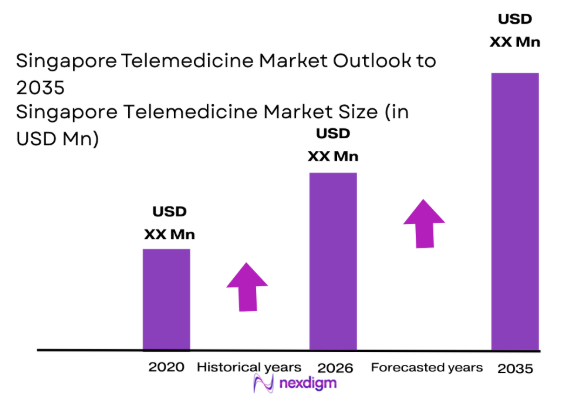
Based on a recent historical assessment, the Singapore Telemedicine Market recorded a valuation of approximately USD ~ million according to combined data reported by the Singapore Ministry of Health digital health program statistics and industry datasets referenced by the International Trade Administration and Statista digital health sector analysis. The expansion of virtual consultation services, digital prescriptions, and remote patient monitoring technologies significantly drives market demand as healthcare providers integrate telehealth systems to improve service accessibility, optimize clinical workflows, and reduce physical hospital congestion.
Singapore’s telemedicine ecosystem is primarily concentrated in highly urbanized healthcare clusters including Singapore city’s central healthcare districts where advanced hospitals, specialized clinics, and digital health startups operate within integrated healthcare networks. Strong government-led digital health initiatives and national smart healthcare programs accelerate telehealth deployment across major medical institutions. A highly connected population, strong broadband infrastructure, and a digitally literate patient base further support telemedicine service adoption across both public and private healthcare providers.
Market Segmentation
By Product Type
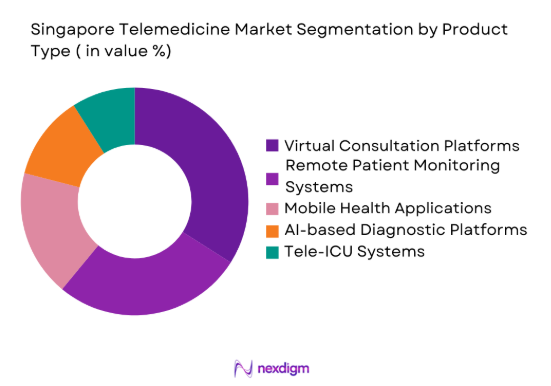
Singapore Telemedicine Market is segmented by product type into Remote Patient Monitoring Systems, Virtual Consultation Platforms, Tele-ICU Systems, Mobile Health Applications, and AI-based Diagnostic Platforms. Recently, Virtual Consultation Platforms has a dominant market share due to factors such as demand patterns, brand presence, infrastructure availability, and consumer preference. Hospitals and digital health providers increasingly adopt video consultation platforms because they enable physicians to remotely assess patients, provide prescriptions, and manage follow-up consultations efficiently. The integration of digital appointment scheduling, electronic prescriptions, and secure patient communication channels further enhances operational efficiency within healthcare institutions. Private telehealth providers and healthcare startups also prioritize virtual consultation platforms as they require lower infrastructure investments compared with hardware-intensive monitoring systems. Government-backed telehealth initiatives and regulatory frameworks supporting remote consultation services further reinforce the widespread adoption of virtual healthcare platforms across Singapore’s healthcare ecosystem.
By End User
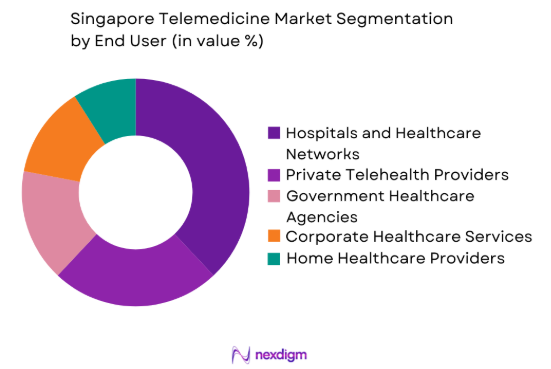
Singapore Telemedicine Market is segmented by end user into Hospitals and Healthcare Networks, Private Telehealth Providers, Government Healthcare Agencies, Corporate Healthcare Services, and Home Healthcare Providers. Recently, Hospitals and Healthcare Networks has a dominant market share due to factors such as demand patterns, brand presence, infrastructure availability, and consumer preference. Major hospitals increasingly deploy telemedicine solutions to improve outpatient consultation capacity, monitor chronic patients remotely, and reduce hospital overcrowding. Digital health integration within hospital electronic medical record systems enables seamless physician collaboration and remote specialist consultations. Telemedicine also supports post-treatment monitoring and rehabilitation services. Government healthcare initiatives encourage hospital-based telehealth adoption through digital health innovation programs and regulatory support. Hospitals further benefit from telemedicine by expanding healthcare accessibility for elderly patients and individuals with mobility limitations, reinforcing their position as the leading end users of telemedicine technologies within Singapore’s healthcare system.
Competitive Landscape
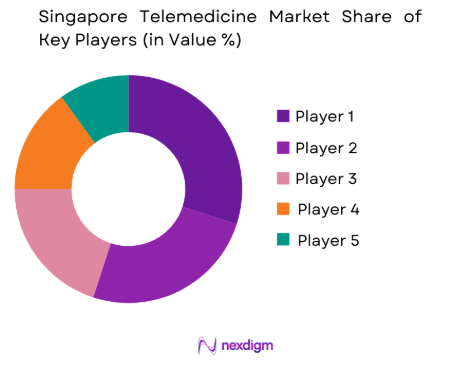
The Singapore Telemedicine Market demonstrates a moderately consolidated competitive structure where established healthcare providers collaborate with digital health startups and global telehealth technology companies. Major players invest in advanced teleconsultation platforms, AI-enabled diagnostic tools, and remote monitoring technologies to strengthen their digital healthcare capabilities. Strategic partnerships between hospitals, technology providers, and government-backed healthcare programs further intensify competition while accelerating telemedicine service deployment across Singapore’s healthcare infrastructure.
| Company Name | Establishment Year | Headquarters | Technology Focus | Market Reach | Key Products | Revenue | Core Telehealth Capability |
| Doctor Anywhere | 2017 | Singapore | ~ | ~ | ~ | ~ | ~ |
| WhiteCoat | 2018 | Singapore | ~ | ~ | ~ | ~ | ~ |
| MyDoc | 2015 | Singapore | ~ | ~ | ~ | ~ | ~ |
| Speedoc | 2017 | Singapore | ~ | ~ | ~ | ~ | ~ |
| Raffles Medical Group | 1976 | Singapore | ~ | ~ | ~ | ~ | ~ |
Singapore Telemedicine Market Analysis
Growth Drivers
Expansion of National Digital Health Infrastructure in Singapore
The expansion of digital healthcare infrastructure significantly drives the Singapore Telemedicine Market as national healthcare modernization initiatives promote technology-enabled patient care across public and private healthcare systems. Government-supported digital health programs encourage hospitals and clinics to adopt telemedicine platforms, remote monitoring devices, and digital patient management systems to improve accessibility and operational efficiency. Telemedicine allows physicians to conduct remote consultations and manage chronic patients without requiring physical hospital visits. Singapore’s strong broadband connectivity and advanced mobile networks support reliable telehealth services. Integration with electronic medical records enhances clinical coordination, while digital prescriptions and pharmacy delivery services further encourage telemedicine adoption across the healthcare ecosystem.
Rising Demand for Remote Chronic Disease Monitoring and Preventive Healthcare
The rising demand for remote chronic disease monitoring strongly drives the Singapore Telemedicine Market as healthcare providers increasingly use telehealth technologies to manage long-term conditions more efficiently. Chronic illnesses such as diabetes, cardiovascular disease, respiratory disorders, and hypertension require continuous monitoring and frequent consultations. Telemedicine platforms enable physicians to track patient health metrics through wearable devices and digital monitoring systems measuring heart rate, blood pressure, glucose levels, and oxygen saturation. These tools allow early detection of complications and timely medical intervention. Remote consultations also improve convenience by reducing hospital visits. Expanding consumer health devices and integrated telehealth platforms further strengthen continuous patient monitoring across Singapore’s healthcare ecosystem.
Market Challenges
Strict Healthcare Data Privacy Regulations and Cybersecurity Risks
Strict healthcare data protection regulations and cybersecurity risks present a major challenge for the Singapore Telemedicine Market because telemedicine platforms manage sensitive patient information that must comply with strict national privacy standards. Telehealth systems store medical histories, diagnostic results, and personal identification data, making them potential targets for cyberattacks and data breaches. Healthcare providers therefore invest in encrypted communication networks, secure cloud storage, and multi-layer authentication systems to protect patient information. Compliance with regulations such as the Personal Data Protection Act requires strict governance protocols and continuous monitoring. High cybersecurity costs and complex compliance requirements can create operational burdens for telemedicine providers.
Integration Complexity with Traditional Healthcare Infrastructure
Integration complexity between telemedicine platforms and existing hospital healthcare infrastructure represents a significant challenge within the Singapore Telemedicine Market because many healthcare institutions still operate legacy digital systems that are not fully compatible with modern telehealth technologies. Hospitals rely on multiple interconnected systems including electronic medical records, laboratory databases, imaging platforms, and pharmacy management software that must function seamlessly with telemedicine applications. Integrating telehealth solutions into these environments requires technical customization, interoperability frameworks, and system upgrades that ensure secure patient data exchange. Healthcare organizations must also train medical staff to adapt clinical workflows for remote consultations. High implementation costs, technical testing requirements, and operational disruptions during integration can slow telemedicine adoption across healthcare networks.
Opportunities
Expansion of Artificial Intelligence Enabled Telemedicine Diagnostics
The rapid advancement of artificial intelligence technologies creates a significant opportunity for the Singapore Telemedicine Market as AI-powered diagnostic tools enhance telehealth platform capabilities and support faster clinical decision making. Artificial intelligence algorithms analyze patient medical records, diagnostic images, and symptom patterns to assist physicians in identifying conditions during remote consultations. AI-based triage systems also evaluate symptoms and guide patients toward appropriate care pathways before physician interaction. These systems improve healthcare efficiency by prioritizing urgent cases and reducing physician workload. Integration with wearable health monitoring devices enables continuous patient tracking and early detection of health abnormalities, strengthening preventive digital healthcare services.
Development of Cross-Border Telemedicine Services in Asia-Pacific Healthcare Networks
Cross-border telemedicine services present a significant growth opportunity for the Singapore Telemedicine Market as the country’s advanced healthcare infrastructure and strong medical reputation position it as a regional hub for digital healthcare delivery. Telemedicine platforms enable Singapore-based physicians to provide remote consultations, treatment planning, and specialist advice to patients across Southeast Asia and other Asia-Pacific regions where specialized healthcare access may be limited. These digital services allow international patients to obtain second medical opinions and follow-up consultations without traveling for physical hospital visits. Multilingual telehealth platforms, secure digital payment systems, and international insurance partnerships further support seamless cross-border telemedicine adoption across regional healthcare networks.
Future Outlook
The Singapore Telemedicine Market is expected to experience sustained expansion driven by continuous digital transformation across healthcare systems and increasing demand for remote healthcare services. Advances in artificial intelligence, wearable health monitoring devices, and integrated digital health platforms will further enhance telemedicine capabilities. Government healthcare innovation programs and supportive regulatory frameworks will continue encouraging telehealth adoption across hospitals and private healthcare providers. Rising healthcare demand, aging populations, and preventive healthcare models will further accelerate telemedicine utilization across Singapore.
Major Players
- Doctor Anywhere
- WhiteCoat
- MyDoc
- Speedoc
- MaNaDr
- Raffles Medical Group
- Parkway Shenton
- Fullerton Health
- HealthwayMedical
- IHH Healthcare
- Philips Healthcare
- Teladoc Health
- Amwell
- PingAnGood Doctor
- Halodoc
Key Target Audience
- Hospitals and healthcare providers
- Telemedicine platform developers
- Digital health technology companies
- Medical device manufacturers
- Pharmaceutical companies
- Healthcare infrastructure developers
- Investments and venture capitalist firms
- Government and regulatory bodies
Research Methodology
Step 1: Identification of Key Variables
Key market indicators including telemedicine platform adoption rates, healthcare digitalization initiatives, regulatory frameworks, and hospital telehealth integration trends were identified through secondary research and healthcare industry databases.
Step 2: Market Analysis and Construction
Market size and segmentation analysis were constructed using healthcare sector statistics, government digital health programs, telehealth adoption studies, and financial disclosures from leading telemedicine providers.
Step 3: Hypothesis Validation and Expert Consultation
Industry assumptions and analytical models were validated through consultations with healthcare professionals, digital health technology specialists, and hospital administrators involved in telemedicine implementation.
Step 4: Research Synthesis and Final Output
All research findings were synthesized using triangulation methods combining primary interviews, secondary datasets, and sector-specific analytics to produce a comprehensive telemedicine market research framework.

- Executive Summary
- Research Methodology (Definitions, Scope, Industry Assumptions, Market Sizing Approach, Primary & Secondary Research Framework, Data Collection & Verification Protocol, Analytic Models & Forecast Methodology, Limitations & Research Validity Checks)

- Market Definition and Scope
- Value Chain & Stakeholder Ecosystem
- Regulatory / Certification Landscape
- Sector Dynamics Affecting Demand
- Strategic Initiatives & Infrastructure Growth

- Growth Drivers
Expansion of Digital Healthcare Infrastructure in Singapore
Rising Demand for Remote Patient Monitoring in Chronic Disease Management
Government Support for National Telehealth and Smart Health Initiatives - Market Challenges
Data Privacy and Cybersecurity Risks in Digital Healthcare Platforms
Integration Complexity Between Telemedicine Systems and Hospital IT Infrastructure
Regulatory Compliance Requirements for Digital Healthcare Services - Market Opportunities
Expansion of AI-enabled Teleconsultation and Diagnostics Services
Growing Adoption of Telehealth in Elderly Home Care Programs
Cross-border Telemedicine Services for Regional Healthcare Access - Trends
Integration of Artificial Intelligence in Telehealth Diagnostics
Expansion of Remote Monitoring through Wearable Medical Devices
Development of Hybrid Physical and Virtual Healthcare Delivery Models - Government Regulations
- SWOT Analysis of Key Competitors
- Porter’s Five Forces

- By Market Value, 2020-2025
- By Installed Units, 2020-2025
- By Average System Price, 2020-2025
- By System Complexity Tier, 2020-2025

- By System Type (In Value%)
Remote Patient Monitoring Systems
Virtual Consultation Platforms
Tele-ICU Systems
Mobile Health Telemedicine Applications
AI-enabled Diagnostic Telemedicine Systems - By Platform Type (In Value%)
Cloud-based Telemedicine Platforms
Mobile Application Platforms
Web-based Telehealth Portals
Integrated Hospital Telemedicine Platforms
Wearable Device Integrated Platforms - By Fitment Type (In Value%)
Standalone Telemedicine Systems
Hospital Integrated Telemedicine Systems
Clinic Integrated Telemedicine Solutions
Home Healthcare Telemedicine Systems
Enterprise Telehealth Infrastructure Platforms - By End User Segment (In Value%)
Hospitals and Healthcare Networks
Private Telehealth Providers
Government Healthcare Agencies
Corporate Health Service Providers
Home Healthcare Providers - By Procurement Channel (In Value%)
Direct Healthcare Provider Procurement
Government Healthcare Tenders
Technology Vendor Partnerships
Private Healthcare Procurement Contracts
Digital Health Platform Subscriptions

- Market Share Analysis
- Cross Comparison Parameters (Platform Capability, Technology Integration, Regulatory Compliance, Service Coverage, Healthcare Provider Partnerships, AI Diagnostic Capability, Remote Patient Monitoring Integration, Data Security Architecture, Hospital System Interoperability, Clinical Workflow Integration)
- SWOT Analysis of Key Competitors
- Pricing & Procurement Analysis
- Key Players
Doctor Anywhere
WhiteCoat
MyDoc
Speedoc
MaNaDr
Raffles Medical Group
Parkway Shenton
Fullerton Health
Healthway Medical
IHH Healthcare
Philips Healthcare
Teladoc Health
Amwell
Ping An Good Doctor
Halodoc

- Hospitals Increasingly Integrating Telehealth into Clinical Workflows
- Private Telemedicine Providers Expanding Digital Consultation Platforms
- Government Healthcare Agencies Promoting National Telehealth Adoption
- Home Healthcare Providers Utilizing Remote Monitoring for Chronic Care

- Forecast Market Value, 2026-2035
- Forecast Installed Units, 2026-2035
- Price Forecast by System Tier, 2026-2035
- Future Demand by Platform, 2026-2035


 Request a Sample
 Ask for Customization
 Get a Quote
 Enquire Now