
 Download PDF
 Download PDF
Market Overview
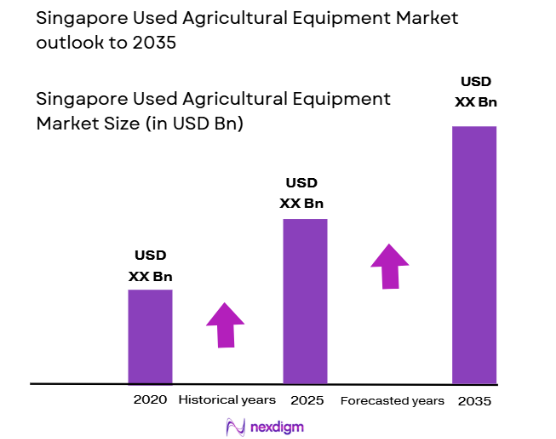
The Singapore Used Agricultural Equipment Market is expected to reach a significant market size based on a recent historical assessment, driven by an increasing demand for affordable and reliable agricultural machinery. This market is shaped by the growing need for modernization in farming practices, with key drivers such as government support for the agricultural sector and the rising adoption of mechanized farming. The market size for used agricultural equipment in Singapore in 2024 is estimated to be USD ~ billion.
Key cities such as Singapore City lead the market due to their established infrastructure, access to logistics, and proximity to agricultural zones. The availability of a wide range of equipment at competitive prices, combined with the country’s strong regulatory framework, fosters a conducive environment for used agricultural equipment. Urban farming initiatives further drive demand for smaller, more versatile machinery.
Market Segmentation
By Product Type:
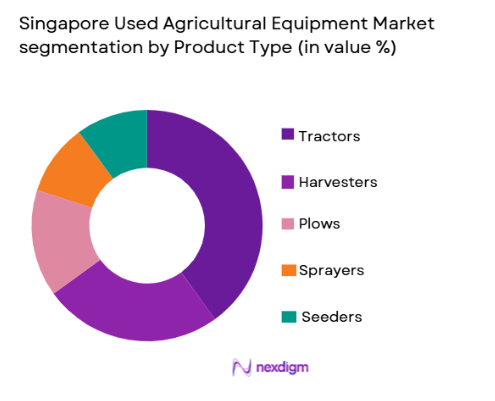
The Singapore Used Agricultural Equipment Market is segmented by product type into tractors, harvesters, plows, sprayers, and seeders. Recently, tractors have dominated the market share due to their versatility in various agricultural processes, from tilling to planting and harvesting. Tractors are essential for both small-scale and large-scale farming operations, driving their higher demand. Furthermore, the strong brand presence of manufacturers and widespread availability of parts in the region contribute to the dominance of tractors in the market. The significant infrastructure availability and consumer preference for multi-functional, durable tractors also play a role in their market share dominance.
By End-User:
The market is also segmented by end-user into small-scale farmers, large-scale farmers, agricultural contractors, government bodies, and private sector agro-industries. Large-scale farmers dominate the market share due to their need for heavy-duty machinery capable of handling large acreage. These farmers seek used equipment as a cost-effective solution while maintaining high operational efficiency. The ability to acquire reliable machinery at lower prices, along with the availability of financing options, contributes to large-scale farmers’ higher share in the market.

Competitive Landscape
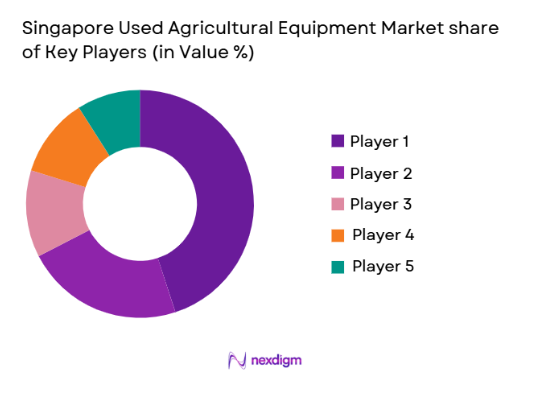
The competitive landscape of the Singapore Used Agricultural Equipment Market is shaped by both local and international players competing for market share. These players influence the market with their wide product ranges, financing options, and after-sales services. The market is witnessing consolidation with larger players acquiring smaller ones to expand their reach. Key players include prominent global brands with strong dealer networks and established brand recognition, as well as local companies catering to specific needs within the region.
| Company Name | Establishment Year | Headquarters | Technology Focus | Market Reach | Key Products | Revenue (USD) | After-sales Services |
| John Deere | 1837 | USA | ~ | ~ | ~ | ~ | ~ |
| Kubota Corporation | 1890 | Japan | ~ | ~ | ~ | ~ | ~ |
| AGCO Corporation | 1990 | USA | ~ | ~ | ~ | ~ | ~ |
| New Holland Agriculture | 1895 | Italy | ~ | ~ | ~ | ~ | ~ |
| CLAAS Group | 1913 | Germany | ~ | ~ | ~ | ~ | ~ |
Singapore Used Agricultural Equipment Market Analysis
Growth Drivers
Increasing Government Support for Agricultural Modernization:
Government initiatives, such as subsidies and financial assistance for farmers, play a critical role in the growth of the Singapore Used Agricultural Equipment Market. These initiatives help farmers adopt more efficient agricultural machinery without facing the full financial burden of new equipment costs. The government’s commitment to modernizing the agricultural sector through initiatives like “Agri-Tech” funding programs has further spurred the adoption of mechanized farming practices. In particular, small-scale and large-scale farmers are increasingly opting for used equipment as an affordable alternative, and the ease of accessing financing options has contributed to the rise in demand for these machines. As the government continues to implement policies supporting sustainable farming practices, the used agricultural equipment market is expected to benefit, especially in sectors like crop production, where mechanization is key to improving yield and efficiency. By fostering innovation and providing tax incentives, the government has created an enabling environment for farmers to invest in both new and used agricultural equipment, ensuring the continued growth of the sector.
Technological Advancements in Agricultural Equipment:
The rapid advancement of technology in agricultural equipment, including automation and AI-driven machines, has positively impacted the growth of the used agricultural equipment market. These technological innovations increase the productivity and efficiency of agricultural processes, prompting many farmers to upgrade their equipment. As a result, there is a growing market for used equipment, as farmers seek cost-effective solutions without compromising on technological improvements. In particular, automated machinery that can operate with minimal human intervention has gained traction, as it enhances operational efficiency, reduces labor costs, and increases precision in farming tasks. This has been particularly beneficial for large-scale farmers who require machinery that can handle vast areas of land. The integration of GPS and IoT technologies into farming equipment has further boosted the demand for advanced used agricultural machinery. As these technologies continue to evolve, the market for used agricultural equipment is expected to grow, driven by the increasing demand for high-tech, yet affordable, machinery.
Market Challenges
High Cost of Equipment Maintenance:
Despite the lower initial cost of used agricultural equipment, the challenge of maintenance and repairs continues to hinder market growth. Used machines often require more frequent maintenance compared to new ones, resulting in higher operational costs. These maintenance challenges can be particularly burdensome for small-scale farmers with limited budgets, who may face difficulties in affording repairs and spare parts. The unavailability of local service centers and the high cost of parts can further exacerbate the situation. Additionally, the lack of skilled technicians to maintain and repair high-tech machinery contributes to the growing demand for proper training, which adds another cost burden. The inability to efficiently maintain the machinery often leads to downtimes, disrupting farming operations and reducing overall productivity. While the lower acquisition cost of used equipment may seem attractive, the long-term expenses associated with maintenance may make it a less desirable option for many farmers. Thus, the cost of equipment maintenance remains a significant challenge for the market.
Regulatory Barriers to Used Equipment Imports:
Import regulations and compliance requirements play a crucial role in limiting the growth of the Singapore Used Agricultural Equipment Market. Stringent regulations concerning the importation of used equipment, such as safety standards and environmental certifications, have made it difficult for international players to enter the market. These regulations are designed to ensure that equipment meets the required operational standards and does not pose any risks to the environment or human health. However, the complexity and cost of adhering to these regulations can discourage both local and international suppliers from dealing in used agricultural equipment. Moreover, the lengthy process of verifying the equipment’s compliance with these standards can delay the supply chain, affecting availability and increasing the overall cost of used equipment. Regulatory barriers also restrict the range of equipment available, limiting farmers’ access to a diverse selection of machines. As the market continues to evolve, addressing regulatory barriers will be essential to enhancing the growth prospects of the used agricultural equipment market.
Opportunities
Growing Demand for Sustainable Farming Practices:
As sustainability becomes a central focus in the agricultural sector, there is an increasing demand for equipment that supports eco-friendly practices. Used agricultural equipment that meets sustainability criteria is becoming increasingly attractive to farmers looking to reduce their environmental footprint. This demand is driven by several factors, including government regulations promoting sustainable farming, consumer preferences for eco-friendly products, and the growing awareness of climate change. Farmers are increasingly turning to used machinery that supports reduced pesticide use, water conservation, and low-emission farming methods. The rise in organic farming and precision agriculture has further driven this trend, with farmers looking for machinery that can optimize resources while minimizing environmental impact. As these sustainable practices continue to gain traction, the market for used agricultural equipment that aligns with these principles is expected to expand, offering significant opportunities for market players to tap into.
Expanding Urban Farming Initiatives:
The increasing popularity of urban farming is another promising opportunity for the Singapore Used Agricultural Equipment Market. With the rise of urban agriculture, particularly in cities like Singapore City, there is growing demand for smaller, more versatile agricultural equipment that can be used in confined spaces such as rooftops and small gardens. This trend has created a new segment within the used agricultural equipment market, as urban farmers seek affordable machinery for soil cultivation, vertical farming, and hydroponics. These machines are typically smaller, more affordable, and tailored to the specific needs of urban farming, such as automation and reduced environmental impact. The integration of advanced technologies in these machines, such as IoT and AI, has further boosted their appeal to urban farmers, who seek efficiency and precision in their operations. As urban farming continues to grow, the used agricultural equipment market is poised to capitalize on the demand for specialized, cost-effective machinery tailored to the needs of urban farmers.
Future Outlook
The future of the Singapore Used Agricultural Equipment Market appears promising, with expected growth driven by continued technological advancements and an increasing focus on sustainable farming practices. As urban farming gains momentum, demand for small, efficient equipment is expected to rise. Moreover, government incentives and financing options are likely to further bolster market growth. Technological innovations, such as automation and precision agriculture, will continue to influence the market, offering new opportunities for both large and small-scale farmers.
Major Players
- John Deere
- Kubota Corporation
- AGCO Corporation
- New Holland Agriculture
- CLAAS Group
- Mahindra & Mahindra
- SDF Group
- Yanmar Co., Ltd.
- Tractors India
- Tafe Motors & Tractors Ltd
- Valtra
- Lovol Heavy Industry Co., Ltd.
- Shandong Shifeng Group Co., Ltd.
- Fendt
- Landini
Key Target Audience
- Investments and venture capitalist firms
- Government and regulatory bodies
- Agricultural machinery distributors
- Agribusiness enterprises
- Large-scale farmers
- Agricultural contractors
- Equipment resellers
- Agricultural technology developers
Research Methodology
Step 1: Identification of Key Variables
The key variables affecting the market are identified through an analysis of historical trends and current industry practices. These include market demand, government regulations, and technological advancements.
Step 2: Market Analysis and Construction
Data is collected from both primary and secondary sources to construct the market model, analyzing trends, competitive forces, and key drivers.
Step 3: Hypothesis Validation and Expert Consultation
Expert consultations are conducted with industry leaders to validate hypotheses derived from the market analysis.
Step 4: Research Synthesis and Final Output
The findings are synthesized into actionable insights, providing a comprehensive overview of the market.

- Executive Summary
- Research Methodology(Definitions, Scope, Industry Assumptions, Market Sizing Approach, Primary & Secondary Research Framework, Data Collection & Verification Protocol, Analytic Models & Forecast Methodology, Limitations & Research Validity Checks)

- Market Definition and Scope
- Value Chain & Stakeholder Ecosystem
- Regulatory / Certification Landscape
- Sector Dynamics Affecting Demand
- Strategic Initiatives & Infrastructure Growth

- Growth Drivers
Increasing adoption of mechanized farming
Rising demand for sustainable agricultural practices
Government initiatives and subsidies for agricultural modernization
Technological advancements in farming equipment
Rising demand for precision agriculture - Market Challenges
High initial investment in agricultural equipment
Lack of skilled workforce for operating advanced equipment
Regulatory challenges in the import and use of used equipment
Volatility in commodity prices affecting investment in equipment
Difficulty in maintaining and servicing used equipment - Market Opportunities
Expansion of second-hand agricultural equipment market
Increasing demand for electric and autonomous farming solutions
Rising urbanization and demand for urban farming solutions - Trends
Rise in farm-to-table practices encouraging the adoption of modern equipment
Technological advancements in equipment for precision farming
Adoption of eco-friendly and energy-efficient machinery
Shift towards integrated farming solutions
Increase in government support for modernizing agricultural practices - Government Regulations & Defense Policy
Regulations on the importation of used agricultural machinery
Incentives for sustainable and energy-efficient equipment
Trade and compliance regulations affecting agricultural equipment imports - SWOT Analysis
- Stakeholder and Ecosystem Analysis
- Porter’s Five Forces Analysis
- Competition Intensity and Ecosystem Mapping

- By Market Value, 2020-2025
- By Installed Units, 2020-2025
- By Average System Price, 2020-2025
- By System Complexity Tier, 2020-2025

- By System Type (In Value%)
Tractors
Plows
Seeders
Harvesters
Sprayers - By Platform Type (In Value%)
Land-based Equipment
Self-propelled Equipment
Hybrid Platforms
Modular Equipment
Portable Equipment - By Fitment Type (In Value%)
OEM Equipment
Aftermarket Equipment
Refurbished Equipment
Custom-built Equipment
Hybrid Equipment - By EndUser Segment (In Value%)
Small-scale Farmers
Large-scale Farmers
Agricultural Contractors
Government Agricultural Bodies
Private Sector / Agro-industries - By Procurement Channel (In Value%)
Direct Procurement
Dealers/Distributors
Online Platforms
Auction Platforms
Third-party Procurement Services - By Material / Technology (In Value%)
Steel
Composite Materials
Electric Components
Hydraulic Technology
Automation Technology

- Market structure and competitive positioning
- Market share snapshot of major players
- CrossComparison Parameters (System Type, Platform Type, Procurement Channel, EndUser Segment, Fitment Type, Material/Technology, Market Value, Installed Units, Price, Technology Adoption)
- SWOT Analysis of Key Players
- Pricing & Procurement Analysis
- Key Players
John Deere
Kubota Corporation
AGCO Corporation
New Holland Agriculture
Case IH
CLAAS Group
Mahindra & Mahindra
SDF Group
Deutz-Fahr
Yanmar Co., Ltd.
Tractor India
Tafe Motors & Tractors Ltd
Valtra
Lovol Heavy Industry Co. Ltd
Shandong Shifeng Group Co., Ltd

- Small-scale farmers adopting cost-effective solutions
- Large-scale farmers investing in high-end used equipment
- Agricultural contractors seeking specialized equipment
- Private sector/agro-industries focused on automated and advanced machinery

- Forecast Market Value, 2026-2035
- Forecast Installed Units, 2026-2035
- Price Forecast by System Tier, 2026-2035
- Future Demand by Platform, 2026-2035


 Request a Sample
 Ask for Customization
 Get a Quote
 Enquire Now