
 Download PDF
Market Overview
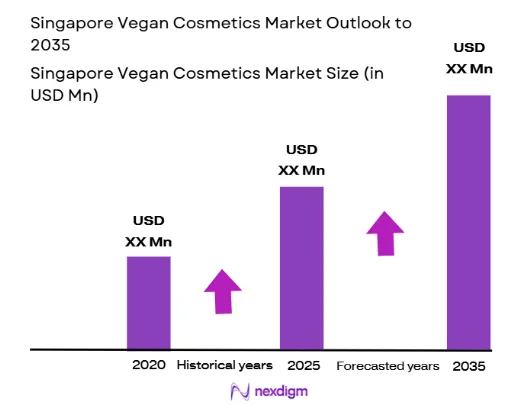
The Singapore Vegan Cosmetics market is valued at approximately USD ~ million in 2024. This market is driven by a surge in consumer demand for ethical, cruelty-free, and environmentally sustainable beauty products. Increasing awareness about the environmental impact of conventional cosmetics, coupled with rising health-consciousness, has propelled the demand for vegan alternatives. Major players are investing in product innovation, marketing, and establishing eco-conscious certifications, making vegan beauty accessible and desirable for the urban, ethically-minded consumer base.
Singapore leads the market in Southeast Asia for vegan cosmetics due to its progressive regulatory environment and a highly conscious consumer demographic. Cities like Singapore itself are dominant due to their high-income residents, widespread internet usage, and acceptance of global beauty trends. The urbanized landscape and the growing middle-class demand for clean beauty further foster the dominance of the market in Singapore. Neighboring countries like Malaysia and Thailand also influence regional trends with growing demand for vegan beauty products, but Singapore remains the primary market hub due to its strong retail presence and consumer sophistication.
Market Segmentation
By Product Category
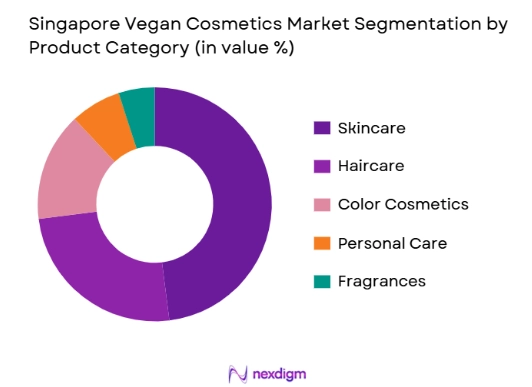
The Singapore Vegan Cosmetics market is segmented by product category into skincare, haircare, color cosmetics, personal care, and fragrances. Among these, skincare holds a dominant share in 2024, driven by the increasing interest in clean and natural ingredients. Skincare products like vegan moisturizers, cleansers, and serums, backed by their efficacy and ethical claims, have captured a large consumer base. This segment’s growth is driven by the popularity of natural skincare routines and the rising awareness of harmful ingredients in conventional products. Key players are investing in innovation, sustainability, and vegan certifications, which further strengthens this segment.
By Distribution Channel
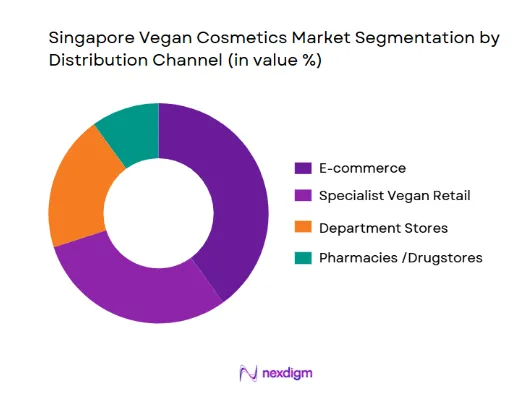
The distribution channel segment reflects the avenues through which vegan cosmetics are sold in Singapore. E-commerce platforms like Shopee, Lazada, and Sephora are significantly contributing to the growth of this market segment, enabling consumers to easily access vegan products from various brands. Physical retail stores, particularly specialist vegan beauty retailers and large department stores, play an important role, especially among consumers seeking a more tactile shopping experience. The increasing trend of online shopping has boosted the role of e-commerce, allowing brands to reach a wider audience beyond traditional retail stores.
Competitive Landscape
The Singapore Vegan Cosmetics market is primarily dominated by both international brands and emerging local players. Leading companies in the market include global names such as The Body Shop, Lush, and Herbivore Botanicals. These companies are leveraging their established brand equity and consumer trust to capture a significant share. Local startups, such as Skinfu and Fresh Herb, are carving out their niche by offering more personalized, regionally inspired vegan products. This competitive environment is marked by high innovation, sustainability efforts, and effective brand positioning, ensuring steady market consolidation.
| Company Name | Establishment Year | Headquarters | Technology Focus | Market Reach | Revenue | Product Line Count |
| The Body Shop | 1976 | London, UK | ~ | ~ | ~ | ~ |
| Lush | 1995 | Poole, UK | ~ | ~ | ~ | ~ |
| Herbivore Botanicals | 2011 | Seattle, USA | ~ | ~ | ~ | ~ |
| Fresh Herb | 2015 | Singapore | ~ | ~ | ~ | ~ |
| Skinfu | 2017 | Singapore | ~ | ~ | ~ | ~ |
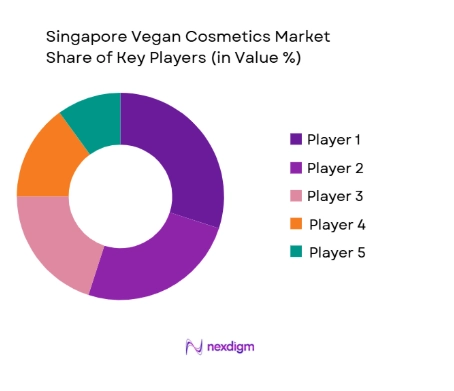
Singapore Vegan Cosmetics Market Analysis
Growth Drivers
Consumer Health & Clean Beauty Awareness
Singapore’s broader personal care and beauty consumption reflects strong consumer interest in wellness and hygiene. In 2024, the wider Beauty & Personal Care market in Singapore generated approximately USD 1,244 million in revenue, with clean and ethical beauty increasingly cited in market intelligence as an influence on purchasing decisions. This revenue base shows that Singaporean consumers allocate substantial spending toward products linked to personal well‑being and safe use. Within this context, vegan cosmetics — formulated without animal derivatives and often marketed as hypoallergenic — gain traction among health‑aware buyers who prioritize safe ingredient profiles. This trend aligns with rising consumer expenditure on health‑oriented goods in advanced economies and suggests that clean beauty positioning correlates with tangible consumer spending patterns in Singapore’s beauty products ecosystem.
Ethical Consumption & Animal Welfare Sentiment
Consumer demand for ethically framed products is reinforced by documented shifts around sustainability and eco‑consciousness. Singapore, an advanced high‑income economy with nominal GDP at USD 572.47 billion and high per capita income of USD 97,134, has a demographic capable of paying for premium positioning that includes ethical attributes such as cruelty‑free and vegan certification. Wealthier populations with higher discretionary space are more apt to integrate ethical criteria into buying decisions. In addition, broader patterns in wellness spending — the global personal care and beauty sector reached over USD 1,212.7 billion in spending in 2023, indicating consumers’ prioritization of beauty and self‑care experiences backed by values such as sustainability — reinforce that ethical labels resonate in affluent markets like Singapore. Vegan cosmetics in Singapore benefit from this overarching shift toward ethical consumerism embedded in larger consumption trends.
Market Challenges
Higher Raw Material Costs (Plant Actives, Organic Extracts)
Singapore’s cosmetics sector must source plant‑derived extracts and botanical actives almost entirely from overseas due to minimal local agriculture; agriculture contributed less than 0.5% of GDP in 2024 and local cultivation is limited. This high reliance on imports creates cost pressures on plant‑derived input sourcing for vegan cosmetics, which depend on botanical actives rather than synthetic materials. Imported raw materials such as plant extracts and active botanicals, part of the broader USD 48.78 billion plant extracts market projected for 2026 globally incur supply chain and pricing volatility that local formulators must absorb, often pushing production costs upward when compared to conventional ingredient supply chains. These macro supply cost constraints present a structural challenge for cost‑efficient vegan cosmetic formulations in Singapore.
Regulatory Compliance Burden (Claims Substantiation)
Stringent regulatory frameworks in Singapore govern product safety, ingredient disclosure, and consumer protection for cosmetics. Firms must ensure full compliance with Singapore Food Agency (SFA) cosmetics standards which include ingredient safety and labeling oversight to legally market products. Given the sector’s emphasis on clean and ethical claims, brands face administrative costs to substantiate “vegan,” “cruelty‑free,” and related claims before engaging in formal product notification processes. This compliance rigor increases overhead relative to generic cosmetic manufacturers and necessitates robust documentation and testing for every formulation variation, creating barriers to swift product iteration. Since safety regulation in Singapore is designed to mitigate public health risks from cosmetic ingredients, companies must maintain high regulatory diligence.
Market Opportunities
Ingredient Innovation (Biotech & Fermented Actives)
Advancements in ingredient science and the global active ingredients market estimated at USD 3.9 billion in 2023 demonstrate growing innovation potential for biotechnologically derived plant actives. Singapore’s position as an advanced consumer goods hub supports formulation innovation using sustainable bio‑engineered actives, enabling brands to develop differentiated vegan products optimized for local climatic conditions and consumer needs. With the plant extracts segment expanding and advanced extraction technologies emerging, there is an opportunity for Singaporean vegan cosmetic brands to adopt innovative plant‑sourced actives or fermentation‑derived compounds from global suppliers. This can yield higher functional attributes while supporting clean‑label positioning within the premium tiers of the cosmetics market.
Localisation & Micro‑Manufacturing
Although Singapore’s agriculture sector is limited, the nation’s broader consumer goods infrastructure, backed by its status as a trade and innovation hub supports high‑value R&D and micro‑manufacturing for personalised cosmetics. Singapore’s 310 million digital consumers projected across Southeast Asia indicate regional scalability potential for locally designed vegan cosmetics leveraging Singapore as an innovation base. Local capabilities in product development and regional distribution networks allow niche brands to produce limited‑run conformations of vegan products tailored to Singaporean preferences and export them across ASEAN markets. These structural advantages open pathways to build vegan cosmetic operations that blend local insight with scalable distribution beyond Singapore’s domestic market.
Future Outlook
Over the next five years, the Singapore Vegan Cosmetics market is expected to witness significant growth driven by increasing consumer demand for ethical beauty products and continuous product innovation. With heightened awareness of environmental sustainability, consumers are increasingly seeking vegan and cruelty-free alternatives. Regulatory support for clean beauty will play a pivotal role, along with the rapid expansion of e-commerce, which is expected to further drive market penetration. Additionally, technological advancements in skincare formulations, packaging, and digital marketing will contribute to a dynamic market environment. Expect significant competition as both established and emerging brands vie for market dominance, with a focus on high-quality, ethically sourced ingredients and innovative product offerings.
Major Players
- The Body Shop
- Lush
- Herbivore Botanicals
- Fresh Herb
- Skinfu
- Fenty Beauty
- ILIA Beauty
- Urban Decay
- Tarte Cosmetics
- Milk Makeup
- KVD Beauty
- Bite Beauty
- Youth To The People
- Pacifica Beauty
- e.l.f. Cosmetics
Key Target Audience
- Investments and Venture Capitalist Firms
- Government and Regulatory Bodies (Singapore Food Agency, Ministry of Health Singapore)
- Dermatology and Cosmetic Clinics
- E-commerce Platforms and Online Retailers
- Retail Chains Selling Beauty and Wellness Products
- Health and Wellness Influencers
- Luxury Beauty Consumers
- Eco-conscious and Vegan Consumers
Research Methodology
Step 1: Identification of Key Variables
The first step involves constructing a comprehensive map of the stakeholders in the vegan cosmetics industry. Secondary research, including database analysis and market intelligence reports, will help identify key market variables. These variables influence the direction and growth of the market, including regulatory guidelines, consumer behavior, and product certifications.
Step 2: Market Analysis and Construction
Data regarding product demand, consumer preferences, and competitive positioning will be analyzed. This will include evaluating consumer demographics, purchase behavior, and regional market trends to understand the local market landscape.
Step 3: Hypothesis Validation and Expert Consultation
The initial hypotheses derived from secondary research will be validated through interviews with market experts, including brand managers, retailers, and product developers. These insights will refine and validate assumptions regarding the market dynamics.
Step 4: Research Synthesis and Final Output
Once the data is compiled and analyzed, direct consultations with stakeholders such as cosmetic brands, regulatory bodies, and e-commerce platforms will be carried out to synthesize the findings. This approach ensures a balanced, well-informed market report.

- Executive Summary
- Research Methodology (Market Definitions, Vegan Certification Standards, Abbreviations & Glossary, COSMOS, GOTS, Halal‑Vegan Cross Certification, Data Sources and Triangulation, Sample Design & Confidence Intervals (Statistical Precision, Response Bias Controls) Market Sizing Approach Top‑Down & Bottom‑Up, Data Normalization (SKU‑Level Harmonization, Price Elasticity Adjustment) Limitations & Assumptions)

- Definition and Scope
- Genesis of Vegan Cosmetics Adoption in Singapore
- Regulatory Framework (Health Sciences Authority, Ingredient Bans, Labelling Compliance)
- Industry Value & Supply Chain Archetype (Ingredient Sourcing, Formulators, Retailers, E‑commerce)
- Demand Drivers (Health Consciousness Index, Ethical Consumption Score)
- Consumer Segments (Demographics, Lifestyle Cohorts)

- Growth Drivers(Consumer Health & Clean Beauty Awareness, Ethical Consumption & Animal Welfare Sentiment, Digital Adoption & Online Discovery, Retailtainment & In‑Store Experience Demand)
- Market Challenges (Higher Raw Material Costs (Plant Actives, Organic Extracts), Regulatory Compliance Burden (Claims Substantiation))
- Opportunities (Ingredient Innovation (Biotech & Fermented Actives), Localisation & Micro‑Manufacturing)
- Key Trends (Personalisation & Bespoke Vegan Lines, Sustainable Packaging Uptake (Refill & Recycle Metrics), Social Commerce & InfluencerLed Adoption)
- Regulatory & Compliance Landscape (HSA, ASEAN Cosmetic Directive Alignment)
- Stakeholder Ecosystem (Tiered Supply & Retail Partnerships)
- Porter’s Five Forces (Competitive Rivalry, Supplier Power, Buyer Bargaining)
- SWOT Analysis for Singapore Vegan Cosmetics

- By Value (2020-2025)
- By Volume (2020-2025)
- By Average Selling Price (2020-2025)
- By Growth Rates & CAGR Benchmarks (2020-2025)

- By Product Category (In Value%)
Skincare
Haircare
Color Cosmetics (Make‑Up)
Personal Care (Deodorants, Body Wash)
Fragrances - By Ingredient Origin (In Value%)
Plant‑Based Extracts
Synthetic Bio‑Derived
Organic Botanicals
Mineral/Clay Based
Functional Peptides - By Certification Status (In Value%)
Vegan Certified Only
Vegan + Cruelty Free
Vegan + Organic
Vegan + Halal
Vegan + Clean Label - By Distribution Channel (In Value%)
Specialist Vegan Retail
Mass Retail / Pharmacies
Department Stores
E‑commerce Marketplaces
Direct‑to‑Consumer (DTC) Brands - By Consumer Segment (In Value%)
Millennials & Gen Z
Working Professionals
High‑Income Households
Eco‑Conscious Shoppers
Ethnic & Multi‑Cultural Cohorts

- Market Share of Major Players (By Overall Market, By Product Type, By Channel Presence, By Certification Architecture)
- Cross Comparison Parameters (Vegan/Cruelty-Free Certification Architecture , Halal-Compatibility Positioning , SFA Product Notification Breadth (Singapore Food Agency Certification), Hero SKU ASP in SGD, Singapore Retail Door Presence (Department Stores, Specialist Vegan Retail), E-commerce Assortment Depth Across Lazada, Shopee, Sephora, Qoo10, Ingredient Exclusion Matrix (Transparency in Ingredients, Clean Label Focus) , Promotional Intensity During Key Retail Events)
- Competitive Positioning Matrix (Brand Equity, Price Ladder (Premium, Mid-Range, Value), Assortment Breadth (Full Range vs. Select Niche Products), Innovation Cadence (Product Releases, Ingredient Innovation), Singapore Accessibility)
- Pricing Analysis (SGD per SKU, SGD per ml/g , Promo Discount Band, Bundle Economics (Effect of Bundling, Discount Thresholds), Comparative Analysis with Conventional Non-Vegan Alternatives)
- Shelf and Assortment Benchmarking, SKU Count, Shade Depth (Cosmetics, Foundations, Lip Colors), Best-Seller Mix (Top-Selling Products by Type) ,Newness Ratio (Frequency of New Product Launches)
- Refill Availability (Packaging Sustainability and Refill Options)
- Competitive Profiles of Major Players
Herbivore Botanicals
The Body Shop (Vegan Sub‑Line)
Lush Fresh Handmade Cosmetics
The Plant Base Co.
Earth Rhythm
By biota℠ (Clean Vegan)
Kylie Skin (Vegan Range)
Pacifica Beauty
Drunk Elephant (Selective Vegan SKUs)
Ilia Beauty
Hynt Beauty
100% Pure
Attitude
Inika Organic
Sophie + Trey

- Consumer Purchase Behavior & Occasion Mapping
- Price Sensitivity & Value Perception Metrics
- Channel Preference and Discovery Journey (Influencer Seeding, Livestream Conversion, Store Trial, Clinic Recommendation, Peer Review Reliance)
- Pain Points & Unmet Needs (Ingredient Transparency, Product Efficacy)
- Decision Journey & Conversion Funnels
- Unmet Needs and Pain Points (Sensitive-Skin Safety, Humid-Climate Suitability, Authenticity Assurance, Shade/Texture Localization, Affordable Certified Vegan Options)
- Brand Loyalty and Repurchase Behavior (Repeat Rate, Hero SKU Pull, Community Building, CRM Effectiveness, Membership / Loyalty Leverage)

- By Value (2026-2035)
- By Volume (2026-2035)
- By Average Selling Price (2026-2035)
- By Per Capita Spend (2026-2035)
- By Online vs. Offline Mix (2026-2035)
- By Import Value Contribution (2026-2035)


 Request a Sample
 Ask for Customization
 Get a Quote
 Enquire Now