
 Download PDF
Market Overview
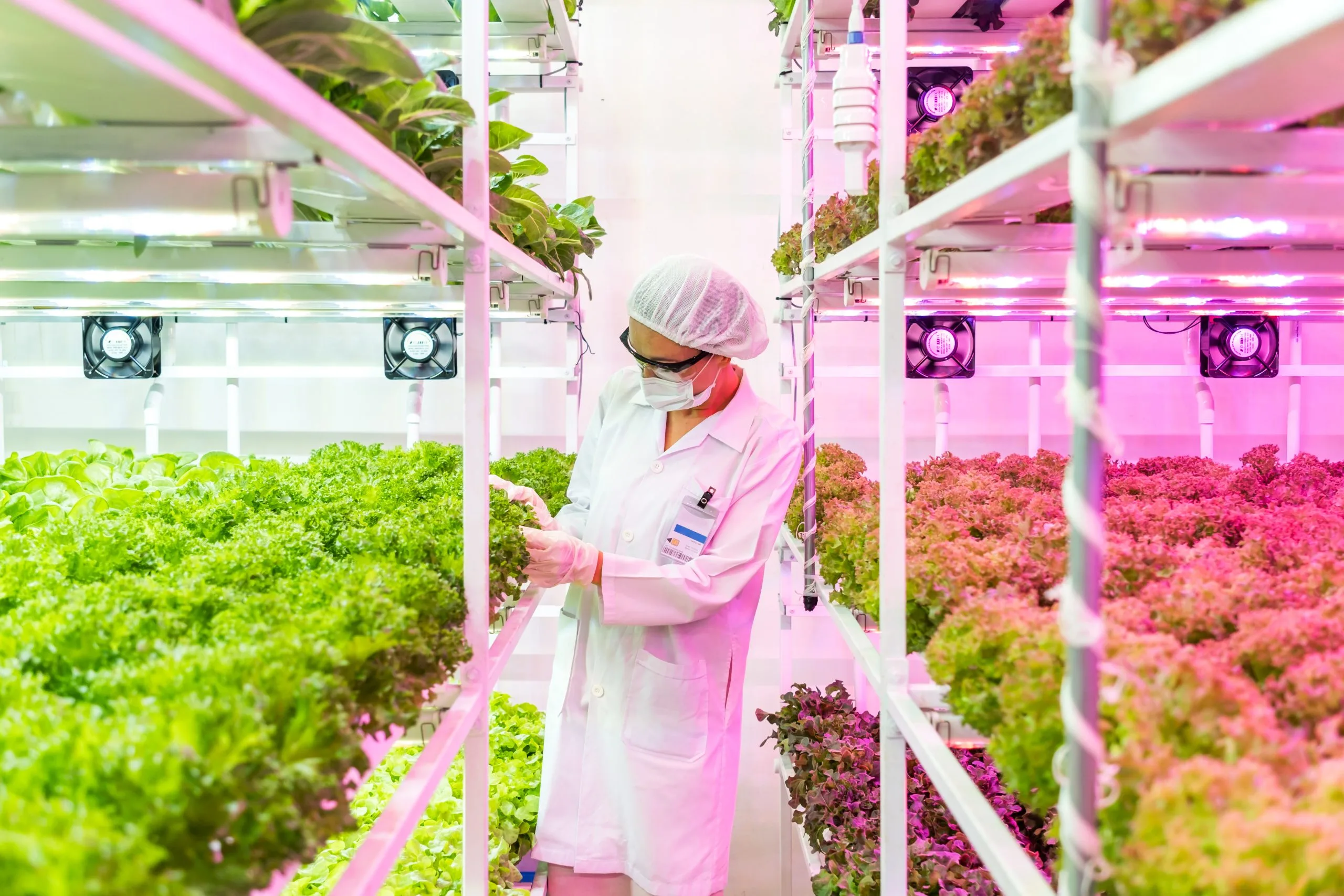
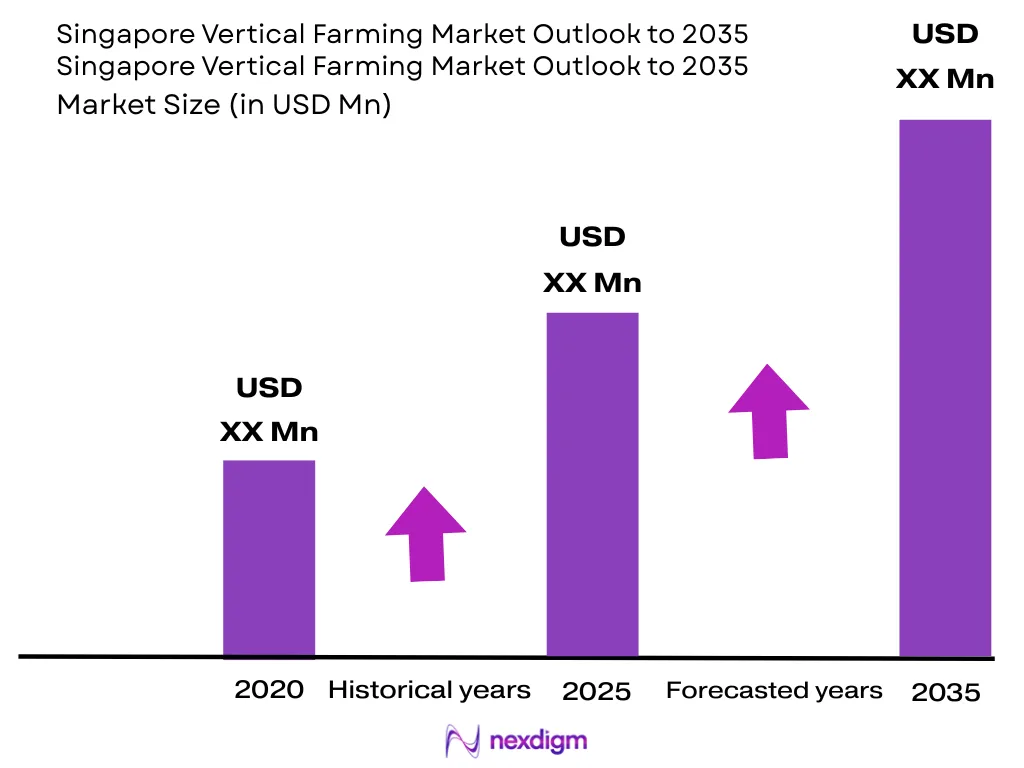
The Singapore vertical farming market is currently valued at approximately USD ~ million. The Singapore Vertical Farming Market is one of the most technologically advanced and policy-supported controlled environment agriculture sectors globally, yet also one of the most commercially demanding, characterised by a difficult balance between the imperative for local food production and the structural cost pressures that have led to a wave of operator closures and strategic pivots over recent years. Singapore imports more than 90 percent of its food supply, making food security a foundational national concern. The government’s original “30 by 30” goal — to produce 30 percent of nutritional needs locally by 2030 — galvanised the sector but was replaced in late 2025 with the Singapore Food Story 2 framework, which sets more targeted goals of producing 20 percent of fibre and 30 percent of protein locally by 2035. This recalibration reflects Singapore’s honest assessment of its land and cost constraints, while reinforcing the government’s long-term commitment to domestic food production. The opening of Greenphyto’s S$80 million, 23-metre-high facility in Jurong West in January 2026 — billed as the world’s tallest indoor vertical farm, capable of producing up to 2,000 tonnes of leafy greens annually at full capacity — signals that the market’s most ambitious operators are doubling down on technology and automation as the path to commercial viability, even as the broader sector undergoes consolidation.
Market Segmentation
By Crop Type
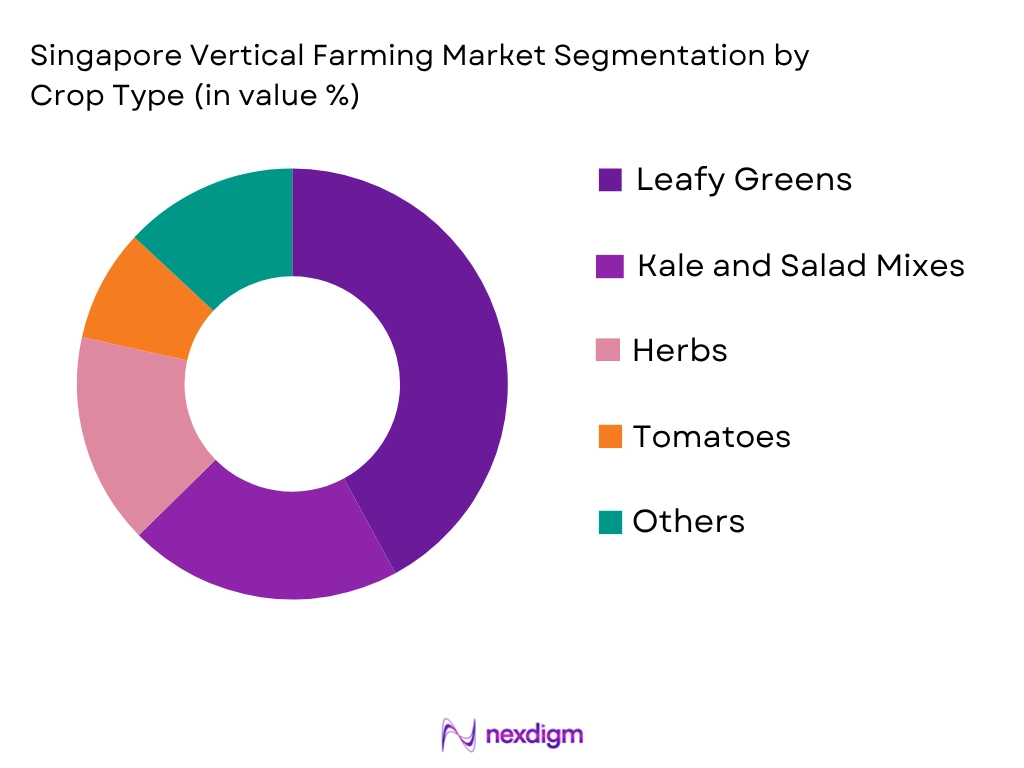
The Singapore Vertical Farming Market is segmented by crop type into leafy greens, kale and salad mixes, herbs, microgreens, strawberries and high-value fruiting crops, mushrooms and specialty fungi, and beansprouts and other local staples. Leafy greens, including kailan, lettuce, spinach, and cabbage, represent the dominant crop category, driven by their short cultivation cycles, high compatibility with hydroponic and vertical tower systems, and consistent demand from Singapore’s supermarket retail and foodservice channels. Sky Greens’ patented rotating tower technology has made it a pioneer in low-energy leafy green production in Singapore, while Greenphyto’s fully automated, AI-managed facility is targeting high-volume kailan and lettuce production for supply to FairPrice and Sheng Siong supermarkets. Kale and imported-style salad greens represent a premium segment dominated by Sustenir Agriculture, which produces varieties such as Tuscan kale and ice plant that are difficult to grow conventionally in the tropics. The fastest-growing segment by value is high-value crops — particularly strawberries and mushrooms — where Singrow’s proprietary climate-resilient plant genetics and circular agri model are redefining what is commercially producible in a Singapore vertical farm context. This pivot toward higher-margin crops beyond leafy greens is increasingly recognised across the industry as a critical requirement for sustainable unit economics.
By Growing Mechanism
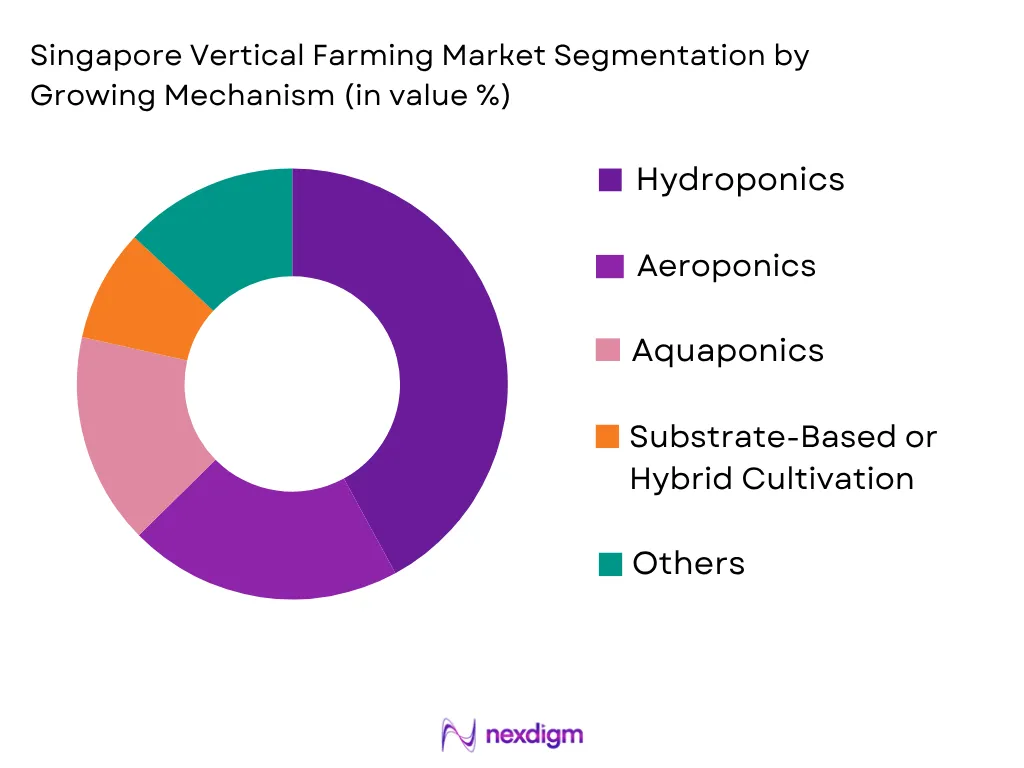
The Singapore Vertical Farming Market is segmented by growing mechanism into hydroponics, aeroponics, aquaponics, and substrate-based or hybrid cultivation systems. Hydroponics holds the dominant market share, underpinned by its proven reliability for leafy green production, established supply chains for nutrients and growing media, and compatibility with the high-automation, data-driven systems deployed by Singapore’s leading operators. Sustenir Agriculture’s nutrient film technique recirculates water continuously, achieving up to 95 percent water savings compared to conventional farming, while Greenphyto’s fully automated hydroponic system integrates AI monitoring to optimise crop cycles on a make-to-order basis. Sky Greens represents a globally distinctive approach, using a patented gravity-assisted rotating vertical tower system that reduces LED lighting dependency by utilising natural light more effectively — a meaningful energy cost differentiator in a market where electricity tariffs represent a primary operational cost driver. Aeroponics is gaining traction through operators such as Aerospring Hydroponics, which entered the commercial farming sector in 2023 with systems delivering up to 30 percent higher yields at 90 percent less water than traditional farming. Aquaponics, integrating fish and vegetable production, occupies a niche but growing segment supported by operators such as V-Plus Agritech, which combines aquaponics with urban farm design and education.
Competitive Landscape
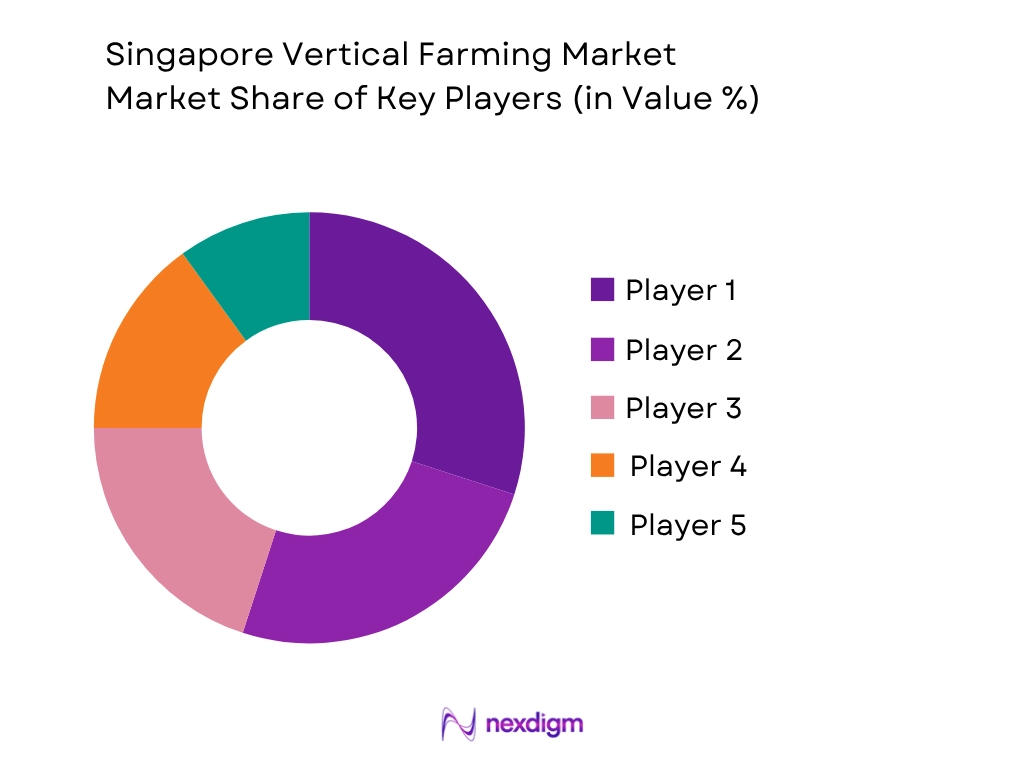
The Singapore Vertical Farming Market is moderately concentrated and is undergoing a significant period of structural consolidation following a wave of operator closures and abandoned expansion plans. High-profile exits, including the voluntary liquidation of Growy Singapore in late 2025, the abandonment of VertiVegies’ Lim Chu Kang plans, and the closure of IFFI’s 38,000-square-metre Tuas facility, have reshaped the competitive landscape and reinforced the view that only operators with differentiated technology, disciplined cost management, and secured demand channels are positioned for long-term viability. The surviving and scaling operators — led by Greenphyto, Sky Greens, Sustenir Agriculture, ComCrop, and Singrow — are each pursuing distinct competitive strategies: Greenphyto through AI-driven scale and make-to-order production; Sky Greens through its proprietary low-energy tower technology and established retail distribution; Sustenir through premium positioning of varieties that cannot be locally grown conventionally; and Singrow through high-value crop genetics and circular agricultural systems. Retail distribution partnerships with FairPrice, Sheng Siong, Cold Storage, and RedMart are critical competitive moats, and the Singapore Food Agency’s SG Fresh Produce label provides operators with a meaningful point-of-sale differentiation tool in a market where consumers have demonstrated willingness to pay a premium for local produce.
| Company | Establishment Year | Headquarters | Primary Crop Focus | Growing Technology | Automation Level | Geographic Presence | Retail Partnerships | Sustainability Focus |
| Greenphyto | 2011 | ~ | ~ | ~ | ~ | ~ | ~ | ~ |
| Sky Greens | 2009 | ~ | ~ | ~ | ~ | ~ | ~ | ~ |
| Sustenir Agriculture | 2014 | ~ | ~ | ~ | ~ | ~ | ~ | ~ |
| ComCrop | 2011 | ~ | ~ | ~ | ~ | ~ | ~ | ~ |
| Singrow | 2019 | ~ | ~ | ~ | ~ | ~ | ~ | ~ |
Singapore Vertical Farming Market Analysis
Growth Drivers
Extreme Land Scarcity, Import Dependence, and the Singapore Food Story 2 Framework
Singapore’s extreme land scarcity — with less than one percent of total land area allocated to agriculture — and near-total dependence on food imports, with over 90 percent of all food consumed imported from more than 170 countries, are the foundational structural drivers of the Vertical Farming Market. The vulnerability of Singapore’s food supply to geopolitical disruptions, climate shocks affecting key source countries, and supply chain volatility has consistently positioned domestic food production as a strategic national security imperative. The Singapore Food Story 2 framework, announced in November 2025 to replace the original “30 by 30” goal, sets category-specific domestic production targets of 20 percent of fibre consumption and 30 percent of protein consumption to be met locally by 2035. These targets provide a clear and sustained government mandate that directly supports investment in vertical farming as a primary mechanism for increasing domestic vegetable and leafy green production. The framework’s focus on fibre — which includes leafy and fruited vegetables, beansprouts, and mushrooms — aligns precisely with the core crop portfolio of Singapore’s vertical farming sector, providing long-term demand visibility for operators investing in production capacity.
Government Grant Support, Retail Infrastructure, and Premium Consumer Demand
Singapore’s sophisticated government support ecosystem for vertical farming, anchored by the Singapore Food Agency’s Agri-food Cluster Transformation (ACT) Fund and the SG Fresh Produce branding programme, provides a uniquely enabling environment for commercial operators. The ACT Fund supports local farms in adopting productivity-enhancing technology, improving resource efficiency, and building commercial-scale capabilities, reducing the capital barrier to technology adoption for smaller operators. The SG Fresh Produce label, prominently displayed in supermarkets including FairPrice and Sheng Siong, has built strong consumer recognition of and preference for locally grown produce, with research consistently indicating that Singapore consumers are willing to pay a premium of 10 to 20 percent for local over imported equivalents at comparable quality levels. Singapore’s modern and highly developed retail grocery sector — encompassing major chains, e-commerce platforms including RedMart, and specialty food delivery services — provides vertical farm operators with mature, efficient distribution channels and consistent demand from organised retail buyers. The hospitality and foodservice sector, including Singapore’s internationally renowned fine-dining and hotel F&B programmes, represents an additional premium demand channel where locally grown, traceable produce commands significant price premiums.
Market Challenges
High Energy Costs and Commercially Elusive Unit Economics
High electricity tariffs represent the most acute operational challenge for Singapore’s vertical farming sector, and are the primary reason behind the wave of farm closures and abandoned expansion plans that have reshaped the market in recent years. Singapore’s electricity costs, which have historically ranged between SGD 0.25 and SGD 0.35 per kilowatt-hour for commercial consumers, are among the highest in Asia, and LED lighting and climate-control systems can account for 50 to 70 percent of a vertical farm’s total operating expenditure. The combination of high energy costs and relatively modest sale prices for leafy greens — the dominant product category for most operators — has made it extremely difficult to achieve commercially viable unit economics at scale, as the closures of Growy Singapore, VertiVegies, and IFFI’s Tuas mega-facility have demonstrated. Greenphyto’s founder Susan Chong has noted that the farm’s make-to-order production model, which avoids overproduction and waste, and its focus on AI-driven operational efficiency are central to its approach to managing energy cost pressure. The sector’s long-term viability requires either a material reduction in the cost of renewable electricity, a significant improvement in LED and climate-control energy efficiency, or a shift toward higher-margin crop categories that can support the energy cost burden.
Sector Consolidation, Workforce Shortage, and Import Price Competition
The Singapore vertical farming sector has experienced significant structural consolidation since 2022, as rising energy costs, post-pandemic supply chain disruptions, and weakening global investor confidence in vertical farming prompted several operators to exit the market or scale back expansion plans. This consolidation has created a more selective investment environment in which capital is being directed toward operators demonstrating credible paths to profitability rather than production scale alone. In parallel, the sector faces a persistent shortage of skilled agronomists, automation engineers, data scientists, and controlled environment agriculture specialists capable of designing and managing advanced vertical farming systems, despite Workforce Singapore and the SFA having developed an Agrifood Sector Skills Framework to guide career pathways. Competition from lower-cost imported produce — particularly from Malaysia, which supplies a substantial share of Singapore’s fresh vegetable imports at prices that are difficult for domestic operators to match — remains a structural pricing constraint, particularly for commodity leafy green categories.
Market Opportunities
High-Value Crop Pivot, Make-to-Order Models, and Regional Export Positioning
The most significant near-term commercial opportunity for Singapore’s vertical farming sector lies in the strategic pivot toward higher-value crop categories that can support the energy and capital cost structure of indoor controlled environment agriculture. Singrow’s success in developing climate-resilient strawberry varieties and its circular mushroom-strawberry production model — which it claims can achieve operational costs approximately 60 percent lower than comparable US operators through combined climate control efficiency and circular resource use — illustrates the transformative commercial potential of moving beyond commodity leafy greens into premium fruit and functional crop categories. Operators that can demonstrate viable economics in strawberries, specialty mushrooms, saffron, and traditional Chinese medicine herbs are accessing markets where price premiums are substantially higher and import competition is less intense. The make-to-order production model pioneered by Greenphyto, which produces vegetables only after securing confirmed orders from retail and foodservice buyers, eliminates overproduction losses and improves working capital efficiency while maintaining supply freshness. Singapore’s strategic position as a regional trade and logistics hub also creates export opportunities for premium vertically farmed produce to Hong Kong, Malaysia, and other Southeast Asian markets where the SG Fresh Produce brand carries credibility.
Lim Chu Kang Agri-Food Hub and AI-Driven Farm Technology Commercialisation
The planned development of the 390-hectare Lim Chu Kang high-tech agri-food hub, alongside the operational Agri-Food Innovation Park at Sungei Kadut, represents a significant long-term structural opportunity for Singapore’s vertical farming ecosystem. While the Lim Chu Kang master plan and associated Agri-Food Innovation Park construction have experienced delays, the SFA’s feasibility study for a pilot multi-tenant facility at Lim Chu Kang — which it describes as a mechanism to intensify limited agricultural land in a climate-resilient and commercially viable manner — signals continued government intent to create shared infrastructure that lowers the cost of entry for viable operators. The commercialisation of AI-powered farm management systems, digital twin technologies for crop optimisation, and advanced plant genomics platforms developed by Singapore-based companies such as Greenphyto and Singrow creates opportunities for the city-state to become not just a domestic food producer but a regional exporter of vertical farming technology, systems, and intellectual property. The SFA’s commitment of S$42 million to future food research projects and continued ACT Fund support provides a sustained government investment channel that underpins private sector innovation activity in the sector.
Future Outlook
The Singapore Vertical Farming Market is expected to undergo continued strategic consolidation in the near term, with the most commercially resilient and technologically differentiated operators scaling while the broader sector shifts decisively toward higher-margin crop categories, AI-driven production efficiency, and demand-led business models. The Singapore Food Story 2 framework’s specific targets for 20 percent of fibre and 30 percent of protein production by 2035 provide a sustained and credible government mandate that will continue to anchor investment in domestic food production infrastructure, with vertical farming positioned as a primary mechanism for increasing fibre output. Greenphyto’s world’s-tallest indoor farm in Jurong West, which opened in January 2026 with capacity for up to 2,000 tonnes of leafy greens annually, represents the most significant individual market development in the recent period and will serve as an important test case for whether AI-driven scale and make-to-order economics can achieve commercial viability for large-format indoor farms. The sector’s pivot toward high-value crops, led by Singrow’s climate-resilient strawberry and circular mushroom concepts, is expected to accelerate as operators seek crop categories with the margin profile required to cover Singapore’s high energy and operating costs. The planned development of Lim Chu Kang and continued ACT Fund support will sustain a flow of government-backed capital into farm technology and capability upgrading through 2035. Singapore’s role as a regional AgriTech innovation hub — exporting vertical farming technology, plant genetics, and farm management systems to Southeast Asia and beyond — is expected to become an increasingly important dimension of the sector’s value proposition as domestic production economics alone remain challenging.
Major Players
- Greenphyto
- Sky Greens
- Sustenir Agriculture
- ComCrop
- Singrow
- Edible Garden City
- Archisen
- Artisan Green
- Aerospring Hydroponics
- Greenhood
- V-Plus Agritech
- The Local Farm
- Urban Tiller
- Grobrix
- Farm deLight
Key Target Audience
- Vertical Farming Operators and Controlled Environment Agriculture Companies
- Supermarket and Grocery Retail Chains (FairPrice, Sheng Siong, Cold Storage, RedMart)
- Hotels, Fine-Dining Restaurants and Premium Foodservice Procurement
- E-Commerce Food Platforms and Farm Subscription Services
- Agricultural Technology Equipment Manufacturers and System Integrators
- Venture Capital, Private Equity and Impact Investment Entities
- Government and Regulatory Bodies (Singapore Food Agency, Urban Redevelopment Authority, Enterprise Singapore, Economic Development Board)
- AgriTech Research Institutions and University Programmes (NUS, NTU, Temasek Polytechnic)
- Agri-Food Cluster Transformation Fund Applicants and Beneficiaries
Research Methodology
Step 1: Identification of Key Variables
The initial phase involves constructing an ecosystem map encompassing all major stakeholders within the Singapore Vertical Farming Market. Extensive secondary research is conducted through industry publications, Singapore Food Agency databases, company reports, AgriTech investment records, and controlled environment agriculture technology resources. The objective is to identify key variables influencing production capacity, crop yields, technology adoption, investment activity, and market growth across Singapore’s key farming districts and districts.
Step 2: Market Analysis and Construction
This phase focuses on collecting and analysing historical industry data related to production volume, facility expansion, crop output, technology deployment, and revenue generation. Market segmentation is developed based on crop types, cultivation technologies, and end-user demand patterns across Singapore’s retail, foodservice, and institutional buyer channels. Supply-side and demand-side assessments are integrated to establish accurate market estimates.
Step 3: Hypothesis Validation and Expert Consultation
Market assumptions and forecasts are validated through structured interviews with vertical farm operators, agricultural technology providers, equipment suppliers, retail buyers, and industry specialists. These consultations provide operational insights regarding yield performance, energy cost structures, expansion strategies, and future technology adoption trends specific to the Singapore vertical farming sector.
Step 4: Research Synthesis and Final Output
The final stage combines insights obtained from primary and secondary research sources. Data triangulation techniques are applied to validate market estimates and segment-level findings. The resulting analysis provides a comprehensive view of competitive dynamics, growth opportunities, future trends, and strategic recommendations within the Singapore Vertical Farming Market.

- Executive Summary
- Research Methodology (Market Definitions and Assumptions, Abbreviations, Market Sizing Approach, Top-Down Analysis, Bottom-Up Analysis, Controlled Environment Agriculture Assessment, Demand-Side Assessment, Supply-Side Assessment, Primary Industry Interviews, Data Triangulation, Forecasting Framework, Limitations and Future Conclusions)

- Definition and Scope
- Market Evolution and Industry Genesis
- Timeline of Major Industry Developments
- Vertical Farming Ecosystem Structure
- Controlled Environment Agriculture Value Chain Analysis

- Growth Drivers (Extreme Land Scarcity and Near-Total Import Dependence, Singapore Food Story 2 and Revised Domestic Production Targets, Government Grants and Singapore Food Agency Support Programmes, High Consumer Willingness to Pay for Local Premium Produce, Strong Retail and Foodservice Infrastructure, Technological Leadership and AgriTech Ecosystem Depth)
- Market Challenges (High Energy Costs and Electricity Tariff Pressure, Commercially Viable Unit Economics Remain Elusive for Many Operators, Sector-Wide Consolidation and Recent High-Profile Farm Closures, Revised and More Targeted Government Production Goals, Competition from Lower-Cost Imported Produce, Acute Skilled Workforce Shortage in Controlled Environment Agriculture)
- Market Opportunities (Make-to-Order and Demand-Led Production Models, Pivot to High-Value Crops Beyond Leafy Greens, Lim Chu Kang Agri-Food Hub and Multi-Tenant Facility Development, Regional Export to Southeast Asia and Hong Kong, Alternative Protein and Functional Food Integration, AI and Digital Twin Farm Management Commercialisation)
- Market Trends (AI-Powered Fully Automated Indoor Farms, Make-to-Order Demand-Led Production, High-Value Crop Diversification (Strawberries, Mushrooms, Saffron), Plant Genomics and Climate-Resilient Variety Development, Circular Agricultural Systems, Regional Export Hub Positioning)
- Government Regulations (Singapore Food Agency (SFA) Licensing and Standards Framework, Agri-food Cluster Transformation (ACT) Fund, Singapore Food Story 2 Framework (20% Fibre, 30% Protein by 2035), Lim Chu Kang High-Tech Agri-Food Hub Master Plan, Agri-Food Innovation Park at Sungei Kadut, Urban Redevelopment Authority Land Use Policies for Agriculture)
- SWOT Analysis
- PESTLE Analysis
- Porter’s Five Forces Analysis
- Stakeholder Ecosystem
- Competition Ecosystem

- By Market Value (2020-2025)
- By Production Volume (2020-2025)
- By Average Selling Price (2020-2025)

- By Crop Type (In Value %)
Leafy Greens (Kailan, Lettuce, Spinach, Cabbage)
Kale and Salad Greens
Herbs (Basil, Mint, Parsley, Coriander)
Microgreens
Strawberries and High-Value Fruiting Crops
Mushrooms and Specialty Fungi
Beansprouts and Other Local Staples - By Farming Structure (In Value %)
Building-Based Indoor Vertical Farms
Rooftop Greenhouse Farms
Rotating Vertical Tower Farms
Container and Modular Farms - By Growing Mechanism (In Value %)
Hydroponics
Aeroponics
Aquaponics
Substrate-Based and Hybrid Cultivation - By District and Location (In Value %)
Lim Chu Kang Farming Belt
Jurong and Jurong West
Woodlands and North Region
Central and Orchard Road Vicinity
Sungei Kadut Agri-Food Innovation Park - By End User (In Value %)
Supermarkets and Grocery Retail
Hotels and Fine-Dining Restaurants
Quick Service Restaurants and Foodservice
E-Commerce and Food Delivery Platforms
Institutional and Corporate Canteens
Direct-to-Consumer and Farm Subscription

- Market Share Analysis of Major Players (By Revenue, Production Volume, Cultivation Capacity, Crop Portfolio, Retail Distribution Reach)
- Market Concentration Analysis
- Cross Comparison Parameters (Cultivation Capacity, Annual Yield Output, Number of Vertical Farming Facilities, Crop Portfolio Diversity, Stacking Density Efficiency, Automation and AI Integration Level, Energy Consumption per Kg of Produce, Retail and Foodservice Distribution Reach)
- SWOT Analysis of Major Players
- Pricing Analysis (Per Kilogram Pricing, Premium vs Imported Produce Pricing, Retail Channel Pricing, Crop-Wise Pricing Benchmarking)
- Detailed Profiles of Major Companies
Greenphyto
Sky Greens
Sustenir Agriculture
ComCrop
Singrow
Edible Garden City
Archisen
Artisan Green
Aerospring Hydroponics
Greenhood
V-Plus Agritech
The Local Farm
Urban Tiller
Grobrix
Farm deLight

- Fresh Produce Consumption and Utilisation Assessment (Consumption Frequency, Freshness Preference, Local SG Fresh Produce Label Adoption, Premium Produce Willingness to Pay)
- Procurement Behaviour Analysis (Contract Farming Preference, Supplier Switching Rate, Procurement Volume, Supply Consistency Requirements)
- Purchasing Power and Spending Analysis
- Sustainability-Driven Purchase Behaviour (Food Miles Awareness, Carbon Footprint Preference, Pesticide-Free Certification Demand, SG Fresh Produce Label Recognition)
- Premium Pricing Acceptance Analysis

- By Market Value (2026-2035)
- By Production Volume (2026-2035)
- By Average Selling Price (2026-2035)


 Request a Sample
 Ask for Customization
 Get a Quote
 Enquire Now