

 Download PDF
 Download PDF
Market Overview
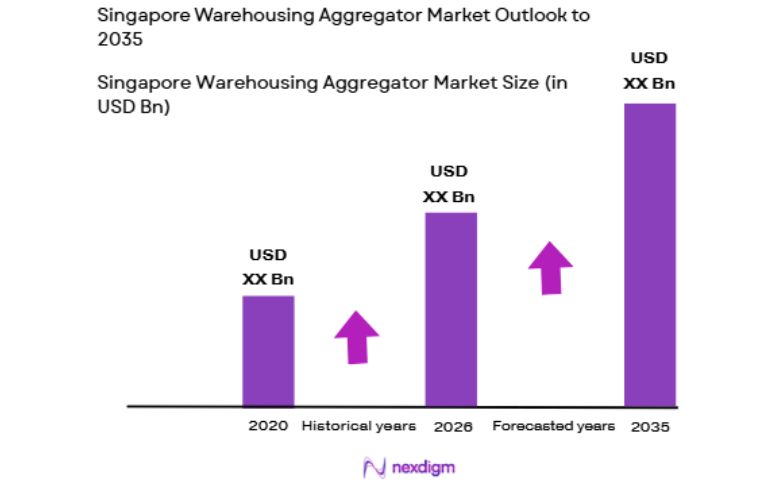
The Vietnam warehousing aggregator market is projected to reach a valuation of approximately USD ~ billion, primarily driven by the increasing demand for logistics services spurred by the rapid expansion of e-commerce, manufacturing, and retail sectors. With advancements in technology and the need for more sophisticated supply chain solutions, the market has seen substantial growth. The growing demand for efficient inventory management and faster distribution times across various industries further fuels this development.
The major cities dominating the Vietnam warehousing aggregator market include Ho Chi Minh City, Hanoi, and Hai Phong. Ho Chi Minh City leads the market due to its economic importance as the hub for logistics and industrial activities. Hanoi is also a key player, benefiting from its proximity to industrial zones and distribution networks. Hai Phong, with its large port infrastructure, is central to Vietnam’s maritime logistics, making it a crucial location for warehousing and distribution services, particularly for goods arriving via sea.
Market Segmentation
By Product Type
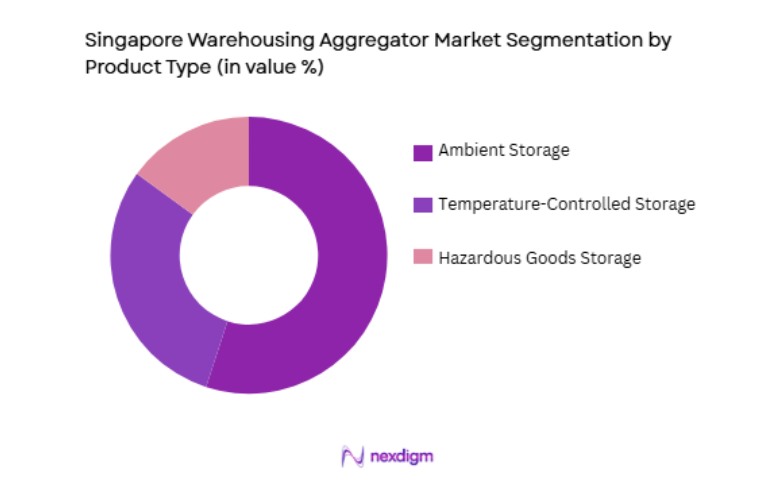
The Vietnam warehousing aggregator market is segmented by product type into ambient storage, temperature-controlled storage, and hazardous goods storage. Recently, ambient storage has emerged as the dominant sub-segment due to the rise in demand for retail and consumer products that do not require temperature-sensitive conditions. The widespread growth of e-commerce and the increasing consumption of non-perishable goods have driven the need for efficient ambient storage solutions. The availability of large, cost-effective warehouses in logistics hubs like Ho Chi Minh City and Hanoi has also contributed to the dominance of this sub-segment.
By Warehouse Size
The Vietnam warehousing aggregator market is segmented by warehouse size into small, medium, and large-sized warehouses. Large-sized warehouses have recently dominated the market, primarily due to the increasing demand for large-scale storage solutions, particularly in e-commerce and manufacturing sectors. The development of large industrial parks and distribution hubs, especially in Ho Chi Minh City and Hai Phong, has contributed to this trend. These large warehouses provide ample storage space, offer economies of scale, and cater to the growing needs of businesses handling substantial volumes of inventory.

Competitive Landscape
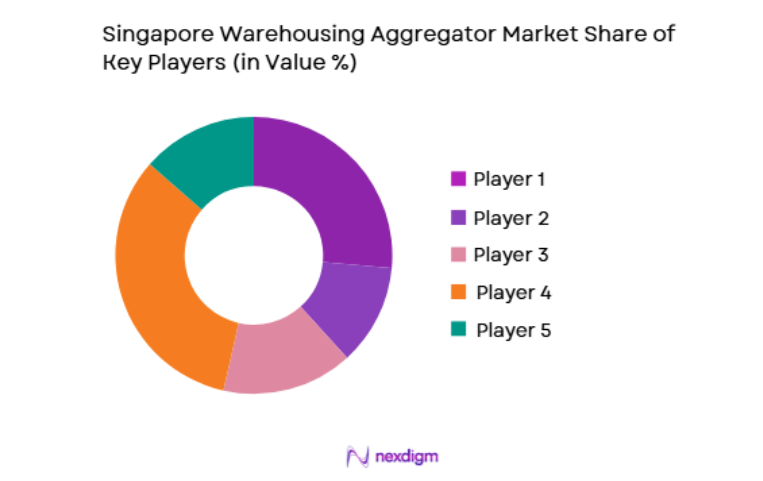
The competitive landscape of the Vietnam warehousing aggregator market is characterized by the presence of both local and international players vying for market share. Companies are focusing on enhancing their service offerings by adopting advanced technologies such as automation, robotics, and IoT to improve operational efficiency. The consolidation trend is evident as larger players acquire smaller companies to expand their portfolio and market presence. This competitive environment is fueled by the growing demand for logistics solutions and an increasing focus on integrating warehousing with the broader supply chain.
| Company Name | Establishment Year | Headquarters | Technology Focus | Market Reach | Key Products | Revenue (USD) | Additional Parameter |
| Tuan Anh Logistics | 1999 | Ho Chi Minh | ~ | ~ | ~ | ~ | ~ |
| Vietnam Logistics Co. | 1997 | Hanoi | ~ | ~ | ~ | ~ | ~ |
| Gemadept Logistics | 1988 | Ho Chi Minh | ~ | ~ | ~ | ~ | ~ |
| Sai Gon Freight | 2000 | Ho Chi Minh | ~ | ~ | ~ | ~ | ~ |
| Vietnam Freight Hub | 2010 | Hanoi | ~ | ~ | ~ | ~ | ~ |
Singapore Warehousing Aggregator Market Analysis
Growth Drivers
Expansion of E-commerce in Vietnam
The rapid growth of e-commerce in Vietnam has played a key role in driving the demand for warehousing solutions. The increasing number of online shopping platforms, coupled with changing consumer behavior, has led to a surge in demand for quick and efficient delivery services. E-commerce companies require warehousing aggregators to provide scalable storage and faster order fulfillment to meet the growing needs of consumers. The rise of platforms such as Shopee and Lazada has been a key factor in the growth of this market, leading to higher demands for large warehouses, real-time inventory management systems, and advanced logistics services. As Vietnam’s e-commerce market continues to expand, warehousing aggregators will play a crucial role in managing inventory and ensuring quick turnaround times. The expansion of e-commerce infrastructure, including logistics parks and distribution centers, further supports this growth.
Government Initiatives and Infrastructure Development
The Vietnamese government has implemented various initiatives aimed at improving the country’s logistics infrastructure, which has a direct impact on the warehousing aggregator market. The government’s investment in the development of logistics hubs and industrial parks in major cities like Ho Chi Minh City, Hanoi, and Hai Phong is enhancing the efficiency of the supply chain. Additionally, the government’s push for digital transformation and modernization of logistics services under the National Logistics Development Strategy is creating new growth opportunities for warehousing aggregators. These infrastructure improvements, which include better road networks, expanded port facilities, and enhanced rail connections, are facilitating smoother logistics operations, thus driving the demand for warehousing services. As infrastructure continues to improve, warehousing aggregators will benefit from increased business opportunities, especially in high-demand regions.
Market Challenges
High Real Estate and Operational Costs
One of the significant challenges facing the warehousing aggregator market in Vietnam is the rising cost of real estate in key logistics hubs. Prime locations, particularly in Ho Chi Minh City and Hanoi, are seeing increasing demand for warehouse space, which is pushing rental prices higher. This trend is putting pressure on warehousing operators to secure affordable land and facilities while maintaining profitability. Furthermore, the rising costs of utilities, labor, and transportation are adding to operational expenses. As demand for large-scale warehousing facilities continues to rise, businesses will need to find ways to mitigate these costs, either through technological investments that improve operational efficiency or by exploring alternative warehouse locations that offer more cost-effective solutions.
Technological Integration and Adoption Barriers
While technological advancements such as automation, IoT, and AI present significant opportunities, their integration into existing warehousing operations remains a challenge. The high cost of implementing these technologies, particularly for small and medium-sized players, is a major barrier to widespread adoption. Additionally, integrating new technologies into traditional warehousing systems can be complex and time-consuming, requiring substantial investments in infrastructure and training. Many warehousing operators in Vietnam, especially smaller ones, may struggle with the initial financial outlay and the expertise required to manage these advanced technologies. As the market becomes more competitive, adopting these innovations will be essential for operators to stay ahead of the curve and meet the growing demands of e-commerce businesses.
Opportunities
Adoption of Smart Warehousing and Automation
One of the most promising opportunities in the Vietnam warehousing aggregator market is the adoption of smart warehousing solutions and automation. As demand for faster and more efficient order fulfillment grows, businesses are increasingly looking to automate their operations to reduce labor costs, improve efficiency, and minimize errors. Technologies such as robotics, automated guided vehicles (AGVs), and real-time tracking systems can help optimize storage, inventory management, and picking processes, thus reducing operational costs and enhancing service levels. Furthermore, the integration of AI and machine learning in warehouse management systems (WMS) can provide valuable insights into inventory trends, helping businesses forecast demand more accurately and manage resources more effectively. As these technologies continue to evolve, they present a significant opportunity for warehousing aggregators to enhance their offerings and stay competitive in the market.
Green and Sustainable Warehousing Solutions
As environmental concerns grow, there is an increasing opportunity for warehousing aggregators to adopt sustainable and energy-efficient practices. Green warehousing solutions, such as solar-powered facilities, energy-efficient lighting, and sustainable packaging, can help businesses reduce their environmental impact and lower operating costs in the long run. Additionally, governments and international organizations are increasingly incentivizing businesses to adopt sustainable practices, offering tax breaks and subsidies for green initiatives. The trend towards sustainability presents an opportunity for warehousing aggregators to differentiate themselves in the market by offering eco-friendly solutions to their clients. As demand for green logistics solutions rises, companies that invest in sustainable warehousing practices will be well-positioned to attract environmentally conscious businesses and gain a competitive edge.
Future Outlook
The future outlook for the Vietnam warehousing aggregator market is optimistic, with continued growth driven by technological advancements, government infrastructure initiatives, and the expansion of e-commerce. Over the next five years, the market is expected to see significant demand for automated warehousing solutions, particularly as e-commerce businesses require faster and more efficient fulfillment capabilities. The government’s focus on improving the logistics infrastructure will further bolster the growth of warehousing services, while the shift towards sustainable practices will present new opportunities for market players. Warehousing aggregators that invest in smart technologies and sustainable practices will be well-positioned to capitalize on these trends and maintain a competitive edge.
Major Players
- Tuan Anh Logistics
- Vietnam Logistics Co.
- Gemadept Logistics
- Sai Gon Freight
- Vietnam Freight Hub
- Vinafreight Logistics
- Transimex Logistics
- SHB Logistics
- IndoTrans Logistics
- IDI Logistics
- Long Hau Logistics
- Vietrans Logistics
- TCE Logistics
- KWE Vietnam
- VinaGroup Logistics
Key Target Audience
- Investments and venture capitalist firms
- Government and regulatory bodies
- E-commerce companies
- Logistics service providers
- Retailers and wholesalers
- Manufacturing companies
- Industrial parks and real estate developers
- Freight forwarding companies
Research Methodology
Step 1: Identification of Key Variables
This step involves identifying critical market drivers, including technological advancements, government policies, infrastructure improvements, and demand for warehousing services across sectors.
Step 2: Market Analysis and Construction
The next step is analyzing current market conditions, evaluating key growth drivers, and constructing a detailed market model to understand the dynamics of the warehousing aggregator market.
Step 3: Hypothesis Validation and Expert Consultation
Consultation with industry experts and stakeholders to validate the preliminary market model and refine assumptions, ensuring the research aligns with real-world trends.
Step 4: Research Synthesis and Final Output
Synthesize all collected data into a comprehensive report, highlighting key insights and actionable recommendations for market players based on the analysis.

- Executive Summary
- Research Methodology (Definitions, Scope, Industry Assumptions, Market Sizing Approach, Primary & Secondary Research Framework, Data Collection & Verification Protocol, Analytic Models & Forecast Methodology, Limitations & Research Validity Checks)

- Market Definition and Scope
- Value Chain & Stakeholder Ecosystem
- Regulatory / Certification Landscape
- Sector Dynamics Affecting Demand

- Growth Drivers
Rapid Growth in E-commerce
Increasing Demand for Warehouse Automation
Government Initiatives to Improve Logistics Infrastructure - Market Challenges
High Initial Capital Costs
Technological Integration Barriers
Labor Shortages and Skill Gaps - Market Opportunities
Expansion of Cross-border E-commerce
Rising Demand for Real-time Inventory Management Solutions
Growth in Warehouse Automation Technologies - Trends
Integration of AI and Robotics in Warehouse Operations
Adoption of Green and Sustainable Technologies
Use of Real-time Data and Analytics in Warehousing - Government regulations
- SWOT analysis
- Porters 5 forces

- By Market Value, 2020-2025
- By Installed Units, 2020-2025
- By Average System Price, 2020-2025
- By System Complexity Tier, 2020-2025

- By System Type (In Value%)
Inventory Management Systems
Order Fulfillment Systems
Warehouse Management Systems
Automated Storage & Retrieval Systems
Warehouse Control Systems - By Platform Type (In Value%)
Cloud-based Platforms
On-premise Platforms
Hybrid Platforms
Mobile Platforms
Integrated Platforms - By Fitment Type (In Value%)
Standalone Solutions
Modular Solutions
Cloud-based Solutions
Hybrid Solutions
Custom Solutions - By End User Segment (In Value%)
E-commerce Retailers
Third-party Logistics Providers
Manufacturers
Automotive Industry

- Market Share Analysis
- Cross Comparison Parameters (System Type, Platform Type, Procurement Channel, EndUser Segment, Fitment Type, Automation Level, Operational Efficiency, Service Level, Scalability, Market Reach)
- SWOT Analysis of Key Competitors
- Pricing & Procurement Analysis
- Key Players
DB Schenker
DHL Supply Chain
Agility Logistics
Kuehne + Nagel
XPO Logistics
Siemens Logistics
Manhattan Associates
Dematic
Honeywell Intelligrated
Swisslog
JDA Software
Cushman & Wakefield
GLP
DHL
Savills

- E-commerce Companies Seeking Efficient Fulfillment Solutions
- Logistics Providers Looking for Cost-effective Automation
- Manufacturers Seeking Advanced Warehouse Management Systems
- Food & Beverage Industry Requiring Temperature-controlled Storage Solutions

- Forecast Market Value, 2026-2035
- Forecast Installed Units, 2026-2035
- Price Forecast by System Tier, 2026-2035
- Future Demand by Platform, 2026-2035


 Request a Sample
 Ask for Customization
 Get a Quote
 Enquire Now