
 Download PDF
Market Overview
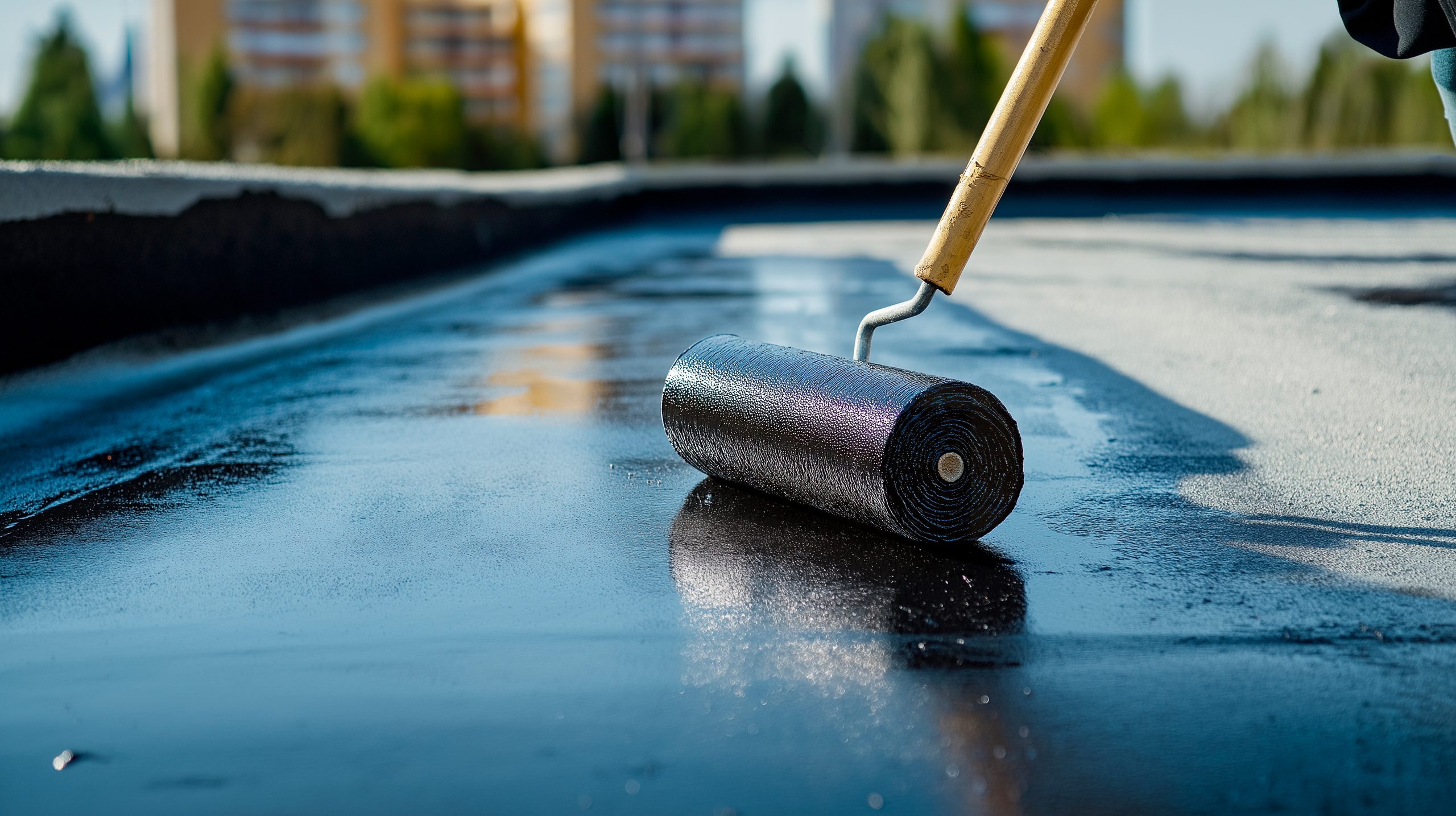
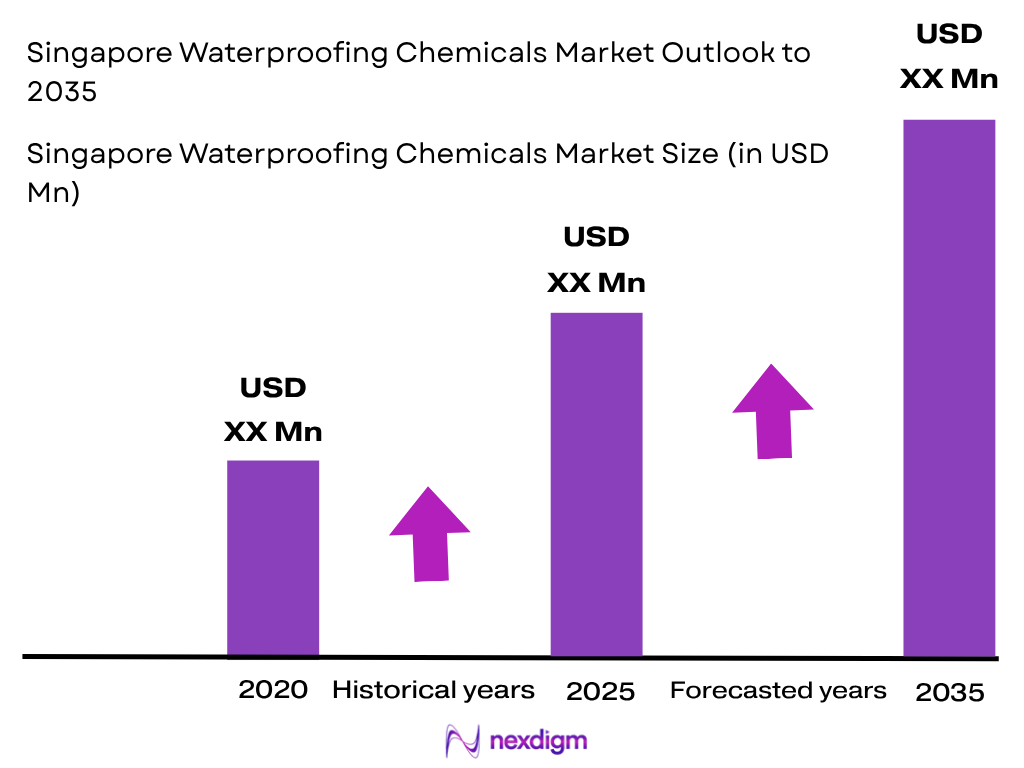
The Singapore Waterproofing Chemicals Market is valued at approximately USD ~ billion, with demand supported by continued construction activity, infrastructure development, building refurbishment and increasing requirements for durable protection of concrete structures. The market encompasses cementitious coatings, polyurethane, polyurea, acrylic, bituminous, crystalline and integral waterproofing systems used across basements, roofs, podiums, wet areas, water-retaining structures and infrastructure. Singapore’s compact urban environment, high-rise building concentration and emphasis on long-term building performance create recurring requirements for waterproofing during both new construction and refurbishment projects.
Singapore’s waterproofing chemicals demand is concentrated around major construction, commercial, residential, industrial and infrastructure development zones. The Central Region remains important because of its concentration of commercial buildings, high-rise developments, hotels, mixed-use properties and redevelopment projects. Western Singapore has strong relevance because of industrial, logistics, port and infrastructure activity, while the eastern region benefits from airport-related infrastructure and established residential and commercial assets. The market is therefore influenced less by geographic land expansion and more by redevelopment, infrastructure renewal, building upgrading and high-density construction requirements.
Market Segmentation
By Product Type
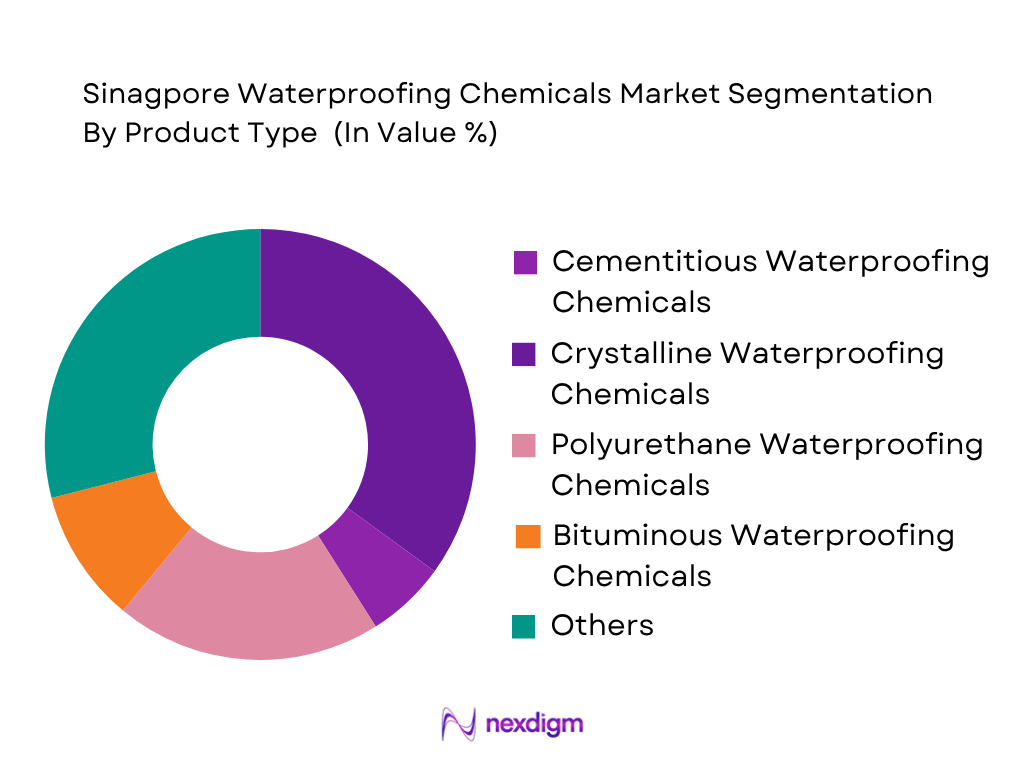
The Singapore Waterproofing Chemicals Market is segmented by product type into cementitious waterproofing coatings, polyurethane waterproofing coatings, polyurea waterproofing systems, bituminous waterproofing coatings, acrylic waterproofing coatings, crystalline waterproofing systems, epoxy waterproofing systems, integral waterproofing admixtures, injection grouting chemicals, and silane and siloxane treatments. Cementitious waterproofing systems can be considered the leading segment because of their compatibility with concrete and masonry substrates and their suitability for basements, wet areas, water-retaining structures and infrastructure applications. Polyurethane and polyurea systems are increasingly relevant where seamless application, flexibility, rapid curing and high-performance protection are required. Crystalline systems are particularly suited to concrete structures where waterproofing needs to be integrated with concrete protection. The competitive landscape therefore depends on substrate conditions, application environment, project specifications, curing requirements and exposure conditions rather than on a single technology being suitable for every project.
By Application
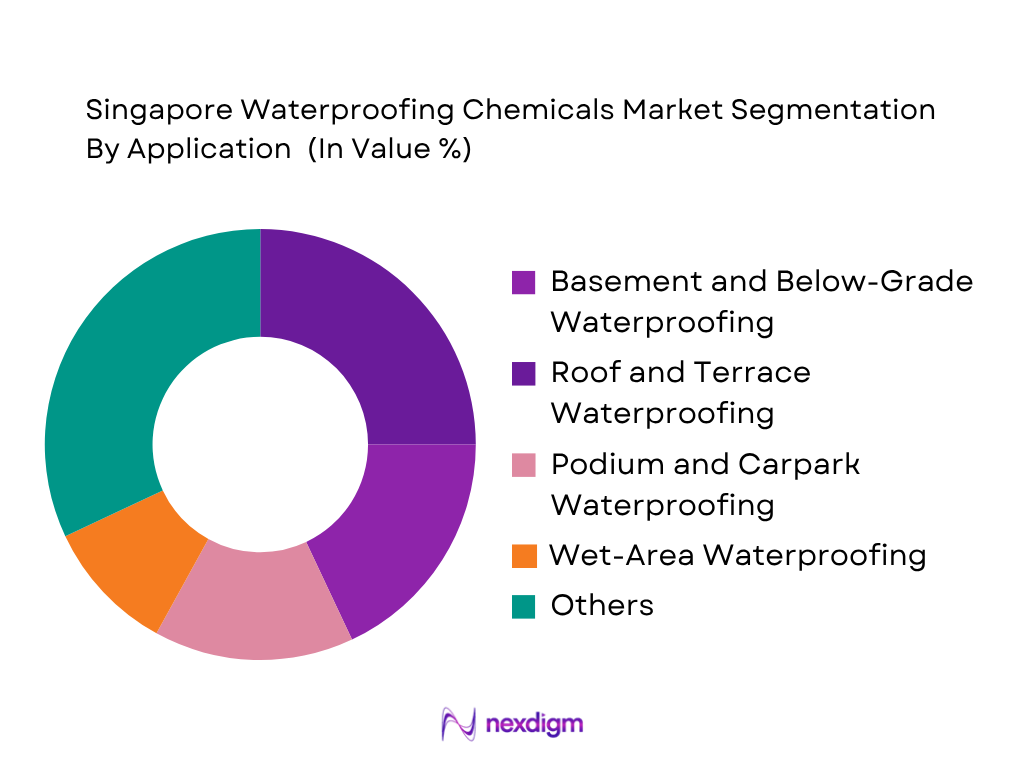
The Singapore Waterproofing Chemicals Market is segmented by application into basement and below-grade waterproofing, roof and terrace waterproofing, podium and carpark waterproofing, wet-area waterproofing, water tank and reservoir waterproofing, swimming pool waterproofing, bridge and infrastructure waterproofing, tunnel and underground infrastructure waterproofing, concrete joint and crack waterproofing, and façade and building-envelope waterproofing. Basement and below-grade waterproofing represents a leading application because Singapore’s dense urban development requires extensive underground spaces for parking, utilities, transportation infrastructure and building services. Below-grade structures face continuous exposure to groundwater and moisture, making waterproofing critical to structural durability and asset protection. Roof and podium applications also remain important because high-rise developments create substantial exposed surfaces requiring protection against rainfall and water ingress. Infrastructure projects further increase demand for specialized systems capable of handling concrete movement, joints, cracks and demanding service environments.
Competitive Landscape
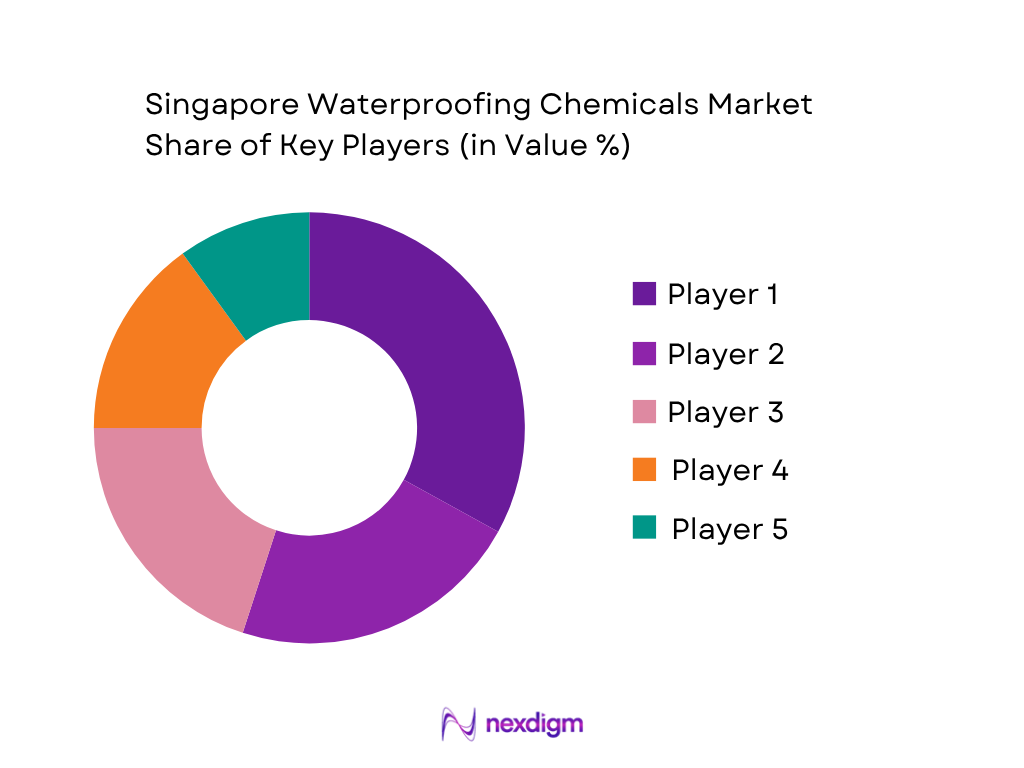
The Singapore Waterproofing Chemicals Market is characterized by the presence of international construction-chemical manufacturers, regional suppliers, specialized waterproofing companies and local applicators. Competition is influenced by product performance, technical specifications, certification requirements, contractor relationships, application support and project references. Major suppliers compete across cementitious, polyurethane, polyurea, crystalline, injection and concrete-protection systems. Companies with broad product portfolios can address multiple construction stages, while specialized suppliers compete through application-specific technologies and technical expertise.
| Company | Establishment Year | Headquarters | Product Portfolio | Key Waterproofing Systems | Application Strength | Technical Support | Singapore Presence |
| Sika | 1910 | Baar, Switzerland | ~ | ~ | ~ | ~ | ~ |
| Mapei | 1937 | Milan, Italy | ~ | ~ | ~ | ~ | ~ |
| Fosroc | 1934 | Birmingham, UK | ~ | ~ | ~ | ~ | ~ |
| Saint-Gobain Weber | 1900 | Paris, France | ~ | ~ | ~ | ~ | ~ |
| Henkel | 1876 | Düsseldorf, Germany | ~ | ~ | ~ | ~ | ~ |
Singapore Waterproofing Chemicals Market Analysis
Growth Drivers
Strong Construction Pipeline
Singapore’s construction pipeline provides a direct demand base for waterproofing chemicals across basements, roofs, podiums, wet areas, carparks, tunnels and concrete structures. The Building and Construction Authority reported preliminary construction demand of S$44.2 billion in 2024, while construction output reached S$38.4 billion, demonstrating substantial ongoing project execution. Demand is expected to remain structurally supported, with BCA projecting construction demand of S$39 billion–S$46 billion annually from 2026 to 2029. Major projects specifically identified by BCA include Changi Airport Terminal 5, public housing, Cross Island Line works, the Tuas Port and commercial redevelopment, all of which create applications for below-grade, structural, roof and infrastructure waterproofing systems. HDB also commenced development of approximately 23,600 flats in FY2024, while 53,000 additional flats were selected for upgrading under the Home Improvement Programme. The broader economic environment also supports construction activity: IMF data records Singapore’s nominal GDP at US$547.5 billion in 2024, with real GDP growth of 4.4%. This combination of large construction contract awards, housing development and infrastructure investment creates recurring requirements for waterproofing chemicals that protect concrete and building envelopes from moisture ingress, leakage, deterioration and long-term service degradation.
Public Infrastructure Development
Singapore’s continued investment in transportation, water infrastructure, ports and aviation creates significant application opportunities for specialized waterproofing chemicals. The Cross Island Line is planned as a fully underground MRT system extending more than 50 kilometres, with Phase 1 comprising 29 kilometres and 12 stations; its infrastructure includes underground stations, tunnels and associated concrete structures that require protection against groundwater and moisture ingress. Water infrastructure represents another substantial application base. PUB’s Deep Tunnel Sewerage System comprises a 206-kilometre network of deep tunnels and is designed for a service life of 100 years, while Phase 2 includes a 98-kilometre network of deep tunnels and link sewers. As of November 2024, DTSS Phase 2 had reached 73% construction progress, with approximately 98 million total man-hours recorded and 5,500 workers daily across the project. Changi Water Reclamation Plant’s expansion also increased treatment capacity from 176 million gallons per day to 246 million gallons per day, creating additional requirements for durable water-exposure protection. Tuas Port adds another infrastructure demand source, with 11 berths operational in 2024 and 7 additional berths planned for operation by 2027. These projects strengthen demand for waterproofing systems suited to underground concrete, water-retaining structures, tunnels, foundations, marine environments and heavily exposed infrastructure.
Market Challenges
High Application Quality and Skilled Applicator Requirements
Waterproofing chemicals require controlled substrate preparation, correct mixing, suitable moisture conditions and precise application thickness, making installation quality a significant challenge in Singapore’s dense construction environment. The Building and Construction Authority recorded S$44.2 billion of construction demand in 2024, indicating the scale of projects across which waterproofing specifications must be executed consistently. Complex projects involving basements, underground stations, tunnels, podium decks and water-retaining structures can require multiple waterproofing technologies and detailed sequencing between concrete placement, surface preparation, joint treatment and coating application. Singapore’s construction workforce also operates under specific foreign-worker controls: the Ministry of Manpower permits construction employers to hire up to 5 Work Permit holders for every local employee who meets the applicable Local Qualifying Salary requirement. From January 2024, monthly levies ranged from S$250 to S$900, depending on worker category and skill status, adding workforce-management considerations for contractors. The challenge becomes more pronounced during remediation because existing concrete can contain cracks, moisture, contamination or deteriorated waterproofing layers that complicate adhesion. Waterproofing failures can consequently require localized repairs, injection treatment or complete system replacement. As Singapore’s construction ecosystem increasingly handles high-value infrastructure and high-specification developments, contractors and chemical suppliers must maintain installation consistency, substrate testing, specification compliance and technical supervision to avoid premature leakage and remediation requirements.
Tight Construction-Site Conditions and Complex Existing-Building Remediation
Singapore’s land constraints and high-density urban environment make waterproofing execution more complicated, particularly where refurbishment occurs around occupied buildings, transportation assets, utilities or existing structures. HDB’s upgrading activity illustrates the scale of the existing-building requirement: during FY2024, HDB spent S$532 million on upgrading programmes, compared with S$396 million in FY2023, while more than 53,000 flats were selected for additional Home Improvement Programme works. The Neighbourhood Renewal Programme also included 23 projects involving more than 15,600 households, with funding exceeding S$95 million. Such refurbishment environments can require waterproofing systems to be applied over aged concrete, existing coatings, repaired substrates and interfaces with new construction. Infrastructure conditions can be even more demanding. PUB’s DTSS Phase 2 involves tunnels with internal diameters ranging from 3 to 6 metres, while link sewers range from 0.3 to 3 metres, creating restricted working environments where access and application logistics matter. Changi T5’s first construction package covers approximately 140 hectares of substructure works with basement depths reaching 28 metres, illustrating the scale and depth of modern below-grade construction. These conditions increase the importance of compatible systems, moisture assessment, substrate preparation, curing control and specialized application equipment, while also making rework more disruptive and technically demanding.
Market Opportunities
Below-Grade Waterproofing and Infrastructure Rehabilitation
Below-grade structures provide a strong opportunity for advanced waterproofing chemicals because Singapore continues to expand underground transportation, utilities, buildings and water infrastructure. The Cross Island Line’s first phase extends 29 kilometres with 12 stations, while the broader line is planned to exceed 50 kilometres and connect major development corridors. PUB’s DTSS Phase 2 includes 98 kilometres of deep tunnels and link sewers, with construction progress reaching 73% at November 2024. The system includes tunnel infrastructure serving the western half of Singapore, including developments around Tengah and Jurong Lake District. Changi T5 further reinforces below-grade demand, with its first construction package covering a 140-hectare substructure site and basement depths reaching 28 metres. Existing assets create an additional rehabilitation opportunity. HDB’s FY2024 upgrading expenditure reached S$532 million, while more than 53,000 flats were selected for further Home Improvement Programme works. These conditions create opportunities for cementitious waterproofing, polyurethane systems, crystalline concrete waterproofing, injection grouts and integrated repair systems capable of treating cracks, joints and moisture pathways. The opportunity is particularly relevant where waterproofing must be installed in confined spaces or integrated with concrete repair rather than applied as an isolated surface coating. As infrastructure assets mature, suppliers able to combine waterproofing with structural protection, crack treatment and remediation can address a broader range of project requirements.
Water Infrastructure Protection and High-Performance Waterproofing Systems
Singapore’s highly developed water infrastructure creates a specialized opportunity for waterproofing chemicals designed for continuous moisture exposure, water-retaining structures and underground assets. PUB operates a 6,600-kilometre water-pipeline network serving approximately 1.7 million customers, while its Deep Tunnel Sewerage System is designed around a 206-kilometre network of deep tunnels with a planned service life of 100 years. Changi Water Reclamation Plant’s expansion increased treatment capacity from 176 million gallons per day to 246 million gallons per day, while PUB announced a further Changi WRP expansion with estimated construction expenditure of approximately S$2 billion. The Tuas Water Reclamation Plant forms part of the DTSS Phase 2 development and is being equipped for advanced industrial-water treatment, creating demanding environments for concrete protection and waterproofing. PUB’s 2024 innovation programme also identified inspection and condition assessment of DTSS tunnels and underground pumping mains as specific technology challenges, demonstrating the importance of long-term asset condition management. These conditions create opportunities for crystalline waterproofing, high-performance polyurethane, polyurea spray systems, low-VOC formulations and integrated concrete repair technologies. Suppliers that can demonstrate adhesion, crack treatment, chemical resistance, water pressure resistance and compatibility with concrete-repair systems can address applications extending beyond conventional building waterproofing into long-life water and wastewater infrastructure protection.
Future Outlook
Over the coming years, the Singapore Waterproofing Chemicals Market is expected to benefit from continued urban redevelopment, infrastructure maintenance and demand for durable building protection systems. The market is likely to see greater emphasis on seamless waterproofing, faster curing, improved adhesion and integrated concrete protection. Refurbishment of existing buildings and infrastructure is expected to remain an important demand source because waterproofing failures can result in deterioration, leakage and costly remediation. Low-VOC formulations, crystalline systems, polyurea applications and high-performance polyurethane technologies are positioned to gain greater attention as project specifications become more performance-oriented.
Major Players
- Sika Singapore Pte Ltd
- Fosroc Singapore Pte Ltd
- Mapei Far East Pte Ltd
- Saint-Gobain Weber Singapore
- Henkel Singapore Pte Ltd
- BASF / Master Builders Solutions
- Pidilite Industries / Dr. Fixit
- Kryton International
- Penetron International
- Tremco CPG Asia Pacific
- MC-Bauchemie Singapore
- Polymer Products Singapore Pte Ltd
- Cementaid (S.E.A.) Pte Ltd
- Chin Leong Construction Systems Pte Ltd
- General Waterproofing & Service Pte Ltd
Key Target Audience
- Construction Chemical Manufacturers
- Waterproofing System Manufacturers and Applicators
- Property Developers and Real Estate Development Companies
- Infrastructure and Civil Engineering Contractors
- Investments and Venture Capitalist Firms
- Government and Regulatory Bodies (Building and Construction Authority, Public Utilities Board, Land Transport Authority)
- Facility Management and Building Asset Management Companies
- Industrial, Logistics and Data Center Infrastructure Developers
Research Methodology
Step 1: Identification of Key Variables
The initial phase involves constructing a market ecosystem covering raw-material suppliers, waterproofing chemical manufacturers, distributors, contractors, applicators, developers and infrastructure operators. Key variables include waterproofing chemistry, application type, construction activity, end-use sector, project specifications, substrate conditions and technology adoption. These variables establish the framework for assessing demand and competitive positioning.
Step 2: Market Analysis and Construction
Historical and current market information is compiled across product categories and applications, including cementitious, polyurethane, polyurea, crystalline, bituminous and integral waterproofing systems. Demand is assessed through construction activity, infrastructure development, refurbishment requirements, waterproofed surface applications and project-level consumption indicators. Supply-side capacity and distribution channels are evaluated to construct the market baseline.
Step 3: Hypothesis Validation and Expert Consultation
Market hypotheses are validated through discussions with manufacturers, distributors, waterproofing contractors, applicators, construction companies and project-specification stakeholders. The consultations focus on technology adoption, application preferences, project specifications, product performance requirements and competitive positioning. These insights are used to validate the assumptions developed through secondary analysis.
Step 4: Research Synthesis and Final Output
The final stage integrates product-level, application-level, demand-side and supply-side findings into a consolidated market assessment. Cross-validation is performed across manufacturers, construction projects, infrastructure applications and distribution channels to reduce inconsistencies. The resulting analysis provides a structured assessment of market dynamics, segmentation, competition, opportunities and future development.

- Executive Summary
- Research Methodology (Market Definitions and Assumptions, Singapore Waterproofing Chemicals Market Classification, Waterproofing Chemistry Mapping, Cementitious System Assessment, Polyurethane System Evaluation, Polyurea System Analysis, Bituminous System Assessment, Acrylic Coating Evaluation, Crystalline Waterproofing Assessment, Epoxy Waterproofing Analysis, Integral Waterproofing Admixture Assessment, Injection Grouting Chemical Evaluation, Silane and Siloxane Treatment Assessment, Waterproofing Thickness Analysis, Crack-Bridging Performance Assessment, Adhesion and Bond Strength Evaluation, Water-Pressure Resistance Assessment, Chemical Resistance Assessment, UV and Weathering Performance Assessment, Substrate Compatibility Analysis, Application Method Assessment, New Construction Demand Assessment, Building Refurbishment Demand Assessment, Infrastructure Rehabilitation Assessment, Contractor Capability Assessment, Specification-Based Procurement Analysis, Domestic Supply Assessment, Import Dependency Assessment, Demand-Side Assessment, Supply-Side Assessment)

- Definition and Scope
- Singapore Waterproofing Chemicals Industry Evolution and Development of Cementitious Waterproofing Systems, Polymer-Modified Waterproofing Coatings, Polyurethane Waterproofing Systems, Polyurea Spray Waterproofing, Bituminous Waterproofing Solutions, Crystalline Concrete Waterproofing, Integral Waterproofing Admixtures, Injection Grouting Systems, Water-Retaining Structure Protection, Basement Waterproofing, Roof and Podium Waterproofing, Wet-Area Waterproofing, Tunnel Waterproofing, Infrastructure Waterproofing, Concrete Repair and Waterproofing Integration, Sustainable Waterproofing Chemistry, Low-VOC Waterproofing Systems, High-Durability Building Envelope Protection
- Waterproofing Chemicals Value Chain Analysis
- Waterproofing Chemicals Supply Chain Analysis
- Cement Suppliers, Polymer and Resin Suppliers, Bitumen Suppliers, Chemical Admixture Suppliers, Silane and Siloxane Suppliers, Polyurethane Raw Material Suppliers, Polyurea Raw Material Suppliers, Waterproofing Chemical Manufacturers, Regional Construction Chemical Suppliers, Waterproofing System Distributors, Building Material Distributors, Waterproofing Applicators, Specialist Contractors, Main Contractors, Civil Engineering Contractors, Architects, Engineers, Quantity Surveyors, Property Developers, Industrial Facility Owners, Infrastructure Operators, Facility Management Companies

- Growth Drivers (Strong Construction Pipeline, Public Infrastructure Development, Building Refurbishment and Upgrading, MRT Expansion, Public Housing Development, Changi Airport Terminal Development, Tuas Port Development, Water Infrastructure Investment, Commercial Redevelopment, High-Specification Industrial Construction)
- Market Challenges (High Application Quality Requirements, Skilled Waterproofing Applicator Requirements, Tight Construction-Site Conditions, High Specification Compliance Requirements, Substrate Moisture Management, Complex Existing-Building Remediation, Compatibility with Existing Concrete Systems, Restricted Site Access, Imported Specialty Chemical Dependence, Competition from Sheet Membranes and Preformed Systems)
- Market Opportunities (Below-Grade Waterproofing, Infrastructure Rehabilitation, MRT and Underground Infrastructure Waterproofing, Public Housing Upgrading, Changi Airport Development, Tuas Port Infrastructure, Water and Wastewater Infrastructure Protection, Roof Restoration, Low-VOC Waterproofing Systems, Polyurea Spray Applications, High-Performance Polyurethane Systems, Crystalline Concrete Waterproofing, Integrated Concrete Repair and Waterproofing Systems)
- Market Trends (Seamless Liquid-Applied Systems, Low-VOC Formulations, Faster-Curing Waterproofing Technologies, Polyurea Spray Systems, Crystalline Concrete Protection, Integrated Repair and Waterproofing Systems, High-Durability Roof Systems, Below-Grade Waterproofing Systems, Digital Quality Inspection, Prefabricated Waterproofing Detailing)
- Government Regulations and Standards (Building Control Act Requirements, Building Control Regulations, BCA Approved Document Requirements, PUB Code of Practice Requirements, Singapore Standards for Waterproofing, Green Mark Requirements, Environmental Product Requirements, Fire Safety Requirements, Structural Concrete Requirements, Construction Product Compliance, Workplace Safety Requirements)
- SWOT Analysis
- Porter’s Five Forces Analysis
- PESTLE Analysis
- Stakeholder Ecosystem
- Competition Ecosystem

- By Market Value (2020-2025)
- By Product Consumption Volume (2020-2025)
- By Waterproofed Surface Area (2020-2025)
- By Waterproofing Chemicals Consumption by Application (2020-2025)
- By New Construction Waterproofing Consumption (2020-2025)
- By Building Refurbishment Waterproofing Consumption (2020-2025)
- By Infrastructure Waterproofing Consumption (2020-2025)

- By Product Type (In Value %)
Cementitious Waterproofing Coatings
Polyurethane Waterproofing Coatings
Polyurea Waterproofing Systems
Bituminous Waterproofing Coatings
Acrylic Waterproofing Coatings
Crystalline Waterproofing Systems
Epoxy Waterproofing Systems
Integral Waterproofing Admixtures
Injection Grouting Chemicals
Silane and Siloxane Treatments - By Application (In Value %)
Basement and Below-Grade Waterproofing
Roof and Terrace Waterproofing
Podium and Carpark Waterproofing
Wet-Area Waterproofing
Water Tank and Reservoir Waterproofing
Swimming Pool Waterproofing
Bridge and Infrastructure Waterproofing
Tunnel and Underground Infrastructure Waterproofing
Concrete Joint and Crack Waterproofing
Façade and Building-Envelope Waterproofing - By Construction Activity (In Value %)
New Building Construction
Existing Building Refurbishment
Building Envelope Rehabilitation
Infrastructure Rehabilitation
Industrial Facility Upgrading
Public Housing Upgrading
Commercial Property Redevelopment
Transportation Infrastructure Renewal - By End-Use Sector (In Value %)
Residential Buildings
Commercial Offices
Retail and Shopping Centers
Hotels and Hospitality Facilities
Industrial and Manufacturing Facilities
Logistics and Warehouse Facilities
Data Centers
Healthcare Facilities
Educational Institutions
Government and Civic Buildings
Transportation Infrastructure
Water and Wastewater Infrastructure - By Waterproofing System Form (In Value %)
Liquid-Applied Waterproofing
Powder-Based Waterproofing
Two-Component Waterproofing Systems
Single-Component Waterproofing Systems
Spray-Applied Waterproofing
Injection-Based Waterproofing
Integral Concrete Waterproofing
Repair and Waterproofing Combination Systems

- Market Share of Major Players (By Singapore Revenue, Product Category, Waterproofing Application, Chemistry Type, New Construction Demand, Refurbishment Demand, Infrastructure Application, Distribution Channel, Project Specification Reach, Contractor Network)
- Cross Comparison Parameters (Waterproofing Chemistry Portfolio Breadth, Crack-Bridging and Flexibility Performance, Water-Pressure Resistance, Adhesion and Substrate Compatibility, Chemical and Moisture Resistance, Application Speed and Curing Capability, Singapore Specification and Certification Coverage, Technical Support and Applicator Training Capability)
- SWOT Analysis of Major Players
- Detailed Profiles of Major Companies
Sika Singapore Pte Ltd
Fosroc Singapore Pte Ltd
Mapei Far East Pte Ltd
Saint-Gobain Weber Singapore
Henkel Singapore Pte Ltd
BASF / Master Builders Solutions
Pidilite Industries / Dr. Fixit
Kryton International
Tremco CPG Asia Pacific
MC-Bauchemie Singapore
Polymer Products Singapore Pte Ltd
Cementaid (S.E.A.) Pte Ltd
Chin Leong Construction Systems Pte Ltd
General Waterproofing & Service Pte Ltd

- Waterproofing Specification Requirement Assessment
- Building Envelope Protection Demand Analysis
- Basement and Below-Grade Requirement Analysis
- Roof and Podium Waterproofing Requirement Analysis
- Wet-Area Waterproofing Requirement Analysis
- Infrastructure Waterproofing Requirement Assessment
- Public Housing Waterproofing Requirement Analysis
- Industrial and Data Center Waterproofing Requirement Analysis
- Water and Wastewater Infrastructure Requirement Analysis
- Refurbishment and Remediation Demand Analysis

- By Market Value (2026-2035)
- By Product Consumption Volume (2026-2035)
- By Waterproofed Surface Area (2026-2035)
- By Waterproofing Chemicals Consumption by Application (2026-2035)
- By New Construction Waterproofing Consumption (2026-2035)
- By Building Refurbishment Waterproofing Consumption (2026-2035)
- By Infrastructure Waterproofing Consumption (2026-2035)


 Request a Sample
 Ask for Customization
 Get a Quote
 Enquire Now