

 Download PDF
Market Overview
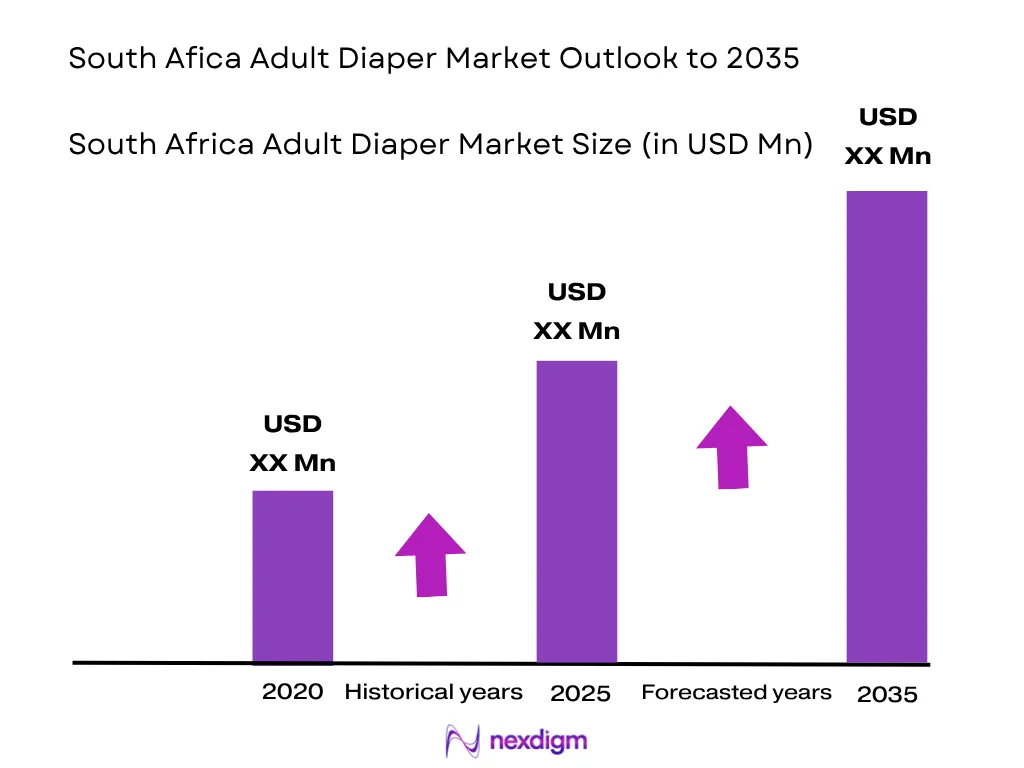
The South Africa adult diaper market is valued at approximately USD ~ million, based on a detailed historical analysis. This market growth is largely driven by the increasing prevalence of incontinence, especially within the aging population. With over 10 million people aged 60 and above, South Africa’s demographic shift plays a significant role in the rising demand for incontinence products. Additionally, the growing healthcare sector, including nursing homes and home healthcare services, contributes to a steady increase in market size. Government initiatives aimed at reducing stigma and promoting awareness of adult incontinence are further propelling market growth, as well as the rise of e-commerce, allowing for convenient and discreet purchases.
South Africa’s adult diaper market is dominated by major urban centers such as Johannesburg, Pretoria, and Cape Town. These cities represent the largest consumer base due to their high population density and substantial healthcare infrastructure. Johannesburg, in particular, is the economic hub of the country, contributing a significant portion of the market share due to its large aging population and advanced medical facilities. Furthermore, the Western Cape and Gauteng provinces are also key contributors due to their strong healthcare facilities, along with increasing consumer awareness, both urban and suburban, regarding incontinence products. These factors position these regions as market leaders in the country.
Market Segmentation
By Product Type
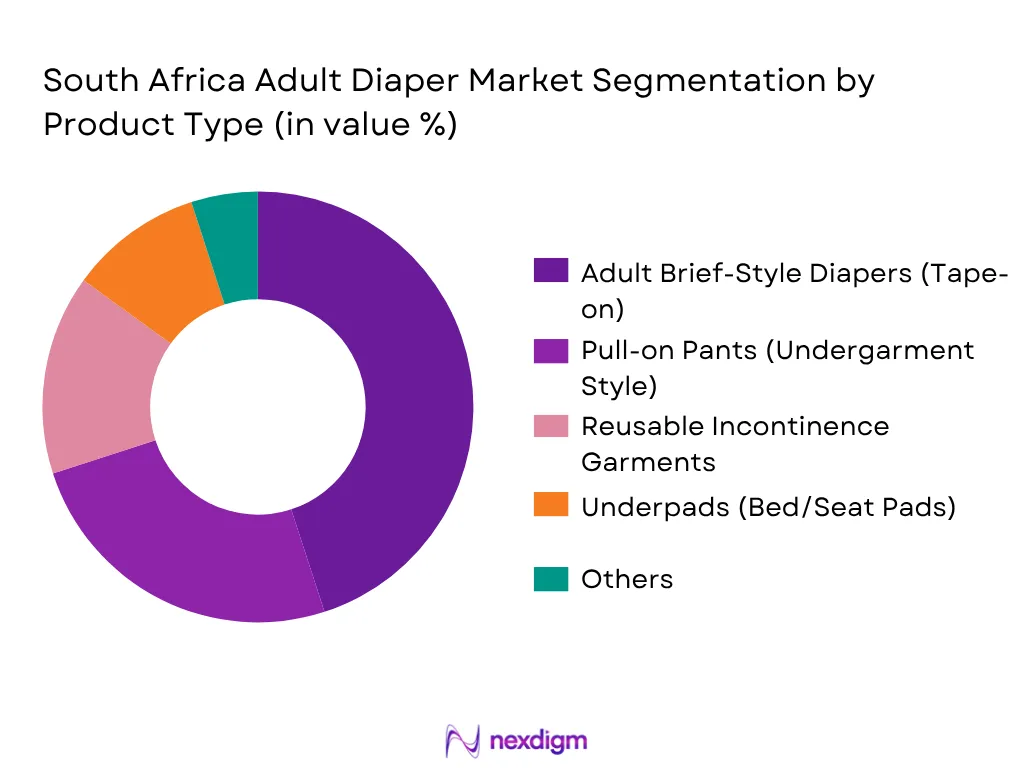
The South Africa adult diaper market is segmented by product type into adult brief-style diapers, pull-on pants, reusable incontinence garments, underpads, and others. The dominant sub-segment within this category is the adult brief-style (tape-on) diapers, which hold the largest market share. This product type continues to dominate due to its widespread use in institutional settings such as hospitals, nursing homes, and long-term care facilities. The reliability, comfort, and ease of use offered by tape-on adult briefs make them the preferred choice in both clinical and home-care environments. Furthermore, their established brand presence, including brands like Depend and TENA, has led to sustained consumer loyalty, further cementing their market dominance.
By End User
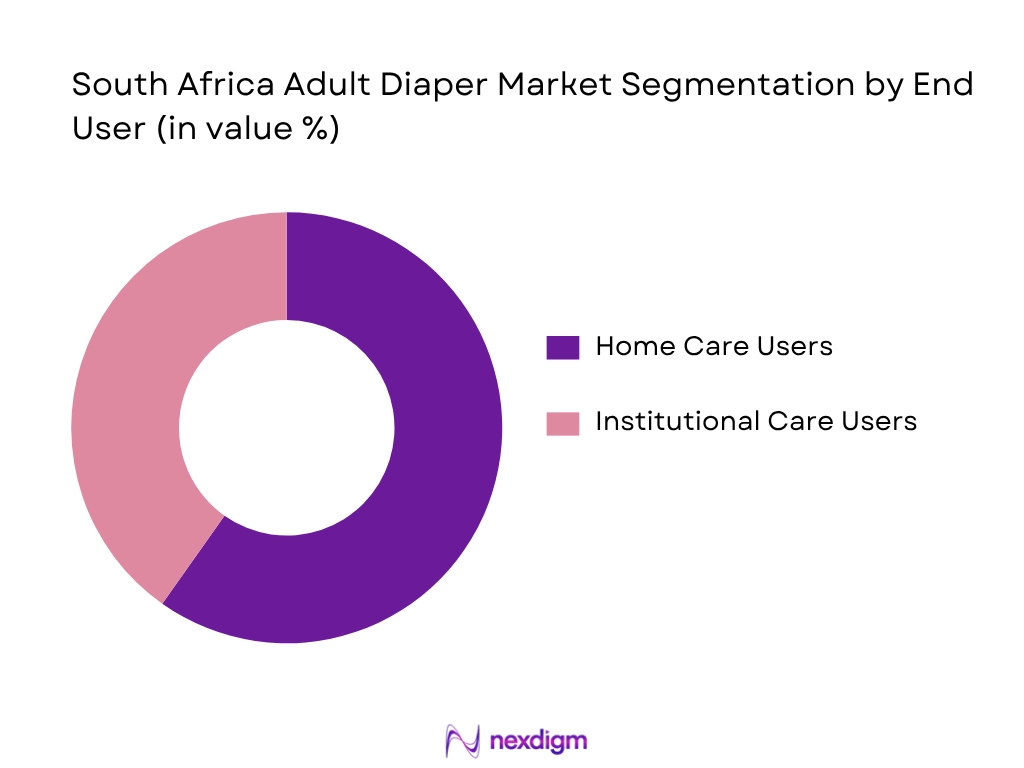
The market is also segmented by end user, categorizing the demand into home care users and institutional care users. Institutional users, particularly nursing homes, hospitals, and clinics, dominate the market. This trend is driven by the larger volume requirements of institutions and the increased focus on healthcare for the aging population. The institutional segment benefits from bulk purchasing and more predictable product demand, making it the leading contributor to market growth. Furthermore, the adoption of adult diapers in institutional settings is also fueled by the growing number of elderly patients requiring long-term care.
Competitive Landscape
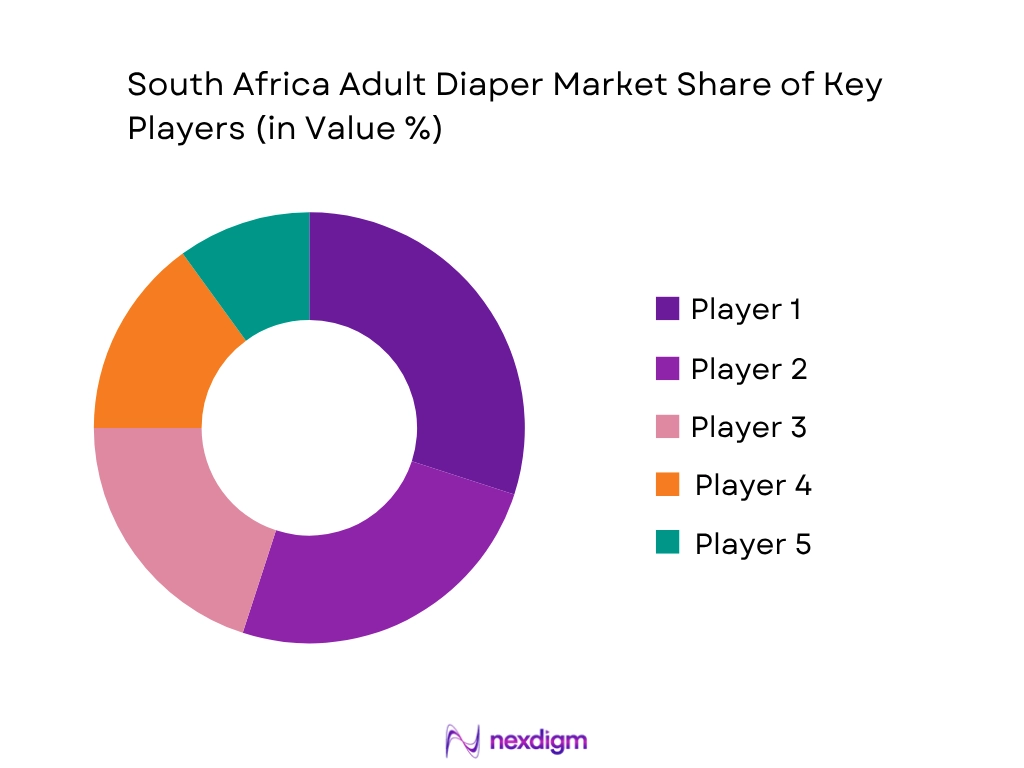
The South Africa adult diaper market is dominated by a few key players, including global giants like Kimberly-Clark, Procter & Gamble, and Essity. These companies hold a significant portion of the market due to their established brand presence and strong distribution networks. Local players like L’il Masters and TZMO SA (Seni) also contribute to the competition, providing products tailored to the South African market. The market is highly competitive with the presence of multinational corporations that offer a wide range of products, often innovating with new materials and features such as skin-friendly properties and sustainable production practices.
| Company Name | Year Established | Headquarters | Market Focus | Key Products | Revenue (USD) | Distribution Channels |
| Kimberly-Clark Corporation | 1872 | Irving, USA | ~ | ~ | ~ | ~ |
| Procter & Gamble Company | 1837 | Cincinnati, USA | ~ | ~ | ~ | ~ |
| Essity AB | 1929 | Stockholm, Sweden | ~ | ~ | ~ | ~ |
| Unicharm Corporation | 1961 | Tokyo, Japan | ~ | ~ | ~ | ~ |
| TZMO SA (Seni) | 1994 | South Africa | ~ | ~ | ~ | ~ |
South Africa Adult Diaper Market Analysis
Growth Drivers
Aging Population
South Africa’s aging population significantly influences the demand for adult diapers. According to Statistics South Africa (StatsSA), the number of people aged 60 years and above is estimated to be approximately 5.2 million in 2024, representing a steady increase from previous years. As the elderly population continues to grow, so does the prevalence of incontinence-related conditions, driving the demand for adult incontinence products. Additionally, the aging population’s healthcare needs are increasingly met by home care services and healthcare institutions, both of which contribute to the high consumption of adult diapers. The World Bank highlights that the proportion of elderly people in South Africa has increased by approximately 2% in the past five years, further reinforcing this trend. With increasing life expectancy, currently at 64 years, the elderly population in South Africa is expected to grow even more in the upcoming years. This demographic shift directly impacts the demand for products like adult diapers, as the incidence of incontinence among the elderly continues to rise. As a result, the market for adult diapers is expected to remain a major area of focus for healthcare providers.
Health Trends
Health trends such as the growing prevalence of diabetes, prostate issues, and other incontinence-related conditions are critical drivers of the adult diaper market. In 2024, it is estimated that approximately 3.5 million South Africans are living with diabetes, as reported by the International Diabetes Federation (IDF). The increasing incidence of diabetes is directly linked to a higher prevalence of adult incontinence, especially as diabetes can lead to urinary incontinence due to nerve damage. Furthermore, prostate problems affect a significant portion of the male population over 50, with around 2.2 million South African men experiencing some form of prostate disorder, leading to urinary issues. These health trends have contributed to the rising demand for adult diapers in the country. Additionally, the South African government has emphasized healthcare awareness through various public health campaigns targeting chronic conditions like diabetes and prostate diseases, indirectly boosting the need for related incontinence products. The increasing awareness and medical care for these conditions are expected to continue to drive demand for adult diapers in South Africa.
Market Challenges
Raw Material Cost Volatility
The adult diaper industry faces challenges related to the volatility of raw material costs. One key raw material for adult diapers is Super Absorbent Polymer (SAP), which is integral for ensuring the product’s absorbency. The price of SAP has been unpredictable, largely due to fluctuating supply chains and global demand. The International Monetary Fund (IMF) reports that the cost of raw materials has seen a significant increase in recent years, particularly in 2024, with SAP prices rising by over 5%. This is partly due to supply chain disruptions caused by the COVID-19 pandemic and geopolitical tensions, especially in regions like Asia, where much of the raw material is produced. Additionally, the fluctuation in the price of pulp, another essential material for adult diapers, has further escalated production costs for manufacturers. According to the South African Reserve Bank (SARB), global inflation has also contributed to price increases for essential materials, making it more difficult for manufacturers to maintain consistent pricing. As a result, these rising costs could potentially be passed on to consumers, affecting market growth, especially among price-sensitive segments.
Disposal & Environmental Concerns
Disposal and environmental concerns have become a major challenge for the adult diaper market in South Africa. Disposable diapers contribute to significant waste, and with growing environmental awareness, both consumers and regulatory bodies are pressuring companies to address sustainability issues. The Department of Environmental Affairs in South Africa has highlighted that the country faces a growing waste management crisis, with disposable items such as diapers accounting for a large share of waste sent to landfills. Approximately 8.2 million disposable diapers are used daily in South Africa, with an estimated 6% of this waste ending up in landfills, contributing to environmental degradation. This has raised concerns about the long-term environmental impact of single-use products like adult diapers. In response, both local and international manufacturers are under increasing pressure to find sustainable alternatives, such as biodegradable diapers or those with reduced plastic content. While some progress has been made, such as the introduction of eco-friendly product lines, the challenge of reducing the environmental footprint remains significant for the market.
Market Opportunities
Eco-friendly Products
There is a growing shift towards eco-friendly products in the South African adult diaper market. As consumers become more environmentally conscious, the demand for biodegradable and sustainable diapers is increasing. In 2024, several key manufacturers, including global brands like Procter & Gamble and Kimberly-Clark, have begun to incorporate eco-friendly materials into their product lines. These materials are designed to reduce the environmental impact of disposable diapers, particularly in the context of the South African waste management issue. The local market has seen increased offerings of diapers made from plant-based fibers, with some brands opting for biodegradable SAP and recyclable packaging. Additionally, according to the South African government, nearly 30% of South Africans are now actively seeking environmentally friendly products, indicating a strong consumer preference shift towards sustainability. With the government introducing stricter regulations on waste management and offering incentives for sustainable practices, manufacturers are expected to further innovate in eco-friendly adult diaper products. This market shift presents a significant growth opportunity, as consumers demand more sustainable alternatives to traditional products.
Product Innovation
Product innovation in the South African adult diaper market is a key opportunity that is expected to drive future growth. Innovations such as gender-specific designs, odour control technologies, and ultra-thin core materials have made adult diapers more comfortable and discreet, appealing to a wider range of consumers. Additionally, the demand for products with enhanced skin-friendly properties has led to the development of hypoallergenic and dermatologically tested diapers. Companies are investing in research and development to create products that offer higher performance with less material waste, addressing both consumer demand for better quality and the environmental concerns related to excess waste. The increasing prevalence of e-commerce is also pushing innovation, as online platforms offer new opportunities for manufacturers to showcase and test innovative products directly to consumers. This focus on product innovation is a significant opportunity for the market, as it can meet both the functional and emotional needs of users, leading to greater adoption and long-term growth.
Future Outlook
Over the next decade, the South Africa adult diaper market is expected to see continued growth, with an increasing elderly population being the key driver. Moreover, the rising awareness of incontinence products and healthcare infrastructure developments will fuel demand for adult diapers. The market will likely witness innovations in sustainability, with biodegradable diapers and eco-friendly packaging becoming more popular. Along with these advancements, more healthcare institutions will adopt adult incontinence products, which will further contribute to the market’s expansion. Government policies aimed at improving healthcare for the elderly and encouraging stigma reduction will play a significant role in market progression.
Major Players
- Kimberly-Clark Corporation
- Procter & Gamble Company
- Essity AB
- Unicharm Corporation
- TZMO SA (Seni)
- L’il Masters Diaper Manufacturers
- Medline Industries
- Domtar Corporation
- Abena A/S
- Ontex NV
- HARTMANN
- National Pride
- First Quality Enterprises
- Principle Business Enterprises
- African Cotton Industries
Key Target Audience
- Investments and Venture Capitalist Firms
- Government and Regulatory Bodies (e.g., South African Department of Health, SABS)
- Institutional Healthcare Providers (e.g., Nursing Homes, Hospitals)
- Pharmaceutical Chains (e.g., Clicks, Dischem)
- Healthcare Manufacturers and Suppliers
- E-Commerce Platforms (e.g., Takealot)
- Retail and Supermarket Chains (e.g., Shoprite, Pick ‘n Pay)
- Healthcare Insurance Providers
Research Methodology
Step 1: Identification of Key Variables
This initial phase involves constructing an ecosystem map that outlines all key stakeholders within the South Africa Adult Diaper Market. Extensive desk research and the utilization of secondary data sources will be conducted to establish the foundational market parameters.
Step 2: Market Analysis and Construction
Here, historical data concerning market trends, growth drivers, and supply chain factors will be compiled. The analysis will also consider the adoption of adult diapers across different consumer segments to ensure that market estimates are robust and well-rounded.
Step 3: Hypothesis Validation and Expert Consultation
We will validate market hypotheses by conducting expert interviews with key players in the industry, including manufacturers and healthcare providers. These consultations will offer valuable insights into market dynamics, allowing for refinement and confirmation of our preliminary findings.
Step 4: Research Synthesis and Final Output
Finally, we will consolidate the data from various sources to provide a comprehensive market analysis. This will involve working closely with companies to gather insights on product segments, sales performance, and key consumer trends, ensuring the report is fully validated.

- Executive Summary
- Research Methodology (Market definitions and assumptions, abbreviations, data sources, market sizing approach, consolidated research methods, in-depth industry interviews, primary research approach, limitations)

- Definition and scope of adult incontinence products
- Industry genesis and evolution
- Timeline of major players market entry
- Business/seasonal cycle trends
- Supply chain & value‑chain analysis

- Growth Drivers (Aging Population:, Health Trends, Healthcare Infrastructure, Awareness & Stigma Reduction)
- Market Challenges (Raw Material Cost Volatility, Economic Pressure, Disposal & Environmental Concerns)
- Market Opportunities (Eco‑friendly Products, Product Innovatio, E‑commerce and Subscription Models)
- Market Trends (Sustainability and green manufacturing gains importance, shift towards skin‑friendly and anti-leak designs, digital marketing and telehealth integration boosting product outreach)
- Regulatory Landscape (Quality standards (SABS/ISO) and import regulations, classification of adult diapers, healthcare reimbursement schemes)
- Porter’s Five Forces (Bargaining power of buyers/suppliers, threat of new entrants, substitutes)
- SWOT Analysis (Internal strengths/weaknesses and external opportunities/threats for the SA market)
- Stakeholder Ecosystem (Roles of manufacturers, distributors, retailers, healthcare providers, and government)
- Competitive Ecosystem (Market concentration and degree of competition, including presence of local vs. multinationals)

- By Value (2020-2025)
- By Volume (2020-2025)
- By Average Price per Unit Analysis (2020-2025)

- By Product Type (In Value %)
Adult brief-style (tape‑on) diapers
Pull‑on pants (undergarment style)
Reusable incontinence garments
Underpads - By End User (In Value %)
Home care users
Hospitals
Nursing/elder care homes
Clinics
Adult day-care facilities
Special care patients - By Distribution Channel (In Value %)
Pharmacy/drugstore sales
Modern retail
Online/e‑commerce and DTC
Institutional procurement
Wholesale
NGOs - By Region (In Value %)
Gauteng (major urban market)
Western Cape
KwaZulu‑Natal
Eastern Cape
Limpopo - By Packaging Type (In Value %)
Carton/box packs
Reclosable pouches/bags
Bulk packs

- Market Share by Value (2024) of top players in adult diapers.
- Cross-Comparison Parameters – Company overview, product portfolio, strategic focus, recent developments, strengths/weaknesses, organizational footprint, revenues (total and by product line), touchpoints (sales channels), distributor/dealer network, production facilities & capacity, unique selling propositions, etc.
- SWOT Analysis of Major Players (Dependence on Retail Channels, Institutional Strength, Brand Recall, Premium Innovation, Private Label Risk)
- SKU-Level Pricing Analysis (Briefs, Pull-Ups, Guards, Pads, Underpads, Overnight Products, Bariatric Products)
- Recent Strategic Developments (Product Launches, Packaging Redesigns, DTC Expansion, Retail Partnerships, Institutional Contracts, Sustainability Initiatives)
- Detailed Profiles of Major Companies
Kimberly-Clark Corporation
The Procter & Gamble Company
Essity AB (TENA)
Unicharm Corporation
First Quality Enterprises
Medline Industries
Domtar Corporation
Abena A/S
Ontex NV
Principle Business Enterprises
HARTMANN
National Pride
L’il Masters Diaper Manufacturers
TZMO SA
African Cotton Industries

- Purchase Frequency & Inventory Cycle (Repurchase Rate, Seasonal Purchasing Patterns) Channel Preference Index (Physical retail vs digital retail, In‑store vs Online Buying Preferences)
- Pain Points & Needs Analysis (Leakage, skin irritation, diaper fit issues, Price vs Comfort/Absorbency Trade-Off, Environmental Impact Concerns)
- Decision-Making Criteria( Absorbency, comfort, brand reputation, eco-friendliness, price, Online reviews, physical retail presence)
- Adoption Barriers (social stigma, lack of awareness) and Patient-care decision drivers.

- By Revenue (2026-2035)
- By Units Sold Projection (2026-2035)
- By Average Unit Price Trend (2026-2035)


 Request a Sample
 Ask for Customization
 Get a Quote
 Enquire Now