

 Download PDF
 Download PDF
Market Overview
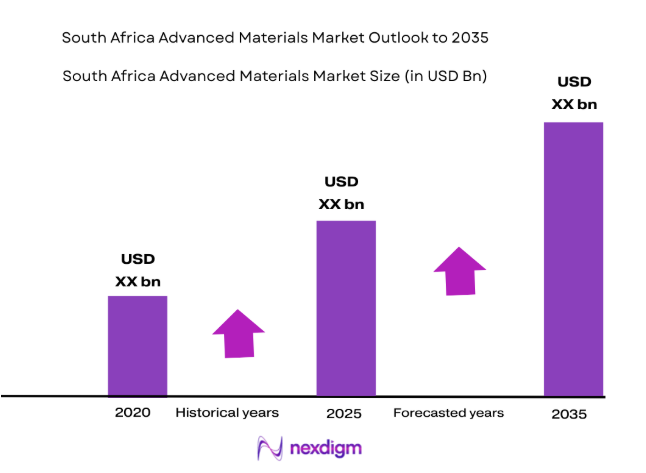
The South Africa Advanced Materials market is valued at USD ~ billion, driven by significant investments in infrastructure, automotive, and electronics sectors. The demand for advanced materials such as composites, polymers, and nanomaterials has been propelled by technological advancements and the need for more sustainable solutions. The market continues to grow due to government support for innovation, energy efficiency, and the increasing adoption of high-performance materials across industries. These factors, coupled with the push for green technologies, are expected to maintain the market’s momentum.
South Africa’s major cities, including Johannesburg, Cape Town, and Durban, lead the market due to their robust industrial bases and infrastructure. The presence of key research institutions, industrial parks, and manufacturing facilities in these cities fosters the development and use of advanced materials. The country’s strategic location and growing role in the global supply chain make it an essential player in the advanced materials sector, further contributing to the market’s dominance in the region.
Market Segmentation
By Product Type
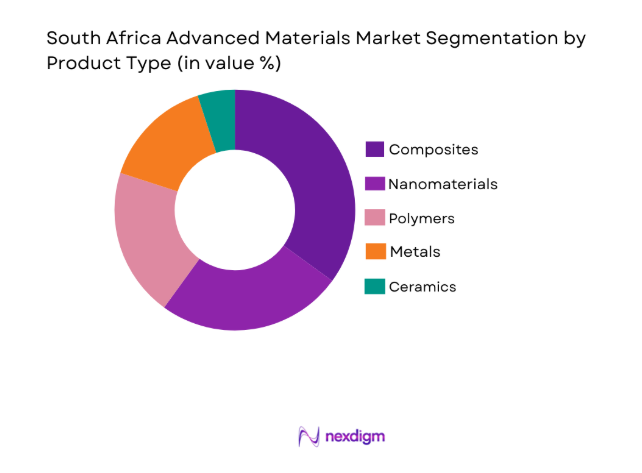
The South Africa Advanced Materials market is segmented by product type into composites, nanomaterials, polymers, metals, and ceramics. Recently, composites have dominated the market due to their superior strength-to-weight ratio, making them ideal for applications in industries such as automotive, aerospace, and construction. This dominance is further supported by the growing preference for lightweight, durable materials, coupled with the significant investments in infrastructure and manufacturing sectors. Composites are particularly favored for their ability to enhance product performance, reduce energy consumption, and meet environmental sustainability goals.
By Platform Type
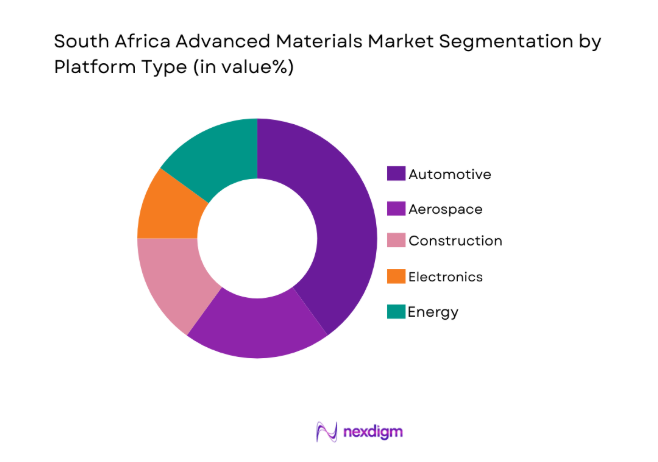
The South Africa Advanced Materials market is segmented by platform type into automotive, aerospace, construction, electronics, and energy. The automotive sector has a dominant market share due to the growing demand for advanced lightweight materials, which help improve fuel efficiency and reduce emissions. This sub-segment has been increasingly adopted due to the industry’s shift toward electric vehicles and the need for sustainable manufacturing processes. The automotive industry’s heavy investments in research and development have further fueled the demand for advanced materials, ensuring its continued dominance in the market.
Competitive Landscape
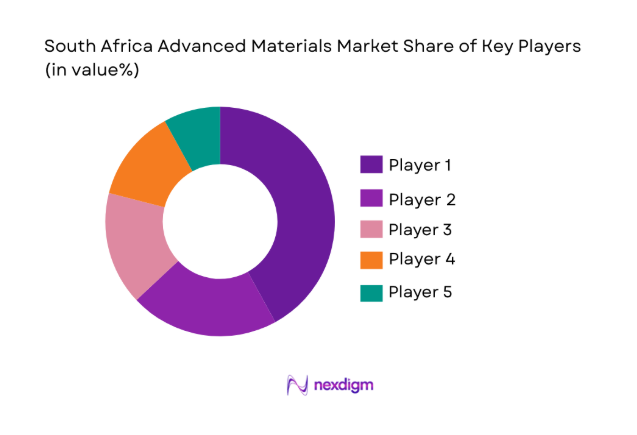
The competitive landscape of the South Africa Advanced Materials market is characterized by significant market consolidation, where major global players collaborate with local firms to enhance their market presence. The influence of key industry leaders has led to a strong push for innovation and the development of sustainable material solutions. Local companies are increasingly leveraging international partnerships to enhance their technology and improve production capabilities.
| Company Name | Establishment Year | Headquarters | Technology Focus | Market Reach | Key Products | Revenue (USD) | Additional Parameter |
| ArcelorMittal | 2006 | Johannesburg | ~ | ~ | ~ | ~ | ~ |
| BASF South Africa | 1959 | Johannesburg | ~ | ~ | ~ | ~ | ~ |
| Evraz Highveld Steel | 2001 | Johannesburg | ~ | ~ | ~ | ~ | ~ |
| Sasol | 1950 | Sandton | ~ | ~ | ~ | ~ | ~ |
| Exxaro Resources | 2006 | Pretoria | ~ | ~ | ~ | ~ | ~ |
South Africa Advanced Materials Market Analysis
Growth Drivers
Technological Advancements in Manufacturing
Technological advancements in manufacturing have significantly contributed to the growth of the South Africa Advanced Materials market. As industries increasingly adopt automation, precision manufacturing, and advanced robotics, there is a growing demand for high-performance materials that can withstand complex applications. Innovations in additive manufacturing and 3D printing also promote the use of specialized materials in custom products, particularly in automotive and aerospace industries. These advancements enhance the efficiency and productivity of the manufacturing process, encouraging investment in materials with enhanced durability and strength. Moreover, the ongoing development of smart materials, which respond to environmental changes, is fostering new market opportunities. The ability to produce materials that are more adaptive, energy-efficient, and sustainable is key to meeting evolving industry demands. As a result, there has been a growing emphasis on producing advanced materials with tailored properties for specialized industries such as electronics, energy, and construction. This has propelled growth in demand for composite materials, nanomaterials, and polymers, ensuring continued market expansion.
Government Support for Industrial Development
Government support for industrial development plays a crucial role in the growth of the South Africa Advanced Materials market. The South African government has implemented policies that encourage innovation and investment in high-tech industries, including the manufacturing and energy sectors. Grants, tax incentives, and subsidies are being offered to local businesses to promote the adoption of advanced materials, particularly in infrastructure and manufacturing applications. The focus on sustainable development and environmental regulations has further boosted the demand for green materials that contribute to reducing environmental footprints. For example, the government’s push toward renewable energy has resulted in a higher demand for materials used in solar panels, wind turbines, and energy-efficient buildings. Additionally, collaborations between government entities and private sector companies in research and development initiatives have fostered innovation, enabling the country to stay competitive in the global market. This support has also helped South African manufacturers improve their technological capabilities and explore new material solutions, which are essential for enhancing the nation’s infrastructure and industrial capacity. These initiatives create a favorable market environment for advanced materials, driving their growth.
Market Challenges
High Production Costs
High production costs remain one of the most significant challenges faced by the South Africa Advanced Materials market. The cost of raw materials, energy, and labor has increased over the years, significantly affecting the affordability and competitiveness of advanced materials. For example, the prices of metals and composites have seen a substantial rise due to fluctuations in global supply chains and the scarcity of certain raw materials. This makes it challenging for local manufacturers to produce materials at competitive prices, especially when compared to international players with lower production costs. The high costs also hinder the expansion of small and medium enterprises (SMEs) in the sector, as they struggle to access capital for technological advancements and infrastructure development. Moreover, the lack of cost-effective production methods for emerging materials, such as nanomaterials and advanced polymers, further complicates market entry for new players. Manufacturers must find innovative ways to reduce costs, such as optimizing supply chain processes, adopting energy-efficient technologies, and developing alternative raw materials. Without addressing these challenges, the growth potential of the market could be limited, and companies may struggle to remain profitable in the face of increasing competition.
Supply Chain Disruptions
Supply chain disruptions continue to pose a significant challenge for the South Africa Advanced Materials market. Global events, such as the COVID-19 pandemic, geopolitical tensions, and natural disasters, have exposed the vulnerability of supply chains, leading to delays and increased costs for manufacturers. The reliance on international suppliers for critical raw materials, particularly in the automotive, aerospace, and electronics industries, makes the market susceptible to disruptions in global trade. Furthermore, transportation bottlenecks and port congestion have exacerbated these challenges, increasing lead times for material delivery. Local manufacturers are often forced to adapt to these disruptions by seeking alternative suppliers or adjusting production schedules, leading to higher costs and inefficiencies. The supply chain challenges also affect the availability of specialized materials, which are essential for the development of advanced products such as composite materials, nanomaterials, and energy-efficient systems. To mitigate these risks, the market must invest in creating more resilient and diversified supply chains, as well as developing local sources for critical raw materials. Companies that can adapt to these challenges will have a competitive advantage, as they can maintain continuity in production and meet demand without significant delays.
Opportunities
Expansion in Electric Vehicle Production
The growing shift toward electric vehicle (EV) production presents a significant opportunity for the South Africa Advanced Materials market. With an increasing number of countries implementing stricter emission regulations and encouraging the adoption of electric vehicles, the demand for advanced materials used in EV manufacturing has surged. Materials such as lightweight composites, high-strength polymers, and advanced batteries are essential for the production of energy-efficient, high-performance electric vehicles. South Africa’s automotive industry, one of the largest on the African continent, stands to benefit from this trend, as both local and international automakers expand their production of EVs. The market is witnessing investments in the development of advanced battery technologies, which require materials like lithium, cobalt, and graphite. Additionally, the demand for recyclable and sustainable materials in the automotive sector aligns with the broader trend of environmental sustainability. This opportunity is particularly relevant for manufacturers that focus on producing specialized materials for electric vehicles and related infrastructure, such as charging stations. As the global demand for EVs grows, South Africa’s advanced materials market is expected to capitalize on this trend, positioning the country as a key player in the electric mobility sector.
Sustainability and Green Building Materials
The growing emphasis on sustainability and green construction presents an opportunity for the South Africa Advanced Materials market. As environmental concerns rise, there is an increasing demand for materials that contribute to energy-efficient, eco-friendly buildings and infrastructure. Green building materials, such as recycled composites, sustainable polymers, and energy-efficient coatings, are gaining popularity in the construction industry due to their ability to reduce energy consumption and minimize environmental impact. This trend is supported by government regulations that encourage the use of environmentally friendly materials and promote sustainable construction practices. The demand for green building materials is particularly strong in urban areas, where there is a push to create sustainable and livable environments. Furthermore, the rise in the adoption of renewable energy technologies, such as solar panels and wind turbines, requires advanced materials that can withstand harsh environmental conditions while maintaining efficiency. Manufacturers that specialize in producing sustainable materials are well-positioned to capitalize on this trend, as both the public and private sectors invest in building green infrastructure. This opportunity aligns with global sustainability goals and presents a long-term growth avenue for the South Africa Advanced Materials market.
Future Outlook
The future outlook for the South Africa Advanced Materials market is positive, with strong growth expected over the next five years. Technological advancements in material science, particularly in areas like nanomaterials and composites, will continue to drive market expansion. Additionally, government support for infrastructure development, energy efficiency, and sustainable practices will further boost demand for advanced materials across various sectors. As industries such as automotive, aerospace, and construction increasingly adopt advanced materials to meet sustainability goals, the market is poised for significant growth. Continued investments in research and development, along with the push for greener technologies, will create new opportunities for innovation in the sector. Despite challenges such as supply chain disruptions and high production costs, the overall market trend points toward a positive growth trajectory, fueled by technological advancements and evolving industry needs.
Major Players
- ArcelorMittal
- BASF South Africa
- Evraz Highveld Steel
- Sasol
- Exxaro Resources
- Afrimat
- Siemens South Africa
- Johnson Matthey
- Nelson Mandela Bay Composites
- Sasol Polymers
- Kumba Iron Ore
- Lonmin
- Impala Platinum
- Anglo American
- Xstrata
Key Target Audience
- Investments and venture capitalist firms
- Government and regulatory bodies
- Manufacturers in the automotive, aerospace, and electronics sectors
- Infrastructure development companies
- Energy and utilities providers
- Renewable energy companies
- Construction and building materials firms
Research Methodology
Step 1: Identification of Key Variables
We identify the key market variables that affect the demand and supply of advanced materials in South Africa.
Step 2: Market Analysis and Construction
We analyze the data collected from both primary and secondary sources, constructing a market model that accurately reflects current market dynamics.
Step 3: Hypothesis Validation and Expert Consultation
Our findings are validated through consultations with industry experts, ensuring that the market projections are realistic and credible.
Step 4: Research Synthesis and Final Output
After synthesizing the data, we prepare a comprehensive report that presents the market insights and actionable recommendations.

- Executive Summary
- Research Methodology (Definitions, Scope, Industry Assumptions, Market Sizing Approach, Primary & Secondary Research Framework, Data Collection & Verification Protocol, Analytic Models & Forecast Methodology, Limitations & Research Validity Checks)

- Market Definition and Scope
- Value Chain & Stakeholder Ecosystem
- Regulatory / Certification Landscape
- Sector Dynamics Affecting Demand
- Strategic Initiatives & Infrastructure Growth

- Growth Drivers
Increased Government Investment in Infrastructure
Technological Advancements in Manufacturing
Rising Demand for Sustainable Materials - Market Challenges
High Raw Material Costs
Technological Integration Barriers
Supply Chain Disruptions - Market Opportunities
Expansion in Electric Vehicle Production
Partnerships with Research Institutions
Growth in Renewable Energy Projects - Trends
Increased Adoption of Green Building Materials
Shift Towards Lightweight Composites in Automotive Manufacturing - Government Regulations
Environmental Regulations
Trade Policies and Tariffs
Sustainability Standards - SWOT Analysis
- Porter’s Five Forces

- By Market Value, 2020-2025
- By Installed Units, 2020-2025
- By Average System Price, 2020-2025
- By System Complexity Tier, 2020-2025

- By System Type (In Value%)
Composites
Nanomaterials
Polymers
Metals
Ceramics - By Platform Type (In Value%)
Automotive
Aerospace
Construction
Electronics
Energy - By Fitment Type (In Value%)
On-premise Solutions
Cloud-based Solutions
Hybrid Solutions
Integrated Solutions - By End User Segment (In Value%)
Manufacturing
Construction
Automotive
Electronics

- Market Share Analysis
- Cross Comparison Parameters (System Type, Platform Type, Procurement Channel, End User Segment, Fitment Type, Material Type, Region)
- SWOT Analysis of Key Competitors
- Pricing & Procurement Analysis
- Key Players
- ArcelorMittal South Africa
SABMiller
BASF South Africa
Evraz Highveld Steel & Vanadium
Exxaro Resources
Afrimat
Siemens South Africa
Johnson Matthey
Nelson Mandela Bay Composites
Sasol
Advanced Materials International
Namibia Uranium
Scaw Metals Group
ArcelorMittal South Africa
South African Steel & Engineering Industries Federation

- Growth in Construction Sector Driving Material Demand
- Automotive Industry Push for Lightweight Solutions
- Electronics Industry Focus on High-performance Materials
- Manufacturing’s Shift Towards Sustainable Materials

- Forecast Market Value, 2026-2035
- Forecast Installed Units, 2026-2035
- Price Forecast by System Tier, 2026-2035
- Future Demand by Platform, 2026-2035


 Request a Sample
 Ask for Customization
 Get a Quote
 Enquire Now