
 Download PDF
Market Overview
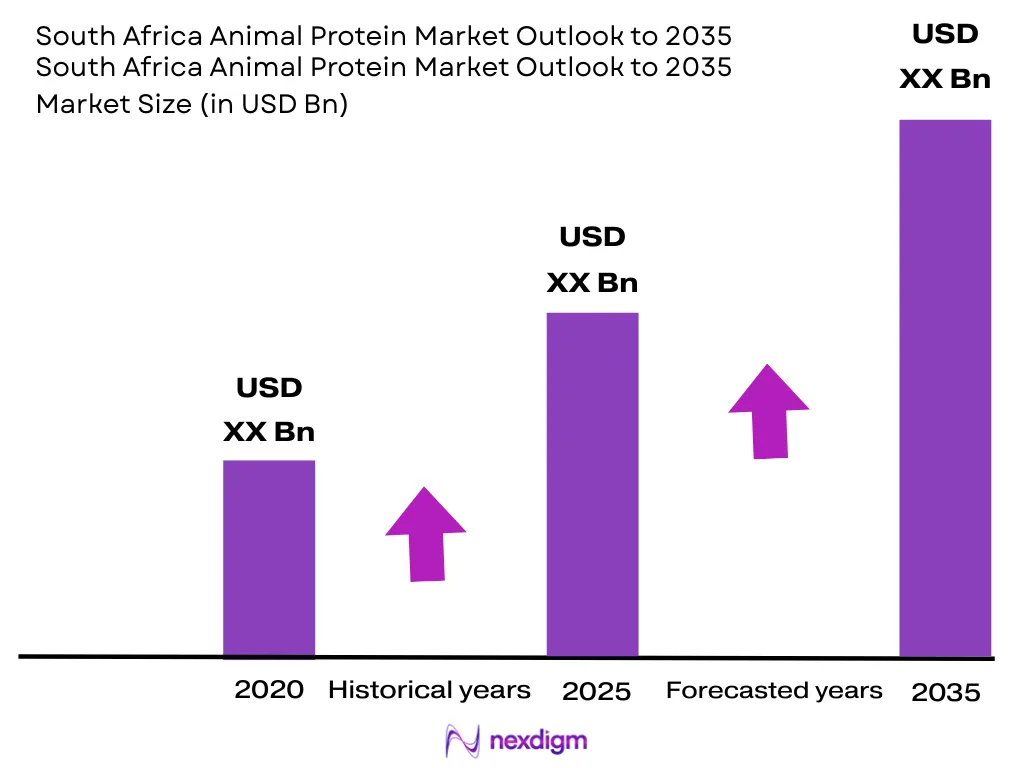
The South Africa Animal Protein Market was valued at USD ~ Billion in 2024, based on historical production, domestic consumption, exports, and processing revenues across pork, poultry, beef, aquaculture and fish protein, and egg products. South Africa produced approximately 7.3 million metric tons of meat and poultry during the latest reporting period, including approximately 4.4 million metric tons of pork, around 2.2 million metric tons of poultry meat, and approximately 0.4 million metric tons of beef and buffalo meat, according to statistics published by the Ministry of Agriculture and Rural Development (MARD), the General Statistics Office of South Africa (GSO), and the Food and Agriculture Organization (FAO). South Africa is also one of Southeast Asia’s largest aquaculture producers, with the seafood export sector — encompassing pangasius (catfish), shrimp, tilapia, and other species — generating approximately USD 9 billion in annual export revenues. The market continues to be driven by robust domestic consumer demand anchored by culturally strong pork consumption, rapid urbanisation, rising middle-class incomes, and the country’s globally competitive aquaculture export industry, alongside growing government investment in livestock modernisation and food safety infrastructure The South Africa Animal Protein Market was valued at USD ~ Billion in 2024, based on historical production, domestic consumption, exports, and processing revenues across poultry, beef, pork, lamb and mutton, seafood, and egg products. South Africa produced approximately 4.5 million metric tons of animal protein products during the latest reporting period, including approximately 2.1 million metric tons of poultry meat, over 1 million metric tons of beef, approximately 270,000 metric tons of pork, and around 170,000 metric tons of lamb and mutton, according to statistics published by the Department of Agriculture, Land Reform and Rural Development (DALRRD), the South African Poultry Association (SAPA), and the Red Meat Industry Forum (RMIF). South Africa is sub-Saharan Africa’s largest and most sophisticated agri-food economy, operating a dual agricultural structure comprising a large-scale commercial farming and processing sector alongside a significant smallholder and emerging farmer base. The market continues to be driven by a population of approximately 62 million people with strong protein consumption traditions, a well-established commercial poultry industry, extensive beef cattle ranching and feedlot operations, and a growing modern retail sector, alongside persistent challenges related to load shedding, import competition, feed cost pressures, and socioeconomic inequality affecting protein affordability across income segments.
Market Segmentation
By Protein Type
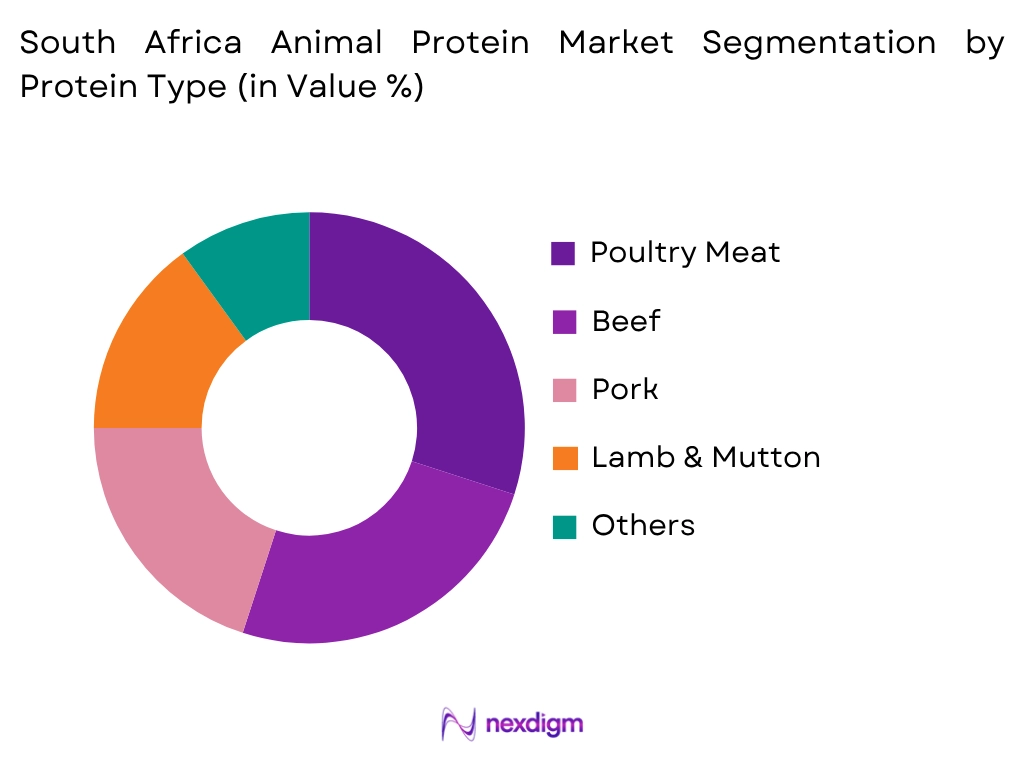
The South Africa Animal Protein Market is segmented by protein type into Poultry Meat, Beef, Pork, Lamb & Mutton, Seafood & Fish Protein, Eggs, and Processed Animal Protein Products. Poultry meat accounts for the largest share of the market by volume, driven by its affordability relative to beef and lamb, broad cultural acceptability across South Africa’s diverse demographic groups, and the presence of highly integrated commercial poultry producers including Astral Foods, Rainbow Chicken (RCL Foods), Sovereign Food Investments, and County Fair Foods. According to SAPA, South Africa’s broiler industry produces approximately 2.1 million metric tons of chicken meat annually, making it the largest protein category by volume and a critical source of affordable animal protein for lower- and middle-income households. Beef represents the second-largest segment and holds significant cultural prestige, particularly among higher-income consumers, traditional communities, and the braai (barbeque) culture deeply embedded in South African social life. South Africa’s extensive beef cattle industry — supported by large commercial ranches in Limpopo, Mpumalanga, the Free State, and KwaZulu-Natal, as well as intensive feedlots such as Karan Beef — produces premium quality beef supplying both domestic retail and select export markets. Lamb and mutton hold particular cultural importance in the Western Cape and among Muslim and Afrikaner communities, with the Karoo region renowned globally for producing distinctive grass-fed lamb of exceptional quality.
By Distribution Channel
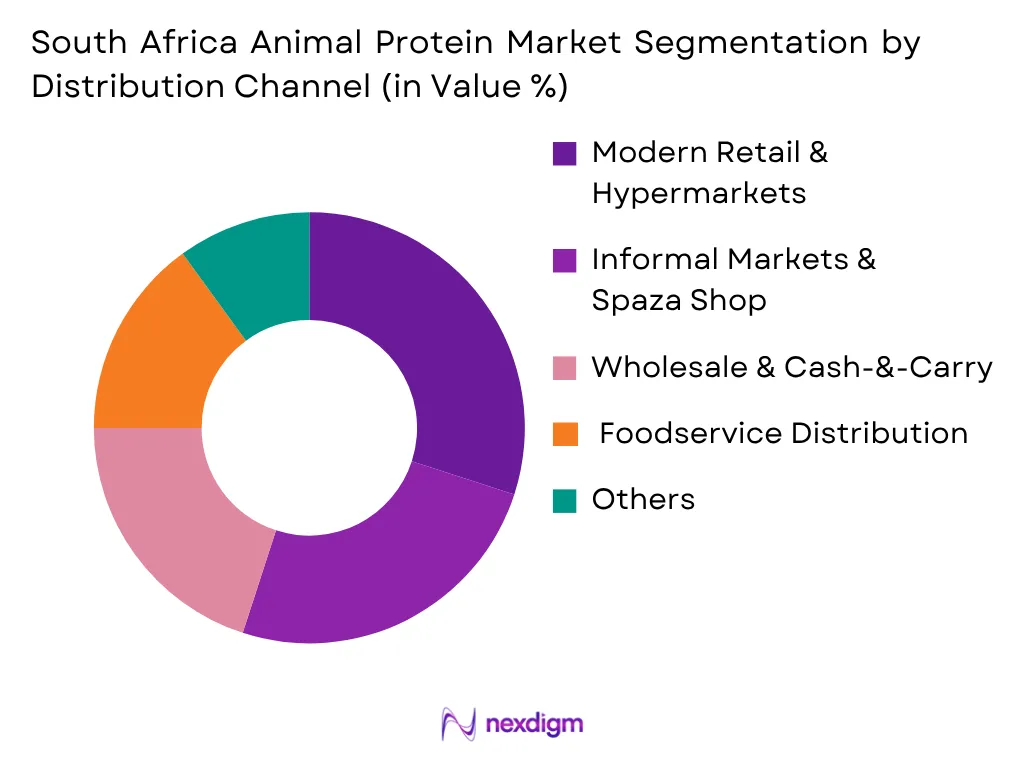
The South Africa Animal Protein Market is segmented by distribution channel into Modern Retail & Supermarkets, Informal Markets & Spaza Shops, Wholesale & Cash-and-Carry, Foodservice Distribution, Export Markets, and Online Grocery & Direct Sales. Modern retail represents the dominant organised distribution channel, with major supermarket groups including Shoprite Checkers, Pick n Pay, Woolworths Food, SPAR, and Makro serving a broad urban and peri-urban consumer base through temperature-controlled fresh meat counters, branded packaged products, and promotional pricing strategies. Shoprite — South Africa’s largest grocery retailer and one of Africa’s largest — plays an especially pivotal role in the affordable protein market through its extensive store network across both formal and township retail locations. The informal market and spaza shop channel remains critically important for lower-income households across townships and rural areas, accounting for a substantial share of fresh and frozen poultry consumption among South Africa’s price-sensitive majority consumer base. Cash-and-carry wholesale operators including Makro (Massmart), Jumbo, and Today are significant in serving both informal retailers and foodservice operators with bulk protein products. South Africa’s foodservice sector — encompassing quick service restaurants, hotel groups, institutional catering, and the growing delivered meals market — generates substantial consistent demand for portion-controlled, processed, and value-added animal protein products across all major cities.
Competitive Landscape
The South Africa Animal Protein Market is characterised by a concentrated commercial processing sector in poultry and processed meats alongside a more fragmented beef, pork, and lamb supply chain comprising large commercial farms, feedlots, abattoirs, and butcheries. The poultry sector is dominated by a small number of large vertically integrated producers — most notably Astral Foods, RCL Foods (Rainbow Chicken), Quantum Foods, and Sovereign Food Investments — which control the majority of commercial broiler production, processing, and branded retail distribution. The beef sector is served by large commercial cattle ranches and high-throughput feedlots such as Karan Beef and Chalmar Beef, which supply premium supermarket and foodservice channels, alongside hundreds of smaller abattoirs and butcheries serving regional markets. A persistent competitive pressure in the poultry sector arises from imported frozen chicken — primarily from Brazil, the European Union, and the United States — which competes on price and has prompted ongoing anti-dumping duty applications through the International Trade Administration Commission (ITAC). Food safety certification, Halal accreditation, cold chain infrastructure, and brand investment are key competitive differentiators within the organised domestic market.
| Company | Establishment Year | Headquarters | Primary Protein Focus | Processing Facilities
|
Export Presence | Production Integration | Sustainability Programs | Value-Added Product Portfolio |
| Astral Foods | 1959 | ~ | ~ | ~ | ~ | ~ | ~ | ~ |
| Rainbow Chicken (RCL Foods) | 1960 | ~ | ~ | ~ | ~ | ~ | ~ | ~ |
| County Fair Foods (Astral) | 1978 | ~ | ~ | ~ | ~ | ~ | ~ | ~ |
| Eskort (Tiger Brands) | 1917 | ~ | ~ | ~ | ~ | ~ | ~ | ~ |
| Sovereign Food Investments | 1994 | ~ | ~ | ~ | ~ | ~ | ~ | ~ |
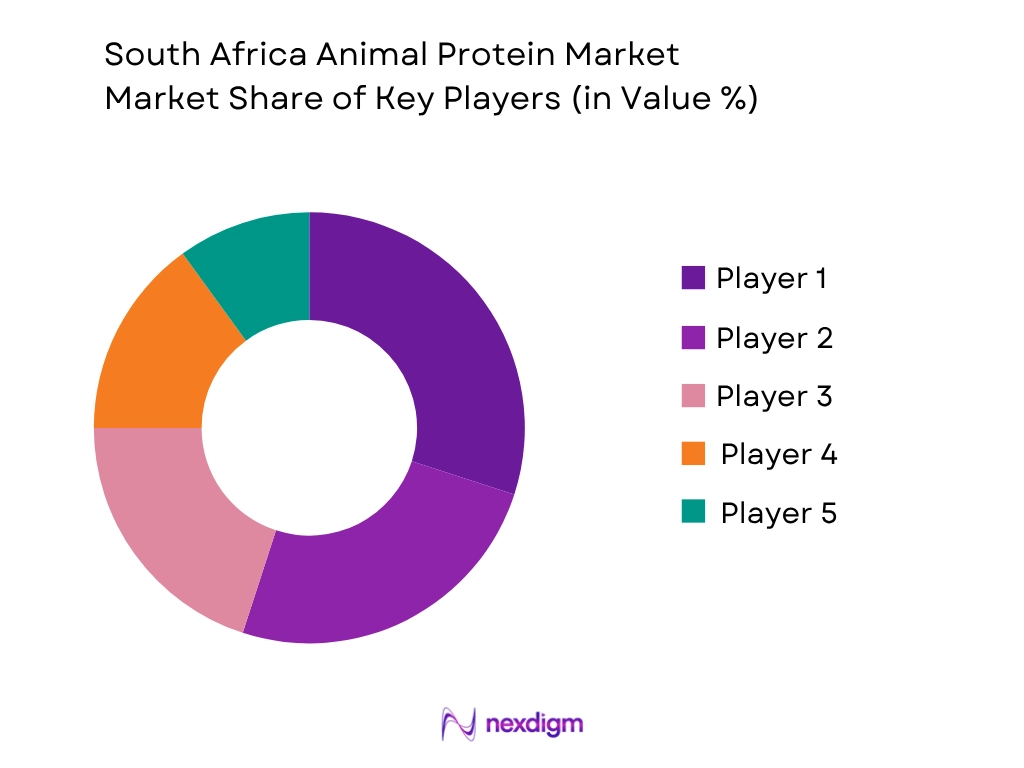
South Africa Animal Protein Market Analysis
Growth Drivers
Large Domestic Consumer Base and Rising Per Capita Protein Demand
South Africa’s population of approximately 62 million people — the largest in southern Africa and the fifth-largest on the continent — provides a substantial and growing domestic consumer base for animal protein products across all income segments. According to Statistics South Africa (Stats SA), the country’s population has grown steadily, driven by natural population growth and inward migration from neighbouring countries, while urbanisation has accelerated the transition of consumers toward commercially processed and packaged protein products. The World Bank estimated South Africa’s GDP at approximately USD 380 billion in 2024, and while the country faces significant inequality — with a Gini coefficient consistently among the world’s highest — a large and growing lower-middle-income consumer segment represents the most important volume growth driver for affordable animal protein, particularly chicken. According to SAPA and DALRRD, per capita poultry consumption in South Africa has grown consistently over the past decade and now exceeds 40 kg per year, making South Africa one of Africa’s highest per capita chicken consuming markets. The IMF projects modest but sustained economic growth for South Africa through the outlook period, supported by structural reforms and improved energy infrastructure investment, which is expected to progressively support household income growth and protein expenditure across key consumer demographics. Rising urbanisation, expanding modern retail penetration into township and peri-urban markets through retailers such as Shoprite and SPAR, and the growth of informal food processing and street food sectors further reinforce domestic animal protein demand momentum.
Well-Established Commercial Poultry and Beef Industries with Integrated Infrastructure
South Africa operates one of Africa’s most sophisticated and technically advanced commercial animal protein industries, providing a strong structural foundation for market growth and export competitiveness. According to SAPA, South Africa’s broiler industry comprises approximately 1,400 commercial broiler farms producing over 2.1 million metric tons of poultry meat annually, supported by vertically integrated operations encompassing grandparent and parent stock breeding, hatcheries, commercial grow-out, feed manufacturing, slaughterhouses, further processing, and cold chain distribution. Leading companies including Astral Foods, RCL Foods, and Quantum Foods operate some of Africa’s most modern poultry processing facilities, achieving world-class food safety standards that underpin retail and foodservice supply contracts. The beef sector is supported by a national cattle herd of approximately 13.7 million head according to DALRRD, serviced by large commercial feedlots — with Karan Beef alone having a capacity of approximately 100,000 head — and a network of accredited red meat abattoirs graded under South African Meat Industry Company (SAMIC) standards. South Africa’s egg industry, represented by the South African Egg Organisation (SAEO), produces approximately 12 billion eggs annually, while the pork sector — led by producers and processors including Eskort and Fouries — serves a substantial domestic market particularly concentrated in Gauteng and the Western Cape. This established production and processing infrastructure positions South Africa as not only the continent’s largest domestic animal protein market but also a potential export hub for sub-Saharan Africa.
Market Challenges
Load Shedding, Electricity Supply Constraints, and Operational Cost Pressures
South Africa’s chronic electricity supply crisis — commonly referred to as load shedding — represents one of the most significant and structurally disruptive challenges facing the animal protein industry across the entire value chain, from feed manufacturing and broiler grow-out to slaughter, refrigeration, cold chain logistics, and retail. According to Eskom, South Africa’s state-owned power utility, the country experienced record stages of load shedding in 2022 and 2023, with power cuts reaching Stage 6 and beyond — equating to up to 12 hours of daily outages — that directly disrupted poultry house temperature control, feed pelleting operations, abattoir line speeds, refrigerated storage, and retail cold chain integrity. The South African Poultry Association (SAPA) estimated that load shedding costs the commercial poultry sector hundreds of millions of rands annually in increased diesel generator costs, production losses from temperature-related poultry mortality, cold chain failures, and reduced processing throughput. The broader food manufacturing and cold chain logistics sector has been similarly affected, with companies across the protein supply chain compelled to invest heavily in diesel backup generation, solar energy systems, uninterruptible power supplies, and energy storage solutions to maintain operational continuity. While the South African government and private sector have accelerated investments in renewable energy capacity under the Electricity Regulation Amendment Act and NERSA licensing reforms, the persistent electricity supply deficit continues to impose significant cost burdens and operational risks across the animal protein industry that are unlikely to be fully resolved in the near term.
Poultry Import Competition and Socioeconomic Inequality Affecting Protein Affordability
South Africa’s commercial poultry industry faces persistent competitive pressure from imported frozen chicken products, particularly from Brazil, the European Union member states, and the United States, which have historically been able to undercut domestic producers on price due to lower production costs, feed efficiency advantages, and export subsidy support. According to ITAC and SAPA, imported chicken — primarily mechanically deboned meat, bone-in portions, and whole frozen birds — has at various points accounted for a significant share of South Africa’s total chicken supply, prompting multiple anti-dumping duty investigations and the imposition of provisional and final anti-dumping duties on imports from Brazil and the EU. Maintaining these trade protections through ITAC processes requires continuous industry engagement and evidence submission, creating ongoing regulatory uncertainty for domestic producers. Simultaneously, South Africa’s extreme income inequality — with approximately 55% of the population living below the upper-bound poverty line according to Stats SA — creates persistent structural tension in the animal protein market between the need for affordable protein access for the majority of consumers and the cost pressures facing domestic commercial producers. Affordable chicken, eggs, and processed meat products are critical nutritional staples for millions of South African households, meaning that any significant increase in retail protein prices due to import restrictions, feed cost inflation, or production disruptions can have meaningful food security and social welfare consequences across the country’s lower-income majority demographic.
Market Opportunities
Sub-Saharan Africa Export Market Expansion and AfCFTA Trade Framework Benefits
South Africa’s position as the continent’s most sophisticated agri-food economy and its advanced processing, cold chain, and quality assurance infrastructure create significant opportunities for expanding animal protein exports across sub-Saharan Africa under the African Continental Free Trade Area (AfCFTA) framework. According to the African Union, the AfCFTA — which entered into force in 2019 and encompasses 55 member states representing a combined GDP of approximately USD 3.4 trillion — is progressively reducing intra-African tariff barriers and harmonising trade regulations, creating expanded preferential market access for South African food and agricultural exporters. South Africa currently exports beef, ostrich meat, processed poultry products, and eggs to a range of African markets including Namibia, Botswana, Zimbabwe, Mozambique, and select West African destinations. The continent’s rapidly urbanising and growing population — projected by the United Nations to reach approximately 2.5 billion by 2050 — is expected to generate enormous incremental demand for processed and commercially produced animal protein products that South Africa’s established processing sector is uniquely positioned to supply. Government initiatives including the Agriculture and Agro-Processing Master Plan (AAMP) and the Export Marketing and Investment Assistance (EMIA) programme are supporting export market development for South African agri-food producers. Continued investment in veterinary border compliance, export health certification systems, and cold chain logistics connecting South Africa to neighbouring and regional markets will be critical to realising this continental export opportunity.
Premium Protein, Free-Range, and Halal-Certified Segment Growth
The South Africa Animal Protein Market presents growing opportunities for premium, welfare-certified, and halal-certified protein products as consumer sophistication increases among higher-income urban segments and as halal market demand expands both domestically and in export markets. According to the Muslim Judicial Council (MJC) and the National Independent Halaal Trust (NIHT), South Africa’s Muslim population — concentrated primarily in the Western Cape and Gauteng — represents a substantial and brand-loyal halal protein consumer base that increasingly demands certified, traceable, and consistently halal-compliant poultry, beef, and lamb products. Major poultry producers and processors including Astral Foods and RCL Foods maintain dedicated halal-certified processing lines and facilities, while the Karoo Natural and free-range lamb segments have attracted growing interest from premium retail channels and international buyers. Woolworths Food — South Africa’s premium grocery retailer — has developed an extensive range of welfare-certified, free-range, and sustainably produced animal protein products that command significant price premiums and demonstrate the domestic market’s appetite for premium differentiation. Growing consumer awareness around animal welfare, antibiotic stewardship, and environmental sustainability among urban middle- and upper-income segments is driving increasing demand for certified free-range poultry, pasture-raised beef, and sustainably farmed seafood products, creating opportunities for producers willing to invest in accreditation, production system upgrades, and premium brand development.
Future Outlook
The South Africa Animal Protein Market is expected to maintain moderate long-term growth through 2035, supported by population expansion, rising urbanisation, progressive improvement in domestic energy supply reliability, and increasing penetration of modern retail channels across township and peri-urban markets. The commercial poultry sector is expected to remain the dominant protein category by volume, with ongoing investment in processing automation, biosecurity, and energy self-sufficiency improving operational resilience. The beef sector is anticipated to benefit from expanding sub-Saharan Africa export opportunities under AfCFTA, while the premium and free-range protein segment is expected to outperform the broader market driven by rising consumer income and food safety awareness. Government investment in smallholder farmer support, land reform, and agri-processing incentives under the Agriculture and Agro-Processing Master Plan is expected to progressively broaden the production base and strengthen domestic supply chain resilience. Continued modernisation of cold chain infrastructure, abattoir upgrades, and digital traceability investment will further improve food safety standards and export market competitiveness across the South African animal protein sector.
Major Players
- Astral Foods
- Rainbow Chicken (RCL Foods)
- County Fair Foods (Astral)
- Eskort (Tiger Brands)
- Sovereign Food Investments
- Quantum Foods
- Chalmar Beef
- Karan Beef
- Fouries Pork
- Freddy Hirsch Group
- Joostenberg Vleis
- Farmer’s Choice
- Sea Harvest Group
- Oceana Group
- Pioneer Foods (PepsiCo SA)
Key Target Audience
- Animal Protein Producers and Meat Processing Companies
- Livestock Producers and Integrated Farming Companies
- Food Processing and Packaged Food Manufacturers
- Retail Chains, Wholesale Distributors and Foodservice Operators
- Exporters, Importers and International Trading Companies
- Investments and Venture Capitalist Firms
- Government and Regulatory Bodies (Department of Agriculture, Land Reform and Rural Development (DALRRD), South African Poultry Association (SAPA), South African Meat Industry Company (SAMIC), Red Meat Industry Forum (RMIF), International Trade Administration Commission (ITAC))
- Cold Chain Logistics, Storage and Distribution Companies
Research Methodology
Step 1: Identification of Key Variables
The research process begins by identifying the complete ecosystem of the South Africa Animal Protein Market, including livestock producers, feed suppliers, meat processors, distributors, exporters, retailers, and regulatory agencies. Extensive secondary research is conducted using government publications, trade associations, customs statistics, company reports, and proprietary industry databases. This stage helps determine the major variables influencing production, consumption, trade, pricing, and investment trends across the market.
Step 2: Market Analysis and Construction
Historical market information is compiled and analysed to estimate the overall market size using both top-down and bottom-up approaches. Production volumes, domestic consumption, processing revenues, export statistics, livestock inventories, slaughter volumes, and pricing trends are evaluated to construct a comprehensive market model. Demand-side and supply-side assessments are performed to validate the consistency of market estimates across various industry participants.
Step 3: Hypothesis Validation and Expert Consultation
The preliminary market findings are validated through computer-assisted telephone interviews (CATIs) and structured discussions with executives from meat processing companies, livestock producers, exporters, distributors, industry associations, and regulatory authorities. These consultations provide valuable insights regarding production capacity, utilisation rates, investment priorities, pricing dynamics, and emerging market opportunities, ensuring that the assumptions used in the research accurately reflect current industry conditions.
Step 4: Research Synthesis and Final Output
The final stage integrates findings obtained from secondary research and primary interviews to develop a comprehensive market assessment. Market estimates are cross-verified using company financial reports, trade databases, production statistics, and industry publications. The resulting analysis provides detailed insights into market size, competitive positioning, segmentation, growth drivers, challenges, future opportunities, and strategic recommendations for stakeholders operating within the South Africa Animal Protein Market.

- Executive Summary
- Research Methodology (Market Definitions and Assumptions, Abbreviations, Market Sizing Framework, Top-Down Analysis, Bottom-Up Analysis, Demand-Side Assessment, Supply-Side Assessment, Primary Industry Interviews, Trade Flow Validation, Data Triangulation, Forecasting Framework, Limitations and Future Conclusions)

- Definition and Scope
- Market Evolution and Industry Genesis
- Timeline of Major Industry Developments
- South Africa Animal Protein Industry Ecosystem
- Supply Chain Analysis

- Growth Drivers (Large Domestic Consumer Base and Rising Protein Demand, Well-Established Commercial Poultry and Beef Sectors, South Africa as Sub-Saharan Africa’s Largest Agri-Food Economy, Government Agricultural Support and Land Reform Programs, Expanding Modern Retail and Informal Market Channels, Growing Halal and Certified Protein Segments)
- Market Challenges (Poultry Import Competition and Anti-Dumping Pressures, Load Shedding and Electricity Supply Constraints, Foot-and-Mouth Disease and Avian Influenza Risks, Socioeconomic Inequality and Protein Affordability Gaps, Water Scarcity and Drought Vulnerability, High Feed and Input Cost Pressures)
- Market Opportunities (Sub-Saharan Africa Export Market Expansion, Premium and Free-Range Protein Segment Growth, Agri-Processing Investment and Value-Added Product Development, Smallholder Farmer Integration Programs, Halal-Certified Export Market Development, Aquaculture and Mariculture Sector Expansion)
- Market Trends (Poultry Sector Consolidation, Branded and Packaged Meat Product Growth, Retailer Sustainability and Responsible Sourcing Commitments, Traceability and Food Safety Digitalisation, Expansion of Cash-and-Carry and Informal Retail Protein Access, Alternative Protein and Plant-Based Meat Market Emergence)
- Government Regulations (Department of Agriculture, Land Reform and Rural Development (DALRRD) Standards, South African Poultry Association (SAPA) Industry Governance, South African Meat Industry Company (SAMIC) Grading, DAFF Food Safety and Export Certification, International Trade Administration Commission (ITAC) Anti-Dumping Regulations, Abattoir Regulations under the Meat Safety Act 40 of 2000)
- Trade Policy Analysis (SADC and AfCFTA Trade Frameworks, Anti-Dumping Duties on Poultry Imports, Export Protocols for Beef and Ostrich, Veterinary Health Certificate Requirements, Market Access Negotiations)
- Feed Industry Assessment (Maize Availability, Soybean Meal Utilisation, Feed Conversion Efficiency, Feed Cost Structure, Domestic Feed Manufacturing Capacity)
- SWOT Analysis
- PESTLE Analysis
- Porter’s Five Forces Analysis
- Stakeholder Ecosystem
- Competition Ecosystem

- By Market Value (2020-2025)
- By Volume Consumption (2020-2025)
- By Average Selling Price (2020-2025)

- By Protein Type (In Value %)
Poultry Meat
Beef
Pork
Lamb & Mutton
Seafood & Fish Protein
Eggs
Processed Animal Protein Products - By Product Form (In Value %)
Fresh/Chilled
Frozen
Processed & Value-Added
Cooked & Ready-to-Eat
Marinated & Seasoned Products - By End User (In Value %)
Retail Consumers
Foodservice & HoReCa
Food Processing Industry
Institutional Buyers
Export Buyers - By Distribution Channel (In Value %)
Modern Retail & Supermarkets
Informal Markets & Spaza Shops
Wholesale & Cash-and-Carry
Foodservice Distribution
Export Markets
Online Grocery & Direct Sales - By Production System (In Value %)
Commercial Integrated Farming
Smallholder & Emerging Farmer Production
Extensive Beef Cattle Ranching
Intensive Feedlot Production
Certified Free-Range & Organic Production - By Animal Protein Grade (In Value %)
Commodity Grade
Premium Grade
Halal Certified
Free-Range & Welfare Certified
Export Grade - By Province (In Value %)
Gauteng
KwaZulu-Natal
Western Cape
Eastern Cape
Limpopo
Mpumalanga
North West
Free State
Northern Cape

- Market Share of Major Players (By Value, Production Volume, Export Volume, Protein Category, Processing Capacity)
- Cross Comparison Parameters (Slaughter Capacity, Processing Capacity, Export Market Presence, Feed Integration Level, Cold Storage Capacity, Product Portfolio Diversity, Sustainability & Animal Welfare Certifications, Value-Added Product Portfolio)
- SWOT Analysis of Major Players
- Pricing Analysis (By Protein Category, Processing Level, Export vs Domestic Pricing)
- Detailed Profiles of Major Companies
Astral Foods
Rainbow Chicken (RCL Foods)
County Fair Foods (Astral)
Eskort (Tiger Brands)
Sovereign Food Investments
Quantum Foods
Chalmar Beef
Karan Beef
Fouries Pork
Freddy Hirsch Group
Joostenberg Vleis
Farmer’s Choice
Sea Harvest Group
Oceana Group
Pioneer Foods (PepsiCo SA)

- Consumption Pattern Assessment (Per Capita Meat Consumption, Protein Preference by Income Group, Meal Frequency, Household Penetration)
- Demographic Demand Analysis (Income Group, Age Group, Urban-Rural Split, Provincial Preferences)
- Household Expenditure Analysis
- Protein Affordability Assessment
- Fresh vs Frozen Product Preference

- By Market Value (2026-2035)
- By Volume Consumption (2026-2035)
- By Average Selling Price (2026-2035)


 Request a Sample
 Ask for Customization
 Get a Quote
 Enquire Now