

 Download PDF
Market Overview
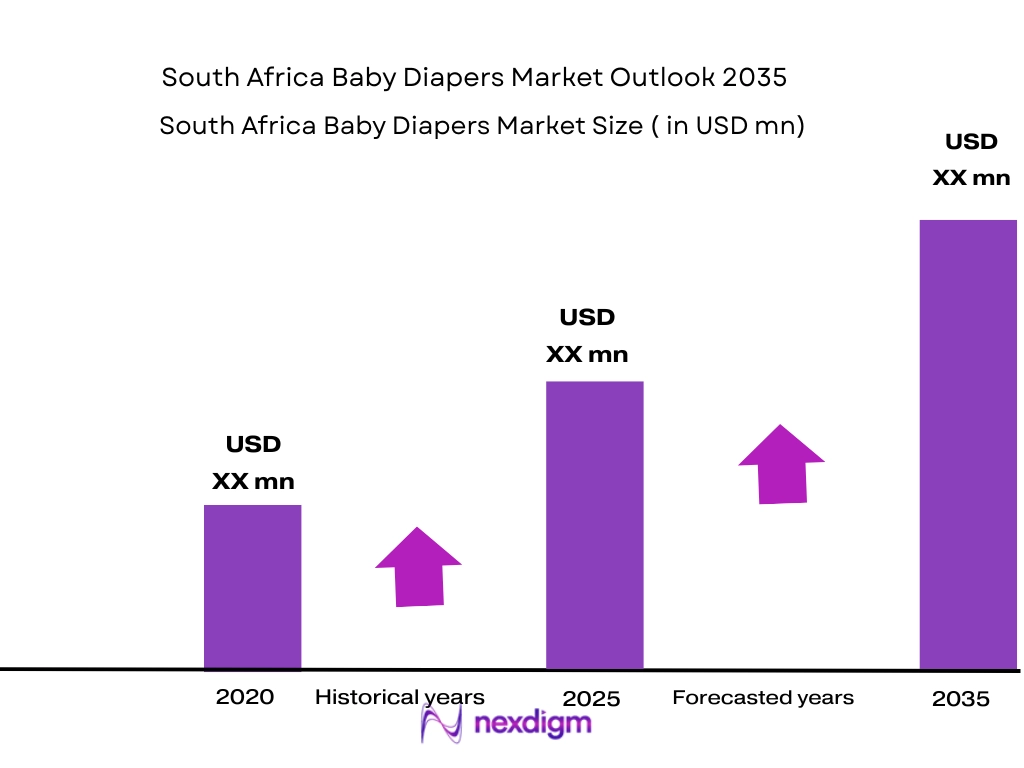
The South African baby diapers market is valued at USD ~ million, driven by the increasing birth rate, urbanization, and growing awareness regarding hygiene and convenience. In recent years, the rise in disposable income has fueled demand for both premium and eco-friendly baby diaper products. Consumers are shifting towards disposable diapers for convenience and hygiene. The market has been growing steadily due to the expansion of retail channels and e-commerce platforms. The demand for biodegradable diapers is also gaining traction due to growing environmental concerns, further driving the market forward.
The South African baby diaper market is predominantly dominated by Gauteng and KwaZulu-Natal provinces, with major urban areas like Johannesburg, Pretoria, and Durban leading the charge. This dominance is due to the higher population density, urbanized population, and economic prosperity of these regions. Furthermore, these provinces boast a large concentration of retail outlets, pharmacies, and distribution centers, facilitating wider product availability. With higher disposable income and growing awareness regarding hygiene, these regions have emerged as key consumption hubs.
Market Segmentation
By Product Type
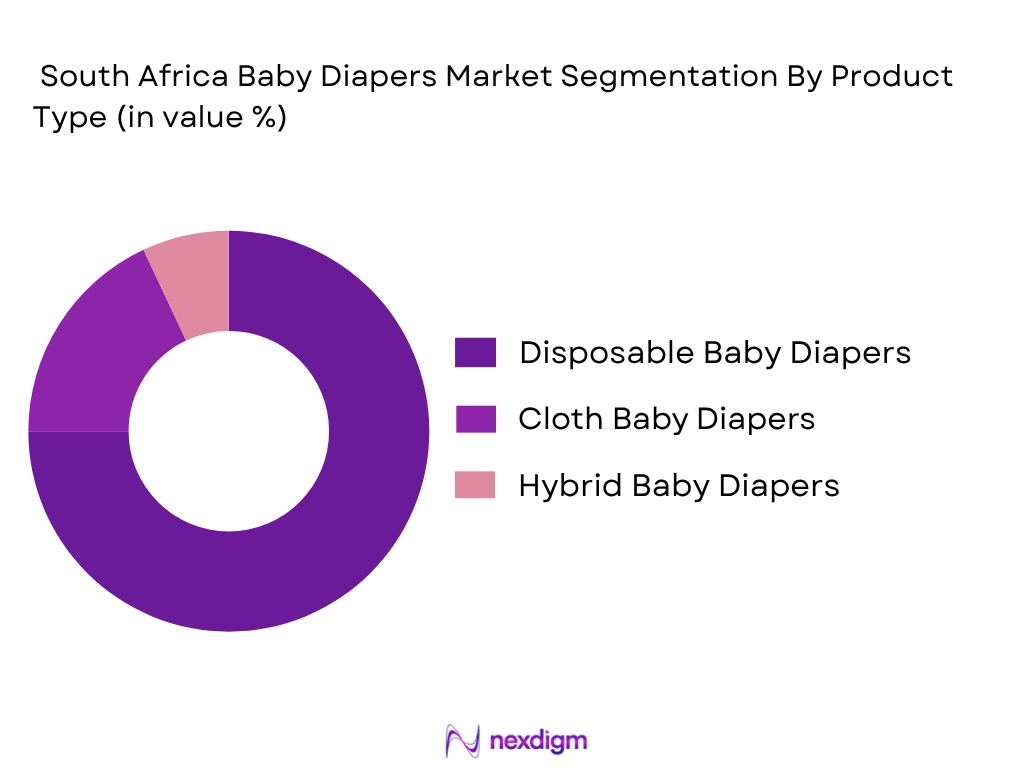
The South African baby diapers market is segmented by product type into disposable diapers, cloth diapers, and hybrid diapers. The disposable diapers segment holds the largest share in the market, driven by convenience, increased disposable incomes, and superior hygiene benefits. Disposable diapers are popular among urban consumers, particularly in Gauteng and KwaZulu-Natal, where busy lifestyles make the use of disposable products essential. These diapers also appeal to working parents who need quick and convenient solutions for their children. The demand for cloth diapers, however, remains steady, especially among environmentally conscious consumers, though its market share is comparatively smaller. Hybrid diapers are slowly gaining ground as a sustainable alternative, appealing to the eco-conscious segment of the market.
By Age Group
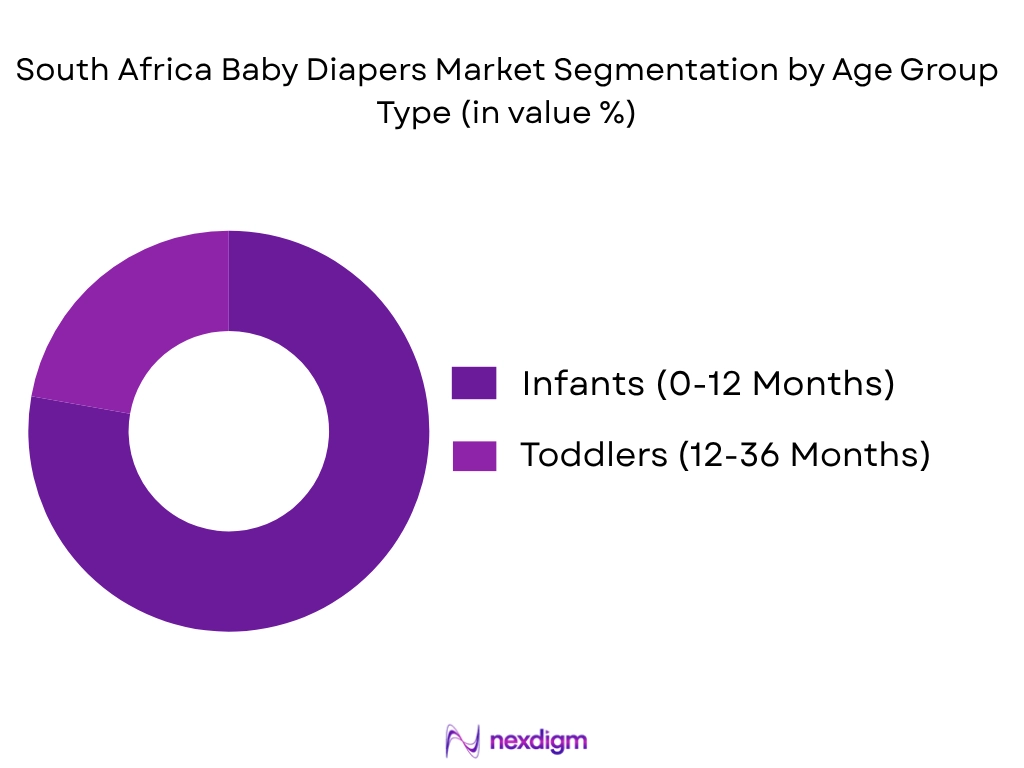
The South African baby diapers market is also segmented by age group into infants (0-12 months) and toddlers (12-36 months). The infant segment holds the dominant market share due to the higher demand for diapers in the first year of a child’s life. This segment is typically characterized by higher product usage, as infants go through more diapers daily due to frequent changes. Furthermore, increased parental concern for infant hygiene has contributed to the significant market share of this segment. The toddler segment is growing steadily, especially as children transition from infancy to early childhood and require specialized diapers for greater mobility and comfort.
Competitive Landscape
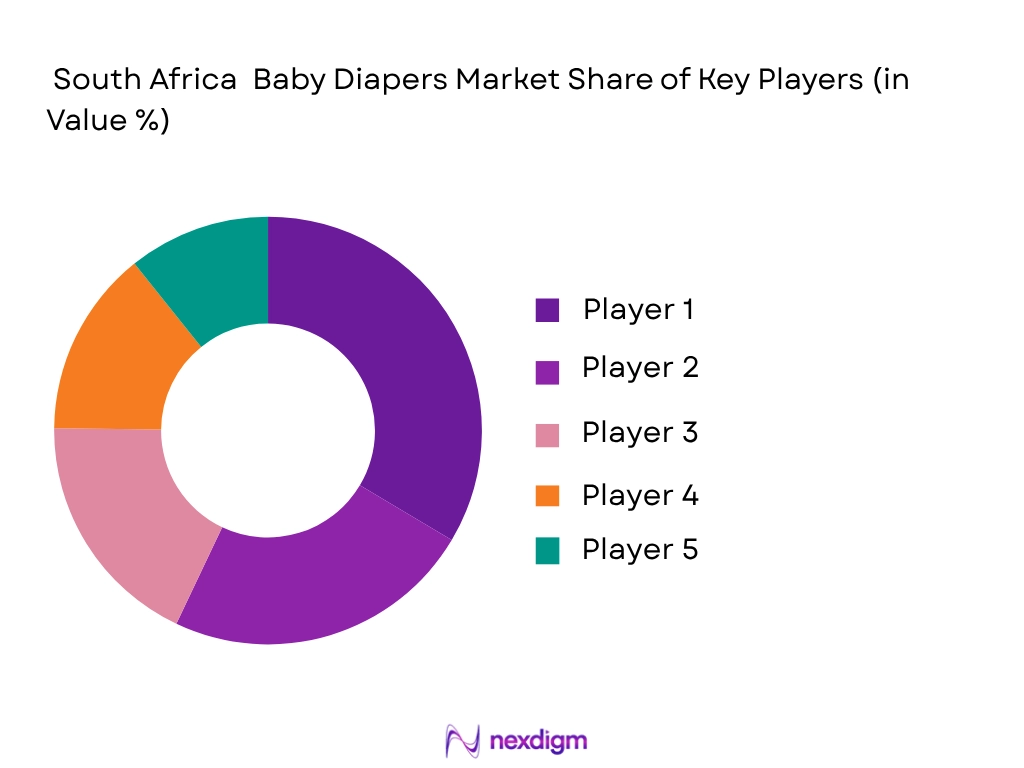
The South African baby diapers market is dominated by a few key players that command a significant market share. These include multinational corporations like Procter & Gamble (Pampers) and Kimberly-Clark (Huggies), along with regional players that cater specifically to the South African market, such as Unicharm (Moony) and local manufacturers. These players are key to shaping the market due to their strong brand recognition, well-established distribution networks, and ability to provide high-quality products that meet local consumer needs. The market also sees increasing competition from eco-friendly and biodegradable diaper brands that are slowly capturing the attention of environmentally conscious consumers.
| Company Name | Establishment Year | Headquarters | Product Portfolio | Revenue (2024) | Key Markets | Strengths |
| Procter & Gamble (Pampers) | 1837 | USA | ~ | ~ | ~ | ~ |
| Kimberly-Clark (Huggies) | 1872 | USA | ~ | ~ | ~ | ~ |
| Unicharm (Moony) | 1961 | Japan | ~ | ~ | ~ | ~ |
| SCA Hygiene Products | 1987 | Sweden | ~ | ~ | ~ | ~ |
| Ontex International | 1979 | Belgium | ~ | ~ | ~ | ~ |
South Africa Baby Diapers Market Analysis
Growth Drivers
Increasing Birth Rate and Population Growth
South Africa’s growing birth rate is a significant driver of the baby diapers market. The country has seen a steady increase in the population, particularly in urban areas, which has translated into a higher demand for baby care products. As more young families emerge, the need for reliable, hygienic, and convenient diaper solutions continues to grow. The government’s efforts to improve healthcare access, coupled with better living standards, have supported the increasing population, thereby expanding the target consumer base for baby diapers. As a result, demand for diapers remains high, particularly in urban centers such as Johannesburg and Cape Town, where disposable income levels are rising, further driving market growth.
Rising Awareness Regarding Hygiene and Skin Care
Growing consumer awareness about hygiene and the importance of skin care is rapidly influencing purchasing behavior in South Africa’s baby diapers market. Parents are increasingly concerned about the health and comfort of their babies, opting for high-quality diapers that reduce the risk of skin irritations and other health issues. As a result, there is a shift towards premium diaper products made with soft, breathable, and hypoallergenic materials. Alongside this, the rise of digital and social media has amplified the information on the importance of maintaining proper hygiene and skin care for infants, which in turn is creating a higher demand for specialized, skin-friendly diaper products.
Market Challenges
Fluctuations in Raw Material Prices
The South African baby diapers market faces challenges due to fluctuations in raw material prices, such as the cost of pulp and plastic. These materials are integral to the production of disposable diapers, and price volatility can significantly affect profit margins for manufacturers. Changes in the cost of raw materials are often influenced by global supply chain disruptions, trade policies, and local economic factors. As a result, diaper manufacturers must constantly adapt their pricing strategies to maintain competitiveness without sacrificing product quality. These fluctuations are particularly challenging for local manufacturers who struggle to manage costs effectively, leading to potential supply chain issues.
Environmental Concerns and Regulatory Compliance
Environmental concerns surrounding disposable diapers and their contribution to landfill waste pose a significant challenge to the South African market. Diapers are a leading contributor to plastic waste, and as sustainability becomes a more pressing issue, both consumers and governments are pushing for greener alternatives. Regulatory bodies are increasingly imposing stricter environmental regulations, requiring diaper manufacturers to either adopt more eco-friendly production processes or offer biodegradable diaper options. This is creating pressure on the market to innovate while complying with new standards. Manufacturers must balance consumer demand for environmentally responsible products while managing the cost implications of switching to sustainable materials.
Opportunities
Growing Demand for Eco-friendly and Biodegradable Diapers
As awareness of environmental issues continues to rise, there is a growing demand for eco-friendly and biodegradable diapers in South Africa. Consumers, particularly in urban and environmentally conscious demographics, are seeking alternatives to traditional disposable diapers. This presents an opportunity for manufacturers to tap into a new segment by offering products that use sustainable materials such as organic cotton and biodegradable plastics. Diaper brands that position themselves as environmentally responsible are likely to attract a loyal customer base, especially as more eco-conscious parents are willing to pay a premium for products that align with their values. This trend is expected to continue shaping the future of the South African baby diapers market.
Expansion of Online Retail Channels
The expansion of online retail channels presents a significant opportunity for growth in the South African baby diapers market. As e-commerce continues to grow in popularity, especially among young, tech-savvy parents, online platforms offer a convenient and often more affordable alternative to traditional brick-and-mortar stores. Online shopping allows consumers to compare products easily, read reviews, and have diapers delivered directly to their homes, enhancing the shopping experience. Additionally, the increasing prevalence of smartphones and internet access in South Africa has made online shopping more accessible, driving the adoption of digital channels. Manufacturers and retailers that invest in robust online sales platforms are poised to capitalize on this shift in consumer behavior.
Future Outlook
The South African baby diapers market is expected to experience continued growth in the coming years, driven by rising disposable incomes, increased urbanization, and growing awareness of hygiene and environmental issues. Moreover, the trend towards eco-friendly and biodegradable diapers is likely to become more pronounced, with more consumers opting for sustainable products. In addition, the expansion of online retail and e-commerce platforms will make baby diapers more accessible to a wider range of consumers, further boosting market growth. Innovations in product offerings, such as enhanced absorbency, hypoallergenic materials, and more affordable pricing, are expected to drive the market forward.
Major Players in the Market
- Procter & Gamble (Pampers)
- Kimberly-Clark (Huggies)
- Unicharm (Moony)
- SCA Hygiene Products (TENA)
- Ontex International
- Hengan International Group
- Reckitt Benckiser Group (Molfix)
- Drypers (DYPER)
- The Honest Company
- Attends Healthcare Products
- Bambo Nature
- Medline Industries
- C. Johnson & Son, Inc.
- Abbott Laboratories
- Fisher-Price (Mattel)
Key Target Audience
- Investment and venture capitalist firms
- Government and regulatory bodies
- Retail and e-commerce giants
- Baby product manufacturers
- Regional distributors and wholesalers
- Hospitals and pediatric care centers
- Eco-conscious consumer groups
- Industry trade associations (South African Baby Products Association)
Research Methodology
Step 1: Identification of Key Variables
The initial phase involves constructing an ecosystem map encompassing all major stakeholders within the South Africa baby diapers market. This step is underpinned by extensive desk research, utilizing a combination of secondary and proprietary databases to gather comprehensive industry-level information. The primary objective is to identify and define the critical variables that influence market dynamics.
Step 2: Market Analysis and Construction
In this phase, we will compile and analyze historical data pertaining to the South Africa baby diapers market. This includes assessing market penetration, the ratio of marketplaces to service providers, and the resultant revenue generation. Furthermore, an evaluation of service quality statistics will be conducted to ensure the reliability and accuracy of the revenue estimates.
Step 3: Hypothesis Validation and Expert Consultation
Market hypotheses will be developed and subsequently validated through computer-assisted telephone interviews (CATIS) with industry experts representing a diverse array of companies. These consultations will provide valuable operational and financial insights directly from industry practitioners, which will be instrumental in refining and corroborating the market data.
Step 4: Research Synthesis and Final Output
The final phase involves direct engagement with multiple baby diaper manufacturers to acquire detailed insights into product segments, sales performance, consumer preferences, and other pertinent factors. This interaction will serve to verify and complement the statistics derived from the bottom-up approach, thereby ensuring a comprehensive, accurate, and validated analysis of the South Africa baby diapers market.

- Executive Summary
- Research Methodology (Market Definitions and Assumptions, Abbreviations, Market Sizing Approach, Consolidated Research Approach, Understanding Market Potential Through In-Depth Industry Interviews, Primary Research Approach, Limitations and Future Conclusions)

- Definition and Scope
- Market Dynamics Overview
- Market Genesis
- Major Players and Market Timeline
- Business Cycle and Trends
- Supply Chain and Value Chain Analysis

- Growth Drivers
Increasing Birth Rate and Population Growth
Rising Awareness Regarding Hygiene and Skin Care
Growing Disposable Income and Changing Lifestyles
Expansion of Organized Retail and E-commerce Channels
Increasing Adoption of Eco-friendly and Sustainable Products - Market Challenges
Fluctuations in Raw Material Prices
High Cost of Premium Diaper Products
Environmental Concerns and Regulatory Compliance
Competition from Alternative Diaper Products (e.g., Cloth Diapers) - Opportunities
Growing Demand for Eco-friendly and Biodegradable Diapers
Product Innovations in Diaper Design and Materials
Expansion of Online Retail Channels
Rising Adoption of Cloth Diapers Among Eco-conscious Consumers - Key Trends
Rise in Demand for Premium and Organic Diapers
Shift Toward Biodegradable and Eco-friendly Materials
Growing Popularity of E-commerce for Diaper Purchases
Innovation in Packaging to Reduce Waste - Government Regulations
- SWOT Analysis
- Porter’s Five Forces

- By Value, 2020–2025
- By Volume, 2020–2025
- By Average Price, 2020–2025

- By Product Type (In Value %)
Disposable Baby Diapers
Cloth Baby Diapers
Hybrid Baby Diapers - By Age Group (In Value %)
Infants (0-12 Months)
Toddlers (12-36 Months) - By Distribution Channel (In Value %)
Supermarkets and Hypermarkets
Pharmacies and Drugstores
Convenience Stores
Online Channels
Direct Sales - By Region (In Value %)
Eastern Cape
Gauteng
KwaZulu-Natal
Limpopo
Mpumalanga
Western Cape
Rest of South Africa

- Market Share of Major Players by Value/Volume
- Market Share of Major Players by Product Type
- Cross Comparison Parameters (Company Overview, Business Strategies, Recent Developments, Strength, Weakness, Organizational Structure, Revenues, Revenues by Product Type, Number of Touchpoints, Distribution Channels, Number of Dealers and Distributors, Margins, Production Plant, Capacity, Unique Value Offering and Others)
- SWOT Analysis of Major Players
- Pricing Analysis Based on Product Categories for Major Players
- Detailed Profiles of Major Companies
Procter & Gamble (Pampers)
Kimberly-Clark Corporation (Huggies)
Unicharm Corporation (Moony)
SCA Hygiene Products (TENA)
Nestlé (Nestlé Baby Diapers)
C. Johnson & Son, Inc.
Reckitt Benckiser Group
Hengan International Group
The Honest Company
Attends Healthcare Products
Ontex International
Bambo Nature
Drypers (DYPER)

- Market Demand and Utilization
- Purchasing Power and Budget Allocations
- Regulatory and Compliance Requirements
- Needs, Desires, and Pain Point Analysis
- Decision-Making Process

- By Value, 2026–2035
- By Volume, 2026–2035
- By Average Price, 2026–2035


 Request a Sample
 Ask for Customization
 Get a Quote
 Enquire Now