

 Download PDF
Market Overview
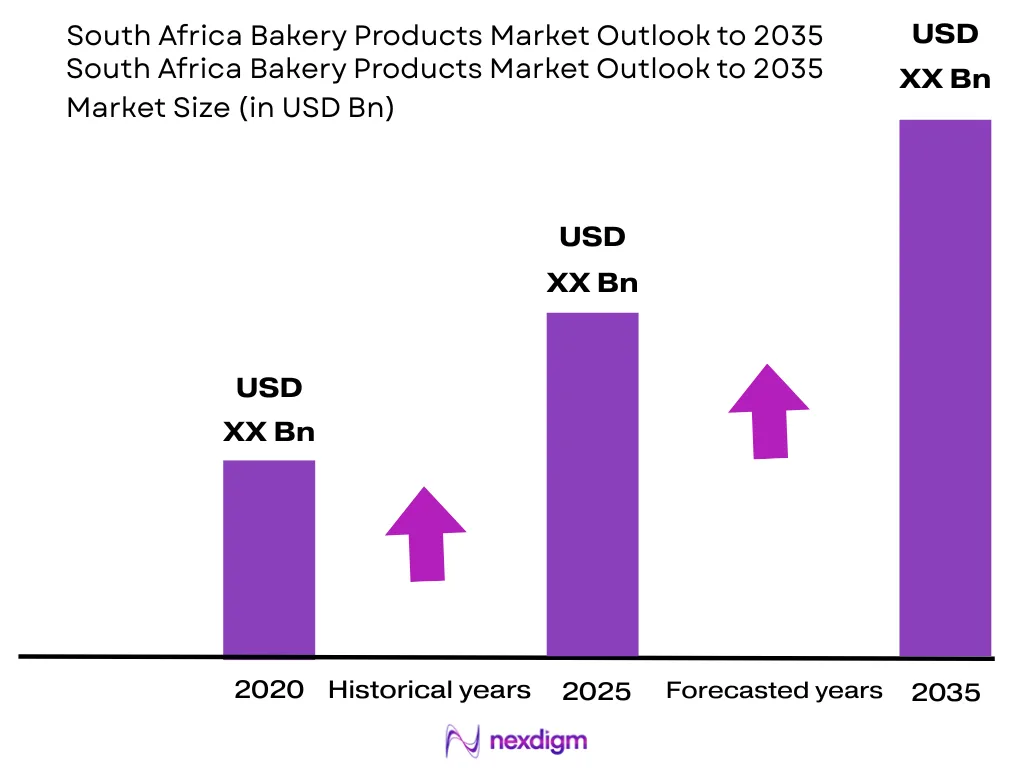
The South Africa bakery products market was valued at approximately USD ~ Billion in 2024, based on industry analysis of packaged bakery sales, artisanal bakery revenues, foodservice bakery consumption, and retail distribution performance. The market expanded from approximately USD X Billion in 2023, supported by rising consumption of staple bread products, increasing urbanization, and growth in modern retail infrastructure. Bread remains a dietary staple for a significant portion of South African households, while increasing demand for convenience foods, packaged snacks, biscuits, cakes, and premium bakery products continues to drive industry expansion. Growth is further supported by supermarket penetration, product innovation, and the emergence of healthier bakery offerings such as whole grain, low-sugar, and fortified bakery products.
Market Segmentation
By Product Type
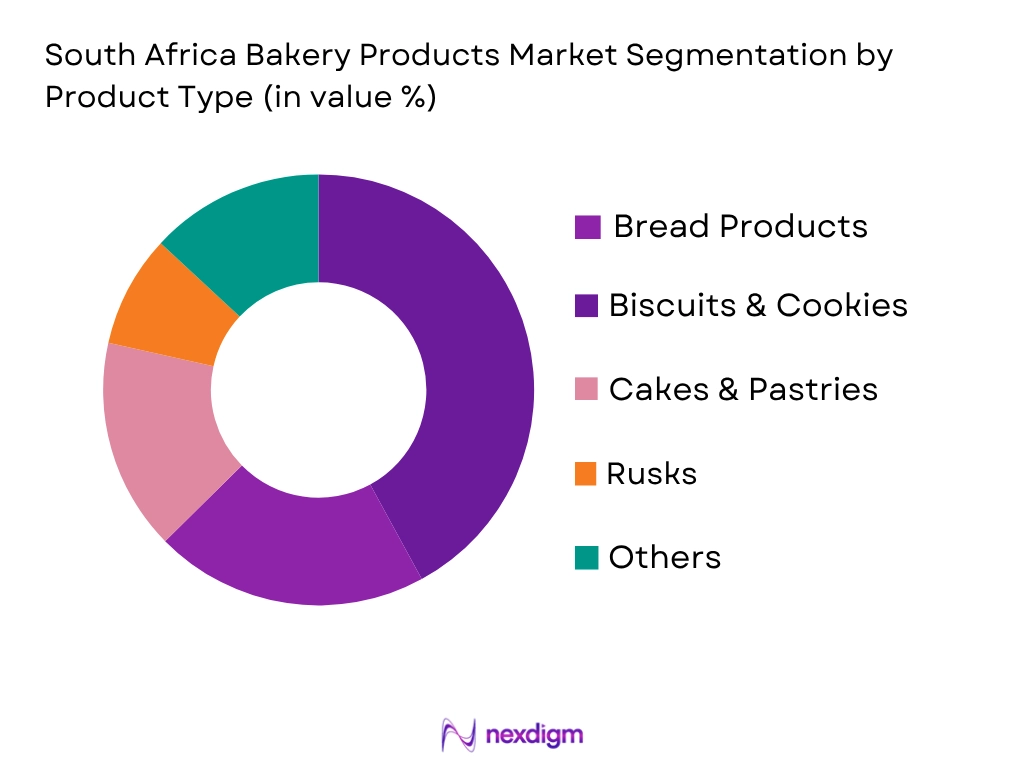
South Africa bakery products market is segmented by product type into bread products, biscuits and cookies, cakes and pastries, rusks, frozen bakery products, morning goods, artisan bakery products, and flatbreads. Recently, bread products hold the dominant market share due to their position as a staple food item consumed daily across urban and rural households. Bread remains one of the most affordable and accessible food categories in the country, making it an essential component of household diets. Large manufacturers such as Sasko, Albany, and Blue Ribbon have established extensive distribution networks reaching supermarkets, convenience stores, and informal retail outlets. Government food fortification requirements have also contributed to sustained bread consumption. Furthermore, increasing urbanization and demand for convenient breakfast options continue to support bread sales. While premium categories such as artisan breads and frozen bakery products are gaining traction, traditional bread products remain the dominant segment because of affordability, accessibility, and high household penetration.
By Distribution Channel
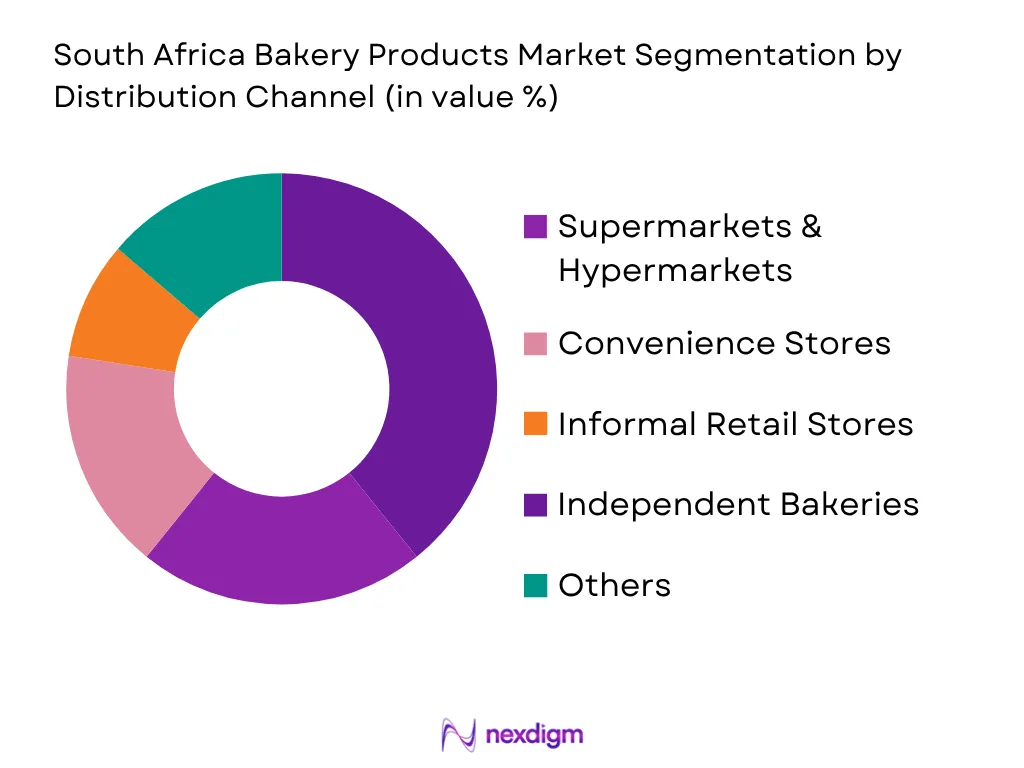
South Africa bakery products market is segmented by distribution channel into supermarkets and hypermarkets, convenience stores, informal retail outlets, independent bakeries, foodservice channels, specialty bakery chains, and online retail. Supermarkets and hypermarkets dominate the market owing to their extensive geographic reach, broad product assortment, competitive pricing, and strong consumer trust. Retail chains such as Shoprite, Checkers, Pick n Pay, Woolworths, and SPAR offer both branded and private-label bakery products across multiple price points. These retailers also operate in-store bakeries, enhancing freshness perception and driving repeat purchases. Their strong logistics infrastructure ensures consistent product availability throughout the country. Furthermore, consumers increasingly prefer one-stop shopping destinations that provide convenience and product variety. Although online grocery platforms and specialty bakery stores are expanding, supermarkets continue to maintain market leadership due to their nationwide footprint and ability to cater to both premium and value-conscious consumers.
Competitive Landscape
The South Africa bakery products market is characterized by the presence of a few large integrated bakery manufacturers alongside regional bakery operators, supermarket bakeries, and artisan bakery brands. Companies such as Tiger Brands, Premier FMCG, and RCL Foods maintain strong positions through established brands, extensive manufacturing capabilities, and nationwide distribution networks. Competition is increasingly focused on product innovation, health-oriented offerings, premium bakery products, and private-label development.
| Company | Establishment Year | Headquarters | Key Brands | Product Portfolio | Distribution Reach | Manufacturing Presence | Retail Penetration | Innovative Focus |
| Tiger Brands | 1921 | ~ | ~ | ~ | ~ | ~ | ~ | ~ |
| Premier FMCG | 1998 | ~ | ~ | ~ | ~ | ~ | ~ | ~ |
| RCL Foods | 1960 | ~ | ~ | ~ | ~ | ~ | ~ | ~ |
| Woolworths Bakery | 1931 | ~ | ~ | ~ | ~ | ~ | ~ | ~ |
| Shoprite Holdings | 1979 | ~ | ~ | ~ | ~ | ~ | ~ | ~ |
 South Africa Bakery Products Market Analysis
 South Africa Bakery Products Market Analysis
Growth Drivers
Urbanization and Growth of Modern Food Consumption
South Africa’s bakery products market continues to benefit from rising urbanization and the concentration of consumers in metropolitan regions where packaged and convenience foods are widely consumed. The country’s population exceeded 63 million in 2024, while the urban population surpassed 43 million people, creating a large consumer base for packaged bread, rolls, cakes, biscuits, and other bakery products. Major metropolitan regions including Johannesburg, Pretoria, Cape Town, Durban, and Ekurhuleni account for a substantial share of household food expenditure and organized retail activity. South Africa’s household final consumption expenditure exceeded USD 250 billion according to macroeconomic estimates, reflecting sustained spending on essential food categories. Bread remains one of the most consumed staple foods across urban households due to affordability and accessibility. Furthermore, modern retail infrastructure continues to expand through supermarket chains such as Shoprite, Checkers, Pick n Pay, and SPAR, increasing bakery product availability across the country. Growing participation of women in the workforce, longer commuting times, and increasing preference for ready-to-eat food products have strengthened demand for packaged bakery goods. These urban consumption patterns continue to create favorable conditions for bakery manufacturers, retail bakeries, and foodservice operators across South Africa.
Expansion of Organized Retail and Foodservice Channels
The continued development of organized retail and foodservice infrastructure represents a significant growth driver for the South Africa bakery products market. South Africa maintains one of the largest retail sectors in Africa, supported by thousands of supermarket outlets, convenience stores, and wholesale distribution centers serving both urban and peri-urban populations. Retail sales exceeded ZAR 1.3 trillion, highlighting the scale of consumer spending flowing through organized distribution channels. The country’s GDP exceeded USD 400 billion, supporting demand for packaged consumer goods including bakery products. The hospitality and restaurant sectors also contribute significantly to bakery consumption through demand for breads, pastries, desserts, sandwiches, and breakfast products. Tourism activity recovered strongly, with international arrivals exceeding 8 million visitors, supporting bakery demand from hotels, restaurants, cafés, and catering establishments. The growth of quick-service restaurants and coffee shop chains has further increased consumption of premium bakery products and convenience snacks. Additionally, digital grocery platforms and food delivery services continue expanding consumer access to packaged bakery products. These developments strengthen product visibility, improve distribution efficiency, and support long-term growth across both mass-market and premium bakery categories.
Market Challenges
Wheat Supply Dependence and Raw Material Volatility
A major challenge facing the South Africa bakery products market is its exposure to fluctuations in wheat supply and agricultural commodity markets. Although South Africa produces wheat domestically, local production does not fully satisfy national demand, resulting in continued dependence on imports. The country imported more than 1.8 million metric tons of wheat during recent marketing periods, making bakery manufacturers vulnerable to international supply disruptions, freight costs, and commodity price movements. Agricultural production is also affected by weather variability, including drought conditions and changing rainfall patterns in key grain-producing regions. Food manufacturers rely heavily on wheat flour, sugar, edible oils, dairy ingredients, and packaging materials, all of which can experience supply-side volatility. South Africa’s merchandise imports exceeded USD 110 billion, illustrating the importance of global trade for food manufacturing operations. Any disruption in agricultural supply chains can affect bakery production planning, inventory management, and procurement strategies. Since bread is considered an essential staple product, manufacturers often face limitations in transferring higher input costs directly to consumers. This creates pressure on operational efficiency and profitability across the bakery value chain while increasing uncertainty regarding raw material sourcing.
Energy Constraints and Manufacturing Inefficiencies
South Africa’s bakery products industry continues to face operational challenges arising from energy supply constraints and infrastructure limitations. Manufacturing facilities require uninterrupted electricity for mixing, proofing, baking, refrigeration, packaging, and storage operations. However, electricity supply challenges have increased operating complexity for food manufacturers across the country. South Africa generated approximately 235 terawatt-hours of electricity, yet power supply disruptions remain a concern for industrial operators. Bakery manufacturers are increasingly investing in backup power generation, solar installations, and energy-efficiency initiatives to maintain production continuity. The manufacturing sector contributes more than ZAR 600 billion to the national economy, emphasizing the importance of reliable industrial infrastructure. Frequent power interruptions can affect production schedules, reduce equipment efficiency, increase food waste, and disrupt cold-chain operations for frozen bakery products. In addition, transportation and logistics challenges increase distribution complexity, particularly for fresh bakery products with limited shelf lives. Rising fuel consumption requirements and warehousing costs further affect supply chain efficiency. These operational constraints create challenges for bakery manufacturers seeking to scale production, optimize margins, and maintain product availability across diverse regional markets throughout South Africa.
Market Opportunities
Rising Demand for Health-Oriented and Premium Bakery Products
An important opportunity within the South Africa bakery products market is the growing consumer preference for healthier and premium bakery offerings. Rising awareness regarding nutrition, wellness, and lifestyle-related health concerns has encouraged consumers to seek products containing whole grains, higher fiber content, reduced sugar, and functional ingredients. South Africa’s middle-income consumer base continues to expand in major metropolitan areas, supporting demand for premium food products. Household consumption expenditure remains above USD 250 billion, providing opportunities for value-added bakery categories. Retailers are increasingly dedicating shelf space to artisanal breads, gluten-free products, seeded loaves, protein-enriched snacks, and clean-label bakery products. Premium supermarkets and specialty retailers have also expanded their bakery portfolios to meet changing consumer preferences. Furthermore, younger consumers demonstrate greater willingness to experiment with innovative bakery formats, international flavors, and wellness-oriented products. The growing popularity of café culture and specialty food outlets further supports premium bakery consumption. These evolving consumer preferences create opportunities for manufacturers to diversify product portfolios, enhance margins, and strengthen brand differentiation through innovation-focused bakery offerings across South Africa.
Growth of Frozen Bakery Products and Digital Retail Channels
The expansion of frozen bakery products and digital retail infrastructure presents significant opportunities for the South Africa bakery products market. Frozen bakery formats offer operational advantages for retailers, restaurants, hotels, and quick-service food operators by extending shelf life and reducing product waste. South Africa’s foodservice industry continues to expand across urban centers, creating demand for frozen dough, ready-to-bake products, pastries, croissants, and specialty bakery items. Internet penetration exceeded 45 million users, while mobile connectivity surpassed 110 million subscriptions, supporting continued growth in digital commerce and food delivery services. E-commerce adoption has improved access to bakery products through online grocery platforms and direct-to-consumer channels. Retailers increasingly utilize digital sales channels to offer broader product assortments and improve customer convenience. In addition, frozen bakery products enable manufacturers to expand distribution beyond traditional geographic limitations while maintaining product quality. The growth of modern cold-chain infrastructure and warehousing capabilities further supports category expansion. These developments create substantial opportunities for bakery manufacturers to increase market reach, improve operational flexibility, and capture emerging consumer demand for convenience-oriented bakery solutions across South Africa.
Future Outlook
The South Africa bakery products market is expected to witness sustained growth over the forecast period, supported by increasing urbanization, population growth, expansion of organized retail channels, and rising demand for convenience foods. Consumer interest in healthier bakery alternatives, including whole grain, high-fiber, and low-sugar products, is expected to encourage product innovation. Premiumization trends, growth of frozen bakery products, and the expansion of foodservice establishments are likely to create additional growth opportunities. Manufacturers are also expected to focus on automation, supply chain optimization, and sustainable packaging solutions to enhance competitiveness and profitability.
Major Players
- Tiger Brands
- Premier FMCG
- RCL Foods
- Sasko Bakery
- Albany Bakeries
- Blue Ribbon Bakery
- Sunbake
- Woolworths Bakery
- Pick n Pay Bakery
- Checkers Bakery
- SPAR Bakery
- Food Lovers Market Bakery
- Fournos Bakery
- Goosebumps Artisan Bakery
- The Bread Mill
Key Target Audience
- Bakery Product Manufacturers
- Flour Milling Companies
- Supermarket and Hypermarket Chains
- Foodservice and Hospitality Operators
- Bakery Equipment Manufacturers
- Frozen Food and Cold Chain Operators
- Investments and Venture Capitalist Firms
- Government and Regulatory Bodies (Department of Agriculture, Department of Trade, Industry and Competition, National Consumer Commission, South African Bureau of Standards)
Research Methodology
Step 1: Identification of Key Variables
The research process begins with mapping the entire South Africa bakery products ecosystem, including bakery manufacturers, flour millers, retailers, foodservice operators, distributors, and consumers. Extensive secondary research is conducted to identify demand patterns, production trends, consumption behavior, and regulatory factors affecting market performance.
Step 2: Market Analysis and Construction
Historical market data is compiled and analyzed to assess bakery product consumption, retail sales, foodservice demand, and production volumes. Both top-down and bottom-up methodologies are used to estimate market revenues and validate category-level performance across different segments.
Step 3: Hypothesis Validation and Expert Consultation
Preliminary market findings are validated through interviews with bakery manufacturers, distributors, retailers, and industry experts. These discussions provide operational insights regarding product demand, pricing trends, consumer preferences, and future growth opportunities.
Step 4: Research Synthesis and Final Output
The final stage integrates findings from primary and secondary research to produce a comprehensive market assessment. Data triangulation techniques are used to ensure consistency and reliability across all market estimates, forecasts, and segment-level analyses.

- Executive Summary
- Research Methodology (Market Definitions and Assumptions, Abbreviations, Market Sizing Approach, Top-Down Analysis, Bottom-Up Analysis, Demand-Side Assessment, Supply-Side Assessment, Formal vs Informal Bakery Sector Analysis, Retail Audit Assessment, Primary Industry Interviews, Consumer Spending Analysis, Data Triangulation, Forecasting Framework, Limitations and Future Conclusions)

- Definition and Scope
- Market Evolution and Industry Genesis
- Timeline of Major Industry Developments
- Bakery Industry Business Cycle Analysis
- Bakery Value Chain Analysis

- Growth Drivers (Rising Urbanization, Growing Consumption of Staple Bread Products, Expansion of Modern Retail Chains, Increasing Household Food Expenditure, Population Growth, Growth of Convenience Foods, Rising Demand for Packaged Bakery Products, Expansion of Foodservice Industry)
- Market Challenges (Wheat Price Volatility, Electricity Supply Constraints and Load Shedding, Rising Production Costs, Dependence on Imported Ingredients, Shelf-Life Management Challenges, Logistics and Distribution Constraints, Regulatory Compliance Costs, Intense Price Competition)
- Market Opportunities (Health-Oriented Bakery Products, Premium and Artisan Bakery Expansion, Frozen Bakery Product Development, Functional Bakery Innovation, Private Label Bakery Growth, E-Commerce and Online Grocery Expansion, Gluten-Free Product Development, Sustainable Packaging Adoption)
- Market Trends (Brown Bread Consumption Growth, Premiumization of Bakery Products, Clean Label Ingredients, High-Fiber Product Launches, Protein-Enriched Bakery Products, Frozen Ready-to-Bake Products, Health and Wellness Positioning, Convenience-Oriented Packaging)
- Government Regulations (Foodstuffs, Cosmetics and Disinfectants Act Compliance, Bread Fortification Standards, Product Labeling Requirements, Food Safety Regulations, Packaging and Environmental Compliance, Import Regulations, Consumer Protection Standards, Competition Law Compliance)
- SWOT Analysis
- Porter’s Five Forces Analysis
- PESTLE Analysis
- Stakeholder Ecosystem
- Competition Ecosystem
- ESG and Sustainability Assessment

- By Market Value (2020-2025)
- By Volume Consumption (2020-2025)
- By Average Selling Price (2020-2025)

- By Product Type (In Value %)
Bread Products
Cakes and Pastries
Biscuits and Cookies
Rusks
Sweet Bakery Snacks
Frozen Bakery Products
Artisan and Premium Bakery Products
Morning Goods (Muffins, Doughnuts, Croissants)
Flatbreads and Wraps
Ready-to-Eat Bakery Products - By Ingredient Type (In Value %)
Conventional Bakery Products
Whole Wheat and Brown Bakery Products
Gluten-Free Bakery Products
Organic Bakery Products
High-Fiber Bakery Products
High-Protein Bakery Products
Low Sugar Bakery Products
Functional Bakery Products - By Distribution Channel (In Value %)
Supermarkets and Hypermarkets
Convenience Stores
Independent Bakeries
Informal Retail Stores and Spaza Shops
Specialty Bakery Chains
Online Retail and Direct-to-Consumer
Foodservice and Institutional Sales
Cash-and-Carry Wholesalers - By Region (In Value %)
Gauteng
Western Cape
KwaZulu-Natal
Eastern Cape
Free State
Mpumalanga
Limpopo
Rest of South Africa - By Packaging Type (In Value %)
Flexible Plastic Packaging
Paper Packaging
Cartons and Boxes
Family Pack Packaging
Single-Serve Packaging
Sustainable Packaging
Resealable Packaging

- Market Share of Major Players (By Value, Volume, Product Category, Distribution Channel, Organized Retail Presence)
- Cross Comparison Parameters (Product Portfolio Breadth, Bakery SKU Count, Production Capacity, Retail Distribution Reach, Bread Manufacturing Capability, Informal Market Penetration, Health-Oriented Product Portfolio, Innovation and New Product Launch Frequency)
- SWOT Analysis of Major Players
- Pricing Analysis by SKU and Product Category
- Detailed Profiles of Major Companies
Tiger Brands
Premier FMCG
RCL Foods
Sasko Bakery
Albany Bakeries
Blue Ribbon Bakery
Golden Cloud
Food Lovers Market Bakery
Pick n Pay Bakery
Woolworths Bakery
Checkers Bakery
PAR Bakery
Goosebumps Artisan Bakery
Fournos Bakery
The Bread Mill

- Consumption Behavior Assessment
- Demographic Consumption Trends
- Household Bakery Spending Analysis
- Premium vs Value Segment Demand Assessment
- Consumer Affordability Analysis
- Health and Wellness Influence on Purchasing Decisions
- Brand Loyalty Assessment
- Consumer Pain Point Analysis
- Product Attribute Preference Analysis
- Purchase Decision-Making Process
- Online vs Offline Purchase Behavior
- Formal Retail vs Informal Retail Consumption Analysis

- By Market Value (2026-2035)
- By Volume Consumption (2026-2035)
- By Average Selling Price (2026-2035)


 Request a Sample
 Ask for Customization
 Get a Quote
 Enquire Now